Tag Archives: deconstruction

Where Did “Historical Criticism” of the Bible Come From? (Part One)

In the previous blog post in this series, we considered a useful definition of “historical criticism” of the Bible. Put succinctly, historical criticism seeks to understand the origins of ancient texts in order to better get at the world “behind the text.” As the most read book ever written, the Bible qualifies as one of the most studied book, in the field of historical criticism.

But what are the roots of historical criticism, when it comes to the Bible? Where did historical criticism come from? Or to put it another way, what are the habits of mind, associated with historical criticism, that can influence how even Christians today read the Bible, and where did these habits originate?

In this second blog post from this series (the first one is here), we look at the first of two books that explore the history behind “historical criticism,” as seen through the lives of a group of 17th century European philosophers. “Part two” will come out about a week from now. Stick around.
 

Historical Criticism on the “Historical Criticism” Movement

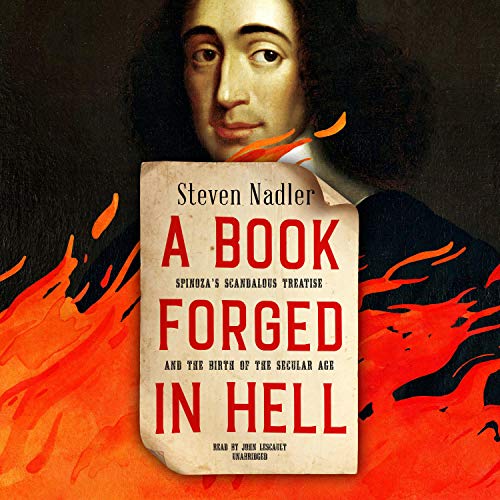
Several books that I have recently read examines the question above in detail, by applying historical criticism to the development of historical criticism itself, by looking at the some of leading early figures of the movement, namely Isaac La Peyrère, Thomas Hobbes, and especially Baruch Spinoza. Steven Nadler, the author of A Book Forged in Hell: Spinoza’s Scandalous Treatise and the Birth of the Secular Age, tells us the story of Baruch Spinoza’s most controversial 17th century book, that really kick started the whole historical criticism movement.

Baruch Spinoza grew up in the Spanish Portuguese Jewish community of Amsterdam, in the Netherlands. Western Europe had been engulfed in a series of religious wars, commonly known as the Thirty Years War, where nearly 1 out of 4 (or 5) Europeans died, prior to the Peace of Westphalia, in 1648, as Roman Catholics and Protestants fought against one another for control of various parts of Europe. The conflagration pretty much ended the medieval social order established by the Holy Roman Empire, resulting in the development of various city-states and regional governments, each one declaring adherence to one form of Roman Catholic or Protestant confession, or another.

Spinoza’s family had been “conversos,” Jews who had been forced to convert to Christianity on the Iberian peninsula. However, such “conversos” were often viewed with suspicion by more established Christians, as to whether they were truly converted. When Spinoza’s family left to go to Amsterdam, to take advantage of the growing religious diversity there in the Netherlands, they were hoping to re-establish their roots in the Jewish faith. However, at age 23, Baruch Spinoza was expelled from the Jewish community in Amsterdam, for expressing theological views at the time that did not agree with the local rabbis. Spinoza had been raised to take over the family import business, but he was able to release himself from these obligations in order to dedicate himself fully to the task of doing philosophy.

He had been left in relative obscurity, until the publication of his Theologico-Political Treatise, in 1670. In his various writings, Spinoza argued that the hotly contested theological conflicts of the day could not be resolved by spiritual authorities alone. Rather, Spinoza argued for a type of “scientific” enterprise that would seek to resolve the conflicts between Roman Catholics, Protestants and Jews on how to interpret the Bible. But the development of his ideas led critics to conclude that Spinoza had become an atheist, and that his book(s) should be banned.

Spinoza the Controversialist

The most well known controversial claim made by Spinoza had to do with the authorship of the Pentateuch, the first five books of the Bible. Like most pious Jews (and Christians) of the time, he was taught in synagogue to believe that Moses wrote everything we find in those five books. Spinoza did note, however, some problems with that entire teaching. But he certainly was not the first to do so.

For example, at the end of the Book of Deuteronomy, the last chapter describes the death of Moses. Scholars for centuries had concluded that Moses simply could not have written about his death, prior to dying himself. The most common solution to this was to suggest that it was Joshua who added in the part about Moses’ death, at a later point in time.

The 4th century Bible translator of the Latin Vulgate, Jerome, living well over a thousand years before Spinoza, believed that Ezra, the scribal priest living after the Babylonian Exile of the Jews, in the 5th c. BCE, either “edited” or “restored” the first five Books of Moses, nearer to the form we now have them.

However, what made Spinoza so controversial is that he proposed a far more radical solution to some of the problems found in the Pentateuch. Instead of suggesting that certain parts of the Pentateuch were added in later or edited, by another scribe, Spinoza concluded that very little, if anything, in those five books could be attributed to Moses in the first place. In other words, much of what we read in the Pentateuch was written perhaps centuries after Moses even lived.

But that was just the start for Spinoza. Spinoza went onto say that the Bible was not literally the Word of God, that divine providence and Scriptural prophecy did not work the way most Jews and Christians thought it did, and that the miracles found in the Bible never happened. For most Jews and Christians alike, Spinoza’s views were scandalous. One particular critic of Spinoza’s Theologico-Political Treatise called it “a book forged in hell by the devil himself.”

It would be several centuries before Julius Wellhausen would teach his students about the “documentary hypothesis,” but the ground work for such radical views about the Bible had been laid by Spinoza. Today, such views about the Bible remain standard teaching among the vast majority of departments of religion in secular (and sometimes even in some Christian) universities.

The World After Baruch Spinoza

The 21st century West lives in the shadow of Baruch Spinoza. Some historians speak of the world before Spinoza as “the Age of Faith.” After Spinoza, they say the world entered “the Age of Reason.” What will future historians think of the 21st century remains to be seen. Nevertheless, the impact of Spinoza’s ideas in the wake of the Thirty Years War, and the bitter strife between Roman Catholics and Protestant Reformers, continues to be felt today.

I will have more to say about Spinoza, and Steven Nadler’s analysis of Spinoza’s writings and life, in “part two” of the history behind “historical criticism” coming soon. Plus, I will also include a brief look at Isaac La Peyrère and Thomas Hobbes, two other 17th century philosophers who stimulated the thought of Baruch Spinoza, in reshaping the world we live in today. Stay tuned.
What is “Historical Criticism” of the Bible?

Today we begin a first in a series of occasional posts, looking at the “historical criticism” of the Bible, the good and the bad of modern thinking habits about Scripture…..

A decade or so ago, some popular news magazines would publish eye-catching cover articles around Christmas and Easter, featuring scholars who would challenge traditional Christian doctrines, like the virgin birth and the resurrection of Jesus. Now, in the age of social media, we are bombarded on our cell phones with stories almost all of the time, that tell us that everything we once knew about the Bible is completely wrong.

The intellectual force behind this skepticism has a track record over the last few centuries. It all comes from the rise of “historical criticism” of the Bible. Historical criticism is generally associated with what is taught in nearly every university department of religion today.  Ironically however, very few churches, even evangelical ones, talk about it. But with the advent of the Internet, where your typical Sunday sermon can be fact checked in less than a minute with a Google search, the fruits of historical criticism scholarship become readily available to anyone having a SmartPhone in their pocket.

The development of “historical criticism” of the Bible has shifted the way Christians, and the culture at large, has viewed the Bible, in both positive and negative ways. What is “historical criticism” all about?

Defining “Historical Criticism” of the Bible

Yet what exactly is historical criticism of the Bible? Historical criticism seeks to understand the origins of ancient texts in order to better get at the world “behind the text.” Some refer to historical criticism as “higher criticism,” or the “historical critical method,” terms which broadly speaking are synonymous. Some conservative evangelical responses to historical criticism are completely in the negative, as historical criticism is often associated with denying the accuracy of the Bible and rejecting the supernatural character of the Scriptures. But the story with historical criticism is really more complicated than that.

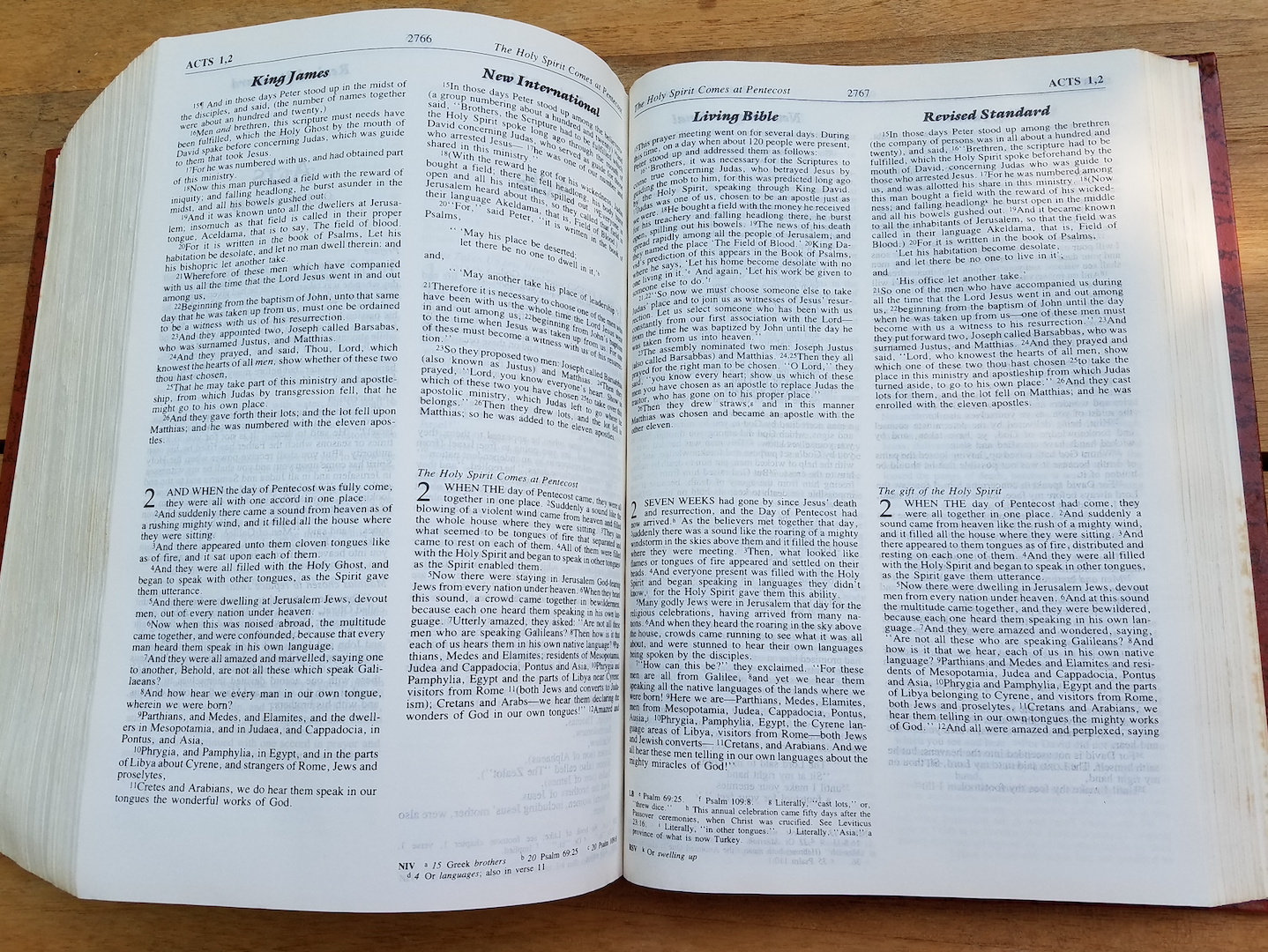
As Baptist New Testament scholar Thomas Schreiner writes in an essay for the CSB Apologetics Study Bible, “Has Historical Criticism Proved the Bible False?,” the rise of historical criticism “has also benefitted the church.” The Christian faith is historically rooted, so we need not fear historical research into the origins of the Bible. For example, the discovery of the Dead Sea Scrolls, archaeological and literary research into the Ancient Near East, and the study of the Greco-Roman world has given us invaluable information that helps us to better appreciate the historical context in which the Bible was written (read Dr. Schreiner’s full essay here).

Historical criticism has also helped to correct some wrong assumptions about how the Bible works. Many Christians have wrongly assumed that the New Testament was somehow mystically downloaded into the brains of New Testament writers in some “special ‘Holy Ghost’ language,” which was then transcribed onto papyrus. The following may sound like a caricature, but it is not too far from how many church-going people think about biblical inspiration:

It is as though the divine inspiration of the Bible means that the Apostle Paul would somehow fall into a trance when he wrote his letters, to find that his hand was moving with pen, without his control, only to wake up later from his trance, and then wonder out loud, “Maybe I should read what I just wrote!”

While this type of “divine dictation” thinking about so-called “biblical inspiration,” or “divine download,” as Dr. Michael Heiser describes it, might appeal to science-fiction lovers, etc., it is really more reflective of a New Age Movement view of the Bible, as opposed to a truly Christian view of biblical inspiration. To our benefit, historical criticism has “demonstrated that the NT was written in the common Greek of the day,” says Dr. Schreiner, using styles of literary genre that were relevant to that time period.

Biblical inspiration really means that instead of overriding the mental faculties of the Scriptural author, God used the personalities and thought processes of folks like the Apostle Paul to reveal divinely authoritative truth, and historical criticism has helped to confirm this. Furthermore, according to Dr. Schreiner, careful research has given us more accurate English translations of the Bible as newer manuscripts discoveries have brought us closer and closer to the original text of the New Testament.

Some call this particular quest for more accurate Bible translations “lower criticism” of the Bible. This quest uses the basic tools of historical criticism, and the advances we have in this field partly explains why we keep seeing new English translations of the Bible popping up on the book market, every few years or so.

Nevertheless, historical criticism has also sadly introduced certain habits of mind that have caused many to lose confidence in the veracity of Holy Scripture. Despite the above benefits noted by Dr. Schreiner, historical criticism has at times introduced certain ideas that have “threatened the faith of evangelical believers” over the last few centuries.

For example, 19th century German scholar Julius Wellhausen popularized the so-called “documentary hypothesis,” that challenges the traditional idea that Moses wrote the first five books of the Bible, by claiming that the Pentateuch was actually derived from at least four different sources, that were later assembled together by some unknown editor, after the Babylonian Exile, centuries after Moses even lived. Now, almost two centuries later, Wellhausen’s ideas continue to have an enormous influence on today’s scholarship. However, these ideas also have been met with a healthy amount of criticism, as new insights challenge old assumptions.

As Schreiner describes it, “the ‘assured results’ of scholarship in one generation are often vigorously challenged by the next.” So, while the debate among scholars concerning historical criticism continues, the existence of the debate itself continues to have a broader impact on both the culture at large and the church in particular, by implanting certain habits of mind that can distort how we read the Bible. What are these habits of mind, associated with historical criticism, that can influence how even Christians today read the Bible, and where did these habits originally come from?

I will save the answer to that question for the next blog post in this series. In this series, I will be reviewing some books that fill out the story of “historical criticism,” offering ways where misguided historical critical methodologies have led people astray in their approach to the Bible, as well as examples of how historical criticism can actually help people better appreciate the Bible. Along the way, I will include some in-depth case studies that show where a not-so-critical approach to historical criticism (pun intended) can sometimes get people into trouble, without needing to.

Stay tuned. I will post the next installment in about a week or so.

UPDATE:

Other posts in this series: