
Christians of all shapes and sizes believe that “Jesus died for our sins.” But the rub comes in trying to explain exactly what that means.
There is a song we sing in the non-denominational church my wife and I attend which has a line in it which has puzzled me recently. Written by Pat Szcebel, of Sovereign Grace Worship, back in 2003, “Jesus, Thank You,” the first verse goes like this:
The mystery of the cross I cannot comprehend
The agonies of Calvary
You the perfect Holy One, crushed Your Son
Who drank the bitter cup reserved for me
That third line is a curiosity: “You the perfect Holy One, crushed Your Son.” At the very least, it sounds pretty harsh. What does that even mean? Did God the Father really “crush” his only Son?
Where does this idea come from in the first place? Well, it turns out that explaining the answer to this question can take you down a very interesting rabbit trail.
However, the idea detailed here is not about some random trivia, meant to help you win some kind of Bible quiz or to impress a friend at some social gathering. Instead, it is about something really, really important in how we as Christians think what the Gospel is.
It involves a famous Old Testament passage, Isaiah 53, but simply quoting from Isaiah 53 is not enough to try to unpack what is going on here. It involves an exploration into how the writers of the New Testament make use of passages of the Old Testament like this. It also involves what translation of the Old Testament the New Testament writers were using. Once you dig deeper, you begin to realize that there is more going here than simply appealing to one Bible verse as a prooftext.
Put on your thinking cap with me…. and let us go for a ride. Shall we??
There is a debate in evangelical circles around “penal substitutionary atonement,” which continues to swirl in the social media world of YouTube. The controversy is also a favorite complaint made by atheists.
In this worship song, this line comes from Isaiah 53:10, part of the famous passage about the Suffering Servant, which according to the ESV (English Standard Version) translation reads:
Yet it was the will of the Lord to crush him;
he has put him to grief;
when his soul makes an offering for guilt,
he shall see his offspring; he shall prolong his days;
the will of the Lord shall prosper in his hand.
Well, you would think that this settles the debate once and for all: God did crush his only Son. But there are some who question this translation of Isaiah 53:10…. and for good reason.
The challenge is that the meaning of a God who would “crush” the Son is not inherently obvious. The logic can be a bit difficult to grasp, but please hang with me. I promise you, even if you are not completely convinced by what I present here, if you stick with it until the very end, you will never read Isaiah 53 again in the same way.
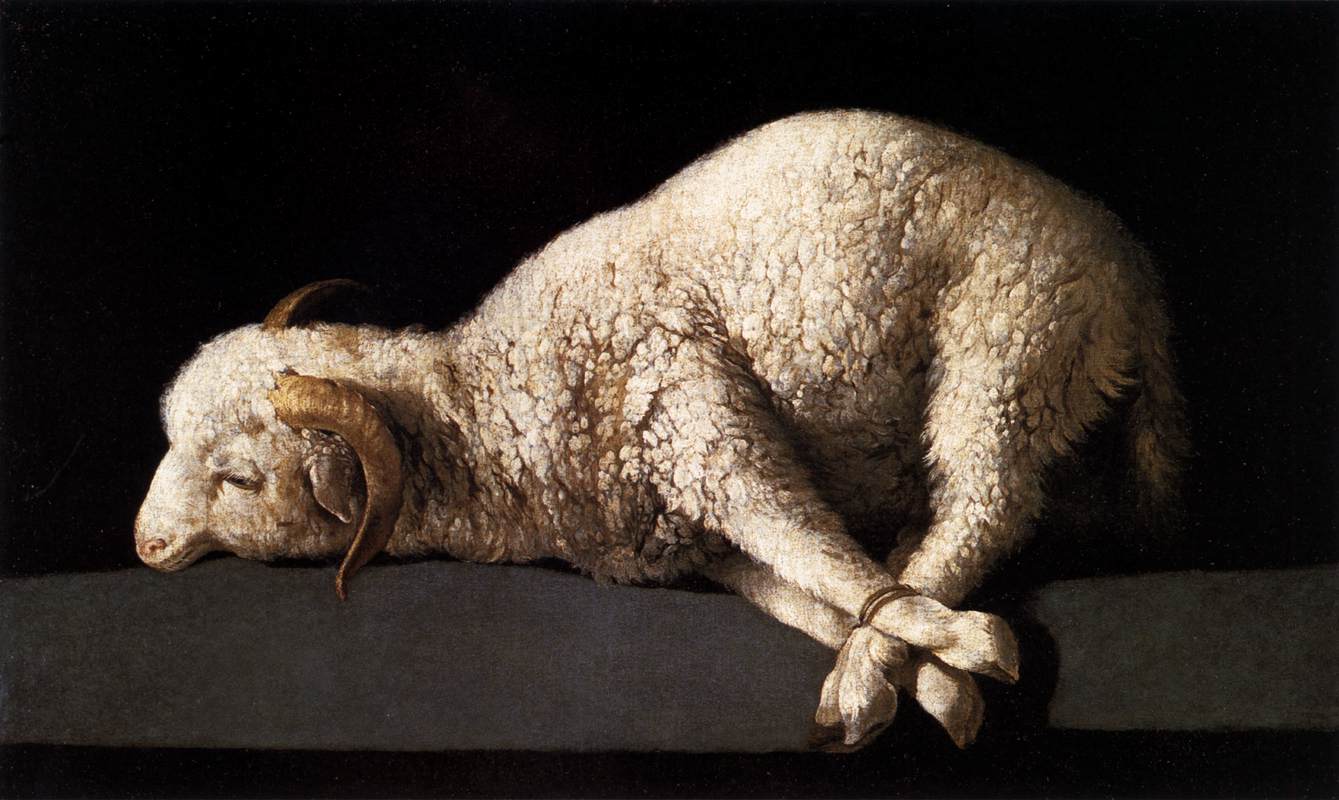
Who is the Suffering Servant? Is it the Lamb of God, the unblemished sacrifice to take away the sins of the world? Christians will say, “Yes,” that the Suffering Servant is Jesus: But in what sense does it mean to say that Jesus is the Suffering Servant of Isaiah 53?
Different Translations of Isaiah 53 ???
In fact, there are translations of Isaiah 53:10 which take a harder line, not simply saying that it was within the will of God that Jesus be “crushed,” but that God the Father took “pleasure” in it. The venerable KJV (King James Version) translation took it that way, and the CSB (Christian Standard Bible) is not that much different:
Yet the Lord was pleased to crush him severely.
When you make him a guilt offering,
he will see his seed, he will prolong his days,
and by his hand, the Lord’s pleasure will be accomplished.
The primary philosophical objection is that it would have been unbecoming of the character of God the Father for him to “crush” the Son of God, when Jesus died for our sins at Calvary, as it implies that the Father took some kind of pleasure in “killing,” or “crushing” Jesus.
After all, even Proverbs 17:15 says that God considers the punishment of an innocent person to be an abomination. If indeed Jesus, as the Son of God, was perfectly innocent of sin, then why would the Father punish Jesus? What do we do this?
Let us first acknowledge some fundamental Christian truth claims: Make no mistake of it: God really hates sin. Furthermore, humans are crushed by sin. God’s solution was for Jesus to take away the sins of the world.
Sinful humanity lives in rebellion from a holy God. But God has made a way for us to be reconciled to our Creator, through the work of Jesus Christ on the cross.
But to say that God the Father takes “pleasure” in crushing Jesus, the Son, can put a kink into a healthy, robust theology. In this approach, sinful humanity gets a reprieve from God’s wrath, but the innocent Son takes the full brunt of the Father’s anger. In response, the Father appears to be appeased with what occurs. Is that really how the death of Christ in dealing with human sin “works?” More importantly, is that the kind of God one ought to worship?
The Puzzle of Reading Isaiah 53 in Hebrew
As it turns out, the translation of Isaiah 53 can be quite difficult and tricky. Down the rabbit trail we go.
First of all, that word in Hebrew, “da-kha,” does mean to be “to be crushed” or “to be broken.” But there is also a figurative meaning of “da-kha,” as in “to be contrite.” So it is possible to interpret the first part of Isaiah 53:10 to say that God through Jesus became “contrite,” feeling deep remorse, guilt or sorrow for humanity’s wrongdoing.
Consider Isaiah 57:15 where this Hebrew word da-kha means “contrite”:
For thus says the One who is high and lifted up,
who inhabits eternity, whose name is Holy:
“I dwell in the high and holy place,
and also with him who is of a contrite and lowly spirit,
to revive the spirit of the lowly,
and to revive the heart of the contrite.
In the doctrine of penal substitutionary atonement, this is often understood to mean that at the cross Jesus took our sin upon himself, bearing the weight of deep remorse, guilt, and sorrow for the wrongdoing of humankind. This helps us to better understand those translations that say that God the Father took “pleasure” in “crushing” the Son. Instead of a picture of God as an angry Father taking pleasure in seeing the Suffering Servant; that is, the Son, suffer under being “crushed,” as in being beaten to death, a more positive picture emerges. In this more positive picture, God is pleased that the “crushing” weight of sin and guilt has been taken off of us sinful humans, to be dealt with by God in himself.
In this sense, the Lord is not taking pleasure as some sadistic pagan deity might in seeing pain inflicted on someone else. Rather, God is satisfied with the outcome, a restored relationship between God and the Creatures he made.
However, while this interpretation is plausible, there is a major problem with it. For this interpretation to work, it requires that it is sin and guilt doing the “crushing” of the Son, and that God the Father’s role is more passively allowing this “crushing” by sin and guilt to take place, while the Father is actively pleased with the result of this “crushing,” namely the satisfaction of having a restored relationship between the Creator and creatures made, putting back the pieces which sin and guilt tore apart.
But the verse really does not read that way. Instead, it would appear that God the Father is really the one in the active role of “crushing” the Son, and not the weight of sin and guilt. This raises again philosophical questions as to why God would take pleasure in crushing the Suffering Servant found here in Isaiah 53.
A variation of this interpretation suggests that when God seeks to “crush” the servant, that this is an effort to uphold the ultimate sovereignty of God in all things; that is, that nothing happens for which God does not have some type of contingency plan to address. But while God stands behind all things, as the indirect cause, there can still be an intermediate cause which directly results in some particular outcome. God is the ultimate cause, in a sense, but God’s involvement is indirect, as opposed to some other direct, intermediate cause being also responsible, in some way.
Consider the historical context which Isaiah is addressing in Isaiah 53. The Babylonians had crushed the southern Hebrew kingdom of Judah, in the 6th century before Christ. Multiple prophets in the Bible have described this as God’s way of punishing the Jews, using the Babylonians as a vehicle for delivering that punishment.
Perhaps the Babylonians were crushing the Suffering Servant as an intermediate, more direct cause. However, the obvious problem here is that the verse indicates that God is indeed the cause of the Suffering Servant’s suffering without exception, with no mention of any other intermediate cause bringing suffering upon the Suffering Servant. This particular variation in interpretation thus ends up depending on an argument from silence.
Learning from Eastern Christians, as to How The Early Church Read the Old Testament
As it turns out, in Eastern Orthodox Christianity, the philosophical objection against God “crushing” the Son is more than just a philosophical whim. It actually has a textual basis in how the Old Testament is translated. If you pick up a copy of the NKJV Orthodox Study Bible, and read Isaiah 53:10, you get a very different sense of what is going on… a VERY DIFFERENT sense:
The Lord wishes to cleanse Him of His wound, and if You give an offering for sin, Your soul shall see a long-lived seed.
There are a lot of moving parts with this translation of Isaiah 53 as a whole, and how it all relates to the New Testament, so let us zone in on one particular problem. For the sake of simplicity, we can focus on the sense of the Lord wishing to “cleanse” the Suffering Servant. Here it suggests that what is going on with the death of Jesus is that rather than God the Father “crushing” his Son, it is God the Father “cleansing” the Son of his wound he endured on Calvary’s hill.
“Cleansing” versus “crushing.” The images these terms bring up are in stark contrast.
So, why is this translation that Eastern Orthodox Christians use so different?
The English Standard Version bases its translation of the Old Testament on what is called the Masoretic text, or Hebrew version of the Bible, preserved by the Jewish community down through the centuries. With the NKJV Orthodox Study Bible, the translators follow the so-called Septuagint, or the Greek translation of the Old Testament (Take a look at a previous Veracity blog post for more info on the Septuagint).
All of this plays into the reason why Isaiah 53:10 looks so different across different Bibles. Protestant Bibles typically preserve the Hebrew Masoretic reading of Isaiah 53:10 (where the Lord desires to “crush“) , whereas Eastern Orthodox Bibles follow the Greek Septuagint (where the Lord desires to “cleanse“). To make matters more complicated, to my knowledge what we have uncovered at Qumran with the Dead Sea Scrolls, particularly with the famous Great Isaiah Scroll, follows the Masoretic tradition for Isaiah 53:10.
The Bible of the Early Church Was Primarily the Greek Old Testament, Not the Hebrew
This brings up a very important point that most Christians completely miss. In fact, I went through multiple years of theological seminary and never picked up on this until long after I finished my degree.
The earliest Christians of the first century, particular as the Gospel spread throughout the Greco-Roman world, even outside of Judea, primarily spoke Greek. As a result, the Greek Septuagint translation, for the most part, became the “Bible” of the early church, not the Hebrew Bible, which not that many people understood, certainly among the growing number of Gentiles joining the Christian movement. The authors of the New Testament, who wrote in Greek, generally followed this tradition (There is one notable exception: the Book of Revelation, whereby the author fairly frequently directly transliterates Hebrew into Greek, but that is a story for another time).
Whenever a New Testament writer quotes from or alludes to Isaiah 53, the author uses the Septuagint reading and not the Masoretic reading. A couple of examples demonstrate the difficulty faced in understanding how the New Testament uses the Old Testament.
In Acts 8:32-33, Luke quotes from the Greek Old Testament (Septuagint), at Isaiah 53:7b-8. Here we read about Philip’s encounter with the Ethiopian eunuch , who was puzzled over Isaiah 53 (as many today still are):
Now the passage of the Scripture that he was reading was this:
“Like a sheep he was led to the slaughter
and like a lamb before its shearer is silent,
so he opens not his mouth.
In his humiliation justice was denied him.
Who can describe his generation?
For his life is taken away from the earth.”
But if you look back at Isaiah 53:7b-8, which in most English Bibles is translated from the Masoretic Hebrew, there is a difference which is striking:
like a lamb that is led to the slaughter,
and like a sheep that before its shearers is silent,
so he opened not his mouth.
By oppression and judgment he was taken away;
and as for his generation, who considered
that he was cut off out of the land of the living,
stricken for the transgression of my people?
Take note of the highlighted line: According to the Hebrew, it was “by oppression and judgment he was taken away,” indicating that the Suffering Servant received judgment (or “justice”) presumably from God, through an act of punishment. Contrast that with the Greek version, whereby “in his humiliation justice was denied him,” suggesting that the Suffering Servant did not receive justice.
In other words, according to the Hebrew, it was by judgment that he (the Suffering Servant) was taken away. But in the Greek version, it was the judgment itself (not the Suffering Servant) that was taken away.
Or to put it another way, according to the Hebrew, God takes the Suffering Servant away (by judgment, through a form of punishment). According to the Greek, God takes the judgment away, thus denying judgment to the Suffering Servant. In some versions of the Greek, the subject is explicit: “In His humiliation His judgment was taken away.”
So, which is it, was the Suffering Servant a recipient of justice…. or was he not?
You can look up several other examples which also can be puzzling (The New Testament reference quotes from the Greek Septuagint, whereas the Isaiah Old Testament passage is translated from the Hebrew):
A messianic Jewish scholar, Eitan Bar, provocatively brings out a particularly insightful observation concerning 1 Peter 2:22-25 which I had not seen before. Unlike the ESV translation, the NIV reads verse 23 as follows:
When they hurled their insults at him, he did not retaliate; when he suffered, he made no threats. Instead, he entrusted himself to him who judges justly.
This is an allusion to Isaiah 53, where the Suffering Servant motif has been understood by Peter to be a reference to Jesus, the one who suffered on the cross. But if God the Father was the one who crushed the Son, then why are those who hurled insults at the Son described in the plural, as with “they” with “their insults?” The Father is always spoken of in the New Testament in the singular, and not in the plural. Who then is the “they?”
In the providence of God, it might be reasonable to say that the Father was an indirect cause of what happened to the Son on the cross, as though nothing escapes the plans and purposes of God. Fair enough. But the use of “they” might indicate the Roman soldiers, etc. were the ones who directly whipped and scourged Jesus. For if it were the Father who was the one who directly crushed the Son, why does Peter, one of the earliest Christians, not clearly come out and say this?
Mmmmmm…..
When I run into things like this when I am studying the Bible, it makes me think of that scene from The Wizard of Oz: “Pay no attention to that man behind the curtain.”
Wow. Indeed. So what does one do with all of this?
Some Possible Ingredients to Help Solve the Isaiah 53 Puzzle
What we do know are two things: First, words in the ancient world have indeed changed meaning over time, so scholars must be careful to consider this when we come to difficult Bible translation issues like this. If you do not believe me, then go and pick up a King James Version translation of the Bible, finished in 1611, and compare that to a modern translation, in say a well-known passage like Psalm 23:1.
The KJV reads: “The Lord is my shepherd; I shall not want.” But the CSB (Christian Standard Bible) reads “The Lord is my shepherd; I have what I need.”
“I have what I need” makes sense, whereas “I shall not want,” from the KJV, is the classic reading, but it can be confusing.
I can draw out another example here: What does the word “halt” mean? I can think of lines in movies where someone says, “Halt! Who goes there?” In this modern sense, “halt” means an order to stop. Stop moving!!
But take a look at the King James Version (KJV) reading of Luke 14:21: “…Bring in hither the poor, and the maimed, and the halt, and the blind.”
To say that Jesus wants to heal the “halt” in the modern sense, does not make any sense!
But in 1611, some 400 years ago, the word “halt” meant something completely different than what we think it means today. Back then, those who “halt” are those who are physically impaired in some way.
In other words, the meaning of the word “halt” has changed over the centuries. It is quite possible that the Hebrew word for “crush” might have changed meaning over the centuries, too, though there is some significant scholarly debate about this particular word.
Secondly, the ancient Hebrew language is way more ambiguous than its nearby rival language, ancient Koine Greek, the language of the New Testament. The number of words in the Hebrew lexicon is significantly smaller than the number of words in the Greek lexicon. Therefore, in order to determine a meaning of the word, Hebrew is much more context dependent than Greek.
Furthermore, as Old Testament scholar John Goldingay says in his The Old Testament for Everyone Commentary on Isaiah 53 (p. 3971), Isaiah 53 as a whole is one of the more difficult passages in the Old Testament to interpret. Gregory Beale and D.A. Carson, both well respected conservative scholars, flat out say that the Hebrew text of Isaiah is “far from easy to understand” (Commentary on the New Testament Use of the Old Testament, p. 573). The bigger picture of Isaiah 53 is clear, but it is possible to get bogged down in all of the details.
This should adequately explain why there are so many variations of Isaiah 53:10 when it comes to translating the Hebrew into English. Was it “the will of the Lord to crush him, he has put him to grief” as the ESV reads, or did the CSB version get it right: “Yet the Lord was pleased to crush him severely?” Apparently, the Hebrew is ambiguous enough to go either way.
However, what is left open deals with what to do with the “crushing” as opposed to the “cleansing” or “purifying” activity of the Father with respect to the wounded Son, as suggested by the Septuagint translators, an idea that the New Testament picks up on. So, why did the Septuagint translators go with “cleansing” and not “crushing?” That Greek word for “cleansing” interestingly is the root word for our modern English word “catharsis.” Is it possible that the Greek language for the term “cleansing;” related to our modern “catharsis,” changed meaning over time?
It is certainly worth thinking about.
But I am not convinced that this entire approach I just outlined is entirely right. As it turns out, there is yet another contextual concern which flips how Isaiah 53 is often read in the Masoretic version, which might better explain why the Septuagint version sounds so different. The reason why this is important is because a number of scholars, particularly of the Protestant variety, tend to elevate the Masoretic translation of the Old Testament as superior to the Septuagint. But since the New Testament writers tend to quote more from the Septuagint, as opposed to a straight translation of the Masoretic text, it does raise some problems for those scholars who prioritize the Masoretic at the expense of the Septuagint.
In my view, this other approach which I will advocate for has the greater explanatory power. Otherwise, you might end up concluding that the original meaning of Isaiah 53 has been hopelessly lost, due to conflicting variations of translations.
But I do not think we need to go there. There is a better solution to the puzzle.
We pick up the rabbit trail again, to see where it leads. ….
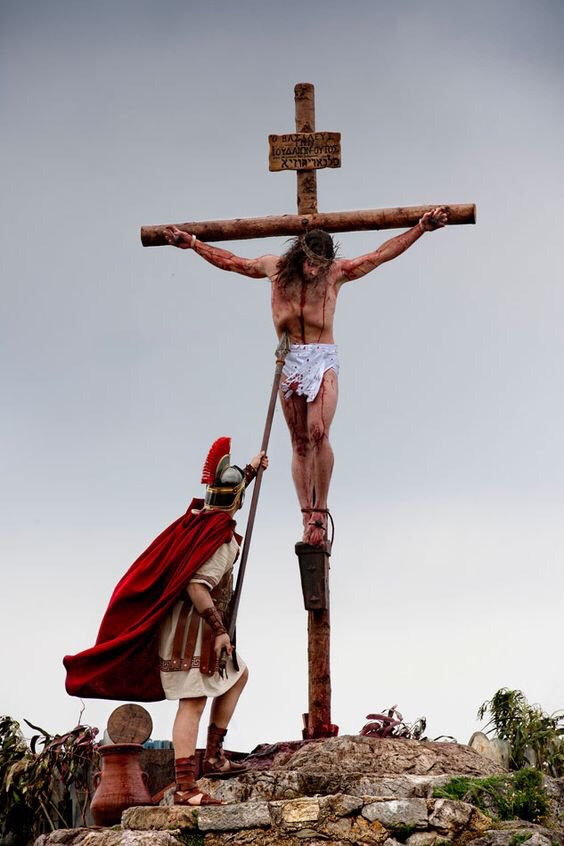
Did God the Father “crush” God the Son, as Jesus was dying on the cross for our sins? The answer to this questions takes on a wild ride, looking a Isaiah 53, the difference between translations, and how the early church read the Bible…. and what we can learn from all of this.
The Historical Context for Isaiah 53
As New Testament scholar Ben Witherington has famously said: “A text without a context is just a pretext for whatever you want it to mean.”
It is absolutely crucial to understand the context for Isaiah 53, and unfortunately, many Christians seem to miss this. Isaiah is describing a time when the nation of Israel will be allowed to return from exile. Years earlier, the cultural elite of what remained of the Israelites had been forcibly marched across the fertile crescent to Babylon, spending some seventy years in an area what we now know as part of modern day Iraq. The Babylonians in 587 BCE had successfully defeated the southern kingdom of Judah, destroying the Temple built by Solomon, and flattening the walls of Jerusalem, ruining the city.
The nations around Judah had mocked the survivors of this exile to Babylon. As onlookers to the demise of Judah, primarily “kings” of surrounding Gentile nations, they had concluded that the God of Israel had failed these people, and that these people had failed Yahweh, their God. Those from Judah had brought so much displeasure to their God that this God had sent these people off to Babylon to be punished for their sins.
These survivors who were marched off to Babylon had become the “Suffering Servant” as described in Isaiah 53. To the onlookers (or what some scholars simply describe as “the crowd“), the sad plight of these survivors proved that the God of Israel was powerless to save these people….. or perhaps even worse, that the God of Israel just gave up on his covenant people, abandoning them to their fate in the hands of the Babylonians.
Nevertheless, a radical turn of events was being prophesied to take place. Now those Jews who were living in exile in Babylon, as the Suffering Servant, according to this prophecy of Isaiah, were to be given permission to return to their land, to restore their nation. This Suffering Servant was being given hope that God had not abandoned his people, contrary to what the onlookers (or “the crowd”) were claiming.
The exile was not a permanent situation, according to Isaiah. The Suffering Servant would be vindicated. While the onlookers had claimed that God had “crushed” his people, this was not the full story. It may have appeared that God had “crushed” the Suffering Servant. But instead, good news was at hand.
What really was going on was that God was taking his people through this time of great trial in order to give the land, back in Israel, a time for renewal and restoration. In this sense, a kind of cleansing and healing was happening back in the land while the people were off in Babylon living under exile. The prophet Isaiah was effectively announcing that the onlookers, who had mocked the Jews over their misfortune, were the ones in the wrong. Now, God was on the verge of returning the people from this exile so that they could dwell back in a fully cleansed and healed land.
This theme of exile and restoration, as portrayed by Isaiah 53, was picked up in numerous places in the New Testament. In this sense, the Suffering Servant of the 6th century BCE was typologically pointing towards the coming of the Messiah. The Messiah would be the true Suffering Servant, who would ultimately defeat the powers of sin, evil, and death. Christians know this Messiah to be Jesus, the one who died on the cross for our sins.
The Masoretic (Hebrew) Versus the Septuagint (Greek) Readings of Isaiah 53
With this context in mind, it can frame for us a better way of reading Isaiah 53, to account for why the Masoretic and Septuagint versions differ so sharply. Essentially, in Isaiah 53, we have a dialogue going on, shifting back and forth between the mockery of the onlookers versus the prophet Isaiah speaking on behalf of Yahweh, the God of Israel.
We have evidence for this starting back in Isaiah 52:13-15 (ESV):
Behold, my servant shall act wisely;
he shall be high and lifted up, and shall be exalted.
As many were astonished at you—
his appearance was so marred, beyond human semblance,
and his form beyond that of the children of mankind—
so shall he sprinkle many nations.
Kings shall shut their mouths because of him,
for that which has not been told them they see,
and that which they have not heard they understand.
Here the prophet Isaiah tells us of the perspective of Yahweh, the God of Israel. These neighboring “Kings” of other nations were “astonished” by the humiliation of the “servant.” Nevertheless, these “Kings,” these onlookers, see things “for that which has not been told.” They have supposedly understood things “which they have not heard.” In other words, these onlookers have been mocking the Suffering Servant, saying things about the servant which were not true. So, it is God’s intent to “shut their mouths” because of what God will eventually do with the Suffering Servant. The purpose of Isaiah 53 is to lay out what the onlookers mockingly say about the Suffering Servant and contrast that with what God through the prophet Isaiah is really saying about that servant.
In other words, the big takeaway from Isaiah 53 is that it is not a monologue coming from the mouth of the prophet. Instead, it is a dialogue between the prophet Isaiah and those onlookers who are mocking Isaiah and the God he worships.
However, what makes translating and interpreting Isaiah 53 so difficult is that there are no obvious markers to show where the onlookers were speaking versus where the prophet was speaking on behalf of Yahweh. In ancient Hebrew, there are no quotation marks like what we have in English which designate when and where a speaker changes in a dialogue. We only have the literary context to go on in order to figure out when, where, and who is speaking. As a result, different scholars have tried to reconstruct this dialogue, but there is no clear established consensus as to what this exactly looks like.
Reconstructing the Dialogue in Isaiah 53
One possible reconstruction looks like this: Isaiah 53:10 in the Masoretic version, at least in the first part of the verse, gives us a portion of the dialogue from the perspective of the onlookers:
Yet it was the will of the Lord to crush him;
he has put him to grief (ESV)
Essentially, the onlookers understand the people of Israel to be the “servant,” and they mockingly say: “Look at those pitiful people. Even the God they supposedly worship is punishing them.” However, the prophet wishes to say that these onlookers were in the wrong, It may have appeared that God was actively “crushing” the Suffering Servant. But the reality was not the case. In the next verse, the dialogue shifts back over to the prophet speaking on behalf of Yahweh, correcting the “fake news” being spread by the ill-informed onlookers:
Out of the anguish of his soul he shall see and be satisfied;
by his knowledge shall the righteous one, my servant,
make many to be accounted righteous,
and he shall bear their iniquities. (Isaiah 53:11 ESV)
Here in verse 11, the suffering of the Suffering Servant will be vindicated. We can see how this theme resonates with the New Testament, as Jesus, who is called “my servant” in verse 11, will “make many to be accounted righteous” through Christ’s work on the cross where “he shall bear their iniquities.”
That word for “crush” shows up again earlier in Isaiah 53, which suggests that the onlookers had made an earlier comment, mocking Israel as the Suffering Servant. We can see this starting midway in verse 4 through the middle of verse 5:
(verse 4b) yet we esteemed him stricken,
smitten by God, and afflicted.
(verse 5) But he was pierced for our transgressions;
he was crushed for our iniquities (Isaiah 53:4b-5 ESV)
Not only were onlookers mocking the Suffering Servant as being “crushed” by God, the passage begins by the onlookers judging that the Suffering Servant had been “smitten by God, and afflicted.” In other words, the onlookers believed that God had forsaken and forgotten Israel, sending the people off into exile into Babylon.
Some scholars then suggest in verse 5 that the mention of “crushed” is actually the prophet’s way of mocking the onlookers as a rebuttal. In this reconstruction of the dialogue, the prophet’s response to the mocking of the onlookers begins in verse 5 and extends through verse 6:
(Verse 5) But he was pierced for our transgressions;
he was “crushed” for our iniquities;
upon him was the chastisement that brought us peace,
and with his wounds we are healed.
(Verse 6) All we like sheep have gone astray;
we have turned—every one—to his own way;
and the Lord has laid on him
the iniquity of us all (Isaiah 53:5-6 ESV, quotes added)
Putting the “crushed” in quotes indicates that the prophet is mocking the speech of the onlookers; thereby, Isaiah is mocking their mockery! Again, remember, the original Hebrew text has no quotation marks. We must rely on the context to figure out what is going on.
Instead, the prophet is saying that this chastisement of the Babylonian exile turns out not to be what the onlookers think it was. Instead of it being God judging the Suffering Servant as hopelessly lost and ultimately deserving of punishment, the suffering of Israel was meant to bring about healing. The vindication of Israel was now at hand, showing that God had not forgotten the Hebrew people.
Bringing this into the New Testament context about the work of Christ on the cross, we see how the “wounds” of Christ on the cross were meant for good, in that “we are healed.” Those who have “gone astray,” which would include “every one,” were now given the opportunity to have their sins taken away from them, which fits in perfectly with the New Testament idea that Christ died for our sins.
Scholars still debate as to the best way to reconstruct this dialogue between the onlookers and the prophet, considering the ambiguity of the original Hebrew, where we have no obvious signals to help us. Yet hopefully you can get the idea that a flat reading of Isaiah 53, as being 100 percent voiced by the prophet, without any voice from skeptical onlookers, simply does not work well in a coherent fashion. These short snippets of Isaiah 53 demonstrate that we need to be careful with how we read the Old Testament, before trying to figure out how this famous chapter of the Bible fits in with the New Testament.
What then do we do with the differences found in the Septuagint version of Isaiah 53? The differences are not trivial. The fact that the earliest Christians defaulted to the Septuagint, and not the Masoretic reading, raises a number of questions which need to be addressed. Granted, in a few cases the writers of the New Testament did prioritize the Hebrew over the Greek translation of an Old Testament passage, but not here in Isaiah 53. With only one exception (noted below), the Greek Septuagint translation of Isaiah 53 is consistently referenced throughout the entire New Testament.
Scholars of the Septuagint do wrestle with this, but one thing to consider is that the translators of the Septuagint probably understood well the difficulty of translating Isaiah 53. How were these ancient translators to bring the Hebrew thought over into the Greek language, and still have it make sense to Greek speakers in the ancient world?
One proposition that I find convincing is that the Septuagint translators thought it to be too confusing to try to reconstruct a sophisticated Hebrew dialogue into a Greek text. Instead, they sought to preserve the meaning of original Hebrew by flattening out the whole dialogue. Instead, the translators make Isaiah 53 to sound like the singular speech of the prophet, thus making it easier to understand for the Greek reader.
Reconciling the Different Voices in Isaiah 53: Masoretic vs. Septuagint Texts
At the risk of getting too lost in the weeds, compare what the Masoretic text version of Isaiah 53 says, versus below that, what the Septuagint version says. Focus on the highlighted portions. The Septuagint version is from the NKJV translation of the Old Testament found in the Orthodox Study Bible, used by Eastern Orthodox Christians. Let us start with the Hebrew version; that is, the Masoretic text.
Here is the Masoretic version:
(1) Who has believed what he has heard from us?
And to whom has the arm of the Lord been revealed?
(2) For he grew up before him like a young plant,
and like a root out of dry ground;
he had no form or majesty that we should look at him,
and no beauty that we should desire him.
(3) He was despised and rejected by men,
a man of sorrows and acquainted with grief;
and as one from whom men hide their faces
he was despised, and we esteemed him not.
(4) Surely he has borne our griefs
and carried our sorrows;
yet we esteemed him stricken,
smitten by God, and afflicted.
(5) But he was pierced for our transgressions;
he was crushed for our iniquities;
upon him was the chastisement that brought us peace,
and with his wounds we are healed.
(6) All we like sheep have gone astray;
we have turned—every one—to his own way;
and the Lord has laid on him
the iniquity of us all.
(7) He was oppressed, and he was afflicted,
yet he opened not his mouth;
like a lamb that is led to the slaughter,
and like a sheep that before its shearers is silent,
so he opened not his mouth.
(8) By oppression and judgment he was taken away;
and as for his generation, who considered
that he was cut off out of the land of the living,
stricken for the transgression of my people?
(9) And they made his grave with the wicked
and with a rich man in his death,
although he had done no violence,
and there was no deceit in his mouth.
(10) Yet it was the will of the Lord to crush him;
he has put him to grief;
when his soul makes an offering for guilt,
he shall see his offspring; he shall prolong his days;
the will of the Lord shall prosper in his hand.
(11) Out of the anguish of his soul he shall see and be satisfied;
by his knowledge shall the righteous one, my servant,
make many to be accounted righteous,
and he shall bear their iniquities.
(12) Therefore I will divide him a portion with the many,
and he shall divide the spoil with the strong,
because he poured out his soul to death
and was numbered with the transgressors;
yet he bore the sin of many,
and makes intercession for the transgressors.
Notice how difficult it is to track where the dialogue transitions from one speaker to another. The pronouns themselves keep moving around so much, it can be terribly confusing to figure out what is really going on. Contrast that with the Septuagint version, translated into English, with the style of the NKJV. Highlighted are the main differences you can find in the Septuagint versus the Masoretic version above:
(1) O Lord, who has believed our report,
and to whom was the arm of the Lord revealed?
(2) We proclaimed His presence as a Child,
as a Root in a thirsty land.
He had no form or glory, and we saw Him;
and He had no form or beauty.
(3) But in comparison to all men, His form was lacking in honor.
He was a man in suffering and knew how to bear sickness.
His face was turned away,
and He was dishonored and not esteemed.
(4) He bears our sins and suffers for us,
yet we considered Him to be in pain, suffering, and ill-treatment.
(5) But He was wounded because of our lawlessness,
and became sick because of our sins.
The chastisement of our peace was upon Him,
and by His bruise we are healed.
(6) All we like sheep have gone astray.
Man has gone astray in his way,
and the Lord delivered Him over for our sins.
(7) Although He was ill-treated,
He opened not His mouth.
He was led as a sheep to the slaughter,
and as a lamb is silent before his shearers, so He opens not His mouth.
(8) In His humiliation His judgment was taken away,
and who will declare His generation?
For His life is taken from the earth,
and because of the lawlessness of My people He was led to death.
(9) I will appoint evil men for His burial
and rich men for His death,
because He committed no lawlessness,
nor was deceit found in His mouth.
(10) The Lord wishes to cleanse Him of His wound,
and if You give an offering for sin,
Your soul shall see a long-lived seed.
(11) The Lord wishes to take away the pain of His soul,
to show Him light, to form Him with understanding,
and to pronounce righteous the Righteous One who serves many well;
and He shall bear their sins.
(12) Therefore He shall inherit many,
and will divide the spoil with the strong,
because His soul was delivered over to death.
He was considered among the lawless,
and He bore the sins of many,
and was delivered over because of their sins.
Notice how the Septuagint changes the meaning of what the onlookers say to reflect what the prophet Isaiah wishes us to understand. By doing this, the Septuagint translators are preserving the meaning of the entire passage, to fit within the singular speech of the prophet, assisting the reader by simplifying the text for the sake of a better understanding.
Making Sense of These Different Voices
Take one more look at verse 5: Some scholars look at verse 5, in the Masoretic text, and see that the first half of the verse ends with “he was crushed for our iniquities,” referring to the mocking perspective of the onlookers, which is then followed by the response of God through the voice of the prophet: “upon him was the chastisement that brought us peace, and with his wounds we are healed,” which serves as a rebuke to the cynical onlookers.
Yet in the Septuagint version of verse 5, we read: ”
But He was wounded because of our lawlessness,
and became sick because of our sins.
The chastisement of our peace was upon Him,
and by His bruise we are healed.
Again, with the Septuagint, we see a big shift. The Masoretic has that the Suffering Servant was “crushed for our iniquities” whereas the Septuagint has that he became “sick because of our sins.”
To be “crushed” and to be “sick” convey different senses of meaning. With the Masoretic version, there is the sense of receiving punishment from God, due to our sins. Yet the latter, as with the Septuagint translation, takes the edge off of the Suffering Servant’s plight to that of being “sick,” which lacks that sense of direct punishment from God. To say that our sins made the Suffering Servant “sick” is quite a different message from being “crushed” by God due to our sins.
The New Testament explicitly quotes from Isaiah 53 seven times, and alludes to Isaiah 53 approximately 34 more times. The late British evangelist/scholar John R. W. Stott cites an older scholar, Joachim Jeremias as saying: “No other passage from the Old Testament, was as important to the church as Isaiah 53” (Stott, John, The Cross of Christ, IVP:1986, p.145)
It bears noting that we have no New Testament author, except in one instance, who follows any reading of Isaiah 53 from the Masoretic version. Aside from this one instance, every reading of Isaiah 53 in the New Testament recalls the Septuagint version.
That one exception is Matthew 8:17:
This was to fulfill what was spoken by the prophet Isaiah: “He took our illnesses and bore our diseases.”
This is where Matthew records Jesus as healing a number of sick people who were brought to him (Matthew 8:16), where Matthew cites the Masoretic text of Isaiah 53:4. That same Isaiah 53:4 passage in the Septuagint reads: “He bears our sins and suffers for us.”
Yet notice the context for Matthew here, which is not the same as the crucifixion of Jesus. This is a reference to Jesus healing, as opposed to bearing any type of punishment often associated with the cross.
At best, one might conclude that the Septuagint translators still preserve both voices, namely that of the onlookers and the prophet, but that in their translation the onlookers are no longer mocking the Suffering Servant. Instead, they have now repented of their mockery and have aligned their thoughts with that of the prophet.
Look at verse 4b, first from the Masoretic:
yet we esteemed him stricken,
smitten by God, and afflicted.
Now from the Septuagint:
yet we considered Him to be in pain, suffering, and ill-treatment.
In the Masoretic version, the onlookers accused God of afflicting judgment upon the Suffering Servant. In contrast, the Septuagint leaves God out of it, simply acknowledging plight of the Suffering Servant. If in the Septuagint, both voices are preserved, then the “we” moves from representing the mocking onlookers, to the “we” of the onlookers now in the state of repentance, for now they no longer accuse God of rejecting the Suffering Servant as being deserving of such a terrible plight.
However, if in the Septuagint, only one voice is preserved, namely that of the prophet, the “we” in the Masoretic is still that of mocking onlookers, but the “we” in the Septuagint is now the prophet and Yahweh; that is, God, whom the prophet is representing. While the exact state of the voice or voices is not completely clear in the Septuagint of Isaiah 53, the messaging in the Septuagint is more streamlined and consistent: God did not punish the Suffering Servant, but rather the Suffering Servant was punished by the enemies of God. In the end, the Suffering Servant will be vindicated, thereby silencing the mocking onlookers; that is,
“Kings shall shut their mouths because of him“
explicitly made clear in the chapter prior to Isaiah 53 (Isaiah 52:15).
I can concede that coming up with an exact reconstruction as to what the Greek translators of the Septuagint were trying to do is not easy. But we need not conclude with a pessimistic cynicism. Critics today on either side of the translation question may conclude that the Masoretic and Septuagint versions are in hopeless contradiction with one another. But when seen in the context of trying to parse through the debate of where and when the speaker changes in this passage, the contradiction evaporates.
Some even say that the Septuagint translators were rather sloppy, making them prone to mistakes, when actually, they were highly skilled in what they were doing. Others may say that the Jews of the early Masoretic textual tradition deliberately changed; that is, corrupted, Old Testament passages, such as the text of Isaiah 53, in order to rule out the Christian reading favored by the Greek readers of the Hebrew Bible, despite the fact that we have no evidence these early Masoretic Jews did such a thing. Neither of these cynical judgments about the difficulties of Isaiah 53 have any weight when considered in the light of this proposition, which I find convincing, even if some of the more specific details about where, when, and who are left unresolved.
Another Way to Sing “Jesus, Thank You”
Unfortunately, a lot of Christians, both lay persons and scholars alike, miss this careful and nuanced understanding of how Isaiah 53 works in terms of its literary flow and construction. This explains why we have worship songs like Pat Szcebel’s “Jesus, Thank You,” which leave us with lines like:
You the perfect Holy One, crushed Your Son
Who drank the bitter cup reserved for me
Can you work it out to make these lines fit together with what is really going on in Isaiah 53 as you sing it? Yes, you can. But it does take some reflective and deep dive bible study to flesh out what is happening in the text of Scripture.
In fairness, verse 2 of “Jesus, Thank You,” is much less problematic than the first verse. This verse rehearses the theme of Jesus, the Son of God, as the Suffering Servant, and it ties in well with a more robust theology of what happened on the Cross at Calvary.
By Your perfect sacrifice I’ve been brought near
Your enemy You’ve made Your friend
Pouring out the riches of Your glorious grace
Your mercy and Your kindness know no end
We, who were once enemies due to our sin, have been made friends of God, by Jesus’ sacrificial act upon the Cross. Because of the corruption of sin in the human heart, it is quite normal to think of ourselves as “enemies” of God. Like the onlookers of the surrounding Gentile nations who mocked the Jewish people and their God, it was at first understandable that the people who were marched off from Jerusalem to Babylon during the Exile had become “enemies” of Yahweh, their God. The destruction of Solomon’s Temple and the fall of Jerusalem would have signaled to those Gentile nations that something had gone terribly wrong with these Hebrew people, and their God.
But Isaiah was given a prophetic understanding which undid all of that mockery. These despised and afflicted people would soon find restoration. They would be able to leave Babylon and go back and rebuild their holy city with its Temple. They would no longer be regarded as “enemies” of God, but rather as “friends.”
Isaiah turned out be right. The refugees who were marched off to go to Babylon were vindicated. The stories in Ezra and Nehemiah show that God had indeed orchestrated events such that the people did return to the land, rebuilding their Temple.
But the story is not simply about the Babylonian Exile and the restoration of the Jewish homeland. For one thing, a lot of Jews during the Second Temple period did not feel like they had fully returned from Exile. Living under Roman rule did feel like the full restoration Isaiah had promised.
However, this was God’s plan all along, to give the Jews who heard Jesus’ preaching a hunger and a hope for an even greater Restoration. What Isaiah had prophesied prefigured an even greater story which has changed all of human history: the coming of the Messiah, Jesus, as the Suffering Servant, who would take away the sins of the whole world.
Typologically speaking, if you substitute in for the exiled Jewish people the peoples of all of the world, both Jew and Gentile, a picture of the Gospel emerges. Those who once appeared to be estranged from God, resulting from their sin, have now been brought back to God as friends, reconciled to God through the work of the new Suffering Servant, Jesus the Messiah.
Now, that is a song I can sing whole-heartedly!!
Just a word of warning: Trying to spell out all of how the mechanics work can get us into trouble. The big picture is what ultimately matters. It is sufficient to celebrate this as a glorious mystery.
Challenges to Reading Isaiah 53 as a Shifting Dialogue
Some might still not be convinced: The drawback to my position, in accepting the proposition of a dialogue in the Masoretic text between the mocking onlookers and the prophet speaking on behalf of God, is that there is no consensus view among scholars as to the exact places where and how the dialogue transitions from one speaker to another.
But we find some early church fathers adopting, to some measure, a variation of a type of dialogue taking place in Isaiah 53, even if that dialogue does not match up directly with the position I am advocating for. For example, early church teachers, such as Origen and Eusebius of Caesarea, picked up on the concept of shifting voices in Isaiah 53, without clearly identifying the perspectives of these various voices.
Since there were Christians in the early days of the Christian movement, who were trying to figure out how the Hebrew and Greek versions of Psalm 53 fit together, then the proposal which I am offering here is hardly “new.”
The other views, which suppose that either words have changed their meaning over time somehow, or that the language of “to crush” is more figurative in Isaiah 53, or that Isaiah 53 is concerned about God’s ultimate sovereignty as opposed to naming intermediate causes, are still possible but they are more speculative. Furthermore, because these other views do not consider the complexities of the Septuagint, they come across as more innovative across the long history of Christian thinking. Plus, these other views invite more skepticism among critics who are offended by the language of God “crushing” anyone. Why would God “crush” anyone he truly loves?
I have read where many fine evangelical scholars get fooled by the idea that God actively “crushed” Jesus, as in God punishing Jesus, simply because they have never grasped the plausibility of the “dialogue” view which I find convincing. These scholars may think that God the Father “crushed” Jesus, who was and is God’s Son, in the negative sense of God the Father unleashing the full extent of his anger against the innocent, kind, and more merciful Son.
In doing so, such scholars may conclude that God was somehow “punishing” Jesus, or that God “killed” Jesus. In a sense, Jesus as the passive Son of God was simply in the position of being a human “punching bag” which the Father could vent out all of his anger on, as opposed to punishing us truly sinful humans.
However, appearances can be deceiving, as the onlookers soon realized, according to Isaiah. For to conclude with such a negative reading of a God who “crushed [His] Son,” this can lead Christians into a theological quagmire, implying that God the Father and God the Son were somehow at odds with one another, acting with cross-purposes (forgive the pun!) at the Cross of Jesus. If someone comes to that conclusion, this effectively divides the persons of the Godhead from one another, severing the unity of God found in the orthodox doctrine of the Trinity. Yet the doctrine of the Trinity was articulated so beautifully and well at the Council of Nicaea, and it remains the standard for historic orthodox Christianity.
To attack the integrity of the Trinity is not a good idea…. and not a very appealing view of God’s character either.
Instead, what appears to be the act of God “crushing” the Son gets turned around. Our sin which crushes us gets crushed, and we get reconciled to God in the process.
Now, that kind of twist to the story is pretty cool!! What an awesome God we find in Jesus!!
(See my Veracity review of John R.W. Stott’s marvelous The Cross of Christ to get a better handle on this)
A Better Way to Read Isaiah 53, Understand the Meaning of Christ’s Death, and How the Early Church Read the Bible
For me, making the best sense of Isaiah 53:10, and how the New Testament writers saw Isaiah 53 as one of key Old Testament texts to unlock the meaning of Christ’s death for our sins, is to say something like this: God, the Father, in his sovereignty, according to his divine will, has always wanted the human creatures he created to be reconciled to him, and brought into fellowship with God. To do so, God had to deal with the problem of sin, to cleanse us from our sin, and therefore he was “pleased” that such a way could be found to do that through the sacrificial death of God the Son. Furthermore, the intentions of God the Son were in perfect harmony with the intentions of the Father.
The mocking onlookers claimed that Yahweh had “crushed” the Suffering Servant, implying typologically that God the Father “crushed” Jesus. But this perspective is wrong. Far from indicating that the mission of Jesus was a failure, as evidenced by the death of Christ on the cross, the crucifixion followed by the resurrection demonstrated that Jesus had victoriously conquered sin, death, evil, and the devil, in one fell swoop.
At first glance, it would appear that the Father was “crushing” the Son. But there is more to the story. Instead, God was effectively “cleansing” us from our sins, through the death of Jesus on the cross. The Father took no pleasure in seeing that the Son was crushed, in and of itself, but rather, was pleased instead with the outcome which resulted; that is, that sins would be forgiven and humanity reconciled to God, for all those who would cling to the Son. It was in this that God was satisfied: those who would believe in this Messiah would be reconciled to God, instead of receiving the just punishment they would have otherwise deserved..
God’s satisfaction in securing our salvation through Jesus’ death on the cross has been guaranteed. Satisfaction guaranteed.
There you have it. A line from a popular worship song leads us to grapple with how the earliest Christians incorporated the Greek translation of the Old Testament into their thinking, as they thought through the meaning of the death of Christ. Granted, this is all a little messy. But once you see what is really going on in Isaiah 53, it becomes difficult to un-see it. This is what can make a deep dive into the study of Scripture so fascinating and rewarding.
I would love to read about your thoughts here in the comments.




September 25th, 2026 at 6:31 pm
[…] on a misreading of both Isaiah 53:6 (see note 15 below) and Isaiah 53:10 (Grudem, p. 577) , which I address in a previous Veracity blog post (see notes 17 and 18 […]
LikeLike