
From the Christianity along the Rhine blog series… probably the last installment…
Back in October, 2025, my wife and I took a Viking longboat cruise ship down the Rhine River, starting in Basel, Switzerland, an experience that easily scratched my church history itch. But before we arrived in Basel, we stayed for two nights in Zurich, Switzerland, which is the setting for this story, where the legacy of Carl Jung began to permeate the modern world. I thought I would end this travelogue series with one more look back at Zurich….
While in Zurich, we took a boat trip around Lake Zurich. There we saw the home of Carl Jung on the shore of the lake, the main subject of this story, and a central character in a book I read prior to arriving in Zurich….
The combined influence of Sigmund Freud and Carl Jung has shaped the modern world in many ways.
The relationship between Sigmund Freud, the father of modern psychoanalysis, and the younger Carl Jung, who adapted Freud’s psychoanalytic theory, is the focus of John Kerr’s A Dangerous Method, which was later adapted into a 2011 film of the same name, by director David Cronenberg. Both Freud and Jung were born in the 19th century, as multiple disciplines of science were being established in the Western world. Freud, an Austrian Jew, and Jung, a Swiss son of a Protestant pastor, independently entered into the developing field of psychiatry, in an effort to find a scientific way to understand the human mind, in hopes of analyzing and curing mental illness.
Freud spent most of his career in Vienna, Austria, whereas Jung practiced his profession in Zurich, Switzerland. The two eventually met and became friends, whereby Freud began to view Jung as his intellectual son, who could carry the psychoanalytic movement forward….
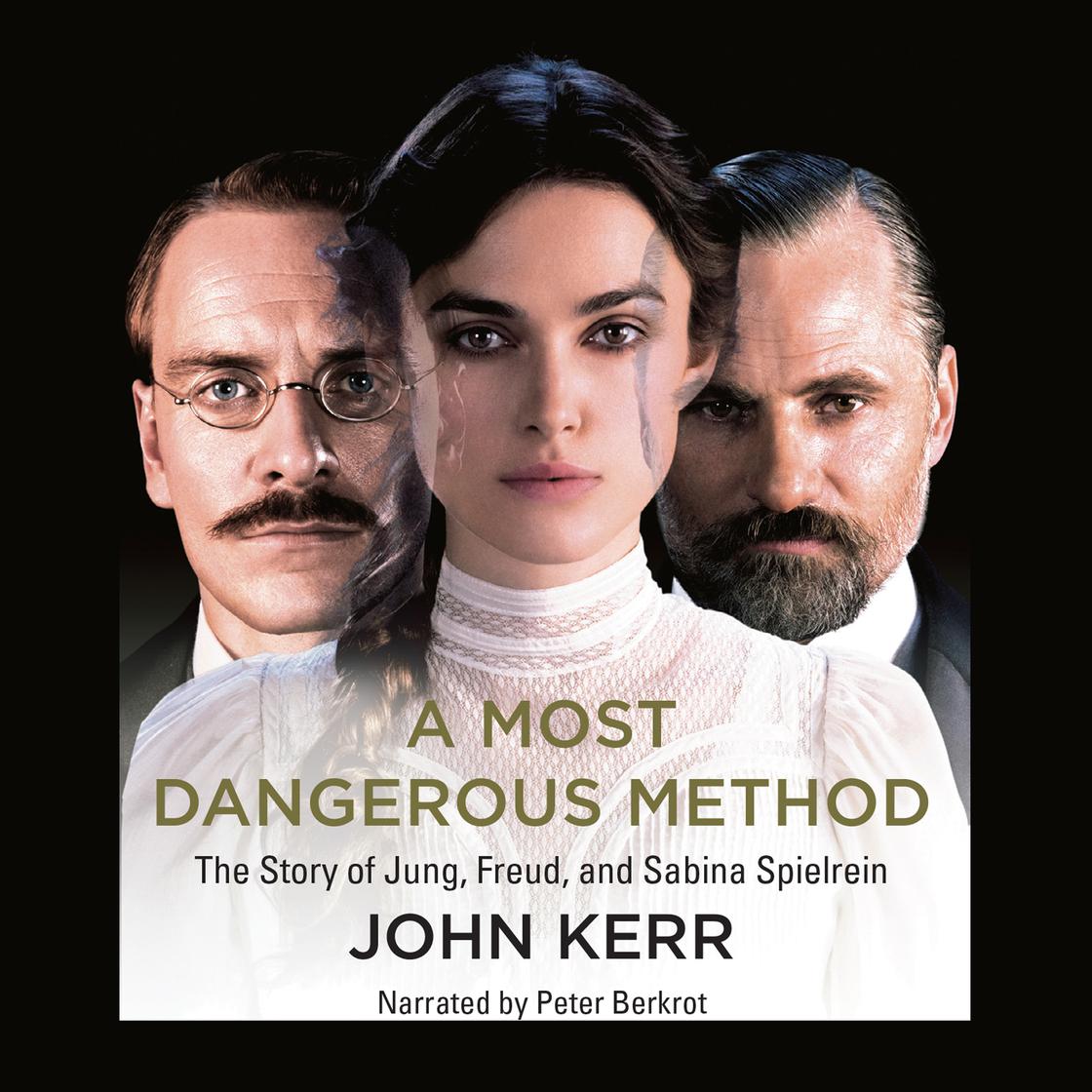
A Most Dangerous Method: The Story of Jung, Freud, and Sabina Spielrein, by John Kerr, was written in 1994. A 2011 movie was made about the book.
A Most Dangerous Method: A Short Review of the Book
What makes Kerr’s history in A Most Dangerous Method: The Story of Jung, Freud, and Sabina Spielrein so intriguing is the introduction of a third character, a young Jewish Russian woman, Sabina Spielrien, who was a psychiatric patient of Jung’s in Zurich. Spielrein would eventually become one of the first female psychoanalysts herself, until she and her two daughters were murdered by the Nazis during World War II in Russia.
Yet as a young patient of Jung’s in his Zurich clinic, she began to have an infatuation with her Swiss psychiatrist, and the two had some kind of affair. Kerr is cautious in not definitively concluding that the affair was sexual, offering instead to say that Spielrein and Jung shared “poetry” together. The film version of the book is not so cautious, and openly portrays the affair as sexual. I could have done without that gratuitious aspect of modern filmmaking.
Either way, for Kerr the character of Spielrein brings into the relationship between Freud and Jung a special dynamic which also explains how these two intellectual giants of the early 20th century eventually parted ways and dissolved their friendship. Though culturally a Jew, Freud took his psychoanalytic theory in a more materialistic and atheistic direction, whereas Jung sought to combine psychoanalytic theory with his own understanding of Christianity.
According to Kerr, what eventually drove Freud and Jung apart was their efforts to psychoanalyze the other, as each man knew of a hidden flaw in the other, which made for a barrier which could not be breached. Freud was having an affair with his wife’s sister, which Jung knew about, whereas Spielrein as an up-and-coming psychiatrist began to consult Freud after Jung severed the affair with Spielrein.
However, it was not the sexual insecurities and histories of both Freud and Jung which alone drove the two apart. It was also the religious backgrounds of each, Freud’s Jewish heritage and Jung’s Christian heritage. Thirdly, it included the very real intellectual differences between the two men, particularly in how each viewed the essential features of psychoanalytic theory and method. The combination of all three tensions: the sexual, the religious, and the intellectual, doomed their friendship and collaboration. In the discipline of psychology, both Freud and Jung were schismatic, both thinking of the other as a heretic. So much for the idea that psychoanalysis was a science that could rise above such differences.
The contribution of Spielrein to the development of psychoanalysis was rarely noticed by anyone until some of her papers were discovered in the 1970s. But the influence of both Freud and Jung in the modern world can not be ignored. Freud pioneered the practice of using free association as a means of diagnosing mental health issues. Freud pursued efforts at dream interpretation in order to reveal repressed memories. He also developed a theory of the human pysche made up of the id, ego, and the super-ego, whereby the life drive, the libido, was in continual conflict with the death instinct.

Carl G. Jung’s last residence, on Lake Zurich in Switzerland. Jung’s home is now a museum. I did not get a chance to visit the museum, but on a boat trip around Lake Zurich, I I took this snapshot of Jung’s home, when my wife and I visited Zurich in October, 2025.
The Enduring Influence of Sigmund Freud, and Even More So, Carl Jung in Psychotherapy
Jung for his part popularized the concept of the archetype, the anima and the animus, and synchronicity. We also get the popular idea of personality types, the extrovert and the introvert, from Carl Jung. Hardly a day or two goes by where someone I converse with does not use terms like “ego,” “introvert,” or “extrovert” to either describe themselves or someone else they know. We live in the shadow of a world created by Freud and Jung.
For Kerr, Spielrein played an essential role, prompting both Freud and Jung to consider new ideas in the development of each thinker’s particular approach to psychoanalysis. Spielrein is also noted for having psychoanalyzed the great child psychologist, Jean Piaget.
Yet despite the positive contributions that Freud, Jung, and now, apparently Spielrein, have made to psychiatric theory and practice, the sticking point for Christians today is how such ideas have been extended beyond psychology into the realm of how we think about God in an increasingly secularized world. Confidence in the Bible as God’s revelation has been superseded in the development of the psychoanalytic movement: God is less a real person to have a relationship with and more a concept in which to interpret the inner workings of the mind. Freud had an apparently antagonistic view of Christianity, whereas Jung sought to reconceptualize Christianity, or at best in trying to reinvigorate interest in Christianity, by laying aside questions of history and focusing on the concept of myth, looking at the stories of the Bible as a lens by which we can better understand the human psyche.
The Jordan Peterson Phenomenon: Jungian Psychology for a 21st Century Audience
Here in the early 21st century, the influence of Freud has been eclipsed by the influence of Jung. We often hear people talk about things like “Freudian slips,” but Freud’s outlook on mental health today has been largely superseded by the insights of his Zurich younger counterpart. That influence has been felt even within the Christian church.
The most popular proponent of a Jungian interest in Christianity is none other than Jordan Peterson, the Canadian psychiatrist, who is widely influential on YouTube and the DailyWire. Jordan Peterson considers himself not to be a “typical Christian;” that is, he is not committed to anything which might be defined as historically orthodox, but neither would he embrace atheism.
Peterson’s influence on YouTube is staggering, as his lectures on the Bible have been viewed by millions of people. Many have appealed to these lectures as encouraging them to reconsider Christianity again and go find a church (Sadly, Jordan Peterson has been beset with a series of health problems, with a set of issues that took him out of North America to find treatment in 2020, and most recently, another serious health decline since the latter half of 2025, due to being diagnosed with chronic inflammatory response syndrome).
Jordan Peterson is clearly a disciple of Carl Jung. He has used his insights gained from Jungian psychology to examine the problem of what makes a normal person commit horrific acts of evil, among a variety of other things. Peterson combines his interest in the work of Carl Jung with Russian authors, like Fyodor Dostoevsky, to reinvigorate an interest in Christian spirituality. The “Rise of Jordan Peterson,” a phenomenon which prompted the title to documentary about Peterson, stands in contrast with the pessimism towards Christianity promoted by the New Atheism movement of the early 21st century. In a world that seems to be growing in its skepticism of Christianity in general, it is a relief to know that Jordan Peterson’s friendly interest in Christianity is sparking fruitful conversations about the faith.
Nevertheless, there is quite a bit of skepticism among historically orthodox Christians that such psychoanalytic efforts to rethink Christian theology will ultimately amount to much, despite the best of intentions by the proponents who offer it. After myself having read books by those like John Sanford and Morton Kelsey, who have sought to integrate Jungian thought and Christianity, the project seems to lead to nowhere, despite the lure of tantalizing insights into the human psyche.
I know of Christians who have benefited from various psychological insights from Jung’s work. But while I would not want to disparage such interests, some caution is in order. The famous Myers-Briggs Type Indicator test, which divides the human psyche along four axes: Introvert versus Extrovert, Thinking versus Feeling, Intuitive versus Sensing, and Perceptive versus Judging, is built squarely on the psychoanalytic foundations set forth by Carl Jung (Frankly, in my view, the Myers-Briggs test is not that much different from the Enneagram, but that’s a topic for another blog post).
Nevertheless, as Christian apologist Douglas Groothuis has argued, there is just too much openness to the occult in Jungian thought to lead to real, genuine spiritual healing for those tormented by questions of the soul. I have read enough of Jung’s thoughts on the interpretation of the Bible to know that he is not much of a careful exegete of the Bible. Rather, he interprets many passages of the Bible through his psychoanalytic framework. If you spent much time reading books by Jordan Peterson, or view his YouTube videos, you will get a lot of the same thing.
Like with Jung, Jordan Peterson’s influence on stirring interest in Christianity has been like a two-edged sword. On the one hand, Peterson is great at generating interest in Christianity, and he does have many helpful insights to offer his readers/viewers, particularly for young men. Peterson’s famous book regarding his “12 Rules for Life” does have its spiritual rewards. Even Peterson’s wife, Tammy, returned to the Roman Catholic Church a few years ago. But if you really want to understand the Bible, there are more tried and true ways of interpreting Scripture the Bible without Peterson’s Jungian hermeneutical grid often getting in the way.
Carl Jung via Jordan Peterson as a Gateway to Historic Orthodox Christian Faith?
As the world’s most recognized disciple of Jung today, Jordan Peterson, acts as kind of like a “gateway drug” into Christianity. If that is what it takes to bring someone into the orbit of Christian faith, then that is great. But I find that Peterson’s brand of Jungian psychology only carries you but so far. For those Christians who are overly skeptical about Jordan Peterson’s influence, then you might want to consider the impact Peterson has had on her daughter Mikhaila, who from what I can see from this interview with Canadian Christian apologist, Wes Huff, has also become a Christian, showing a keen interest in knowing more about historic orthodox Christianity. Wes Huff might be the most well-known Christian apologist active on YouTube these days, and his interview with Mikhaila is spot-on in my view.
In preparation for our trip to Europe in 2025, where we visited Zurich, Switzerland, the city where Carl Jung spent most of his professional life, I wanted to learn more about the famed Swiss psychoanalyst, whose influence is still being felt now in the 21st century. John Kerr’s A Dangerous Method sounded like a good title in which to learn more. Unfortunately, I found reading A Dangerous Method to be a mixed bag at best.
While the historical background offered by John Kerr’s A Dangerous Method is of interest, the book itself was for me difficult to get through. It amazed me how well the letters of correspondence involving Freud, Jung, and Spielrein have been preserved to tell the story that Kerr meticulously narrates. However, Kerr assumes that the reader has familiarity with numerous psychoanalytic concepts. I listened to pages and pages of references to “dementia praecox” before I finally had to stop listening to the audiobook to look it up and discover that “dementia praecox” was an early diagnostic term to refer to schizophrenia. It would have been better if Kerr had explained his terminology, instead of assuming too much from his audience.
Stumbling blocks like these made progress through the book into a slog. A book like this will surely interest those who are already invested in the field, but as a psychological “layperson,” I could not wait to finish the book and move onto something else.
Just the other day, a colleague of mine came to my office and asked if I had ever heard of “Jordan Peterson,” as he had recently listened to a podcast where Peterson was speaking. This colleague of mine does not go to church, and he knows that I am a Christian, but there was just something about Peterson’s talk about the Bible that intrigued him. I doubt if my colleague has ever heard the name of Carl Jung before. But apparently he got a dose of Jung’s thought by listening to Jordan Peterson. I pray that having that kind of exposure to Jordan Peterson might yield some fruit and encourage him to consider a full-on look at Christianity itself, not simply as some ideological framework which has arranged the mental furniture of the Western world, but as a joyful, deep, and real encounter with Jesus Christ.




What do you think?