
Crushing the Serpent: Did God Punish Jesus?, written by William L. Hess, a Christian YouTube apologist, has in its blurb on Amazon promoting the book like this: “What really happened at the Cross? Did the Father really forsake His son and ‘turn His back’ as some claim? How could an all-loving God punish someone innocent for the crimes of the world?”
These are good, honest questions. I have had numerous conversations with others, both Christian and non-Christian alike, who wonder about such things.
However, some Christians might take some offense, wondering why a self-professing Christian would ask questions like these: At first glance, a Christian immersed in a Protestant evangelical background might think that Will Hess is a “progressive Christian,” disillusioned with evangelicalism, using his platform on YouTube to deconstruct evangelical Christianity. But first glances can be deceiving. A closer look tells a much different story.
I can not help but think that Will Hess probably had a Stuart Townend song in mind when he wrote this book. “How Deep the Father’s Love for Us,” written some 30 years ago, is sung in countless evangelical churches. My church sings it about once a month. The first verse reads like this:
How deep the Father’s love for us,
How vast beyond all measure,
That He should give His only Son
To make a wretch His treasure.
How great the pain of searing loss –
The Father turns His face away,
As wounds which mar the Chosen One
Bring many sons to glory.
There is one line: “The Father turns His face away” that troubles some people…. including Will Hess. What is that line really talking about?
I wrote a blog post about that line in this song a few months ago on the Veracity blog, so I will not repeat that analysis here. But Will Hess has written an entire book trying to show why the underlying theology, in his estimation, for the line in this worship song is erroneous. It is a provocative claim, and one that needs to be considered and examined. It has to do with a doctrine called “penal substitutionary atonement.”
For Will Hess, there is a Scriptural doctrine of atonement, but the idea of “penal substitution” as connected with atonement is not good news.
It is bad news…. or at best, misleading news.
Here is my summary “hot take” review of the book: Crushing the Serpent: Did God Punish Jesus? is thorough, without being overly technical. It is readable by someone who is not a scholar. Still, it will make you think. It will open you up to considering other perspectives you might have never thought of much before. This book changed my mind on how to read certain passages of Scripture. I am a more careful thinker about the theology of atonement having read this book. However, Crushing the Serpent still has some problems. One particular problem stands out more than all of the others, in that it relies on popular caricatures of evangelical atonement theology as an ideological punching bag, as I will hopefully make clear in this fairly detailed review.
Buckle up, so here we go!
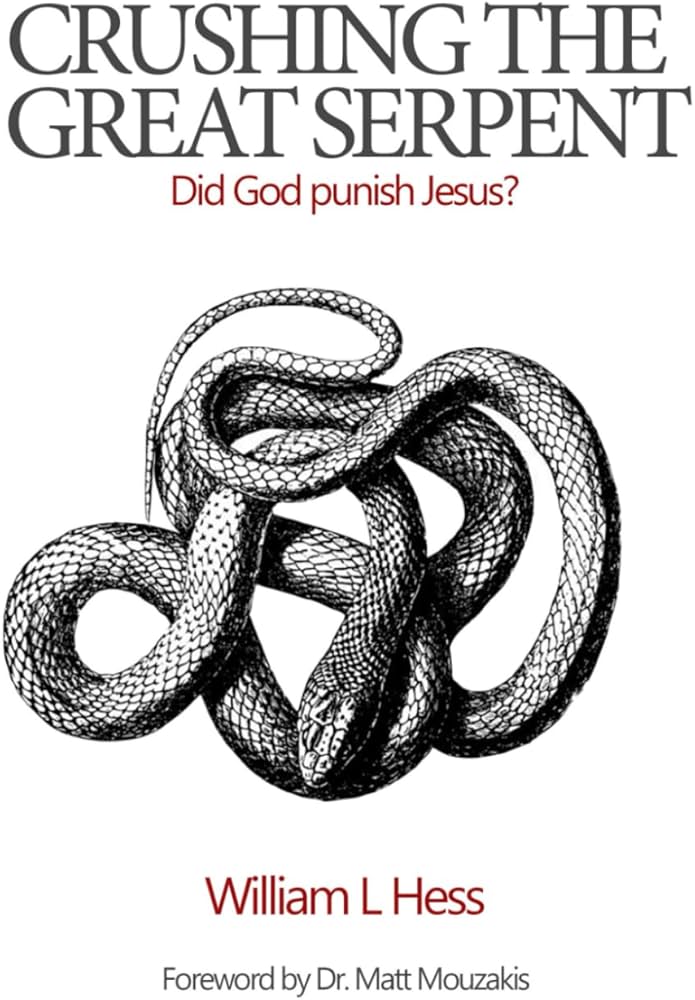
Crushing The Serpent: Did God Punish Jesus?, by William L. Hess challenges the doctrine of penal substitutionary atonement. While Will Hess does a good job in exegeting various texts in Scripture regarding the work of Christ on the Christ, its singular focus bent on undercutting the doctrine of penal substitutionary atonement is weakened by its repetitive reliance on caricatures of that doctrine.
An Overview of Crushing the Serpent… and “Penal Substitutionary Atonement” (or PSA)
Crushing the Serpent offers a survey of different views of the work of Christ on the cross, as they have been held throughout church history. The central claim in the book is that in contemporary evangelicalism, particularly that tradition informed by Reformed theology, the doctrine of penal substitutionary atonement has been lifted up at the expense of other approaches to the atoning work of Christ. But the claim does not stop there: Crushing the Serpent argues that penal substitutionary atonement is nowhere to be found in the Bible.
As someone who has spent about 45 years in evangelical churches, this startling claim was news to me!!
So…..What is “penal substitutionary atonement?” In a nutshell, it means that in the death of Christ, Jesus bore the penalty for our sin, so that we would not have to. But we can flesh this out a bit more.
Broadly speaking, there are three components to penal substitutionary atonement, often abbreviated simply as “PSA.” First, there is this sense of “penalty,” in that we as sinful humans have incurred a penalty, due to our rebellion from God. Secondly, Jesus has stepped into history, as the Son of God, to stand in our place, taking that penalty upon himself, so that we might be spared the consequences of that penalty. This is the “substitution” element.. As God’s son, Jesus’ efforts to resolve our sin problem is an act of “self-satisfaction,” as the late British evangelical theologian, John R.W. Stott put it. Then thirdly, this gracious act of love by Jesus, as God’s Son, brings about “atonement,” or reconciliation with God.
Some say that penal substitutionary atonement stands at the very heart of the Gospel message. Some say that if you deny penal substitutionary atonement that the integrity of the very Gospel message is at stake. So this is not some “how many angels can fit on the head of a needle” type of thing. Instead, getting the atonement right is really important.
True, in some circles, the doctrine of penal substitutionary atonement, which is quite a mouthful to say, is often viewed as being synonymous with the entire Gospel message itself. Some even say that if someone rejects penal substitution then one can not be regarded as a genuine Christian.
Contrast that posture with that of a C.S. Lewis. Lewis is probably one of the most famous and beloved of Christian apologists, but even Lewis had some reservations about the language of penal substitution. In Lewis’ Chronicles of Narnia, he would instead describe the work of Jesus on the cross as the “deep magic” worked by Aslan.1
Yet for many Christians, Lewis’ view of the cross is not strong enough. Martyn-Lloyd Jones, a great British Reformed Bible teacher of the 20th century, viewed Lewis’ view of atonement to be defective. In Dr. Jones’ mind, Lewis’ soft-pedaling of penal substitutionary atonement, if not outright denial, threatens the very core of the Gospel message. As an admirer of C.S. Lewis, I have been curious to know what Dr. Jones believed was so lacking in the Oxford don’s view of the cross of Christ.
A reductionistic focus on penal substitutionary atonement alone often invites criticism, which is the main thrust of Crushing the Serpent. In his book, Will Hess offers a helpful discussion of other theories of atonement, such as the ransom theory, the Christus Victor theory, and the recapitulation theory of Ireneaus, which all offer different facets to the big picture appreciating the work of Christ on the cross, dying for our sins.
As the title of the book implies, the atoning work of Christ is more about “crushing the Serpent;” that is, the one in the garden of Eden, as opposed to God the Father crushing his one and only Son.
With respect to the ransom theory, what Christ does at the cross is to set us free from our enslavement to sin, freeing us at a great cost to himself, as Will aptly puts it. The ransom theory is typically associated with a popular view held by the early church. However, interpreters have debated as to whom the ransom was paid: Was it the Devil? Someone else?
With the Christus Victor theory, in the death of Christ, Christ has obtained victory over sin, death, and the devil. The Christus Victor theory also goes back to the era of the early church. Other atonement theories abound, such as Abelard’s moral influence theory, emphasizing that Christ’s death for others sets an example for how Christians ought to lay down their lives for others. The atoning work of Christ is like a diamond, offering different angles for exploring the theological mystery performed by Christ at Calvary.
Then there is the recapitulation theory according to the late 2nd century Christian author, Ireneaus, whereby Christ as the head of creation “re-heads up,” or recapitulates a broken world, undoing all of the evil that has happened in the world and restoring creation to what it was meant to be in the first place. To that extent, Crushing the Serpent gives the reader a helpful survey, diving into the riches of the Christian tradition regarding this topic, by getting past a narrow focus on penal substitution.2
However, the problem with books like these that critique controversial doctrines like penal substitutionary atonement is that they often go about it too strongly in the other direction, framing penal substitution in the most extreme way possible, highlighting the view in a most uncharitable way. As John R.W. Stott has written in one his most important works, The Cross of Christ, there are responsible, measured ways of speaking about Christ’s death as the means by which we are forgiven for our sins. Yet there are as well caricatures which distort this doctrine. Christians would do well to push back on such distortions.
In my estimations, those caricatures arise when theologians try to delve in too deeply into the mystery of the atonement, in order to find some specific mechanism to explain how atonement works. For it should be sufficient to say that Jesus “bore our sins” when Christ died upon the cross. But when theologians speculate to say things like “God killed Jesus,” as an explanation as to how Jesus “bore our sins,” this is when theology goes awry.
Will the Real “Penal Substitutionary Atonement” Please Stand Up!!
In Crushing the Great Serpent, Will Hess will often describe penal substitutionary atonement as somehow pitting the wrath of the Father against sin with the merciful love of Jesus as the Son who takes upon himself the Father’s wrath, as though the aims of the Father and the Son are somehow opposed to one another. This is clearly an abusive approach to the atoning work of Christ, which wrongly divides the Trinity. It gives the wrong idea that the Father has some type of anger management problem, while the loving Son is trying to assuage the Father’s wrath by intervening on our behalf, as though the Father is the “meanie” and the Son is the “softie” on human sin. However, this is penal substitution atonement framed in the most extreme and worst way possible. It comes across as a kind of a “good cop” (Jesus the Son) versus “bad cop” (God the Father) way of thinking about salvation. Whenever I hear PSA explained in a way that echoes some kind of conflict within the Trinity like this, I simply shake my head in disbelief along with Will.
If I had a nickel for every time the author brought up this complaint about what he thinks PSA is teaching, I would be a very wealthy man. In fact, after making my way about two-thirds through the book, this repeated theme became rather ad nauseam, to the point of it being a distraction, despite other strengths of the book.
Will Hess apparently grew up in a very conservative, extremely fundamentalist church. He eventually left that church to join a more thoughtful, welcoming evangelical church. I even visited his current(??) church in Evansville, Indiana, though I did not meet him when I visited. At least, sometime within the past five years, Will has served as a youth pastor in that church. My wife’s family is from Evansville, Indiana, and my wife and I stopped in to check out this church during a family visit a few years ago. We enjoyed our visit, and enjoyed worshipping in Will’s church, even though Will was not there that Sunday. Yet Will Hess got on my radar as he is part of an online community of Christian YouTube apologists who are pushing back against the doctrine of penal substitutionary atonement in evangelical circles.
One can give Will the benefit of the doubt that certain corners of conservative evangelical Christianity do indeed frame penal substitutionary atonement in the negative way he describes it. The late Episcopal bishop, John Shelby Spong, wrote in his Rescuing the Bible from Fundamentalism, that this approach to the work of Christ on the cross is “barbaric,” making God into a kind of pagan deity, whose insatiable thirst for blood must be appeased. Will evidently grew up in a church much like John Shelby Spong did, where both heard preaching with that kind of message. But whereas Spong rejected much of historic orthodox Christianity, Will remains a conservative evangelical with a high view of Scripture.3
Still, Will derives some odd conclusions from his understanding of PSA. For example, in the chapter on “Death Be Not Proud,” he believes that PSA makes the resurrection of Jesus unnecessary, suggesting that the cross would be all you need to accomplish the forgiveness of sins.
That was news to me! But frankly, I have never heard any presentation of PSA that splits apart the work of Christ on the cross from the doctrine of the resurrection like that. Instead, the cross and the resurrection go hand in hand.
For if Christ had merely died on the cross, with no resurrection, what benefit would his death really bring to us? We would have forgiveness of sins, but no promise of new life to go along with it? Does anyone seriously preach a ‘gospel’ like that? In 1 Corinthians 15:17, Paul emphatically says that if Jesus has not risen from the dead, then you are still in your sins….. with or without Jesus’ death on the cross!
Much of the confusion regarding Christ’s work on the cross to deal with sin comes down to how various theological terms are defined. For example, when discussing 2 Corinthians 5:21, Will finds that in his Christian upbringing, this passage is built on a Reformed understanding of imputation. Just as the sin of humanity is imputed to Christ on the cross, so is Christ’s righteousness imputed to us, thus atoning for our sin.4
To Impute or Not to Impute?
Yet what does “imputation” even mean? Will defines “imputation” to mean “to hold someone who has not done a thing, as if he has done it” (Hess, “Transmission of Sin,” Chapter 4). Honestly, for the life of me, I have never heard of “imputation” defined that way. Perhaps he does so elsewhere, but Will does not offer to define “imputation” in the way that Romans 4:24 deploys the concept to speak of Christ’s righteousness:
It will be counted to us who believe in him who raised from the dead Jesus our Lord (ESV)
It will be credited to us who believe in him who raised Jesus our Lord from the dead.
(CEB)
Here in this verse, the concept of imputation is expressed through an accounting metaphor, as “counted” or “credited,” and not strictly a legal way. The Greek word logizomai used in this verse has a primary meaning of “to count,” or “calculate,” though in certain cases the word simply means to “consider” (as in Philippians 3:13).
Theologically, this is typically tied into the idea that through the work of Christ on the cross, our debt resulting from our sin is erased, whereby Christ’s righteousness is credited to our spiritual bank account, in a sense. While one may further deploy the idea of imputation in a legal or forensic manner, as Will suggests is inherent to PSA, it need not be understood that way. Alas, if someone has had the concept of imputation relentlessly drilled into one’s head in the particular legal way which Will has defined it, then sure, you might have some serious reservations about how the justice of God actually works.5
Some Valid Readings of Scripture Which William Hess Challenged Me On
Yet in that same chapter, Will offers an intriguing interpretation of Numbers 14:18 (ESV):
The Lord is slow to anger and abounding in steadfast love, forgiving iniquity and transgression, but he will by no means clear the guilty, visiting the iniquity of the fathers on the children, to the third and the fourth generation.’
I have typically read this to say that while God is indeed loving and merciful, yet he still punishes those who continue in sin, and God will even punish for one’s sin extending into future generations. This verse then creates tension with other verses in the Old Testament which suggest that God only holds the one who commits a particular sin responsible, such that the guilt of one person’s sin is not transferable to another person.
Yet Will notes that the placement of the comma actually changes the meaning of that verse entirely. The comma Will is talking about is placed after the word “guilty,” and before the word “visiting” in the ESV translation cited above. Alternatively, the text could be read to say: ” ….. he will by no means clear the guilty, nor will he visit the iniquity of the fathers on the children, to the third and the fourth generation.”
That gives the reader something to chew on. Kudos to Will for noting this. I think he is correct.
At a minimum, Will’s reading demonstrates just how much ambiguity certain texts in the Old Testament can carry, so we should be careful not to be too hasty in drawing conclusions from difficult Old Testament texts. Thankfully, the New Testament helps us to resolve such tensions. There is no hint in the New Testament that I am somehow guilty of the sins of my grandparents, as though that guilt has been somehow transferred to me. There is a high probability that I may still feel the impact of the consequences of those sins, but I need not be held responsible for the ethical failures of those in my family line from previous generations.6
Crushing the Serpent, in the chapter on “Death, Where is Sting?,” has an excellent critique of the view that it is the guilt of Adam’s sin which is imputed to us, and not simply the inescapable proclivity towards sinning, which is derived from a terrible misreading of Romans 5. We all have a tendency towards sin, based on Adams’ fall, but we are only guilty for the sin we have committed. The guilt of Adam’s sin is not mysteriously transferred to us. Nevertheless, some indeed do believe that the passing on of original sin necessarily implies the passing on of Adam’s original guilt. This reading was derived from an interpretation error made by Saint Augustine, many centuries ago.
Yet this notion of original guilt is highly problematic. In Romans 5:18, we read a verse which has often been used to justify a doctrine of universalism, suggesting that all of humanity will eventually be saved:
Therefore, as one trespass led to condemnation for all men, so one act of righteousness leads to justification and life for all men (ESV).
For if the guilt of Adam’s sin is imputed to all of humanity, without condition, it would seem obvious that the elimination of that guilt, through Christ’s righteousness, would be imputed to all humanity, without condition. Based on this verse alone, a doctrine of universalism might seem inescapable. However, if guilt is only passed onto all of humanity, on the condition that a person does actually sin, then the elimination of guilt, through Christ’s righteousness, is only imputed to persons, on the condition that they have faith in Jesus. In other words, universalism is not guaranteed in Romans 5.
William Lane Craig is the interlocutor which Will likes to rail against (though he does so in a fairly gentle manner). As I am not familiar with William Lane Craig’s specific book-length work on the atonement, I can not verify whether Will has read Craig correctly or not. Regarding the theological category of “propitiation,” Will believes this is about the aversion of God’s wrath. In other words, the purpose of propitiation is to remove God’s wrath such that no one needs to bear it. Yet Hess takes William Lane Craig to say that propitiation is about the “appeasement” of God’s wrath. However, I have also heard that William Lane Craig rejects the language of “appeasement” as it does conjure up a more pagan approach to atonement, and not a Christian view. I will leave it to readers of Craig to verify what William Lane Craig has in mind here.
To his credit, in the chapter on “No Wrath for the Weary,” Will argues that the wrath of God is more connected to the final judgment, as suggested by the typology of the “Day of the Lord” mentioned frequently in the Old Testament, as opposed to what Jesus specifically accomplished at the cross, at that moment in time. Unfortunately, extreme advocates of PSA keep their focus on God the Son satisfying the wrath of the Father, at the moment of Christ’s humiliation and death, as opposed to primarily averting the wrath of God towards the believer in Jesus at the final judgment, a future event. Will Hess’ critique is probably correct here. Paul affirms this understanding of averting future wrath in 1 Thessalonians 1:10, for it is Jesus who “delivers us from the wrath to come.”
In other words, the effects of what Jesus did on the cross 2,000 years ago ripples across the entire history and future of humanity. The question of God’s wrath is not restricted to the crucifixion event. God sometimes does display his wrath in human history, prior to the final “Day of the Lord.” However, what Jesus accomplished on the cross is about addressing God’s wrath to come at the final judgment, and not experiences of God’s wrath in a more temporal sense, prior to the final judgment.
The best part about Will Hess’ Crushing the Serpent is that he educates readers on what the Book of Leviticus says about atonement. Even where the author gets hung up on certain polemical readings at times, he does drive the reader to make a concerted effort to better understand Levitical sacrificial system, by focusing on the text of Scripture. Will Hess is to be commended for this.
Taking Another Look at the Book of Leviticus
The most helpful aspect of Will’ book is that it takes the reader on a journey to explore the concept of atonement and sacrifice as presented in Leviticus, a topic often not well understood by many, if not most Christians. Advocates of penal substitutionary atonement would do well to learn from Crushing the Serpent about how the sacrificial system in ancient Israel actually worked, as Leviticus maps out the framework for a theology of atonement. This topic is too much to go into in this blog post in any substantial way, but Will does offer a helpful introduction to the topic of Levitical sacrifice in his book, which I can recommend.
Yet even here Crushing the Serpent brings up some confusion on certain points, so it would be good to pair reading the book alongside a good commentary on Leviticus, or at least a respected study Bible with expanded notes. For example, in his chapter on “Sin Offering,” Will rightly shows that not everything under the category of “sin offering” deals with sin, as women in their menstrual period were declared to be unclean and in need of performing a “sin offering.” That type of uncleanliness had nothing to do with moral impurity, or “sin” in the classic sense of it. 7
The “sin offering” is one of five main offerings found in the Jewish sacrificial system described in the early chapters of Leviticus. The other four offerings are typically described as burnt, grain, peace, and guilt offerings, which to some degree share similar characteristics, while maintaining certain important differences. Some scholars suggest that the “sin offering” should be better translated as being a “decontamination offering,” in that this specific offering denotes cleansing in general, thus covering both cleansing with respect to ritual impurity, as is the case of a woman’s menstrual flow, as well as moral impurity, which corresponds to a typical Christian understanding of sin. All of this is well thought out in Crushing the Serpent.
As an aside, I concur with Will’s suggestion that the “guilt” offering might be better thought of as a “reparation” offering, as it involves making some sort of restitution as part of the sacrificial act. 8
But as I hope to show, Will’s reading of Leviticus goes sideways on at least one particular, important element.
Representation Versus Substitution: A Necessary Distinction??
Will goes on to claim that the character of atonement with a “sin offering” is representative as opposed to being substitutionary. But why the one and not the other? This assumes that for something to be representative; that is, on behalf of someone or something else, it is not substitutionary; that is, instead of someone or something else. But is it really sensible to bring up such a contrast? This is an odd way of framing or defining one’s terms, as the concepts of representation and substitution can indeed be overlapping. “Representation” and “substitution” are not synonymous, but neither are they completely exclusionary to one another.
But for the sake of the argument, let us assume that Will is correct in that the way the Scriptures speak about representation regarding atonement is not overlapping with the concept of substitution; that is, the Bible makes no room for substitution regarding atonement. His critique against the concept of substitution only works if you can demonstrate that the doctrine of atonement is a completely uniform concept throughout the Bible without exception, with no cases where substitution applies.
However, we have multiple authors in the New Testament who all express the meaning of Christ’s death in different ways, even if some of those differences are ever so slight. Broadly speaking, the Bible does speak in one voice, in that God has inspired all of Holy Scripture, but it does not preclude a particular author from emphasizing certain metaphors while ignoring other metaphors, which other biblical writers pick up. Nevertheless, these various metaphors, while standing in some tension, can still indeed complement one another.
For example, consider the fact that in Acts, Luke as the author never makes any explicit appeal to Levitical sacrifice to explain the meaning of the death of Christ, whereas the author of Hebrews makes the Day of Atonement, which is at the very heart of Leviticus, into a central figure to explain the meaning of Christ’s death on the cross.
Some have even argued that Luke has no atonement theology at all, whereas other scholars say that a theology of atonement is simply downplayed or expressed in a different way by Luke, in contrast with Hebrews where a theology of atonement, with Jesus as the great high priest, is a central theme of the book. In other words, both Luke and the author of Hebrews emphasize certain themes regarding the death of Christ, and de-emphasize other themes. But this in no way requires these authors to be at odds with one another. Instead, like facets of a diamond, the New Testament offers different angles from which to view the meaning of Christ’s death. Again, in these discussions about sensitive Christian doctrines like this, the definition of terms makes all the difference. 9
The Scapegoat and PSA
Another puzzling question came to mind when Will discusses the scapegoat of Leviticus 16, which indicates that sins of the people of Israel were somehow transferred to the scapegoat, who is then sent out into the wilderness on the annual Day of Atonement. In the Book of Hebrews, Christ is considered to be the scapegoat for the believer, taking our sins away. Our sins were placed on Jesus, so that Christ bore our sins in the same way that the scapegoat of Leviticus bore the sins of the Israelites.
Most responsible adherents to penal substitution would argue that this transfer of sins to the scapegoat in Leviticus was symbolic. However, I was surprised to learn from Will that true defenders of penal substitution do not interpret this act metaphorically, but rather, they interpret it literally. Really?
What does this mean exactly, to say that the sins of the people were “literally” transferred to the scapegoat? What does that even mean? Was Will taught in his Christian upbringing that these “sins” were some kind of material substance? I am still left scratching my head to understand how someone can teach that these “sins” were involved in such a “literal” transaction, and how one can make any sense of it. Is Will Hess accurately describing the penal substitutionary way of thinking, or is he straw-manning it?
The Curse of the Law in Galatians 3:13
In Crushing the Serpent, I was interested to learn how Will interprets Galatians 3:13:
Christ redeemed us from the curse of the law by becoming a curse for us—for it is written, “Cursed is everyone who is hanged on a tree” (ESV)
Notice how Paul does not call the law itself a curse, as that would be nonsensical. Paul is a Jewish believer and Scripture teaches that Law is good (1 Tim. 1:8, Ps. 19:7, Rom. 7:12), so it is not the law that is a curse. Paul is speaking on the curse of the law, which is death. The law brings knowledge of sin, and it is sin that brings forth death (Rom. 3:20; 6:23; Gal. 3:24). So, when Christ becomes “a curse for us,” Paul is referring to the curse of death. Death is the price of sin, the reward for the common criminal, yet Jesus succumbed to death that we might live (Gal. 2:20). He was not cursed by God, but instead through His mortal body, experienced the curse of death for all mankind. Jesus did not deserve death and, therefore, it was an egregious crime for Him to be struck down and put to death. The very death we inherit due to our sin, Jesus willfully surrendered Himself to as an innocent man to free us from the condemnation brought by the law. (Crushing the Great Serpent, p. 190-91)
So far, so good. This would tell me that the “curse of the law” refers to the penalty all humans live under, as a result of sin, which separates us from God. Christ then takes that curse upon himself as a substitute; hence “penal substitution,” so that we would no longer live under that curse. In his classic explanation of God the Father and God the Son working in concert with one another in dealing with sin, John Stott puts it this way, without resorting to caricature:10
Evangelical Christians believe that in and through Christ crucified God substituted himself for us and bore our sins, dying in our place the death we deserved to die, in order that we might be restored to his favor and adopted into his family. (John Stott, The Cross of Christ, preface).
But then Will follows in his paragraph with:
Not so that God could punish Him in our place, but so that Christ could resurrect as the representative of mankind robbing death of its power (Crushing the Great Serpent, p. 190-91)
The second phrase is fine, but the first phrase is problematic. First, it does not necessarily follow that “God could punish Him,” meaning that the Father punishes Jesus, and that this represents what PSA teaches. That might unfortunately suggest that the aims of the Father were at odds with the aims of the Son, which is merely a caricature of PSA.
Secondly, Will suggests that the death of Christ is not substitutionary; that is, “instead of” or “in our place.” Rather, the death of Christ as taught in Galatians 3:13 suggests that Christ is our representative. In other words, when Paul says: “Christ redeemed us from the curse of the law by becoming a curse for us,” the “for” here means representation, and not substitution.
But why can it not mean both? Why the hard distinction between representation and substitution? How is this “for” not substitutionary as well? How then is this not some kind of substitution also, whereby Christ experiences the curse of death, so that we would not have to?11
I find myself in agreement with much of what Will says. But when he characterizes the position of “PSA,” there are times where his descriptions become unrecognizable.
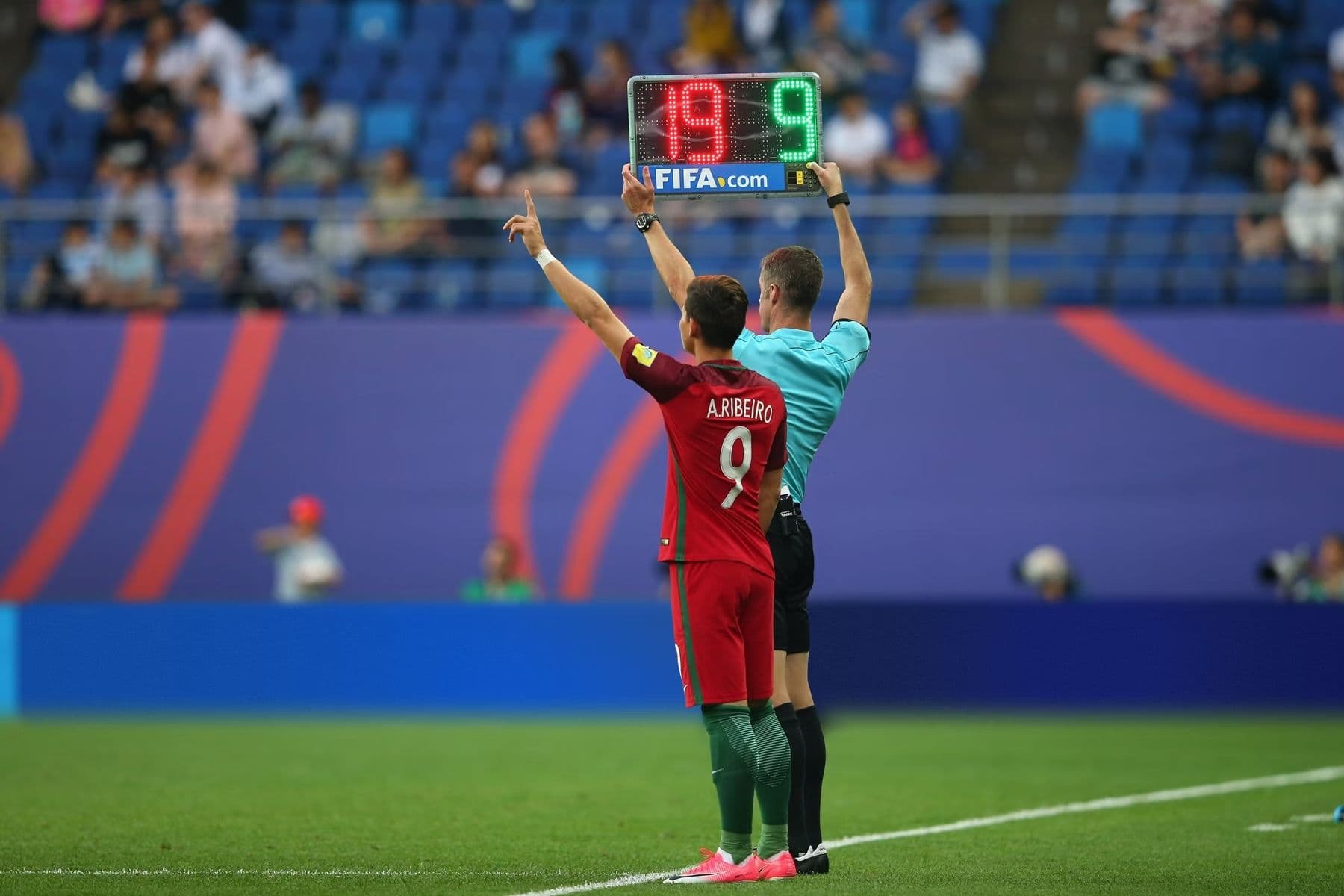
The concept of “substitution” is an idea which many are familiar with, particular when it comes to sports, such as my favorite sport: soccer. But when it comes to theology, the notion of “substitution” has fallen on hard times in theological discourse. Will Hess’ Crushing the Serpent takes aim at the concept of “substitution,” when it comes to understanding Christ’s work on the cross for the sake of our redemption.
Adjudicating The Debate Over “Substitionary Atonement”
But let me give Will the benefit of the doubt. I am persuaded that Will is making a “good faith” argument in opposing PSA. After all, I have heard some explanations of PSA over the years which do fall into the theological trap that Will is trying to expose.
However, I know of others also in “good faith” who seek to defend PSA. What does one do when two sides in “good faith” are unable to agree? Typically, Christians who are strongly committed to a particular doctrine do so because they have some degree of investment in holding their views. A good rule of thumb for me is to look at what a scholar says who is not invested either way, as offering insight into trying to resolve the impasse .
What if one was to consider the viewpoint of Jewish scholars, who are not invested in any particular Christian approach to the topic? Both Jews and Christians view Leviticus to be sacred Scripture, so it seems reasonable to start there. This does not mean that such Jewish scholars will have everything right, but on certain disputed points of Christian doctrine, they might have a perspective which can clarify matters in a debate.
Consider just this one point of evidence from Jewish scholars who comment on Levitical sacrifices. In the Jewish Study Bible, we read a comment about burnt offerings in Leviticus 1:4, where the worshiper is instructed thus (I will quote here from the ESV):
He shall lay his hand on the head of the burnt offering, and it shall be accepted for him to make atonement for him (ESV).
The hand laying indicates a transfer of ownership of the animal, but what does this have to do with atonement? Knowing the rhetorical angle which Will is aiming for, he might say that in handing over the animal to the Levitical priest, this is an act whereby the animal is representative of the worshipper as opposed to being an act of substitution. Why would Will reject the language of substitution? Because it hints at PSA, the doctrine which Will wants to take down. After all, that is what the “S” stands for in “PSA,” namely “substitution.”
But note the comment for this verse in the Jewish Study Bible, a study Bible written by Jewish scholars:
“The moment ownership of the animal is transferred to the deity, it is accepted as payment, i.e., as a substitute for the worshipper himself.” (emphasis mine)
Even the Jewish commentator here uses the language of substitution and not strictly representation, the latter which is the language Will prefers. This does not necessarily rule out the language of representation. It could indeed be both. But to say that the transfer of the animal is not a substitute flies in the face of how Jewish scholars understand their Hebrew Scriptures. In my mind, this tips the balance against the more “anti-PSA” posture presented in Crushing the Serpent, despite a number of strengths and valid arguments Will presents in his book.
While most of evangelicalism today still affirms some notion of penal substitutionary atonement, in the academy these days PSA has fallen on hard times. Many scholars who would rather see PSA thrown into the theological dustbin of history, typically fall into the camp of progressive Christianity, if they hold to any concept of Christianity at all. But the refreshing thing about Crushing the Serpent is that there are those among the evangelical crowd, like Will, who do not buy into liberal theology, who nevertheless find PSA highly problematic. One need not poison the well by insisting that all opponents to PSA are motivated by liberal theology (as some are want to do).
Part of what drives a more scrutinizing approach towards PSA in recent times is the fact that PSA is generally not a feature of Eastern Orthodox Christianity. Well, at least, it depends on how penal substitutionary atonement is defined among the Eastern Orthodox, which can be a difficult thing to grasp. But the point is this: Traditional Eastern Orthodoxy is anything but “progressive Christianity.” Those like Father Stephen De Young, an Eastern Orthodox priest, argue that Eastern Orthodoxy represents the religion of the apostles, and not some revisionist attack on biblical authority. At least one or more of the authors cited in Crushing the Serpent are either Eastern Orthodox scholars, or who have sympathies towards Eastern Orthodoxy.12
“Better Than I Deserve” : What Do I Deserve, and In What Sense Has Jesus Taken That Away From Me?
When asked “how are you doing?,” my longtime Protestant pastor, the late Dick Woodward, would often say “better than I deserve.” But that answer begs another question: What would one “deserve?”
The answer is that due to our sin, apart from Christ’s intervention, we would not “deserve” to stand in God’s presence, a belief built on the doctrine of penal substitutionary atonement. God is holy and just, and cannot simply overlook our sin. A penalty must be paid. But the nature of that God who imposes the penalty is not like some deranged angry father carrying a loaded gun, looking for someone to kill, as critics might imagine.
Nevertheless, if Christ had not intervened in our place, we would still be stuck in our sins. In Jesus’ work on the cross, a “great exchange” occurred, whereby Jesus took upon himself our sin and the consequences of that sin, namely death, while giving believers the righteousness of Christ. Exactly how Jesus absorbs the consequences of that sin remains a mystery, yet it would still be fitting to say that Christ did “bear our sins.”
But Dick Woodward would be careful to stress that God’s anger is not directed towards us, but rather, his anger is directed towards our sin. Our problem is that our sin gets in the way of us experiencing the love of God. This why we need a Savior who will take that burden of sin off of us.
A Rejoinder: Towards a More Modest, Dare I Say, “Classical” View of Penal Substitutionary Atonement
As a response to Will Hess’ Crushing the Serpent, I would say this: It is through the cross that the justice of God and the love of God meet in perfect harmony, as the Father and the Son work in concert together to “condemn sin in the flesh,” as Paul puts it in Romans 8:3-4:
For God has done what the law, weakened by the flesh, could not do. By sending his own Son in the likeness of sinful flesh and for sin, he condemned sin in the flesh, in order that the righteous requirement of the law might be fulfilled in us, who walk not according to the flesh but according to the Spirit.
Notice that in Romans 8:3-4, God condemned sin. God did not condemn Jesus. That is a big difference. But it is a difference which Will would probably agree with.
Nevertheless, there is still a penal aspect of atonement in that there is a condemnation of sin. But this penal aspect was resolved by God’s coming “in the flesh,” through Christ’s crucifixion and the incarnation, as a whole. The condemnation of sin took place not only at the cross, but in the entire ministry of God the Son’s incarnation upon the earth. Otherwise, what does Paul’s usage of “in the flesh” really mean? Did the God the Son’s appearance “in the likeness of sinful flesh ” only happen at the crucifixion, and not earlier in the life of Jesus? This is unlikely. 13
If you only focus on the crucifixion, you might be tempted to walk away thinking that “God punished Jesus,” however misleading that would be. But it makes no sense to say that the incarnation of God through Jesus was a form of “punishment,” as though God the Father had summoned Jesus to go hang out with those “nasty,” “miserable” humans, and wallow in their world drenched with the stench of sin, as though the very incarnation itself was an act of the Father punishing the Son. That is not it at all.
Instead, there is a substitutionary aspect of atonement in that God through Jesus was able to accomplish what we as humans could not do. In that sense, Jesus is indeed our substitute.
While Will’s repetitive description of PSA as being all about “appeasement,” etc., makes for tiresome reading, his exegesis of certain specific texts are greatly illuminating. In particular, his analysis of Isaiah 53 might be worth the price of the book, even though not every argument presented is equally compelling. 14 15
If Will just focused on biblical exegesis and less on polemics Crushing the Serpent would have been a much better book. It is just unfortunate that his unrelenting rants against what he considers to be PSA, the greatest drawback of the book, often gets in the way of appreciating his reasoned analysis of difficult Bible passages.16

Jesus bore our sin for us, through not only his death, so that we could be spared that spiritual death penalty, but also through his life and resurrection, whereby the powers of sin and death have been defeated, such that the God of life has the last word.
Why Not Interact With a More Modest, Widely Respected View of PSA?
I found it interesting, if not disturbing, that not once did Will reference the work of John R.W. Stott, in The Cross of Christ, who describes the work of Jesus on the cross as an act of “self-substitution,” whereby God satisfies the requirements of meeting the demands of the penalty resulting from sin in himself, as opposed to some notion of the loving Son trying to appease the wrath of an angry Father. God’s satisfaction with the death of Christ is not the kind of perverse satisfaction someone might have watching over the suffering and pain of someone else. God the Father is not gloating over seeing the Son as a hapless, suffering victim, in some wicked state of pleasure, neither unwilling nor unable to relieve the Son. Far be it! Rather, God takes satisfaction in the outcome of Christ’s death, in that human suffering under the weight of sin and guilt has had that weight taken away, such that a believer in Jesus has finally been restored to having a loving relationship with one’s Creator.
Toward’s the latter half of the 20th century, John R.W. Stott was considered by many to the “evangelical pope;” that is, the most recognized Bible teacher in worldwide evangelicalism, having been the chief architect behind the Lausanne Covenant. To neglect Stott’s most significant work on a topic so important to the Christian thinking seems just as odd if someone were to write a book about the impact of Apple Computer on today’s society and completely neglect to mention the name of Steve Jobs!17
John R.W. Stott’s book is not the only work defending a modest view of PSA. Nevertheless, The Cross of Christ has been a pretty standard text articulating a classic doctrine of penal substitutionary atonement for the past 40 years from a modestly-Reformed theology angle.18
“Substitutionary Atonement” via StarTrek
One picture from pop-culture that comes to mind helps to capture the theme of “self-satisfaction,” even if it is not a perfect analogy. Spoiler alert: At the end of the Star Trek 2 movie, “The Wrath of Khan,” Spock saves the crew of the starship Enterprise by entering the engine room, consumed by lethal radiation, just long enough to repair the warp drive, so that the ship escapes the devastating blast of a bomb ticking down triggered by the film’s villain, Khan, who is intent on killing Captain Kirk. As Spock lays dying, he speaks to Kirk on the other side of radiation barrier glass, to say “I have been, and always shall be, your friend.” This scene has brought tears to this Star Trekkie fan every time, but it is quite clear that Kirk, in his grief over Spock’s death, is quite satisfied by the loyalty and self-sacrifice of Spock to save the lives of the crew of the Enterprise. Spock’s act of substitution, giving his life for his fellow crew mates, by taking on the penalty of radiation sickness, saved the day.19
Granted, I primarily only listened to Crushing the Serpent as an audiobook, but I would be curious to know if Will had any footnoted references to Stott in his written copy of Crushing the Serpent. The audiobook version of Crushing the Serpent has nearly a 4 hour long reading of Will’s “Selected Bibliography,” which I decided was too jumbled to listen to via Virtual Voice, powered by AI…. for four hours!! Having not waded through all of that, it is possible that I missed certain caveats of Will’s position, but otherwise the criticisms I have noted above still stand.
What Crushing the Serpent Gets Right
That being said, Will at the very least makes a cogent case that a more nuanced view of penal substitution needs to be re-articulated. In that sense, Will Hess has done a service to the church with Crushing the Serpent: Did God Punish Jesus?
Crushing the Serpent: Did God Punish Jesus? is targeted towards a popular audience, so it is fairly easy to read. But more academically inclined readers will benefit, too. Evangelical seminaries, at least until recently, have been woefully inadequate in training Christian Bible teachers about the intricacies of the Levitical sacrificial system, leading to rather overly-simplistic teachings about the atoning work of Christ in our churches.
Since about the 1990s, the categories of “penal,” “substitution,” and even “atonement” itself have been often collapsed together under one rubric, thereby reducing our understanding of Christ’s work on the cross to certain kinds of slogans which fail to take in the breadth of the different facets that the Bible as a whole expresses to explain the work of Christ on the cross. We need not just “penal,” “substitutionary,” and “atonement” motifs to explain the meaning of Christ’s death, but also “Christus Victor” and “moral influence” to round out the various dimensions this theology.
For example, even the word “atonement,” as often found in English translations of the Old Testament is often over-inflated to describe the entirety of what Jesus accomplishes on the cross, which is highly misleading at best. Misunderstandings about how sacrifice and atonement works in the book of Leviticus, brought to light by relatively recent scholarship (the kind that Will Hess likes and appropriately highlights), require that certain framings of penal substitution need to be rethought and better articulated.
As one who still holds to a modest understanding of penal substitutionary atonement, Will Hess may charge me with redefining penal substitutionary atonement, typically abbreviated as “PSA,” in ways that do not reflect how the doctrine is typically taught today. Will Hess may call me an advocate of “PSA Light” or “Diet PSA”.
Whatever. Point noted.
I am sure that those on the other side of this who promote a caricature of PSA think I am soft-pedaling the doctrine of the penal substitutionary atonement.
Again. Whatever.
But is the real issue with PSA that PSA is inherently a bad, faulty doctrine, as Will Hess claims, or is it because a lot of preaching and teaching today of PSA is bad and faulty? I would argue that the case is the latter.
Footnotes:
1. C.S. Lewis, as a literary critic, was careful to stay in his lane, and not get too technical when it came to biblical exegesis and theology. Simon Gathercole, a New Testament scholar at Cambridge University in England, on the other hand, whom I had the pleasure of meeting a couple of years ago, is an expert in the field. Simon Gathercole, author of Defending Substitution: An Essay on Atonement in Paul, offers a stimulating defense of the substitutionary aspect of atonement theology (Read this partial review of Gathercole’s Defending Substitution on the Veracity blog). Notably, Gathercole refrains from attaching the word “penal” to the description of substitutionary atonement. I am not sure why. But it is notable that even Simon Gathercole’s defense of substitution does not win over Will Hess. Gathercole makes the case that Paul’s atonement theology in Romans 5:6-8 is appealing to the sacrificial theology background of his Gentile audience, as a means of building a bridge between Greco-Roman ways of thinking with the very Jewish message of a Messiah who remarkably dies on the cross: “while we were still sinners, Christ died for us.” Gathercole cites the story of Alcestis from classic pagan literature as an example of a vicarious death, mirroring the substitutionary death of Christ which Paul is trying to teach to the Romans. Gathercole acknowledges that there is no explicit connection to Alcestis in Romans, but he does contend that stories like that of Alcestis were simply in the air of Greco-Roman culture in the first century (See Gathercole, Defending Substitution, pp. 96-116). Gathercole is arguing that there are types of substitutionary death in Greco-Roman thought which demonstrate love. “In Romans 5, Christ’s death creates a friendship where there had been enmity” (Gathercole, p. 115). In his chapter on “Show Me the Money,” Will Hess rejects this idea of Gathercole’s borrowing a concept of substitution from a pagan perspective. According to Will Hess, Gathercole’s appeal to pagan stories of substitution are “rooted in the pagan culture at large.” However, this is only half true. The problem with Will’s rebuttal is that it assumes that all pagan views of sacrifice and substitution are necessarily about appeasement in orientation, and therefore all such pagan stories contradict the non-appeasement orientation of sacrifices we find in the Old Testament. Yet while Will is correct to say that appeasement is not a characteristic of Hebrew sacrificial practices found in the Old Testament, this does not mean that all sacrificial practices in the Greco-Roman pagan world were necessarily about appeasement. I am not an expert on Greco-Roman pagan stories and rituals, but this much I can say: Yes, surely, the pagans did practice rituals which sought to appease the gods. But they did not do this all of the time. There were stories and sacrificial rituals associated with them among the pagans that were non-appeasement in their orientation. This is a case whereby Will makes some wrong assumption about how substitution actually works, an error which frequently permeates much of the storyline of Crushing the Serpent.↩
2. With respect to the ransom theory, Will in a number of places in his book willingly accepts that a payment is involved. However, there are other critics of penal substitutionary atonement, such as Ronn Johnson, who emphatically deny the concept of “payment” as a means of understanding the meaning of Christ’s death for our sins. Those like Ronn Johnson will talk about a cancellation of debt with respect to the forgiveness of sins, and yet do not describe the cancellation of debt as a “payment,” which really makes me wonder how Ronn Johnson, and others like him, define “payment” or even “debt.” See my critique of Ronn Johnson’s claims regarding payment and atonement, in contrast to what Michael Heiser’s position was, which remains the correct position in my view. So, I find it very interesting that Will and Ronn Johnson are not in agreement on this point, and yet both claim to be critics of PSA. Definitions of words really matter.↩
3. Does Will Hess’ understanding of PSA accurately represent that theological position? It largely depends on who teaches PSA and how it is taught: In the case of J.I. Packer’s view of penal substitutionary atonement, one might indeed fault Packer’s over-emphasis on the “retribution” character of penal substitution, but in his essay (Packer, “What Did the Cross Achieve?: The Logic of Penal Substitution.”), which is relatively brief yet dense, Packer also balances this by saying that the substitutionary aspect of this “retribution”, whereby Jesus bears our sins, is nevertheless a “mystery” which defies precise explanation. In reference to the earliest Christian believers of the New Testament era, Packer states: “How it was possible for [Christ] to bear their penalty they do not claim to know, any more than they know how it was possible for him to be made man; but that he bore it is the certainty on which all their hopes rest” (Packer, “What Did the Cross Achieve?: The Logic of Penal Substitution.”). Unfortunately, John R.W. Stott has an advantage over Packer’s position, as Stott has an emphasis on the self-satisfaction of the work of God in Christ’s death, an emphasis lacking in Packer. Stott’s view of self-satisfaction indicates that both the Father and the Son are subjects, who in concert together, act upon the condemnation of sin while simultaneously transforming the sinner. This is different than the common caricature of the Father being the subject who inflicts wrath upon the Son, who acts merely as an object of the Father’s wrath. As an aside, in that essay (Packer, “What Did the Cross Achieve?: The Logic of Penal Substitution.”) , Packer’s treatment of John McLeod Campbell’s view of atonement does not sound familiar, but that is something to address in a future blogpost. Admittedly, Campbell’s prose is exceedingly difficult to get through in his The Nature of Atonement. See Oliver Crisp’s reading of John McLoed Campbell’s view of atonement, which gives better clarity to Campbell’s view than Campbell does himself. Crisp describes Campbell’s view as non-penal substitutionary atonement, which might be accurate (Oliver Crisp, “Non-Penal Substitution”, International Journal of Systematic Theology Volume 9 Number 4 October 2007, pp. 379-494) . Campbell, a Scottish theologian, was influential in the early 19th century, whose greatest contribution to the atonement debate was in challenging the notion of a “legal fiction” regarding post-Reformation-era reflections on atonement doctrine, which suggests that through the Son’s work on the cross, God the Father no longer sees our sinful selves, but rather sees Christ in his righteousness. The problem with the “legal fiction” component is that it suggests that in the work of Christ, God only pretends to see us as righteous, which has the unfortunate corollary that justification is unable to bring about any real change in us. Thought about in another way, this “legal fiction” is analogous to us “getting into” God’s Kingdom by using some type of “fake ID.” The only thing the “legal fiction” view does is to bring about a juridicial positive disposition towards us on behalf of God (See Veracity book review of Matthew Thiessen’s A Jewish Paul for a deeper explanation). McLeod Campbell’s response was to say that the substitutionary work of Christ is that of “vicarious penitence, according to which Christ atones for human sin by repenting on behalf of fallen human beings” (from Crisp’s essay). However, critics of Campbell judge that Campbell’s argumentation is primarily philosophical and not sufficiently exegetical. Yet the point I want to make is that while Packer might overstate certain matters, he largely agrees with the broad framework which John R.W. Stott presents regarding a modest affirmation of penal substitutionary atonement, without gravitating towards excess as is the unfortunate case of Wayne Grudem. In his Systematic Theology (1st Edition, p. 574-575), Grudem unfortunately asserts that “As Jesus bore the guilt of our sins alone, God the Father, the mighty Creator, the Lord of the universe, poured out on Jesus the fury of his wrath: Jesus became the object of intense hatred of sin and vengeance against sin which God had patiently stored up since the beginning of the world.” Note that Grudem states that “Jesus became the object of intense hatred of sin ,” a direct disregard of Stott’s careful warning that we should only view the Father AND the Son together as subjects intent on punishing sin, instead of Grudem’s framing of a Father as a subject who pours out vengeance on the Son, as the object of that wrath. Grudem gets the part right about God’s hatred of sin, but misplaces the object of God’s fury of wrath by applying it from the Father to the Son, which actually does distort the relationship between the Father and the Son, thus undercutting the doctrine of the Trinity. Grudem gets this based partly on a misreading of both Isaiah 53:6 (see note 15 below) and Isaiah 53:10 (Grudem, p. 577) , which I address in a previous Veracity blog post (see notes 17 and 18 below).↩
4. I addressed the topic of how to interpret 2 Corinthians 5:21 in detail in a previous Veracity blog post . New Testament theologian N.T. Wright has put forward a provocative thesis concerning 2 Corinthians 5:21, which challenges traditional interpretations. Specifically, Wright denies the doctrine of imputation. While Wright’s view is plausible, it is in my view not the most probable interpretation the Apostle Paul had in mind.↩
5. Granted, theologians of the Reformation, like Martin Luther, favored a legal, or forensic application of logizomai , but the primary meaning of the term is rooted in accounting language and not legal language. In other words, the idea of imputation primarily means that something someone has is counted, or considered, as belonging to someone else.↩
6. This type of guilt transference from one generation to the next is problematic. For it takes a notion of “original sin” to mean that the guilt of some sin of my ancestors has been transferred to me, simply based on some genetic connection. Ezekiel 18:20 would argue against this type of guilt transference. This kind of guilt transference theology also supports that idea that future generations should be forced to pay the price of sins committed in prior generations, a way of thinking which undergirds a theology of cross-generational reparations. See this Veracity blog post on divine violence in the Old Testament for more discussion.↩
7. The issue of menstrual blood is associated with ritual impurity, an issue covered well in Matthew Thiessen’s extraordinary book, Jesus and the Forces of Death, reviewed elsewhere here on Veracity.↩
8. See my three part Veracity discussion on Leviticus as explored by the late Old Testament scholar, Dr. Michael Heiser. Part one. Part two. Part three.↩
9. See Veracity book review of Jeremy Treat’s The Atonement: An Introduction, which argues that we should think of the atonement as describing different dimensions of Christ’s work, much like what one sees when looking into a kaleidoscope. As a Reformed theologian, Treat dismisses the concept of “theories” of the atonement as unhelpful, for a “theory” tries to explain all of the data with a single idea. Instead, Treat treats different “theories” of the atonement as different “dimensions,” depending on the way you look at theology of the cross. …As to the postulation that representation and substitution are mutually exclusive categories, N.T. Wright offers are corrective here, for example when Wright addresses Galatians 3:13-14 , to be addressed below in this book review: “Exegetes and theologians have often postulated an unnatural and unnecessary either/or between Jesus as ‘representative’ and Jesus as ‘substitute’. Here the matter is quite clear: because he is Israel’s representative, he can be the appropriate substitute, can take on himself the curse of others, so they do not bear it any more” (N.T. Wright, Paul and the Faithfulness of God, p. 865).↩
10. In an upcoming review of N.T. Wright’s The Day the Revolution Began, I will insert a caveat to what is being stated here in this book review regarding Galatians 3:13-14. At this point, I see a remarkable parallel between this debate about penal substitutionary atonement, and another doctrinal controversy which has been having a substantial impact on the church in our day: What is so fascinating about the debate over penal substitution is that it often mirrors the debate between complementarianism and egalitarianism. As a complementarian, I would argue that the Apostle Paul teaches that only qualified men should serve as elders in a local church. However, many egalitarians will push back on me to say that I believe that women are not as competent as men when it comes to leadership in the church. However, this is not what I see in Scripture. The issue as to why women should not serve as elders has nothing to do with competency, despite protestations from egalitarians to the contrary. Those who hold a form of complementarianism, who also say that women are more easily deceived than men, are really presenting a caricature of complementarianism, as opposed to what complementarianism actually is. It is more proper to think of those extreme “complementarians” as advocates of “patriarchy” instead. It is ironic that opponents of PSA often will caricature what PSA is in order to attack and reject the doctrine in a very similar way. But that is pretty much the state of debates like these.↩
11. Authors like Michael Bird, I. Howard Marshall, and even Fleming Rutledge (who presumably is said to have denied some version of penal substitutionary atonement) have all acknowledged some concept of substitutionary atonement found in Galatians 3:13. Bird quotes Rutledge (Crucifixion, 472): “This is perhaps the clearest statement of the substitution motif in Paul.” Some who reject the substitution motif in Galatians 3:13 argue that the curse Paul is talking about is the “curse of the law,” which is part of the covenant with Israel. The argument here is that Jesus is not acting as a substitute for Israel, as Jesus is actually participating in the covenant curses experienced by Israel. In other words, Jesus is not becoming a curse, so that Israel need not experience the curse of the law, as a substitute would. However, it could reasonably be argued that because of Israel’s failure, Jesus does act as a substitute, successfully accomplishing that which Israel was unable to do. It can be both participation and substitution. …. Neither Hess nor do I interact with N.T. Wright’s specific interpretation of Galatians 3, which explores the larger context than that which is presented here. But to go into that would take us far afield from the matter at hand, namely PSA. So, I will defer to a future blog post to deal this this……↩
12. Will Hess offers an informative chapter as to how some of the writings of various early church fathers made statements that line up with my understanding of penal substitutionary atonement. Of course, the author then uses this analysis to show how these various quotes of early church fathers are misused by certain modern defenders of PSA. At least the author acknowledges that the kind of PSA he rejects differs from how the language of PSA is articulated in the early centuries of the church.↩
13. To suggest this would be odd. There are other evangelical authors who look upon the work of Christ to deal with human sin as something which includes the totality of Christ’s earthly life, and not just the Jesus’ suffering on the cross. For example, Thomas F. Torrance’s The Mediation of Christ offers an accessible introduction showing how the incarnation and the cross are intertwined together in the doctrine of atonement.↩
14. As explained in an earlier post on Veracity, Isaiah 53 is a very difficult text to translate to English, partly because the Masoretic Hebrew version differs substantially from the Septuagint Greek version typically quoted from the New Testament authors, at key places. While there are long-standing debates regarding the identify of the Suffering Servant, who according to Christians is Jesus, yet according to most Jewish traditions is the nation of Israel itself, Bible translators today wrestle with even more basic issues, such as rare Hebrew vocabulary, grammatical shifts in tense and person, and shifting identities of the speakers. Will Hess has a 50-minute YouTube video explaining his view of Isaiah 53, where the content summarizes a lot of the main points of the book, including elements which I both agree and disagree with, as I try to show in this book review. Father Thomas Soroka has a very helpful and provocative video on Isaiah 53 which analyzes the differences between the Masoretic and Septuagint versions of the Suffering Servant passage, which has convinced me that a lot of the advocates of the more extreme version of PSA have misinterpreted Isaiah 53. See more particulars in the next footnote, number 15.↩
15. Some anti-PSA critiques of Isaiah 53, while having some positively provocative elements to them (which I will note here), still tend to overstate certain arguments. For example, according to some critics, it is said that the word “for” is not a synonym for substitution. Technically, this is can indeed be the case, but the argument depends upon some rather strict understandings of what substitution can mean. True, to say that something is “for” something is not necessarily the same thing as saying something is “instead of” something. One anti-PSA video gives this example: “I can take aspirin for my headache” does not mean “I can take aspirin instead of my headache.” But in the game of soccer, if a player is substituting for another player in the game, we could equally say that player X is playing “for” player Y. In education, when a substitute teacher comes in “for” the regular teacher, that substitute teacher is teaching “instead of” the regular teacher. In this sense, there is no difficulty is using the word “for” to convey a sense of substitution. This sense of substitution is important because we see this “for” language expressed throughout Isaiah 53. What is more at stake is the purpose of the substitution. The video goes on to analyze 1 Peter 2:21 to argue that PSA teaches that Jesus suffers so that we would not have to suffer. When it comes to final judgment, this is true of PSA, but it is not true that the suffering of Jesus precludes our suffering in this life. What PSA advocate teaches this? But to the credit of this YouTube creator, 1 Peter 2:21 does appeal to the Septuagint language of healing when recalling Isaiah 53, and not divine punishment against the Suffering Servant. The video is also correct to argue that from the Hebrew of Isaiah 53:6 that the “laid on him the iniquities of us all” language is intercessory language, not punitive language, just as we find in Isaiah 53:12 for “makes intercession,” as found in both the Hebrew and Greek Septuagint. In the analysis of Isaiah 53:8, the video claims that Jesus did not die instead of us, otherwise we would not die. See my Veracity blog post on the nature of death as an answer to this critique. When it comes to Isaiah 53:9, the video cites the Septuagint version to say that there is penal substitution in this verse, but that it is the wicked who are punished instead of the Suffering Servant. While this does not directly address the issue of PSA overall in Isaiah 53 with respect to Christ dying in our place, it does highlight the difference between the Hebrew and Septuagint readings of this verse. The video’s treatment of Isaiah 53:10 reflects this Veracity blog post which goes into deeper analysis of the passage. The video also correctly cites the fulfillment of Isaiah 53:11-12 in Mark 15:27-28 (KJV), 1 Peter 2:20, and Matthew 8:12-47, with respect to the “bearing of sins.” As argued in a recent Veracity blog post about Isaiah 53, some defenders of a strict, or caricatured version of PSA rely too much on an interpretation of Isaiah 53 which misses the dialogue structure of the passage, making it difficult to differentiate the perspective of cynical onlookers versus the view of God as explained by the prophet. Since the New Testament relies on the Old Greek, or Septuagint translation of Isaiah 53, which at points is in stark contrast to the Hebrew version, this dialogical interpretation of Isaiah 53 is required to make sense of the text of Scripture. To summarize, a more robust reading of Isaiah 53 would indicate that Jesus’ work on the cross was the New Testament fulfillment of Isaiah’s prophetic vision of Israel’s exile and eventual restoration, resulting from the Babylonian conquest of the 6th century BCE. Instead of Jesus being punished for our sins by the Father, Jesus instead took upon the full weight and consequences of our sins, essentially absorbing the full impact of our sin on the cross, which enables our healing from sin and the spiritual consequences of spiritual death. Nevertheless, Jesus does this in our place, which is an act of substitution. Jesus dies a death so that we would not have to. There is no need to abandon the notion of substitution, and also no need simultaneously to require Jesus as the Son to be the passive recipient of the Father’s anger. ↩
16. In a future blog post, I will review N.T. Wright’s The Day the Revolution Began, which offers an alternative framework to Will Hess’ work, but which is sympathetic with some of the main concerns which Hess considers. What do we mean by such terms as “penalty” and “punishment?” N.T. Wright comments on Romans 8:3 are explicit: “[Paul] does not say that God condemned Jesus, but that he condemned sin in the flesh of Jesus” (N.T.Wright, New Testament for Everyone Complete Eighteen-Volume Set, p.2437). Will does have a helpful insight regarding how to think about “penalty.” From his chapter on an “Historical Case for a More Classical View,” Will reasons that many simply associate the word “penalty” with the idea of “punishment for doing a wrong.” However, the concept of penalty can also correspond to some kind of “disadvantage, hardship, or loss due to some action.” I believe that Will is correct here. We should refrain from thinking about “penalty” exclusively in terms of “punishment.”↩
17. This is not to say John Stott got everything right regarding the cross of Christ. However, it is not always that Stott was wrong, but rather, that he has been misunderstood. For example, Stott wrestles with the work of the 11th century Anselm who states: ‘If anybody imagines, he wrote, that God can simply forgive us as we forgive others, that person has ‘not yet considered the seriousness of sin’, or literally ‘what a heavy weight sin is’ “ (Stott, The Cross of Christ, p. 88). Stott continues: ‘True, Jesus taught us to pray: “Forgive us our sins, as we forgive those who sin against us.” But he was teaching the impossibility of the unforgiving being forgiven, and so the obligation of the forgiven to forgive, as is clear from the Parable of the Unmerciful Servant; he was not drawing any parallel between God and us in relation to the basis of forgiveness. For us to argue “we forgive each other unconditionally, let God do the same to us” betrays not sophistication but shallowness, since it overlooks the elementary fact that we are not God‘ (Stott, p. 88) At least for one YouTuber, Stott has been misunderstood as saying that the way God forgives, because God is God, and we are not God, that God’s forgiveness is wholly unlike the way humans should forgive. According to this YouTuber, Stott is saying God’s forgiveness of us is not the same as our forgiveness of others, therefore we should not follow God’s way of forgiveness. Yet this really is not what Stott is saying here. Stott concludes that trying to compare our forgiveness of others with God’s forgiveness of us in this manner is asking the wrong question: ‘It is not why God finds it difficult to forgive, but how he finds it possible to do so at all. As Emil Brunner put it, “Forgiveness is the very opposite of anything which can be taken for granted. Nothing is less obvious than forgiveness.” Or, in the words of Carnegie Simpson, “forgiveness is to man the plainest of duties; to God the profoundest of problems” (Stott, p. 88) . The problem is that while forgiveness of others on a human level may be “the plainest of duties,” it is still far from easy for us as humans. What God has to deal with as the Creator of the universe in confronting human sin is something bigger than we can ever imagine. Stott could have clarified this better so that this YouTube detractor would not have missed it. What probably tripped this YouTuber up was Stott’s use of Ezekiel 7:7-8 and Lamentations 4:11 to argue that “God is ‘provoked’ to jealous anger over his people by their sins. Once kindled, his anger ‘burns’ and is not easily quenched. He ‘unleashes’ it, ‘pours’ it out, ‘spends’ it. This three-fold vocabulary vividly portray’s God’s judgment as arising from within him, out of his holy character, as wholly consonant with it, and therefore as inevitable” (Stott, p. 126). Some authors, unfortunately, such as Wayne Grudem, in his Systematic Theology, contend that it was the Father venting out his full wrath against sin against the Son. (See footnote number 3 above) However, in the case of Stott, Stott does not clearly state to what or to whom God’s anger is unleashed, poured out, and spent upon. It need not be the Father pouring out wrath on the Son, as though the Father and the Son were somehow at odds with one another. Stott has guardrails up to protect against that way of thinking. Instead, it could be the wrath of God poured out on sin itself, as opposed to a person or group of people. I can concede that Stott could have clarified this better. However, the point that Stott is trying to make here is not the object of wrath but rather what it costs God in an effort to deal with this wrath. It costs us to forgive others. I can not simply “forgive and forget,” as though this is just a matter of setting one’s mind to it. It is that, but there is more to it than that. If someone cuts me off in traffic on the highway, I can quickly forget about it. But if I have been defrauded by someone whom I thought I could trust, that is an entirely different matter. If someone breaks something that is precious to me, which can not simply be glued back together, I can forgive that person, but it takes something out of me in the process. The challenge for God forgiving us is infinitely greater due to the immensity of human sin in the aggregate across all of human history, whereas the realm of my life is merely finite in comparison. God does not forgive differently from us, but the magnitude of the sin problem God deals with concerning the whole of humanity far outweighs the “weightiness” of sin we have to deal with as human individuals. God’s generosity in forgiving us, despite the cost, should be our motivation to want to forgive others, and pay that cost, but that never makes it easy. God’s forgiveness of humanity was not easy, but he nevertheless accomplished it. So, it should not surprise us when our forgiveness of others is found to be difficult. It is very easy to demand someone else to forgive generously when you are not the one who has been injured or wronged!↩
18. I will let John R.W. Stott speak for himself: “Jesus Christ did indeed bear the penalty of our sins, but God was active in and through Christ doing it, and Christ was freely playing his part…..We must not, then, speak of God punishing Jesus or of Jesus persuading God, for to do so is to set them over and against each as if they acted independently of each other or were even in conflict with each other. We must never make Christ the object of God’s punishment or God the object of Christ’s persuasion, for both God and Christ were subjects not objects, taking the initiative together to save sinners” (Stott, The Cross of Christ, p. 151). Unfortunately, Will repeatedly, ad nauseam, claims that advocates of PSA do just the opposite, despite the fact that John R.W. Stott, though now deceased, had long been considered as one the standard bearers of Reformed theology regarding the atonement, though the book was written back in 1986. While Wayne Grudem has much to say of great value in his Systematic Theology, published in 1994, the fact that Grudem contradicts Stott on this point is disconcerting. Note Stott’s warning that “We must never make Christ the object of God’s punishment” , the very thing that Grudem plows on through without hesitation. Stott put up modest guardrails in his defense of substitutionary atonement, but Grudem ran a truck right through those guardrails! This is not to say that Stott got everything right, nor does it mean that Grudem got everything wrong about the atonement. See my review of Stott’s book, The Cross of Christ, on Veracity. But Stott’s basic insight, founded on the concept of self-substitution, addresses the main contours of Will’s thought, better than what we find in Grudem. However, I think Will makes some improvements over Stott when it comes to the exegesis of certain texts, as I hope I have made clear in this book review.↩
19. The problem with the language of “satisfaction” is that it is rarely used in the New Testament with respect to atonement. The language of “satisfaction” comes to us through Western theology primarily through the work of Anselm, in the late 11th century. Anselm’s work was less exegetical in nature regarding the concept of satisfaction in the Bible and more a philosophical defense of atonement doctrine corresponding to the ethical ideal of honor which was prevalent in the medieval world. Hardly any work in systematic theology in the past several hundred years neglects to bring the language of “satisfaction” into the discussion regarding the work of Christ. You could probably spend a lifetime reading all of what has been written about on the atonement, and Anselm is just one step along the way. If Anselm can make a philosophical argument for satisfaction in his time, I see no reason why the language of satisfaction can not be repurposed in our time to make a philosophical defense of satisfaction in our time. However, I can readily admit that philosophical defenses of certain Christian doctrines do not always do justice to what the Scriptural text actually says . See this Veracity blog post which touches more on Anselm’s view of satisfaction with respect to atonement.↩




What do you think?