
A popular online video makes the rounds every now and then with a clip from The West Wing, a political drama television series broadcast from 1999 to 2006. It features a scene where the President of the United States, played by the actor Martin Sheen, has an interaction with either a Jewish or Christian call-in show host, with a PhD, where they have some back and forth regarding the interpretation of the Book of Leviticus, and a few other passages describing particulars of Old Testament Law.
The scene dramatizes a heightened conflict, concerning the instruction in Leviticus 18:22 prohibiting same-sex relations. The President challenges the doctor by quoting select verses, such as Exodus 35:2, which prescribes the death penalty for those who violate the Sabbath. Then there is Leviticus 11:7-8, which forbids an Israelite from touching the dead skin of a pig. Would someone playing football be required to wear gloves to avoid becoming unclean? What about Leviticus 19:19, which forbids planting two different kinds of crops within the same field, and wearing different kinds of fabric in their clothing?
The message of The West Wing video connects with many in our culture today, appealing to both non-believers and progressive Christians alike, who find the regulations described in the Book of Leviticus to be baffling, to say the least, if not overly harsh and rigid. At least on an emotional level, it is difficult to parse out why a prohibition against same-sex relations would be mixed in with odd requirements about not wearing two types of clothing (Leviticus 19:19). If historically-orthodox Christians seem so adamant about defending a definition of marriage restricted to one man and one woman for one lifetime, why is it that they seem so casual about wearing clothing made up of both cotton and polyester, when Leviticus addresses both subjects with disapproval?
Such a posture comes across to many critics today as needlessly judgmental, hypocritical, and not very loving. As a result, many progressive Christians (though not all) would rather lump the Levitical prohibition against same-sex acts in with instructions about not planting two different kinds of crops within the same field: Dismiss both of them!
The non-believer would go further and dismiss the whole Bible as a muddle of contradictions, an outdated moral system stuck in the Late Bronze age. Either way, the conclusion drawn by such critics and skeptics is the same: the regulations in Leviticus as a whole are a bunch of nonsense and no longer apply in today’s world. Get your morality from somewhere else other than Leviticus.
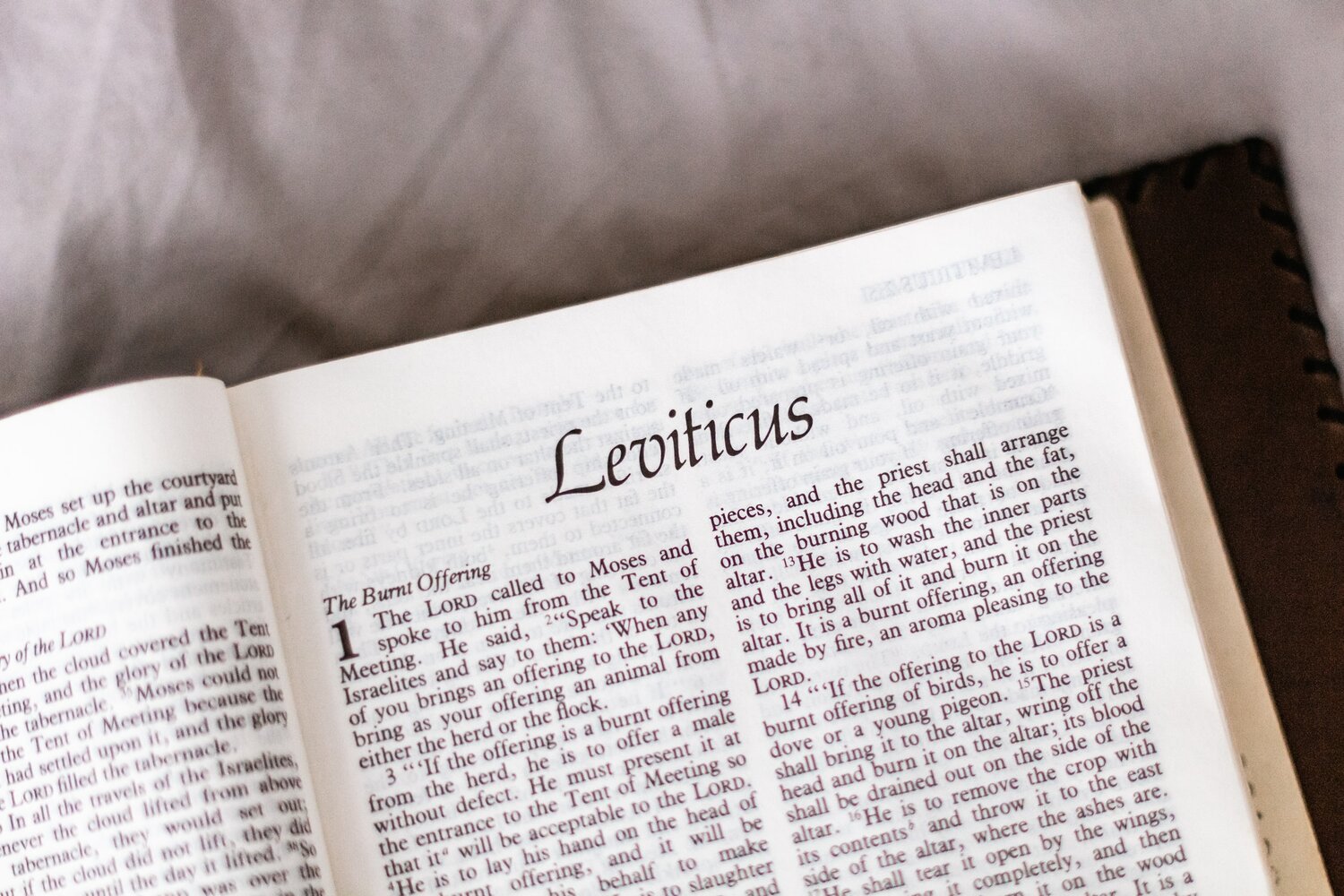
On the late Michael Heiser’s Naked Bible Podcast, this Old Testament scholar brings out important highlights, accessible to everyday Christians, who want to have a better grasp on Leviticus, one of the least studied, least understood, and least read books in the Old Testament.
Leviticus: An Outdated Relic from the Late Bronze Age?
Frankly, there are many conservative Christians, who while not being persuaded by such an impactful rhetorical argument, simply would not know how to respond to this kind of message. Disagreements between such progressive Christians and non-believers on the one side, and conservative and even moderate Christians on the other, are indeed very difficult to resolve. Is there any way to make sense of Leviticus? What would it have meant to an ancient Israelite many hundreds of years ago? Is there any kind of sensible application to make today for Christians? Or to put it bluntly: Are historically orthodox Christians really hopeless bigots?
I took the time to listen to Dr. Michael Heiser‘s Naked Bible Podcast series, covering the Book of Leviticus. I was surprised to learn that there are indeed ways in which scholars have been able to parse through such difficult texts, and make sense of them. Heiser’s teaching, where the transcripts of these podcasts have been put into book form, Notes on Leviticus: from the Naked Bible Podcast, while not a full-blown verse-by-verse analysis of every sentence in Leviticus, it nevertheless is an in-depth treatment of the Levitical system, exploring the logic of what is what in Leviticus, and what continues to be applicable today (and how) in a New Testament context, and what does not. While not every question I had in mind was answered, I gained a much better perspective as to how the Bible can be read within its historical, cultural context.
The Difference Between Ritual Impurity and Moral Impurity, in the Old Testament Jewish Mindset
In the previous post in this series, I reflected on Heiser’s teaching regarding “sacred space,” and the distinction between ritual impurity and moral impurity, despite the fact that both concepts of impurity often share the same language of “clean versus unclean.” Ritual impurities are simply things that happen in the normal course of life, and therefore, are not sinful, whereas moral impurities do qualify as sin, in the New Testament sense. The tabernacle/temple idea in Old Testament Judaism is about defining an area of “sacred space,” where God dwells. For someone to enter this “sacred space,” one needs to be fit to enter it, cleansed from both ritual and moral impurity.
One may easily see that the prohibition against same-sex relations is an example of a moral purity regulation as it is associated with the language of “abomination” (Leviticus 18:22). But it is difficult to understand how this relates to commands about mixtures in Leviticus 19:19, just one chapter later:
“You shall keep my statutes. You shall not let your cattle breed with a different kind. You shall not sow your field with two kinds of seed, nor shall you wear a garment of cloth made of two kinds of material.”
A similar passage is found in Deuteronomy 22:9-11. The New Testament is silent about the Leviticus regulations on mixtures. Some scholars argue that since the prohibition against same-sex relations is repeated in the New Testament (1 Cor 6:9-10, Romans 1:26-27), and that the commands against mixtures are not repeated in the New Testament, that the prohibition against same-sex relations is applicable for Christians today but that the commands against mixtures are not. While there is strength to this argument, it does not help us much in understanding why these commands are different from one another. If the commands against mixtures are not related to moral impurity, what about them makes them related to ritual impurity? What is the logic behind both of these regulations: the one concerning homosexual practice and the commands against mixtures?
With respect to homosexuality, it can be easily established that male same-sex relations can imply a role and power imbalance, where one sexual partner dominates and penetrates the other. Outside of ancient Israel, same-sex relations were allowed, with caveats. Heiser notes that same-sex relations were still looked down, but in general, they were not severely punished, in comparison with what is described in the Old Testament. Outside of Israel, homosexual rape was condemned in certain cultures. However, pederasty, where Greek adult men would have sexual relations with younger men, was used as a method of training in the art of war. In this context, homosexual activity was not condemned. Israel was the exception in that all same-sex relations were condemned (Heiser, p. 231ff).
In citing the Jewish Old Testament scholar, Jacob Milgrom, Heiser concludes that homosexual practice goes against the creation order, in that it removes the possibility for procreation. While procreation is not the sole purpose of sex, as texts like the Song of Solomon celebrate human sexuality without reference to procreation, homosexual practice takes the procreative act out of sexual expression. Since the God of Israel is a God of life, to deny procreation from an Old Testament standpoint runs against God’s purposes for human sexuality.
The omission of any reference to lesbianism in the Old Testament is curious. Nevertheless, Paul’s inclusion of a prohibition against lesbian sexual expression in Romans 1:26-27 shows a parallel to male-male sexual relations. As Heiser summarizes:
“These passages are not written so that space is devoted to being mean. They’re written to reinforce a worldview that elevated the production of and care for human life” (Heiser, p. 237).1
The commands which restrict mixtures in Leviticus,about wearing different types of clothing, planting different types of seed in a field, etc., are even more perplexing. Centuries later, in the time of David, the Bible mentions mules, which are bred with a mixture of horse and donkey (1 Kings 1:45-47). But the Bible never has anything negative to say about mules. So, how does a student of Scripture make sense of all of this? Thankfully, recent scholarship, particularly from the eminent Jewish scholar, Jacob Milgrom, which Michael Heiser relates to the reader/listener, can help to sort things out.

Michael Heiser. Semitic languages and Old Testament scholar. The late scholar tackles tough issues regarding biblical interpretation found in the Book of Leviticus, on the Naked Bible Podcast.
Cotton and Polyester Clothes, Multiple Kinds of Seeds in Your Field, and Other Mysteries About Mixtures
In Ezekiel 1:5-11, it is important to observe that the cherubim flanking the ark were portrayed as mixtures of different animals, such as the lion, ox, and eagle… and including humans. The Israelite high priest had all kinds of mixtures in their clothing, with different colors of threads and kinds of cloth. Ordinary priests, who could not venture into the innermost sanctuary still had mixtures in their clothing, but their mixtures were less prominent than the high priest. Non-priestly Israelites were forbidden to have any mixture of clothing.
This spectrum in Israelite culture with respect to mixtures, whether it be about the breeding of cattle, the kind of seed you have in a field, and cloth used in garments carried symbolic significance to the Israelite. The closer you got to the sacred space of the tabernacle, with the “Holy of Holies” being the most sacred space area, the more mixtures were present. The farther away from the tabernacle’s “Holy of Holies” you get less mixture. The ordinary priests had greater access to the more holy areas within the tabernacle area than the common Israelite, and the high priest had even greater access to God’s presence than the ordinary priests.
The purpose for this arrangement was to remind the people that mixture is associated with sacred space, whereas space that was not as sacred had less mixture. It represented a sacramental system whereby how you managed your livestock, what you grew in your field, and even what you wore would remind the Israelite as to the supernatural spiritual significance of sacred space.
Furthermore, note that a violation of the mixture prohibitions described in Leviticus 19:19 does not carry with it a severe penalty. Contrary to what is described in The West Wing video above, there is no call for the death penalty for wearing cloth made from two different kinds of fabric. Compare that to the severe penalties associated with moral impurity matters found in Leviticus; like idolatry, blasphemy, murder, adultery, and other forms of sexual immorality.
These regulations regarding mixtures were not associated with moral impurity concerns, as were same-sex relations. Instead, the restrictions concerning mixtures were about ritual impurity concerns. Since the work of Christ in the New Testament effectively fulfilled the ritual purity intent of the Law of Moses, these restrictions concerning mixtures no longer apply, at least for Gentile believers in Jesus. This is not the same as the moral impurity concerns related to same-sex relations, which still applies even today, according to passages like Romans 1:18-32.
Why Lumping Same-Sex Behavior Moral Concerns In With Cotton and Polyester Clothes Misses the Message of the Old Testament
In other words, contrary to the popular opinion conveyed by the West Wing episode with the actor Martin Sheen, the various regulations found in Leviticus are not some random and confusing set of rules. Rather, there is a logic to it all which explains why some aspects of purity, as with ritual purity, are not binding on the Gentile believer in Jesus, while other aspects of purity, as with moral purity, are still binding on the Gentile believer. If Jews, or others, wish to continue observing Levitical ritual purity concerns today, then that is still acceptable. It just is not required anymore for every Christian.
Granted, there are many progressive Christians, who think that either God has somehow changed his mind regarding human sexuality and the definition of marriage, or simply that the Bible does not address contemporary sexuality morality concerns adequately. There are many non-believing persons as well, who would rather not bother with the Bible. Both groups dismiss an historically orthodox view of Christian marriage today. But it is important to recognize how the moral seriousness regarding sexual morality, as presented in texts like the Book of Leviticus, actually relate to ritual impurity issues, such as the Levitical teaching on mixtures (clothing, seeds planted, the breeding of animals, etc.).
The concept of ritual purity seems very foreign to many today, largely because there is a sacramental character to each of the Levitical regulations. So while planting two different kinds of seed in a field carries no moral, or sinful significance, it does serve a purpose in reminding the Israelite that the idea of mixtures belongs to areas of “sacred space,” and not areas which are thought to be common to all. Such common areas are not “sacred space.” As Saint Augustine taught, a sacrament is a visible expression of an invisible grace. The Old Testament insistence that God is a holy God is not inherently visible. But it can be made visible through maintaining practices which train the mind to think about sacred space in a certain way. We see this same idea expressed in the New Testament with sacraments like baptism and the Lord’s Supper.
Navigating Other Levitical Regulations: Prescriptive Principles for Today Versus Descriptive Instructions Under the Old Covenant
As noted in the previous blog post in this series, the genius of New Testament theology, particularly as expressed by the Apostle Paul, is that the concept of sacred space has been modified. No longer does someone need to go to a tabernacle/temple somewhere to enter that sacred space. The community of believers, the body of Christ, is sacred space.
So, while we can gain certain principles from Levitical ritual impurity regulations which still can be applied today, their concrete expression traced back to the Old Testament context is no longer binding today, according to the New Testament. As discussed in the previous blog post in this series, believers in Jesus have become “sacred space.” The tabernacle/temple system of Leviticus has been replaced by the body of Christ as people, where God through the Holy Spirit now dwells. The New Testament draws a dividing line between that which is applicable under the Old Covenant versus what is applicable today under the New Covenant.
Different concrete expressions of those principles with parallel concerns for ritual purity can still make sense today, even if they are not binding. For example, many evangelical churches construct their worship space in a manner that draws attention to the preaching of God’s Word. The seating in a worship room is arranged in a way which trains the mind’s eye to focus on a podium in front of a congregation, where the Bible is read and taught. While there is no explicit Scriptural requirement for arranging a worship room like this, it has the effect of visibly reminding the people of the sacred character of hearing the exposition of the Word of God, as a means of revealing God’s invisible truth to the listener, which can be experienced concretely.
To re-emphasize, there is no “sin” with respect to how a worship space is constructed, for those under the New Covenant expressed in the New Testament. We are dealing with ritual impurity concerns, and not moral impurity concerns here.
The implications of this distinction between ritual impurity and moral impurity has consequences in other areas, relating to various topics which concerns Christians today:
- Is tithing required by the New Testament, and binding on all Christians today? (Leviticus 27:30-34)
- What about Christians getting tattoos? (Leviticus 19:28)
- Is keeping the Sabbath on Sunday sufficient, as many Christians appear today to believe, if they even practice that, or is the Jewish Saturday Sabbath still required? (Leviticus 23:3)
These topics are worth exploring in-depth in separate, future blog posts, but there are some principles which can be gleaned from Leviticus which point towards general answers to such topics. What follows are two relatively simple examples.
Necromancy and Idolatry
What about necromancy? Michael Heiser covers this in Notes on Leviticus. In Leviticus 20:6 we read:
If a person turns to mediums and necromancers, whoring after them, I will set my face against that person and will cut him off from among his people.
The prohibition here addresses concerns about idolatry, and it is not about ritual impurity. Rather, idolatry is in the moral impurity category. The penalty is severe.
As Heiser observes, God had provided the people a way to hear from God, through the priesthood, the prophets, and elements like the Urim and the Thummim. Appealing to mediums and necromancers is an attempt to bypass that God-ordained process, or even encouraging others to do the same, which is an intentional violation associated with moral impurity. It is an attempt to obtain knowledge from some god other than Yahweh, the God of Israel, as though “other gods were more truthful and were better sources of truth than Yahweh” (Heiser, p. 253). As with the prohibition against intentionally murdering a person, there is no means of atonement described for such a violation. The Leviticus penalty to “cut him off from among his people” is exile, indicating a serious offense.
Unlike ritual impurity concerns, idolatry is a big deal in the Bible. Idolatry is one of the chief sins. The idea is reinforced in the New Testament. The Apostle Paul flat out teaches: “flee from idolatry” (1 Corinthians 10:14-22). The principle which Paul is appealing to is grounded here in Leviticus: Stay away from worshipping other gods. The God of the Bible is the only one true God worthy of our worship. If you worship other gods, this is an intolerable offense in the eyes of God. The command to avoid idolatry therefore applies to both the Old and the New Covenant.
Touching A Dead Animal
In Leviticus 11:39-40, we read about regulations concerning touching a dead animal:
“And if any animal which you may eat dies, whoever touches its carcass shall be unclean until the evening, and whoever eats of its carcass shall wash his clothes and be unclean until the evening. And whoever carries the carcass shall wash his clothes and be unclean until the evening.”
This passage is sandwiched inside Leviticus 11, which is all about the kosher food regulations the Israelites must follow. Interestingly, this particular prohibition concerns the touching of the animals one may eat, not other animals. Numbers 19:10-22 carries a similar ruling about touching the dead body of a human person. Contact with the dead is even more regulated when it comes to the priests, according to Leviticus 21:1-4.
Heiser comments that having contact with the dead “made one ritually unclean and unfit for sacred space” (Heiser, p. 250ff). So, how do we know this is not a moral impurity issue?
For one thing, the concern about touching a dead animal in Leviticus 11:39-40 is within the context of ritual impurity concerns regarding food. Secondly, touching a dead animal is simply a part of life. It is kind of hard to prepare for a meal of an animal for dinner without touching its carcass. So, becoming unclean from touching an animal is simply unavoidable. Touching a dead animal is not a sin; therefore, this is about a ritual impurity issue, and not a moral impurity issue. So while this is not a sin, it nevertheless makes the person unclean…. at least unclean until evening. If you nibble on the carcass, well, you are supposed to wash your clothes, too.
When we get to the New Testament, particularly with the teachings of the Apostle Paul, we see that these concerns about touching dead animals no longer apply to the Gentile believer in Jesus.
“If with Christ you died to the elemental spirits of the world, why, as if you were still alive in the world, do you submit to regulations— “Do not handle, Do not taste, Do not touch”(referring to things that all perish as they are used)—according to human precepts and teachings?” (Colossians 2:20-22 ESV)
Paul is chiding Gentile Christians who try to mimic following the Leviticus 11:39-40 regulations, as the Jews do: “Do not touch!” It is no longer necessary for those who are in Christ Jesus, the sacred space of where God dwells now through the Holy Spirit.
Scholars do debate what is meant by “according to human precepts and teachings,” as Paul is certainly not mocking what is taught in Leviticus. Rather, he is probably mocking those Jewish Christians who insist that Gentiles must conform to the expectations of Leviticus, when they really do not have to do that. The Levitical instructions regarding the touching of dead animals were addressed to the Israelites, and not to Gentile aliens living in their midst, as the context of Leviticus 11:1 indicates. The Jewish Christians could certainly go on and keep the Levitical ritual purity regulations for themselves. But to require those same practices among the Gentile followers of Jesus would be wrong in Paul’s eyes.
In other words, the restriction against touching a dead animal applies only under the Old Covenant and is therefore not carried forward into the New Covenant.
Paul believes that the Gospel message he received from Jesus, perhaps right there on that road to Damascus, or later after his encounter with the Risen Jesus, has changed the situation about “sacred space” under the New Covenant. No longer is “sacred space” identified with a tabernacle or a temple in Jerusalem alone. Rather, the concept of “sacred space” has been extended to include each and every believer in Jesus, whether Jew or Gentile, who is a member of the body of Christ.
Nevertheless, while the exact prescription no longer applies under the New Covenant, the principle behind the prescription is still of value. In Leviticus, God is described as being about the celebration of life. A principle we can gain from the ritual impurity concern about touching a dead animal, as taught in Leviticus, can be applied to those under the New Covenant. Believers in Jesus are ultimately about celebrating life, where God has taken that which was dead and now resurrected it (Colossians 3:1). Christians should be known for their reverence for life, human and animal.

The Book of Leviticus has some unusual regulations regarding the length of hair. Could it be that concerns about hair in the Law of Moses can help explain one of the more difficult passages in the New Testament, the “head covering” passage of 1 Corinthians 11:2-16?
The Hair on One’s Head is More Than What You Think!
Pardon the pun, but this one is a “hairy” one…..
Leviticus 19:27 oddly teaches:
“You shall not round off the hair on your temples or mar the edges of your beard.”
Leviticus 21:5 repeats this restriction to not “shave off the edges of their beards.” Why do these instructions show up in Leviticus?
For one thing, there is no severe penalty like we find with the idolatry concerns of appealing to mediums in Leviticus 20:6. That is a tip to indicate that the thing about hair has more to do with ritual impurity and not moral impurity. So what does hair have to do with ritual impurity?
Also, it is important to note that Leviticus 21:5 is specifically concerned about the duties of the priest, and not the non-priestly people (Leviticus 21).2
According to Heiser, “Hair had something to do with life force, with fecundity, with the ability to conceive children” (Heiser, p. 264). In some sense, hair had the same life giving properties as blood and semen. This makes little sense today for us, as there is no scientific basis for linking hair with reproduction. But in the ancient world, such was not the case. Even up through the New Testament period, there were people who associated hair with the ability to conceive children. Heiser argues that this makes sense of one of the more difficult and confusing passages of the New Testament to interpret, the hair covering passage of 1 Corinthians 11:2-16.3
The Year of Jubilee: Lessons from the Levitical Civil/Judicial Law
Towards the end of his teaching series, Heiser discusses Leviticus 25, the chapter about the Year of Jubilee, and the associated regulations regarding land ownership and the issue of indebtedness. Unlike the earlier parts of Leviticus, Leviticus 25 does not address issues of ritual or moral impurity. Instead, this chapter addresses aspects of Levitical law having to do with what John Calvin described as the judicial or civil law. In Calvin’s three-fold description of the law, Calvin classifies the teaching in Leviticus into three areas: (1) moral law, (2) ceremonial law, and (3) judicial/civil law. The moral law is roughly equivalent to the concerns about moral impurity; such as sexual immorality. The ceremonial law is roughly equivalent to the concerns about ritual impurity; such as, concerns about mixtures discussed above. The judicial/civil law covers the rest, those regulations enforced by Israel as a theocratic state.
For Calvin, the moral law is still binding under the New Covenant, for New Testament believers, whereas the ceremonial law is no longer binding. The judicial/civil law is no longer binding either, as it assumed Israel as a self-governing community, whereas that political entity no longer exists, and the Christian church is not a political entity like Israel was. Nevertheless, certain principles behind the Levitical judicial/civil regulations can be applied today, which undergird what is found in Leviticus 25.
The challenge in an modern, Western pluralistic society today is that it goes against democratic principles to try to implement the judicial/civil aspects of Levitical law upon people who do not all hold to the same beliefs. However, a Christian community without theocratic aspirations can still take certain principles behind those aspects of the law and implement them within Christian communal life.
Leviticus 25 describes a system which teaches that God is ultimately the owner of the land, and the people of Israel are but stewards. Every number of years, the land would revert back to whomever God had originally allotted the land. God let Israel live in the land, so “he let them lease it out” (Heiser, p. 300). Heiser further writes:
“Leviticus 25 teaches who owns the land. Parts of that system were applied in different ways in Exodus 21 and in Deuteronomy 15 with how God, the ultimate landowner, wanted the land used to care for the poor and to alleviate situations of indentured servitude. All of these chapters together are not contradictory. They have to be taken together because there are different situations to which the idea of God’s ultimate ownership is applied.” (Heiser, p. 300).
The only real tie-in for Leviticus 25 to the rest of the book is the association with the annual Day of Atonement, which acted like a big reset button, which effectively cleared the deck of all of any lingering ritual and moral impurity concerns once a year. The Day of Atonement marked the day whereby every number of years or so the effective “ownership” of the land would be reset. The 50th year is the big Year of Jubilee, the biggest reset year.
There is no evidence that Israel ever effectively applied the Year of Jubilee in its history. Things got complicated through periods of exile and occupation by foreign powers. But the principle behind Leviticus 25 was to avoid the cycle of poverty, teaching Israel how to care for the poor. So while the exact prescriptions in Leviticus 25 are no longer applicable today, the principles of caring for the poor, and not taking advantage of them are still applicable. Furthermore, when Jesus visits a synagogue in Luke 4:16-21, he reads from Isaiah 61, which announces that he is fulfilling the “year of God’s favor,” or the Year of Jubilee, which never got practiced in Israel’s prior history (Heiser, p. 304ff). Here is what Jesus quoted in the synagogue:
“The Spirit of the Lord is upon me,
because he has anointed me
to proclaim good news to the poor.
He has sent me to proclaim liberty to the captives
and recovering of sight to the blind,
to set at liberty those who are oppressed,
to proclaim the year of the Lord’s favor.”
Interestingly, Jesus skips over the coming of “the day of the Lord language” in Isaiah 61:2, right after quoting “to proclaim the year of the Lord’s favor.” Heiser answers the question as to why Jesus did that:
Jesus skips the end-time, Day of the Lord language when he quotes Isaiah 61 because he knows how it would all play out. He knows that what he would do on the cross would be the inauguration of all of that. It would begin the restoration of the kingdom and of Eden (Heiser, p. 306ff).
So while Jesus establishes that he is fulfilling the “year of God’s favor” through his earthly ministry, final judgment is still suspended to a later point in time. This hints at the Kingdom is “now here” and still “not yet” language and theology of the New Testament. The ultimate future fulfillment comes with Jesus’ Second Coming, which will bring about the final judgment.

Should a Christian banker only offer a fellow Christian an interest-free loan to obtain a house mortgage? The Book of Leviticus raises some questions about this.
Lending Money At Interest Forbidden? ….. Versus the Principle of Not Taking Advantage of the Poor
While not mentioned by Heiser, it is important to reflect on the fact that incorrect ways of interpreting Leviticus through church history have led to misunderstandings which have had serious consequences. For example, Leviticus 25:35-38 teaches against lending money with interest:
“If your brother becomes poor and cannot maintain himself with you, you shall support him as though he were a stranger and a sojourner, and he shall live with you. Take no interest from him or profit, but fear your God, that your brother may live beside you. You shall not lend him your money at interest, nor give him your food for profit. I am the Lord your God, who brought you out of the land of Egypt to give you the land of Canaan, and to be your God.”
During the medieval period, the Western church took this in a “replacement theology” sort of way and applied directly to the church instead of ancient Israel. Christians were forbidden to lend money to fellow Christians at interest. So, if you wanted to secure a loan, in which you could pay back to someone at interest, you had to find someone outside of the Christian community to act as the loaning party. This is where European Jewry played a part, in that Christians would often go to Jews to obtain loans, because Christians were forbidden to do so with their fellow Christians.4
By taking the notion of not-charging interest for loans among ancient Hebrews living under the Old Covenant and interjecting that directly into the New Covenant, as practiced in the Christian church, this situation became a recipe for social disaster. As a result of this medieval system, if a Christian were to have problems paying off a loan, they would at times take their frustrations out on the local Jewish communities, which effectively established the banking system in medieval Europe. This ultimately fueled the fire which ultimately culminated in the horrors of the Nazi Holocaust killings of 6 million Jews during World War II.
The terrible effects of this failed system, which frankly resulted from bad biblical interpretation, was mitigated partly by John Calvin’s 16th century teaching that the principle behind Leviticus 25:35-38 was not to forbid the exacting of interest at all from a fellow member of the covenant community. Rather, it was to emphasize that Christians in the New Testament way of thinking were to not take advantage of the poor. Calvin believed that the problem was not the charging of interest itself. Rather it was the charging of “excessive interest” which was the real lesson to be learned, in a New Testament context. Calvin’s teaching radically revolutionized Christian economic thinking, leading to the creation of the modern banking system. Calvin understood that you simply cannot flatly take a passage from Leviticus, which is not specifically an issue of moral purity, and transport it from its Old Covenant context into a New Covenant context without wreaking havoc. It is unfortunate that Calvin’s insights were not adopted earlier in Christian history, as it may have prevented the stain of antisemitism from causing all of the harm it has eventually done in recent centuries.
The bottom line for Christians today is that we need not follow the exact prescriptive regulations regarding the judicial/civil application of Leviticus, such as prohibiting all lending of money at interest. Rather, we in the New Covenant should adopt the principle behind Leviticus, where we are taught to care for the poor and not take advantage of them.
Did Moses Write All of This Stuff Down Himself?… Or Did He Have Some Help?
Heiser also briefly deals with questions as to when Leviticus was written, through some evidence found in Leviticus 18. In Leviticus 18:3, the text mentions alien practices among the Egyptians and the Canaanites, which fits the time period when Moses might be recording these Levitical passages. However, in Leviticus 18:21, the text mentions child sacrifice practices associated with the cult of Molech. Many scholars note that the first mention of Molech in the historical narrative of the Bible appears when Solomon builds a cultic center for “Molech, the abomination of the Ammonites,” in 1 Kings 11:7. But this event would have been several hundreds of years beyond Moses’ time.
Michael Heiser describes himself as a Supplementarian, when it comes to the origin of the Pentateuch, including the Book of Leviticus. Unlike the well-known higher critical proposal among scholars, the so-called Documentary Hypothesis, which envisions that most (if not all!) of the material found in the first five books of the Bible, attributed to Moses, actually was written centuries later after Moses lived, the Supplementary Hypothesis view offers a middle way between the Documentary Hypothesis and a traditional view, the latter which holds that Moses wrote everything in the first five books of the Bible, as we have it today. For Supplementarians, there is a core of teaching in the Pentateuch which goes back to the historical Moses, but there is also other material in those books which have been edited and/or supplemented later by others who considered themselves within the school of Moses.
In the case of the oddity of Molech in Leviticus, it is quite plausible to say that a later redactor took Mosaic core material found in Leviticus 18 and then added similar material regarding Molech, which aligned with what Moses’ messaged centuries earlier. That way, the curators of the Moses tradition were able to keep Moses’ teaching understandable and applicable to new generations of Israelites.
These curators saw themselves as maintaining what Moses originally taught, and presenting Moses’ teaching in ways that connected with Israelites hundreds of years later. They were not trying to misrepresent Moses, contradict, or twist his message. Rather, these curators sought to be faithful to the inspired vision Moses was given.
Some might object that just because Molech is never mentioned before the reign of Solomon that this does not disprove the existence of the Molech cult in Moses’ day. But this view is hard to defend without supporting historical evidence, either archaeologically or Scripturally. Likewise, on the other side, to say that something like the Book of Leviticus was composed centuries after Moses’ supposedly lived is difficult to support without historical evidence demonstrating that Moses not involved. This liberal, critical scholarship view effectively counters the Scriptural presentation that Moses was indeed an historical person, from roughly the 15th to 13th century BCE timeframe. Michael Heiser’s view, as typical of an evangelical Old Testament scholar, is a sensible alternative to the opposing extremes.5
The Feasts of Israel: Changes Over Time, and the Proper “Place” Versus “Places” for the Festivals
Heiser also observes that in Leviticus 23, we have a description of the annual feasts of Israel. However, some of the details differ with parallel passages in Exodus 23:12-19 and Deuteronomy 16:1-17. For example, Exodus 23:12-19 describes three festivals, including the Feast of Unleavened Bread. In Deuteronomy 16:1-17, the text describes two festivals, skipping the Feast of Unleavened Bread, by lumping that in with Passover.
It gets even more complicated than that. In Exodus 20:24, in the same book where Exodus 23:12-19 describes the annual feasts, there is no central meeting place for where the feasts are to be celebrated. God could be worshipped at any one of these properly constructed worship areas. There is not one acceptable worship place. Instead, there were multiple locations; hence the reference to “every place“:
“An altar of earth you shall make for me and sacrifice on it your burnt offerings and your peace offerings, your sheep and your oxen. In every place where I cause my name to be remembered I will come to you and bless you.”
This makes sense in the time when Moses lived, as he never entered the Promised Land. There was no fixed temple location, as the people had a movable tabernacle while wandering in the wilderness. Later, when Joshua led the people into the Promised Land, there still was no fixed temple location, so different worship areas were established where the sacrifices and offerings were made, and festivals celebrated.
But all of that changed in the later centuries, long after Moses had died. In Deuteronomy 12 and 16, all of the sacrifices and festival celebrations were to be carried out in one central singular location (Deuteronomy 12:5-6, Deuteronomy 16:2, 5-7). For example, from Deut. 16:5-6 (note the singular reference to “place,” and not the plural “places“):
“You may not offer the Passover sacrifice within any of your towns that the Lord your God is giving you, but at the place that the Lord your God will choose, to make his name dwell in it, there you shall offer the Passover sacrifice, in the evening at sunset, at the time you came out of Egypt.”
This makes sense in a later period of Israel’s history, when you actually have a singular temple for the Israelites located in Jerusalem. Some of the regional locations for worship of Yahweh, like at Bethel, had become terribly corrupt with Baal worship, where prophets like Elijah and Elisha were sent to clean up the mess. So it is understandable that during the period of the Divided Monarchy there was concern for the revival of the true worship of Yahweh, focused on the Temple in Jerusalem, as opposed to these corrupt regional worship centers, part of the concern of Deuteronomy.
It hardly makes sense that Moses wrote all of these passages, with such variances between them. Yet neither does it suggest that Moses had nothing to do with any of these texts, as some critical scholars claim. A plausible, middle-way position suggests that while Moses was the ultimate source in which these feasts were revealed to Israel, the exact implementation changed somewhat as the situation changed later in Israel’s history. In other words, editors who considered themselves students and servants of Moses in later centuries added or otherwise changed certain details of the law of Moses in order to keep the text up-to-date, relevant, applicable, and understandable to newer generations (Heiser, p. 282).
Some try to get around these difficulties by saying that such changes in Deuteronomy, for example, are actually prophecies made by Moses, looking into the future when circumstances would change. A similar argument is made to say that Moses prophesied about his own death in Deuteronomy 34. But if this is the case, you would expect that such prophecies would be rendered in the future tense. However, all of our English translations indicate that these actions were completed actions in the past, not future ones extending centuries beyond when Moses lived.
The main problem with conjectures like these is that such passages in the first five books of the Bible are not worded as prophecies. For even if Moses had made such prophecies, it would still require a later copyist and/or editor of these texts to make changes in order to make such texts not look like prophecies. To think that Moses made prophecies and then intentionally disguised those prophecies so that they do not appear to be prophecies is quite a stretch.6
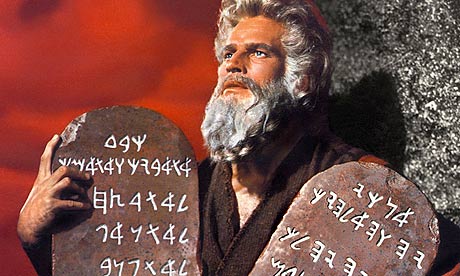
A closer look at Leviticus gives us some clues as to how Moses may have constructed the framework of the first five books of the Bible, which later curators of the Moses tradition maintained over the following centuries.
HOWEVER: Do Not Completely Write Off Moses as an Author
Nevertheless, there are cases where something which might be attributed to a later editor of the Pentateuch could indeed be traced back closer to the Moses era, if not to Moses himself or a close associate. Heiser notes the following example: In the passage on mixtures, Leviticus 19:19 teaches that: “You shall not let your cattle breed with a different kind. You shall not sow your field with two kinds of seed…. .”
But a parallel passage in Deuteronomy 22:10 teaches that “you shall not sow your vineyard with two kinds of seed….. you shall not plow with an ox and a donkey together.”
Scholars wonder why Deuteronomy effectively changes the “breed” of Leviticus, regarding different kinds of animals, to “plow” with different kinds of animals. Some postulate that Deuteronomy must have changed the Levitical instructions during a much later period in Israelite history.
But this need not be the case. In Judges 14:18, not long after Moses, Samson says:
“If you had not plowed with my heifer, you would not have found out my riddle.”
Some scholars suggest that “plowed” in Judges 14:18 is actually a euphemism for “breed.” In other words, Samson is rebuking his opponents for having sexual relations with his wife, in order to learn the secret of Samson’s riddle. In this sense it is quite possible that Deuteronomy is using the euphemism as well, instead of changing Leviticus to mean something quite different.
The lesson here should be straightforward: J.R.R. Tolkien never fully finished The Silmarillion. His son Christopher took his father’s material and assembled the final manuscript for The Silmarillion and had it published. But no one would say that J.R.R. Tolkien was not the ultimate author behind The Silmarillion.
Some Christians get nervous if someone suggests that Moses did not write every single word we have in the first five books of the Bible. But such anxiety is unnecessary. For one, you will be hard pressed to find any definitive statement in the Pentateuch saying “I Moses wrote this.” This is quite unlike the situation with the letters of Paul in the New Testament, which explicitly and emphatically say that Paul wrote these letters, even when he evidently had some secretarial assistance.
Furthermore, even if Joshua, or Ezra, or some other later editor inserted the Deuteronomy 34 material about Moses’ death, or if the descriptions of the feasts differ between different books within the Pentateuch, or if Deuteronomy used a euphemism not found in Leviticus, this in no way undermines the idea of Moses as the ultimate, inspired source for the revelation we find in the first five books of the Bible.
More Nuggets of Insights From Leviticus
A few other insights are worth noting at this point. In Leviticus 19:1-4, we read a section that roughly corresponds to the giving of the Ten Commandments, back in Exodus. One particular command goes like this: “Every one of you shall revere his mother and his father.” What is interesting to note here is that this reverses the order of Exodus 20:12, where the father is mentioned prior to the month. In a patriarchal society, you would not expect a mother being mentioned before the father. Heiser suggests that this indicates that both mother and father are of equal value when it comes to their roles within the family (Heiser, p. 240).
In Leviticus 19:11-12, we read about not swearing by God’s name falsely. This is not about the use of profane language, but rather it is about trying to make God part of a false agreement, which is contrary to God’s character. “Here in Leviticus, when you have this swearing language, which is the language of covenant and of making agreements, swearing by God’s name, in effect, brings God into the proceedings as a witness” (Heiser, p. 241). So if someone makes some kind of agreement, which they have no intention of keeping, or is to be taken too lightly, God does not want to have anything to do with it.
In Leviticus 19:15, the text tells us not to have partiality towards the poor. Granted, throughout the whole Bible, we are encouraged to advocate for the poor, and meet the needs of the suffering and those without. But here in Leviticus, we are instructed to favor neither the rich nor the poor, simply because they are rich or poor. This flies in the face of a lot of social justice thinking today, which advocates a view that the poor have some sort of moral superiority in comparison to the rich (Heiser, p. 242ff).
One More Coming Installment for Leviticus
Michael Heiser’s teaching series on Leviticus, from the Naked Bible Podcast, as transcribed in Notes on Leviticus: from the Naked Bible Podcast, explores a very important book in the Bible, which many Christians simply ignore. This is unfortunate, as there are many gems here which can illuminate other parts of the Bible, and how the Bible works as a whole.
I still have a number questions as I think about Leviticus. But perhaps the most difficult thing to work through is related to the Day of Atonement, and how all of this connects to how we are think through what it means to say that “Jesus died for our sins.” Here we get to the heart of a running debate today among scholars concerning penal substitutionary atonement, a doctrine which many say stands front and central to the Gospel message, while others say that penal substitution is never even taught in the Scriptures.7
Those are fighting words in my Protestant evangelical world! My conviction has been that penal substitutionary atonement is part of a Protestant evangelical theological commitment, but this should not close our minds to seeing other models of atonement at play in understanding the work of Christ on the cross. Certain expressions of penal substitutionary atonement have surely gone down the wrong road, and they need to be set aright. There are still some challenging things we find in Leviticus which might help us to have a more biblically, well-rounded theology regarding what atonement is all about.
Stay tuned for the last installment in this series.
Notes:
1. This rationale must also take into consideration what is taught in the New Testament, which honors the celibacy of Jesus, and where Paul encourages believers not to be encumbered by marriage, unless the passions are so great that they can not be effectively disciplined (1 Cor 7). It is possible to grow the Kingdom of God not simply through procreation but also through the disciple-making of non-biologically related fellow human beings.↩
2. There is some lack of clarity as to why the issue of hair/beard length shows up in Leviticus 19, which does not address the priesthood specifically. Hess in his commentary on Leviticus 19:27, suggests that the restriction regarding hair and beard length are restricted to the priests, in view of Leviticus 21:5. The only exception, which might be the context for Leviticus 19:27, suggests an application for the common, non-priestly people with respect to mourning rites for the dead, as opposed to other life situations. See Deuteronomy 14:1, you shall not “make any baldness on your foreheads for the dead“. See Hess, Leviticus: The Expositor’s Bible Commentary, p. 754.↩
3. See the Veracity series on 1 Corinthians 11:2-16, which seeks to tackle the problem of trying to understand what Paul was doing in that passage, which urges women to keep their head covered while praying and prophesying. Some may wonder why Paul would restrict the head covering application to worship settings, and not to everyday practice. But if Paul still sees that the worship setting, where the Lord’s Supper is practice, still carries with it a kind of sacramental reminder of the Levitical concept of sacred space, then it makes sense for Paul to restrict the head covering application to a worship environment. While in many parts of the world, Christians still practice the wearing of head coverings today, in largely Western contexts, Christians do not practice the wearing of head coverings, as this passage of the Bible sounds so weird. A proper understanding of the relationship between science and biblical interpretation can help to better interpret 1 Corinthians 11:2-16. In my view, Michael Heiser’s approach to 1 Corinthians 11:2-16 through its connection back to Leviticus 19:27 and 21:15 makes the best sense of all of the biblical data. ↩
4. See Veracity posts on replacement theology, what it is and what it is not. For more on the history of usury; that is, the lending of money with interest, as practiced among Christians, read this Veracity post.↩
5. See Veracity series on historical criticism for more detail. Michael Heiser has some interesting blog posts dealing with questions regarding Mosaic authorship of the first five books of the Bible: The Law of Moses: Does it Read Like Moses Wrote It? , The Law of Moses: A Brief Survey of the Scriptural Use of the Phrase, Samples of where the “Law of Moses” is mentioned in the Old Testament, and The Law of Moses: Whatever That Means ↩
6. Some of these observations within the text are explained in greater detail in the actual audio recordings of the Naked Bible Podcast (this from Episode 83: see the transcript here). Some readers might be troubled to think that Moses was not the author of every entire word of Pentateuch. Hopefully, a careful look at Deuteronomy 34, which describes the death of Moses, should cause one to rethink such a position. As Heiser puts it, the Hebrew “Torah Moshe,” often translated as the “law of Moses,” does not have to mean that everything included in the law of Moses originated with Moses himself. The meaning of the Hebrew (just two words!!) is rather ambiguous, suggesting a range of possible meanings, such as that the Torah is associated with Moses, or that the Torah originated with Moses, or that Moses is the central character of the first five books of the Bible. It does not have to exclusively mean authorship, as in point of origin. So when Jesus or others in the New Testament mention Moses in connection with the first five books of the Bible, one need not necessarily conclude that Moses must have written every single word found in the Pentateuch.↩
7. See Veracity post on N.T. Wright’s view of penal substitutionary atonement. I have also wrestled with Father Stephen De Young’s view of atonement. De Young is an Eastern Orthodox priest. Many Eastern Orthodox Christians reject the doctrine of penal substitutionary atonement, while other Eastern Orthodox believers embrace a modified view of substitutionary atonement, making for a complex discussion. I have a list of books I intend to work through in order to address thorny questions surrounding the atoning work of Christ on the cross. ↩




September 25th, 2026 at 6:31 pm
[…] on Leviticus as explored by the late Old Testament scholar, Dr. Michael Heiser. Part one. Part two. Part […]
LikeLike