When I attended Washington and Lee University (W&L) in the 1980’s, I was drawn to the school’s sense of tradition, civility and honor. But I was only a few months into my freshman year at W&L, before I wondered if I had made a mistake in going to college there. I had walked passed by a fraternity one Saturday night, when they were celebrating an annual tradition of having a Confederate ball.
W&L was all-male back then, one of only five all-male colleges remaining in the United States (now we are down to only two all-male schools, Hampden-Sydney and Wabash College). The men of this fraternity had all rented Confederate military uniforms, and their dates wore elegant dresses, with hoop skirts, as they danced the night away. But when I later saw a few of my African American friends on campus (of which there were few at W&L to begin with), I realized that my friends might have felt a bit out of place at this school. They surely would not have fit in at that fraternity Confederate ball, as every fraternity man and respective date were strictly white caucasians.
I had already applied as a transfer student to a different school, when I stumbled upon some essays about the life of W&L’s second namesake, Robert E. Lee, the Confederate army general, who after the Civil War, essentially saved the struggling college from extinction. I read that the defeated Confederate leader did not support a type of guerrilla warfare that many of his fellow Confederates had advocated. Instead, upon surrender to General Grant at Appomattox, Lee turned his attention towards healing the rift between North and South. By promoting a concept of the “Christian gentleman,” it was through Lee’s presidency at W&L that the education of Southern men was seen as a way of seeking reconciliation after a bitter military conflict.
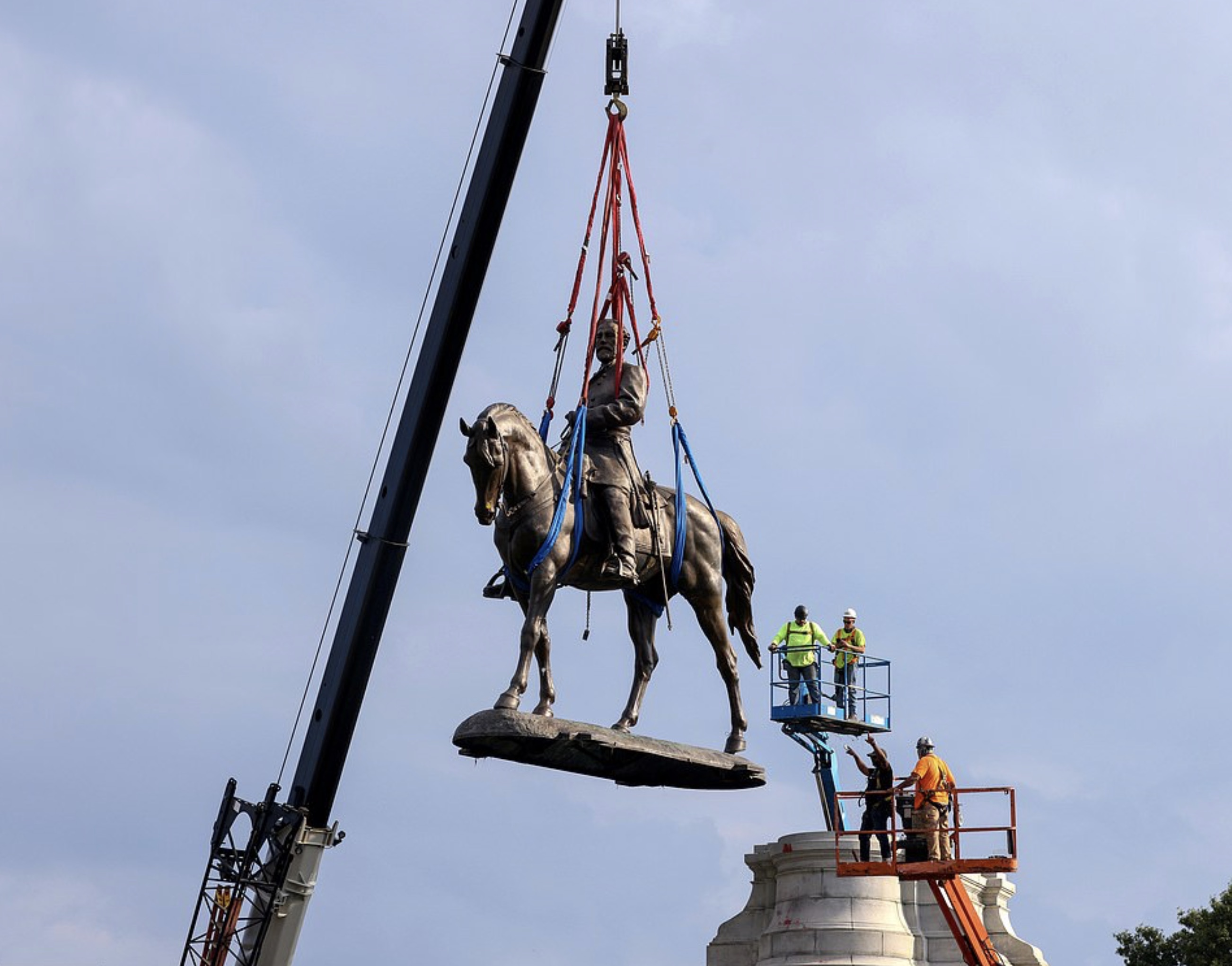
The Robert E. Lee statue on Monument Avenue in Richmond, Virginia was removed in September, 2021. The power of symbols exercises tremendous influence over the human psyche: Some see the statue removal as an attempt to erase history, or more so, a desecration. Others see it as a liberation from a lie that has perpetuated a legacy of racism. But who really was Robert E. Lee, anyway?
R. David Cox’ The Religious Life of Robert E. Lee, which I reviewed a few years ago on Veracity, tells the story of a man conflicted by the ethics of slavery and yet loyal to his native Virginia. He had strong misgivings regarding the slavery system, but nevertheless supported the system, through his dedication to his Virginia homeland. There is no doubt that Robert E. Lee was a complicated figure. In the end, Lee saw the military defeat of the South as divine judgment against him, and therefore his service as an educator at W&L after the war stemmed from his Christian convictions.
It was the image of Lee “the Educator and Reconciler” and not Lee “the Southern Military Hero” that helped to inspire me to turn down the offer to transfer to a different college, and then finish my 4-years at W&L. Fast forward to the early part of the third decade of the 21st century, and the popular opinion regarding Lee’s legacy has shifted dramatically.
After the defeat of the Civil War, and before his death in 1870, Lee rejected any notion that he should be memorialized and statues set up depicting him as a great Southern military leader. Rather, attention should be focused on bringing the United States back together, and accepting the dissolution of the slavery system as the will of God.
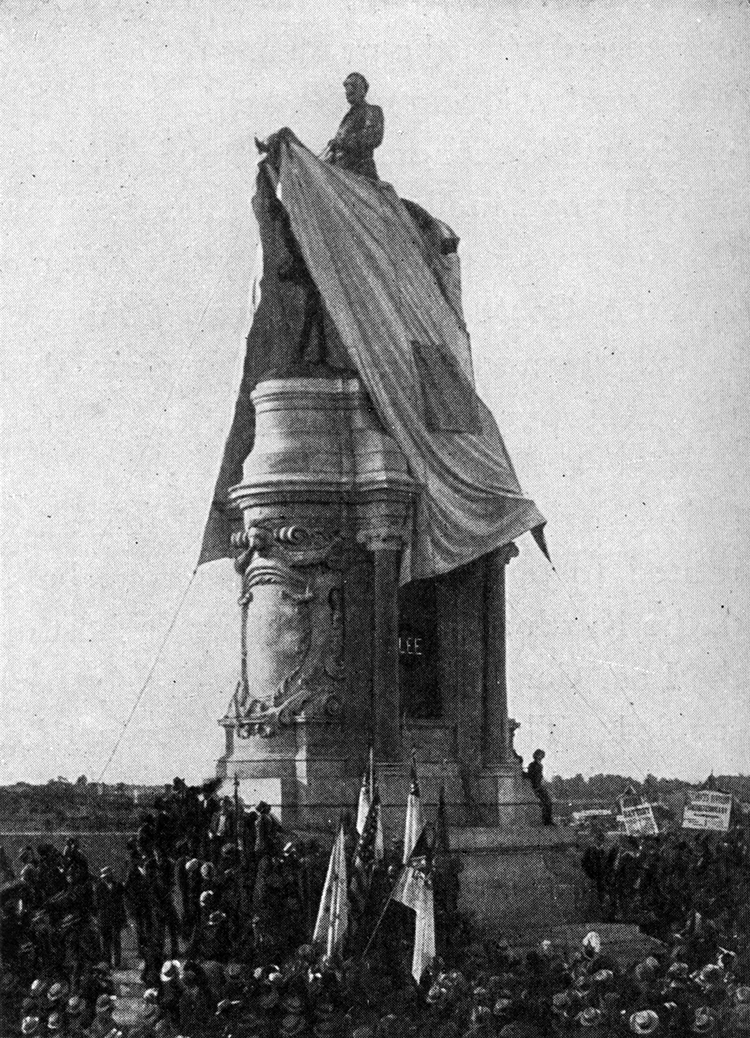
The Robert E. Lee statue on Monument Avenue in Richmond, Virginia, was unveiled in 1890 (credit: Wikipedia)
Nevertheless, by the end of the 19th century, the myth of the “Lost Cause” had firmly taken hold in the imagination of Southern folklore, and statues of Lee had popped up all over the South, a deliberate attempt to recall the “glory days” of the Antebellum South. The most prominent statue, in my mind, was the 60-foot tall depiction of Lee on his famed horse “Traveller,” in the midst of a traffic circle along Richmond, Virginia’s historic Monument Avenue. The refashioning of Lee’s image was complete by then, as even Traveller was transformed from a moderate sized breed to a stronger, more muscular-looking thoroughbred. Needless to say, not everyone has been impressed with the symbolism represented by the Lee statues.
In the wake of the death of George Floyd in 2020, protests turned their attention in Virginia to that Lee statue on Monument Avenue. After quite a bit of legal back and forth, the statue was finally removed from the top of its pedestal on September 8, 2021. As the statue was lifted off of its perch, cheering crowds sang “Nah-nah-nah-nah nah-nah-nah-nah, hey-hey, goodbye!!“
So, how does one go about remembering someone who did not want to be remembered in the way he has been most often remembered?
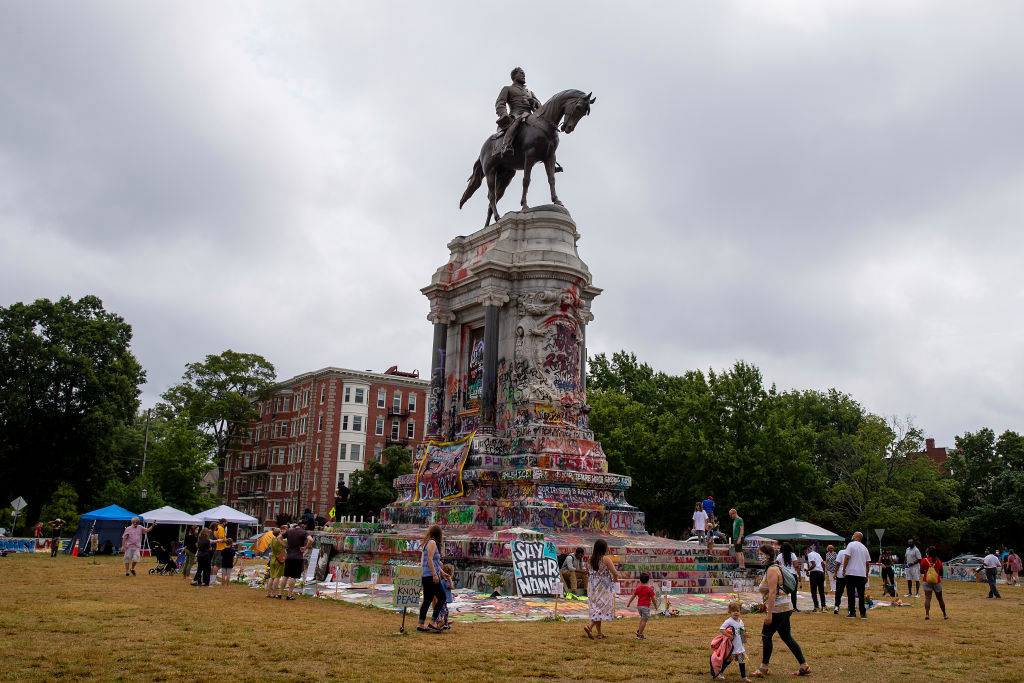
People gather at the Robert E. Lee Monument on June 20, 2020 in Richmond, Virginia. After 2020 protests graffitied the monument, a Richmond Circuit Court Judge ruled to extend an injunction preventing the Virginia governor from removing a historic statue. The injunction was later rescinded, and the statue was removed by Governor Northam nearly 15 months later, September 2021 (Photo by Tasos Katopodis/Getty Images)
The Quest for the Historical Robert E. Lee
During the 20th century, most biography readers looked to Douglas Southall Freeman’s multi-volume, 1934-1935 Pulitzer Prize winning R.E. Lee: A Biography. Freeman was a great admirer of Lee, who seemed to imbibe the “Lost Cause Narrative” that tended to elevate Lee to an almost semi-divine status. So, by the time controversy over another Robert E. Lee military statue in August, 2017, in Charlottesville, Virginia, erupted into violence, a revisionist re-evaluation of Lee’s legacy was long overdue.
The often cited essay at The Atlantic, by journalist Adam Serwer, “The Myth of the Kindly General Lee,” published just weeks before the Charlottesville protests captivated the nation, is representative of this revisionist picture of the famed Confederate general. The subtitle for Serwer’s essay, “The legend of the Confederate leader’s heroism and decency is based in the fiction of a person who never existed,” pretty much sums up the disdain for Lee’s memory, as the honored military hero for the Confederacy.
A more fair and accurate portrait lies somewhere between Freeman’s distorted hagiography and Serwer’s campaign to dismantle any remaining virtue in Lee’s reputation. But where does one go to find a such a nuanced biography? Thankfully, former Gettysburg College and current Princeton University historian Allen Guelzo has set his sights on demystifying the matter with his expansive 2021 R. E. Lee: A Life. Allen Guelzo is an evangelical Christian, along with being a well-regard historian. Guelzo manages to bring out dimensions of Lee’s character and life that humanizes Lee in ways that others have not always done so.
Guelzo’s portrait of Robert E. Lee is framed around Robert’s attempt to distance himself from the shadow left by his revolutionary war hero father, “Light Horse” Harry Lee. “Light Horse” Harry was known to the general public to be a decorated military leader, serving under the Continental Army of General George Washington. But by the time Robert E. Lee was born, Harry Lee’s reputation had sunk. Robert’s father became known as a “swindler,” a man who speculated on various means of getting wealthy, encouraging others to join him, only to have such efforts fail, and force the family into debt.
When Robert E. Lee was only two-years old, his father was thrown into debtors prison. Robert’s father spent most of Robert’s young life trying to escape creditors. Robert hardly even got to know his father, as his father died while Robert E. Lee was still a child. Robert E. Lee endeavored to be everything that his father was not, except for the fact that Robert E. Lee chose to make life in the military a career. It took 50 years before Robert E. Lee made any effort to visit his father’s grave, and when he finally did so, he made little mention of his father’s grave to other members of the family.
Robert E. Lee refused alcohol, became exceedingly frugal with money, and determined to live a life of responsibility and duty. He vowed not to make the same mistakes his father did, and not leave his own children in the type of desperation that Harry Lee left him in. This characteristic of Robert E. Lee helped to shape some of the most significant decisions in his life, that would eventually impact the lives of thousands, if not millions, of Americans.
Partly through the influence of his mother, Robert E. Lee sought to honor the reputation of his father’s militarily most distinguished supporter, George Washington, even to the point of marrying into the Washington family, by marrying Mary Custis, a descendant of Washington. Lee made top honors at West Point, and served the U.S. Army as an engineer for decades, before coming into his own as a trusted supporter of General Winfield Scott, during the U.S.-Mexican War. Winfield Scott essentially became the father Robert E. Lee never had.
The death of Robert E. Lee’s father-in-law precipitated a crisis, that led to perhaps the most morally damaging act in Lee’s life. The father-in-law, George Washington Parke Custis, a step-grandson to George Washington, had himself inherited a considerable amount of property, mainly associated with a large estate plantation at Arlington, Virginia. The late Custis had decided in his will to follow the example of his step-grandfather, and release all of the slaves that he employed within five years after his death. In addition, Custis left his daughter (Lee’s wife) and grandchildren significant property, but bypassed his son-in-law, Robert E. Lee, while still assigning Lee to be the late Custis’ executor. Lee effectively took this as a vote of “no confidence” by his father-in-law, though Lee would indirectly benefit. However, the situation was made awkward since a most successful transfer of the estate to other members of Lee’s family was contingent on the remaining years of service to be provided by the soon-to-be-released slaves of Custis. Still clinging to the desire not to leave his children in a financial distressing situation as his father had done for him, this put pressure on Lee to try to make more efficient use of those slaves, prior to their manumission.
In various letters, Robert E. Lee had made his opinion known, that while he viewed the slavery system to be a moral “evil,” he was not a supporter of urgent abolitionism, instead hoping that a process of gradual emancipation would eventually wind down the slavery system. When several of Custis’ slaves decided to try to escape the plantation, before the five years specified in the Custis’ will had expired, the slaves were caught, and in a fit of anger, Lee ordered that they be whipped for their premature release from slavery service, in order to teach them “a good lesson.” Lee’s otherwise steady, measured, moral disposition had cracked. It was apparent that Lee’s hopes for gradual emancipation would not necessarily be sped up by any intentional action on his part.
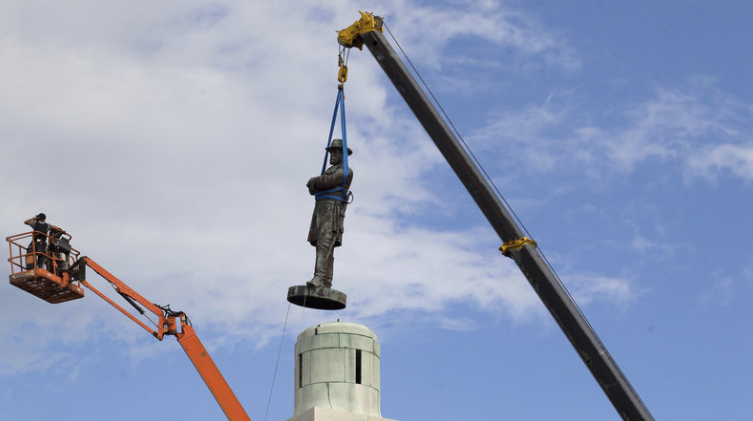
Robert E. Lee statue being removed from a New Orleans monument in May, 2017 (credit: Scott Threlkeld/ AP)
Choosing Sides: Why Did Lee Defend the Confederacy?
However, the most significant decision that Lee faced in his life, was driven by a complex set of factors. Upon the eve of the Civil War, Lee had faithfully served for decades in the United States Army, and he seemed to be the best candidate to assume command of the Union army, under President Lincoln’s direction. Lee’s fatherly mentor, the retiring General Winfield Scott, personally asked Robert E. Lee to consider the offer, on April 17, 1861. Yet in the conversation that Scott had with Lee, Scott held the opinion that a Civil War could be averted.
Even though many states in South had seceded from the Union, Lee’s home state of Virginia remain undecided at the time. Lee was hopeful that perhaps Virginia could foster some type of middle position between the radical Southern states, like South Carolina, and the Northern slave-free states, for negotiating some type of mediating solution between the extremes.
At the same time, Lee was concerned about his duty to his family, and his responsibility towards the Arlington estate, just across the Potomac River from Washington. Lee believed that the family property was endangered by both sides, as Arlington held a high ground position, which would have been perfect for Confederate artillery to overlook the federal capital. Likewise, the Union side also recognized the strategic importance of the family property as well. Nevertheless, the family property was legally in Virginia, and he felt a certain obligation to defend his native state. Lee’s initial response to Scott included this, “General, the property belonging to my children, all they possess, lies in Virginia. They will be ruined if they do not go with their state. I cannot raise my hand against my children.”
It was this sense of duty towards Virginia and primarily his family, and his desire to get out from underneath the shadow of his father, that pushed him towards supporting Virginia, and declining Scott’s offer to lead the Union Army, three days afterwards on April 20. Lee’s middle-of-the-road, Southern view, that wished that slavery as an institution would simply go away over time, did not have a significant role in Lee’s decision.
In summary, Lee’s views on summary were complicated and contradictory. He disliked the institution of slavery, but he did nothing to try to end it himself. Instead, he opted to take up a different offer to eventually command the Army of Northern Virginia. Interestingly, Lee kept the provision specified in his father-in-law’s will and released the remaining Custis slaves, in 1862, while the Civil War was well underway.
Nevertheless, once the die was cast, the effects of that decision bore consequences that led to the deaths of hundreds of thousands of Americans. Lee’s plan for “winning” the war were straight-forward. If he could lead the Confederate Virginia army to shatter northern confidence, it could have led to some type of peaceful settlement between the North and the South. That was the best Lee could hope for, as he knew well that the North had more resources at their disposal than the South. The plan almost worked. However, defeats at places like Antietam and eventually Gettysburg shattered Lee’s plan, at the cost of many lives. Serious mistakes were made, included the loss of Lee’s orders before the Battle of Antietam, and an overly ambitious attempt to smash the Federals with Pickett’s charge doomed the Gettysburg campaign. Lee may have even considered a third attempt to humiliate the North, had it not been for Grant’s final campaign that eventually led to the capture of Richmond.
It is fascinating to consider what was going on in Lee’s mind, in the waning days of the Confederacy, when Grant was slowly tightening the grip around Lee’s army in Petersburg. Lee was desperate, and desperately short on men. So he petitioned the Confederate government to conscript, not just white Southerners, who been already been drafted into the Army of Northern Virginia, but African American slaves as well. Lee was quite firm in insisting that those conscripted slaves be given their emancipation, following the conclusion of their military service. This was certainly not well received by Southern slaveholders, who overwhelming rejected Lee’s request. Nevertheless, this one particular act suggests on the one hand, that Lee continued to have certain misgivings about the slavery institution, foreseeing its ultimate demise, while continuing to fight to preserve that very system.
The Lee I have come to appreciate, that of being the President of my Alma Mater, Washington and Lee University, following the Civil War is given a critical yet fair appraisal by Allen Guelzo. Like many if not most white American men of his day, both in the South as well as the North, Lee did not think very highly of the aptitude of most African Africans. Lee can not avoid the stain of racism. But you would be hard pressed to find exceptions to that, in the mid 19th century.
In Lee’s favor, as President of the then “Washington College,” he discouraged actions taken by Southern whites that would denigrate former slaves, even to the point of expelling white students who engaged in such behavior. Many white voices in the South probably would have preferred continuing on with guerilla war effort to resist the North, in the name of defending the Confederacy, but Lee’s wise judgment at Appomattox Courthouse, to cease hostilities, and move towards reconciliation prevailed. But Lee did not go out of his way to lift up the African American. Nevertheless, it can be genuinely said that Lee wished to put the tragedy of the Civil War behind him and refocus on the rebuilding of a United States, encouraging the students of the college to purse the life of being “Christian gentlemen.”
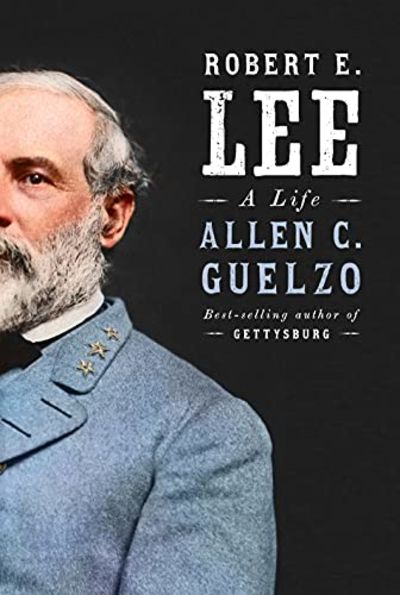
One looks back on Allen Guelzo’s R. E. Lee: A Life and sees a rather complex man, who sought to do what he believed was his duty, first and foremost for his family, who had a rather complicated relationship with slavery. Revisionists will often depict him as a defender of racial slavery, and traditional defenders of Lee will portray him as being a principled defender of states rights. Neither view is truly accurate. Both judgments are overstated and overly simplified, and thus they distort what should properly be remembered of the historical Robert E. Lee.
Lee’s motive of defending his children’s inheritance at Arlington, thus seeking to reverse the dishonorable legacy left to him by his absentee father, as the prime motivation for him joining the Southern cause, as argued by Allen Guelzo, stands out as a convincing and neglected aspect of Lee’s life. This does not diminish the fact that Lee was at least in some sense a traitor to the Union, and it’s army that he faithfully served for decades. But it does illustrate how one’s family history can deeply impact one’s moral decision making ability.
Furthermore, Guelzo portrays Lee as more of a cultural Christian, than a truly evangelical one, more so than I had originally imagined. A good case can still be made, even from Guelzo’s book, that Lee eventually took his faith more seriously, while he assumed the great responsibility for leading the Confederate military effort. His self-acknowledgment that God had used the Confederate loss to judge and chastise Lee should not be underestimated.
I would agree with the review of the book offered by biblical scholar Mark Ward, that R. E. Lee: A Life can help one see more clearly the faults of Lee, while still appreciating his many virtues. As the history of racism in America continues to have an impact on the Christian church, and the broader culture, R. E. Lee: A Life offers an important look into that history. Many books on Lee focus on his accomplishments as a military field leader, but R. E. Lee: A Life explores much more than that. Complicated he was …. Robert E. Lee has been branded as a traitor, who lacked a better sense of moral clarity regarding race and slavery, but still was enough of a Christian gentleman, who sought to serve and honor his family, out of a profound sense of duty, all at the same time. This type of balanced look at a person is sorely needed in our day and age.