Category Archives: Witnesses

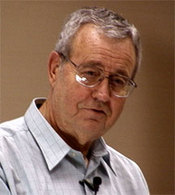
Transformation: Dallas Willard

Dallas Willard. Pioneer for the renewal of spiritual formation in the contemporary church.

Dallas Willard. Pioneer for the renewal of spiritual formation in the contemporary church.

Can you tell the difference between someone who says that they are a Christian, and someone who is not?

The Apostle Paul challenges us:

Examine yourselves, to see whether you are in the faith. Test yourselves. Or do you not realize this about yourselves, that Jesus Christ is in you?—unless indeed you fail to meet the test! (2 Corinthians 13:5, ESV)

Whoa.  I am not sure I like this type of test. Do you meet the test? Or does it only apply to the really “spiritual” people out there?

The existence of many people who are Christian “in name only” is a serious problem in the contemporary church, even among so-called “Bible-believing” congregations. Dallas Willard, who died on May 8, 2013, believed that he had pinpointed the source of the problem.
Continue reading


Brokenness: Brennan Manning

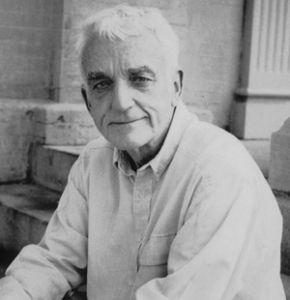
Brennan Manning.  A ragamuffin.  A story of brokenness and grace.

Brennan Manning. A ragamuffin. A story of brokenness and grace. It is a beautiful story, but it isn’t very pretty.

Life can get really messy. Even for Christians.

Consider the life of Brennan Manning. Brennan grew up in Brooklyn, New York, and then as a young man served as a Marine during the Korean War. After the Marines, Brennan was pretty lost. He was looking for something more in his life. That “something” was Jesus. After a few years of searching, he entered a Catholic seminary and eventually joined the Franciscan order as a priest. He did a bunch things as a priest: he joined a community committed to live with and work among the poor in Spain, he did campus ministry among college students, and even worked on the shrimp boats with another group of priests in Alabama, reaching out to fishermen who had fallen away from the church.
Continue reading


Keeping the Faith

The Race, 2004

Therefore, since we are surrounded by such a great cloud of witnesses, let us throw off everything that hinders and the sin that so easily entangles, and let us run with perseverance the race marked out for us.
Hebrews 12:1 (NIV)

Hebrews 12:1 reveals so much about the character of God.  This short, pivotal verse tells us about the heavenly realm; the ability of those in that realm to ‘see’ what we are doing; that God has a plan for our lives; that he knows it is not easy; and that he values our striving.  The race we are directed to run gives us a purpose and a mission.  In context it’s about keeping the faithHebrews Chapter 11, often called the Great Faith Chapter, precedes the ‘therefore’.  If you pay attention to the ending of Hebrews Chapter 11, you’ll notice that all the saints mentioned “were commended for their faith, yet none of them received what had been promised. God had planned something better for us so that only together with us would they be made perfect.”

God works by processes.  He wants us to run a race that he knows will be difficult.  Some believe this to be unfair—why doesn’t God just poof everything to be easy for everybody?  But God plays by his own rules.  That’s what the sacrifice of Jesus Christ is all about.  And we have a role in that sacrifice—we’re supposed to keep the faith.

Who wrote the Book of HebrewsOpinions vary considerably, but my personal hunch is Barnabas.  It’s hard to say, but one thing is certain—the apostle Paul knew and appreciated this theology. Continue reading


Apologetics Thomas Aquinas Style

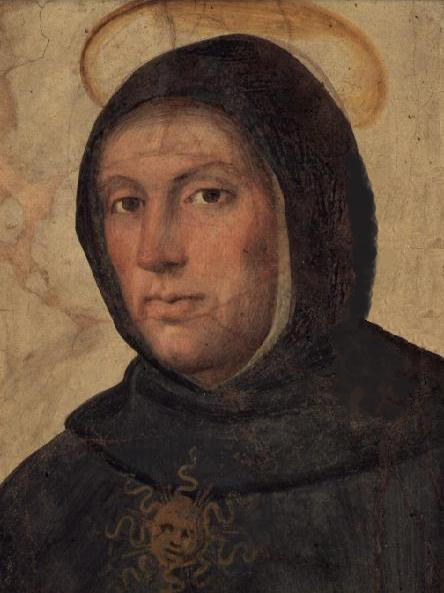
Thomas Aquinas, by Fra Bartolomeo.  During a period  of Islamic ascendancy in medieval  Europe, Aquinas let the way as a follower of Jesus to transform history.

Thomas Aquinas, by Fra Bartolomeo. During a period of Islamic ascendancy in medieval Europe, Aquinas led the way as a follower of Jesus to transform history.

According to the U.S. Census of 2010, Islam is the fastest growing religious movement  in America, increasing 66.7% over the previous ten years, as compared to only a 1.7% increase among evangelical Protestants. How do we best relate the Gospel to Muslims? Here is a nugget from church history on Thomas Aquinas and the influx of Islam into medieval Europe with lessons for today.

So, how did the medieval church respond to the overwhelming cultural influence carried by the Arab Muslims into Christian Europe? Enter in Thomas Aquinas. Aquinas was a young Dominican monk in the 13th century as he thought about the growing influence of Islam throughout the known “Christian” world. But Aquinas knew that the famous ancient Greek philosopher, Aristotle, was perhaps the most important thinker enlisted by the Muslims to support Islamic belief. Aquinas began a nearly lifelong study of Aristotle. His magisterial Summa contra Gentiles was written in about 1264 largely as an apologetic treatise for use by Christian missionaries when explaining the faith to Muslim critics. In Summa contra Gentiles, he comments extensively on Aristotle, the great pagan thinker, in an effort to defend the Gospel.

Continue reading


Call Yourself a “Christian”?

What does it mean to "follow after Jesus" as opposed to simply being a "Christian"?  Carl Medearis has some thought-provoking ideas.

What does it mean to “follow after Jesus” as opposed to simply being a “Christian”? Carl Medearis has some thought-provoking ideas.

If you call yourself a “Christian”, what do you mean by that? For some, being a “Christian” is something you inherit from your parents. For others, “Christian” is a political label. Does the word “Christian” communicate something you really mean to say?

I have a missionary friend of mine who supports the ministry of Carl Medearis. I had heard of Medearis before, and I have a book by him in my library that remains unread, Muslims, Christians, and Jesus: Gaining Understanding and Building Relationships. Like many folks today with tight schedules, I simply have not had the time to read the book. But I am a cheap guy, and so when my missionary friend sent me a link to download a **FREE** copy of Medearis’ latest book as part of a limited time offer, I thought “Sure, I’ll get it…. but I’ll probably never read it.” So I downloaded an electronic copy of Speaking of Jesus: The Art of Not-Evangelism. It is a fairly small book, so I just happened to glance at the title of the last chapter, “Gays, Liberals, and Muslims“….. Say whaa??

Continue reading