What does it mean to “follow after Jesus” as opposed to simply being a “Christian”? Carl Medearis has some thought-provoking ideas.
If you call yourself a “Christian”, what do you mean by that? For some, being a “Christian” is something you inherit from your parents. For others, “Christian” is a political label. Does the word “Christian” communicate something you really mean to say?
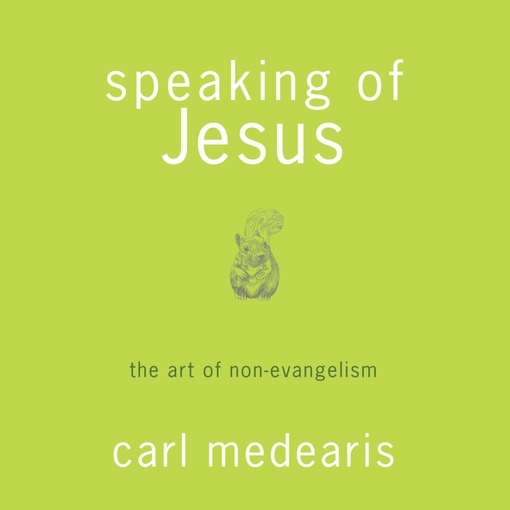
I have a missionary friend of mine who supports the ministry of Carl Medearis. I had heard of Medearis before, and I have a book by him in my library that remains unread, Muslims, Christians, and Jesus: Gaining Understanding and Building Relationships. Like many folks today with tight schedules, I simply have not had the time to read the book. But I am a cheap guy, and so when my missionary friend sent me a link to download a **FREE** copy of Medearis’ latest book as part of a limited time offer, I thought “Sure, I’ll get it…. but I’ll probably never read it.” So I downloaded an electronic copy of Speaking of Jesus: The Art of Not-Evangelism. It is a fairly small book, so I just happened to glance at the title of the last chapter, “Gays, Liberals, and Muslims“….. Say whaa??
J. R. R. Tolkien wrote his first children’s book about Middle Earth in 1937. Popular film director Peter Jackson adapted a modern retelling of the tale to the big screen in 2012.
J.R.R. Tolkien wrote the books, and film director Peter Jackson has put them on the big screen. The Lord of the Rings trilogy and now The Hobbit have made a huge mark at the box office. But did you know that Tolkien was instrumental in the conversion of C. S. Lewis to the Christian faith?
Tolkien, a Roman Catholic, and Lewis, an atheist, were both veterans of World War One and eventually colleagues at Oxford. Tolkien took a late night walk with Lewis and another friend, during a period in 1931 when Lewis was questioning his atheism. Lewis had a great deal of interest in ancient myths and the truth hidden in such stories. Within days, Lewis committed his life to Jesus Christ, owing much of his conversion to his conversation with his friends. Continue reading
It’s just not in our nature to accept losing. We hate to lose. But there are worse things that can happen. One of the pastors in the video below has a uniquely refreshing perspective on what really matters—and on being blessed for obedience.
My son, do not forget my teaching, but keep my commands in your heart, for they will prolong your life many years and bring you prosperity. Let love and faithfulness never leave you; bind them around your neck, write them on the tablet of your heart. Then you will win favor and a good name in the sight of God and man. Trust in the LORD with all your heart and lean not on your own understanding; in all your ways acknowledge him, and he will make your paths straight.
Proverbs 3:1-6 (NIV)
Here’s a follow-up to our previous Chi Rho post. (Don’t miss the comments at the end.)
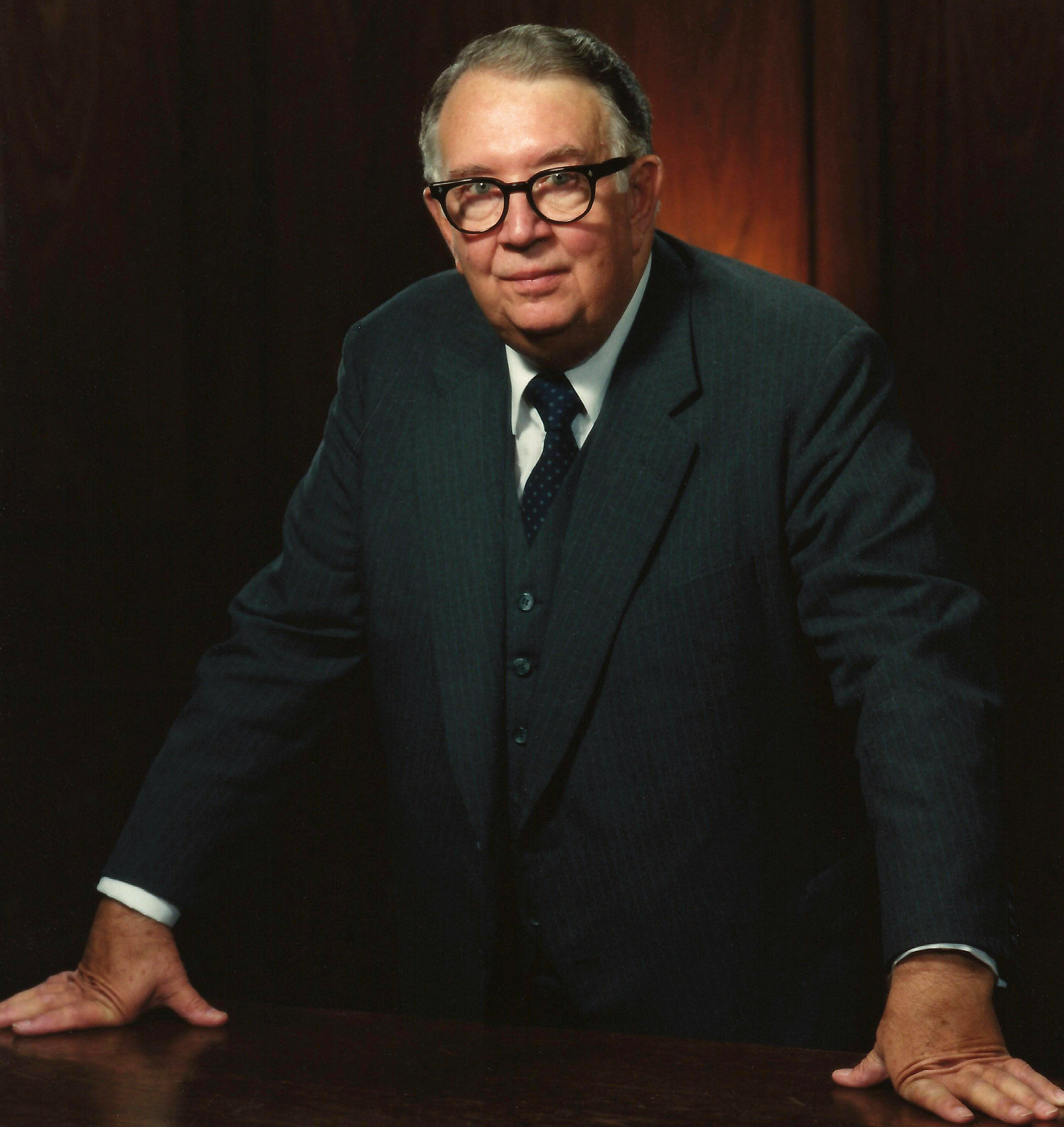
Paris Reidhead, 1990 (courtesy of Marjorie Reidhead)
When you get right down to it, most of us are timid about sharing our faith.
Among the thousands of people I’ve ever met, only a handful have had the character to put their faith out there without first running it through a popularity filter. The world is full of hard-edged egocentrics who feel it incumbent upon themselves to “tell it like it is,” but listening to most of them is painful. I’m not referring to people like that.
Gary Carter and Paris Reidhead had the courage of their convictions. One was a superstar athlete who, by the time I met him, didn’t have to prove anything. The other was a fire-and-brimstone preacher who could crush all distractions with his empowered delivery.
I had breakfast with Paris Reidhead 23 years ago at a men’s retreat. I still remember much of what he said. When he asked what I did for a living and I told him, he immediately asked if I could design a pump motor for use on a well that could “sustain 1,800 rpm when driven by oxen.” As an engineer, this sort of question rarely comes up at breakfast. Trust me. (For the purposes of this blog I won’t go into why 1,800 rpm is important—let’s just say he knew what he was talking about.)
That weekend Paris Reidhead preached on the ‘S’ word. A lot. It helped me get over the idea that Christians are “holier than thou.” Or that all our problems are solved when we come to faith. He helped me understand how God has a plan to deal with ‘S’, and that he bankrupted heaven to pay for that plan.
In a world full of self centeredness, where prosperity theology is a ubiquitous salve, Paris Reidhead’s classic sermon Ten Shekels and a Shirt is a hard, cool rain on a scorched worldview. This teaching isn’t for beginners. He uses the ‘S’ word. He yells and slams the pulpit. He convicts every listener. And he reminds me of what Jesus said in John 8:32, “Then you will know the truth, and the truth will set you free.”
So the next time you have 50 minutes to yourself, give a listen to this classic, masterful sermon. It ends up on the bottom line of why we are here.
As an amateur mechanic, I appreciate when real mechanics talk about the “old school” way of doing things. It’s a reverent term referring to doing things the tried and proven way—because it works. The old school approach is based upon real craftsmanship, with an elegance that cannot be cheaply replicated. In the best sense of the term, Paris Reidhead’s hermeneutics were old school. And he was obvously a master of homiletics.
A very special thank you to Mrs. Marjorie Reidhead for providing the above photograph of her husband. I hope I have framed his work in a way that honors his memory.
I think about Jesus Christ’s words in John 16:33 a lot:
“…In this world you will have trouble…”
D.L. Moody built upon this obvious truth when he characterized his life’s mission in a verbal self-portrait:
“I don’t find any place where God says that the world is to grow better and better…I look upon this world as a wrecked vessel, God has given me a lifeboat and said to me, `Moody, save all you can.’ ”
Of course Moody was right. The world is a sinking ship—just read the Bible. Or read the news. As Mark Driscoll would say, “There, now you know. You won’t be disappointed.”
Armed with this maritime perspective, it is very easy for us to rationalize the disappointments of our circumstances and culture. “The world is going to hell in a handbasket!” Right?
Not so fast.
We need to get over Moody’s bow wake. Both and. The wisdom in Moody’s statement is at the end. It’s what Moody was called to do. He didn’t sit in judgment of the sinking ship, and—as Dick Woodward said when I first heard this quote in a Mini Bible College lesson years ago—Moody did’t try to fix the ship or keep it from sinking. He spent his life working passionately to lead people to Jesus Christ.
Moody was a remarkable man, born poor, in harsh circumstances. He couldn’t afford a higher education, so he studied on his own. And his study made all the difference. He made the most of his time and gifts.
If anger is rooted in unmet expectations, there are a lot of people who are angry at God because things don’t appear to be getting any better. It doesn’t take a genius to figure out that our world is indeed a sinking ship. But if that’s all Christians have got as a comeback, we’re really missing the boat. Time for a little more study. God loves us and has a perfect plan—it’s our understanding of that plan that often needs some work. The Apostle Paul had his own bow wake in Romans 12:2:
“Do not conform any longer to the pattern of this world, but be transformed by the renewing of your mind.Then you will be able to test and approve what God’s will is—his good, pleasing and perfect will.”
Scripture is full of verses admonishing us not to put our hope in the things of this world. It also tells us that our hope is in the next world.
Or as Jesus offered at the end of John 16:33,
“…In this world you will have trouble. But take heart! I have overcome the world.”
The best thoughts are orbital—they keep circling and circling and we’re never quite done with them.





 Veracity