Category Archives: Topics

Is the European Union the Beast of Revelation?

From across the pond….

Next week, the UK will hold a referendum on whether or not to leave the European Union. In this discussion, what fascinates me is that some Christians across the pond are concerned that the European Union is fulfilling the role of a “revived Roman empire,” as a sign of the End Times. For example, some prophecy people look upon the Euro currency as displaying a woman riding upon a wild beast, just as it is taught in Revelation 17:3.

Just a word of caution: It might be helpful to be a little bit cautious about prophecy claims that look to the newspapers for signs of fulfillment. Below is a three and a half minute video from British pastor and author Andrew Wilson, making his case for why the European Union (EU) does not line up with what you find in Revelation.1

Interestingly, this may not be much of a surprise to some people! It is important to note that there is a growing, new movement among some Christians, that Europe is not to play such a role in God’s prophetic timetable. Instead, folks like Joel Richardson are teaching that the Islamic Middle East will play that role instead.2

Notes:

1. I blogged about this topic before when the last Left Behind movie came out. ↩

2. Joel Richardson is interviewed extensively in Covenant and Controversy, a film about Israel and Christian Zionism that I highlighted in a recent blog post.↩

Christian Passion About Israel: Can We Talk?

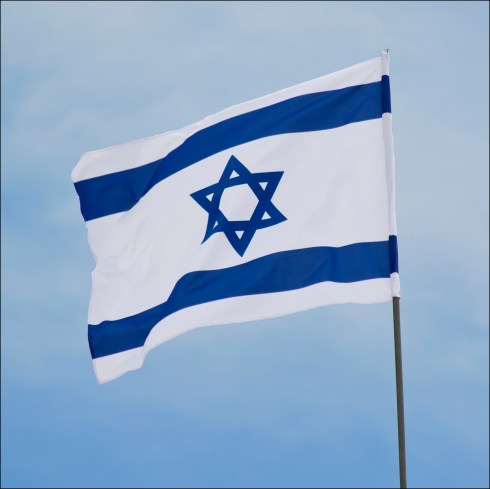
Is the secular nation state of Israel a fulfillment of Bible prophecy? Veracity tackles a "hot potato."

If I had to name one, persistent, mind-boggling issue that has divided so many conservative, evangelical Christians, it would be this one: Israel.

Unlike, say the creation vs. evolution controversy, women in ministry, etc., that some categorize as conservative vs. liberal splits, the question of what to think and do about national Israel defies simple labels. There is tremendous pressure from the surrounding culture to go in very opposite directions. On one side, are those who view Christianity as complicit in enabling, and even consciously encouraging, centuries of antisemitism. On the other side, are those who view Christianity as terribly narrow and closed-minded, urging Christians not to try to share their faith with the Jewish people.

Nowhere does the issue become more focused and heated among believers, than when it comes to the subject of the land of Israel, and the current Jewish nation state that exists there in the modern Middle East. To one extreme, are those who view any criticism of the nation of Israel as being hateful and antisemitic. On the other extreme, vocal support of the nation of Israel at the expense of spiritual concerns is sometimes viewed as a compromise on the centrality of Christ, diminishing the need to have Christ, and Christ alone, for salvation.

Israel can be deeply polarizing.

Call me naive, but I am a big believer in the need for Christians to have better and more civil conversations with one another, on emotionally-charged subjects like Israel.  Otherwise, the consequences can be devastating. If Christians are unable to have frank and open dialogue with one another, without resorting to name-calling, then this brings ill repute upon the message of the Gospel to a watching world. In an effort to promote such open and brotherly discussion, I will soon embark on a multi-part blog series on the question of “Zionism,” and its relationship to Bible prophecy1.

As I have been studying Romans 9-11 over the past year or so, the theme of how a Christian should respond to “Zionism,” the Jewish desire to return to their ancestral homeland, pops up over and over again in my conversations with fellow believers. Keep an eye out for this upcoming blog series…. and keep your Bibles, and your minds, and your hearts open.

Do you want to get the conversation going? How about two movies that illustrate the tension in the discussion?

Continue reading

Who is a “True” Jew?

Who is a "true" Jew, according to the New Testament?

Who is a “true” Jew, according to the New Testament?

Throughout the Old Testament, generally speaking, a “Jew” is someone who is a member of God’s covenant people, bound together by the Law of Moses given on Mount Sinai, as defined by the first five books of the Bible. In contrast, a “Gentile” is someone who is not a Jew[1]. For example, Jews keep the requirement of male circumcision, whereas Gentiles do not. Historically however, those who can trace their ancestral lineage back to this special nation of people, Israel, are still considered to be “Jewish,” even if they do not keep all of the rules associated with Moses.  I have known a number of  Jewish people who would consider themselves to be agnostics or atheists. These people are “ethnically Jewish,” though not “religiously Jewish.” But this distinction often causes confusion.

So, when we think of someone who is a “Jew,” do we mean someone who is ethnically Jewish? Or do we mean someone who is a practicing or believing Jew, someone who really believes in the God of Abraham, Isaac, and Jacob? Does the New Testament help us out here?
Continue reading


Destiny Disrupted: A History of the World Through Islamic Eyes

Islamic Center in Williamsburg, Virginia

Islamic Center in Williamsburg, Virginia

Everyday on my drive home from work, I pass by a house that always catches my curiosity: There is an Islamic mosque off to the side. I have often wondered, who really goes to that mosque? Why do they go? What goes on inside?

Over the past few years, I have had the privilege to make friends with some young men who attend that mosque. They are a nice bunch of guys. How much do they really know about Jesus? I am not sure yet.

Before I met these guys, I never knew that much about the history of Islam. So I thought it might be best to take some time to learn. What is the bigger story behind how a group of young men from the Islamic world ended up in my town? That is how I stumbled upon an Audible.com audiobook by Tamim Ansary, Destiny Disrupted: A History of the World Through Islamic Eyes.
Continue reading


On Disputable Matters

Accept the one whose faith is weak, without quarreling over disputable matters.(Romans 14:1 NIV, photo credit: Anglicans Ablaze)

Accept the one whose faith is weak, without quarreling over disputable matters.(Romans 14:1 NIV, photo credit: Anglicans Ablaze)

In Romans 14 through the first half of Romans 15, the Apostle Paul is encouraging the church in Roman not to quarrel over “disputable matters.” The church in Rome was divided between the Jewish Christians, who emphasized adherence to the Law of Moses, and the Gentile Christians, who emphasized greater liberty. Here, Paul gives us an excellent model of how to work through differences that come up in the Christian community, seeking to love one another, even when we do not agree.

However, the “elephant in the room” about this concerns defining what is a “disputable matter.” It seems that everyone has a different list of what they think is disputable and what is indisputable. So how is this fundamental question resolved?

Continue reading