Author Archives: Clarke Morledge

About Clarke Morledge

Unknown's avatar
Clarke Morledge -- Computer Network Engineer, College of William and Mary... I hiked the Mount of the Holy Cross, one of the famous Colorado Fourteeners, with some friends in July, 2012. My buddy, Mike Scott, snapped this photo of me on the summit.

Dead Sea Scrollback

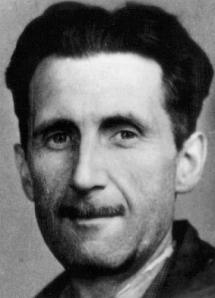
George Orwell wrote about the tendency to revise history into a muddle of misinformation in order to pacify people. Though Orwell had political totalitarianism in mind, is there perhaps a similar application with respect to popular distortions of church history?

George Orwell wrote about the tendency to revise history into a muddle of misinformation in order to pacify people. Although Orwell had political totalitarianism in mind, is there perhaps a similar application with respect to popular distortions of church history?

“The most effective way to destroy people is to deny and obliterate their own understanding of their history.” George Orwell penned this in his classic novel, 1984. Can the same be said of God’s people regarding their knowledge of church history?

Perhaps the greatest battleground in apologetics today revolves around the early history of the church.   Many students of the Bible are content to honor the authority of Scripture as God’s Word straight from Jesus Christ.  Some say that if all you need is the Bible, why trouble yourself with church history?

However, the Bible as we have it today did not drop down out of the sky.   During the early centuries of the church, Christians passed down the teachings of those earliest apostles to make up the New Testament.   The Old Testament was borrowed from the Jewish community.     Put together, the Scriptures as we have them arose out of the spiritual life of the early church.   If we fail to grasp a hold on this earliest Christian history, we risk falling into a type of Orwellian trap that would make discussions about the Bible… sadly…. useless.
Continue reading
Constantine the Great?

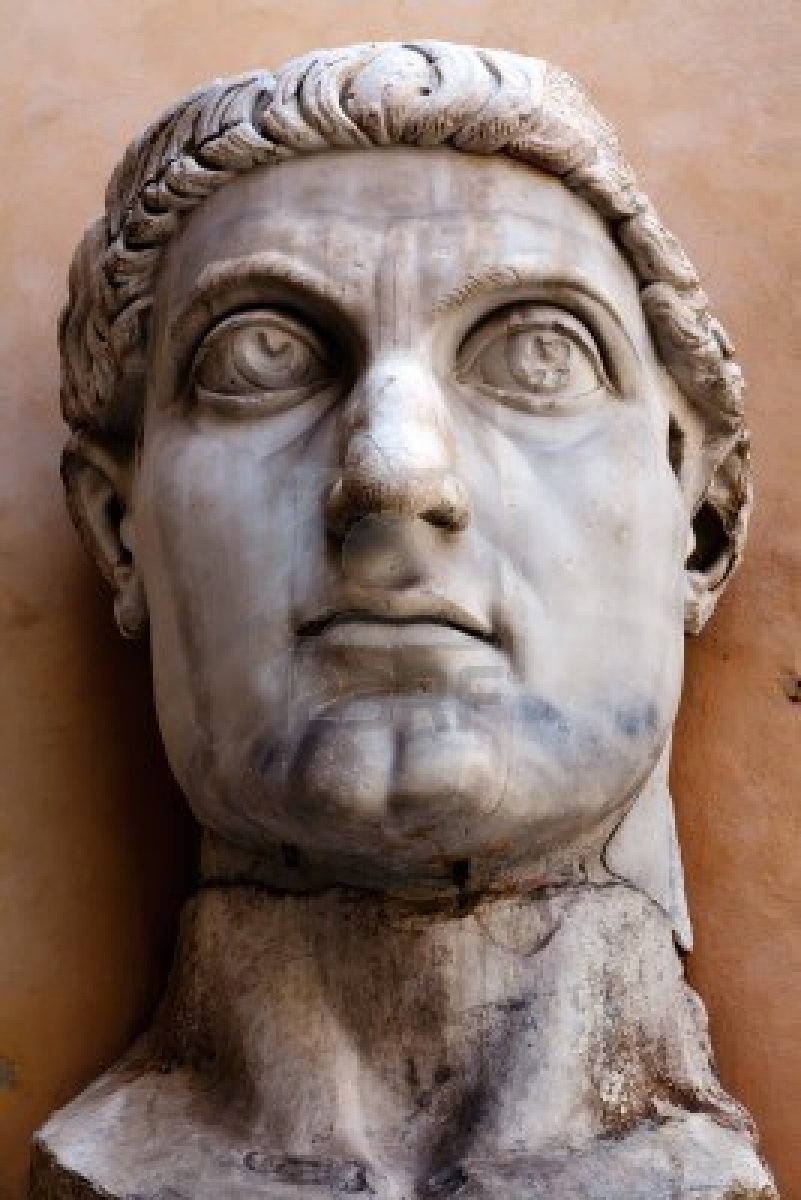
Constantine the Great, founder of "Christendom."

Constantine the Great, founder of “Christendom.”

Constantine awoke from his dream. Christ had appeared to him bearing the sign of a bent over cross. Earlier, Constantine had seen the same cross in a vision, with the inscription, “In this sign conquer”. Could this be the sign of victory he had been waiting for?

So the story goes…. it was the year 312, and this young Roman general was approaching the most pivotal battle in his life. Maxentius, a challenger to the imperial throne, had amassed an army to defeat Constantine. Constantine forged an alliance with another general, Licinius. But was this going to be enough to defeat Maxentius? Perhaps this sign from one of the gods was what he needed. Constantine ordered his troops to paint the sign of the cross on their shields. From there, Constantine won the Battle of Milvian Bridge, and the history of the world, along with the Christian faith, was forever changed.

Continue reading


Contradiction or Difference?

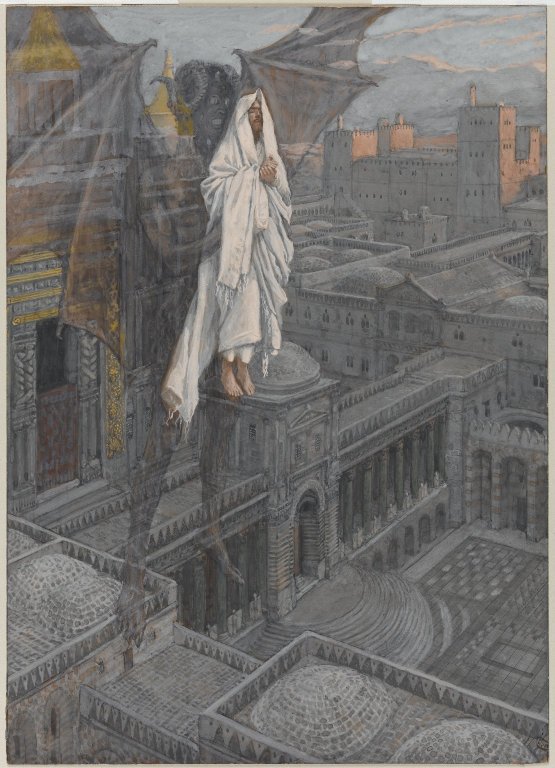
Jesus carried up to a pinnacle of the Temple, by James Tissot , a watercolor between 1886 and 1894. Was Jesus taken up to a pinnacle on the Temple prior to being taken up to a high mountain and shown the kingdoms of the world, or is the order reversed? Does the chronology really matter?

Jesus carried up to a pinnacle of the Temple, by James Tissot, a watercolor between 1886 and 1894. Was Jesus taken up to a pinnacle on the Temple prior to being taken up to a high mountain and shown the kingdoms of the world, or is the order reversed? Does the chronology really matter?

The sermon this past week was on the Temptations of Jesus. I noticed that in comparing Matthew’s version with Luke’s version that there is an apparent discrepancy in the chronology. I asked my small group what they thought of the discrepancy:  “Does this impact how you view the Bible?”

You probably know the story: Early in Jesus’ public ministry, He spends forty days in the wilderness and after being exceedingly hungry, He was tempted by the devil. Mark simply records the basics (Mark 1:12-13). But Matthew and Luke spell out the order of events of the three temptations. Both Matthew (Matthew 4:1-11) and Luke (Luke 4:1-13) start with the first temptation suggesting that Jesus turn the stones to bread. However, the order of the next two temptations between Matthew and Luke are reversed. Matthew’s second temptation is where the devil takes Jesus up to the pinnacle of the temple, urging Him to throw Himself down and trust the angels to catch Him, and the third temptation is where Jesus is taken to a very high place, challenging him to worship the devil in exchange for sharing power. Luke, on the other hand, switches the chronology, putting the “pinnacle of the temple” last, prior to being taken up to a high mountain and shown the kingdoms of the world.
Continue reading


Call Yourself a “Christian”?

What does it mean to "follow after Jesus" as opposed to simply being a "Christian"?  Carl Medearis has some thought-provoking ideas.

What does it mean to “follow after Jesus” as opposed to simply being a “Christian”? Carl Medearis has some thought-provoking ideas.

If you call yourself a “Christian”, what do you mean by that? For some, being a “Christian” is something you inherit from your parents. For others, “Christian” is a political label. Does the word “Christian” communicate something you really mean to say?

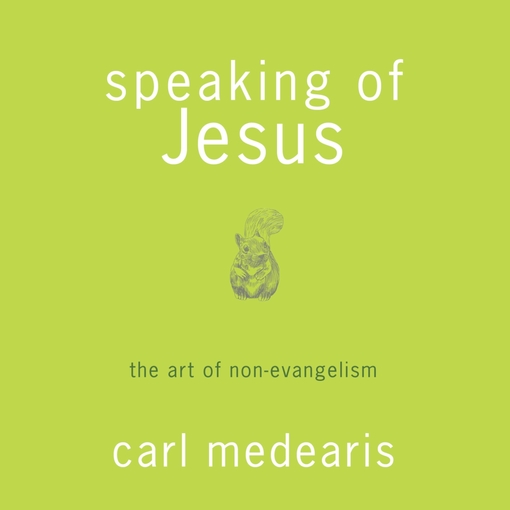
I have a missionary friend of mine who supports the ministry of Carl Medearis. I had heard of Medearis before, and I have a book by him in my library that remains unread, Muslims, Christians, and Jesus: Gaining Understanding and Building Relationships. Like many folks today with tight schedules, I simply have not had the time to read the book. But I am a cheap guy, and so when my missionary friend sent me a link to download a **FREE** copy of Medearis’ latest book as part of a limited time offer, I thought “Sure, I’ll get it…. but I’ll probably never read it.” So I downloaded an electronic copy of Speaking of Jesus: The Art of Not-Evangelism. It is a fairly small book, so I just happened to glance at the title of the last chapter, “Gays, Liberals, and Muslims“….. Say whaa??

Continue reading


Gnosis: The Inside Scoop

The Nag Hammadi Library is the largest and earliest discovery of Gnostic Christian texts, discovered in Egypt  in 1945 by two peasant brothers digging for fertilizer.

The Nag Hammadi Library is the largest and earliest discovery of Gnostic Christian texts, discovered in Egypt in 1945 by two peasant brothers digging for fertilizer.

What is that new stock tip? Where is that sale that no one else knows about? What secret knowledge can I get to win in Fantasy Football? The human quest to get the “inside scoop” is no surprise. But when it comes to Christian spirituality, an obsession to get insider knowledge can lead to folly.

Whether it is a get-rich-quick scheme, the latest diet fad, or even many forms of alternative medicine, the characteristics of an obsession with getting the “inside scoop” are basically the same. Someone gives you some special tip that is trivial at first yet seems helpful.   You have gained some valuable insight that others might not have.   But then this self-proclaimed “guru” encourages you to place your confidence in that person to gain more and more knowledge that will lead to success, wealth, health, or peace in a way inaccessible previously. You find yourself engrossed in what the guru says and you become skeptical of ordinary ways of knowing things. In many cases, you end up shelling out lots of money and/or time or other valuables to obtain what is promised to you, and any other discipline on your part is typically a short-cut to the ultimate goal. You may eventually learn the hard way that you have been duped, or you continue on in the ruse, ever more hopeful for that which was originally promised to you will finally come your way.
Continue reading