Author Archives: Clarke Morledge

About Clarke Morledge

Unknown's avatar
Clarke Morledge -- Computer Network Engineer, College of William and Mary... I hiked the Mount of the Holy Cross, one of the famous Colorado Fourteeners, with some friends in July, 2012. My buddy, Mike Scott, snapped this photo of me on the summit.

Wideness of God’s Mercy: Pluralism #4

I like playing soccer. But playing pick-up soccer is pretty difficult when you do not have any goals. Sometimes you have to improvise with a pair of shoes, a few backpacks, or if you are really lucky, a set of orange highway department cones.

Mmmm…. those look like some mighty fine cones ….. perfect soccer goals!

If you want to mess with the opposing soccer team, just move those improvised goals when they are not looking. When on the opponent’s side of the field, sneak that one cone farther apart from the other one to make that goal wider. Then just wait a few minutes. Pretty soon, you’ll be hearing, “Morledge! What are you doing messing around with the goals?! You can not make the goals wider for you!”

There is always a temptation to try to widen the goals. But it does not just happen in soccer. It also happens when we think about God and salvation. How wide is God’s mercy when we consider who will be saved and who will not be saved? What a troublesome question! In an age drawn more to the love of God as opposed to His justice, does human sentimentality confuse us in our understanding of the parameters God has set for salvation?
Continue reading


Habits of the Hobbit Heart

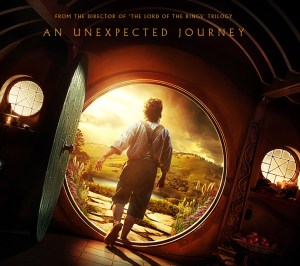
J. R. R. Tolkien wrote his first children's book about Middle Earth in 1937.  Popular film director Peter Jackson adapted a modern retelling of the tale to the big screen in 2012.

J. R. R. Tolkien wrote his first children’s book about Middle Earth in 1937. Popular film director Peter Jackson adapted a modern retelling of the tale to the big screen in 2012.

J.R.R. Tolkien wrote the books, and film director Peter Jackson has put them on the big screen. The Lord of the Rings trilogy and now The Hobbit have made a huge mark at the box office. But did you know that Tolkien was instrumental in the conversion of C. S. Lewis to the Christian faith?

Tolkien, a Roman Catholic,  and Lewis, an atheist, were both veterans of World War One and eventually colleagues at Oxford. Tolkien took a late night walk with Lewis and another friend, during a period in 1931 when Lewis was questioning his atheism. Lewis had a great deal of interest in ancient myths and the truth hidden in such stories. Within days, Lewis committed his life to Jesus Christ, owing much of his conversion to his conversation with his friends.
Continue reading


Have a Merry Mithras!?

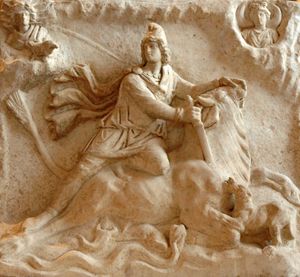
Roman bas relief from 2nd or 3rd century depicting Mithras, a central figure of the "Mystery Religions" of the early Christian era, killing a bull.

Roman bas relief from 2nd or 3rd century depicting Mithras, one of the gods of the “Mystery Religions” of the early Christian era, killing a bull.

Who was born on December 25th? Born of a virgin in a stable with shepherds present? Who had twelve disciples? Who was killed and buried in a tomb, and then rose up three days later after his death? Students of the Bible might think the answer is obvious. Not so, according to a popular movement known as “mythicism”. For the “mythicists” this original ancient figure is Mithras, a Persian god. Christianity is really just a copycat faith of Mithraism. Should we be wishing one another a “Merry Mithras” instead during the Christmas season?
Continue reading


It’s the End of the World?

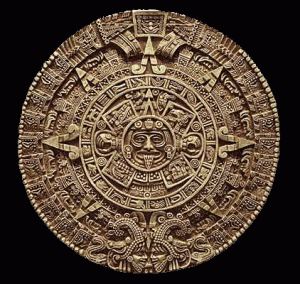
Descendants of the Mayan people were first evangelized by Spanish missionaries in the 16th century.   Once a great civilization prior to the arrival of the Spanish, the collapse of the Maya remains an enigma to anthropologists.... which partly explains the fanciful theorizing regarding the Mayan calendar among New Age movement enthusiasts.

Once a great civilization centuries before the arrival of the Spanish in the 16th century, the collapse of the Maya remains an enigma to anthropologists. The “Mayan mystery” partly explains the contemporary fascination with and speculation about their ancient calendar system.

Head for the hills, folks! THE END IS NEAR! The Georgia rock band, R.E.M., wrote “It’s the End of the World as We Know it (And I Feel Fine)” in 1988. Whenever I hear threats of impending apocalypse, I always hum that song. But seriously, should a Christian be concerned when we hear doomsday talk?

At the time of this blog posting, the fascination has been with the end of the Mayan calendar on December 21, 2012. Much has been made of potential cataclysm on this date, but the fact is that it really is not a big deal. On that date, the Mesoamerican Long Count calendar will need to flip over to the next b’ak’tun, according to Mayan mythology. Anthropologists who study Mayan culture contend that linking the idea of universal catastrophe with the end of the Mesoamerican Long Count calendar is simply speculation, having absolutely zero correspondence to historical Mayan thought. However, this does not dissuade popular New Age theorists from “cashing-in” on all of the fuss.
Continue reading


Nativity Redux

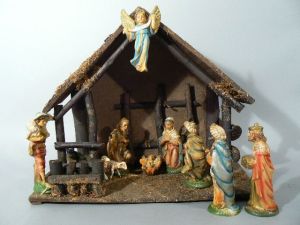
A typical nativity creche that you can get through your Christian bookstore.... replete with Joseph, Mary, the baby Jesus, a shepherd and the "Three Kings of Orient are,"  much like the one I grew up with.  Historically accurate?  Maybe not.

A typical nativity creche available through your local Christian bookstore…. replete with Joseph, Mary, the baby Jesus, a shepherd and the “Three Kings of Orient are,” much like the one I grew up with. Historically accurate? Maybe not.

When I was a kid, I liked setting up our wooden nativity creche during Advent season. The creche had Joseph and Mary in the stable, with barnyard animals all around. There were the shepherds, and of course, the three wise men. I lost the little infant baby Jesus under the couch one year, but found him a few weeks later. I loved this nativity scene. And I was really excited about it…. until I started to actually read the Bible.
Continue reading