Author Archives: Clarke Morledge

About Clarke Morledge

Unknown's avatar
Clarke Morledge -- Computer Network Engineer, College of William and Mary... I hiked the Mount of the Holy Cross, one of the famous Colorado Fourteeners, with some friends in July, 2012. My buddy, Mike Scott, snapped this photo of me on the summit.

No Compromise?

Was Galileo right?  Or did he take the Christian church down the path of compromise, eventually leading to the contemporary secularization of the traditionally Christian societies, weakening the witness of the church?

Was Galileo right? Or did he take the Christian church down the path of compromise, eventually leading to the contemporary secularization of  traditionally Christian societies, and weakening the witness of the church?

Millions of years. The age of the earth. Established scientific fact based on evidence? Or fatal compromise of biblical inerrancy and the integrity of the Gospel?

Answers in Genesis (AiG) is the premier Young Earth Creationist organization in the world. Their basic mission is to try to help Christians have a restored confidence in the full inerrancy of the Bible, starting at the “very first verse” in Genesis. One of their primary claims is that evangelicalism has allowed apostasy to enter the church by accommodating to the modern scientific idea of a “millions of years” Old Earth. Over time, this gradual movement away from a literal 24-hour day interpretation of the Creation account, with a Creation date of less than 10,000 years ago, has led to all sorts of  other confusions of Bible doctrine. Secular critics scoff, church leaders fumble on the questions, and many bewildered young people in our churches go right out the door and leave the faith, according to AiG.
Continue reading

Feeling Like a Zero

Zero.  Have numbers ever helped you in your life?  If so, go thank your local Muslim neighbor, today!!

Zero. Have numbers ever helped you in your life? If so, go thank your local Muslim neighbor, today!!

Muslim countries. The Undeveloped World. Kind of go together don’t they? Except for oil-rich places like Dubai, this is a typical impression held by Christians in the West. But what if you were from a Muslim country? Would that impression make you feel very good? Probably not. You might feel a little like a ZERO.

In the wake of current tensions in Egypt, Syria, and Iran, Carl Medearis has been getting me to rethink some things here on Veracity.   If you know of anyone who has done missionary work among Muslims, you will learn from them that there is a long history of mistrust between Christians and Muslims that you simply have to work through if you hope to make any progress in sharing your faith. A huge part of that story is how the tables have been flipped over the centuries with respect to cultural influence.
Continue reading


Dead Sea Scrollback

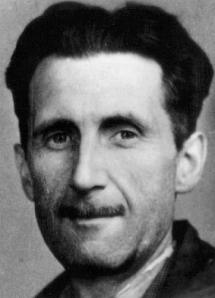
George Orwell wrote about the tendency to revise history into a muddle of misinformation in order to pacify people. Though Orwell had political totalitarianism in mind, is there perhaps a similar application with respect to popular distortions of church history?

George Orwell wrote about the tendency to revise history into a muddle of misinformation in order to pacify people. Although Orwell had political totalitarianism in mind, is there perhaps a similar application with respect to popular distortions of church history?

“The most effective way to destroy people is to deny and obliterate their own understanding of their history.” George Orwell penned this in his classic novel, 1984. Can the same be said of God’s people regarding their knowledge of church history?

Perhaps the greatest battleground in apologetics today revolves around the early history of the church.   Many students of the Bible are content to honor the authority of Scripture as God’s Word straight from Jesus Christ.  Some say that if all you need is the Bible, why trouble yourself with church history?

However, the Bible as we have it today did not drop down out of the sky.   During the early centuries of the church, Christians passed down the teachings of those earliest apostles to make up the New Testament.   The Old Testament was borrowed from the Jewish community.     Put together, the Scriptures as we have them arose out of the spiritual life of the early church.   If we fail to grasp a hold on this earliest Christian history, we risk falling into a type of Orwellian trap that would make discussions about the Bible… sadly…. useless.
Continue reading


Constantine the Great?

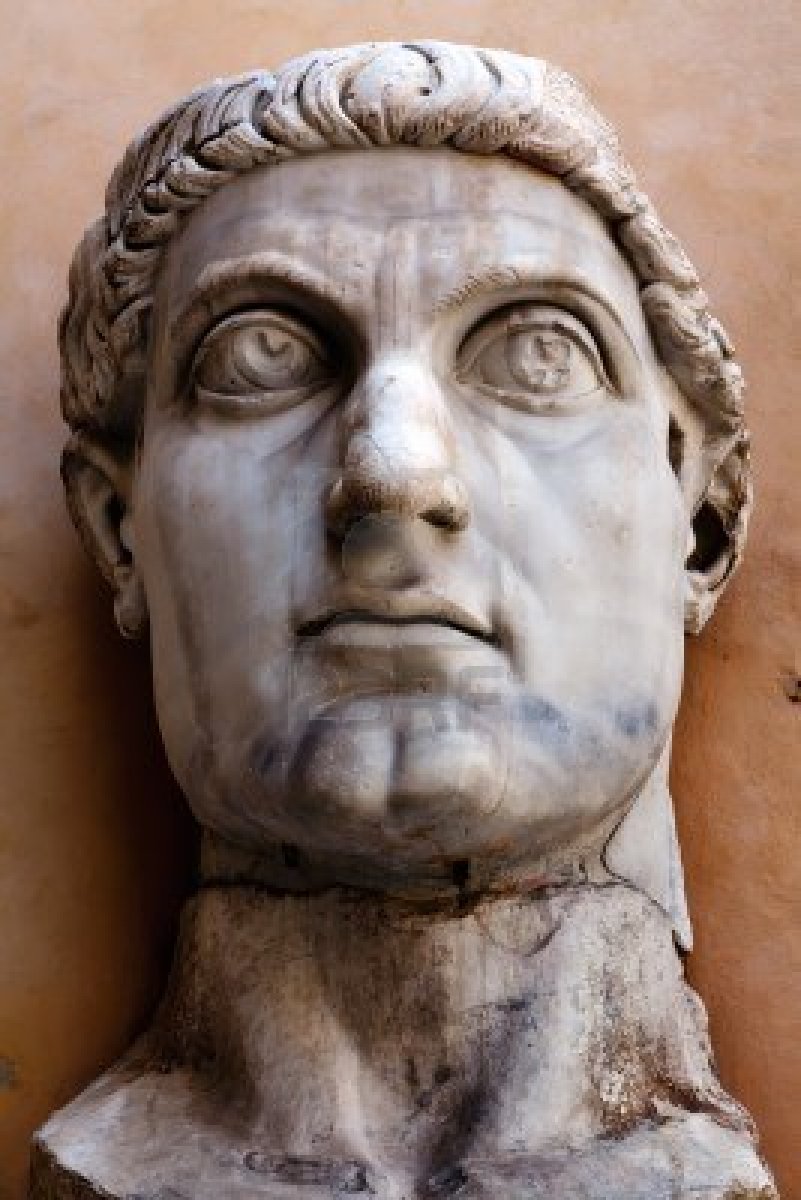
Constantine the Great, founder of "Christendom."

Constantine the Great, founder of “Christendom.”

Constantine awoke from his dream. Christ had appeared to him bearing the sign of a bent over cross. Earlier, Constantine had seen the same cross in a vision, with the inscription, “In this sign conquer”. Could this be the sign of victory he had been waiting for?

So the story goes…. it was the year 312, and this young Roman general was approaching the most pivotal battle in his life. Maxentius, a challenger to the imperial throne, had amassed an army to defeat Constantine. Constantine forged an alliance with another general, Licinius. But was this going to be enough to defeat Maxentius? Perhaps this sign from one of the gods was what he needed. Constantine ordered his troops to paint the sign of the cross on their shields. From there, Constantine won the Battle of Milvian Bridge, and the history of the world, along with the Christian faith, was forever changed.

Continue reading


Contradiction or Difference?

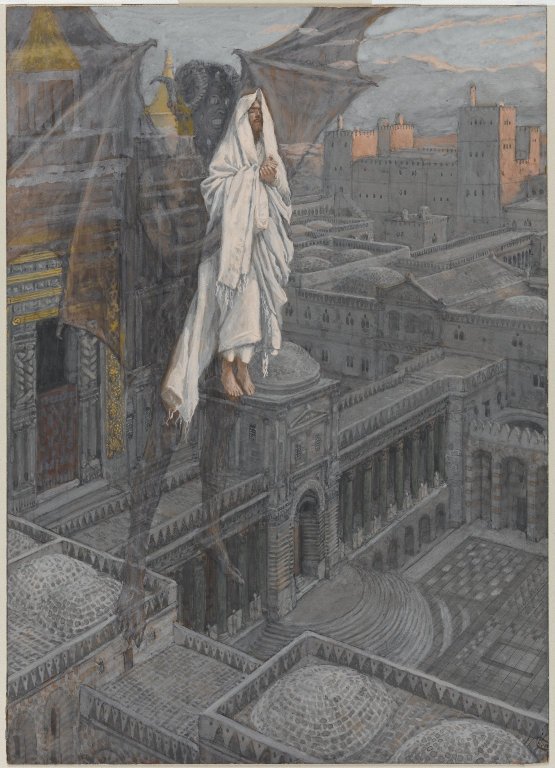
Jesus carried up to a pinnacle of the Temple, by James Tissot , a watercolor between 1886 and 1894. Was Jesus taken up to a pinnacle on the Temple prior to being taken up to a high mountain and shown the kingdoms of the world, or is the order reversed? Does the chronology really matter?

Jesus carried up to a pinnacle of the Temple, by James Tissot, a watercolor between 1886 and 1894. Was Jesus taken up to a pinnacle on the Temple prior to being taken up to a high mountain and shown the kingdoms of the world, or is the order reversed? Does the chronology really matter?

The sermon this past week was on the Temptations of Jesus. I noticed that in comparing Matthew’s version with Luke’s version that there is an apparent discrepancy in the chronology. I asked my small group what they thought of the discrepancy:  “Does this impact how you view the Bible?”

You probably know the story: Early in Jesus’ public ministry, He spends forty days in the wilderness and after being exceedingly hungry, He was tempted by the devil. Mark simply records the basics (Mark 1:12-13). But Matthew and Luke spell out the order of events of the three temptations. Both Matthew (Matthew 4:1-11) and Luke (Luke 4:1-13) start with the first temptation suggesting that Jesus turn the stones to bread. However, the order of the next two temptations between Matthew and Luke are reversed. Matthew’s second temptation is where the devil takes Jesus up to the pinnacle of the temple, urging Him to throw Himself down and trust the angels to catch Him, and the third temptation is where Jesus is taken to a very high place, challenging him to worship the devil in exchange for sharing power. Luke, on the other hand, switches the chronology, putting the “pinnacle of the temple” last, prior to being taken up to a high mountain and shown the kingdoms of the world.
Continue reading