Author Archives: Clarke Morledge

About Clarke Morledge

Unknown's avatar
Clarke Morledge -- Computer Network Engineer, College of William and Mary... I hiked the Mount of the Holy Cross, one of the famous Colorado Fourteeners, with some friends in July, 2012. My buddy, Mike Scott, snapped this photo of me on the summit.

Hey Jude, Who is this Son of Man?

God took Enoch (Genesis 5:24).   From Figures de la Bible, Gerald Hoet and others, 1728.

God took Enoch (Genesis 5:24). From Figures de la Bible, Gerald Hoet and others, 1728.

Jude is one of those obscure little books. Just one page in most Bibles. Whenever I glance at it, I want to sing with the Beatles, “Na na na, na-na na na. Na-na na na, hey Jude!” Often overlooked, the Letter of Jude references a critical key to help unlock the mystery of Jesus as the Son of Man.

The odd key is found in verses 14-15:

It was also about these that Enoch, the seventh from Adam, prophesied, saying, “Behold, the Lord comes with ten thousands of his holy ones, to execute judgment on all and to convict all the ungodly of all their deeds of ungodliness that they have committed in such an ungodly way, and of all the harsh things that ungodly sinners have spoken against him (Jude 1:14-15 ESV).

The funny thing about this is that you will search your Bible in vain for this prophesy from Enoch. Enoch is only mentioned a handful of times in the whole Bible, such as in Genesis 5:24:

Enoch walked faithfully with God; then he was no more, because God took him away.(Genesis 5:24 ESV)

Pretty brief. Pretty curious, too. Pretty much leaves a lot open to the imagination. So, what is up with this Enoch, who just disappears, and what does he have to do with Jesus as the Son of Man?
Continue reading


Crisis at Marburg

"This is my Body... This is my Blood." Matthew 26:26-27. Literal or symbolic interpretation?

“This is my Body… This is my Blood.” Matthew 26:26-28. Literal or symbolic interpretation?

Zwingli, with tears in his eyes, extended the hand of fellowship, but Martin Luther steadfastly refused: “Yours is a different spirit from ours“. Luther walked out.  The split was final. The unity of the Protestant Reformation movement was in tatters.

Marburg, Germany. 1529. Martin Luther’s attempt to reform the Roman Catholic church and restore confidence in the Bible “alone” was in full swing. Years earlier, he had nailed his famous 95 theses to the Wittenburg church door, protesting abuses within the church. Four hundred miles away, in Zurich, Switzerland, a young renegade priest, Huldrich Zwingli, was beginning to do the same thing Luther had started in Germany. Both Luther and Zwingli felt that the Church of Rome had lost its way. Christianity needed to return to the Holy Scriptures as the pure, unadulterated Word of God. The medieval church had allowed man’s traditions to creep in and compromise the truth of the Gospel.  Luther and Zwingli were hoping to stand together against what they saw as the corruption within the Roman church.
Continue reading


Announcement: Apologetics Conference

Daniel Janosik, professor of Apologetics and Islamic Studies at Southern Evangelical Seminary.   A College of William and Mary graduate, Dr. Janosik will be speaking at an Apologetics Conference at Faith Bible College, April 12 & 13, 2013.

Daniel Janosik, Apologetics Conference speaker.

In an effort to alert the Veracity community in the greater Williamsburg, Virginia area about other resources…..

Ken Petzinger asked us to help spread the word that Faith Bible College will present an Apologetics Conference at Tabernacle Church (Norfolk, Virginia) on April 12 & 13, 2013. The brochure can be downloaded from the Faith Bible College, and the topics will surely be of interest to Veracity readers.

Daniel Janosik, professor of Apologetics and Islamic Studies at Southern Evangelical Seminary will be speaking. A College of William and Mary graduate, Dr. Janosik will cover a number of topics, including his areas of specialty, Science and Islam.


Like a Son of Man

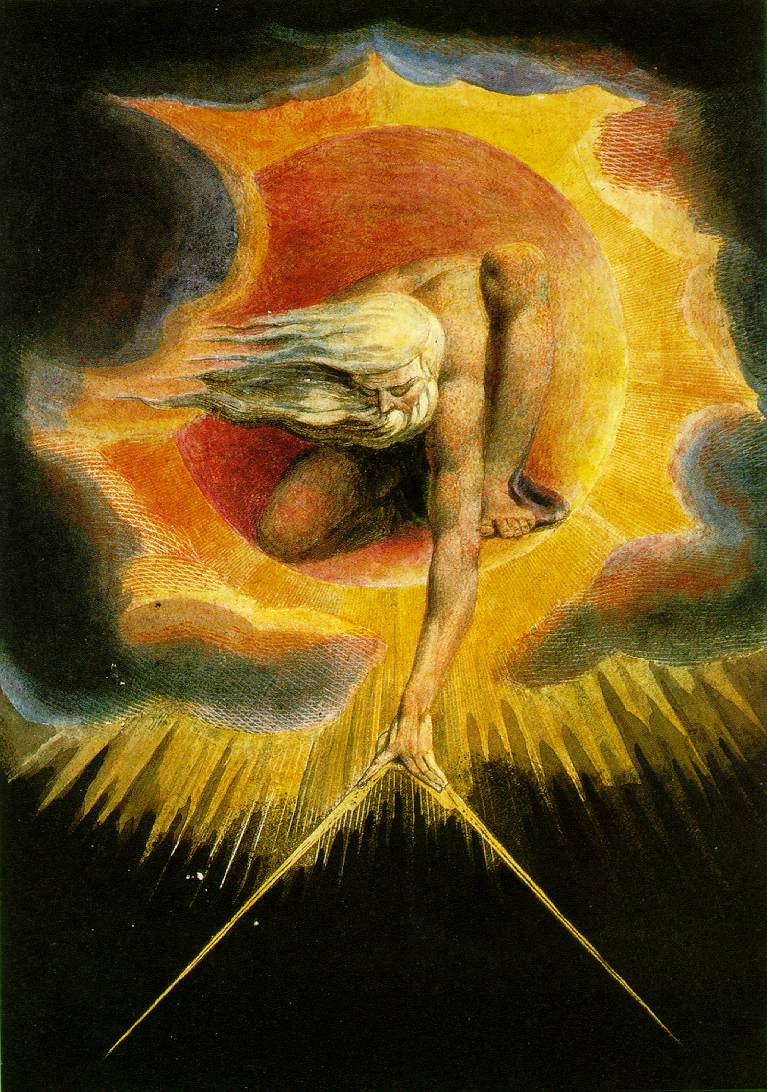
The Ancient of Days. 1794.  Watercolor by William Blake.

The Ancient of Days. 1794. Watercolor by William Blake.    Based on the “like a son of man” passage in Daniel 7.    In the Old Testament, Daniel is the master of apocalyptic imagery, which means using words as pictures to “reveal” or “uncover” that which is hidden.

Jesus talks about being the “Son of Man” eighty-one times in the New Testament. The term is Jesus’ favorite designation for Himself in the Gospels. So, what is the deal with this “Son of Man” stuff anyway?

“Son of Man = Messiah = Divinity of Christ“. For years, I merely assumed this to be true, simply out of reflex of being a Christian. But if it is true, why is it true?  I never really thought about it that much. Recently, our  small group Bible study has been looking at the Gospel of Luke, and every now and then there are puzzled looks whenever Jesus speaks of this Son of Man. As I observe everyone scrambling to read their study bible notes, I know that I am not alone in my why question.

A number of critics complain that Christians read way, way too much into this phrase. The Son of Man as the Messiah?  Mmmm. How so?   Furthermore, the Bible never explicitly equates Son of Man with “divinity”. Are followers of Jesus getting ahead of the Bible when asserting the messianic, divine meaning of Son of Man? Can a believer in Christ reasonably defend such a claim?

Continue reading


Apologetics Thomas Aquinas Style

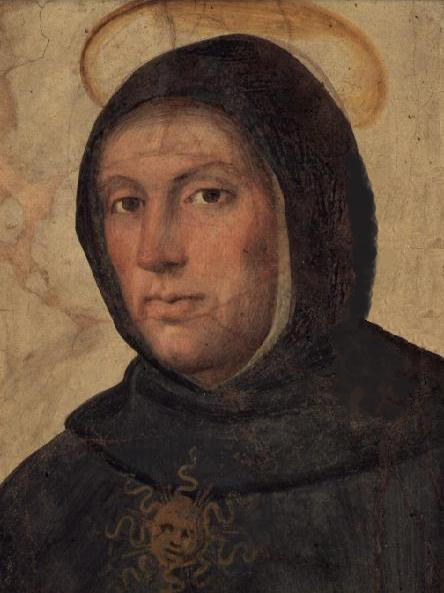
Thomas Aquinas, by Fra Bartolomeo.  During a period  of Islamic ascendancy in medieval  Europe, Aquinas let the way as a follower of Jesus to transform history.

Thomas Aquinas, by Fra Bartolomeo. During a period of Islamic ascendancy in medieval Europe, Aquinas led the way as a follower of Jesus to transform history.

According to the U.S. Census of 2010, Islam is the fastest growing religious movement  in America, increasing 66.7% over the previous ten years, as compared to only a 1.7% increase among evangelical Protestants. How do we best relate the Gospel to Muslims? Here is a nugget from church history on Thomas Aquinas and the influx of Islam into medieval Europe with lessons for today.

So, how did the medieval church respond to the overwhelming cultural influence carried by the Arab Muslims into Christian Europe? Enter in Thomas Aquinas. Aquinas was a young Dominican monk in the 13th century as he thought about the growing influence of Islam throughout the known “Christian” world. But Aquinas knew that the famous ancient Greek philosopher, Aristotle, was perhaps the most important thinker enlisted by the Muslims to support Islamic belief. Aquinas began a nearly lifelong study of Aristotle. His magisterial Summa contra Gentiles was written in about 1264 largely as an apologetic treatise for use by Christian missionaries when explaining the faith to Muslim critics. In Summa contra Gentiles, he comments extensively on Aristotle, the great pagan thinker, in an effort to defend the Gospel.

Continue reading