Author Archives: Clarke Morledge

About Clarke Morledge

Unknown's avatar
Clarke Morledge -- Computer Network Engineer, College of William and Mary... I hiked the Mount of the Holy Cross, one of the famous Colorado Fourteeners, with some friends in July, 2012. My buddy, Mike Scott, snapped this photo of me on the summit.

Son of Man as Israel?

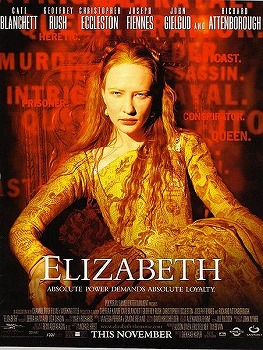
Elizabeth, Queen of England.   She represented the aspirations, hopes and dreams of her nation.

Elizabeth, Queen of England. She represented the aspirations, hopes and dreams of her nation.  What insight does this give us in knowing  how the Son of Man represents Israel?

Jesus’ self-designated title of Son of Man is a mystery to many. What does Son of Man “represent”?

One of my favorite movies is Elizabeth, starring Cate Blanchett. What strikes me about the Virgin Queen was that she truly personified England as the up and coming European empire in the 16th century. As she matured over her long forty-four year reign, England grew along with her to become a decisive world power. Elizabeth never simply spoke nor acted on her own. She represented England as a nation.  She was not just a queen.  She was England.

To “represent” some entity has an interesting etymology. It is derived from a Latin phrase meaning “to present”, or “to symbolize, to be the embodiment of”.

Earlier on Veracity, we explored how Jesus as God’s “Son” lives out the same type of life that the nation of Israel was originally supposed to do as God’s “son” in the Old Testament. Israel was disobedient, but Jesus obediently fulfills what God intended Israel to do. Jesus somehow embodies all of what the nation of Israel is meant to be.  How do we clarify what it means to say that Jesus represented Israel?
Continue reading

Brokenness: Brennan Manning

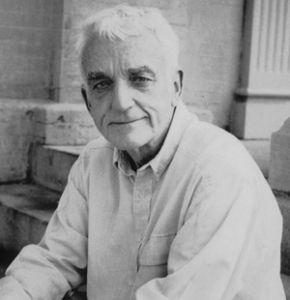
Brennan Manning.  A ragamuffin.  A story of brokenness and grace.

Brennan Manning. A ragamuffin. A story of brokenness and grace. It is a beautiful story, but it isn’t very pretty.

Life can get really messy. Even for Christians.

Consider the life of Brennan Manning. Brennan grew up in Brooklyn, New York, and then as a young man served as a Marine during the Korean War. After the Marines, Brennan was pretty lost. He was looking for something more in his life. That “something” was Jesus. After a few years of searching, he entered a Catholic seminary and eventually joined the Franciscan order as a priest. He did a bunch things as a priest: he joined a community committed to live with and work among the poor in Spain, he did campus ministry among college students, and even worked on the shrimp boats with another group of priests in Alabama, reaching out to fishermen who had fallen away from the church.
Continue reading


Son of Man and Prophecy

Perplexed by those making predictions in the economy?  Likewise, many are perplexed by prophecies in the Old Testament that are cited as being "fulfilled" in the New Testament.  Thankfully, there are useful ways of working through these difficulties.

Perplexed by those making predictions in the economy? Likewise, many are perplexed by prophecies in the Old Testament that are cited as being “fulfilled” in the New Testament. Thankfully, there is a useful way of working through these difficulties.

I don’t know about you, but I am terrible when it comes to understanding predictions, particularly when it comes to the stock market. Some say,  “buy gold, because it will double in price”. Some say to invest in the stock of company X, etc. All of this is based on supposedly predictive factors. It is like you need a “prophet” if you want to make a “profit”.

However, the best advice I have received is that you should stick with good, sound financial principles learned retrospectively over time and leave the rest to the speculators who have more money than sense in their heads: Diversify your portfolio instead of chasing the latest stock pick, get out of debt, etc., principles like that. Sometimes, the best way we can understand “prophecy” is only when we have the privilege of looking back.

The challenge can be no less different than when it comes to the prophecies of the Old Testament about what we see in the New Testament. Critics sometime charge that Christians misread prophesy in the Hebrew Bible about the coming of Christ. As we continue to look at Jesus as the Son of Man (start here then go to here), we need to step back for a moment and first address the issue of prophecy. This can be a complex topic for sure, but a lot of our problems about Bible prophecy sometimes come from not understanding the importance of looking back for perspective.
Continue reading


Michelangelo: Marvel and Mystery

Michelangelo di Lodovico Buonarroti Simoni (1475-1564) remains one of the greatest artists of all time.  If you are in the Williamsburg, Virginia, area, you have a treat in store for you at the Muscarelle Museum at the College of William and Mary.    The Muscarelle has a number of the Italian Renaissance artist’s sacred and profane works on display.    You only have a limited time to see them, as the exhibit ends on April 14, 2013.    You will not want to miss the Matti Preti (1613-1699) exhibit at the Muscarelle at the same time, a collection of  paintings ranging from Christian martyrdoms to John the Baptist to the story of the apocryphal Book of Tobit.

To wet your appetite for Michelangelo, I discovered that the Vatican has put an interactive virtual tour of the Sistine Chapel on the web, with some meditative audio as a plus.   You can click and move your mouse over the image to take in different perspectives, and from the lower left corner zoom in on all of the Biblical themes in the master’s incredible work.

Also, I know that my fellow Veracity blogger, John Paine, is a known Michelangelo fan (here and here).

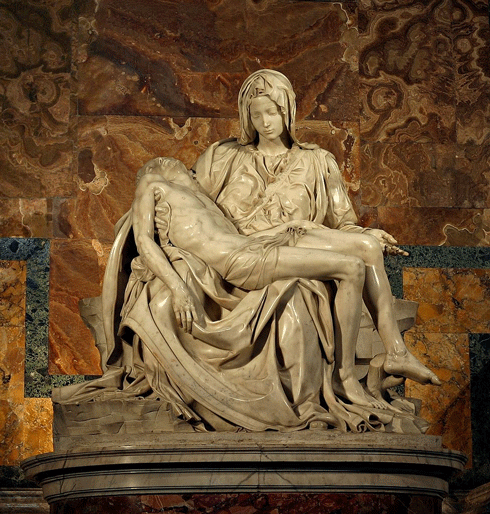
Michelangelo's Pietà

Pietà by Michelangelo, 1499

Michelangelo inspires many with his grand vision of Christian faith, an artist to marvel, and yet he remains a man of mystery. Michelangelo struggled with same-sex attraction , as suggested by a number of homoerotic poems he wrote. However, there is no known evidence that he ever acted on his carnal desires, remaining celibate his entire life.    Was he redirecting and rechanneling his sexual energies towards glorifying God through his extraordinary talents?

HT:  My mom, for the Sistine Chapel virtual tour.


Now the Green Blade Rises

Yesterday, at our worship service for Easter, we played a modern rendition of the classic hymn, Now the Green Blade Riseth.   With lyrics written by an Anglican clergyman, John Macleod Campbell Crum, in 1928, it is based on an old French Christmas Carol tune and 15th century melody, Noël Nouvelet.

The version we rocked out on yesterday was arranged by Alex Mejias for High Street Hymns, that seeks to reclaim hymns for the good of the contemporary church.   The lyrics powerfully testify to the truth of Christ’s Resurrection:

Now the green blade rises from the buried grain,
Wheat that in the dark earth many years has lain;
Love lives again, that with the dead has been:
Love is come again, like wheat that springs up green.

In the grave they laid Him, Love Whom we had slain,
Thinking that He’d never wake to life again,
Laid in the earth like grain that sleeps unseen:
Love is come again, like wheat that springs up green.

Up He sprang at Easter, like the risen grain,
He that for three days in the grave had lain;
Up from the dead my risen Lord is seen:
Love is come again, like wheat that springs up green.

When our hearts are saddened, grieving or in pain,
By Your touch You call us back to life again;
Fields of our hearts that dead and bare have been:
Love is come again, like wheat that springs up green.

When engaging with those who are skeptical about the truth of the Christian faith, it all comes down to whether or not the story expressed in this hymn is a real event in history,  fantastic wishful thinking, or a really bad April Fools joke.  I’ll go with the first option.

For a more traditional version of this hymn, enjoy this by the Choir of Ely Cathedral:

Veracity Blavatar