Author Archives: Clarke Morledge

About Clarke Morledge

Unknown's avatar
Clarke Morledge -- Computer Network Engineer, College of William and Mary... I hiked the Mount of the Holy Cross, one of the famous Colorado Fourteeners, with some friends in July, 2012. My buddy, Mike Scott, snapped this photo of me on the summit.

Rosaria Butterfield – Hospitality and the Unlikely Convert

Rosaria Butterfield - An unlikely convert to Christian faith, touched by the art of hospitality.

Rosaria Butterfield – An unlikely convert to Christian faith, touched by the art of hospitality.

Unless you have been living under a rock for the past fifteen years, you probably know that American public opinion has been shifting dramatically within the past few years to support same-sex marriage.

Given the current cultural trajectory, many observers remark that it is inevitable that gay and lesbian marriages will become widely accepted, at least legally, across large sections of America. Many critics of a traditional reading of Scripture regarding homosexuality argue that  finally “the train has left the station” regarding same-sex marriage. Many would say that Evangelical Christians should join in and affirm the trend as a matter of promoting civil rights, as was the case with racial issues in the 1950’s and 1960’s. How does someone who holds to a high view of the authority of Scripture respond to these challenges in a Christ-like way?

Enter in Rosario Butterfield. She was a lesbian professor at Syracuse University, who was for years convinced that Christians publicly supporting an exclusive approach to traditional marriage were a threat to democracy and human rights.  She was an activist who was horrified by what she saw as “homophobia” and worked aggressively to try to stamp it out. But something unlikely happened along the way.
Continue reading


A Harbinger of Typology Gone Awry?

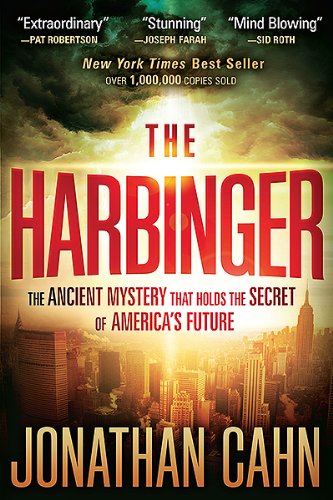
The Harbinger.  Popular New York Times Bestseller by pastor Jonathan Cahn.  Fact or fiction?

The Harbinger. Popular New York Times Bestseller by pastor Jonathan Cahn. Fact or fiction?

“Have you read The Harbinger?” The wife of the elderly couple in the restaurant asked me with great curiosity and concern. “I am not sure what to think of all of it, but it sounds like a prophetic warning for America!”

Sometimes going out to lunch can get you into trouble. As we were finishing up a meal with some friends and getting ready to leave, this couple at another table wanted to have a “conversation” with me. Well, it was more like a monologue than a dialogue. I was thinking that this would be brief, as my wife and friends had already left the restaurant, but this couple just kept going on and on about this “Harbinger” book, among other topics. I needed a rescue but there was none to be had. My wife was understandably upset, by this time waiting on her crutches outside the restaurant. After I finally left the couple as they were still in mid-sentence, I was sorely rebuked by my wife for leaving her stranded in the parking lot, after she had recently undergone foot surgery. Ouch. I had messed up. Boy, was I in trouble!

But I was not the only one in trouble. As I did a little more research later into The Harbinger, I realized that there are probably a lot more folks in trouble!

You see, I do not have cable TV, so I’m am pretty clueless about what passes for pop culture and the round-the-clock news cycle these days. But apparently, a Messianic Jewish pastor, Jonathan Cahn, has written a blockbuster novel, The Harbinger: the Ancient Mystery that holds the secret of America’s Future. As of late June, 2013, after 75 weeks on the New York Times Best Seller list under the paperback trade fiction category, The Harbinger, sat at #19. That is quite remarkable for a book written by an evangelical Christian author.

Now, the book may indeed be a great story if you like that particular genre, mixing non-fiction into primarily a fictional story. The problem is that it is sometimes hard to figure out the line where the non-fiction ends and where the fiction begins.
Continue reading


What’s a “Melchizedek”?

Abraham meets the Priestly-King Melchizadek. Dieric Bouts (1464-1467),  The Church of Saint Peter, Leuven, Belgium.

Abraham meets the Priestly-King Melchizadek.
Dieric Bouts (1464-1467), The Church of Saint Peter, Leuven, Belgium.

So, what is “Melchizedek” all about? Is a “Melchizedek” the level above the “Parking Deck”? No, not quite. In the Christian New Testament, the writer of the Book of Hebrews makes the priesthood of Melchizedek a central theme in that letter.  Jesus the Christ is also our high priest, standing in the order of Melchizedek.  So where does Melchizedek come from?

Originally, there are just a couple of obscure references in the Old Testament to Melchizedek, someone who has no described ancestry and no known descendants. He just appears and vanishes in the biblical scene quickly. Contemporary speculation abounds about Melchizedek, ranging from the writings of Joseph Smith to the Urantia book of the New Age Movement…. Mmmm….Is the writer of Hebrews just making things up as he goes along, making too much of a big deal over an insignificant character?
Continue reading


Dogs Who Know the Lord

Dooty Morledge.  1996-2013.

Dooty Morledge. 1996-2013.

We had to put our dog down today. Our little Italian greyhound, Dooty, was seventeen years old, and he had lived a full life. He was a sweet little dog, and he particularly gave my wife a lot of comfort and joy.

Ever since we got back from the vet, I have been weepy. I keep expecting him to chase me around the house, wagging his tail.

But he is not here anymore. Gulp.
Continue reading


Christian Imagination?

Imagination.  Is there such a thing as a godly imagination in the life of a believer in Christ?

Imagination. Is there such a thing as godly imagination in the life of a believer in Christ?

Is there a place for imagination in the spiritual life of the Christian?   Some critics argue that Christian faith stifles human creativity.   Does the use of imagination in worship and prayer lead to spiritual transformation or spiritual depravity?

On the one side, the Bible consistently warns that a misplaced imagination will distract the Christian from true worship.  For example, everywhere in the classic King James Version, in contrast with more modern translations, the English word imagination from the original Hebrew and Greek phrases always carries a negative meaning (then contrast with ESV). For example:

But they hearkened not, nor inclined their ear, but walked in the counsels and in the imagination of their evil heart, and went backward, and not forward (Jeremiah 7:24 KJV).

Clearly, it is possible to become so engrossed in our own imagination, or someone else’s imagination projected towards us, that we fail to hear God. In our television-saturated world and ultra-realistic CGI animation movies, the massive feast before our eyes can easily clog up our ears to God’s Word. Even in the church, if in our Sunday morning services we find ourselves remembering more about the vivid illustration used by the preacher, and yet still unable to recall what Bible passage was being expounded upon, then I think we have a deadly serious problem.

OK.  So far, given this overview, the concept of imagination does not bode well in the life of a Christian.   But does this mean that all imagination is contrary to God’s purposes? Is there a more positive, biblical, even godly approach to imagination? Sometimes, in an effort to fight off counterfeit spirituality, we can easily throw out the baby with the bathwater.
Continue reading