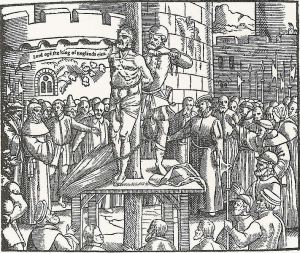
In 1526, William Tyndale published for the first time a copy of the complete New Testament into English, based on the original Greek. Ten years later, Tyndale would be dead, strangled and then burned at the stake for his crime of translating the Bible into English without authorization.
Tyndale’s translation of the Bible gave us a slew of words that did not exist before in English, as the renegade scholar sought to give the English speaking world a translation that even the ordinary “plough boy” could understand. Here is a list of some of the most creative words which Tyndale invented, mainly derived from other English words compounded together:
• Atonement (compounded from “at-one-ment”, meaning the state of being “at one” or reconciled)
• Scapegoat (derived from translating the Leviticus 16 term for the “escaping goat”)
• Mercy seat (the cover of the Ark of the Covenant, combining German and Hebrew ideas)
• Jehovah (transliterating the divine name of God from Hebrew)
• Passover (translating the Hebrew word “Pesach” for the feast celebrating Israel’s escape from Egypt; as the angel of death “passed over” the homes of Hebrew slaves with blood marked on their door posts)
• Peacemaker
• Fisherman
• Castaway
• Busybody
• Landlady
• Seashore
Exactly five hundred years after Tyndale’s monumental achievement, people are still reading the Bible in English today, having some of the same phrases derived from Tyndale that have become part of common, everyday speech.
From a blog post I first published about 12 years ago….
Continue reading