Category Archives: Witnesses

Imagination: ‘Jack’ Lewis

I was just a few months old when the death of President John F. Kennedy shook our nation 50 years ago. But everyone who knew of the Kennedy assassination at that time knows exactly where they were at the moment when they heard the news. Like 9/11 in our day, the story of the Kennedy tragedy shaped a generation. However, there was another cultural event on November 22, 1963 that was overshadowed by the Kennedy shooting:  the death of C. S. Lewis.

Clive Staples “Jack” Lewis: famous Christian of the 20th century, influential apologist, and still today a popular author of children’s fantasy… and yet, I often wonder how much the Christian church has truly been been shaped by the life and work of this Oxford don.

As my fellow Veracity blogger, John Paine, confesses, Lewis can sometimes be a little hard to get in sync with.  From another angle, I pretty much boycotted reading Lewis years ago precisely because he was so popular back then. Many evangelicals seem uncomfortable today about the legacy of this tobacco-smoking, British intellectual Anglican. But both John and I have now come to deeply appreciate Lewis more and more.

What does Lewis have to say?  If I had to sum it up in one word, it would be imagination.  It was a vision of a Biblically-informed imagination that brought this atheist to faith, a man filled with animosity towards his father, and who had a very odd, even scandalous relationship with a much older woman. Lewis endured the mindless insanity in the French trenches of World War I, but he rarely talked about it. Lewis, like any human that I know, had moral failures and terrible skeletons haunting him in his closet. But it was the creative energy of thinking about the love story of the Bible, God’s relentless pursuit of bringing a rebellious and alienated people into relationship with Himself, that broke through Lewis’ cynicism, despair, and denial.

We need more of C. S. Lewis’ vision of a Christian imagination today in Christ’s church.  Many Christians get so absorbed by the literal truth of the Scriptures that they forget about the revelatory power of the figurative, the transcendent beauty of a turn of a phrase, the deep wisdom of Biblical poetry, the whoop and wharf of story, and the subtle Truth of myth.

I think Lewis can still help us with that.

I have been listening to a wonderful and provocative audio book by Alister McGrath, C. S. Lewis – A Life: Eccentric Genius, Reluctant Prophet.  In promoting the book, McGrath gave a series of lectures, including the following sponsored by the Lanier Theological Library in Houston, Texas in the spring of 2013.

May we as followers of Jesus be shaped by the imaginative vision of C. S. Lewis.  His friends knew him as “Jack”.

Jonathan Edwards on Charity Towards the Poor

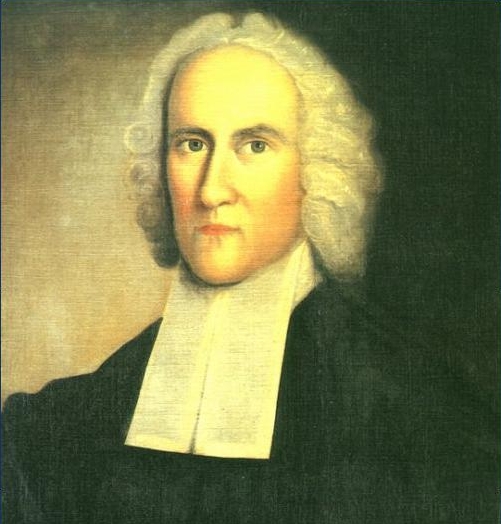
Jonathan Edwards (1703-1758), pastor, theologian, philosopher, and .... advocate for a biblical social justice??

Jonathan Edwards (1703-1758), pastor, theologian, philosopher, and …. advocate for a biblical social justice??

Most people know of Jonathan Edwards as the colonial American preacher of hell-fire and brimstone. I remember reading the mandatory “Sinners in the Hands of an Angry God” in high school and thinking that this guy had an unhealthy, morbid fascination with damnation. This narrow view of Edwards I had for years is a real tragedy, as this unfairly diminishes the extraordinary intellectual and spiritual contribution of perhaps America’s greatest philosopher.

Perry Miller, an influential Harvard historian and prominent atheist of the mid-20th century, practically rescued Jonathan Edwards from the dustbin of American cultural history. In an age when colonial American Puritans like Edwards were treated with “fundamentalist” disdain, Miller saw in Edwards perhaps one of the most perceptive and wide ranging thinkers America has ever produced. What was it about the 18th century Edwards the Christian that fascinated Miller the atheist?
Continue reading


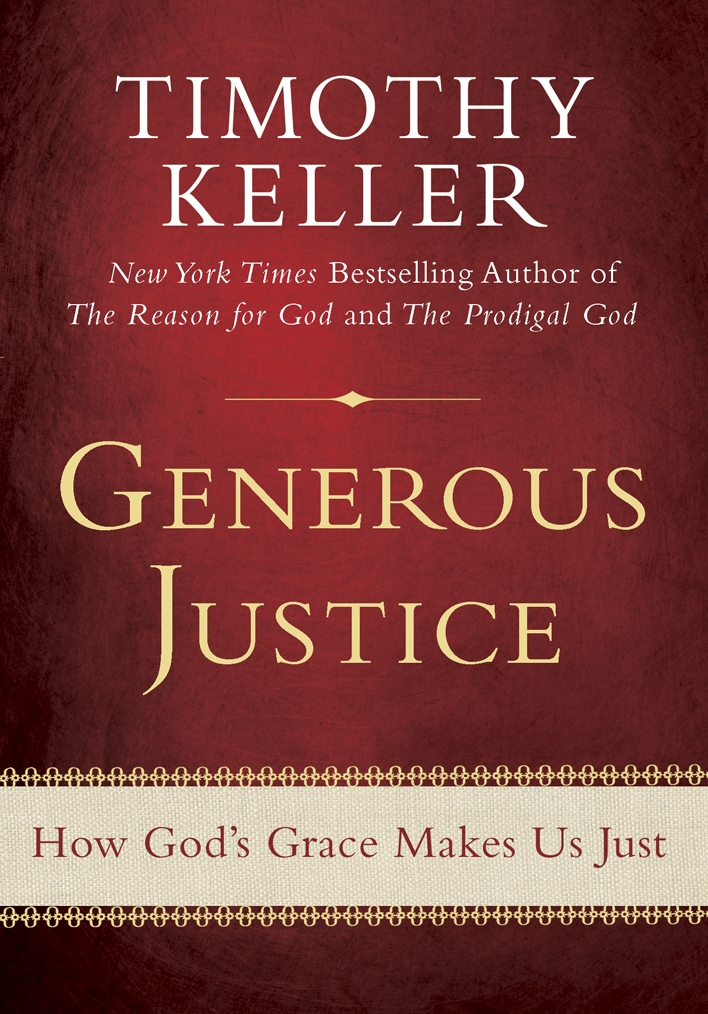
Generous Justice

Is there a connection between the Bible's teaching on justification by faith alone and living a life that promotes justice?  Tim Keller says, "Yes!"

Faith alone saves, but the faith that saves is never alone”.   This quote, often attributed to the Protestant Reformer John Calvin, reveals an important truth that pastor/author Tim Keller wants everyone to know.

A lot of people experience injustice.   A lot of people find themselves on the receiving end of life’s bitter struggles. Then along comes some Bible-toting Christian saying that “all you need is Jesus“.  Well, how does Jesus help you when you can not pay your medical bills, you lost your job, or when your spouse ran off with someone else and left you in thousands of dollars of credit card debt?

Is the Christian faith just some pie-in-the-sky hope for an eternal future or does it mean something for the here and now? Ouch.

Meet Timothy Keller.  Keller is a pastor of Redeemer Presbyterian Church in New York City.  This fall our church is doing a six-week study on his book Generous Justice: How God’s Grace Makes Us Just.   Many critics of historic, orthodox Christian faith complain that the Bible stands in the way of really making progress towards eliminating injustice in our world today.   Others find that efforts to promote “social justice” in the church are undercutting the message of the Bible.

In his book, Tim Keller is attempting to make a crucial connection between the experience of God’s grace on the one hand with a life empowered to live justly with our neighbor on the other.   The following is a 30-minute talk where Keller summarizes the message of his book based on the teachings he finds in the Bible.  Does he succeed in making that crucial connection?


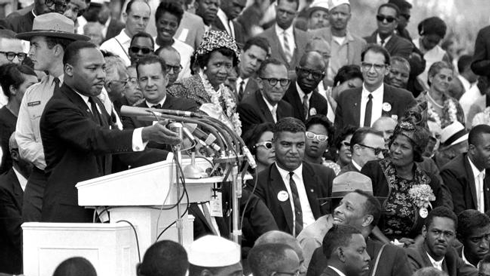
Rhetoric That Still Matters: “I Have a Dream”

Martin Luther King, Jr.

Dr. Martin Luther King, Jr. delivering his “I Have a Dream” speech—50 years ago today.


I still get emotional reading this speech. This is how you start a revolution. This is rhetoric that still matters.


C.S. Lewis: Christian Champion … or Contrarian?

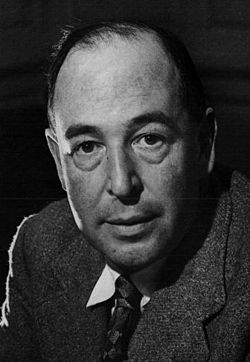
C.S. Lewis.  Died on the same day as President John F. Kennedy and author Alduous Huxley.

C.S. Lewis. Died on the very same day that President John F. Kennedy was shot.  The author of Brave New World,  Aldous Huxley, died on that day as well:  November 22, 1963 (Wikipedia image, photo by Arthur Strong, 1947)

In 2013, we remember the 50th anniversary of the death of C.S. Lewis. Though his death back then was overshadowed by the assassination of President John F. Kennedy, I would argue that at least for followers of Jesus, C.S. Lewis has had a far more profound and lasting influence than even JFK…. but how well did he do as a theologian?

Lewis was clearly the most popular Christian apologist of the 20th century. His works have been cited as a major factor in the conversions to faith of numerous prominent Christians, ranging from the scientist and U.S. National Institutes of Health director, Francis Collins, to the British atheist and molecular biologist turned theologian, Alister McGrath. Lewis’ Chronicles of Narnia books remain bestsellers among children’s fiction, several of the books having been portrayed in big-budget, major motion pictures. He was a member of the Inklings, a group of Oxford scholars that included such literary luminaries as J.R.R. Tolkien, author of The Hobbit, and (indirectly) Dorothy Sayers, the inspiring visionary of the classical Christian education movement. Lewis’ classic introduction to Christian faith, Mere Christianity, is also the slogan for a major Christian magazine, Touchstone, and his writings form part of the “canon” of many homeschooling curriculums.

For any Christian living in the past fifty years or more, Lewis has been big stuff. However, where does Lewis stand now in the mind of 21st century Christianity? Oddly enough, his legacy is somewhat controversial among some Christians.
Continue reading