Clarke and I have been invited, along with four other bloggers, to share devotional posts with our Church (Williamsburg Community Chapel) during Lent. Here’s the first post we’d like to also share with our Veracity readers as we start this ” Lessons In Lent” series on Ash Wednesday.
Personal discipleship has been a lifeline for me between what had become a comfortable and complacent Christian experience, and one that became vibrant, exciting, and very real. As we embark on this new Lenten series, I invite you to take a fresh approach to your devotional life.
Personal discipleship is the process in which a believer or seeker takes personal responsibility for investigating the claims and content of the Bible. While we all appreciate hearing a well-turned sermon in a moving worship service, sitting in a pew is a passive experience. None of us would get very far academically if all we ever did was attend lectures. We have to read, study, work some problems through, write, engage others in discussion, apply ourselves, and prepare to be tested. And so it is with our faith.
Matthew’s Gospel invites that kind of approach. His…
What does it mean to say that the Bible is without error? For a number of people, the answer is a no-brainer: either the Bible has errors (skeptics) or it does not (Bible-believer). But is it really that simple?
Back in the 1970s, a group of evangelical scholars got together and drafted The Chicago Statement on Biblical Inerrancy. It was an attempt by the best conservative evangelical minds at the time to articulate an understanding of the authority of Scripture that was faithful and consistent with what the Scriptures actually teach. The framers remarkably were able to come together with a unified understanding of what inerrancy means with respect to the Bible. For example, while English grammarians may dispute the correctness of using “regardless” or “irregardless” in a sentence, such similar issues of standardization for ancient Greek grammar do not apply to the concept of inerrancy according to the Chicago framers. In other words, the New Testament was never meant to be a textbook in Greek grammar. While the Chicago Statement was largely accepted within the evangelical faith community back then, there were some rough edges.
Those rough edges are still with us some thirty years later.
In Zondervan’s latest Counterpoint series book, Five Views on Biblical Inerrancy, we find Al Mohler, president of the Southern Baptist Theological Seminary. He is the intellectual leader of the largest Protestant evangelical denomination in North America. He enthusiastically supports and affirms the Chicago Statement on Biblical Inerrancy to be just as true for us today as it was back in the 1970s. Al Mohler is smart. He is articulate. He is well-read. He is passionate for the truth.
But according to Bible scholar and Ancient Near East literature expert Pete Enns, Al Mohler is also dead wrong. To those familiar with the compromises associated with liberal Protestantism, the complaint registered by Enns is nothing new, except that Pete Enns says that he is still speaking as an evangelical. Enns, formerly an Old Testament scholar at the Westminster Theological Seminary, says that the Chicago understanding of inerrancy advocated by Mohler is flawed and does not do proper justice to how the Bible truly presents itself to us.
In between the above polar opposite positions (further represented with excerpts from the book on the BibleGateway blog by Mohler and Enns) are other contributors, Kevin Vanhoozer, Michael Bird, and John Franke, each who in their own distinct way think that while inerrancy is still in some sense a useful term for understanding the authority of Scripture, its definition should be carefully reevaluated in view of new challenges to our understanding of the Biblical text.
When thinking about inerrancy, there is a certain sense of nuance involved and attention to what is meant by “inerrancy“. For those who look at the Bible from afar, this may not register too much, but for those who really dive into the Biblical text, as John Paine is encouraging us to do in his recent series on Who Wrote the Bible, it becomes really important.
I want to go on record and say that statements like these make me cringe. I can understand when it can be confusing when we run into evidence from science and history that contradict certain ways of reading the Bible. But it becomes clearly absurd when straight-forward mathematics are involved.
Sure, I was a mathematics major in college, so I could be a little prejudiced here. But with all due respect to Pastor LaRuffa, I am not persuaded that this is quite what the Lord has in mind with respect to the authority of God’s Word. Continue reading
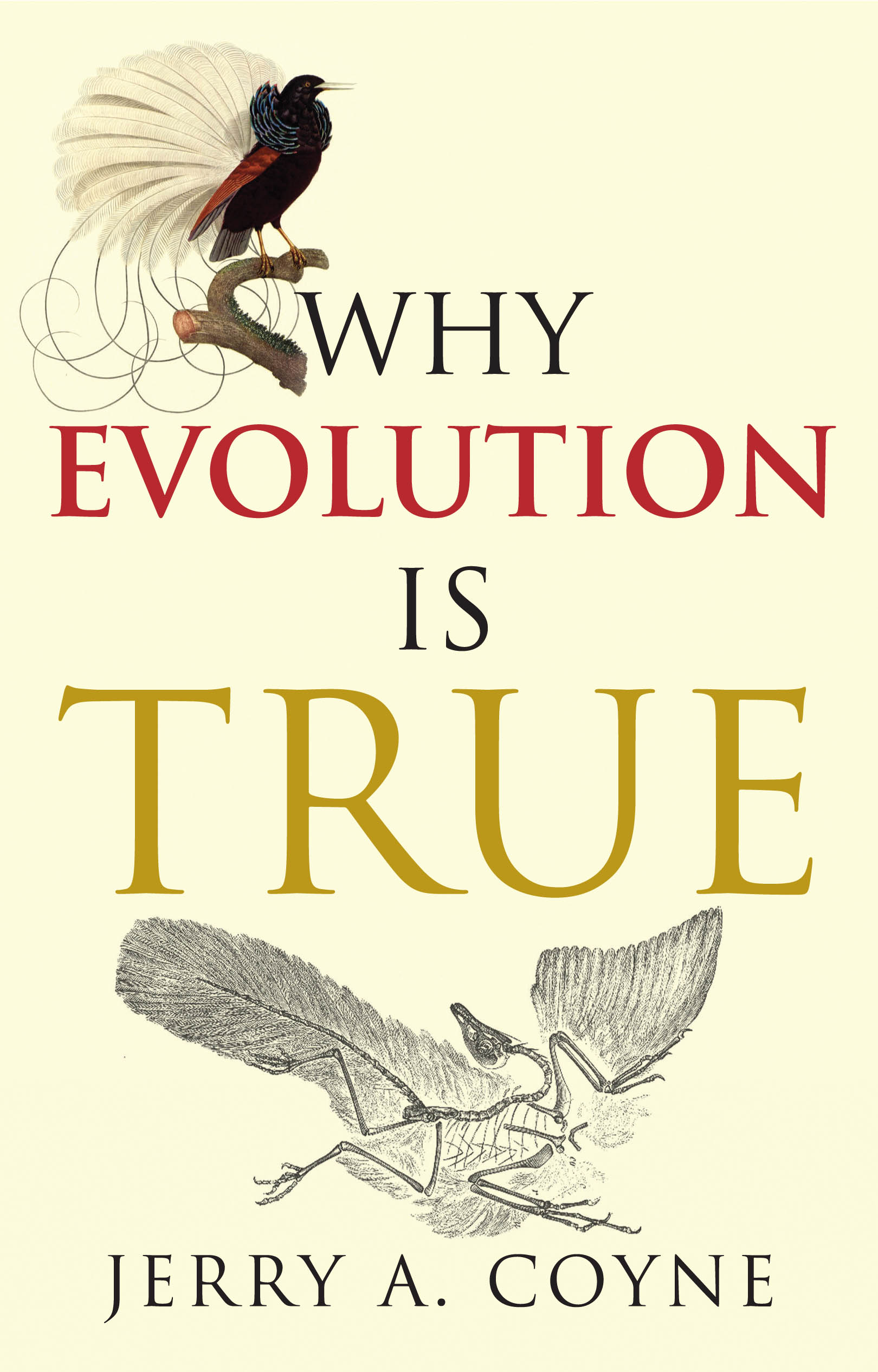
In Why Evolution is True, biologist and atheist Jerry Coyne seeks to drive a wedge between intelligent design and NeoDarwinian evolution, favoring the latter. But what if the Bible and “real world” engineering both make a case that there is less of a contrast than what Coyne would have us believe? Would a little imagination from an engineer help?
When God created the world did He do so as a Master Engineer or as a Tinkerer?
I recently finished listening to an audiobook by Jerry Coyne, a University of Chicago biologist, and vocal critic of Christian interpretations of science. In Why Evolution is True, Jerry Coyne is making the argument that the biological theory of evolution rules out the possibility of Intelligent Design. Evolution does not reflect the divine activity of a Creator. According to Coyne, the biological world does not resemble the work of someone creating things from scratch. Instead, the evolutionary process demonstrates the work of tinkering; that is, working with a limitation of available parts, experimenting at putting together different solutions. Tinkering is not very efficient, nor does it always produce the most beneficial results, hardly becoming the activity of a Divine Creator. But for Coyne, this tinkering is exactly what NeoDarwinian evolution is all about… and it is true.
Jerry Coyne did his undergraduate work at the College of William and Mary, finishing in the 1970’s. I currently work at William and Mary as a network engineer. Coyne is a superbly skilled scientist, but I need to respond to him as an engineer. Continue reading
My wife and I were still out making our monthly run to CostCo while last night’s debate between Ken Ham and Bill Nye was going on. It was not like the SuperBowl or anything, but somewhere between a half a million to a million people watched the YouTube version online.
I only caught the closing statements near the end and rewinded to the beginning to catch their opening statements. I actually thought the exchange went better than I thought it would, and it did turn out a little different than I expected and predicted here on Veracity.
Instead of focusing on the harm evolution education he reports is causing in our schools, Ken Ham focused more on the distinction he was making between historical science and observational science. His main argument was that he and Bill Nye actually share the same perspective on observational science that gives us things like modern technology today. The disagreement is over historical science. For Bill Nye, historical science gives us genuine knowledge about the past. For Ken Ham, science can not give us reliable knowledge about the past. We must look to the Bible for that.
Likewise, Bill Nye surprised me, too. Though he clearly has an agnostic orientation towards the Christian faith, he made some approving mention that not all Christians share Ken Ham’s Young Earth Creationist views.


 The Life Line by Winslow Homer, 1884