Category Archives: Topics

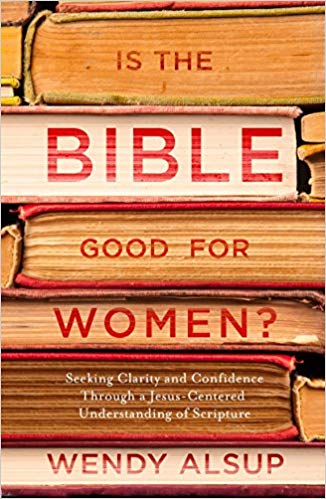
Is the Bible Good for Women?: A Review of Wendy Alsup’s Critical, Timely Book

Is the Bible good for women?

That is a question that troubles many people, Christian and non-Christian alike. As my mother told me at times, in so many words, “I like what Jesus in the Bible has to say about women, but I am not so sure about Paul.” I have stumbled over this question myself, and I am a guy.

Is “Biblical Womanhood” a Bad Deal For Women? : Rachel Held Evans Speaks Out

Unless you have no clue what the Internet is, you probably have heard of Rachel Held Evans. Evans was a relatively young mother, of several young children, who tragically met her death at 37, earlier this year. Growing up in a conservative, evangelical Christian home, Rachel, who would probably prefer that title, instead of “Ms. Evans,” was regarded as a master communicator, in the world of social media, and she was a funny and engaging blog and book writer. She deeply cared about her faith in God, the health of the evangelical church, and how to work through periods of doubt, as a Christian.

But she had an edge to her. She would spar with leading evangelical pastors and leaders on Twitter. Her most controversial book, A Year of Biblical Womanhood, simultaneously encouraged and disturbed many of her evangelical Christian readers. Rachel had her fans, but she also had her vocal critics. To her fans, Rachel offered a way of reading the Bible, that enabled them to look past a rather rigid, wooden approach to how the Bible treated women. Rachel presented a positive view of women, that offered to transcend the cultural limitations and misogynistic prejudices she saw, that were in the Bible. But she did this in a manner that also sought to retain many classic themes in Christian theology. Many felt encouraged, even relieved, to read Rachel’s book.

For example, to the delight of her fans, Rachel believed that God can call women to serve in any position of Christian ministry, that a man can serve in. Women should be elders and pastors of churches, just like men are. There is effectively no functional difference between men and women, at any level, at any measure, in the ministry of the local church. Bible passages that effectively restrict the roles of women in church, such as Paul’s policy of not permitting women to teach or exercise authority over a man, in a local church, as in 1 Timothy 2:12, can be safely set aside as merely a culture-bound restriction, that only applied to the church in Ephesus in the first century. Today, the trajectory of the Gospel has simply erased any and all differences between men and women, except for basic biology, …though in some circles, even that can be debated today, as the advances of medical surgery can make just about anything possible!

Rachel Held Evans.

Conflicted Responses to Rachel Held Evans

However, for others who read Rachel, they felt ill at ease. To her most alarmed detractors, Rachel came across as a wolf in sheep’s clothing. Rachel was not merely recasting a different interpretation of the Bible, more acceptable to modern ears. She was attacking the very integrity and plain-spoken character of God’s Word itself. Such critics completely wrote off Rachel Held Evans as an unhinged, false teacher.

At the same time, more moderate readers of Rachel’s work appreciated her voice, opposing the discrimination of women, but were bothered by what appeared to be a diminished view of Scriptural authority. In her effort to make the Bible more palatable to women, as well as to the men who know, love, and respect them, Rachel was throwing out the baby with the bathwater. Rachel’s egalitarian theology was opening up the floodgates of doubt upon other vital themes in Scripture.

Is there are middle-ground here? Is there a way of recognizing the vital contribution of Rachel Held Evans, without abandoning a more balanced way of reading Scripture?

Wendy Alsup, a Christian who is a divorced mother, who once was a women’s ministry director in a large megachurch in Seattle, Washington, read Rachel Held Evans’ book, and she was caught in the middle between the two extremes. In her reflections on Rachel’s death, Wendy describes the sense of growing up in a rigidly conservative, legalistic evangelical church, where it was commonly thought that girls who question are troublemakers. The message was this: if you do not want to be a troublemaker, keep your questions to yourself.

That is not very good advice for women who read the Bible, in the shadow of #MeToo.

Thankfully, Wendy Alsup sees right through that kind of corrupt theology. But it still leaves the fundamental question open: Is the Bible good for women?

Does the Bible Required a Raped Woman to Marry Her Rapist?

What women are not troubled when they read about the rape of Dinah (Genesis 34), or the rape of Tamar (2 Samuel 13), and then also learn that in Old Testament times, the man who who raped a woman, was then commanded, by the Law of Moses, to marry the woman, whom he had raped (Deuteronomy 22:28-29)?

Why would God command such a law, in the Bible? At first glance, it would look like the Bible is really not so good for women.

Wendy Alsup’s personal story is instructive, in understanding why such questions are so important. Wendy was herself working as a women’s ministry leader in one of evangelicalism’s largest megachurches, only to have the whole thing implode, not too long after she left the church, when the pastor was asked to step down from his position, with charges that he was abusing his power and influence. Rachel Held Evans was one of the first Christians to publicly call out this pastor’s abusive behavior.

Wendy Alsup was grateful for Rachel’s willingness to step up and raise questions, particularly about abuse. Rachel Held Evans took a lot of heat for her vocal criticism, and for that, Wendy was grateful for Rachel’s voice. The hoped for accountability structure at this influential complementarian church was not working, and accountability was sorely needed.

But Wendy was also concerned that Rachel had indeed crossed a line, in the other direction, with respect to honoring Scriptural authority. Wendy’s response to all of this was to write her own book about “biblical womanhood.”


Wendy Alsup.


Tackling Tough Issues With Honesty, Biblical Fidelity, and a Strong Sense of Hope: Wendy Alsup’s Vision of “Biblical Womanhood”

In many ways, Is the Bible Good for Women?: Seeking Clarity and Confidence through a Jesus-centered Understanding of Scripture, is the book that many Christians, like myself, wish Rachel Held Evans had of written.

Wendy tackles some of the really tough parts about Scripture, honestly grappling with the question in her book’s title. Wendy makes her appeal to some of the best evangelical scholarship available, in order to find answers. For example, with respect to the Mosaic regulation, commanding that the rapist marry the woman he raped, Wendy points out that Ancient Near East culture was not very friendly to women, in such desperate, humiliating positions (Deuteronomy 22:28-29).

But then one considers that marrying the raped woman was actually a way of protecting and providing for the raped woman, who would otherwise be shunned by her ancient community, or even killed by her family, due to the shame. The Law of Moses challenged the rapist to re-examine himself, repent of his wrong doing, make restitution to the woman by restoring her dignity and honor, and seek to try to make things right.1

It bears keeping in mind that rape, in those ancient cultures, were typically not involving unknown assailants, as commonly thought of today. Rather, the case of rape often involved persons who were already known to each other, to begin with. True, this ancient Hebrew prescription of the Mosaic Law was not as progressive as modern Westerners have come to expect. But as Wendy Alsup reminds the reader, the Law of Moses was never meant to be an end, in and of itself.

The Law of Moses pointed towards its eventual fulfillment in the coming of the Messiah. The Law itself was incapable to completely right the wrong suffered in cases of rape. Only Christ Himself can do that. Jesus fulfills what the Law intended to do.

The Law of Moses was a step in the right direction, in an otherwise brutal Ancient Near East culture, but it does not tell the whole story of God’s redemptive purposes. Part of the Good News of the Gospel is that we are no longer required to follow laws, such as this one, anymore. We furthermore anticipate that Jesus will wipe every tear away, and undo all of the evil done in this world. This is a big part of our blessed hope as Christians.

What about the prescriptive regulations about cleanliness following a woman’s menstrual period (Leviticus 15)? To be kept isolated after menstruation seems humiliating today. But in a culture where wild animals could easily enter a house, smelling blood, the protective aspect of the Law of Moses begins to become seen in a whole new light.

Keeping a woman in such a condition isolated from wild animals was probably a very sensible thing to do, even though the Bible does not explicitly spell that out for the average reader. Plus, these isolation regulations helped to protect against the spread of disease, in an era when modern medical knowledge was not accessible. As our knowledge of Ancient Near Eastern culture continues to increase, as we learn more about such early periods of human history, through archaeology and historical studies, we can gain some fresh insight into why some of the more bizarre sounding parts of the Bible are perhaps not so bizarre after all.

Wendy embraces a form of complementarian theology, that holds to a time-honored view of male-headship in the home, and in believing that the role of elder/pastor is limited to men only. So while Wendy is quite open to embrace scholarship, that might shed further light on difficult Bible passages, she rejects the suggestion that scholarship can itself be used to overthrow readings of Scripture, that are simply not available to non-specialists, who lack the academic training. Scholarship can help to illuminate those parts of Scripture that are difficult to understand. But scholarship can not be used to contradict a non-specialized reading of Scripture.

This might be still too much for some of Wendy’s more egalitarian minded readers.2 Even I would place a caveat on Wendy’s position, in that it is quite clear to me that some non-specialized readings of Scripture can still be wrong, in light of compelling evidence. Good biblical scholarship can help to bring such evidence to light. Nevertheless, Wendy appears to be correct and quite sober in how she handles the evidence, in articulating her positive, refined approach to a complementarian theology.

Less she gets misunderstood, Wendy is also quite uncompromising on critiquing bad elements of complementarian theology, that would seek to use the Bible as a weapon to harm women. Too often, critics of complementarian views of the Bible, lump all complementarians into the same category, particularly viewing all women who hold to such complementarian views as being “self-haters.” But this one-dimensional criticism is far too simplistic. Honoring differences in gender, through church office, need not imply that women are somehow “more easily deceived” than men, as some supposed traditionalists maintain. In particular, in my view, Wendy’s reading of Genesis 3:16 is spot on, avoiding some of the pitfalls found in the more popular interpretations of this critical verse of the Bible.3

Wendy also sees no conflict with Scripture, if a woman were asked to teach a Bible study, or a Sunday school, if asked by the elders of that local church, as it is the elders of that local church who are given spiritual authority for teaching, and not the Bible study leaders themselves, who are called to submit to that eldership authority. This view of women “teaching” is consistent with what any non-ordained, non-elder man can do, in a local church. You can find out more about what Wendy thinks at her blog, Theologyforwomen.org. Or better yet, read her book.

Wendy Alsup encourages the reader that the Bible is indeed good for women, but that it all begins by rethinking what “good” means, and looking at it from God’s perspective, as ultimately revealed to us in Jesus Christ. Just because we think something is “good” does not necessarily mean that God thinks that it is “good.”

If anything, the chapter of the book where Wendy makes a distinction between prescriptive versus descriptive passages of the Bible, is worth the price of the book alone.

Wendy may not answer every question to everyone’s satisfaction, as Is the Bible Good for Women?, is not a completely exhaustive look at every possible objection, regarding the Bible’s view of women. But Wendy Alsup is to be commended for writing a fantastic book that probes difficult questions, without offering weak and simplistic answers.

If I had to pick one very intelligent woman author, who presents an easily accessible read about “women in the church,” while possessing great theological acumen, and who holds a balanced view on this subject, that would appeal to the greatest cross-section of Christian readers, it would be Wendy Alsup.

If you get the audiobook version, like I did, she reads the book herself, which added to the gripping honesty and forthrightness of the book. As a male, Wendy’s book helped me to understand the  hesitations some women may experience when reading the Bible, while at the same time, affirming a positive answer, that yes, the Bible is truly good news for women. Though published in 2017, Wendy’s message is still very fresh and timely, touching on the ever present themes in the work of the late Rachel Held Evans, a critical engagement in our day and age when topics on gender are front and center, in the minds of many Christians and skeptics alike.

I have read or cited a number of books on this topic, in recent months, but many of them are quite technical. Wendy’s book is more of an easy entry into the discussion, and it makes for a great read. If you, or someone you know, wrestles with what the Bible has to say to about women, then you really need to get this book.

Notes:

1. There are actually other arguments that indicate that the command for a rapist to marry the raped woman, is not exactly how it first seems. For example, another example from Mosaic law indicates that the father of the woman must approve of the marriage, before consenting to it. If the father does not consent, the man who raped the woman must still provide material support for the woman he injured (Exodus 22:16-17). Furthermore, another instance of the Mosaic Law clearly prescribes the circumstances, where one can tell if a rape was committed, or not. If a rape was committed, the male perpetrator was to suffer the death penalty (Deuteronomy 22:25-27). Some scholars even suggest that there is a Bible translation issue here, as the original Hebrew is ambiguous (listen to Tyler Vela’s Freedthink podcast). It is quite possible that Deuteronomy 22:28-29 may not even be addressing a rape situation. The point is that while Wendy Alsup takes a worst-possible scenario here, reading Scripture within the larger context is a more suitable way to understand controversial texts, such as these.   ↩

2. See Marq Mowczko’s excellent website, offering an informed egalitarian alternative to Wendy Alsup’s moderate complementarianism. For a Bible study on YouTube, covering the same Biblical issues in detail, from another informed egalitarian perspective, see this video with Dr. Cynthia Westfall, at Bruxy Cavey’s church in Canada..↩

3. Wendy Alsup was interviewed on the Theology Gals podcast, put out by a group of Reformed Presbyterian women, where she explains the problems with the 2016 change in the English Standard Version, in Genesis 3:16.  Wendy highlights the fact that the Council for Biblical Manhood and Womanhood (CBMW), largely drove the translation change, while embracing a suspect view of the Trinity, namely the Eternal Subordination of the Son, an issue that divides the complementarian movement into basically two camps, that of a moderate complementarianism, championed by those like Wendy, and a more extreme version of complementarianism, championed by the CBMW.  Wendy writes about the New Wave of Complementarianism, in her blog, and in an essay, in a new highly praised book, Cultural Engagement: A Crash Course in Contemporary Issues, a compendium of essays edited by Joshua Chatraw and Karen Swallow Prior.  ↩


Jamestown: 1619 Remembered

Growing up in Williamsburg, Virginia, I pretty much took nearby Jamestown Island, the 1607 site of the first successful English settlement in North America, for granted. Yet sadly, I still meet people who know very little about Jamestown, and its historical importance. So, it is very exciting to remember Jamestown on this day, when many of the world’s eyes are upon this island.

On July 30, 1619, a very hot day indeed, the very first democratic English assembly was held, in the “New World,” known as the House of Burgesses, the forerunner to today’s Virginia General Assembly.

Aerial look over Jamestown, Virginia, in the 1950s, showing the beginning of modern archaeological work being performed on the island. 20-years later, as a middle school kid, I worked on one of those archaeological projects (taken from the book, New Discoveries at Jamestown, by archaeologist J. Paul Hudson and co-author John L. Cotter).

1619 was a big year in Jamestown for other reasons. The small colony established at Jamestown was starting to stabilize, but with very few women around, a lot of the men wanted to leave (for understandable reasons). In response, the Virginia Company of London ordered that “…a fit hundredth might be sent of women, maids young and uncorrupt, to make wives to the inhabitants and by that means to make the men there more settled and less movable….” By 1620-1621, women started to show up at Jamestown.

It was a tough sell to get women to come live in an area, centered in a mosquito-infested, swampy island. Some women were secretly kidnapped to bring them to Virginia, but a more voluntary arrangement was needed for the colony to survive. What effectively was a “mail-order” bride system, to provide incentives for impoverished English women to make the journey across the Atlantic, saved the day for the young Virginia colony.

Barely a month after the first House of Burgesses meeting, in July, 1619, the first Africans arrived at Jamestown. What is particularly notable was that among this first boatload of Africans, were actually prisoners taken from a Portuguese slave ship. These Africans were originally treated as indentured servants. In principle, these Africans could purchase their freedom.

But over the following decades, the rules gradually changed. What started out as customs, here and there, eventually became Virgina colony law, as the indentured servanthood status of dark-skinned persons was transformed to make them slaves for life.

There was some resistance to these legal changes. For example, it was not considered proper for a Christian to enslave a fellow Christian. So, if an African person was baptized, they could claim a right to their freedom. Yet as regretted now, in our day, even that exemption was eventually eradicated. Even racial intermarriage was outlawed in 1691.

I wonder what would have happened if those slavery laws were never passed in the Virginia colony. I wonder what it might have been like, if Christians in Virginia would have studied their Bibles a bit more closely, to learn that racism has no actual basis in the Scriptures. Perhaps they might have rethought the whole slavery business, and the inherent racism that undergirded it.

It is worth thinking about… and remembering.

Other posts about Jamestown: (a) Musings about the parallels between Jamestown’s Captain John Smith and the ancient Jewish historian, Josephus, (b) Jamestown and the first Thanksgiving, and (c) Veracity co-blogger, John Paine, takes us on a YouTube video trip to Jamestown, to help us learn some lessons about the historicity of Jesus.


Apollo 11 : The Moon Landing Remembered

I was just a kid in elementary school, when Neil Armstrong uttered his famous words, “That’s one small step for man, one giant leap for mankind.”

My parents had taken me down to Virginia Beach, for our annual, family summer beach trip. The old Halifax Hotel had but one “common room,” where the only television set was to be found, which sat off and idle most evenings.

But on that sweltering, Sunday summer evening, July 20, 1969, the room was packed. Everyone was huddled around the TV, watching this grainy, black-and-white image of an astronaut, over the crackly radio channel, transmitting nearly a quarter of a million miles away.

I wriggled up and found a spot on the floor, just feet away from the TV.  I was riveted.

To this very day, I get emotional just thinking about that night, as Walter Cronkite narrated those historical events, particularly the suspenseful moon landing, with its infamously mysterious “1202” alarm. Grateful for a safe landing, co-pilot Buzz Aldrin celebrated communion inside the lunar module, doing so privately.

My parents allowed me to stay up late to watch Armstrong step off the lunar lander ladder, amid the voices of adults all around me, chatting about how remarkable this event really was.

I drifted off to sleep that night, dreaming about what it would be like to work for NASA.

Thousands of people, including scientists, engineers, you name it, all had bonded together, with a common mission, to get a man to the moon, and back to earth, safely. Personal interests were set aside, and even a few lives were lost in the process, in an effort to reach that lofty goal.

By the end of that vacation week, I took walks out on the beach at night, looking up at a nearly full moon, simply amazed that two human beings had walked on the surface of that glowing object, so far away. This was no sketchy propaganda project, filmed on some Arizona back lot. It was a thrilling moment in human history. I was hooked on science and technology from that moment on.

Little did I know, that after college, I would end up working as a government contractor at NASA, for about 15 years. Now, among a new generation of explorers, there is talk about going to Mars!…. Even an Arab Islamic nation wants to get to Mars, very soon!

.     .     .

All of us have moments like these, iconic moments that just stick in our memory, and inspire us.

What makes these moments even more profound, is when these moments get shared with others, even with others whom we barely know, or do not know at all. Some are electrifying and uplifting, like the Apollo 11 moon landing. Some are downright shocking and shattering, and lower our spirits.

For my parents’ generation, it was events like when it was announced that the Soviet satellite, Sputnik, had made it into space, in 1957, sparking the race to the moon (the Soviets almost scooped the American Apollo 11 mission, with their unmanned Luna 15).

My mother distinctively remembered where she was, the afternoon she heard that President John F. Kennedy had been shot, in 1963. It was the grief of a nation.

I remember clearly where I was when the Challenger space shuttle blew up, in 1986. Then there was the moment when the First Gulf War started in 1991, when Revered Billy Graham prayed with President George H. W. Bush for wisdom, in the White House.

For younger generations, the most profound memory has been watching the second plane crash into the World Trade Center, on September 11, 2001.

Or a few years later, in 2008, it was the election of the first African American to the Presidency of the United States, breaking a color barrier. A year ago, it was when divers rescued a group of young soccer players, who got trapped in a cave in Thailand. The list could go on.

But perhaps, the Apollo 11 moon landing will stand out as the definitive moment of my lifetime. As U.S. Vice President Mike Pence said, “Apollo 11 is the only event of the 20th century that stands a chance of being widely remembered in the 30th century.”

.     .     .

Just a quick lesson here: Iconic moments, like the 1969 moon landing, are opportunities for people to create a sense of common bond and unity, with a large number of other humans.

Moral psychologist, Jonathan Haidt talks about the idea of the “hive hypothesis,” suggesting that normally, we as humans are primarily self-absorbed, like chimpanzees are, about 90% of the time. Scientific studies show that we are pretty much concerned with ourselves as individuals, doing our own thing, even if others are around us. However, about 10% of the time, humans seek to cohere with others, and cooperate in groups, creating a sense of unity, just as you find in a bee hive. It is those “10% moments” that make community life and family possible. The very individualization that drives us, like chimpanzees, is ironically transcended by these bee hive-type experiences.

We live in an era, in the era of social media, when such large scale, cooperative iconic moments, are becoming more elusive. The customized individualization of media sources, the 24-hour news cycle, and the explosion of information on the Internet, has made it more and more difficult to experience such collective experiences, of sharing iconic moments together, with masses of people.

Cultural commentators lament that we live in an age where people are greatly divided from one another. As Jake Meador, MereOrthodoxy blogger and author of the recent In Search of the Common Good (with a forward by Tim Keller) put it:

Our communities are disintegrating, as …the breakdown of the family leave(s) us anxious and alone—indeed, half of all Americans report daily feelings of loneliness. Our public discourse is polarized and hateful.

But this is where the Christian church can play a role, in healing the breaches that exist between people so divided… by conveying the Good News. The Apollo 11 moon landing may have been the most iconic moment in my life, that I shared with a great many of other people.  But for Christians, the greatest iconic moment of all human history is found in the Death and Resurrection of Jesus Christ.

As believers gather together, once a week (if not more), the most important thing we can do, is to continue to rehearse and tell the story of Calvary, and the Empty Tomb. The news of the Risen Christ, and the continual retelling of that story, over and over again, transformed the Roman Empire, within a mere three or four hundred years. We still recall this event of Jesus’ sacrifice for us, to conquer death and sin, every time we gather together to break bread, for the Lord’s Supper, 2,000 years later.

Then there is the entire task of following the Great Commission, that of following Jesus’ last instructions, to “go and make disciples of all nations, baptizing them in the name of the Father and of the Son and of the Holy Spirit” (Matthew 28:16-20). It is a common mission, shared by Christians, across many different denominations, that binds believers together, where personal interests are set aside, and even lives are lost in the process, martyrs for the faith.

In a recent blog, by Baylor scholar Alan Jacobs, Jacobs recalls from Larry Hurtado’s book, Destroyer of the Gods, that:


  • In 40 A.D. there were about a thousand Christians
  • In 100 A.D. no more than ten thousand
  • In 200 A.D. around two hundred thousand
  • In 300 A.D. around six million


That tremendous growth in the early church happened before the Emperor Constantine issued his Edict of Milan , despite a few periods of state-sanctioned persecution of believers. That news about Jesus continues to transform our world today, day in and day out, as millions of Christians seek to continue fulfilling that Great Commission.

In an age where it feels like the world is becoming unglued at the seams, and the Christian church appears not to be doing that much better, we would do well to continually go back and recall that iconic moment of the Risen Christ, greeting those women, outside of the tomb, where the stone was rolled way.

The moon landing of Apollo 11 was an event of worldwide importance, as television viewers all over the globe were glued to watching the drama of a few men, and a small spacecraft, unfold. But it was a secular event, nonetheless.

The story of the Risen Christ tells a different type of story, transcending the boundary between natural and supernatural, that seems almost impenetrable in our secular world today. There is a lesson to be learned here, from Apollo 11, that invites Christians to ponder our faith more deeply.


Are You a “Lukewarm” Christian?

I could subtitle this blogpost as “further adventures in misreading the Bible.”

Today’s concept of being “lukewarm” originated in the Bible, but it has permeated nearly all of contemporary culture. For example, football players are scolded by their coaches for having lukewarm enthusiasm for their team. “Step it up, folks, or get off the team!!” It is a well-worn word picture, warning against half-heartedness.

Unfortunately, to be lukewarm has taken on a meaning that has been completely ripped out of its original, biblical context. A standard definition of lukewarm has come to mean “neither cold nor hot; tepid,” but there is a figurative meaning that can be traced back to the period of the Reformation, in the 16th century, to describe a person, or their actions, as “lacking in zeal.”

The ancient city of Laodicea, an early church city site, mentioned in the Book of Revelation.
(Credit: Rjdeadly – Own work, CC BY-SA 3.0, https://commons.wikimedia.org/w/index.php?curid=19781425)

In evangelical church culture, this has meant that a lukewarm Christian is someone who is neither hot; as in, “on fire for the Lord,” nor cold; as in “a nominal Christian,” or not even a Christian at all, one who is cold-hearted in their faith. Rather, such a lukewarm person is rather tepid in their faith, someone who says that they believe in Jesus, but that they are simply going through the motions of being Christian, with nothing truly heartfelt inside of them.

Being “hot” for the Lord is good. Being “cold” for the Lord is bad. Nevertheless, either being “hot” or “cold” is preferable to being lukewarm.

While this rebuke against lukewarm faith is surely correct, it completely misses the original context for where it is expressed in the Bible. In the early chapters of the Book of Revelation, Jesus issues a rebuke for each of the seven churches, being addressed in the text, with a particularly notable admonition towards the church in Laodicea:

“(v.14-16) And to the angel of the church in Laodicea write: ‘The words of the Amen, the faithful and true witness, the beginning of God’s creation.

“‘I know your works: you are neither cold nor hot. Would that you were either cold or hot! So, because you are lukewarm, and neither hot nor cold, I will spit you out of my mouth……(v.19) Those whom I love, I reprove and discipline, so be zealous and repent (Revelation 3:14-16, 19)

The city of Laodicea, located near the modern city of Denizili, Turkey, was situated just a few miles from the neighboring cities of Hierapolis and Colossae (think, the Book of Colossians), during the New Testament period, of the 1st century C.E.  All three cities were known for the spring waters that flowed near and through them. Hierapolis was known for its hot springs, which were useful for medicinal purposes. Colossae was known for its cold springs, which were useful for drinking and refreshment purposes.

Laodicea, on the other hand, was known for its tepid, lukewarm water springs, which were completely useless. Visitors to Laodicea, in the New Testament era, were known to taste the water of Laodicea, only to spit it out, because it was so yucky. As a result, an intricate piping system was built to supply Laodicea with useful water, from the two other nearby cities, or other acceptable water sources. You can still visit the ruins of this ancient plumbing system today.

Original clay pipes in Laodicea, dating to the New Testament period, that were used to transport hot springs water from nearby Hierapolis, as Laodicea had no useful water supply of its own. (credit: ProudlyPetites travel blog)

Unfortunately, Bible interpreters of the 16th century Europe were unaware of this archaeological, historical context, for Laodicea. Presumably, Bible interpreters grabbed onto Jesus’ exhortation to be “zealous,” in the nearby verse, Revelation 3:19, and concluded that Jesus was primarily concerned about the temperature of the faith, of the believers in Laodicea.  In other words, it is better to be “on fire for the Lord,” or to be spiritually dead, instead of being lukewarm.

However, a look at the original, historical context for this passage of the Bible, brings out the appropriate clarity, regarding what Jesus’ warning to the church of Laodicea, really meant. Being “hot” is indeed useful. Being “cold” is also useful as well. Being lukewarm is not. Jesus’ teaching here is that we are to have a faith that is useful to God, and His purposes…. not a useless faith.

The spiritual temperature of a person’s faith is still important, though. Being “sold-out for Jesus” is good teaching indeed.

But it is just not what Jesus is getting after in this particular passage.

As verse 19 indicates, the passage is intended to stir the heart of the believer to accept God’s patient discipline, in their practice of faith. It was never intended as a means of threatening punishment. Rather, this passage was meant to encourage the believer to accept the Lord’s loving discipline, and respond with zeal to become more useful.

Be “hot” for the Lord, or be “cold” for the Lord. YES! Both of these are good, useful things. Being lukewarm is not.

Being “hot’ for the Lord, is to be zealous for the Lord. But being “cold” for the Lord, is to be zealous for the Lord also, strangely enough, when you read this Bible passage, in its historical context.

Nevertheless, the word lukewarm has taken on a life of its own, detached from its original context, having been embedded in the consciousness of Christians for about 500 years now, and still going strong. Some habits with how we use words prove hard to break.

It is true that such insight into the original meaning of the passage can not be gained simply by reading the text in isolation, in the privacy of one’s home. A visit to this part of modern Turkey, where Laodicea is located, would quickly impress a Christian with the real meaning of the text. But not everyone has the luxury to hop on a plane, and learn this lesson for themselves. For the rest of us, the help provided by sound, biblical scholarship can give us the insight we need to understand God’s Word more effectively.

In other words, reading the Bible as sola scriptura, “Scripture alone,” is not the same thing as reading the Bible as scriptura nuda, “Scripture naked.”  Thankfully, there are capable, faithful scholars of the Bible, who can open up our understanding, even for passages that have been taken out of context for centuries. There is a genuine place for historical scholarship that can help us to more faithfully and accurately interpret the Bible that we are reading.

Note: Peter Liethart quotes another New Testament scholar, Craig Koester, who suggests that the notion of “usefulness” of water, in Laodicea, was more specifically related to the practice of hospitality. Koester’s work indicates that when guests came to visit homes in Laodicea, Laodiceans may have used either cold water, to help chill (or supply) cold drinks, or warm water, to mix with wine, in order to warm up those type of beverages. Either way, the tepid water naturally found in Laodicea was not a useful beverage to anyone. So, the piped-in water was much preferred, whether it be hold or cold.  This is a slightly different take, than what I presented above, but the principle remains similar: cold water is a good thing, not a bad thing!!


David Barton’s “Creative” Re-Interpretation of the Founding Fathers

I had a great Fourth of July weekend. How about you?

On the 4th itself, I spent a great afternoon with Christian friends, complete with hotdogs, hamburgers, corn hole games, and watermelon seed spitting contests, and we even gathered for a moment of prayer, with a young man, who is serving his first year as a United States Marine, defending a country that we Americans love so dear. The fireworks got rained out, but that was okay. It was a great day to remember the freedoms that all Americans share. At the top of the list, as a Christian, I am most grateful to live in a country that values the freedom of religion, that allows me to worship freely, and celebrate the life we believers have in Christ, without fear of government interference or reprisals. Amen!

It is a freedom that Americans, of all worldview backgrounds, should never take for granted. I do wonder if it was as hot as it was back in the summer of 1776, when the Founding Fathers met together, as compared to the Virginia heat of the past weekend!

So, I was intrigued to learn that David Barton, of Wallbuilders, a popular Christian speaker, who goes around to various churches, to talk about America’s Founding Fathers, was recently interviewed by popular conservative talk show host, Ben Shapiro.

Let me say something right up front about David Barton. I admire his enthusiasm for American history and his concerns about how so many people have forgotten about the Christian roots of American society. He is an excellent communicator, and I do hope that his excitement in learning about history will become contagious, for the next generation.

Barton has had a number of critics on the secular left. Books with titles like The Godless Constitution have prompted many to dismiss the Christian heritage of the United States, and in many ways, David Barton has been right to try to correct that misunderstanding of history.

However, David Barton has proven to be a controversial figure. In 2012, Barton’s book The Jefferson Lies was pulled from publication, by his Christian publisher, due to criticism from other evangelical Christian historians and other leading scholars, regarding certain misrepresentations of history. As Jay Richards put it, Barton’s books and videos are full of “embarrassing factual errors, suspiciously selective quotes, and highly misleading claims.”  The Museum of the Bible has had to correct years of misinformation propagated by David Barton, surrounding the so-called Aitken Bible. David Barton has issued confusing statements about whether or not Mormons can hold orthodox beliefs about Christianity, prompting a Christian radio outlet to cancel Barton’s radio show in 2011. In 2016, David Barton made the claim that he had an “earned doctorate,” only to retract that claim a day later, when he was challenged by at least one other scholar, with an earned PhD.

Nevertheless, David Barton must have some type of teflon coating, as he still manages to bounce back from the controversies. He was able to find another Christian publisher to republish his book on Jefferson. Popular Christian actor Kirk Cameron made a movie that featured an interview with David Barton, without addressing any controversy. Even one of my (otherwise) favorite Christian authors, Eric Metaxas, featured David Barton in a book Metaxas wrote, a few years ago, without mentioning Barton’s troubles.

Like Lazarus, David Barton manages to rise again.

It is enough to drive conscientious, but otherwise less entertaining, evangelical Christian historians and scholars bananas. Because David Barton has no doctoral training in history, he is not part of any peer-reviewing, scholarly community, that can double-check his work. Why Christian leaders still promote Barton, while simultaneously failing to encourage him to submit to peer-review, and thereby correct some of his errors, is baffling.

I actually enjoyed meeting David Barton, when he came to my church to speak, about 14 years ago. We had a pleasant conversation, and I got the sense that he is a sincere man, with a desire to serve God and honor our nation’s Christian heritage. But two weeks of fact checking his presentation, and finding glaring errors, made me rather leery of what he is doing. I just wish he would fess up to making such mistakes and correct them, instead of dismissing all of his critics as secular, left-leaning liberals.

This is hard to quantify. But if I had to ballpark it, roughly about 80% of what David Barton says is reliable. The other 20% is pure bunk.  The Gospel Coalition has a very helpful blog post covering some of David Barton’s problems in detail, with a fantastic interview with prominent evangelical historians, George Marsden and Mark Noll, to help set the record straight, regarding The Search for Christian America.

The strange thing about this is that most Christians would never knowingly tolerate reading or listening to someone, who got 4 out of 5 things right. Christians are supposed to be people committed to the TRUTH, more than anything else. Right? How would you know what 80% to trust, and what 20% to distrust? But hey, that is apparently the world we live in today.

So, in the interest of setting the record straight yet again, here are some reflections on Ben Shapiro’s interview with David Barton: first, from Warren Throckmorton, the author of Getting Jefferson Right: Fact Checking Claims about Our Third President, and then secondly, a running commentary of the Shapiro interview by Messiah College historian, John Fea, the author of Was America Founded as a Christian Nation? Revised Edition: A Historical Introduction.

Last count, there were over 120,000 views of David Barton on Shapiro’s show on YouTube. So, we somehow have to get the word out to at least 120,000 people that maybe there is more to the stories that David Barton is telling.