Category Archives: Topics

Egypt: Coptic Christianity

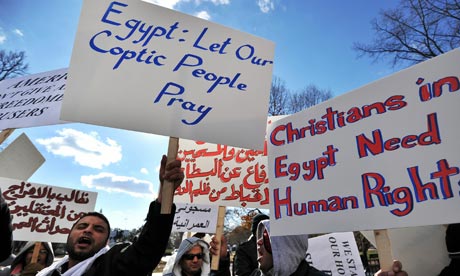
Members of an historic Christian community in Egypt find themselves persecuted in the midst of political and economic turmoil.   How should Christians at large throughout the world pray for them?

The international media highlights the conflict between the secular elite and Islamic fundamentalists in Egypt.  But what about Egypt’s historic Christian community, the Copts?  How should believers around the world pray for them?

Since the Arab Spring of 2011, Egypt has been a focal point of political renewal … and unrest. Much of the conflict in Egypt is between a secular minded ruling class and a resurgence of fundamentalist Islam. What will take shape in Egypt? A Westernized secular democracy? A return to a traditional Islamic state?

What many do not realize is that there is another group of people in Egypt often caught in the middle: the Coptic Christians.  It is a situation where many other Christians, like me, here in America, find it difficult to comprehend.
Continue reading


Jesus the “Zealot”?

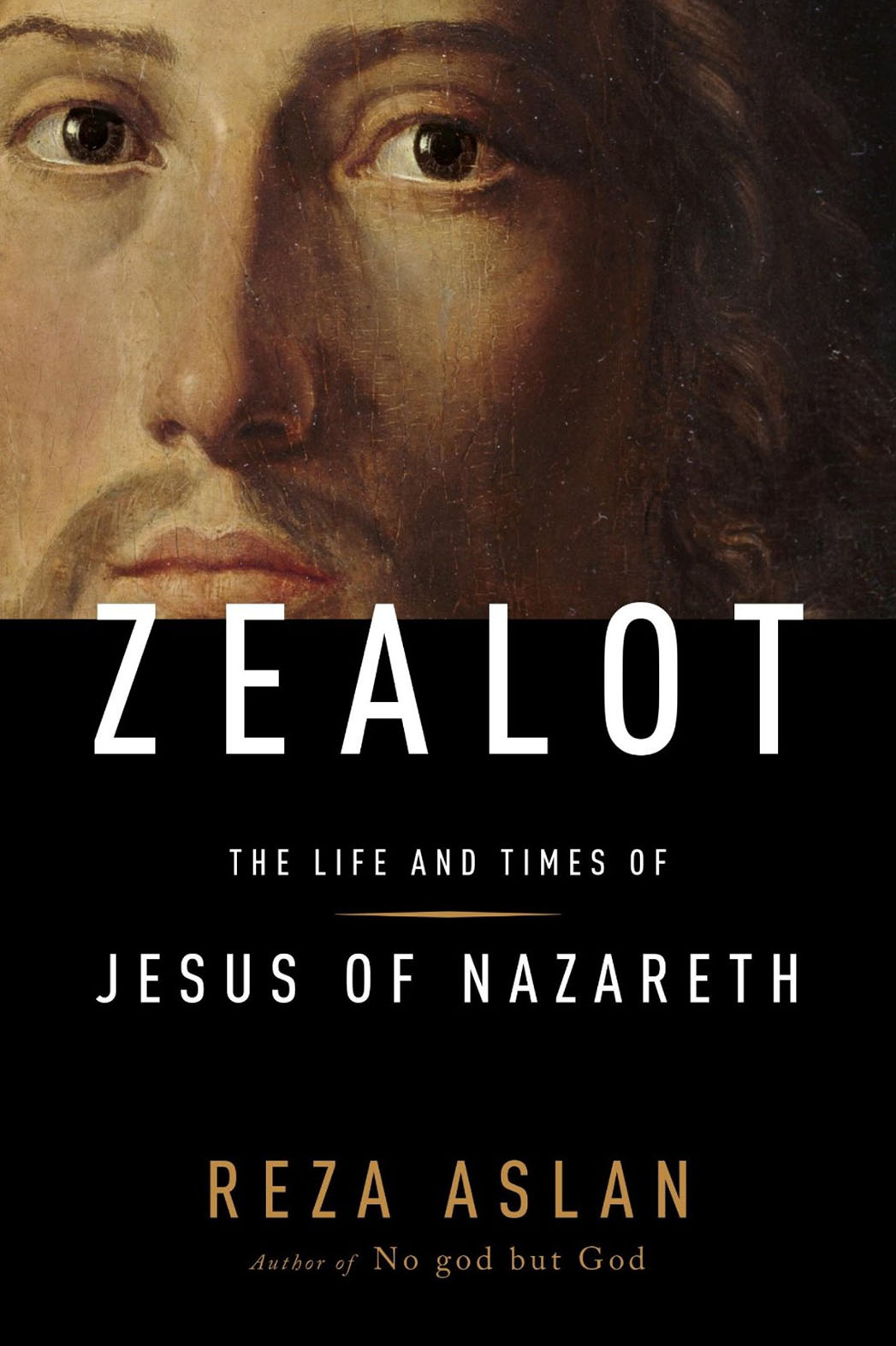
Reza Aslan's, Zealot, has profited greatly from a television interview gone viral.   But does Aslan's creative thesis really deliver?

Reza Aslan’s, Zealot, has profited greatly from an embarrassing television interview gone viral. But does Aslan’s creative thesis really deliver?

Was Jesus a “Zealot”, a Jewish political revolutionary? According to a new popular book by Reza Aslan, Zealot: The Life and Times of Jesus of Nazareth, the answer would be “yes”.

Aslan’s conclusion is in marked contrast with what I wrote on Veracity just last week and before. There I briefly made the case that Jesus offered an alternative between those Jews, like the tax collector, Matthew, who colluded with Rome, and others like Simon the Zealot, who sought to violently eject the Romans from the land. Matthew and Simon joined the group of Jesus’ twelve disciples and were drawn by Jesus’ extra-political claim as being the One who transcends and personally fulfills the messianic hopes and national aspirations of first century Judaism. A less convinced author, Reza Aslan, pretty much casts aside Jesus’ relationship with those like Matthew and places him squarely in the Zealot camp, prior to the formation of a distinct “Zealot party” that dominated Jewish politics during the era of Josephus.

But the Zealot issue is not what has captured the public’s attention about Aslan’s book. Rather, the spark was a recent, combative interview on the FOX television network. The controversy originated over whether or not a Muslim had a right to write a book about Jesus. The case that Aslan was making got lost in a series of ad hominem attacks. Yikes!! Granted, Aslan makes an embarrassingly big deal about how many academic degrees he has (“look how smart I am!”), but might I suggest that the way FOX conducted the interview was not terribly helpful, to put it mildly?
Continue reading


Dr. Bell’s Submarine Chaser

“For what can be known about God is plain to them, because God has shown it to them. For his invisible attributes, namely, his eternal power and divine nature, have been clearly perceived, ever since the creation of the world, in the things that have been made. So they are without excuse. For although they knew God, they did not honor him as God or give thanks to him, but they became futile in their thinking, and their foolish hearts were darkened.”
Romans 1:19-21 (ESV)

Bell Hydrofoil

Alexander Graham Bell’s HD-4 “Submarine Chaser” Hydrofoil. Constructed in 1919, it set a marine speed record that remained unbroken for two decades.


I read a very touching letter this week—from one of the Twentieth century’s most inspiring women to one of mankind’s most brilliant pioneers. By any measure, Helen Keller and Alexander Graham Bell were truly remarkable people.

“Dear Dr. Bell, it would be such a happiness to have you beside me in my picture-travels! As in real journeys you have often made the hours short and free from ennui, so in the drama of my life, your eloquent hand in mine, you make the way bright and full of interest, give to misfortune an undertone of hope and courage that will assist many others beside myself to the very end.”
Helen Keller letter to Alexander Graham Bell, July 5th, 1918
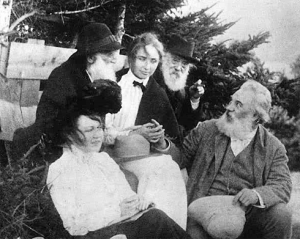
Alexander Graham Bell and Hellen Keller

Helen Keller and Bell “finger spelling,” August 29th, 1901.

For someone saddled with blindness and deafness, who was disappointed by her own speech, Helen Keller had a profoundly beautiful and powerful voice.  Her letter to Bell is affectionate, expressing deep love and gratitude.  But when she writes “your eloquent hand in mine,” she is alluding to something that surpassed a simple display of affection—she and Bell conversed through “finger spelling.” Continue reading

Teenagers with Disabilities: Amplifying Our Witness

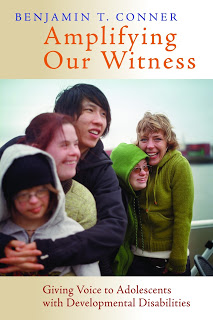
Ben Conner's latest book, Amplifying Our Witness, is a wonderful primer in doing ministry to an often neglected community:  adolescents with developmental disabilities.

Ben Conner’s latest book, Amplifying Our Witness, is a wonderful primer in doing ministry to an often neglected community: adolescents with developmental disabilities.

How many young people today do you know that wrestle with Asperger’s syndrome, cerebral palsy, or Down’s syndrome? How many parents do you know are utterly consumed by the developmental challenges faced by their teenage sons and daughters that keep them from fitting in with their age group?

Benjamin T. Conner has been a long time friend of mine in Young Life in Williamsburg, Virginia. Over the past few years, Ben has been leading the Capernaum ministry, a branch of Young Life dedicated to reaching out to adolescents who struggle with developmental disabilities. In his latest book, Amplifying our Witness, Ben cites an alarming statistic: nearly 20% of all adolescents today are diagnosed with some type of developmental disability. One in five teenagers today deal with issues that make them noticeably different from the rest of their peers. How can the Christian community effectively minister to these young people in need, as well as the families that seek to support them?
Continue reading


The Septuagint and the Original Old Testament?

The first part of the Book of Genesis, from the Septuagint, the early Old Testament Greek translation used by the early Christian church.

The first part of the Book of Genesis, from the Septuagint, an early  Greek translation of the Old Testament, which served as the “Bible” of the early Christian church before the completion of the New Testament.  Is this translation the closest thing we have to the “original” Old Testament?

“I noticed sometimes the quotes of the Old Testament passages in [the Book of] Hebrews do not exactly match the wording when I go back and look up the verses in the Old Testament. I am just wondering what is going on.” This was a question sent to our pastors for our summer Bible study series on the Book of Hebrews. I do not know who asked the question in our congregation, but I want that person in my small group. What an awesome question!

The problem is that when you read a number of Old Testament citations in the New Testament, the New Testament writers are actually quoting from the ancient Greek translation of the Old Testament, the Septuagint. Most of the Old Testament was written originally in Hebrew, so it comes as a shock to people to learn that this ancient Greek version of the Old Testament is referenced quite a bit in the New. Critics of Biblical faith will ask if the New Testament writers are at best sloppy when quoting from the original Old Testament, or are they downright fraudulent and terribly mistranslate the Old Testament by relying so much on the Septuagint instead of the original Hebrew?

Get your thinking caps on. This is really a good question.
Continue reading