Category Archives: Apologetics

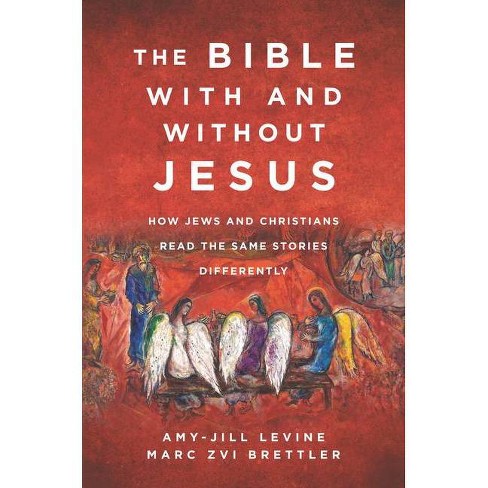
The Bible With and Without Jesus: Jews and Christians Reading Scripture Differently

Jews and Christians read the same stories in the Bible differently: So argues Jewish Bible scholars Amy-Jill Levine and Marc Zvi Brettler, as the sub-title to their 2020 book, The Bible With and Without Jesus: How Jews and Christians Read the Same Stories Differently.

So, why would I, as an evangelical Christian, read a book like this from two Jewish scholars titled as “The Bible With and Without Jesus?” Well, both Jews and Christians have at least one thing in common: The Old Testament, or what many Jews prefer to call “the Hebrew Bible,” or “the Hebrew Scriptures.” But one group reads the Old Testament with all eyes focused on finding Jesus in the text (the Christians), whereas the other group finds it difficult to see Jesus at all in the text (the Jews….. at least the non-Messianic Jews).

What do non-Christian Jews find in the Old Testament, if they do not find Jesus there? I was on a mission to find out. Having worked previously with a Jewish colleague of mine for seven years, with many hours of spiritual conversation, this was not just an academic interest. It was personal.

As Levine and Brettler put it, wherever there are two Jews, there you will find three opinions. This is as true now as it was in the time of Jesus, and in the few centuries leading up to Jesus’ birth.
 

How Jews and Christians Read the Bible in Different Ways

Last year, I read a history of the “time between the testaments,” Crucible of Faith: The Ancient Revolution That Made Our Modern Religious World, by Philip Jenkins (see this review on Veracity). Learning about the history covering several hundreds of years before Jesus was born helped me to better understand why sometimes understanding the Old Testament can be so tricky.

By the time Jesus walked the earth, different Jewish groups all held to the Law of Moses, yet came to different conclusions on certain important theological issues. The Pharisees believed in the resurrection, and the Sadducees rejected it. The Pharisees believed in an oral tradition, that had authority side by side with the written Law of Moses. The Sadducees rejected anything that was not in the written Law of Moses; that is, the first five books of the Bible. As for the rest of the books of what most Christians call the “Old Testament,” such as the Prophets (like Isaiah, Ezekiel, etc.), the Sadducees were highly suspicious as to their status as Scripture.

Other complexities abound: The Pharisees believed in a world filled with angels and demons, that interact with humans. The Sadducees rejected such grand diversity of supernatural beings, and present day communication with them, as being a bunch of nonsense, that obscured the reality of there being but one and only one ultimate divine power, that of God and God alone (Acts 23:8). The Sadducees emphasized the centrality of the Temple, whereas the Essenes (think “The Dead Sea Scrolls” people at Qumran, according to at least some scholars) rejected the Temple as a completely corrupt institution. But the Essenes went beyond even the Pharisees, as they considered books like 1st Enoch as part of Scripture…. but they interestingly dismissed Esther as not part of the Bible. This can be all quite confusing.

These type of differences, some of which are recorded in the New Testament, stem back to different ways of interpreting and translating the Hebrew Scriptures. Fast forward beyond the destruction of the Jerusalem Temple, in 70 C.E., the Jews eventually settled on a basic body of Scripture, and have since figured out ways of maintaining their tradition, without a central Temple. Nevertheless, Jews still today regularly debate the interpretation of many important aspects of their faith.

So, when I saw that Levine and Brettler had written a book that tries to show how Jews (in general) read the Bible differently than Christians, my curiosity was pricked, to dig into this issue some more. After all, I have long made the assumption that some of the most basic stories we find in the Old Testament are read the same way, by Jews and Christians alike. Apparently, my assumption has been quite embarrassingly wrong.

Levine and Brettler have been intimately involved in two major projects, that serious students of the Bible have found useful, one being The Jewish Study Bible (Brettler), taking an English translation of the Old Testament and providing study notes, written from a Jewish perspective, just like you would find in a Christian Bible. The other project is the Jewish Annotated New Testament (Brettler and Levine), which is geared towards introducing Jews to the thought world of the New Testament, but which has also helped me, as an additional resource to better understand a more Jewish context in reading the New Testament (see this book review at Themelios).

In The Bible With and Without Jesus, Levine and Brettler take some of the major theological themes as found in the New Testament, to compare how Christians view the same themes as found in the Old Testament, and contrast them with how such themes have been typically interpreted by Jews, who just read the Old Testament, by itself.

Jewish vs. Christian Understanding of Biblical Prophecy??

For example, biblical prophecy, especially as Christians have thought of Jesus fulfilling certain prophecies of the Old Testament, is a big issue. Since the Reformation, particularly after the first generation of folks like Luther and Calvin, many Protestant Bible teachers have tended to dismiss allegorical-type interpretations of the Old Testament, that were common in the medieval church, as such allegorical-type readings of the Bible tended to lead to doctrines that were considered to be theologically suspect, such as the perpetual virginity of Mary. As a result, most Protestant Reformed Christians have believed that only an historical-grammatical interpretation (sometimes called a “literal interpretation”) of the Bible is permissible when studying Scripture.

But this strict approach becomes a problem when trying to handle certain elements of biblical prophecy. For example, in Isaiah 7:14, we find the famous Christmas prophecy for the virgin birth of Jesus, as told by the Gospel of Matthew. The immediate historical-grammatical context shows that the prophecy was originally fulfilled in the birth of the prophet Isaiah’s son, in Isaiah 8. But many Jews acknowledge that there is an additional, deeper meaning of the prophecy, that finds its fulfillment in the birth of King Hezekiah. Christian scholars, even Protestant Reformed scholars, typically refer to this interpretive method as typology (or as many Roman Catholic apologists frame it, in terms of a somewhat different hermeneutical method called sensus plenior, or the “fuller sense” of the text). C.S. Lewis called this interpretive characteristic of the Old Testament to be the second meaning of the Hebrew Scriptures.

Levine and Brettler note Justin Martyr’s Dialogue with Trypho, where the early Christian apologist, Justin Martyr, engages in a debate with Trypho in the 2nd century C.E. As a Jew, unconvinced by the Christian message, Trypho was emphatic in insisting that Isaiah’s prophecy ultimately had King Hezekiah in mind back in the 6th century B.C.E, and not Jesus of Nazareth, centuries later. In other words, Isaiah 7:14 does not prophecy the coming of the Jewish Messiah. Justin Martyr, as a Christian, took a different approach, contending for the Gospel of Matthew’s claim that Jesus was the real reason and ultimate fulfillment for Isaiah’s prophecy.

The ESV translation reads Isaiah 7:14 as follows, “Therefore the Lord himself will give you a sign. Behold, the virgin shall conceive and bear a son, and shall call his name Immanuel.”  For most Jews, the “virgin” is said to be a mistranslation of the ancient Hebrew, since the translation of “virgin” comes from the Septuagint, the Greek translation of the Old Testament, favored by Greek-speaking Jews, including the earliest Christians, in the first century. However, the Septuagint’s translation may indicate an older, more authentic Hebrew tradition, that is currently lost. Or it may indicate some special insight that the Septuagint translators had, which was not made clear in the ancient Hebrew tradition, preserved by the Masoretic text. This Masoretic text, that most orthodox Jews believe to be authoritative, translates “virgin” simply as “young maiden.”

When the verse talks about “give you a sign,” Levine and Brettler note that the “you” is plural, which might suggest that the prophecy does, in fact, have a plural meaning, which might allow for one of the “you” to refer to the time of Joseph, the betrothed husband of Mary, in addition to the original reference to the time of Isaiah, through the birth of Isaiah’s son, or even the prophetic prediction of Hezekiah’s birth. Levine and Brettler’s discussion of this controversial passage reveals the complexities that show why Jews and Christians have differed in their interpretation of certain key texts of the Bible.

Psalm 22 provides another famous example of how New Testament writers used this Old Testament psalm to speak of Jesus, according to Levine and Brettler. In Matthew 27:46, we have Jesus’ well-known cry upon the cross, “My God, my God, why have you forsaken me?,” which is a direct quotation from Psalm 22:1. But certain Jewish traditions extending back to the time just before Christ treat Psalm 22 differently. In the Apocrypha version of the Book of Esther, part of what Roman Catholics call the deuterocanonical writings, we have a Greek commentary to the Hebrew version of the Book of Esther. The Hebrew version of Esther, commonly found in Protestant Bibles, has no reference to God found in the text. So, the Greek version offers a theological interpretation of Esther’s story, running throughout the text. But many Jews have noted that some significant parts of Esther contain direction allusions to Psalm 22, leading many Jews, even today, to say that Psalm 22 is not about Jesus, but rather, is about Esther.

However, it would be a mistake to conclude that the Hebrew Bible (Old Testament) can only be appreciated in a postmodern way; that is, by admitting that the original meaning intended by the original author has very little bearing on what the text says to us today. In postmodernism, what really matters is the reception history of the text; that is, how different reading communities over the centuries have articulated the meaning of the text, for themselves. Yet this would not be consistent with how Jews and Christians have understood the inspiration of Scripture, over thousands of years. Instead, the Bible has a progressive character of revelation to it, where God continues to unfold its meaning and the reading communities develop in their understanding of the text, as God intended it to be understood. In the case of the Christian, the culmination of this progressive revelation is the coming of Jesus of Nazareth, as the Messiah, whereas a non-Christian Jew sees the culmination of the message differently.

Helping Christians and Jews Understand Why They Read the Bible Differently

Levine and Brettler admit that their project is two-fold, to help Christians better understand how Jews approach the Bible, and to help Jews better understand how Christians read the Bible. As a Christian, I would say that both Levine and Brettler are to be warmly commended for treating the Christian tradition fairly.  I was won over by their effort, not to try to get everyone to agree on “the” interpretation of particular passages, but rather to encourage sympathy as to why Jews and Christians do indeed differ, in their reading of the text. Nevertheless, there is a polemic edge that pokes through in some spots The Bible With and Without Jesus. Their project is not an apologetic for any sort of relativism. Rather, their work is still an apologetic for their approach to Judaism.

For example, in their chapter on supersessionism in the Book of Hebrews, they correctly note the New Testament claim that the revelation of Jesus does supersede other Jewish interpretations of the Jewish Scriptural tradition. The author of Hebrews repeatedly tries to show how Jesus is better than the angels, better than Moses, better than Joshua, and better than the ancient Jewish sacrificial system. Levine and Brettler reject such a claim, as they consider themselves to be faithful Jews, unconvinced that the Christian message, that asserts that Jesus is the Messiah, is really true. In other words, Levine and Brettler are convinced that the Jewish tradition is still doing pretty well as it is, thank you very much, without having to make an appeal of accepting Jesus as the promised Messiah.

Furthermore, Levine and Brettler would not fit into a purely “conservative” category of scholarship, and this might bother some Jews, in addition to some conservative evangelical Christians who might read their work. For example, Levine and Brettler find a plethora of evidence in the Book of Jonah, that would indicate to them, that this short, popular story from the Old Testament is a work of historical fiction. A few conservative Christians scholars might agree with them, but a vast majority of Christians, and many Jews as well, will probably find such an idea difficult to swallow. But unlike other prophetic books, like Nahum, Hosea, and Haggai, the Book of Jonah has a completely different look and feel to it, which raises questions, both today and in the long history of Judaism and Christianity, as to what is really supposed to be going on in the Book of Jonah. Is it an allegory, a report of factual history, or something more complicated than that? While Levine and Brettler affirm that Jonah was a genuinely historical prophet, in Israelite history, they conclude that the story of Jonah and the big “whale” (thanks to William Tyndale’s translation of Matthew 12:40, that made its way into the King James Version of the Bible), and subsequent repentance of Nineveh was originally meant as a theological message, describing the merciful and compassionate character of God, and not as observable history.

Levine and Brettler happily argue that the Bible is ambiguous, or “slippery,” in its very nature. They would contend that such ambiguity is a virtue. To a certain degree, such ambiguity should cause Christians to embrace a kind of hermeneutical humility, particularly when Christians are unable to agree with one another, on certain Scriptural passages, involving non-essential matters of faith. Fair enough. However, there are limitations to this. Such limitations are found on both the Jewish and Christian sides of the discussion. But I will only focus on a Christian critique here.

For while The Bible With and Without Jesus succeeds in helping the reader to better appreciate why people can read the Bible so differently, thus creating a pathway for better conversation, it still can not get beyond the fact that the fundamental New Testament claim, that Jesus is the Messiah, stands in stark contrast with any other Jewish reading of the Old Testament. Effectively, the New Testament seeks to set forth the definitive commentary and critique challenging other (competitive?? for lack of a better term?) Jewish readings of the Old Testament. After all, Jesus, Paul, and many of the key figures in the early Jesus movement were all Jewish themselves. Yet the scandal of the New Testament is the claim, drawing on the testimony of Jesus as the Crucified and Risen Messiah, that the teachings of Jesus seek to properly interpret the true meaning of Israel’s Scriptures.

Applying this to the example of Isaiah’s prophecy noted above, Christians believe that Isaiah’s prophecy ultimately had Jesus in mind, despite how other Jews might interpret it. Why? Because the New Testament teaches that the birth of Jesus is the ultimate fulfillment of what is preserved in the Book of Isaiah.

Critics will indeed dispute this. The claim that Jesus is, in fact, the promised Jewish Messiah is stilly a gutsy bold claim. Grounded in the resurrection narrative, the claim of a once-died but now Risen Messiah still offends the sensibilities of most Jews.

Sadly, Christians like me, for the past 2,000 years, have at times assumed the worst about the Jews. After all, Christians over the centuries have sometimes settled for some rather odd, at best, or even conspiratorial, at worst, understandings of what Jews really think. In response, a number of Jewish critics have charged that it is the Christians who have been the ones to twist the Old Testament Scriptures to serve Christian purposes, thereby obscuring the message of the Torah.

But once we dive into the world of the New Testament, peeling back layers of tradition, we can see the essential Jewish character of the earliest Jesus movement. Far from being a Hellenized (Greek-influenced) heretical spin-off from Judaism, as popularly believed by some in modern times, or even more so by certain extreme skeptics, that Christianity was simply a “copy-cat” religion of other pagan faiths, the early Christian movement was rooted in the central debates of Jewish thought, that were alive and well in first century Palestine, and other surrounding Jewish communities.

The New Testament as Authoritative Commentary on the Old Testament (…. and Not Some Attempt to Paganize/Hellenize Judaism)

Contrary to many critics of Christianity today, there are good reasons to believe that the Christian faith is thoroughly rooted in a first century, Jewish theological context. Here is a good example of this, that blows my mind, every time I think of it, with respect to the work of Dr. Michael Heiser (see my review of Heiser’s groundbreaking book, Angels). Dr. Michael Heiser teaches about how Jesus uses the reference to the “cloud rider” and “one like a son of man,” in Daniel 7:13-14, to refer to himself, in his defense before Caiphas, the High Priest, in Matthew 26:62-65. For years, it really puzzled me as to why Caiphas immediately charged Jesus with uttering blasphemy, because of this statement by Jesus. However, during the inter-testamental period (that time between when the Old Testament and the New Testament were written), some Jews were actively thinking about how to best interpret Daniel’s mystifying statement.

It was as though Daniel was suggesting that Yahweh, the God of Israel, was giving a prophecy regarding the coming of Yahweh, in human-flesh form (“one like a son of man”). Does this mean that there were somehow “two Yahwehs,” one who was not like “a son of man,” and another who was? According to one Second Temple Judaism tradition, this is exactly what they believed.

This “two-Yahwehs” (or “two-powers”) theology was alive and well in the days of Jesus, which is really the reason why Caiphas freaked out, over Jesus’ claim made before the Sanhedrin. Interestingly though, the mainstream of Jewish thought eventually abandoned this interpretation of Daniel, during the early Christian era. Christians, in turn, found in this Jewish strand of thinking, the basis for affirming the divine nature of God the Son, simultaneously with the divine nature of the Father, thus serving as the Old Testament basis for the doctrine of the Trinity. If you have about 10-minutes, it is worth hearing Dr. Heiser summarize the whole thing:

For a 7-minute exploration of the topic at a deeper level, follow this link to YouTube. If both Christians and Jews are “people of the book,” what really separates them, when it comes to how they interpret Scripture? It is worth now taking a stab at an answer.

Whereas Jews can suffer through having multiple interpretations of their sacred texts, but still remain Jews together, due to their ethnic identities and traditions, this can not be said so easily of Christianity. Christianity is not about embracing a particular ethnic identity, rooted in tradition, as in Judaism. Rather, Christianity has an essential universal claim to truth that demands a response from any and all peoples, not just those who share a Jewish tradition. The Christian faith is ultimately bound up in its unified affirmation of fundamental Christian doctrinal teachings, primarily focused around the proclamation of a crucified Jesus as the Risen Messiah.

We Christians still have much to learn from our Jewish friends, in that many Christians still divide over and against one another, in non-essential areas of Christian doctrine. Many of these disputes have been ongoing for centuries, where it is unlikely that there will be any clear resolution to such controversies, prior to Christ’s final return. We can learn more than a few tips from our Jewish friends, in learning how to still view one another as fellow Christians, when we have disagreements with one another over non-essential matters of the faith. For that reason alone, I am grateful for Levine and Brettler’s book.

At the same time, there are essentials to the Christian faith that can not, and need not, be compromised. If you try to take away an essential to the Christian faith, you no longer have a Christian faith. Either Jesus is the crucified Messiah, Risen from the dead, or he is not. Either Jesus is the unique Son of God, or he is not. Either God has revealed himself  in the pages of the New Testament, thus completing what was started in the Old Testament, or he has not.

And so, this means, that Jews and Christian still have much to think about and talk about. Let the conversation continue.


The following 4-minute video clip is from an interview with Brettler and Levin about how Christians and Jews interpret the Sabbath commands of the Bible differently. I am not necessarily endorsing the video, but this section of the interview is surely food for thought.


How can a Christian worship Jesus, and still be a monotheist? For a more in-depth examination of the “two-Yahwehs” or “two-powers” theology, which was an important component of some Jewish thinking, during the time of Jesus, that prefigured the development of the divinity of Jesus and Trinitarian thinking in Christianity, please spend some time considering the following teaching by Dr. Michael Heiser:

For a longer and earlier version of this lecture (with somewhat inferior audio-quality), please consider this presentation of Dr. Heiser’s teaching:

The Rise and Triumph of the Modern Self: Carl Trueman on Our Cultural Crisis … and “Mr.” Potato Head??

Who am I?” A profound yet difficult question. How does one go about trying to answering it?…. and what does this all have to do with “Mr” and/or “Mrs” Potato Head?

A generation ago, the thought of “a woman being trapped in a man’s body” was commonly rejected as unthinkable silly talk. Such a thought was judged to be simply incoherent.

Today, the idea that anyone can simply define their own gender, as an expression of one’s self, is quite normal, in many social, political, business, and educational institutions. Three examples come to mind to illustrate this:.

  • Among ordinary Americans: A 2020 Gallup poll shows that 1 in 6 Americans, between the ages of 18 and 23, consider themselves to be somewhere in the “LGBTQ” category, as opposed to 1 in 50 Americans, ages 56 and older.
  • In politics: In the month that I am writing this post (March, 2021), the U.S. Senate is considering a bill, already passed in the House of Representatives, called “The Equality Act,” that would enable sweeping changes in current law, regarding how schools, employers, religious-affiliated institutions, and even parents of children handle such questions of self-identity.
  • In business: A book that features testimonies from trans-persons who later regretted pursuing gender reassignment surgeries, or other medical procedures, Ryan T. Anderson’s When Harry Became Sally, was delisted from the world’s largest book seller, Amazon.com, as Amazon says that the book violates their company policy, which prohibits them from selling books that “frame LGBTQ+ identity as a mental illness.

That first example alone blows my mind every time I think about it. So, how did this radical perception of the self change so rapidly within such a short period of time?

While still keeping the characters of “Mr” and “Mrs” Potato Head, in February, 2021, Hasbro announced that they will remove the “Mr” from the overall brand name, which is now simply, “Potato Head.” Now “kids [can] create their own type of potato families, including two moms or two dads,” presumably with interchangeable parts, where dads can become moms, and moms can become dads. How did we get here? Carl Trueman helps us out. (Link to the full Hasbro press release, including the video you have to see to believe)

The Roots of Our Current Crisis Regarding the Self

Before going any further, it is important to say that gender dysphoria; that is, having a sense that one’s personal experience of gender is not congruent with one’s biological sex, is a real phenomenon, involving real people, with real confusions and real consequences. We should never be quick to brush off the difficulties facing by people, particularly youth, who struggle deeply with troubling, and often painful experiences related to gender identity. (See my review and personal reflections on Preston Sprinkle’s marvelously helpful book, Embodied: Transgender Identities, The Church, & What the Bible Has to Say ) But aside from such personal and pastoral issues, as important as they are, there is the broader question of how such fluid understandings of gender have emerged in the larger cultural conversation, in the secular West. Where did this sudden emergence of gender identity questions come from?

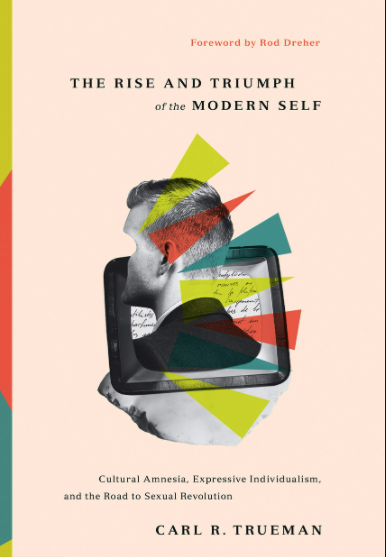
If you consider yourself to be a thinking Christian, and the current wave of interest in all things “trans” concerns you, then I know of THE book that you need to read: Carl Trueman’s The Rise and Triumph of the Modern Self: Cultural Amnesia, Expressive Individualism, and the Road to Sexual Revolution is a long awaited attempt to frame the historical and philosophical factors that have led to our current, cultural moment. Trueman currently serves as a professor of biblical and religious studies at Grove City College, but he has had a distinguished career as a Fellow at Princeton University, and in teaching church history at Westminster Theological Seminary, in Philadelphia, Pennsylvania. Born and raised in England, Trueman is what can best be described as a confessional Protestant, a member of the Orthodox Presbyterian Church, holding fast to an unabashedly Reformed and Puritan mode of evangelical faith, and a cohost of the Mortification of Spin podcast, an intellectually and spiritually invigorating podcast I listen to from time to time. But as Trueman articulates so well in The Rise and Triumph of the Modern Self, he is fully conversant with the best of modern and post-modern philosophy and historical studies. His work is lucid, insightful, and inviting, all at the same time. In fact, you really do not learn of Trueman’s confessional convictions as a Christian, until towards the end of the book, but he does so in a thoughtful and irenic fashion, without shying away from the challenges of today’s controversies.

How Did We Get Here, to This Cultural Moment?

Back to the original question: “Who am I?”  The question of one’s self-identity has undergone a cosmic shift over the past few centuries, argues Trueman. The touchstone on which Trueman places his analysis comes from the thought of the Canadian Roman Catholic philosopher, Charles Taylor, author of the highly acclaimed The Secular Age. But for Trueman’s purposes, he zeroes in on Taylor’s work as to how the concept of the self has changed during the modern and post-modern eras. In particular, Taylor argues that the shift in answering the question, “Who am I?,” has increasingly moved towards an inward, introspective direction. In the premodern world, the concept of self-identity was wrapped up in what some external, objectifying source said about you, such as a parent, a feudal lord, or a priest or other spiritual guide expressing a body of church teaching. The quest to understand one’s self-identity is grounded today in a therapeutic mindset, by “looking within.”

Reinforcing this point, Trueman highlights the thought of American sociologist, Philip Reiff, who says that today we have a “plastic” view of the self, whereby we can fashion our own-self conception to be whatever we like it to be. Together with that, Trueman adds Roman Catholic philosopher Alasdair Macintyre as yet a third voice, who suggests that today’s language of self-expression is primarily “emotive,” namely that today’s ethical “values” are essentially the products of “expressive individualism.”

Trueman contends that this bend towards “expressive individualism” is inescapable now. The Christian church is caught in the thick of it all. Diagnosing how we arrived at this “expressive individualism” is the set of historical ideas that Trueman seeks to unpack in The Rise and Triumph of the Modern Self.

Owing largely to the influence of Sigmund Freud, all of these trends find their biggest impact in the areas of human sexuality and gender: Someone is “gay” because they “feel” that way, and that tells them a lot about “who they are.” Or, as has emerged in recent years, we have the idea that someone can define themselves as being a “man” or a “woman,” simply on the basis of how they “feel.” The language of identity has moved, in small increments, from the objective to the subjective.

Far be it for me to try effectively lay out the full framework of The Rise and Triumph of the Modern Self. I can best refer the reader to consult either the summary reviews written by Regent College theologian Paul Helm, at his website, or at MereOrthodoxy.com. Let it suffice to say that Trueman does a masterful job weaving in the thought of Marx, Freud, and Darwin to buttress his thesis, along with some erudite analysis and critique of the Romantics, like William Blake and Percy Shelley, as well as an engagement with other seminal thinkers like Rousseau and Nietzsche. In particular, I once had a particular fascination for William Blake’s view of Christian spirituality, but Carl Trueman has convinced me that such a warm appreciation has been sorely misplaced, due to Blake’s advocacy of “free love” in his early years. Among a host of other insights, Trueman gave me the most succinct analysis of ethicist Peter Singers’ rationale for accepting abortion that I have ever read, due to Singer’s attack on orthodox Christianity (readers interested in pro-life concerns should read The Rise and Triumph for that reason alone!)

The sexual revolution of the 1960s, and the consequences that have been born out in terms of the legalization of same-sex marriage and widespread public acceptance gender re-imagination, is all the fruit of cultural trends in the past few hundreds of years that Trueman brings to light. While readers may know very little about Rousseau and Nietzsche, in particular, the thought patterns they championed have seeped into all levels of society, from pop-culture to the halls of academia.

Book reviewer Mark Ward calls The Rise and Triumph of the Modern Self an “excellent — though long and at times tedious — book.” I would not characterize it as “tedious“, but it does assume at least some familiarity with a number of the world’s greatest thinkers since the 18th century age of Enlightenment, which might be daunting for the uninitiated. But Ward is right to point out that far too often Christians will dismiss the uncomfortable ideas of the Sexual Revolution in a very glib fashion as being “from Satan,” as though that should settle the matter. This is naive.

All ideas, including evil ones, do not spring up from nowhere. They have a history. There is a path that such ideas follow. At first, these ideas appear to be ridiculous. But then slowly over time, they gain more and more traction, until whole societies will adopt them as perfectly acceptable. For Westerners in the 21st century, this is including not simply mainline liberal Protestant churches, but even evangelical churches, to varying degrees. Today, we see the growth of such ideas being slowly cultivated, which eventually bears the fruit that we see all around us. Reviewer Andrew T. Walker likewise has other helpful insights, as well as does this interview with Trueman by Fred Zaspel.

One particular application has to do with how poorly Protestant evangelicalism, in general, does at presenting a truly sacramental expression of distinguishing between male and female, in the life of the church. Far too often, evangelical churches will get sidelined with questions about whether or not women can serve as elders/pastors in a local church, thereby missing the deeper question as to how churches can effectively model what it means to be Fathers and Mothers, in an age where understandings of gender and human sexuality owe more to cultural stereotypes, as opposed to reflecting on the great theological truths of the Christian faith. We live in age when differences between male and female are often reduced to something merely having to do “with the plumbing,” and even that can be altered, with the appropriate medical procedure.


Calling All Christians To Think Theologically… and Imaginatively

Trueman admits that diagnosing the problem is one thing. The harder part comes in trying to come up with an adequate solution. The chaos resulting from this therapeutic revolution appears to have no end in sight. Furthermore, this reconceptualization of the self has political consequences. It is not enough to merely tolerate inward expressions of the self. They must all be recognized as morally valid. This explains why the ratcheting up of the culture wars, over the previous few decades, have now reached such a high, fever pitch. The advocacy for the “Equality Act” is no historical accident. It is the culmination of years of culture pressure, building up slowly over time.

Trueman does suggest that the answer for Christians, in how to respond to this movement, lies in the importance of community. As Christians grapple with these issues, they need to do so within the context of a worshipping community, in submission to the study of the Scriptures, as opposed to working out their angst on their Facebook and Instagram social media pages.

Comparatively, the so-called LGBTQ community, though it is hardly a monolithic entity, has enjoyed strong bonds of community, over the past few decades. Such bonds are in many ways as supportive, if not more supportive, than what you find in many Christian churches. But the communal cohesion of the LGBTQ movement has been its primary engine for success, and orthodox-minded Christians have much to learn from this strong sense of community bonding.

As far as the “Potato Head” brand goes, the idea of mixing and matching “Mr” and “Mrs” Potato Heads, with presumably interchangeable parts, to produce different varieties of families and gender transitions, is merely one of the many ways Philip Reiff’s concept of the “plastic” self is being integrated into the norms of post-modern society. Critics of those who are concerned about this transformation of the self will surely dismiss such criticism as being hyper-over-reactive. But it is the up-and-coming generation of young people who will be left trying to figure all of this stuff out.

What To Do About It?

Is the answer to try to boycott Hasbro? Probably not, at least not in the long run. Neither is trying to return to some “golden age” of Christendom the answer either, through trying to control and takeover the machinery of civil government. At least, that is my take, and from reading The Rise and Triumph of the Modern Self, I gather this is Carl Trueman’s perspective as well. Applying such cultural pressure might accomplish something in the short run, but it will surely just enrage proponents of such cultural shifts, causing them to double-down against Christian “intolerance.”

Thankfully, Christians are not alone in their anxiety about all of this. There are also secular liberals, and other thinkers, who are deeply concerned about such fluid understandings of the self. Consider best-selling author Abigail Shrier, from her appearance before Congress arguing against the proposed Equality Act. Her testimony that the Equality Act would encourage great harm against women and girls, in our society. But Christians need to go further than this, with a more transformative outlook upon contemporary Western culture.

What it does take is for Christians to learn how to think about the Bible’s view of the self, and how that is contrast with today’s view of the self. Christians ranging from plumbers and construction workers to soccer moms to college professors need to be able articulate an evangelical theology of the self. This is not a job just to be left with pastors and Christians public intellectuals. It is something that must be cultivated in Christian small groups meeting in living rooms, Bible classes meeting in church buildings, and in one-on-one get togethers for coffee and lunch.

Every Christian believer needs to be a theologian able to articulate a theological anthropology that adequately describes a Scriptural view of the self. Christians can then help their non-believing neighbors understand the beauty of what God intended for humanity, without flaming the passions of the culture wars. Christians need to rediscover the value of natural law, and think creatively to stir the imagination with a genuine picture of what the Kingdom of God really looks like, that our secular neighbors might find attractive. We must recover the art of persuasion. Thinkers like G. K. Chesterton and C.S. Lewis did this in their generations. We need new Christian voices to do the same in ours. Carl Trueman sets out the task before us.

The Rise and Triumph of the Modern Self is surely to be one of the most, if not “the” most, important and reasonably accessible intellectual history of the West to date, that bears consequences in the marketplace, the voting booth, and in the world of education, that shapes our children. Christians need to be conversant in these matters, so that we can be better persuaders of the truth of the Gospel, as opposed to automatically going to the “you must be Satan” line of attack, and thus stopping the conversation. The Rise and Triumph of the Modern Self will help the thoughtful Christian to engage these new and revolutionary ideas, that appear to be going mainstream, so that we might be able to have thoughtful and meaningful discussions, even where there are sharp points of disagreement. This is a must-read for Christian pastors and thought leaders, or any Christian committed to thinking deeply about the rise and triumph of the modern self.

A number of excellent interviews with Carl Trueman are available on YouTube, but I found this discussion between Southern Baptist Seminary president Al Mohler and Trueman to be particularly engaging.  You may not agree with every aspect of the discussion, but if you are on the sidelines about whether or not to read this book, I would urge you to listen to an interview like this, and I believe you will agree that the topic is perhaps one of the most timely and important ones Christians, as well as non-Christians, need to have together.


Women Should Keep Silent in Church? : A Corinthian Conundrum Considered

Should “women keep silent in the churches,” as Paul writes in 1 Corinthians 14:34-35? Is it really “shameful for a woman to speak in church?” This is one of those more difficult passages in the Bible, for several reasons.

Some critics of the Christian faith read these verses from Paul, and they therefore conclude that Christianity is hopelessly misogynistic. A few cases in church history have shown that there is a grain of truth here, so the church does need to take this on the chin, to a certain extent.

Various Christians leaders, ranging from Tertullian to Thomas Aquinas, believed from these verses that women should not sing or pray out loud, when men were present. Some Presbyterians up through the late 19th century restricted women from singing in church worship services.

The #MeToo movement today has led many to believe that the church still silences the voices of women…. in ways that go much beyond women’s participation in a worship service, with more perverse consequences. The well-publicized moral failure of evangelist/apologist Ravi Zacharias, accused of sexually abusing other women, sadly reminds us of this. Compounding this, I learned a few days before publishing this post, that Beth Moore, a popular women’s Bible study leader, and a sexual abuse survivor, has left her denomination, the Southern Baptist Convention, saying that her denomination has not done enough to listen to the voices of women who have suffered sexual abuse in that Protestant tradition.

Other liberal-minded, or “progressive” Christians, will point out that Jesus was definitely NOT misogynistic, but will claim that Paul probably was, based on certain Bible passages like what we read in 1 Corinthians 14. Some so-called “Red-Letter Christians,” simply take Jesus over Paul, when it comes to teaching regarding women. Others might merely comment on Paul’s inconsistency of thought, when elsewhere in Galatians 3:28, he says that there is neither “male [nor] female, for you are all one in Christ Jesus.Galatians 3:28 then becomes the paradigm by which we can throwout other verses of the Bible that trouble us. So, we just have to put up with the rest of Paul’s lingering misogyny, when we find it here and there, and thus roll our eyes when we get to such passages as found in 1 Corinthians 14.

While these progressivist approaches are meant to somehow salvage Christian faith, it all comes across as rather desperate, and does not lend itself to give us a great deal of confidence in the Bible as God’s inspired word. After all, if Jesus really did select Paul to be his representative voice to the Gentiles (Galatians 1:1), as Paul repeatedly claims, then if Paul failed at the job, this would also reflect poorly upon Jesus. Do any genuine Christians really believe that Jesus royally messed up when he picked out Paul to be his great ambassador to the Gentiles? I would certainly hope not!

When Christians default to this kind of thinking, we end up with a faith that merely picks and chooses verses of the Bible we do like, and reject the rest, a “cafeteria” approach to Christianity, which is really no Christian faith at all. However, a closer look at the Scriptural evidence shows that there are better approaches to this difficult passage, that do not demand the reader to adopt some extremist viewpoint, whether it be on the progressive or traditionalist end of the controversy.

When I wrote my multi-part blog series on “women in ministry” two years ago, I purposely avoided discussing this passage because of its complexity, as I will show in this current blog post. There are basically three different approaches that Bible scholars propose, to try to resolve the difficulty in 1 Corinthians 14: (1) Paul is addressing a particular situation in the early Christian church, that we are largely unfamiliar with today, (2) Paul never actually wrote this passage in his letter. It was inserted by a later copyist into the text of 1 Corinthians, or (3) Paul is quoting a Corinthian objection to women speaking in church, with the purpose of refuting their argument. Let us examine each proposal in turn.

Is Paul Addressing a Particular, Cultural Situation, That Would Require Women to Remain Silent in Church?

No matter where you land in the “women in ministry” debate, often referred to by theologians as the “complementarian/egalitarian controversy,” 1 Corinthians 14:34-45 presents difficulties that extend far beyond the claims of misogyny in the Bible.

The most pressing issue is that 1 Corinthians 11 is actually encouraging women to pray and prophesy in church worship settings. Paul specifically urges women to wear a head covering, but he certainly allows women to speak in church, through prayer and/or prophesy (1 Corinthians 11:5).1  Paul’s climatic verse honoring male and female equally, Galatians 3:28, only raises the stakes higher.2 So, if Paul allows for women to speak in 1 Corinthians 11, but then forbids women to speak in 1 Corinthians 14, just three chapters later, that would indicate that Paul was contradicting himself, or that he said one thing at first, only to change his mind later in the letter. Having this type of in-your-face contradiction is not suitable for something claiming to be the Word of God.

But if you follow the time-honored principle of Scripture-interpreting-Scripture, you can look at a parallel passage to get a hint at what is going on. 1 Timothy 2:11-12 includes these phrases that can remind the reader of 1 Corinthians 14:3

“Let a woman learn quietly with all submissiveness…. she is to remain quiet”

Readers often focus on the “she is to remain quiet” part. Some might run off in a huff and mutter, “There goes that misogynistic Paul again!” But what is typically missed is that Paul wants women to “learn.” Why might that be an important cultural clue that students of the Bible should notice?

In contemporary Western culture, we regularly take for granted that both men and women should be properly educated. However, in the first century Greco-Roman society, the education of women was the exception, rather than the norm.

Imagine yourself in an elementary or middle school classroom today, and a substitute teacher comes in, but they show little ability to keep control of the classroom. If left to their own devices, the students will talk amongst themselves, resulting in chaos, and no learning occurs in the classroom.

Since women in the first century rarely participated in classroom-type settings, they would be very prone to be disruptive in instructional situations, including church services. The Apostle Paul, on the other hand, believed that the ministry of teaching was essential to the mission of the church, and he firmly believed that order was necessary to allow for learning to take place. But what was so radical about Paul is that he specifically encouraged women to learn the Scriptures, along with the men. In doing so, Paul was widely out of step with the dominant culture, that saw no reason for educating women. Our current day Western culture, which evidently values the education of both men and women, is in many ways the multi-century product of the Apostle Paul’s radical vision completely overturning a fully misogynist society, in Greco-Roman times (Just consider historian Tom Holland’s view of Christian history).

Therefore, far from being a misogynist, one could safely argue that 1 Corinthians 14:34-35 follows the same pattern as 1 Timothy 2:11-12. Paul wants women to learn, but he wants them to learn within the context of an orderly learning environment, where there are not constant interruptions, and people are actively listening. Here are the two controversial verses from 1 Corinthians, in full:

34 the women should keep silent in the churches. For they are not permitted to speak, but should be in submission, as the Law also says. 35 If there is anything they desire to learn, let them ask their husbands at home. For it is shameful for a woman to speak in church.

The advantage of this approach is that it modifies Paul’s encouragement for women to actively participate in various ways during the worship service, in 1 Corinthians 11, for a legitimate cultural purpose. For the sake of preserving order within the church, in 1 Corinthians 14, Paul follows the same pattern as taught also in 1 Timothy 2:11-12. Because of this, the general tone of consistency across all of the passages of Scripture involved, and the weight of tradition down through the ages, many if not most Christians find this proposal to be most likely and acceptable.4

The downside to this approach is that such a cultural modification may not satisfy all critics of this proposal. Some might still say that while the “in-your-face” contradiction is removed in this interpretation, it is not wholly removed. It is merely muted.

Furthermore, supporters of this proposal will often note that women “are not permitted to speak, and should be in submission, as the Law also says.” So, where does “the Law” say that women are not to speak, out of submission? Supporters of this view contend that the Old Testament in general teaches this principle. But detractors against this view observe that there is no specific Old Testament passage, in the Law of Moses, which requires women to be silent, within the context of submission. Male headership? Yes. But the silence of women? Not explicitly. You will search the Old Testament in vain to try to find such a prooftext.

We do find instances of women being asked to remain silent in the oral tradition of the Jewish law. However, Jesus frequently rejected the oral tradition of the Pharisees, arguing that the oral law of the Pharisees would often nullify the commands of the written law, as found in our Old Testament (see Matthew 15:1-6). Therefore, according to critics of this view, if we understand that Jesus rejected the oral tradition of the Pharisees, it seems highly unlikely that Paul would be commending the oral tradition here. Nevertheless, supporters of this view contend that the Old Testament; that is, “the Law,”  implicitly instructs for women to be silent in worship, out of submission.

On the Evaluation of Prophecy? …. Something For Only Male Elders to Do?

A close variation of the above proposal, and frankly, the more traditional reading, notes that 1 Corinthians 14 includes a lengthy discussion of the proper order in a church worship setting, where people offer a “tongue” or prophetic word. In this view, the prohibition against women speaking in church is not absolute. Rather, it is intended to be a prohibition against women evaluating prophecy, specifically. Again, Paul is most concerned about establishing order within a church worship service; thereby necessitating his command that uneducated women should behave in an orderly fashion in a church worship service. Again, the concept of what “the Law also says” is a broad appeal to order within the practice of corporate worship, in opposition to having confusion distorting that practice. For example:

29 Let two or three prophets speak, and let the others weigh what is said. 30 If a revelation is made to another sitting there, let the first be silent.31 For you can all prophesy one by one, so that all may learn and all be encouraged, 32 and the spirits of prophets are subject to prophets. 33 For God is not a God of confusion but of peace.

We then get to Paul’s principle that addresses how women are to behave in church. This Pauline ruling emphasizes the universal extent of this teaching, “as in all the churches of the saints” (v.33b), with the concluding admonition that “all things should be done decently and in order.”

As in all the churches of the saints, 34 the women should keep silent in the churches. For they are not permitted to speak, but should be in submission, as the Law also says. 35 If there is anything they desire to learn, let them ask their husbands at home. For it is shameful for a woman to speak in church.36 Or was it from you that the word of God came? Or are you the only ones it has reached? 37 If anyone thinks that he is a prophet, or spiritual, he should acknowledge that the things I am writing to you are a command of the Lord. 38 If anyone does not recognize this, he is not recognized. 39 So, my brothers, earnestly desire to prophesy, and do not forbid speaking in tongues. 40 But all things should be done decently and in order.5

Paul does not want women to look foolish or be shamed in church, so he seeks to honor women, who have received less education than the men. But this call for order, between the sexes, is not something Paul merely wants. He reminds his readers that this call for order is also a command from the Lord. In other words, there is a timeless principle involved, which has a particular application in this 1st century church situation, and even beyond to our present day.

Most advocates of this view go further to say that the evaluation of prophecy, which is what Paul has in view here, is something to be done by the elders in the church, presumably who are all qualified men. The lack of education among 1st century Corinthian women is not really relevant to Paul’s primary concern.  In other words, women are not to participate in the evaluation of prophecy, as a matter of principle, which means that this is not necessarily a practice restricted to 1st century Corinth. But the point here is that this restriction on women is indeed limited, for when compared with what Paul says earlier in 1 Corinthians 11:2-16, where women are praying and prophesying, Paul must be specifying a limited application for women to be silent, in 1 Corinthians 14:34-35, since clearly women are not to be silent in 1 Corinthians 11:2-16.

Did an Unknown Copyist Insert Verses 34-35 Into 1 Corinthians 14?

This second particular approach is very interesting, in that it dives into the nitty-gritty of how the Bible got to be the English Bible we have today. In the days of the early church, they had neither computers nor Xerox copying machines to preserve written documents. Instead, the church relied on copyists to continually copy the Bible over and over again, for each new generation of readers, as written materials tended to decay over time.

In the vast majority of cases, the New Testament copyists did exceedingly well in preserving the ancient text, that would eventually become the basis for our English Bibles today. However, there were times when mistakes were made, and textual critics are needed to step in and analyze where such mistakes were made, in order to correct them.

Nevertheless, there are certain cases where even the finest textual critical scholars are not in complete agreement regarding the authenticity of certain, small portions of the New Testament.  A classic example of such controversy is regarding Mark 16:9-20. Most English Bibles today will note that some of the earliest manuscripts do not include Mark 16:9-20.  Opinion is divided as to what to make of Mark 16:9-20, but many scholars contend that Mark 16:9-20 was not original to the Gospel of Mark, because of the big differences among the manuscripts (See this Veracity blog post on the issue of the ending of Mark’s Gospel, for more details).

This becomes important because there are some churches that will use Mark 16:18 as the basis for snake handling in church, “they will pick up serpents with their hands,” and they will not get hurt by those snakes … Uh… I will go with the scholarly majority on this one. How about that? 😉

Interestingly, there are some textual critical scholars who put 1 Corinthians 14:34-35 in the same category. The larger majority of English translations follow the standard order for these verses, but this verse ordering is following only one particular tradition.

The “Western” tradition of manuscripts, and a few other variations put these verses after the very end of the chapter, after verse 40. It would read like this (we can start with verse 33, to get a feel for it):

33 For God is not a God of confusion but of peace. As in all the churches of the saints……..36 Or was it from you that the word of God came? Or are you the only ones it has reached? 37 If anyone thinks that he is a prophet, or spiritual, he should acknowledge that the things I am writing to you are a command of the Lord. 38 If anyone does not recognize this, he is not recognized. 39 So, my brothers, earnestly desire to prophesy, and do not forbid speaking in tongues. 40 But all things should be done decently and in order……… .34 The women should keep silent in the churches. For they are not permitted to speak, but should be in submission, as the Law also says. 35 If there is anything they desire to learn, let them ask their husbands at home. For it is shameful for a woman to speak in church.

So, where do these two verses really go? Between verses 33 and 36, as found in most Bibles today? Or after verse 40?

Some scholars conclude that the confusion over where to put these verses may indicate that this passage is an example of what scholars call an “interpolation,” where something of a different nature is inserted into something else. In other words, some scribal copyist may have inserted these two verses into the text, merely as a side commentary in the margins, and then this got copied into the main body of the text by later copyists, who never detected the illegitimate insertion.6

The advantage of this approach is that it raises enough suspicion about the precise nature of these two verses, such that it would warrant any Christian to proceed with caution, and not make a whole doctrine out of these two verses, in the event we eventually learn that these two verses were wrongly inserted into the New Testament, not by Paul himself, but rather, by a later copyist.

The downside to the proposal is that we have zero New Testament documents that omit these two verses. So, in this particular case of 1 Corinthians 14:34-35, it does not match up exactly with the situation we have with Mark 16:9-20, where there are certain early manuscripts that omit those verses altogether.

Was Paul Quoting a Corinthian Saying, For the Purpose of Refuting It?

This last major approach to 1 Corinthians 14:34-35 actually turns the whole idea of Paul approving of the idea found in 1 Corinthians 14:34-35 on its head. This proposal suggests that what Paul is doing here is quoting from a Corinthian saying, that would prohibit women from speaking in church, for the purpose of utterly refuting it. A little background is in order to understand this.

First, when the New Testament was originally written, and copied by copyists later, down through the centuries, there were no quotation marks in those ancient Greek manuscripts of the New Testament. This tradition of not having quotation marks available, to aid the reader, was even extended to the popular English version of the Bible, the King James Version. You will not find quotation marks in the King James Bible, but you will find them in more modern translations, as scholars have been able to detect where a New Testament author was quoting from some other source, as opposed to where they were not quoting from an outside source.

Next, it is important to know that there were other letters involving Paul, aside from 1 and 2 Corinthians, which are not available to us in our Bibles. 1 Corinthians should probably be called “2 Corinthians” instead, because Paul has already mentioned a previous letter he wrote to the church of Corinth, which is now lost (1 Corinthians 5:9). Evidently, Paul is writing our traditionally called “1 Corinthians,” found in our Bibles, partly to respond to another letter sent by the Corinthians to him. This letter from Corinth, was probably written in response to Paul’s first, now lost letter to the Corinthian church:  “Now concerning the matters about which you wrote” (1 Corinthians 7:1).

In answering the Corinthians previous letter to him, Paul quotes certain sections of that letter, and then he responds to those concerns. For example, read the opening of chapter 7 in full:

Now concerning the matters about which you wrote: “It is good for a man not to have sexual relations with a woman.” But because of the temptation to sexual immorality, each man should have his own wife and each woman her own husband. The husband should give to his wife her conjugal rights, and likewise the wife to her husband.

The quoted Corinthian saying is highlighted above. The Corinthians, in this particular quotation, were saying that celibacy is the only appropriate calling of the Christian, whereas Paul rejects that argument and affirms the validity of marriage as a genuine calling for the Christian, where sexual relations should rightly take place.

Paul makes rhetorical use of the Greek word translated into English as “but“, as we have here in 1 Corinthians 7:1, or in other cases the Greek word for “or“, or even an exclamation such as “what?!”, or some other transitional mechanism, in order to argue against the Corinthian position (1 Corinthians 1:13; 6:16; 9:6, 8, 10; 11:22), or to reject a particular practice at Corinth ( 1 Corinthians 6:2; 9, 19; 10:22; 11:13).

One particular case shows how Paul’s rhetorical skill works: In 1 Corinthians 6, Paul first lays out the Corinthian quoted sayings, with some brief responses interspersed (in this instance). Paul’s purpose here is to rebuke the Corinthian mindset, which was allowing certain unethical conduct to continue on unchecked:

12 All things are lawful for me,” but not all things are helpful. “All things are lawful for me,but I will not be dominated by anything.13 Food is meant for the stomach and the stomach for food”—and God will destroy both one and the other. The body is not meant for sexual immorality, but for the Lord, and the Lord for the body.

Note the highlighted phrases within the quotes, which are quotes from the Corinthians. Note also that a modern translation like the ESV explicitly shows you where these quotes are in the verses. Then Paul unloads on his original readers by interjecting his rhetorical “but” to refute the thinking of the Corinthians, verses 12 and 13. Then he expands his refutation more fully in the following verses. See the highlights in verses 16 and 19, where Paul uses the rhetorical “or” to accomplish the same rhetorical transitions:

14 And God raised the Lord and will also raise us up by his power.15 Do you not know that your bodies are members of Christ? Shall I then take the members of Christ and make them members of a prostitute? Never! 16 Or do you not know that he who is joined to a prostitute becomes one body with her? For, as it is written, “The two will become one flesh.” 17 But he who is joined to the Lord becomes one spirit with him. 18 Flee from sexual immorality. Every other sin a person commits is outside the body, but the sexually immoral person sins against his own body. 19 Or do you not know that your body is a temple of the Holy Spirit within you, whom you have from God? You are not your own, 20 for you were bought with a price. So glorify God in your body.

This same type of pattern has been recognized by various scholars in our 1 Corinthian 14 passage under review (note the quoted part, that I have highlighted, for verses 34-35, as well as the rhetorical “or” language in verse 36):

33 For God is not a God of confusion but of peace. As in all the churches of the saints,
34 The women should keep silent in the churches. For they are not permitted to speak, but should be in submission, as the Law also says. 35 If there is anything they desire to learn, let them ask their husbands at home. For it is shameful for a woman to speak in church.”
36 Or was it from you that the word of God came? Or are you the only ones it has reached? 37 If anyone thinks that he is a prophet, or spiritual, he should acknowledge that the things I am writing to you are a command of the Lord. 38 If anyone does not recognize this, he is not recognized. 39 So, my brothers and sisters, earnestly desire to prophesy, and do not forbid speaking in tongues. 40 But all things should be done decently and in order.
Verse 36 could also be translated as follows, substituting the acceptable English exclamation “what” for the rhetorical use of “or“:   “What!!? Was it from you that the word of God came? What!? Are you the only ones it has reached?” 

The point here is that Paul is quoting a Corinthian saying, in verses 34-35, for the purposes of refuting it, starting with Paul’s mockery of the Corinthians in verse 36.

The more substantial argument for this interpretation relies on the gender implied by the language used in this entire passage, noted above. The idea that women should remain silent, is part of the Corinthian logic. Yet Paul specifically uses masculine language in verse 36. In New Testament Greek, as in many other gendered languages, masculine language can refer to “men only” or “men and women.” But in this case, since women are being specifically addressed in verses 34-35, and the fact that the “from you” and the “only ones” mentioned in verse 36, are masculine, it would consistently indicate that Paul is addressing “men only” in this verse. For if Paul had intended his rebuke against the women of Corinth specifically, Paul would have used feminine language in verse 36, which he has not. Therefore, this would indicate Paul’s rebuke is directed against the men in Corinth, who are promoting this false teaching.

A reinforcement of this interpretation comes from observing that “the Law” referenced in verses 34-35 probably comes from the oral law, and not the written law, associated with the New Testament. In other words, it would make sense for Paul to rebuke the Judaizers in Corinth, who wish for the Christians to hold to the oral Jewish law.

Paying attention to the gender of the language, verse 36 could more accurately be translated as follows:

What!!? Was it from you men that the word of God came? What!? Are you men the only ones it has reached?”

Far from approving of the “silence of women,” Paul is actually reinforcing his argument from 1 Corinthians 11 that women should be encouraged to participate in the church worship service, through the exercise of prayer and prophesy, just as the men do. As long as things are done in an orderly fashion, Paul is encouraging men and women to worship together.

One other observation to make is that in this particular interpretation, it makes better sense to put the entirety of verse 33, “For God is not a God of confusion but of peace. As in all the churches of the saints ” at the end of the previous section regarding the interpretation of tongues and the evaluation of prophecy (1 Corinthians 14:26-33). Many translations actually split verse 33, putting the “For God is not a God of confusion but of peace” part with the prior section, and the “As in all the churches of the saints ” part with the “women should keep silent” following section.  In other words, the concluding section about tongues and prophecy should be read with one complete thought in mind, putting a comma in place instead of a period, in the middle of the sentence:

33 For God is not a God of confusion but of peace, as in all the churches of the saints.

A fully reconstructed reading of our “Corinthian Conundrum” passage might better look like this, with all of the important contextual differences highlighted:  first the Corinthian saying that Paul is trying to refute, then the “What?!” transition, and then the references to “men“:

34 The women should keep silent in the churches. For they are not permitted to speak, but should be in submission, as the Law also says. 35 If there is anything they desire to learn, let them ask their husbands at home. For it is shameful for a woman to speak in church.”
36 What!!? Was it from you men that the word of God came?  What!?  Are you men the only ones it has reached? 37 If anyone thinks that he is a prophet, or spiritual, he should acknowledge that the things I am writing to you are a command of the Lord. 38 If anyone does not recognize this, he is not recognized. 39 So, my brothers and sisters, earnestly desire to prophesy, and do not forbid speaking in tongues. 40 But all things should be done decently and in order.

The advantage of this approach is that it completely removes all possible contradictions between 1 Corinthians 11 and 1 Corinthians 14, thus serving an apologetic purpose for defending Scripture better than other approaches. It also has a great deal of supportive, contextual evidence, as it extends a well known pattern of how Paul interacts with the quotations of the Corinthians, in this letter, to make this particular difficult passage exceedingly less difficult.7

The downside to this proposal is that it completely flips a great deal of traditional teaching regarding this passage. Has this more contextualized approach met the burden of proof to sufficiently overcome more traditional interpretations of this passage?

Clearing Up Confusion over a Corinthian Conundrum

Which proposal to resolving this Bible difficulty is best? You be the judge based on the evidence, knowing that this blog post is but a brief exposition of the main ideas and points of evidence available.

My own conclusion at this point is that the final proposal, that of this being a quotation/refutation device used by Paul to support his teaching that women should participate fully and NOT be silent in church, has the greatest amount of explanatory power. Yet perhaps others are still not convinced.

Here is what has finally convinced me that the quotation/refutation view is the most correct: There is not a single passage in the Old Testament, or “the Law” which teaches that “women should keep silent in the [assembly].” Not a single one. Go and try to find it yourself.

The reference to “the law” in this passage must be about something else. Defenders of other viewpoints have to somehow invent the existence of a prohibition of women speaking in church that simply does not exist in the Old Testamet.

Therefore, I am very skeptical of the idea the Paul would approvingly cite a portion of the Jewish oral law (or something from pagan Roman law), as binding on the Corinthian church, particularly when Jesus makes such a big deal about how the oral traditions of the Pharisees have led them to fail to see the truth of the Gospel. The idea that Paul would knowingly leave a potential contradiction or serious error like this in one of his letters, without any clarifying explanation, is unbecoming to the character of sacred Scripture, in my mind. Nor am I convinced that some later Christian scribe would insert a similar reference to the Jewish oral law, centuries later into the New Testament.

However, the other two positions are still viable, given the assumptions they carry, so I have no reason to be dogmatic here. The point is that we need not “bring back the patriarchy” in order to have a fully authentic Scriptural faith that properly incorporates 1 Corinthians 14:34-35. But neither do we need to throw certain passages of Paul out, simply because we do not like the taste of them.

It is important to note that Paul nevertheless affirms a principle of order, when it comes to the practice of Christian corporate worship. He also acknowledges that there are real differences between men and women, and that such differences should be honored and upheld by all of the churches of God. In particular, men and women are not interchangeable in the mind of Paul, as expressed through the Scriptures, as it is clearly taught in 1 Corinthians, particularly in 1 Corinthians 11. As London-based pastor and author, Andrew Wilson, puts it, there is a “beautiful difference” between male and female, a complementarity in how men relate to women, and vice-versa, and this is something that the New Testament calls all Christians to celebrate.

Notably, 1 Corinthians makes absolutely zero mention of elders and/or overseers in the church at Corinth. Defenders of a more traditional reading have to pull in the idea of elders/overseers being in view in this passage from elsewhere. Paul is primarily concerned about how the entire local church body functions, men and women together, giving honor and glory to God. In 1 Corinthians, Paul is not interested in addressing how the church should be governed, nor is he making any special plea regarding how the sheep are to be shepherded, by those entrusted to their care. Paul leaves the discussion of such other matters, particularly with respect to church elders and/or overseers, to the Pastoral Letters, with a particular focus found in 1 Timothy.

For more reflection on the centrality of 1 Timothy for articulating a sacramentalist approach to honoring the distinction of male and female, within the context of a local church, please explore the “women in ministry” blog series, linked here.


Notes:

1. For an in-depth look at 1 Corinthians 11:2-16 concerning head coverings, please consult the Veracity blog post series beginning here. The head covering issue is troubling for many as well, as most American Christian women, aside from certain traditions like the Mennonites, do not use head coverings. But the whole topic of head coverings is fascinating, that deserves separate attention. I urge readers to get a copy of Michael Heiser’s Angels, to dig into the nitty gritty of what is going on with head coverings, in a way that will probably surprise you. I reviewed Angels in 2020, and wrote about it here.  ALSO: in this blog post, I am mainly quoting from the ESV translation of the Bible.

2. Please note that Galatians 3:28 is getting abused more and more in the current Western culture climate. To learn about this, see this blog post from 2020.  

3. 1 Timothy 2:12 is probably one of, if not the most, controversial verses in the New Testament today. I address the central concerns in other blog posts (#1, #2, #3). But in this blog post, only the women being “quiet” part is being addressed.  

4. Some even say that the supposed contradiction (according to Sam Storms), between 1 Corinthians 11 and 1 Corinthians 14, is way overstated. Some contend that 1 Corinthians 11:5, “but every wife (or woman) who prays or prophesies with her head uncovered dishonors her head, since it is the same as if her head were shaven,” is really a conditional statement. It should be read as “if a woman were to pray or prophesy with an uncovered head, it would be disgraceful.”  Paul only rejects the whole practice of women praying or prophesying in church until 1 Corinthians 14. But this type of translation appears to be a case of special pleading, as I know of no other English translation that tries to translate 1 Corinthians 11:5 in this matter. A variation of this view suggests that 1 Corinthians 11 teaches that a married woman should wear a head covering, when around their marriage husbands, in a private setting, and this practice has nothing to do with a public, corporate act of worship. But 1 Corinthians 11:16 refutes this idea, as this practice is applicable in all of “the churches of God,” which would indicate a public, worship setting. I only mention this perspective as there are only tiny minorities of Christians who hold to such views.  

5. Note that the word “brothers” highlighted here generally means “brothers and sisters,” when in the plural form. Other translations, such as the NIV specifically spell out that both men and women, “brothers and sisters” are addressed here. While the majority of complementarian scholars accept this particular proposal, a number of egalitarian scholars are open to some variation of this proposal as well, such as Marg Mowcko, a prominent egalitarians blogger, whom I used for reference for doing research for this blog post. Complementarian Denny Burk takes the alternative view described in this section of the blog post, staying within the scope of this particular proposal. Author Aimee Byrd takes a position midway between Mowcko and Burk. Burk takes the position that women are only being restricting from judging prophecies. Yet for some very Reformed interpreters, even this solution is going too far

6. The most notable proponent of this “interpolation” view is made by Gordon Fee, in his New International Commentary of the New Testament, on First Corinthians.

7. Kirk MacGregor is a very articulate, persuasive proponent for the “quotation-refutation device” rhetorical proposal. I have tried to summarize MacGregor’s argument in this blog post. Examples of the Jewish oral law calling for the silence of women in the church assembly include: (a)The Mishnah (M. Ketub. 7:6), is sinful for a woman to “speak with any man” in assemblies, (b) first-century AD historian Josephus (Ag. Ap.200–1) relates the following instruction from the oral Torah: “The woman, says the law, is in all things inferior to the man. Let her accordingly be submissive,” and the first-century AD Hellenistic Jewish philosopher, Philo of Alexandria, in a comment on the oral Torah, “The husband seems competent to transmit knowledge of the laws to his wife” (Hypothetica 8.7.14). With respect to examples of Roman law calling for women to be silent in government assembly, we have the 215 BC Oppian Law that banned public displays of wealth, during a time of crisis for Rome when Rome needed more money to fight Hannibal, during the Second Punic War.  The law against public display of wealth for men was eventually repealed, but not for women. Women rose up against the law, after the Hannibal crisis had ended, in 195 B.C.  The Roman historian Livy quotes Cato the Elder, who opposed the repeal of the law, sometime during the reign of Caesar Augustus (30 BCE to 17 CE), urging women to stay at home, or be quiet in the public assemblies.   Juvenal, in the early second century CE, in Satires 6, also condemns women publicly intruding on male governance in the assemblies. The earliest prohibition of women speaking in public assembly can be traced back to Aristotle Politics 1.1260a. Critical scholar Joseph A. P. Wilson defends this view: Joseph A. P. Wilson, “Recasting Paul as a Chauvinist within the Western Text-Type Manuscript Tradition: Implications for the Authorship Debate on 1 Corinthians 14.34-35”, Religions, 2022, 13(5), p. 432 . Legal and other precedents gave way to cultural attitudes that forbade women from speaking up in public assemblies, that were common to the world of Paul. Whether the “Law” in 1 Corinthians 14:34-35 is the Jewish oral law or the Roman laws, there is abundant evidence to show that Paul is critiquing a misguided view held by the Corinthians.  


Were Ravi Zacharias’ Accusers Lying?… (Were the Apostles Lying About the Resurrection?)

About a week ago I wrote a blog post about the Ravi Zacharias scandal. Most reactions to the news about Ravi have been understandable: a mix of shock, anger, dismay, empathy for the victims, and a call to self-reflection and greater accountability. However, some reactions have been in the extreme.

On one side are those who will use the Zacharias scandal as yet another reason why Christianity can not be true, and Christians can not be trusted. There will always be people in this category, it seems.

On the other side are those who profess to be Christians, but who have come with a variety of reasons why one should be dismissive or skeptical about the findings of Ravi Zacharias International Ministries (RZIM)’s internal report. Here are the most common reactions I have seen:

  1. We are all sinners. Why all of this focus on what Ravi did?
  2. Why bring all of this up after Ravi has died?  The man can not defend himself.
  3. Why did these women witnesses not come forward until after he died? How trustworthy are they? Ravi was a great man of God!”

What am I going to do with my Ravi Zacharias books?  Read my answer here.

I want to briefly address each one of these responses/reactions, before I get to my parenthetical question: “Were the Apostles Lying About the Resurrection?

The first reaction has definitely truth to it. But while it recognizes a particular Scriptural truth, that all of us fall short of the glory of God, the tendency here is to forget that Ravi’s sin went far beyond your “average sin.”

We are not talking about a pornography addiction here, that vacillates between shame and repentance, that may or may not have a direct impact on others. What we are talking about is a repeated pattern of behavior, over many years, with no evidence of repentance, that subjected harm and deception upon multiple, vulnerable women. These women were taken advantage of by a stronger, more powerful man, a man claimed to be the “greatest Christian apologist of [the 21st] century,” who further abused them spiritually.  But the objection is right to protest the focus upon Ravi. Instead, we should be remembering his victims, and pray for them.

The second reaction is peculiar, as though it assumes some sort of statute of limitations. Perhaps this reaction is made, as a way of defending Ravi’s family, so there might be some understandable motive here. But as apologist David Wood argues, if he were to die tomorrow, and then someone found 20 bodies buried beneath his house, would you not want to know how those 20 bodies got there?

Ravi Zacharias is in many ways like Amnon, David’s most favored, first-born son, a man of great “integrity”, who in 2 Samuel 13 abused his sister Tamar. Amnon has been dead long ago, but God saw fit to preserve this story in our Bibles. I believe, part of the reason, for preserving the story, is to help us all to remember the Tamars of the world. Even though Ravi is dead, the Tamars in the Ravi story are still living.

The third reaction is meant to test the credibility of the female witnesses. If you have the time, you might want to view the YouTube video below, an interview conducted on the Capturing Christianity YouTube channel, with female Christian apologists Alisa Childers and Dr. Liz Jackson, who tackle this reaction in more detail.

What I want to highlight here is the nature of cognitive bias, and how it can so easily trick us into believing something that lacks evidential support. As I mentioned in my earlier reports about Ravi, I really did not want the negative stories about Ravi to be true. Ravi was not my most favorite Christian apologist…but he still seemed like a genuine, reputable guy, with the most winsome, popular appeal, having a positively great impact on many of my Christian friends. I really wanted to believe that there was some good explanation for what had happened. Sadly, the evidence points to the reality that the situation with Ravi was far, far worse than anyone could have imagined (see apologist Mike Winger’s video).

I had some serious doubts about Ravi, when the first set of allegations about him came forward THREE YEARS AGO. But after having talked with someone at RZIM, I was given assurances that RZIM was serious about the matter and that everyone in RZIM’s top leadership was being held accountable, and that everything would be OK.

But the funny thing about evidence, is that when you begin to take a serious look at the available evidence, it can have a serious impact on how much you trust your previous assumptions. It can challenge your wishful thinking. If substantial evidence is analyzed, that refutes your wishful thinking, then you have to make a choice. Either you revise your cognitive bias, and rethink your wishful thinking, and follow the evidence wherever it leads….. OR you will choose to continue believing what you want to believe, and simply ignore the evidence that contradicts your beliefs.

So, were Ravi Zacharias’ accusers lying? The problem with assuming that these women were lying is that they all gave the same type of testimony, despite being independent of one another. First, we have the Canadian supporter of Ravi’s ministry, who first challenged Ravi, in the 2017 sexting controversy, Lori Anne Thompson. She is the only named witness, but prior to RZIM’s internal investigation, there were at least three other witnesses, involved in Ravi’s spa business. RZIM’s internal investigation revealed five other witnesses to Ravi’s behavior. Then there are about 200 women, with photos solicited by Ravi Zacharias, on the phones that he had, over the past 7 years or so, which in some of those photos, the women where naked. With such independent, multiple witnesses (8 thus far, by my count), along with the evidence from the cell phones, this makes for a substantial case against Ravi (None of this even touches on the academic credentials controversy, or the report that while Ravi was a younger preacher, he pressured his brother’s girlfriend to get an abortion).

Is it possible that all of these women just happened to give very similar stories that were all fabricated? Were all of these electronic photos on Ravi’s phones fakes? Possibly. But how plausible is that? Even more so, how probable is that?

Compare all of that to the evidence we have for the Bodily Resurrection of Jesus. The Apostle Paul reports some 500, unnamed witnesses to the Risen Lord. We have four, different Gospel testimonies, that all feature the Empty Tomb. The New Testament tells us numerous stories of those who saw the Risen Jesus. Interestingly, the first witnesses to the Resurrection were those who were most suspect in terms of giving an accurate testimony: they were women.

Consider this: We have more substantial evidence that demonstrates that Ravi Zacharias was a sexual predator than we have for the Resurrection of Jesus.

Think about that for a moment.

Nevertheless, there are many Christians out there, apparently, who still believe Ravi to be completely innocent, and who buy into Ravi’s own rhetoric, which calls the critics of Ravi to be “demonic,” or otherwise, “tools of Satan,” or other sayings like that.

It really makes me wonder why so many Christians call themselves Christians. If the evidence against Ravi can not be believed, why do such people believe that Jesus really rose from the dead?  What type of cognitive bias is in play here? What type of wishful thinking keeps folks from accepting evidence that runs counter to what is believed?

The same can be said for non-believers, who reject the Resurrection of Jesus. Though the evidence for the Resurrection is not as clear-cut as the case against Ravi, the evidence for the Resurrection is still very, very good. So, if you easily accept the verdict against Ravi, as a “no-brainer”, what is it that is preventing you from accepting Jesus as the Risen Lord? What type of cognitive bias is in play here? What type of wishful thinking keeps folks from accepting evidence that runs counter to what is believed?

Something to think about.

Oh, one more thing, before I close out: REMEMBER THE VICTIMS AND PRAY FOR THEM.


A Call to Repent Internally at RZIM

Truth-telling is essential to the cause of proclaiming the Gospel of Jesus. For if an unbelieving world can not regard Christians as trustworthy people, why would they even bother to listen to us, when we speak about Jesus?

Events of late in the Christian world have brought me much despair. But some recent news have given me a ray of hope.

This past weekend, an apologist with Ravi Zacharias International Ministries (RZIM) wrote an internal letter to RZIM’s leadership, calling upon RZIM for more transparency regarding the controversies regarding some of Ravi’s actions, while he was living and leading the RZIM ministry. The letter was leaked out from RZIM, and published at Julie Roys’ website, where Julie describes the letter’s content as “stunning.” The fact that such a letter was even “leaked” out from RZIM is stunning in and of itself. Interestingly, the letter calls for RZIM to rebrand itself, something that I made a case for several months ago, after a new series of allegations were disclosed. The author of the letter, Dr. Max Baker-Hytch, a senior tutor with RZIM’s  OCCA The Oxford Centre for Christian Apologetics and a lecturer at Wycliffe Hall, a private hall of the University of Oxford, urges that the corporate culture at RZIM is due for an overhaul.

In response to the letter, several apologist associates, working with RZIM, have decided to sever their ties with the organization. One of those associates, John Dickson, believes the ministry of RZIM to be in “grave peril.

Serious accusations against Christian leaders should not be taken lightly. We should uphold the reputations of leaders, as best as we can, and not jump to conclusions. Furthermore, it must be acknowledged that all of us have skeletons-in-the-closet, that we need not always publicize. Everyone falls short of the glory of God, and we should extend grace towards others, as much as possible, so that relationships can be healed and integrity maintained.

But that being said, when a Christian leader or organization presents a story, that does not jive with the available evidence, then that warrants a measure of skepticism. An initial act, that might lead to disgrace is one thing. But when a concerted effort is made to cover-up such an act, the lack of trust associated with the cover-up effort is infinitely more damaging than the original transgression itself. When this type of behavior is exhibited by Christian leaders, and the organizations that support them, then this is a clear case where the celebrity cult of personality has eclipsed whatever good the ministry might be doing.

It took courage for Dr. Baker-Hytch to write such a letter, and that courage gives me some hope that integrity is still something to yearn for. Let us pray that RZIM will make good on their promise to pursue truth, take Dr. Baker-Hytch’s letter to heart, and do the right thing immediately. 

A broken trust can be hard to rebuild and repair.