Author Archives: Clarke Morledge

About Clarke Morledge

Unknown's avatar
Clarke Morledge -- Computer Network Engineer, College of William and Mary... I hiked the Mount of the Holy Cross, one of the famous Colorado Fourteeners, with some friends in July, 2012. My buddy, Mike Scott, snapped this photo of me on the summit.

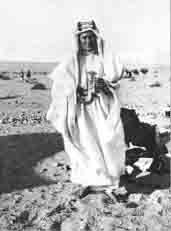
Lawrence of Archaeology

T. E. Lawrence, a British intelligence officer in World War I who became an Arabian legend. But how many folks know about his work in Biblical archaeology?

T. E. Lawrence, a British intelligence officer in World War I who became an Arabian legend. But how many folks know about his work in Biblical archaeology? (Imperial War Museum, London)

Back when I was in college, I worked as an usher at a drama theatre. One night, I caught this guy trying to sneak in after the show started. “Sir, may I see your ticket please?” My demeanor startled the guy, but then he flashed me his official guest badge. On the badge read “PETER O’TOOLE”.

I took the famous actor to his seat for the performance. But then I thought to myself, “I just met Lawrence of Arabia!”

The 1962 film, Lawrence of Arabia, is one of my all-time favorite movies. But I have always wanted to know who the real T. E. Lawrence was. In the following article, I discovered that Lawrence was an illegitimate child. His father ran off with the governess. His father and his mother (the governess) were never able to legally marry as his father never secured a divorce from his legal wife. Lawrence’s mother eventually, torn by her guilt, found relief when she came to know Jesus Christ as her Lord and Savior. She was determined that her children would have a Christian education. Lawrence’s mother and a brother later went to China as missionaries.

T.E. Lawrence never really embraced his mother’s faith, but he did gain a love for the Holy Land from what he was taught from the Bible. It was this fascination with the ancient Middle East that led him to pursue archaeological work across the Palestinian landscape and beyond, eventually giving him the opportunity to serve in British intelligence to aid the Arabs to rise up against the Ottoman Turks nearly a hundred years ago. Read Stephen E. Tabachnick’s full article on BiblicalArchaeology.org to learn more.

Here is one of my favorite scenes with Peter O’Toole from the movie, where he first meets the character played by Omar Sharif:
Movement: Chuck Smith

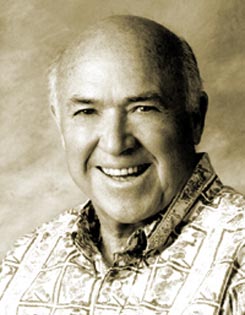
Chuck Smith (1927-2013). A pastor on the move.  A passion for the lost, but not without conflict.

Chuck Smith (1927-2013). A pastor on the move. A passion for the marginalized, but not without some conflict along the way.

In the 1960s, most American Christian churches wanted to have nothing to do with hippies. A young Southern California pastor, Chuck Smith, was determined to change all of that.

When an older member of the church posted a sign in the sanctuary with “no bare feet allowed”, Smith ripped it down. Smith believed that the church was called to reach out to the counter-culture community, even if it meant exchanging the standard suit and tie of the evangelical preacher for a more casual dress.

Chuck Smith’s critical moment came unexpectedly when he befriended a long-haired, bearded hippie teenager, Lonnie Frisbee. Frisbee became a pastor himself in Chuck Smith’s Calvary Chapel in Costa Mesa. From there, by the sheer providence of God, the Jesus Movement was born.
Continue reading


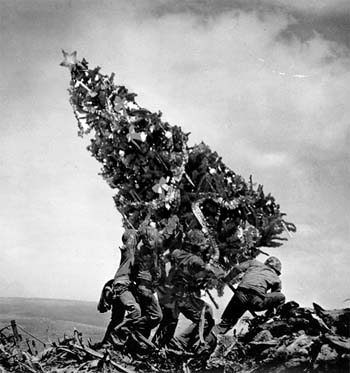
Christmas Wars: Then and Now

The "War on Christmas"? Are we missing something here? Perhaps a look at church history might help.

The “War on Christmas”? Are we missing something here? Perhaps a look at church history might help.

It is that time of year again, December, when Christians in America face an annual existential crisis: Do you wish people a “Merry Christmas”… or not?

I must confess that I am not crazy about fighting amongst the shopping hordes at the mall, and the year after year pressure of finding the right gift can be really stressful. Sure, shopping online helps a teeny bit, but what I am talking about here is a more fundamental cultural anxiety. Increasingly over the past few years, I have heard Christians grumble throughout the month of December over how “they have taken Christ out of Christmas!” I have read angry letters in the local newspaper complaining how store operators are greeting customers more and more with the shallow and inadequate “Happy Holidays”. Where have the traditional nativity scenes at the community fire station gone? Have a “Joyous Winter Solstice”? What is that all about?

Folks. Let’s face it. We are moving more towards to a post-Christian society with every passing year.

Deal with it.

We could continue to get mired in frustration and disgust, or we can see this as a providential opportunity to reflect on what God is calling us to do as witnesses for the Gospel. What does this look like? Might I suggest some lessons from church history?
Continue reading


Bible Secrets Revealed via the History Channel?

God took Enoch (Genesis 5:24). From Figures de la Bible, Gerald Hoet and others, 1728.

God took Enoch (Genesis 5:24). From Figures de la Bible, Gerald Hoet and others, 1728.

As I do not have cable TV, I never really get to watch the History Channel. But when some friends suggested that I check out the new History Channel series on the Bible Secrets Revealed, I thought I should investigate a little.

As it turns out, the History Channel does allow you to watch some of the previous episodes online fairly easily, at least for a limited time. I missed the window to see the first episode, “Lost in Translation“. However, I was able to view the next two episodes, “The Promised Land” and “The Forbidden Scriptures“. I will not attempt to give a full review but just offer some brief general observations and pointers to some resources for further study.

I like Bible documentaries because I always learn something from them, such as in this History Channel series, and it encourages me to dig deeper in the data even more for myself, even if I do not agree with everything presented. But what bothers me about some Bible documentaries is in the style of presentation and the overall narrative that the producers of the film are trying to convey. Genuine efforts to present views even handedly get unwittingly sidetracked by unexamined biases held by these documentary makers. Unfortunately, the History Channel’s latest film on this topic is no exception.
Continue reading


The First Thanksgiving

I had a great Thanksgiving. How about you?

The turkey I ate was wonderful, just like what the Pilgrims ate….. or was it? Did they even have turkey to eat in 1621?

The study of American history is a tough thing to deal with for Christians. We are annoyed and quite accustomed to revisionists who want to exorcise Christianity out of America’s past. On the other hand, a lot of ideas about history that have been passed down to us over the generations do not always line up with the facts. Is there a responsible Christian way to approach our nation’s past?

Robert Tracy McKenzie, an historian at Wheaton College, has written a new book, The First Thanksgiving: What the Real Story Tells Us About Loving God and Learning from History, that attempts to set the record straight (with a measure of humility with respect to the challenges to doing history) and still show us the Biblical and historical lessons that we can learn from our nation’s forebears.

Here is the book’s trailer and then a brief interview with the author addressing a question that many evangelical Christians merely assume to be true, “Were the Pilgrims just like us?”:

More discussion is available here at the Patheos Book Club.

Audio podcast with Al Mohler, President of Southern Baptist Theological Society, interviewing McKenzie here.
