
Tag Archives: N.T. Wright

When A Jew Rules the World: Joel Richardson’s Defense of Future Israel, An Extended Review

Young author, Joel Richardson, makes a measured yet passionate plea for a premillennial view of the End Times, that includes a definite future for ethnic Israel, as an antidote to Christian Antisemitic sentiment.

Prophecy teacher and author, Joel Richardson, makes a measured yet passionate plea for a premillennial view of the End Times, that includes a definite future for ethnic, national Israel. But hold onto your Bible: Is this an antidote to Christian Antisemitism?

And now, time for an in-depth book review… so pour yourself a beverage, before you dive in…

Are Christians in danger of forgetting national, ethnic Israel’s role in God’s “End Times” program?

According to New York Times bestselling author, Joel Richardson, the answer is “yes.” Joel Richardson is a fairly young, articulate spokesperson promoting Christian Zionism, hosting an Internet biblical prophecy program, “The Underground.” Joel Richardson travels widely in the Middle East, with a genuine excitement about God’s mission to proclaim the Gospel in that part of the world. He is passionate about keeping Christians informed about the Middle East through various books and films. Nevertheless, Joel Richardson is deeply concerned. In a promotional advertisement for Richardson’s 2015 book, When a Jew Rules the World: What the Bible Really Says About Israel and the Plan of God, we read, “In the past thirty years, the trend among American evangelical’s view of Israel has shifted dramatically.”

As Richardson’s ad continues on later, “A new generation of Christians are not only turning away from traditional support for Israel, but from the very belief that there yet remains any ongoing calling and election upon the Jewish people. As this portentous shift is seen on a growing number of evangelical seminaries, and even on Facebook, are Scripturally-grounded Christians prepared to provide solid responses?”

When A Jew Rules the World, which I recently finished in an audiobook form, is designed to present arguments to reverse this trend. I wanted to read this book, since I keep hearing quite a bit about the dangers of so-called “replacement theology” these days. The terminology of “replacement theology” was something unknown to me until about five years ago, so I wanted to understand what the fuss was all about. If “replacement theology” was a theological error that needed to be addressed in the evangelical church, I figured that Joel Richardson might be able to help me out.

Prophecy teacher Joel Richardson impresses me as an articulate, well-informed defender of an Israel-centric view of the End Times, which stands at the heart of the concern over “replacement theology.” This is a hard-hitting book, and it deserves wider exposure, for those not familiar with the arguments proposed by folks like Richardson. But I would be careful before you raise the issues that concern Richardson in your small group Bible study. For example, in that same Richardson ad, there is also an extraordinary claim: “There is a sudden rise of anti-Israel and anti-Semitic sentiment among Christians today. ”

There is? Really? In the wider culture, I thought being Jewish was cool. In a post-Holocaust era, with movies like Steven Spielberg’s Schindler’s List permeating popular consciousness, have Christians bucked the cultural trend and grown more hateful towards Jewish people in recent years? Continue reading

Why N.T. Wright Can Be Both Fascinating and Frustrating

Nicholas Thomas Wright. British New Testament scholar, retired Anglican bishop, ... and agitator among more than a few conservative, evangelical Protestants.

Nicholas Thomas Wright. British New Testament scholar, retired Anglican bishop, … and agitator among more than a few conservative, evangelical Protestants.

This fall, our church has been conducting a Bible study on the first eight chapters of the Book of Romans. We have been using a study guide written by an Anglican New Testament Scholar teaching at the University of St. Andrews in Scotland, N.T. Wright, Romans (N.T. Wright for Everyone Bible Study Guides).

I need not give you a biography of N.T. Wright, other than to say that Wright is perhaps one of the most influential evangelical scholars of our day. In the 1990s, Wright wrote about and impressively critiqued the rather infamous Jesus Seminar, that sought to determine the “truly” authentic sayings of Jesus in the Gospels simply on the basis of majority vote among the Jesus Seminar scholars. Wright also wrote perhaps the best contemporary defense of the bodily resurrection of Jesus Christ, The Resurrection of the Son of God (the only other book that comes anywhere close to exceeding Wright’s work is Michael Licona’s The Resurrection of Jesus: A New Historiographical Approach). He has been a bishop, and he regularly speaks all over the world, appealing to conservative and liberal-minded Christians alike, along with interested skeptics and seekers. N.T. Wright writes faster than most humans can read… and he is overall an excellent and engaging writer, writing for both academia and also for the popular audience, as with his C.S. Lewis-like introductory book to the Christian faith, Simply Christian: Why Christianity Makes Sense. For the intellectually inclined, Wright is very much like a C.S. Lewis for our times… and he even has a great English accent to listen to!

But Wright also disturbs many of his fellow Christians, particularly those from a Reformed theological background. Now, the study of Romans is incredibly rich and rewarding in and of itself, but if you are not familiar with N.T. Wright, you might find yourself perplexed by some of the things N.T. Wright argues for in his study book. Consider a note on Romans 1:17 that Wright gives us on pages 13-14 of the Romans study guide:

Here Paul introduces a word and theme that will be critical throughout the letter. The Greek word and its variants are often translated as “righteous,” “righteousness,” “just” or “justice.” The problem is that Paul (though writing in Greek) has Hebrew words and meanings in mind, which English translations often overlook…..the phrase “the righteousness of God” [refers] to God ‘s own faithfulness to his promises to Israel, to his covenant…He keeps his word and thereby shows his trustworthiness, justice and righteousness…. What does this mean for what Paul is saying in Romans? [God] does not impart or impute or transfer his righteousness, his just character [to the believer]….”

and here is this remark on page 26:

The phrase often translated “righteousness of God” … is not, as some have argued, a righteous quality that God gives or imparts to humans. It is God’s own righteousness, his being true to the covenant. This covenant faithfulness carries with it more of the overtones that Paul is trying to highlight, referring back to God’s covenant promises to Abraham to undo the problem caused by the sin of Adam. But Israel failed to both keep the law and bring the message of God to the nations.

For evangelical Christians who read this, those who have grown up hearing sermons about the “imputation” of Christ’s righteousness to the believer, primarily through Christ’s “active obedience” to the Mosaic Law, thus enabling God to see us clothed in Christ’s righteousness, instead of our sin, sentences like those above from N.T. Wright are frankly startling. It can even be downright maddening! So then, what is N.T. Wright up to here? (CAUTION: you might need to put your thinking cap on!)
Continue reading


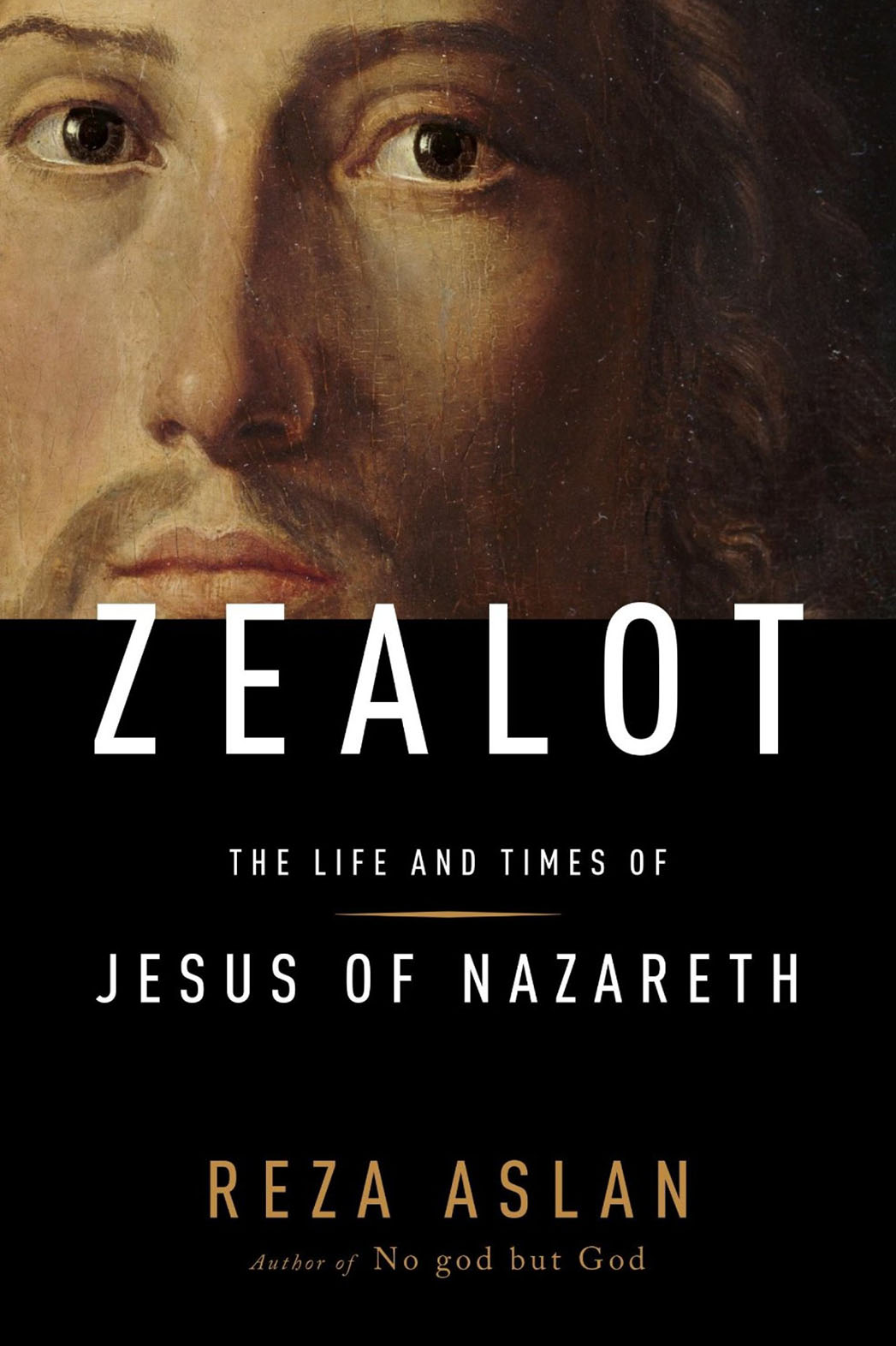
Jesus the “Zealot”?

Reza Aslan's, Zealot, has profited greatly from a television interview gone viral.   But does Aslan's creative thesis really deliver?

Reza Aslan’s, Zealot, has profited greatly from an embarrassing television interview gone viral. But does Aslan’s creative thesis really deliver?

Was Jesus a “Zealot”, a Jewish political revolutionary? According to a new popular book by Reza Aslan, Zealot: The Life and Times of Jesus of Nazareth, the answer would be “yes”.

Aslan’s conclusion is in marked contrast with what I wrote on Veracity just last week and before. There I briefly made the case that Jesus offered an alternative between those Jews, like the tax collector, Matthew, who colluded with Rome, and others like Simon the Zealot, who sought to violently eject the Romans from the land. Matthew and Simon joined the group of Jesus’ twelve disciples and were drawn by Jesus’ extra-political claim as being the One who transcends and personally fulfills the messianic hopes and national aspirations of first century Judaism. A less convinced author, Reza Aslan, pretty much casts aside Jesus’ relationship with those like Matthew and places him squarely in the Zealot camp, prior to the formation of a distinct “Zealot party” that dominated Jewish politics during the era of Josephus.

But the Zealot issue is not what has captured the public’s attention about Aslan’s book. Rather, the spark was a recent, combative interview on the FOX television network. The controversy originated over whether or not a Muslim had a right to write a book about Jesus. The case that Aslan was making got lost in a series of ad hominem attacks. Yikes!! Granted, Aslan makes an embarrassingly big deal about how many academic degrees he has (“look how smart I am!”), but might I suggest that the way FOX conducted the interview was not terribly helpful, to put it mildly?
Continue reading