Mark Driscoll and the Cult of Personality

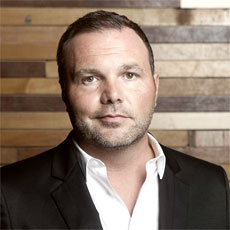
Mark Driscoll. Former pastor of the Mars Hill mega-church in Seattle, Washington.

Mark Driscoll. Former pastor of the Mars Hill mega-church in Seattle, Washington.

I have a confession to make. I like Mark Driscoll.

Mark Driscoll is a gifted Bible teacher. I have referenced some of his material here before on Veracity. He is direct, does not pull any punches, explains things from the Bible really well, and relates to the guy on the street in a very winsome way, putting things right on the bottom shelf for people within easy reach. For years he had led one of the fastest growing mega-churches in the country, but now the mega-church run is over. Just a few weeks ago, Driscoll resigned his position as head over his multi-site congregation, where his video sermons had been displayed live via satellite over about twelve locations in Seattle, Washington.

Veracity’s blogger-in-chief, John Paine, sent me this article from the Atlantic this morning that tells the whole story. According to the article, Driscoll’s Mars Hill Church has dropped from a peak in January of 14,000 Sunday worshippers down to 6,000, less than a year later. Now the remaining congregations will become autonomous local churches and the Mars Hill infrastructure will disband completely.

For years, Mark Driscoll has had his critics. Some conservatives had complained that he was too vulgar in his public demeanor. Others dismissed his muscular, Calvinist brand of Christianity as too divisive. He has had difficulties in being charged with plagiarism. Countless progressive Christians have accused him of everything from misogyny to being horribly infatuated with his own ego, something that even historian Molly Worthen reported on several years ago. But what really brought about his downfall was the internal disputes within his church among the church leadership and elder board. It was not a sexual or drug abuse related scandal. Instead, Driscoll was apparently a control-freak, prone to bullying other church leaders, all while projecting a congeniality towards others who did not know the inside situation that well.

The really sad part is that because of the crisis of leadership at the church, dozens of church staff people will lose their jobs. A once vibrant and growing community will have to remake itself. We would do well to pray for those remaining at Mars Hill, that the unemployed staff will find jobs elsewhere soon to support their families and that the remaining congregants will rebuild the leadership in these small churches into more healthy, growing and dynamic communities of faith. We should pray for Mark Driscoll, too, as losing your job as a pastor can be a dreadfully humiliating experience, not simply for himself, but for his family, as well.

What do we learn from the Mark Driscoll saga? Well, the big thing for me is to realize that the evangelical church in general has a serious problem with cultivating cults of personality. It can happen in large churches like Mars Hill, but it can happen in much smaller churches.

It can happen in your own church.

If a church builds itself around the “charismatic” leadership of one individual, no matter how gifted or likable that person is (remember: I still like Mark Driscoll, even with his flaws), then we should have red flags go up. However, if the church instead is built around the message of the Gospel, where Jesus Christ and Him alone is the “head pastor,” and not some guy in the pulpit, then that church is doing the right thing.

If and when a church goes through a crisis of leadership, it will serve as a wake-up call to that community. Churches that survive these difficult times do so because they focus on Christ and His work, not on the work of man. If a church experiences a decline in attendance because of a cult of personality crisis, then perhaps that is actually a good thing. If people are a part of a local church simply because they want to hear one particular person preach, and then they leave because their guy is no longer there, then I would argue that this is actually a good thing. On the other hand, if someone is in a local church because they are excited by what God is doing among the community as a whole, not simply through one individual, then a community of faith built with people like that will not only survive, it will flourish.

We have much to learn from the Mark Driscoll saga, lessons we all need to learn.

HT: John Paine


Happy Halloween…Er… Reformation Day!!

Martin Luther nails his Ninety-Five Theses to the Wittenberg church door. Most people associate October 31st with Halloween, but students of church history know this as "Reformation Day"

Martin Luther nails his Ninety-Five Theses to the Wittenberg church door on All Hallows Eve, 1517. Most people associate October 31st with Halloween, but students of church history know this as “Reformation Day”

Like any kid growing up in an American secularized society, I liked the whole Halloween thing. I have a serious weakness for chocolate, so I always looked forward to going door to door to see how many chocolate treats I could get. Sure, there were horror stories about  people sneaking razor blades into mini-candy bars, but I was willing to take the risk. As I got a little older, I would try to terrify the neighborhood kids by playing Pink Floyd’s Echoes album through my bedroom speakers out the window as costumed figures approached our house.

Okay. I stopped that pretty quick when my mother learned about it and reprimanded me for making a few of the little kids cry.

When I began to take my spiritual journey with Jesus Christ seriously in high school, I began to hear other types of horror stories about Halloween from my new church friends. There were tales about its connection to Satanism at worst, or perhaps just only a milder, yet just as bad, connection to Wiccan, Druid and other forms of pagan religions… and those “dreadful” Harry Potter books.

I began to see a shift in evangelical churches away from celebrating “All Hallows Eve” towards things like having “Harvest Parties” or “Fall Festivals.” Well, I can surely appreciate the effort to shift the focus, but I am not so sure how successful it has been.

Instead, I think if we really want to shift the focus away from the negative aspects of Halloween, then we should instead take a page or two from church history. On October 31st, 1517, Martin Luther approached the door of the Wittenberg church with a list of his Ninety-Five Theses regarding abuses in the Roman church. What he nailed to the door of that church that day has forever changed the face of Western Christianity… and the whole world!

Martin Luther had kicked started the Protestant Reformation, a movement that resulted in perhaps the greatest revival of spiritual vitality and love for the Scriptures that the world has ever seen.  But Martin Luther’s Reformation belongs not just to Protestants. It belongs to the whole Christian church. Even those Roman Catholics who murmured about Luther must admit that change was necessary to correct some serious problems. It was through the efforts of people like Martin Luther that the Bible came to the common people in their native tongue, a privilege that most Christians today simply take for granted. It was also through the turmoil of the Reformation that made the Western world into what it is today, providing the intellectual and cultural incubator for the growth of modern science and capitalism. So even if someone is not a Christian, Luther’s Reformation has made an incredible impact upon world history.

So, instead of getting all flustered about those trick or treaters coming to our doors to unwittingly fan the flames of pagan traditions, let us as believers consider a completely different approach, encouraging people to remember this day in world history, where one man with a hammer in hand and a powerful set of ideas birthed in Scripture changed the world.

Let us celebrate Reformation Day!

 Additional Resources:

Do you have no idea what Luther’s Ninety-Theses were all about? Check out the following interview with Carl Trueman, professor of church history at Westminster Theological Seminary in Philadelphia.

And one final “treat” courtesy of something I found on Andrew Wilson’s Twitter log from “Across the Pond.” Enjoy!:

HT: Timothy George on First Things, and Andrew Wilson at Think.


Bumgarner Blues

"Madison Bumgarner on September 3, 2013" by SD Dirk on Flickr - Originally posted to Flickr as "SF Giants Madison Bumgarner". Wikipedia

“Madison Bumgarner on September 3, 2013” by SD Dirk on Flickr. Wikipedia

Okay, I really wanted the Kansas City Royals to win the World Series this year. It would have been a wonderful Cinderella story, but it was not to be. The Series belonged to a young pitcher for the San Francisco Giants, Madison Bumgarner.

Wow. What a performance. Bumgarner shut out the Royals in game 5 and then in game 7 closed out the final innings without allowing a single score from the Royals. Baseball does not get any better than that.

I did not know this before, but it turns out that Madison Bumgarner is also an evangelical Christian, according to an interview he gave about four years ago. As long as his stellar performance this past week does not go to his head, this extraordinary athlete will serve as an inspiring example to a generation of young baseball pitchers out there growing up in families all across the country.

So, why did I title this blog post the “Bumgarner Blues?” Well, I am continually struck at how so many cultural celebrities from a Christian background who make the scene are athletes. Rarely do you find public intellectuals or respected spokespersons representing an evangelical point of view in the wider culture. Over the next week, you will surely see the lanky, dark curly haired figure of Madison Bumgarner graced over the pages of magazines and Internet websites. Well, great for him, great for the San Francisco Giants, and great for Christian believers for whom baseball is an important part of life.

But when was the last time you saw someone like a C.S. Lewis, a Malcolm Muggeridge, or a Billy Graham hailed across the Internet media landscape? Who stands up to present the Gospel in such a persuasive way that others will thoughtfully listen to the message, even though they might respectfully decline to accept that message? Why is it that great evangelical scholars like Daniel Wallace, Darrell Bock and Ben Witherington, or even prolific pastors like John Piper or Tim Keller, fail to register much of a bleep on the cultural landscape… even on Christian media? Aside from some moral scandal or political debate, about the only time you get a glimpse of an evangelical spokesperson is when someone tips over some line theologically, like a Rob Bell (to the left) or a John Hagee (to the right).

Okay. I can think of one public intellectual or spokesperson over the past ten years who stands out as an exception: National Institutes of Health director Francis Collins. Can anybody think of others?

Sure, you can probably find a number of reasons where blame can get assigned, such as perhaps a media bias of some sort. Okay, I get that. But I wonder if the trouble is not something within the church, too. Do we really value public thought for the sake of Christ, seeking earnestly to give a reason for the hope that we have in Jesus? It will take more than phenomenal baseball players like Madison Bumgarner to draw the world’s attention to the Savior.

Where are the public intellectuals and spokespersons for the faith today?

I wonder.


Agreeing to Disagree

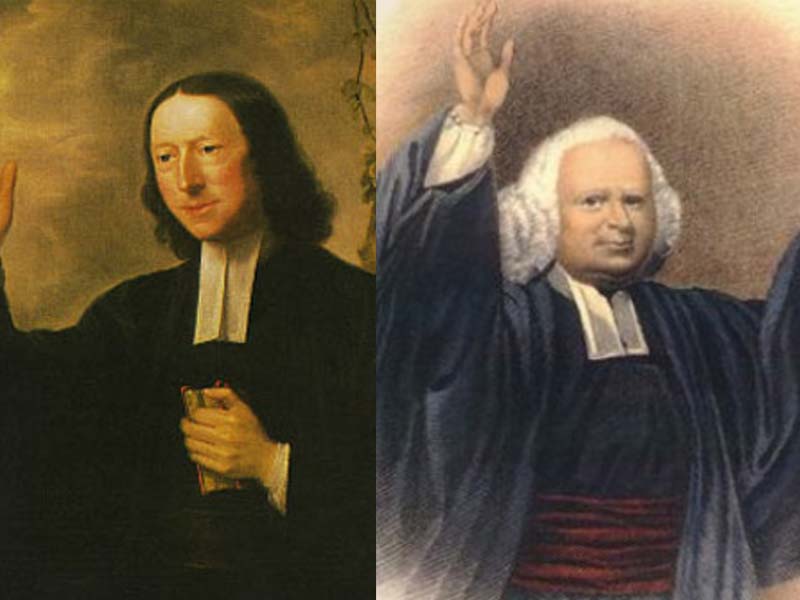
John Wesley (1703-1791) and George Whitefield (1714-1770) were the most well-known Christian leaders in the English-speaking world of the 18th century. Yet they struggled with each other regarding some significant points of Christian doctrine.

John Wesley (1703-1791) and George Whitefield (1714-1770) were the most well-known Christian leaders in the English-speaking world of the 18th century. They struggled with each other regarding some significant points of Christian doctrine, and through their dialogue they introduced the notion of “agreeing to disagree” into Christian discourse.

Sometimes “agreeing to disagree” with fellow believers can be difficult. I know. I have been there. But first, let me give you some historical background…

In 18th century England and America, two of the most celebrated figures were George Whitefield and John Wesley. Whitefield and Wesley would travel up and down the American Eastern seaboard and across the British Isles preaching in the open air. The first “Great Awakening” can largely be attributed to how God used these two men to lead many thousands into a relationship with Jesus Christ, perhaps one of the greatest spiritual revivals in the history of the church.

But Whitefield and Wesley had some rough spots in their relationship with one another. In one important matter, they differed in terms of some significant Christian doctrine. George Whitefield, a Calvinist theologically, believed that when Jesus Christ died on the cross, He died only for the elect who would come to know Christ. If you were not among the predestined elect, Whitefield concluded that the Bible taught that Jesus had not died for you. John Wesley, an Arminian theologically, vehemently rejected this teaching. For Wesley, Jesus Christ died for all of humanity, whether someone received Christ or not. Though these men clearly differed on the extent of Christ’s atoning work on the cross and how that related to predestination, they were united in many more things in terms of doctrine than over that which they were divided.

The prolonged controversy between Whitefield and Wesley was at times very tense. Though I do not recall the reference, my understanding is that John Wesley was the more quarrelsome of the two men. But it is to John Wesley’s credit that eventually when he was asked to deliver a memorial sermon when George Whitefield died, he was extremely charitable to his evangelistic counterpart. In that sermon, Wesley uttered a most memorable phrase:

“There are many doctrines of a less essential nature … In these we may think and let think; we may ‘agree to disagree.’ But, meantime, let us hold fast the essentials…”

Since that remarkable sermon, Christians over the years have recalled Wesley’s words that he at times exchanged with his colleague Whitefield about “agreeing to disagree.” Though these men still had their points of conflict, in the end, they were able to consider each other not as enemies but rather as friends, as brothers in Christ, despite their disputes over some points of doctrine.

It is a lesson that the evangelical church today still needs to hear.
Continue reading


Discipleship Candy

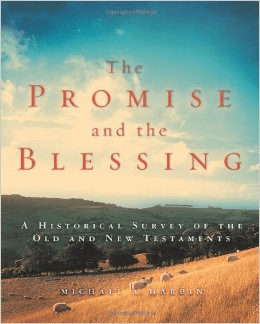
The Promise and the Blessing

The Promise and the Blessing: a Historical Survey of the Old and New Testaments, by Michael A. Harbin

One of the really cool benefits of writing a blog like Veracity is all the backdoor sharing. People are constantly bringing things to our attention or sharing some thought, question or resource from their devotional lives.

This week I feel like a kid in a candy store. One of Marion’s coworkers loaned me her copy of The Promise and the Blessing: A Historical Survey of the Old and New Testaments, by Dr. Michael A. Harbin. I haven’t been able to put it down.

Dr. Harbin’s text is used in Old and New Testament ‘survey’ courses in colleges and seminaries. What makes it special is that it ties all the biblical text to the timeline of Judeo-Christian history while maintaining a brisk flow from Genesis to Revelation. The pieces are thoroughly connected. It’s packed full of illustrations and references and has no qualms about taking the reader off on interesting tangents with sidebars. Theological topics are introduced and adequately summarized, with fair treatment given to opposing doctrinal views.

One of my litmus tests for any resource is how much fresh and useful information it contains. I can’t seem to turn anywhere in this text that I don’t get new information or have the parts of the Bible presented in a fresh light.

Normally I advocate electronic versions of books, particularly when they can be accessed in the cloud with tools like Kindle Cloud Reader. Kindle puts all of my books in a library that I can access with any device, including my iPad, iPhone, and computer. The upshot of reading this way is that you can highlight and bookmark the text, and search it electronically. It makes books very portable and eliminates the need to flip through pages manually trying to find some passage you barely remember.

However…The Promise and the Blessing is such a beautifully composited book I recommend buying the hardcopy version, which you can do for minimal expense by clicking here. If you’d like to preview the book before you buy it, here is a link to the Browse Inside page.

Enjoy!


HT: Liz Marshall