Lectio Divina: Spiritual Formation #3

Imagination. Is there such a thing as a godly imagination in the life of a believer in Christ?

Lectio divina: An ancient spiritual discipline of “divine reading” of Holy Scripture that is being revived among evangelicals today. Yet some Christians fear that such practices could be dangerous.

Over the course of my spiritual journey, I have often had trouble reading the Bible. Not only do I find some things difficult to understand from what the text is saying, I also have struggled with something closer to home. Does God still speak through the Bible to people today? Am I trying to read the Bible merely to gain information, or am I reading it to try to meet with God in a personal relationship?

It has been said that the ultimate objective of reading Scripture is not simply to know the Word of God. Instead, it is to get to know the God of the Word, to move beyond the Sacred Page to have an encounter with the supreme Author of the text.

Yet for some Christians, there is a danger associated with moving beyond the Sacred Page. There is a temptation, critics argue, even for Christians to view the reading of Scripture as some sort of talisman, a type of magic book where merely reading the words of the text will somehow subconsciously restore our soul. The imagination of the reader can easily get caught up in inventing one’s own private, personal interpretation, thereby introducing confusion between understanding our own thoughts and wishes and desires with God’s supreme and objective revelation that calls us to face reality.

The critics are right to have their concerns. I have sat through innumerable Bible studies where people have brought forward a cacophony of opinions of “what the Bible says and means to me.” I even have known people who simply opened up to some random page of the Bible, put their finger somewhere into the page, and then read that verse believing that God might speak to them through that verse. I remember opening up my Bible once to Genesis 41:46. There I read that “Joseph served in Pharoah’s court.” As I was struggling with my tennis game at the time, I could have easily mistaken the words of Scripture as God’s way of coaching me on my backhand, but I sincerely doubt that this would have been the proper use of Scripture!

These are some of the issues that we can encounter when we think about spiritual formation, particularly in terms of developing spiritual disciplines focusing around Scripture. One of the classic spiritual disciplines in this area is something called lectio divina. Some might even call lectio divina … dangerous…
Continue reading

The Right Tool for the Right Job: Spiritual Formation #2

Dewalt Impact Driver. You can drive some screws with this baby? Are you using the right tools to help you in your spiritual growth?

Dewalt Impact Driver. You can drive some screws with this baby!! Are you using the right tools to help you in your spiritual growth?

So, what does spiritual formation look like in the life of the Christian? I think of it as having the right tool for the right job.

I am in the process of making some repairs to our backyard deck. Over the years, a number of the nails holding the deck together have corroded. This time, I plan on using galvanized screws instead of nails. To do the job, I broke down and bought a Dewalt impact drill. It is like a screwdriver or a power drill, but it has a unique design. An impact drill increases the efficiency in driving screws into wood by applying a stronger rotational and downward force than a normal drill.

(Hey, I am engineer. An engineer likes his tools).

Here is the point: When you are trying to make home improvements, like repairing a deck, it is important to get the right tool for the right job. In much the same way, spiritual formation is about getting the right tool for doing the right job.
Continue reading


Do We Need It?: Spiritual Formation #1

Dallas Willard.  Pioneer for the renewal of spiritual formation in the contemporary church.

Dallas Willard. Pioneer for the renewal of spiritual formation in the contemporary church.

What is spiritual formation? Do we really need it?

Spiritual formation is a term that gets tossed around quite a bit in churches today, but there is a lot of confusion as to what it means. Some are even downright suspicious of the idea. This hesitancy is understandable. In the broader culture, we find a lot of appeals to so-called “spirituality.” There is spirituality in the workplace, spirituality Oprah-Winfrey-style to beat the rat-race, spirituality all over the place.

But as the late Dallas Willard observed, this type of generic approach to spiritual formation is misguided:

Human beings are, as such, supposed to have a spirituality. And in a sense they do. They remain spiritual beings, with all that implies. But on their own they’re dead spiritually. They’re cut off from the source of spiritual life. Yet what we are seeing and what we will continue to see is an attempt to take the merely human, dead in trespasses and sins, and make that into ‘spirituality’, framing it culturally, artistically, and in other ways (from the essay, Spiritual Formation: What it is, and How it is Done.)

In other words, spiritual formation without the Holy Spirit really does not lead to the type of life promised to the believer in Christ.

Earlier on Veracity, we briefly explored some of the basic ideas behind a Christian approach to spiritual formation. When we read Romans 12:1-2, we learn that the Apostle Paul urges us not to be conformed to the values of this world but instead to be transformed by the renewing of your mind. What does this mean and what does this look like in the daily life of the Christian? The answer to this question gets to heart of what genuine Christian spiritual formation is all about.

Here again, is Dallas Willard, from the same essay:

Spiritual formation in the tradition of Jesus Christ is the process of transformation of the inmost dimension of the human being, the heart, which is the same as the spirit or will. It is being formed (really, transformed) in such a way that its natural expression comes to be the deeds of Christ done in the power of Christ.

Transformation: As the Apostle Paul teaches in Romans 8:9-11, if Jesus Christ is in someone, then that person becomes spiritually alive. To be in Christ, through the indwelling of the Holy Spirit, means taking on the character of Christ (Galatians 4:19).

The problem is that many Christians are great at acquiring knowledge, but they are not so great about putting what they have learned into practice. On an intellectual level, we may be able to grasp the theology, but in terms of our day to day experience, our level of spirituality might actually be rather shallow. The challenge is this: practically speaking, what does it mean to take on the character of Christ in your life?

Here I want to try to address some of the misunderstandings Christians often have about spiritual formation. Like any misunderstandings of this sort, there are grains of truth that we should keep in mind.
Continue reading


Wrong Kind of Christian

A growing number of college campuses today are not extending the welcome mat to evangelical Christians today. Is it merely an issue regarding sexual discrimination or is it an erosion of religious freedom?

A growing number of secular-minded college campuses are not extending the welcome mat to evangelical Christians today. Is the central issue regarding sexual discrimination, or is it an erosion of religious freedom?

Tish Harrison Warren has written a very compelling article at Christianity Today on her experience as a campus ministry worker at Vanderbilt University. Several years ago, Vanderbilt University kicked several Christian student groups off of campus for failing to comply with the university’s revised anti-discrimination policy.

Along with Bowdoin College in Maine and possibly soon the entire Cal State school system, with some 450,000 students, Vanderbilt has joined a growing trend that is seeking to revise their criteria for allowing religious groups to affiliate with university campuses, allowing space for on-campus meetings, as well as sometimes permitting the partial use of student activities fees to fund some aspects of their programs. The conservative Christian groups at Vanderbilt sought to challenge what they considered to be an intrusive form of control by the university. Vanderbilt insisted that leadership in student religious groups should not be limited to those adhering to an organization’s statement of faith. This put the Christian groups on that campus in a real bind, having to choose between the principle of honoring their creedal commitments against working with the anti-discriminatory policies of the university.

It is a dilemma worth thinking about deeply.
Continue reading


Adam vs. Atoms #2

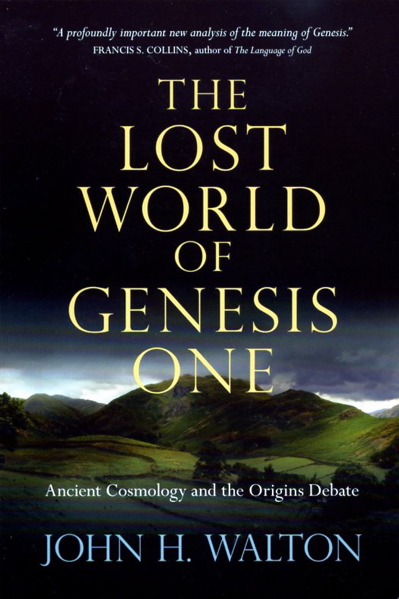
Are Christians who look for literal scientific revelation in Genesis abusing the Biblical text?  John Walton, in The Lost World of Genesis One, says "Yes",  proposing a better way to interpret and honor the authority of Scripture based on pioneering research from the Ancient Near East.

John Walton understands Genesis to be talking about an archetypal, functional view of creation, as opposed to a scientific, materialistic account of origins.

Many Christians are opposed to calling Genesis One an allegory or poetry. These Christians warn that this threatens to change the clear message of the Bible, watering it down, and thus compromising the Gospel. On the other side, other Christians are troubled by efforts that interpret Genesis too literally. Does not an over-literal reading of Genesis One conflict with modern science, creating an unnecessary obstacle for a non-believer in coming to know Christ? John Walton, an Old Testament scholar at Wheaton College, takes both of these concerns seriously, and he suggests a third alternative.

In the previous Veracity post about John Walton, you were introduced to Walton’s thesis that the first chapter of Genesis is an account of the functional order of the universe, NOT the material origins of the universe. It sounds a little odd, but some refer to John Walton’s perspective as an archetypal view of creation. Walton calls it a cosmic temple inauguration view.

Yeah, just go ahead and try to explain that to your grandmother…. or Joe Friday.

Joe Friday wants to interrogate Moses.. he might just have to settle for Wheaton College's John Walton.

Joe Friday wants to ask Wheaton College professor John Walton, “So, what is the cosmic temple inauguration view, and what does it have to do with the Bible? Have you been spending a bit too much in time in those Ancient Near Eastern texts?

Okay, it does sound a little fancy and nerdy. But just exactly what is Dr. Walton driving at? Let us give Dr. Walton a little room here, shall we? Walton argues that the Genesis was written for us but not to us. It is as though we are reading someone else’s mail when we read Genesis. Walton contends that Bible students today need to understand Genesis from the perspective of those ancient Hebrews who first read the text. If we fail to do that, we risk distorting God’s Word.

Whoa. Do I have your attention now?

In the last Veracity post on this topic, we set out some of the primary points of John Walton’s thesis.  But before doing a “deep-dive” it might be good to consider some of the objections critics have been making to his ideas. Then, as you look over Walton’s presentation, you can evaluate on your own whether he has made a good case or not. Even if you are not entirely convinced, you will be challenged to grow deeper in your faith and understanding of God’s Word.
Continue reading