Category Archives: Topics

A FIRST THANKSGIVING HOAX

I recently had dinner with some folks from another part of the country, where we talked about the Pilgrims landing on Plymouth Rock, soon to be followed by the famed “first ” Thanksgiving dinner in 1621, or thereabouts. Having grown up near Jamestown, Virginia, I am continually astounded when I hear that many Americans are completely ignorant about Jamestown as the first English settlement in the New World (1607), predating Plymouth Rock by thirteen years (1620). Furthermore, the thought that Virginia has had a “leg up” on the New Englanders with a Thanksgiving festival at Berkeley’s Hundred (1619) at least two years before the famous Pilgrim feast, comes as quite a surprise to many.

But while New Englanders and Virginians can have a friendly quarrel over dates, it is probably more disturbing how well-intended Christians have at times variously modified the first Thanksgiving event to fit within a particular historical narrative. But as Wheaton College historian Robert Tracy McKenzie and author of the The First Thanksgiving argues, the tendency to change the story is generally not malicious in motive. Furthermore, many contemporary readings that try to secularize Thanksgiving history can be just as guilty! Rather there is this universal human proclivity to see things in a way we want to see them, which provides an incentive to fudge a bit on the sparse details. However, as believers in a faith where history is vitally important, it is worth it as Christians to try to set the record straight.

In many ways, the story of how we have come to celebrate Thanksgiving is just as amazing as the original event itself.

Over the past few weeks, Professor McKenzie has been blogging a number of posts regarding the theme of Thanksgiving and understandings of its history over time, such as the following one. I hope you enjoy it as you feast on your traditional “turnips and boiled eel” instead of turkey this year…

rtmckenzie's avatarFaith and History

History is not the past itself, but only that tiny portion of the past that human beings remember.  I’ve shared in a previous post the memorable word picture that C. S. Lewis has given us to illustrate that distinction.  In his essay “Historicism,” Lewis concluded that even a single moment involves more than we could ever document, much less comprehend.  He then went on to define the past in this way:

The past . . . in its reality, was a roaring cataract of billions upon billions of such moments: any one of them too complex to grasp in its entirety, and the aggregate beyond all imagination.  By far the greater part of this teeming reality escaped human consciousness almost as soon as it occurred. . . . At every tick of the clock, in every inhabited part of the world, an unimaginable richness and variety of “history” falls off…

View original post 1,532 more words


Politics and the Christian Faith

Political Family

“My opponent is a #^&@)*g.  You know he’s a #^&@)*g because here’s a picture of him frowning with his finger near his nose.  (Cue the pleasant music)  Here’s a picture of me smiling with my family and our dogs.  I will be good for you, and I will be good for your wallet.  You can tell I am a true patriot.  I am your non-#^&@)*g candidate, and I approved this message. (Smile)”

Welcome to the predominant success formula on the American political landscape. To get elected candidates discredit their opponent—by striking fear in voters that there is something really wrong with the other guy. Political handlers believe that American voters have short attention spans. There isn’t enough time in a 30-second spot to address substantive issues or ideas—but we can absorb short, memorable sound bites that leave horribly unfavorable impressions of the opponent.

After being bombarded with political rhetoric and campaign commercials in the month leading up to the midterm elections, I was hoping the election results would bring an end, at least for now, to this ugly parade of mudslinging.

But I received a troubling email this week. Not from a political candidate who caved in to his handlers, but from a seminary that, at the very least, has an increasing appetite to engage in political issues and debates.

So?! What’s wrong with that? Shouldn’t seminaries be engaged in the democratic process? After all, the right to free speech is protected in our constitution. The church is under increasing attacks from political figures and the culture in general. Shouldn’t seminaries prepare their graduates to engage and challenge the culture? Shouldn’t Christians be thermostats instead of thermometers? Why would anyone object to Christians being actively engaged in political processes? Some of these candidates are sincere Christians who truly want to serve their Lord and their country.

At the risk of disappointing family, friends and Veracity readers, there is something wrong with mixing politics and political agendas with the Christian faith.

Please hear me out. There are times when it is right—even necessary—to mix Christian values with politics. Consider the political activities of William Wilberforce (fighting slavery), Dietrich Bonhoeffer (fighting Nazism), or Martin Luther King, Jr. (fighting racism). These are three strong examples of when Christian activism was necessary and made an impact on our world.

But let’s be honest—it’s a long way from Wilberforce, Bonhoeffer and King, Jr. to the political candidates of the 21st century. So, how willing should we be to lock arms as Christians with political candidates or political agendas? Is that necessarily a problem?

The problem is that one institution (politics) is fueled by popular opinion, and the other (Christianity) is beyond popular opinion. Democratic politics is practiced successfully by appealing to the widest swath of voters, while negotiating compromises to build plurality positions. The objective in politics is to make a better world for ‘us’. The means are often ugly and combative. Christianity, on the other hand, is successfully practiced by appealing to God, who isn’t favorably impressed or swayed by popular opinion. The objective in Christianity is to develop a right relationship with God, by representing Him well and serving others.

An Argument from Silence

When we bring Jesus to the political arena, we risk equating our faith with our politics. The Christian faith compels us to maintain a certain integrity—by sharing God where it matters most, not necessarily in politics for political gain.

Jesus never attacked a government (although He certainly did attack religious leadership), and nowhere did He model that His followers should engage in any political debate, issue or cause. Jesus launched the ultimate revolution. He did call upon His followers to fight—not against individuals or governments—but against separation from God, darkness, evil and man’s own inhumanity to man. And what weapons did He prefer? Kindness, compassion, self-sacrifice, empathy and love. In fact, when confronted by Pontius Pilate at His trial, Jesus said, “My kingdom is not of this world. If my kingdom were of this world, my servants would have been fighting, that I might not be delivered over to the Jews. But my kingdom is not from the world” (John 18:36, ESV). When the apostle Peter drew his sword to defend Jesus in Gethsemane, Jesus said, “Do you think that I cannot appeal to my Father, and he will at once send me more than twelve legions of angels?” (Matthew 26:53, ESV). Jesus was fighting a different kind of war, for something far more important than political gain. And He never promised that anything would be better in this world—”In this world you will have trouble, but take heart! I have overcome the world.” (John 16:33, NIV84).

In the 1st century somewhere between 10 and 15 percent of the entire population of the Roman empire was enslaved. The Romans occupied Palestine and Jerusalem. Talk about political causes you could sink your teeth into! In fact, Jews expected their Messiah to be a king who would overthrow the Roman occupiers. So if Jesus wanted to gain the respect of the chosen people, all He would have had to do was take on the Roman government. But when Jesus said, “Give to Caesar what is Caesar’s, and to God what is God’s” (Matthew 22:21, Mark 12:7, Luke 20:25, NIV84), we see the ultimate example of a big thinker. If they were looking for a leader to free the slaves, Jesus was way ahead of them—“You know that the rulers of the Gentiles lord it over them, and their great ones exercise authority over them. It shall not be so among you. But whoever would be great among you must be your servant, and whoever would be first among you must be your slave, even as the Son of Man came not to be served but to serve, and to give his life as a ransom for many” (Mathew 20:25b-28, NIV84). In John 8:34-36 Jesus answered them, “Truly, truly, I say to you, everyone who commits sin is a slave to sin. The slave does not remain in the house forever; the son remains forever.  So if the Son sets you free, you will be free indeed.“

The apostle Paul got it. Paul had a lot to say about slavery, particularly as he addressed the idea that we are all one in Christ. His letter asking a slave owner to restore a runaway slave as a brother in Christ is as poignant as his instructions to slaves and masters in Ephesians 6:9. Paul ends these instructions by noting that God is everyone’s master in Heaven. There’s that big-picture idea again.

In logic, this type of argument is termed an “argument from silence.” Can we infer from Jesus’ own words and deeds, and apostolic writings, that the Christian faith is dealing with more important matters than politics and political ideas? Is there a principle to be applied in our own lives about our approach to politics?

Ravi Zacharias on Christianity and Politics

Ravi Zacharias recently wrote an eloquent post about Christianity and politics.

“Only Christianity is strong enough to preserve our freedom and our dignity. Only the gospel of Jesus Christ gives us the enormous privilege of sacred freedom without imposing faith on anyone. Those who mock this faith will find themselves before long under the oppression of an ideological domination that uses religion to gain political and cultural dominance and will not tolerate the mocking of their beliefs without cruel responses.

“History is replete with examples that politics never has had and never will have the answers to ensuring the perpetuity of a nation and the freedom and dignity of our souls. From the feudal warlords of ancient Mesopotamia to the divine status of kings in Babylon and Persia, from the democratic and republican ideas of Greece to the empire building of Rome, from the theocracies of Islam and the state church of Europe to flirtation with the idea of freedom without responsibility in postmodern America and the materialism of Communism—what has remained? A world in turmoil.

“Political theories come and go. Nations and empires rise and fall. Civilizations wax and wane. For this very reason, Jesus resisted any efforts to make himself an earthly king. The allegiance he wants is that of the heart, for the ultimate universal battle is that of the will against God. In Him alone are we truly made free.”
Ravi Zacharias, Think Again–Freedom and Dignity

 So What?

Back to Lon Solomon‘s litmus test. Back to Jesus and the apostle Paul, and bring it through Ravi Zacharias. What would I say to the seminary president who introduces a politician at a national Christian apologetics conference, and who has specific ideas about which political parties have made certain mistakes, and which legislative bills should be passed and which should be defeated?

Simply this. Your faith is of far more consequence than your political views, and (with all due respect) your Savior deserves better treatment than your Congressman.

You have a right to your political opinions, and you have a right to speak out. In matters of highest import I sincerely hope you will. But when you take up one politician or political cause and promote them with your faith, you put Jesus in a position of lower integrity than He deserves, and you invite questions about your judgment and priorities. Be as shrewd as snakes and as innocent as doves.

So, promote the Gospel and promote Jesus Christ with all your heart, mind, soul and strength. Let your efforts affect the political system most importantly through the votes of the citizens that you counsel and teach. Prepare them to engage this world and our culture, but more importantly prepare them for the next. Prepare them to recognize the shortcomings in a political system that succeeds by following formulas built on disdain for people who think differently than we do.

As Ravi Zacharias wrote, “History is replete with examples that politics never has had and never will have the answers to ensuring the perpetuity of a nation and the freedom and dignity of our souls.” Christianity should remain above politics.

 Additional Resources

Relevant Magazine (yes, Relevant Magazine has fresh, insightful material) published a piece by contributing author Brian Roberts entitled 7 Things Christians Need to Remember About Politics that we would all do well to heed.


Mark Driscoll and the Cult of Personality

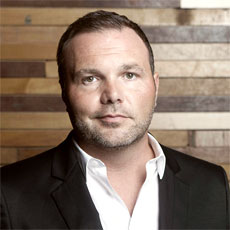
Mark Driscoll. Former pastor of the Mars Hill mega-church in Seattle, Washington.

Mark Driscoll. Former pastor of the Mars Hill mega-church in Seattle, Washington.

I have a confession to make. I like Mark Driscoll.

Mark Driscoll is a gifted Bible teacher. I have referenced some of his material here before on Veracity. He is direct, does not pull any punches, explains things from the Bible really well, and relates to the guy on the street in a very winsome way, putting things right on the bottom shelf for people within easy reach. For years he had led one of the fastest growing mega-churches in the country, but now the mega-church run is over. Just a few weeks ago, Driscoll resigned his position as head over his multi-site congregation, where his video sermons had been displayed live via satellite over about twelve locations in Seattle, Washington.

Veracity’s blogger-in-chief, John Paine, sent me this article from the Atlantic this morning that tells the whole story. According to the article, Driscoll’s Mars Hill Church has dropped from a peak in January of 14,000 Sunday worshippers down to 6,000, less than a year later. Now the remaining congregations will become autonomous local churches and the Mars Hill infrastructure will disband completely.

For years, Mark Driscoll has had his critics. Some conservatives had complained that he was too vulgar in his public demeanor. Others dismissed his muscular, Calvinist brand of Christianity as too divisive. He has had difficulties in being charged with plagiarism. Countless progressive Christians have accused him of everything from misogyny to being horribly infatuated with his own ego, something that even historian Molly Worthen reported on several years ago. But what really brought about his downfall was the internal disputes within his church among the church leadership and elder board. It was not a sexual or drug abuse related scandal. Instead, Driscoll was apparently a control-freak, prone to bullying other church leaders, all while projecting a congeniality towards others who did not know the inside situation that well.

The really sad part is that because of the crisis of leadership at the church, dozens of church staff people will lose their jobs. A once vibrant and growing community will have to remake itself. We would do well to pray for those remaining at Mars Hill, that the unemployed staff will find jobs elsewhere soon to support their families and that the remaining congregants will rebuild the leadership in these small churches into more healthy, growing and dynamic communities of faith. We should pray for Mark Driscoll, too, as losing your job as a pastor can be a dreadfully humiliating experience, not simply for himself, but for his family, as well.

What do we learn from the Mark Driscoll saga? Well, the big thing for me is to realize that the evangelical church in general has a serious problem with cultivating cults of personality. It can happen in large churches like Mars Hill, but it can happen in much smaller churches.

It can happen in your own church.

If a church builds itself around the “charismatic” leadership of one individual, no matter how gifted or likable that person is (remember: I still like Mark Driscoll, even with his flaws), then we should have red flags go up. However, if the church instead is built around the message of the Gospel, where Jesus Christ and Him alone is the “head pastor,” and not some guy in the pulpit, then that church is doing the right thing.

If and when a church goes through a crisis of leadership, it will serve as a wake-up call to that community. Churches that survive these difficult times do so because they focus on Christ and His work, not on the work of man. If a church experiences a decline in attendance because of a cult of personality crisis, then perhaps that is actually a good thing. If people are a part of a local church simply because they want to hear one particular person preach, and then they leave because their guy is no longer there, then I would argue that this is actually a good thing. On the other hand, if someone is in a local church because they are excited by what God is doing among the community as a whole, not simply through one individual, then a community of faith built with people like that will not only survive, it will flourish.

We have much to learn from the Mark Driscoll saga, lessons we all need to learn.

HT: John Paine


Left Behind: A Good Thing or A Bad Thing?

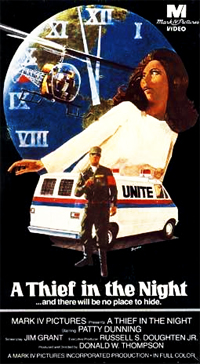
Long before the popular Left Behind books and films by Tim LaHaye and Jerry Jenkins, a Christian filmaker, Russell S. Doughten, in 1972 produced the classic (though some say a bit cheesy) A Thief in the Night, a visual experience that haunted a great many youth groups in dispensationalist churches throughout the 1970s.

Long before the popular Left Behind books and films by Tim LaHaye and Jerry Jenkins, a Christian filmaker, Russell S. Doughten, in 1972 produced the classic (though some say a bit cheesy) A Thief in the Night, a visual experience that haunted a great many youth groups in dispensationalist churches throughout the 1970s.

Growing up in the late 1970’s and early 1980’s, things were not looking very good. The Cold War with the U.S.S.R., the Islamic Revolution in Iran with American embassy staff held as hostages, and runaway inflation were on everyone’s mind. So when I first heard Larry Norman’s song “I Wish We’d All Been Ready,” I really resonated with the message:

life was filled with guns and war
and everyone got trampled on the floor
i wish we’d all been ready

children died the days grew cold
a piece of bread could buy a bag of gold
i wish we’d all been ready

there’s no time to change your mind
the son has come and you’ve been left behind
a man and wife asleep in bed
she hears a noise and turns her head
he’s gone
i wish we’d all been ready

two men walking up a hill
one disappears and one’s left standing still
i wish we’d all been ready

Based on Matthew 24:36-44, Larry Norman was singing about the coming Rapture, where all living Christians would be taken up into the air to escape the approaching seven years of the Great Tribulation, prior to the Second Coming where Jesus Christ sits in judgment as the righteous King and to rule the earth for a one thousand year millennium (previous Veracity post). While most of my Christian friends were hesitant to guess any particular dates, the general sense was that Jesus would definitely come within my lifetime. I was so taken in by this message that for the first few working years out of college, I never bothered to participate in my company’s 401K plan to save for the future. Why should I plan for the future when Jesus is definitely coming back so soon?

Years later, I now wish I had given greater thought to how my view of the EndTimes had impacted my life as a young person. Even more so, I wish I had learned that the Rapture theology narrative I had so readily embraced as being identical with the very Word of God is actually a bit more complicated. Let us dig a little deeper into what the Bible teaches on the subject. Continue reading


Ben Witherington and Darrell Bock on the Rapture

If you were a bit intimidated by my last (lengthy) post regarding the Book of Revelation, including its connection to the Rapture, you might be more interested in the following less-than-seven minute video by Ben Witherington, New Testament scholar at Asbury Seminary. Witherington, who was highlighted before here on Veracity, gets to the rub of the history behind the Rapture.

Witherington, as you will see, concludes with a negative assessment of “Rapture Theology.” Contrast this with Dallas Theological Seminary’s Darrell Bock who accepts the “Rapture Theology.” For those of you not accustomed to big words like eschatology, you can think of it in this context as someone’s understanding or theology of the “End Times.” Bock, also a New Testament scholar and a favorite here on Veracity, follows his brief assessment with a very helpful, three-minute way of evaluating how Christians should handle important issues in the church where Christians nevertheless disagree.

I hope you might benefit from both videos.