Category Archives: Topics

When the New Testament Writers Quote the Old Testament, … Uh… Are They Crazy?

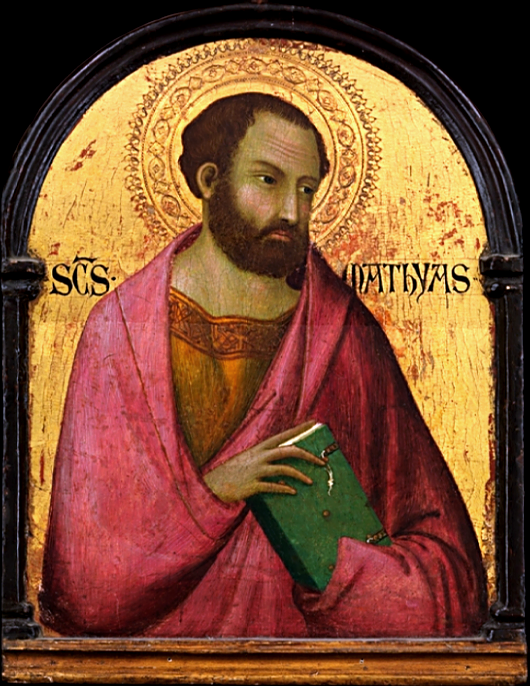
Saint Matthias replaced Judas Iscariot among the original 12 apostles, following Judas' death, as described in Acts 1. The Bible tells us nothing more about Matthias, but one tradition says that he founded the first Christian community along the Caspian Sea (credit: Simone Martini, Wikipedia)

Saint Matthias replaced Judas Iscariot among the original 12 apostles, following Judas’ death, as described in Acts 1. The Bible tells us nothing more about Matthias, but one tradition says that he founded the first Christian community along the Caspian Sea, before being martyred. (credit: Simone Martini, Wikipedia)

Have you ever wondered why the New Testament writers quote the Old Testament, the way they do? Sometimes, it looks rather strange, if not outright crazy. Is there an explanation for this? Let us explore an example from the Book of Acts.

In Acts 1:15-22 (ESV), we have come to the point in Luke’s story, just after the ascension of Jesus into heaven. The disciples are waiting in Jerusalem for the coming of the Holy Spirit, when Peter stands up and convinces the rest of the group that they must replace the position, among the apostles, vacated by Judas Iscariot, after Judas’ betrayal of Jesus. Luke records what happens, as follows:

(v.15) In those days Peter stood up among the brothers (the company of persons was in all about 120) and said, (v.16) “Brothers, the Scripture had to be fulfilled, which the Holy Spirit spoke beforehand by the mouth of David concerning Judas, who became a guide to those who arrested Jesus. (v.17) For he was numbered among us and was allotted his share in this ministry.” (v.18) (Now this man acquired a field with the reward of his wickedness, and falling headlong he burst open in the middle and all his bowels gushed out. (v.19) And it became known to all the inhabitants of Jerusalem, so that the field was called in their own language Akeldama, that is, Field of Blood.) (v.20) “For it is written in the Book of Psalms,

“‘May his camp become desolate,
and let there be no one to dwell in it’;
and

“‘Let another take his office.’

(v.21) So one of the men who have accompanied us during all the time that the Lord Jesus went in and out among us, (v.22) beginning from the baptism of John until the day when he was taken up from us—one of these men must become with us a witness to his resurrection.”

Let us ignore the whole question of how Judas died, and instead, focus on what I have highlighted, namely Peter’s statement, “the Scripture had to be fulfilled,” in v. 16. In v. 20, Peter quotes from two psalms, Psalm 69:25 and Psalm 109:8.  But if you read either of those Psalms in the Old Testament, say Psalm 69, you will notice that this psalm says absolutely nothing about Judas Iscariot, and nothing directly about Jesus as the Messiah. How does this have anything to do with replacing the apostolic position left open by the death of Judas? How can prophecy be “fulfilled” in Acts, when neither psalm appears to be predicting anything?

So,… Is Peter’s use of the quotations from the Old Testament, a bit…. uh…. crazy???? Was Peter suffering from some form of “post-Ascension” stress?

The answer to that is “no,” but it requires taking a closer look at the original context of the Biblical speakers, writers, and their audience.

Continue reading


A Conversation Starter: Muslims, Christians, and Jesus

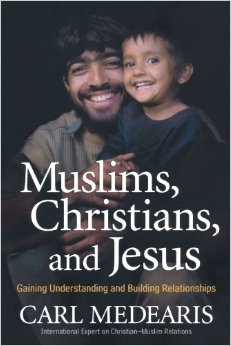
muslims-christians-jesusMy wife and I just finished reading a book written by Carl Medearis, Muslims, Christians, and Jesus: Gaining Understanding and Building Relationships. Little did we know that when we first started to read the book that current events surrounding the world refugee crisis would make our reading of the book into quite a big conversation starter.

Some voices in our culture say that Islam and Christianity are basically equal pathways to God, just using different language. Therefore, Christians should not bother trying to share their faith in Jesus with Muslims. On the other side, some say that Muslims can not be trusted, because of their association with terrorism.

Carl Medearis avoids the pitfalls of those two extremes. He focuses on the person of Jesus. I reviewed my first Carl Medearis book, Speaking of Jesus: The Art of Non-Evangelism, here on Veracity. Medearis and his family spent 12 years in Beirut, Lebanon, building relationships with Muslims in the Middle East, talking with them about Jesus. As in his other books, including Muslims, Christians, and Jesus, Medearis recounts some of his conversations with Muslim leaders that challenged me to rethink my own prejudices against Muslims as real people, who need Jesus just as much as I do. In addition to giving a helpful overview of what Islam is, Medearis provides some very useful tips in making friends for Jesus with Muslims. As a read geared towards a popular audience, it is a fairly short book, too.

For example, according to Medearis, did you know that Muslims often think that Christians do not properly honor the Bible as God’s Holy Word? Sure enough, this past Christmas, I invited a few Muslims friends to a concert at our church. In our church, we put our pew Bibles in metal trays attached underneath the seat in front of where we are sitting. My Muslim guests were appalled that we stored our Bible down low, underneath people’s rear-ends, instead of lifting God’s Word up high, as a sign of honor and respect.

I had never thought about that before.

In early 2017, a new American President implemented a temporary travel ban on citizens from several Islamic countries, including an indefinite ban on refugees from Syria coming into the United States. Several million people have been fleeing civil war in Syria, including not just Muslims, but Christians as well. Refugee resettlement programs can take a very long time to work through, so the recent moratorium complicates the situation. Veracity blogger John Paine and I have made our views known before here on Veracity, on which we both agree, regarding the Syrian refugee crisis, and how Christians should respond.

Christians all over the world, and especially here in the United States, are divided over this issue. Hundreds of prominent Christian leaders oppose the refugee ban, while others support it. World Relief, an evangelical relief agency working with churches to settle refugees, has drafted an open letter, as a full-page in the Washington Post in February, 2017, calling upon conservative evangelical Christian leaders to speak out. It is a delicate balance between being obedient to the Gospel’s call to love and care for the refugee, with the requirement for national security and protecting American borders. We need to have a conversation among Christians today, as to how believers are to pray and be faithful in God’s calling to best assist the refugee, in a dangerous world.

Might I suggest that you grab some copies of Carl Medearis’ Muslims, Christians and Jesus, read it together with Christian friends as a group, discuss it, and then, do something about it?


Does the Bible Speak Definitively On the Age of the Earth?

Albert Mohler

Albert Mohler: Theologian and defender of a Young Earth view of Creation.

C. John Collins

C. John Collins: Old Testament scholar and defender of an Old Earth view of Creation.

I recently listened to a debate between Dr. Albert Mohler and Dr. C. John Collins, with the provocative title, “Genesis and the Age of the Earth: Does the Bible speak definitively on the age of the universe?” Christians have very different views on this topic, and sadly, a lot of debates of this sort tend to descend into either rancor, or simply talking past one another, particularly for debates with non-believers. But this debate, intended for an audience of Christian pastors, was different, and for that reason, I thought it worthwhile to make some notes and share them here on Veracity. You can view the debate yourself at the Trinity Evangelical Divinity School’s website, and I would encourage you to do so to get the most out of my following comments and observations (another synopsis of the debate is available here).

Al Mohler, the president of the Southern Baptist Theological Seminary, answered the debate question with “yes.” But in doing so, I appreciated what Mohler had to say about the very nature of this debate. As he put it, there are three different orders of theological debates that have an impact in the church:
Continue reading


Bill Nye Visits the Ark Encounter

Exactly three years ago today, the arguably most recognizable popular advocate for modern science, Bill Nye, debated one of the most controversial leaders in evangelical Christianity, Ken Ham, of Answers and Genesis, on the topic of creation. Since then, this debate has received nearly 6 million views on YouTube, which is a lot for a two-hour debate on science and the Bible.

This past year, Bill Nye returned to Kentucky to take a tour of the new Ark Encounter exhibit, just days after its opening. Cameras were rolling as Answers in Genesis recorded the casual, yet often heated, discussion between these two iconic men. Bill Nye and Ken Ham represent two very opposite ends of the pole on this topic, so I frankly found the discussion rather frustrating and exasperating. It felt like the two sides were just talking past one another. Nevertheless, it gives a good example of the type of challenges Christians face when defending their faith, with skeptics who are enamored by the prospects of modern science.

UPDATE: April 2018.  I originally posted a 2o-minute edited version of the discussion, which has since been taken down. Here is the full 2-hour version, from Answers in Genesis:


A Covenant for Small Groups: Discovering Authentic Christianity

Ray Stedman, the California Bible teacher, who inspired Dick Woodward to write A Covenant for Small Groups.

Ray Stedman, the California Bible teacher, who inspired Dick Woodward to write A Covenant for Small Groups.

Dick Woodward, the late pastor emeritus for the local church I worship with, was once a youth director in a church pastored by Ray Stedman, at Peninsula Bible Church in Palo Alto, California. This was back in the 1950s, when Ray Stedman, a popular Bible teacher and author at the time, mentored Dick Woodward, then a young man, fresh out of Bible college.

Stedman eventually would write a book, Body Life, that explained some of the great teachings that impacted Dick Woodward in those days. The thesis in Body Life is that the church needs to get back to practicing authentic Christianity, creating small fellowships of believers, who learn to care for one another, getting to know one another….really….as they study and seek to live out God’s Word together.

Fast forward to the 1980s, when Dick Woodward took these teachings with him to pastor the church I would eventually become a part of in Williamsburg, Virginia, the Williamsburg Community Chapel. Dick decided to distill the fundamentals of these teachings into a small booklet, A Covenant for Small Groups, now published by International Cooperating Ministries, that can be read in one evening. But this little booklet contains a lifetime of spiritual wisdom.

Since that time, the concept of small groups of believers, gathering together on a regular basis, to care for one another as they study God’s Word, has been the core foundation in our larger church fellowship, for over thirty years. An untold number of other churches and groups have adopted these same principles in their own fellowships. I would encourage every Christian to get and read the whole booklet, but please allow me to list out Dick’s eight fundamental commitments of a small group below, to whet your appetite.

By following these principles, a small group can create a safe place where the group members can get to know one another… really… as they study the Bible together. Living out these principles does not happen on “day one,” when you first meet together as a group. It takes time, and different people have different expectations as to what these specific commitments entail. But when you find such a group that is willing to embrace these eight commitments, it will help you and your group to discover authentic Christianity. Continue reading