Category Archives: Apologetics

Is It A Stretch?….The Big Bang and the Bible

I know that a number of my Young Earth Creationist friends are not too crazy about the “Big Bang Theory,” as they argue that the Big Bang can not be found in the Bible…. and I am not talking about the TV show, but rather the cosmological theory….

But try this one on for size:

Bless the Lord, O my soul!
    O Lord my God, you are very great!
You are clothed with splendor and majesty,
     covering yourself with light as with a garment,
    stretching out the heavens like a tent. (Psalm 104:1-2 ESV)

The continuous expansion of the universe, that results from the cosmological Big Bang, ties in very well with the psalmist’s metaphor, of God “stretching out the heavens like a tent.”

Okay. I am not necessarily saying that a psalm writer was consciously thinking about the modern physics of cosmic radiation, underneath his Middle Eastern tent, over twenty-five hundred years ago.

That would be a “stretch!”

Yet we are dealing with not just a human author, but a supernatural author, as well. It seems to be more than mere coincidence that God’s Word just happens to have a metaphor, that perfectly matches the description that astronomer Edwin Hubble first discovered in 1929. As John Paine demonstrates, the history of the universe from science is a good argument to help people who do not accept the Bible, to consider the possibility of believing in the God of the Bible.

True, having conversations with your neighbors about the Big Bang, rarely by itself will  lead them to profess faith in Jesus. But it can create a pathway to share the Gospel. Otherwise, to refrain from appealing to general revelation in our conversations, is like trying “to snatch defeat from the jaws of victory.”

Think about it.

Perhaps the connection between the Bible and the Big Bang is not such a “stretch” after all.


If you are still a bit confused, Christian astrophysicist Hugh Ross at Reasons to Believe gives us some background on the Big Bang Theory (two videos, about 90-seconds each).  If you want to know more about how we at Veracity approach the debate over creation, just find the search field on the Veracity blog, type in “creation” or “creationism,” and click GO!….. (SLIGHTLY OFF-TOPIC: John Paine filmed the promotion video for Faith Bible College. Check that out, too!)


Whistling Past the Graveyard

~Vlog-Graphic_002


The Case for Christ: Easter for Believers and Skeptics

Leslie and Lee Strobel, 1972, back when they dismissed the Resurrection as a fraudulent delusion.

“He is Risen!” Historical event or fraudulent delusion?

If you are the type of person who has had questions about the veracity of the Christian faith, then go see this movie. Better yet, take an open skeptic with you.

The Case for Christ is based on the true story of an atheistic journalist, whose life is turned upside down when his wife becomes a follower of Jesus. Lee Strobel, an accomplished reporter for the Chicago Tribune, a “just the facts, ma’am,” type of guy, is desperately afraid of losing his marriage and family, so he begins a long journey to try to disprove Christianity in order to “save” his wife from the error of her ways.

The Case for Christ is a major, major step up from movies like God’s Not Dead, that ambitiously relies on the composite characterizing of atheists, unnecessarily fueling the fires of culture war rhetoric. Furthermore, unlike other recent film offerings, The Case for Christ does not get distracted by the logic of false dichotomies either. Instead, The Case for Christ, focuses on two themes: (1) making the case for the Resurrection of Jesus, based on the minimal facts argument, built on the consensus of evidence found in secular, historical scholarship, and (2) exploring how human prejudices interplay with the tension between faith and reason.

The Case for Christ is not for everyone, and I can think of two, very different types of people who fit within this category. First, if you are a skeptic, and you are completely opposed to considering the evidence for the Resurrection, The Case for Christ will absolutely frustrate you. But you probably will not like any other Christian-themed movies either.

Secondly, The Case for Christ will underwhelm the Christian who feels like they already have all of the answers, and who never wrestles with doubts. The film simply leaves open the question of why the different Gospel accounts are not 100% agreed upon the discrete events surrounding the Crucifixion and Resurrection of Jesus. Many a Christian evidentialist would reason that the existence of discrepancies between the Gospels enhances their historical credibility, instead of taking away from it, an argument that makes good sense to historians, but that will unsettle the most strict, biblical inerrantist. The evidence from textual criticism, that upholds the reliability of first century New Testament documents, will annoy the Christian who merely believes that the English Bible in their hand simply dropped straight down right out of heaven. But for believers and non-believers who are willing to ask penetrating questions, The Case for Christ is right for them.

The Case for Christ is not perfect, by any means. For example, as this Forbes magazine reviewer observes, the discussion about the Shroud of Turin was not very convincing. Plus, there is only so much you can do in a two-hour movie, as this review at The Gospel Coalition points out (check out these “The Case for Easter” resources). Because of the limitations of the medium, the events surrounding Lee Strobel’s journey towards faith and overcoming skepticism have been tightly compressed in the film, and this might confuse some. Strobel’s interviews with experts happened after his conversion to Christian faith, and not before, as depicted in the movie.

But overall, The Case for Christ does a very good job with making an apologetic argument for the Christian faith, based on evidences, within the context of a believable narrative, without getting too bogged down with the details. Get the book that the movie is based on, if you want to go to that level. If I had to recommend one movie that you can take a non-believing friend to see, without embarrassment, The Case for Christ would be it.


Ivor Noël Hume, and the Evidence for Faith

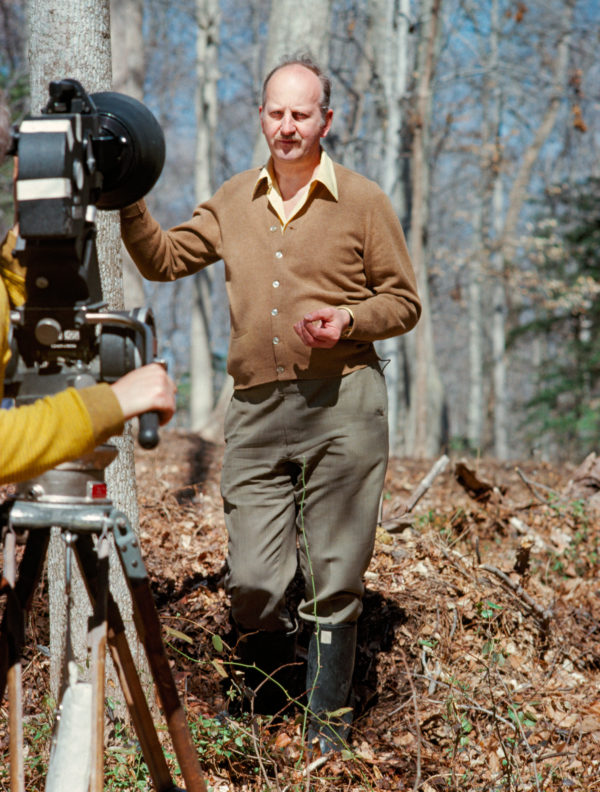
Ivor Noel Hume, in the filming of "Search for a Century," a 1970s Colonial Williamsburg production.

Ivor Noël Hume, actor turned famous archaeologist, in the filming of “Search for a Century,” a 1970s Colonial Williamsburg production.

Ivor Noël Hume, a pioneering archaeologist of colonial America, died on February 4, 2017. As the New York Times tells it in their remembrance, Hume was an “accidental, self-taught English-born archaeologist who unearthed the earliest traces of British colonial America.” He was the director of archaeology at the Colonial Williamsburg Foundation from the mid to near late 20th century, excavating 18th century Williamsburg, as well as 17th century settlements in the area, notably, Wolstenholme Towne, at the Carters Grove estate. Most locals now know of the place as part of Martin’s Hundred, in the neighborhood of the Kingsmill community subdivision.

I only met Mr. Hume a few times growing up as a kid, but my late father, George Alan Morledge, worked with him at Colonial Williamsburg. My dad, an historical architect, had been hired by Colonial Williamsburg vice president, Ed Kendrew, to assist in the team effort with the archaeologist Hume. From digging below ground to restoring 18th century structures above, these historians across various disciplines enjoyed the pursuit of evidence that helped to reconstruct Williamsburg, and other local, historical sites, to paint a portrait of what life really looked like in the early years of colonial Virginia.

Many consider Hume to be the “father of historical archaeology.” As I remember him, mostly through my dad, Ivor Noël Hume was quite a character.
Continue reading


The Tim Keller Controversy at Princeton: And What It Means for the Church

OOOOPS!!  It was a shocker when the Oscars mistakenly first awarded Best Picture to “La La Land,” instead of “Moonlight.” But who would think that a leading Protestant seminary would do the same type of thing? (photo credit: Kevin Winter/ Getty Images)

Normally, when a theological seminary gives an award to someone in the greater community, the announcement brings about as much excitement as saying how many millimeters your grass has grown up so far this spring. But when the prestigious Princeton Theological Seminary announced that Tim Keller, a New York City pastor, was to be awarded the esteemed Abraham Kuyper Prize for Excellence in Reformed Theology and Public Witness… and then later rescinded the offer, it created quite a stir.

Tim Keller is probably one of the most well-known, conciliatory voices in the conservative evangelicalism movement. His books on the Bible, marriage, and particularly, apologetics, like Reason for God and Making Sense of God: An Invitation to the Skeptical, have helped millions to better understand how the Gospel of Jesus Christ effectively relates to the challenges of living in a postmodern culture. The Gospel Coalition, an organization that Keller helped to found, is a “go to” resource for many evangelicals, for encouragement, Bible teaching, and cultural analysis.

Interestingly, Keller in the past has had his critics on the extreme conservative side. Keller’s openness to some aspects of evolutionary creationism has come under a suspicious eye, for some, while others have branded his book, Generous Justice: How God’s Grace Makes Us Just, as uncritically paving the way towards an embracement of socialism. But most evangelical Christians, who know anything about Tim Keller, regard him as a gracious and thoughtful spokesperson for evangelical faith, even if there is disagreement on relatively minor matters, according to Richard Mouw, former president at Fuller Theological Seminary, and a past recipient of the very same Kuyper prize, awarded at Princeton Seminary.

Tim Keller

Tim Keller: A type of evangelical thinker who models the kind of irenic approach to Christian apologetics, that Veracity tries to follow.

However, when some members of the Princeton Seminary community realized that Keller was a member of the Presbyterian Church of America (PCA), a Christian denomination that does not confer ordination on women, or practicing gay or lesbian people, they became angry over the Seminary’s plans to honor Keller with the Kuyper award, leading to the rescinding of the award offer. Apparently, you just can not make everybody happy. As a type of compromise, Keller has still been invited to speak on the topic of mission at the seminary, an invitation which he graciously accepted. Yet the controversy regarding Keller forebodes several signs, that do not look good for the health of the Christian community in America in our day. I will list four, but see if you agree with these assessments:

  • Oversimplifying Complex Points of View. Keller’s position on both women’s ordination and gay/lesbian ordination was the stated reason for rescinding the award. Issues concerning how men and women relate to one another, and how the church can best address the concerns of the LGBTQ community, are quite complex, so it seems rather flatfooted for dissenters at Princeton to base their protest over Keller’s theology of ordination. While it is true that the large majority of evangelicals do oppose both women’s and gay/lesbian ordination, there is also a significant voice among evangelicals that opposes gay/lesbian ordination, but believes that the question regarding women’s ordination is still a matter of vigorous debate. Yet there is even another debate among Christians as to what constitutes ordination in the first place. Presumably, Tim Keller’s wife, Kathy Keller, who at one time advocated for women’s ordination, but now opposes it, would never be eligible for the Kuyper award, per the dissenters at Princeton. Keller’s dissenters at Princeton do not seem to be aware of these divergent, complicated factors, apparently out of step with the discussion in the evangelical church body at large. Jim Daly, of Focus on the Family, insightfully remarks that Princeton Seminary needs Tim Keller more than Keller needs Princeton. Is Princeton in danger of unnecessarily conflating complex issues together?
  • The Intolerance of Tolerance. For years, progressives in various churches have complained that conservatives have shut down conversations on sensitive, controversial issues. So, it seems strange that progressives at Princeton would attempt to try to “marginalize” a moderate figure like Tim Keller. Even a few progressive types, like Jonathan Merritt, of the Religion News Service, believes that Princeton’s actions are over the top, observing that Keller is no misogynist and no bigot. So, when did an attempt to maintain fidelity to the long standing traditional interpretations of Scripture make someone a misogynist or bigot?
  • The Flipping of “Orthodoxy” Upside Down. For much of the 19th and early 20th century, Princeton Theological Seminary was self-consciously the guardian of conservative evangelical orthodoxy. Abraham Kuyper, for whom the Princeton award is named for, was one of the distinguished leaders of confessional evangelicalism, in the latter 19th century and early 20th century, at one time the Prime Minister of the Netherlands. Kuyper’s doctrinal commitments mirror much of what Keller’s denomination, the PCA, believes. Some even argue that Kuyper negatively would be greatly more conservative than Tim Keller. Is it not strange that if Abraham Kuyper were alive today, that he would not be eligible to receive an award that bears his name?
  • The Polarization of American Christianity. It is as though the extremes on both sides, conservative and progressive, are getting more extreme, and those who propose a more measured, moderate approach to sensitive issues, are caught in the crossfire. Will divisive rhetoric continue to polarize Christians, or will voices be allowed to emerge that promote dialogue and unity, while preserving orthodox faith?

While there are some at Princeton who begrudgingly will allow Tim Keller to come and speak, anyway, we here at Veracity have no hesitation in offering the kind of thoughtful engagement with contemporary issues that Tim Keller offers to the church, as well as the largely secular folks at Google. Here is Keller’s talk at Google last year, articulating the main ideas found in Making Sense of God: An Invitation to the Skeptical (be sure to hear the question that is relevant to the fundamental concern of the dissenters at Princeton, and Keller’s response, starting at the 52:45 mark).

UPDATE: March 29, 2017