Author Archives: Clarke Morledge

About Clarke Morledge

Unknown's avatar
Clarke Morledge -- Computer Network Engineer, College of William and Mary... I hiked the Mount of the Holy Cross, one of the famous Colorado Fourteeners, with some friends in July, 2012. My buddy, Mike Scott, snapped this photo of me on the summit.

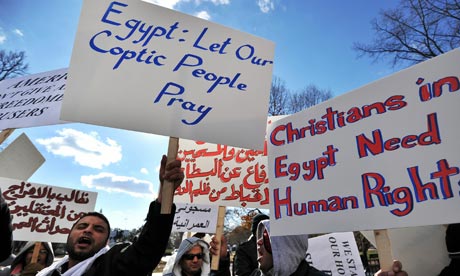
Egypt: Coptic Christianity

Members of an historic Christian community in Egypt find themselves persecuted in the midst of political and economic turmoil.   How should Christians at large throughout the world pray for them?

The international media highlights the conflict between the secular elite and Islamic fundamentalists in Egypt.  But what about Egypt’s historic Christian community, the Copts?  How should believers around the world pray for them?

Since the Arab Spring of 2011, Egypt has been a focal point of political renewal … and unrest. Much of the conflict in Egypt is between a secular minded ruling class and a resurgence of fundamentalist Islam. What will take shape in Egypt? A Westernized secular democracy? A return to a traditional Islamic state?

What many do not realize is that there is another group of people in Egypt often caught in the middle: the Coptic Christians.  It is a situation where many other Christians, like me, here in America, find it difficult to comprehend.
Continue reading


Wisdom: John R. W. Stott

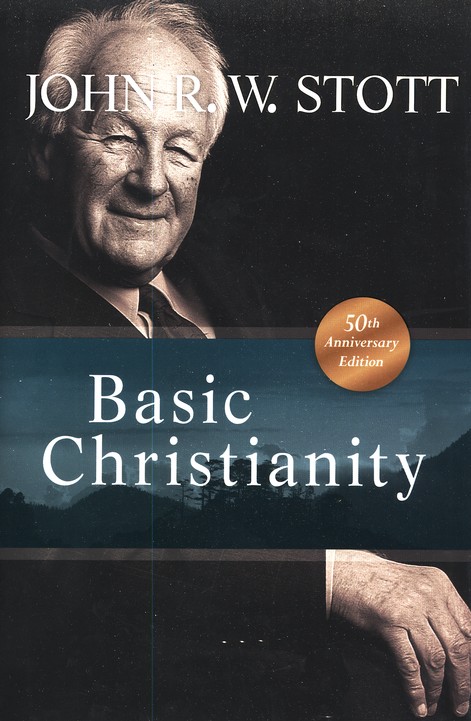
John R.W. Stott, author of the classic introduction to the Christian faith, Basic Christianity.

John R.W. Stott, author of the classic introduction to the Christian faith, Basic Christianity.

I fondly remember listening to John Robert Walmsley Stott teaching tapes in college some thirty years ago. Stott was a staple speaker at InterVarsity Christian Fellowship conferences in the last third of the 20th century. Verse by verse, Stott would calmly expound each point in the biblical text. He was not flashy, but in his eloquent British voice he was passionate about gaining an in-depth perspective on God’s Word. Stott died a few years ago at age 90, on July 27, 2011.

John Stott still embodies biblical wisdom for me. He was scholarly but still had a pastor’s heart that enabled him to care for people. How do the great truths of the Bible impact not only the way I am to think, but the way I am to live as a Christian? In the dozens of books and biblical commentaries Stott authored, he tackled tough issues with day-to-day applications in a tender and very practical way.

In celebration of Stott’s contribution to the church, Christian Audio is offering a FREE audio download of Stott’s classic book, Basic Christianity, during the month of August, 2013.

Continue reading


Jesus the “Zealot”?

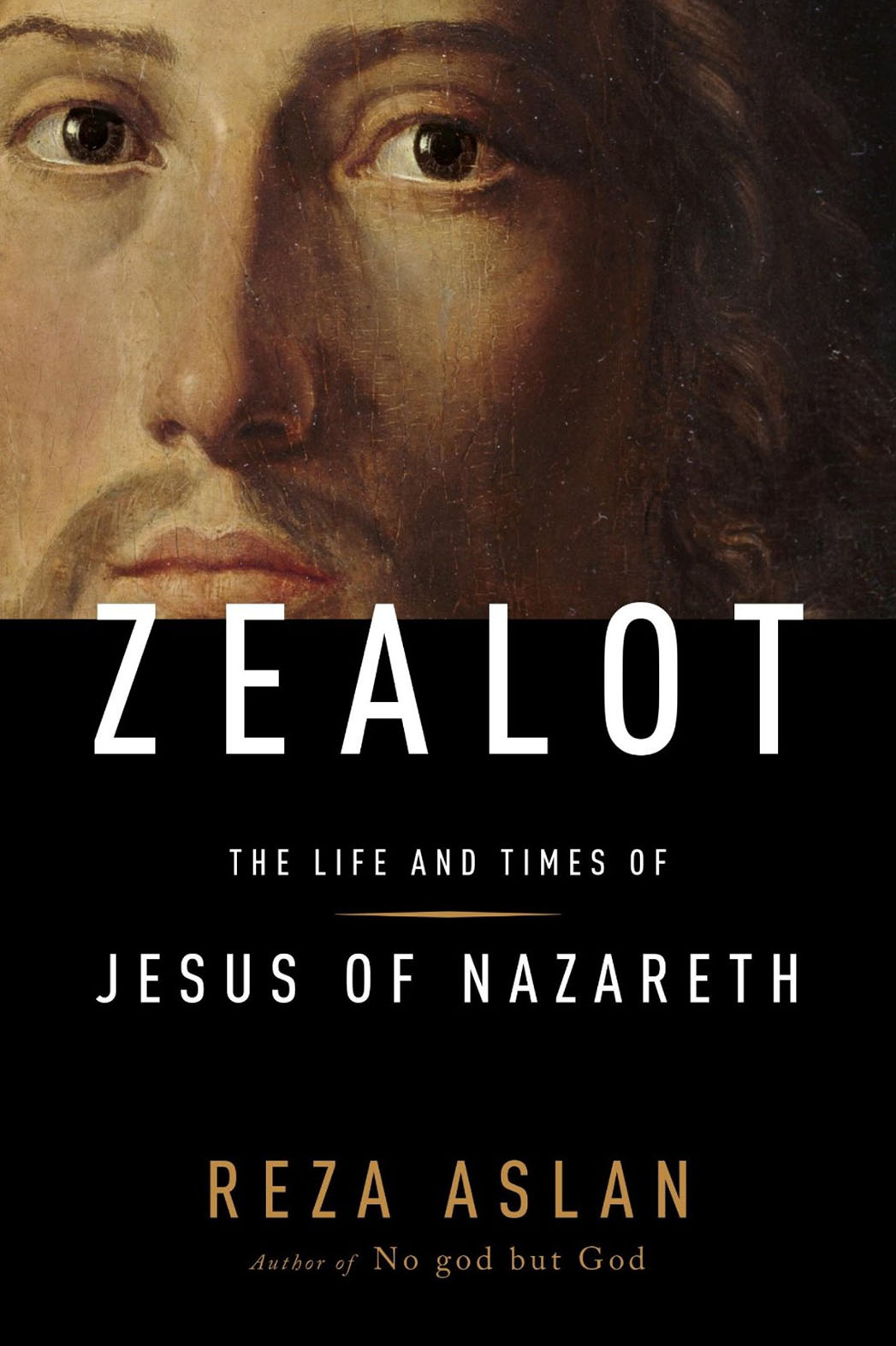
Reza Aslan's, Zealot, has profited greatly from a television interview gone viral.   But does Aslan's creative thesis really deliver?

Reza Aslan’s, Zealot, has profited greatly from an embarrassing television interview gone viral. But does Aslan’s creative thesis really deliver?

Was Jesus a “Zealot”, a Jewish political revolutionary? According to a new popular book by Reza Aslan, Zealot: The Life and Times of Jesus of Nazareth, the answer would be “yes”.

Aslan’s conclusion is in marked contrast with what I wrote on Veracity just last week and before. There I briefly made the case that Jesus offered an alternative between those Jews, like the tax collector, Matthew, who colluded with Rome, and others like Simon the Zealot, who sought to violently eject the Romans from the land. Matthew and Simon joined the group of Jesus’ twelve disciples and were drawn by Jesus’ extra-political claim as being the One who transcends and personally fulfills the messianic hopes and national aspirations of first century Judaism. A less convinced author, Reza Aslan, pretty much casts aside Jesus’ relationship with those like Matthew and places him squarely in the Zealot camp, prior to the formation of a distinct “Zealot party” that dominated Jewish politics during the era of Josephus.

But the Zealot issue is not what has captured the public’s attention about Aslan’s book. Rather, the spark was a recent, combative interview on the FOX television network. The controversy originated over whether or not a Muslim had a right to write a book about Jesus. The case that Aslan was making got lost in a series of ad hominem attacks. Yikes!! Granted, Aslan makes an embarrassingly big deal about how many academic degrees he has (“look how smart I am!”), but might I suggest that the way FOX conducted the interview was not terribly helpful, to put it mildly?
Continue reading


Josephus and the Werowocomoco Effect

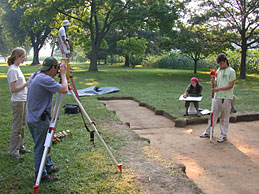
Archaeology students from the College of William and Mary doing field work a few years ago at Werowocomoco, a prominent Native American village in pre-colonial Virginia... and famous site for Captain John Smith's rescue by Pocahonatas.

Archaeology students from the College of William and Mary doing field work a few years ago at Werowocomoco, a prominent Native American village in pre-colonial Virginia… and famous site for Captain John Smith’s rescue by Pocahontas.   Werowocomoco, under excavation since 2003,  dates back as an active settlement as early as perhaps the 12th century Before Christ.

Terrence Malick’s 2005 film, The New World, was filmed on the Chickahominy River, less than a mile or two from where we live. The New World tells the story of Jamestown, focused around the fascinating story of Captain John Smith, his capture by the Native Americans, and his detainment at the ancient Algonquian village of Werowocomoco, recently discovered along the York River in Virginia. By Smith’s recollection, his life was spared at the last minute by the intervention of the young daughter of chief Powhatan, Pocahontas. This is the stuff that great legends are made of.

Captain John Smith was a man of adventure, much like the great Jewish historian, Josephus, whom we considered in an earlier Veracity post. Perhaps in more ways than one, you might find a connection between John Smith and Josephus. Let me know what you think.
Continue reading


The Masada Myth: Martyrs or Maniacs?

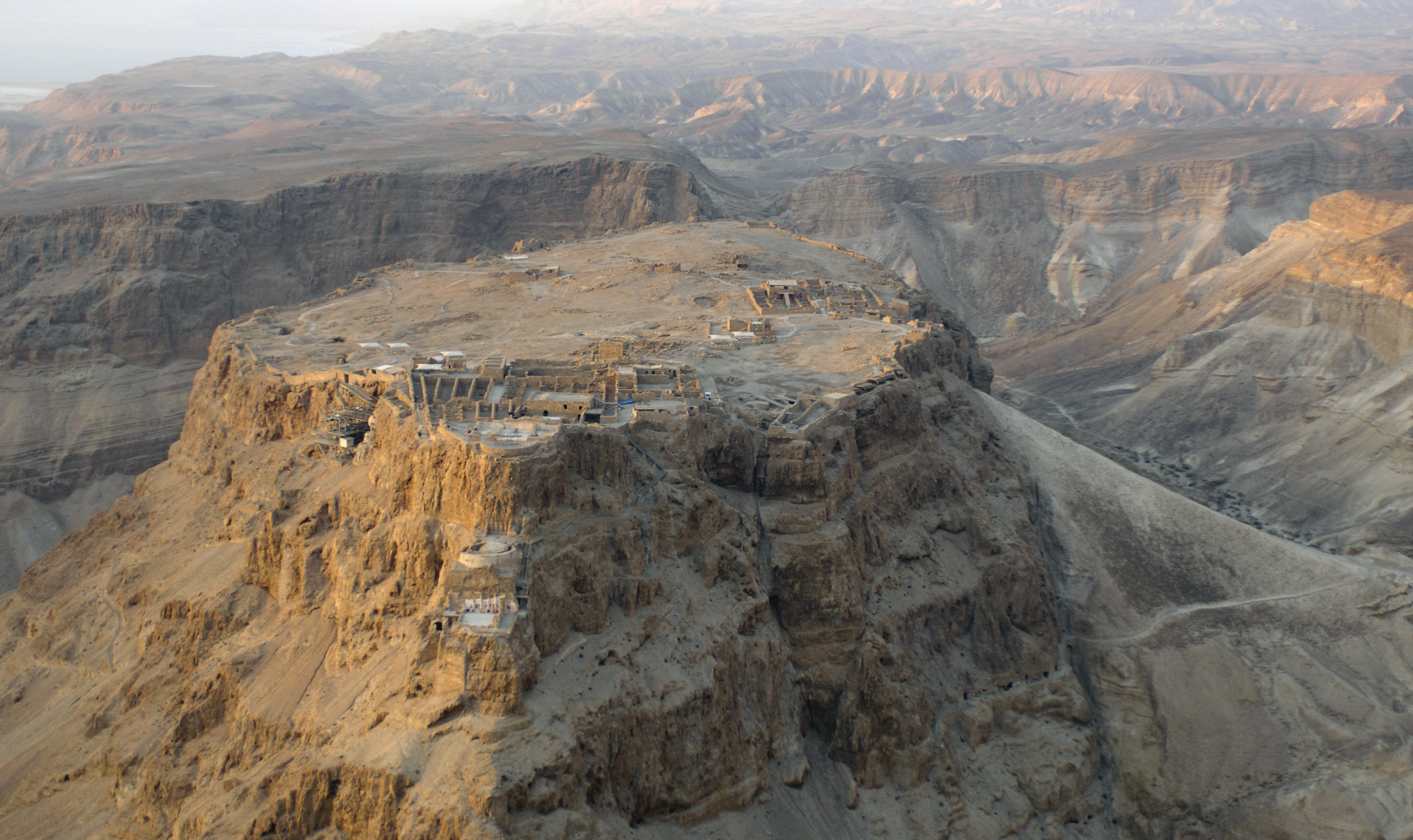
Aerial view of Masada, Herod's fortress near the Dead Sea, where Jewish rebels resisted the Roman army, just a few years after the Destruction of Jerusalem within a generation after Jesus' Resurrection (Wikipedia image, Godot13 photographer)

Aerial view of Herod’s Masada, where Jewish rebels resisted the Roman army, just a few years after the Destruction of Jerusalem, within a generation after Jesus walked the earth.  Note the Dead Sea faintly in the upper left to the east, and the location on the right where the Romans built their siege ramp on the western approach. (Wikipedia image, Godot13 photographer, click on the image to see it close up…. pretty impressive)

Around the years 72-73 A.D., a band of Jewish rebels and their families sought refuge in one of Herod the Great’s fortresses, Masada. The Roman army had recently destroyed the city of Jerusalem, slaughtering thousands of fellow Jews in the process. These 960 men, women and children belonging to a radical group of Zealots, the Sicarii, sought to hold out at Masada in a last ditch effort to resist the Roman occupation.

Herod the Great, known to students of the Bible for the “massacre of the innocents”, had originally built Masada on a desolate mountaintop just west of the Dead Sea. What happened at the siege of Masada some one hundred years later has continued to fascinate historians and believers down through the years. The Jewish Zealots had enough food and water to last them for many, many months, but it was only a matter of time before their defeat in the hands of the Roman army would become inevitable. Roman troops eventually surrounded the near impenetrable fortress, and over the following months they were able to build a siege ramp that enabled the Romans to break through the Jewish Zealot defenses.

What the Romans found there next on top of Masada has inspired many a freedom fighter while horrifying others by the ghastly moral choices that were made. What really happened at Masada, and how is a Christian to respond to it?
Continue reading