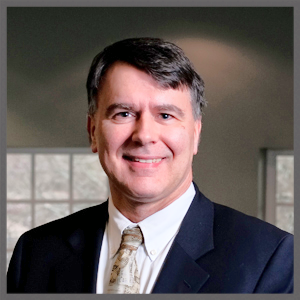
Clarke Morledge -- Computer Network Engineer, College of William and Mary...
I hiked the Mount of the Holy Cross, one of the famous Colorado Fourteeners, with some friends in July, 2012. My buddy, Mike Scott, snapped this photo of me on the summit.
Andreas Köstenberger. Friday, March 20, 2015. College of William and Mary. Millington 150. 7pm. Sponsored by InterVarsity Christian Fellowship.
Does truth really matter? Is the New Testament really reliable, and can I have confidence in what it teaches? The New Testament is under attack, and many people today find it difficult to accept the trustworthiness of the Scriptures. Furthermore, many Christians find themselves unable to defend their faith against this form of skepticism.
Andreas Köstenberger, Senior Research Professor of New Testament and Biblical Theology at Southeastern Baptist Theological Seminary in Wake Forest, North Carolina, will be speaking at the College of William and Mary InterVarsity Christian Fellowship large group meeting, Friday, March 20, 2015, at 7:00 pm. Köstenberger is co-author of a recent book highlighted earlier here on Veracity along with Darrell Bock, Truth Matters: Confident Truth in a Confusing World. Köstenberger lectures on college campuses addressing issues related to the criticism of the New Testament and the nature of Christian marriage. For people living in the greater Williamsburg, Virginia area, Köstenberger’s talk promises to provoke a wide-ranging discussion of issues that many people, believer and skeptic, struggle with in today’s world. If you wrestle with these type of questions, please come and engage in the conversation.
Anne Jackson Morledge (November 6, 1928 – February 24, 2015)
My mom died a few weeks ago.
Anne Jackson Morledge was 86 years old, without a doubt the most influential person in my life. Humanly speaking, she was my anchor.
She had been diagnosed with a brain tumor resulting from a stage IV glioblastoma cancer. The tumor was surgically removed, but the surgeon carefully warned us that there was a 100% chance of recurrence. In the weeks after the surgery, I devoured Siddartha Mukherjee’s The Emperor of All Maladies in an attempt to understand this dreadful disease of cancer. Living only twenty minutes from the nursing facility where my mom was, I visited her almost every other day. We had many in-depth conversations as she progressively declined. The wonderful gift provided by the surgery is that it gave time for family and friends to come visit my mom and say good-bye. In the end, she died peacefully in her sleep, with the immediate cause being complications due to pneumonia.
A number of family and friends have requested that I send them the text of the remembrance I gave yesterday at her memorial service. My remarks were framed within the Episcopal Rite II liturgy for the burial of the dead, part of Thomas Cranmer’s Book of Common Prayer, a powerful testimony to the Christian hope. My Veracity co-blogger, John Paine, convinced me that I should publish it here on the blog, commenting that the tensions I highlighted were refreshingly honest: Continue reading
We are currently in the middle of the traditional Jewish feast of Purim, celebrating the classic story from the Book of Esther in the Bible, describing how the Jewish people during the Babylonian/Persian exile were saved by the faithful actions of one woman, Queen Esther. Jews from all over the world gather together to retell the story, many of them making loud noises whenever the name of Haman, the wicked villain of the story who desired to wipe out the Jews, is mentioned.
A Jewish friend of mine gave me some hamantash, a traditional three-cornered cookie filled with different yummy fillings, which represents the antagonist Haman. If you are not familiar with this Jewish festival, or the Book of Esther, you might enjoy this 5-minute explanation produced by a traditional Jewish website, aish.com:
The saddle between Grays and Torreys Peaks in Colorado. I am the guy in the red jacket.
I love hiking in the Colorado Rockies. In 2006, a buddy of mine and I hiked two of Colorado’s famous “fourteeners,” mountains that rise above 14,000 feet, in one day. In the photo, I am walking up from the saddle connecting these two huge peaks, with Grays Peak to my back and the photo being taken from a few hundred feet below the summit of Torreys Peak. I love this picture because it eerily captures the pure desolation at such heights, with the clouds just crossing this “valley” between the two mountain summits. If you click on the photo for more detail, you can barely make out the dozens of other climbers that day as they made their way between these beautiful peaks.
This camera shot fits well with the topic at hand, the relationship between inerrancy “summits” and the “valleys” of biblical interpretation. Continue reading
It was March 7, 1965, a day remembered in the civil rights movement as “Bloody Sunday.” A group of African Americans were planning to march from Selma to Montgomery, Alabama to demand that they be given the legal right to vote without any unnecessary encumbrances. Six hundred men and women began their march across the Edmund Pettus Bridge, only to be greeted by a line of state troopers waiting for them with billy clubs and gas masks, and members of an all-white county posse, composed of men who had been deputized to participate only the night before. The non-violent marchers were told to go back home or “go to your church.” Television cameras, such as these scenes from CBS, were broadcast around the world showing how the marchers were run over and beaten by “law enforcement.”
In the 2014 film by Ava DuVernay , Selma, the general outline of the story is depicted, showing how the marchers were eventually able to complete their march to Montgomery, which resulted in President Lyndon Johnson urging Congress to pass the Voters Rights Act of 1965. Critics have made much of DuVernay’s negative portrayal of President Johnson as being directly antagonistic towards the efforts of Martin Luther King, Jr., so one might complain of the tendency to oversimplify the narrative regarding what happened in Selma, and King himself was far from perfect.
Nevertheless, as I was watching the film, I kept thinking to myself, where were the followers of Jesus on that “Bloody Sunday” morning? As the state troopers were putting on their gas masks, they acknowledged that among the marchers were many Christians. And yet, I wonder where were the white Christians? Were the white Christians of Selma all in their churches that morning worshipping God? Upon hearing the television reports, did they come out and lend a hand to their African American brothers and sisters in the Lord as they were bleeding in the streets?
There were many who saw the events of “Bloody Sunday” unfold before them on their television sets across the world, and some responded by traveling to Alabama to participate in a future attempted march. One of these was a Unitarian Univeralist minister from Boston, James Reeb. Much like the Samaritans in first century Palestine, who were viewed in John 4:19-25 as theologically suspect with their call to worship on Mount Gerizim instead of the correct place, Jerusalem, Unitarian Univeralists fifty years ago as well as today are viewed as being theologically suspect among evangelicals. Yet why was it that someone like James Reeb became a martyr for the civil rights movement when he was beaten to death by white supremacists in Selma, and not a more theologically-sound born again Christian? Is it fair to say as in the story of the Good Samaritan in Luke 10:25-37, that James Reeb was like a modern day “Samaritan?”