Author Archives: Clarke Morledge

About Clarke Morledge

Unknown's avatar
Clarke Morledge -- Computer Network Engineer, College of William and Mary... I hiked the Mount of the Holy Cross, one of the famous Colorado Fourteeners, with some friends in July, 2012. My buddy, Mike Scott, snapped this photo of me on the summit.

The Last Days of Jesus

Andreas Köstenberger, whom several of us Veracity folks met a few weeks ago when he came to speak at the College of William and Mary,  co wrote a book The Final Days of Jesus with the Gospel Coalition’s Justin Taylor. On this Good Friday, I took a peak at some 5-minute videos that the authors put out, walking through each day of Holy Week, interviewing different New Testament scholars about the significance of each day. An excellent resource for thinking about these final days of Jesus… a feast for the mind and heart!

Here is the entry for today, Good Friday, featuring one of those interviews (towards the end) with Andreas Köstenberger. Below are some links to the videos for the other days of the week.

Palm Sunday.

Monday.

Tuesday.

Wednesday.

Thursday.


Was Easter Originally a Pagan Holiday?

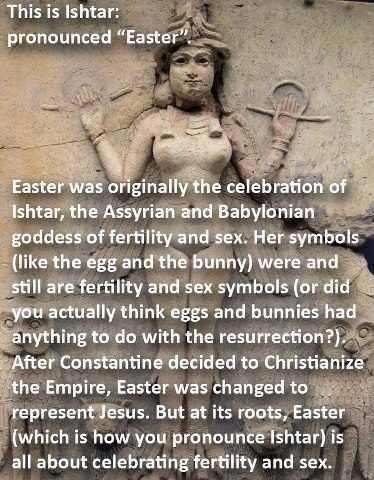
A few years ago, this image linking the celebration of Easter with the goddess Ishtar made its rounds on the Internet on various atheistic websites. Is there any truth to such claims? In short, this is complete nonsense. But sadly, some Christians propagate these ideas, too.

A few years ago, this image linking the celebration of Easter with the goddess Ishtar made its rounds on the Internet on various atheistic websites. Is there any truth to such claims? In short, this is complete nonsense. But sadly, some Christians propagate these ideas, too.

So, is the Christian celebration of Easter originally derived from a pagan holiday?

Just yesterday I overheard the idea that Christians are dishonoring Jesus by being involved in a celebration that involves the painting of eggs. This otherwise sincere believer understood that Easter eggs are associated with the pagan practices of child sacrifice.

I just about fell out of my chair.

Sadly, a lot of folks get their information these days from random Internet websites, rather than credible, researched resources. Much of the “free” content available on the Internet on these subjects today come from public domain sources where the copyright has expired, such as some scholarly works written in the 19th century. For example, a Scottish theologian, Alexander Hislop (1807–65) wrote a pamphlet in 1853, The Two Babylons, where Hislop lays out his theory of the connections between Easter, as celebrated traditionally among Roman Catholics, and Ishtar, an ancient goddess of fertility and sex.  But more modern research has shown that such theories are without historical foundation.  To make a long story short, Easter has its roots in the Jewish celebration of the Passover and Christ’s resurrection, not ancient fertility rites.

In his day, apologists like Hislop were very interesting in writing polemic works designed to criticize Roman Catholicism in an attempt to promote a more Protestant understanding of faith. But today, these same type of arguments are used by atheists to attack Christianity in general. To complicate matters even more, as traditional religions associated with European paganism are being revived in the West, you will find various groups, such as modern day Druids and Wiccans, who use the same type of pseudo-scholarship folklore to justify their practices as a polemic against Christianity!

Unfortunately, there are some evangelical Christians today, mainly associated with the Hebrew Roots movement, introduced briefly here on Veracity, that thrive on such supposedly convincing theories. It is true that many evangelical Christians are basically ignorant of the Old Testament and the Jewish roots of the Christian faith. So while the modern trend to have church-run Passover Seders in an attempt to make up for this deficiency could be a step in the right direction, mishandling of such practices might do more harm than good. In other words, if you think that a once a year church-run Seder is enough to ground the Christian believer in an understanding of authentic Jewish belief and Old Testament theology, then you are probably short changing yourself. If you really want to understand the Old Testament, there is simply no shortcut other than actually taking the time to read and study the Old Testament, or the “Hebrew Scriptures,” as many Jewish people would prefer to say. Furthermore, developing a friendship from an actively practicing Jewish person is probably the best education you can get!

The problem with much that goes on with the “Hebrew Roots” movement is that in their enthusiasm to get back to the Jewish roots of our faith, they inadvertently toss “the baby out with the bathwater,” all based in ignorance as they appeal to the conspiracy theory logic of those like Alexander Hislop.

Now, I am not much into painting Easter eggs, and if avoiding such practices help you to distinguish Christian faith from the revival of neopaganism, then that is perfectly understandable. But please do not take away my chocolate Easter bunny. Yum! Yum!

The main point here is that we should not allow atheists and pagans to hijack Easter. Our confidence in the Gospel is not grounded in conspiracy theories. Instead, it is about the celebration of our Risen Lord from the empty tomb!! Arm yourself with a knowledge of what the Bible teaches and credible scholarly research. Here are few recommended resources online for correcting some of the misconceptions about Easter:


More Bad Blood Moon Rising?

A year ago on Veracity, we covered the story of the popular “Four Blood Moons” prophecy being promoted by pastors Mark Biltz and John Hagee.  But in a story that has become even more bizarre a year later, it appears that John Hagee has released a movie to be shown in theatres across America as we near the third of the four lunar eclipse events coming early (briefly) Saturday morning, April 3rd, 2015, on the North American east coast.

It appears that the producer of a Mark Biltz book about the same subject, World Net Daily’s Joseph Farah, on behalf of Biltz, has threatened some sort of potential legal action against Hagee for the claim made in Hagee’s movie that the San Antonio, Texas megachurch pastor made the “discovery” of the prophecy himself. Biltz, who also made a relatively smaller movie in comparison on the same topic, was actually the one who supposedly made the “discovery” of the prophecy by looking at information from NASA.

I find it strangely odd that two men and their representatives would be quarreling about which one of them speculated on this rather convoluted, supposed “prophecy” first.

(…Placing palm on forehead…)

If someone can enlighten me on how this whole affair can possibly preserve the integrity of Christian witness and bring honor to our Lord, I am all ears.

Some wisdom from the words of Jesus are appropriate here to encourage responsible Christians not to wander into such territory: “It is not for you to know times or seasons that the Father has fixed by his own authority.” (Acts 1:7 ESV)

At least to his credit, pastor Hagee did invite astrophysicist Dr. Hugh Ross to interact with him in the movie and express some scientific and biblical criticisms.  Here is a two part analysis by Hugh Ross concerning the blood moon theory (#1 and #2).

If you are still curious but have no interest in going back to read the original post from last year for more detail, I would encourage you at the very least to view this video critique of the blood moon theory:


Henry Morris and the Case of the Missing Signature

Henry M. Morris (1918-2006). Along with Grace Theological Seminary's John C. Whitcomb, this engineer was one of the fathers of the contemporary Young Earth Creationist movement.

Henry M. Morris (1918-2006). Along with Grace Theological Seminary’s John C. Whitcomb, this engineer was one of the pioneers of the contemporary Young Earth Creationist movement and a leading figure in the inerrancy crisis of the 1970s and early 1980s.

The pen lay undisturbed on the table. The document needed one more signature. Others had scribed their name in ink. But Dr. Henry Morris had left the room. The hope for having a unified front in defense of the inerrancy of the Bible were dashed at that moment.

The International Council on Biblical Inerrancy (ICBI) had accomplished so much. In 1977, this group of Bible scholars and teachers had drafted a document affirming a set of principles that sought to expound on the meaning of Biblical inspiration and authority. Christian leaders from across the widest denominational spectrum had agreed to put aside their relative doctrinal differences to stand on what Francis Schaeffer had understood to be the “watershed of the evangelical world“. Against the tide of a creeping liberalism in the churches that would compromise God’s Truth, these leaders had pinned their hopes on the banner of inerrancy to unite the evangelical church.

But it was now 1982, and despite how well things had gone, the unique opportunity for a consensus was gone. How did we get here, and what went wrong?
Continue reading


Tenacity: Mel Rosche

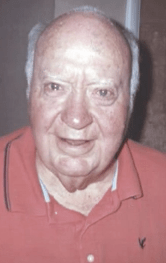
Melvin G. Rosche. February 27, 1921 to March 16, 2015. Photo: Brigette Weis

Melvin G. Rosche. February 27, 1921 to March 16, 2015. Photo: Brigette Weis

Several weeks ago, I lost my mother to cancer. One of the first people I talked to after my mother died was my former Young Life leader, Mel Rosche. At 94 years of age, Mel took my hand and prayed with me and cried with me. Mel Rosche was one of the most remarkable people I have ever known.

A farm boy growing up in rural Illinois, Mel Rosche went off to serve as a pilot in the Army Air Force during World War II. On a bombing mission out of Italy in December, 1944, Mel’s plane was shot down over Hungary. I remember as a high school kid sitting at Mel’s feet, enraptured as he told us about being picked up by some Hungarians out of a corn field in his parachute, when he pulled out a Sunday School picture of Jesus from his wallet, whereupon his captors realized that Mel was a Christian. Several months later, while on a train bound towards a German camp for prisoners of war, the train stopped so that the prisoners could see Werhner von Braun’s V-2 rockets being fired off, presumably against the British. Little did Mel know at that time that he would have the opportunity to work near von Braun at NASA in the 1960s in the development of the United States space program. Mel’s prisoner of war camp was eventually liberated by the Soviet army.

Mel came back to the States after the war to marry Ruth, his high school sweetheart. Mel and Ruth moved to Virginia with his degree in aeronautical engineering and served in NACA, which eventually became NASA, and raised two children along the way. Mel’s career was fascinating as he helped to lead a team of structural engineers in designing and testing spacecraft that could carry people back and forth to the moon. One of his most famous colleagues for a brief period was the indefatigable visionary Buckminster Fuller.

While living in northern Virginia, the Rosches met Scott Dimock, an area director for Young Life, a ministry whose mission is dedicated to reaching disinterested high school kids with the Good News of Jesus Christ. When Mel and Ruth moved to Williamsburg, near where Mel was working at NASA Langley Research Center, they met up with a former Young Life student, Bill Clark, then a young man attending the College of William and Mary in 1972. Following Clark’s leadership, they started the ministry of Young Life in the Williamsburg, Virginia area (currently led some 43 years later by area director Nathan Havasy).

When Bill Clark graduated from William and Mary in 1974, Mel had a bit of a crisis. What would become of the Young Life outreach to teenagers that they had started? Well, just as Martin Luther King Jr. had his “kitchen table” experience which led to his commitment to the civil rights movement, Mel Rosche had a “kitchen table” experience of his own. Mel’s experience might not have been as dramatic as King’s, but it still impacted a whole generation of people. As Mel sat and prayed, he got a clear sense that God had called him to be a missionary to teenagers. God gave Mel a love for high school kids.

Over the next few years, Mel took early retirement from government service so that he and Ruth could dedicate their lives to loving teenagers for Jesus Christ. Mel would invite kids to come over and play pool in the Rosche’s basement, and he would teach dozens of young people how to water ski off of his boat. Countless young people were impacted by this man and his determination to answer the call of God in his life.

By 1979, I had received dozens of invitations to attend a Young Life meeting in high school. I never showed any interest. But then one day, a friend of mine told me that there were good-looking girls at the Young Life club. So I went. Sure, there were some good-looking girls there. But I was really intrigued by this “old” guy with white hair. Here was this retired NASA engineer standing in front of a group of rowdy teenagers, trying to lead the group in singing some song terribly off-key.

Mel could not hit a note even if it was painted on the side of a barn. What was it that would possess this man to hang out with a bunch of rascally teenagers?

I kept coming to Young Life meetings, and I listened as Mel shared stories of Jesus from the Bible. Even though I had grown up in a church, I was filled with a lot of doubts and questions about the Christian faith. But within a few months, I continue to listen and learn, and I was drawn in.

I even got up on water skis myself.

Later when I was in college, I would come back to ask Mel more questions. I was going through a crisis of faith. Caught up in the academic rigor of a secular university, a number of well-intentioned Christian friends of mine had told me that I basically had to choose between the Bible and science, between following after Jesus and pursuing the life of the mind. One of the issues at stake was the Creation vs. Evolution controversy. After I poured out my anguish with Mel, I listened to his story of when he was about my age. Growing up in the post-Scopes Monkey Trial era in the 1930s, the question of evolution dominated Mel’s mind. As Mel put it, “I got so tired of thinking about it, I asked God, my junior year [in high school] to free me from it. He did and still has. When I saw that He had answered my prayer, I asked Jesus Christ to be my Savior.”

Mel’s answer impressed me so much. It was not theologically sophisticated, but it was genuine, honest and simple. For Mel, there was no conflict between accepting the findings of modern science and accepting the Biblical testimony about the Risen Jesus. Mel was determined not to let anything stand in the way between him and his love for God.

Mel eventually left Young Life staff in the mid-1980’s, training my dear friend, Charly Franks, to take over the leadership of the local ministry. But when Charly left Williamsburg, Mel stayed on Young Life committee and mentored me when I was the local ministry staff.

Soon, Mel’s life changed dramatically when he began to have difficulties standing. Not too long after that, his partner for many, many years, Ruth, died, and Mel suffered more health difficulties. Mel had been beat up pretty bad by all of these trials in his life.

But this did not stop Mel. His passion for young people found a new expression through the ministry of Heart for Orphans, an outreach in Ukraine with a mission to provide small, family-style transition homes to teens who have graduated from orphanages.

As Mel entered the last decade of his life, he was beset with continued health problems. But Mel’s attitude was incredibly inspiring. He would always say that he “never felt better.” He was a blessing and shared this blessing with everyone around him. At the retirement community where he lived, to date he is the only person to have been sent into “skilled nursing” care, only to return back to assisted living… not simply once, but twice!

That is why I can say that the best word to describe Mel is tenacity. Once Mel got a grip on something, he could never let go, whether it was a joyful passion for teenagers, his love for his children and grandchildren, or even his health. After every setback, he would always bounce back. But most importantly, Mel had an incredibly tenacious grip on the grace of God.

Whether or not I ever live to be 94 years old, I want to be just like Mel Rosche.