Author Archives: Clarke Morledge

About Clarke Morledge

Unknown's avatar
Clarke Morledge -- Computer Network Engineer, College of William and Mary... I hiked the Mount of the Holy Cross, one of the famous Colorado Fourteeners, with some friends in July, 2012. My buddy, Mike Scott, snapped this photo of me on the summit.

What is the “Church?” #1

What is a the "church?"

What is a the “church?”

When you think of the word “church,” what springs to mind?

The first thing that pops into my mind is a building, a physical meeting place where Christians gather for worship.  You know, some place with a cross on the outside, a steeple on top, surrounded by a black asphalt parking lot, and with lousy coffee inside, right? But a closer look at the Bible and the history or our word church reveals a different story.

The word church actually has a Germanic root to it, etymologically. It stems back to the German kirche, which probably goes back to the related Greek word kyriakon, which means “of the Lord.” In Germanic based cultures, the “house of the Lord,” where Christians gather for worship, began to acquire the meaning of the word kirche, which reasonably explains why we often think of a church as a building. However, the original usage of church in the Bible has a more specific meaning.

The original Greek word for church is “ekklesia.”  In ancient Greek, prior to the writing of the New Testament, ekklesia had essentially a secular meaning, that of an “assembly,” or specifically “a gathering of people called out of their homes into a some public place.” In the New Testament sense, the ekklesia is the assembly of people who come to worship Jesus. The emphasis is on the community of the people, and not where those people meet. For example, the Apostle Paul uses the term ekklesia, or church, several times in the last chapter of the Book of Romans, to refer to a community or communities of his believing friends in different localities.

By the time we get to the late medieval period in Western Europe, the word church had taken on a more formal meaning. The church was not merely an assembly, but rather it was an institution, namely the church as an organized social structure.

When William Tyndale took upon the task of translating the Bible into English during the 16th century, he rattled people in the church institutional establishment by translating the word ekklesia into the English word congregation, such as in his rendering of Romans 16. The word congregation retains more of the local, “assembly” meaning of the term, and this upset those who were more concerned about maintaining the church as a national or global institution. For example, some years after Tyndale’s death, the legendary King James Version of the Bible was translated, guided indirectly by the King himself. The King sought to make sure that this translation was sympathetic towards the Church of England, for which he was the official head. So, for the word ekklesia in the New Testament, the translators opted for the word church, never using Tyndale’s congregation (see the KJV relevant verses in Romans 16).

In contrast, the 17th century Quakers took the more literal approach to ekklesia and adopted the word meetings to describe their decentralized church structure, much to the chagrin of those who saw the church as having a more hierarchical structure. Who would have thought that such a single Greek word, ekklesia, would cause such controversies!!

Modern Bible translations are less beholden to the concerns of monarchs in the 17th century. But neither do they always stay away from the word church. Broadly speaking, the church in the Bible can mean both a local assembly of believers, as well as the universal community of all Christian believers across the globe, and down through the centuries. The specific meaning of church depends on the context of where it is found in the Bible. A good example of church in the universal sense can be found in Ephesians 5:25-30, which speaks of Christ’s love for the ekklesia, or the church body as a whole.

Nevertheless, new concerns about the meaning of church provoke lively discussions among Christians today, as we shall see in our next post.


How to Have a Good Conversation About the Rapture

The topic of the “Rapture” is sure to generate rather vibrant discussion among Christians with diverse backgrounds. I worship in a community of faith where we have “pretrib” Rapture people, “midtrib” Rapture people, and “posttrib” Rapture people. I have even learned recently that there is now a “prewrath” view of the Rapture, though I am not completely sure what that is. In some corners of the global church, the late Tim LaHaye’s Left Behind novels are regarded as inerrant theology, while others dismiss “Rapture theology” as a modernistic innovation clashing with 18 centuries of Christian teaching! It can get so touchy with people that sometimes folks wonder if there is any way possible to have good conversation about this topic with fellow believers, without someone walking away mad.

My church this summer is promoting a Summer Reading Challenge, encouraging our community of faith to read through all of the letters of Paul, including the famous “Rapture” passage from 1 Thessalonians. A new friend of mine, Hunter Ruch, is also a new member of the pastoral staff at my church. In the following video clip, Hunter models for me what a good conversation looks and sounds like when discussing difficult issues like this. Whether you agree or not with Hunter about what he believes about the Rapture, I hope you will agree that he takes the right posture on how to talk about the Rapture.

Previous Veracity posts about the Rapture include:


God Dwells Among Us: A Review

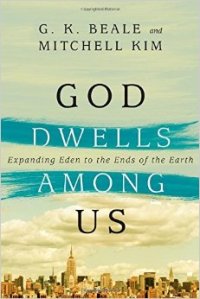
G. K. Beale and Mitchell Kim's God Dwells Among Us: Expanding Eden to the End of the Earth offers a grand portrait of how the theme of the temple throughout the Bible propels the church forward into mission to a dark and hurting world.

G. K. Beale and Mitchell Kim’s God Dwells Among Us: Expanding Eden to the End of the Earth offers a grand portrait of how the theme of the temple throughout the Bible propels the church forward into mission, as a light to a dark and hurting world.

Have you ever wondered how the whole message of the Bible fits together? Moreover, how does that message impact your life and the mission of the church?

We have sixty-six books in Holy Scripture, and if you have ever read through it all, it can be puzzling to think about how everything fits in with each other. Biblical theologian Gregory Beale and pastor Mitchell Kim have put together a book that helps you gain the big picture of the Bible from Genesis to Revelation, following one theme, one particular thread tying the whole thing together.

God Dwells Among Us: Expanding Eden to the Ends of the Earth is a collection of sermons mainly by Mitchell Kim, based on a more academic work by Gregory Beale, The Temple and the Church’s Mission: A Biblical Theology of the Dwelling Place of God. In condensing and simplifying Beale’s profound work of biblical theology, Kim and Beale take the theme of the temple of God, and trace it beginning from Eden to the last chapters of the Book of Revelation. Kim and Beale’s main thesis is that God’s temple is the dwelling place of God, embodying the presence of God in creation. The temple of God is where we as humans were created to worship God, and that worship catapults the people of God into mission, whereby God’s temple is expanded throughout the whole world.

Continue reading


Four Views on the Land Promise: A Zionism Cheat-Sheet

Is the secular nation state of Israel a fulfillment of Bible prophecy? Veracity tackles a "hot potato."

Is the secular nation state of Israel a fulfillment of Bible prophecy? Veracity tackles a “hot potato.”

I am taking a short break in the middle of a multipart blog post series on the question of Christian Zionism, to address topics indirectly related to the main theme. As I have been putting posts out this summer, it occurred to me that there is a whole slew of information here. Would it not be helpful for some people to have a helpful summary, a kind of “cheat-sheet” of the main ideas?

Recently, I was going back through some of Preston Sprinkle’s “Theology in the Raw” podcasts. Preston Sprinkle is the vice president of the Boise, Idaho campus for Eternity Bible College, started by another popular author and speaker, Francis Chan. In these podcasts, Sprinkle addresses some of the tougher problems in interpreting the Bible, and one of his 15-minute topics was about four views regarding the land promise for national Israel.

Perfect! I got my cheat-sheet!

So, here it goes (thanks to Preston Sprinkle): Here are four views regarding how the land promise might be fulfilled for national Israel. It would be good first to read about the original Abrahamic covenant, whereby God promises to give to Abraham and his descendants the land of Canaan and beyond, that the Bible defines as being bounded by a river in Egypt, on one side, to the Euphrates River in modern day Iraq, on the other (Genesis 15:18-21):

  • The 1948 (Partial???) Fulfillment View: I list this one first for several reasons. First, it serves as the main theme I am addressing in the multi-part blog series. Secondly, this view, or some form of it, is the most popular view held by evangelical Christians today. Essentially, God had promised much of the Middle Eastern land to national Israel back in Abraham’s day, but the promise was never fully fulfilled. The Hebrew people inhabited part of the land for many centuries, but they kept getting kicked out of the land. But this view contends that after the Jewish people have been scattered, that they will be regathered (Ezekiel 28:25-26). This regathering promise has been fulfilled in 1948, when Israel was declared as a modern nation-state…. or at least partially, since the current nation is rather tiny compared to the full borders described in the original land promise. So, the hope is that sometime in the future, probably when the Messiah returns, that the restoration of the land promise will reach its fullness. And God always keeps His promises!
  • The Preterist Fulfillment View: “Preterism” simply means “past,” so the idea here is that the land promise to Abraham has already been fulfilled sometime in the past. The main prooftext for this view comes from Joshua 21:43-45, where Joshua states that the “the Lord gave to Israel all the land that he swore to give to their fathers. And they took possession of it, …. Not one word of all the good promises that the Lord had made to the house of Israel had failed; all came to pass.” This is talking about the period in Old Testament history when Joshua and the people of Israel had completed their conquest of Canaan. There you go! Land promise already fulfilled! There is no need for the current Zionism movement today, according to this view. This perspective is a minority among Christians today, though some scholars do embrace it.
  • The “Jesus Fulfills the Land Promise” View: This may sound a little odd, but this view contends that Jesus Himself, in a sense, fulfills all of the purposes originally set out for the Abrahamic covenant. If this view seems rather sketchy to you, then you should probably read Hebrews 3 and 4. In this passage, the writer of Hebrews is making the case that the promise of rest to Israel was never really fulfilled in Joshua’s day. God had promised the people the land, according to Joshua through Moses, to give them a place of rest (Joshua 1:13). The people had possessed the land after the conquest of Canaan, as indicated by the Preterist Fulfillment view. But this was only a temporary rest (Joshua 21:44). The people still faced difficulties in keeping the land, and the land promise was meant to be perpetual. According to the Book of Hebrews, Jesus then is the one who finally gives the promised rest, thereby fulfilling the land promise in Himself. In other words, that well-known promise of Jesus, “Come to me, all who labor and are heavy laden, and I will give you rest” (Matthew 11:28), is not just a word of spiritual encouragement, it is a radical re-interpretive fulfillment of the Old Testament Abrahamic covenant!
  • The Cosmic Fulfillment at the End Times View: This view sees that the physical piece of real estate in the Middle East is actually a foreshadowing of God’s plan to redeem the entire cosmos, the entire universe as a fulfillment of the land promise, for both believing Jew and Gentile, shared together as brothers and sisters in Christ. Therefore, there is no need for a “literal” future fulfillment of the land in the Middle East. See Romans 8:18-25 for the main idea to where this view is aiming.

There could be other views, too. But these are probably the most prominent views of the Abrahamic land promise held by Christians today. Are you still a bit confused? Are you trying to sort this all out? Then I encourage you to explore the whole, multi-part blog post series for details!


Forgotten Christians: Zionism #7

Can Palestinian Christians become the bridge to bring about peace between Israelis and Muslim Arabs? Elias Chacour, in Blood Brothers, says, "Yes."

Can Palestinian Christians become the bridge to bring about peace between Israelis and Muslim Arabs? Elias Chacour, in Blood Brothers, says, “Yes.”

In the news, we hear much about the tension between Jewish Israelis and Muslim Palestinians in the Arab-Israeli conflict. But did you know that there has been a community of Christians in the Holy Land for centuries? The story of this ancient church is often overlooked.

Since the time of the New Testament, there has been a Christian presence in the Holy Land. Possession of the land has changed multiple times over two thousand years. Pagan Rome, Zoroastrian Persians, Byzantine Orthodox Christians, Muslim Arabs, European Crusaders, and Muslim Turks have all claimed title over Jerusalem. But miraculously, the Christian church in some form or another has survived all of these various conquests. Sadly, the Christian community in Palestine today is nearly threatened with extinction.

Continue reading
