Author Archives: Clarke Morledge

About Clarke Morledge

Unknown's avatar
Clarke Morledge -- Computer Network Engineer, College of William and Mary... I hiked the Mount of the Holy Cross, one of the famous Colorado Fourteeners, with some friends in July, 2012. My buddy, Mike Scott, snapped this photo of me on the summit.

Daniel’s Seventy Weeks #3

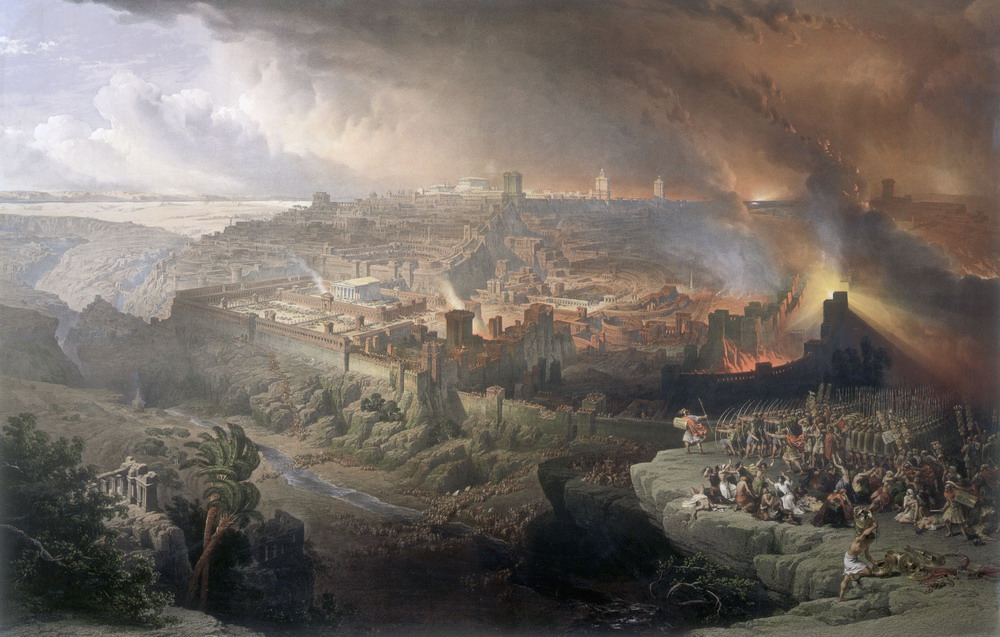
The destruction of Jerusalem by the Romans in 70AD -- a painting by David Roberts (1796-1849).

The Roman army under Titus destroyed Jerusalem and its Temple, by the year 70 AD. Does this catastrophic event in the first century offer any insight into understanding the “Seventy Weeks” prophecy found in Daniel 9:24-27?  
(a painting by David Roberts, 1796-1849).

Up to this point in this series ( post #1, post #2), we have been exploring the dispensationalist approach to the “Seventy Weeks” of Daniel 9:24-27. Let us jump into the text again, first:

“Seventy weeks are decreed about your people and your holy city, to finish the transgression, to put an end to sin, and to atone for iniquity, to bring in everlasting righteousness, to seal both vision and prophet, and to anoint a most holy place. Know therefore and understand that from the going out of the word to restore and build Jerusalem to the coming of an anointed one, a prince, there shall be seven weeks. Then for sixty-two weeks it shall be built again with squares and moat, but in a troubled time. And after the sixty-two weeks, an anointed one shall be cut off and shall have nothing. And the people of the prince who is to come shall destroy the city and the sanctuary. Its end shall come with a flood, and to the end there shall be war. Desolations are decreed. And he shall make a strong covenant with many for one week, and for half of the week he shall put an end to sacrifice and offering. And on the wing of abominations shall come one who makes desolate, until the decreed end is poured out on the desolator” (Daniel 9:24-27 ESV).

So, is the dispensationalist reading of this passage the best way to understand the text?

Let us explore some of the issues in this blog post. Different Bible interpreters over the years have looked at Daniel 9 in very different ways. When you examine each approach, you learn that there are some ambiguities in the text that force the interpreter to make some assumptions as to how a particular ambiguity in the text might be resolved.

So, what are these ambiguities? Have you ever heard of Hank Hanegraaff, known in radio-land as the “Bible Answer Man?” Continue reading


Single-Mindedness: Helen Roseveare

Helen Roseveare (1925-2016) was one of the great missionary spokespersons of the 20th century. Roseveare served as a medical missionary in Zaire, surviving a violent civil war there, where she was brutally raped in 1964. In her moment of utter darkness, she prayed to God, and she sensed the Lord telling her, “You asked Me, when you were first converted, for the privilege of being a missionary. This is it. Don’t you want it? . . . These are not your sufferings. They’re Mine. All I ask of you is the loan of your body.”

I had the privilege of hearing Helen Roseveare speak at the Urbana ’87 missionary conference. Her single-minded devotion to the Lord sustained her in extended periods of loneliness, in her near 20-years ministering in Zaire.

She never married.

Justin Taylor, at the Gospel Coalition, posted a remembrance of her life. She died today.


Daniel’s Seventy Weeks #2

One of Clarence Larkin's (1850-1924) memorable charts illustrating how to interpret the Seventy Weeks of Daniel 9 from a dispensationalist perspective.

One of Clarence Larkin’s (1850-1924) memorable charts illustrating how to interpret the Seventy Weeks of Daniel 9 from a dispensationalist perspective. Clarence Larkin’s charts were some of the most influential teaching tools in evangelical churches throughout the bulk of the 20th century (click on it for more detail — source clarencelarkincharts.com)

Here we take a closer look at Daniel 9:24-27, in this season of Advent, as we dig a little deeper into this famous prophecy of “Seventy Weeks.” I am surely no “Yoda” (read the first post in this series to get what I am saying), but let me guide you with some things to think about, and then point you towards other resources on the Internet that I think you will find helpful. First, let us read our text again, as it has a lot packed in here:

“Seventy ‘sevens’ are decreed for your people and your holy city to finish transgression, to put an end to sin, to atone for wickedness, to bring in everlasting righteousness, to seal up vision and prophecy and to anoint the Most Holy Place. Know and understand this: From the time the word goes out to restore and rebuildJerusalem until the Anointed One, the ruler, comes, there will be seven ‘sevens,’ and sixty-two ‘sevens.’ It will be rebuilt with streets and a trench, but in times of trouble. After the sixty-two ‘sevens,’ the Anointed One will be put to death and will have nothing. The people of the ruler who will come will destroy the city and the sanctuary. The end will come like a flood: War will continue until the end, and desolations have been decreed. He will confirm a covenant with many for one ‘seven.’ In the middle of the ‘seven’ he will put an end to sacrifice and offering. And at the temple he will set up an abomination that causes desolation, until the end that is decreed is poured out on him” (Daniel 9:24-27, NIV 2011).


Scratching your head a bit? Well, let’s start digging!

Continue reading


Daniel’s Seventy Weeks #1

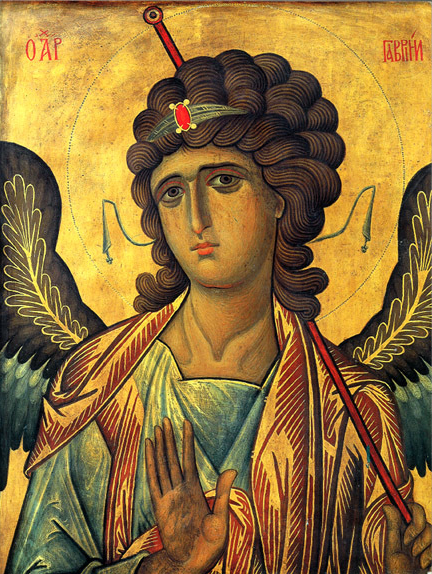
The angel Gabriel, from a 10 century icon, spoke to Daniel, with a mysterious vision of "Seventy Weeks." (credit: Uncut Mountain Supply)

The angel Gabriel, from a 10 century icon, spoke to Daniel, with a mysterious vision of “Seventy Weeks,” in Daniel 9:24-27 , that many say speaks of the coming time of the Christ (credit: Uncut Mountain Supply).

The season of Advent is a time when Christians look forward to the coming of the Messiah, Jesus of Nazareth, in the period we celebrate at Christmas. Part of that time of preparation is spent considering Old Testament prophecy that looks forward to the coming of this Messiah. This Advent season, I want to tackle one of the more controversial passages of the Bible, that many say points hundreds of years in advance, with incredible accuracy, to the time of Jesus, the so-called “Seventy Weeks” prophecy of Daniel 9. Though not directly a “Christmas prophecy,” per se, nevertheless, some Christians believe that the “Seventy Weeks” of Daniel 9 is the most important prophecy about Jesus in the Bible. Have you ever heard of that before?

In churches that emphasize teaching on the “End Times,” the topic of Daniel’s “Seventy Weeks” gets talked about a lot. On the other hand, there are other churches that tend to steer clear away from the “Seventy Weeks.” There is a good reason for all of this: Daniel 9 is loaded with mystery.

The “Seventy Weeks” prophecy in Daniel 9 is a significant, yet difficult, part of the Bible to  grasp. Throughout my life as a Christian, I have heard plenty about the “Seventy Weeks,” but to be honest, my eyes have tended to glaze over whenever someone starts to explain it. But over the past couple of years, or so, I finally decided that I needed to make a concerted effort to grasp what the fuss was all about.

I must warn you: This gets complicated. Like with any investment in something worthwhile, there is great reward, though it does require a good degree of concentration. Nevertheless, despite the challenges, it really is an amazing passage of the Bible.

I will try not to get too technical, but I would suggest that you grab a chair, pour yourself a beverage, and keep your thinking cap handy, as we embark on this series….
Continue reading


When Did Advent Celebrations Start?

Have you ever wondered where and when the season of Advent started? Reformed Theological Seminary history professor, Ryan Reeves, puts together some really helpful videos on church history related topics, and the following 5-minute video introducing Advent is really good.

My only quibble with the video is professor Reeves’ statement that “no one, by the way, believed that Jesus was actually born on December 25,” at the the 1:20 mark in the video.  Actually, there was quite a bit of speculation in the early church as to the correct date of Jesus’ birth, as I learned in researching an early Veracity post on the topic. In the early 200s, roughly 150 years before the Western church officially designated December 25, as the celebration feast for Jesus’ birth, the church father Hippolytus calculated December 25 as the correct date for Christ’s birth, from his Commentary on Daniel (Reeves is primarily an historian of the Reformation, and not the early church, so I will give him a pass). But Reeves’ larger point stands, centuries later, that we simply do not know when Jesus’ birthdate was with any firm degree of certainty, once you examine the Bible, and other arguments made by other commentators.

The celebration of Advent is not contingent on the exact date of Christmas. Rather, it is about encouraging the community of believers to dedicate some time to spiritually prepare for the coming of the Christ. Syncing the birth of Jesus with one of the shortest days of the year has great symbolic importance, in that as the days just begin to get longer (in the Northern Hemisphere, at least, where Christianity grew the most in the early centuries), it corresponds to the idea that Jesus is the light that has come into the world, and thus overturning the darkness of the present age.

Come, Lord Jesus!