The New Mormonism… And the Old

The Church of Jesus Christ of Latter Day Saints is changing. Once a marginal, persecuted sect isolated in the frontier regions of Utah in the 19th century, the movement popularly known as “Mormonism” has entered the American mainstream. Out with the “old”, in with the “new”.

Years ago, the stereotypical Mormon was a clean cut, college-aged student wearing a white buttoned-down shirt and a name tag, riding down your street on a bicycle. Now he is a professional business executive, a famous entertainer, or even a presidential candidate. In the “old” Mormonism, a Mormon was someone who wore weird underwear and perhaps thought that he might become a god of his own planet someday. Now in the “new” Mormonism, he is happily married and upholds traditional and wholesome American family values and loves his country. Sure, Mormons still have the bicycles and the underwear, but now they are those good-looking neighbors next door who always seem so nice and friendly and hug their kids…. Yeah, come to think of it… in my experience, every single Mormon gal I have ever met has been really cute.

Former Mass. Governor Mitt Romney is the first major Mormon candidate for the United States Presidency since…… Joseph Smith ran for the office in 1844.

But the Latter Day Saints (LDS) are changing in other ways, too. True, new membership rates indicate over 14 million LDS members worldwide and that number is steadily rising. However, the rates for active membership are actually in decline. LDS General Authority Marlin Jensen has stated that “attrition has accelerated in the last five or ten years.” Some research shows that even since the early 1990s, for every new Mormon convert there is at least one Mormon who leaves the church or simply becomes inactive. The LDS movement is hemmorraging, and hemmorraging fast. Out with the “old”, and in with the “new”. What explains these changes? How can evangelical Christians respond to the changes within Mormonism when doing apologetics? Continue reading
Obedience in Losing

It’s just not in our nature to accept losing. We hate to lose. But there are worse things that can happen. One of the pastors in the video below has a uniquely refreshing perspective on what really matters—and on being blessed for obedience.

My son, do not forget my teaching, but keep my commands in your heart, for they will prolong your life many years and bring you prosperity. Let love and faithfulness never leave you; bind them around your neck, write them on the tablet of your heart. Then you will win favor and a good name in the sight of God and man. Trust in the LORD with all your heart and lean not on your own understanding; in all your ways acknowledge him, and he will make your paths straight.
Proverbs 3:1-6 (NIV)

Here’s a follow-up to our previous Chi Rho post. (Don’t miss the comments at the end.)


HT: John Yates


The Resurrection

The resurrection of Jesus is the basis for the Christian faith.  No resurrection, no Christian faith—it’s that simple according to the Apostle Paul, who wrote half the New Testament.  But how well does the resurrection stand up to historical scrutiny?

The Gospel accounts of Jesus’ burial and resurrection are found in:

Matthew 27:27 – 28:15,
Mark 15:42 – 16:8,
Luke 23:50 – 24:12, and
John 19:38 -20:18.

Here’s a presentation on the historical reliability of these accounts by Dr. William Lane Craig, in which he uses analytic philosophy to get at the truth of the resurrection.  If this sounds a bit intellectually over the top, check out our recent Apologetics 101 post where he explains the process—using logic, clear definition, and the careful enunciation of arguments, with an emphasis on the derivations of conclusions from premises.  It’s a lengthy video, packed full of sound reasoning, and well worth the time it takes to watch.

Backstory

So how did William Lane Craig, one of the greatest deep thinkers of our time, come to faith in Christ?  It must have been in response to the writings of someone like C.S. Lewis or Søren Kierkegaard, right?  Maybe he read classical theologians like Augustine of Hippo, or reformists like Martin Luther, John Calvin, or Thomas Aquinas?  Or maybe he read the Bible and found some special truth that appealed to his intellect?

Here’s Dr. Craig’s surprising answer (you just can’t make this stuff up).

He was “hit like a ton of bricks” by an annoyingly happy girl named Sandy.  Go figure.


Apologetics 101

Here’s an interview with Dr. William Lane Craig in which he answers basic questions about the importance of Christian apologetics, the resurrection of Jesus, the problem of evil, and the lack of atheistic explanatory models.  He also gives some practical advice for those interested in apologetics.

Enjoy!


Cave of the Patriarchs

Cave of the Patriarchs

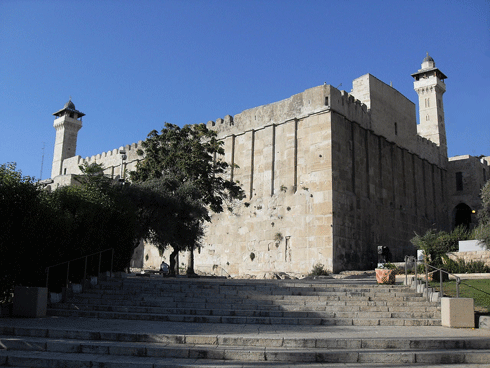
Cave of the Patriarchs, Hebron, Israel

“Then Abraham breathed his last and died at a good old age, an old man and full of years; and he was gathered to his people. His sons Isaac and Ishmael buried him in the cave of Machpelah near Mamre, in the field of Ephron son of Zohar the Hittite, the field Abraham had bought from the Hittites. There Abraham was buried with his wife Sarah.”
Genesis 25:8-10, NIV

There are so many strange names and places in the Bible it’s easy to just keep reading without digging into the details.  But the details contain evidence for the historicity of the Scriptures, even if we don’t appreciate them.  Just because we’re dealing with “long ago and far away” doesn’t mean we’re reading fairy tales.

For all their pratfalls and controversies, archaeology and history have a lot to offer in terms of making sense of obscure names and places.  Take the “cave of Machpelah near Mamre” in Genesis 25 for instance.  It turns out that this cave is a well-known place, also known as the “Cave of the Patriarchs.”  The cave is memorialized in Judaism underneath the only fully surviving Herodian structure from the first century.  According to the biblical accounts in Genesis, Abraham, Isaac, Jacob, Sarah, Rebecca, and Leah—the Patriarchs and Matriarchs of the Jewish people—were all buried in this cave.  We are also told in Genesis 23 that Abraham paid Ephron the Hittite 400 Shekels of silver for the cave, the field, and all the trees in the field.  Pretty detailed information. Continue reading