Category Archives: Topics

Aimee Semple McPherson: Disappearing Woman Evangelist

As a follow-up piece to the previous post (please be sure to read it first), I thought I would link to some resources regarding Aimee Semple McPherson, for those who want to learn more.

Sister Aimee was perhaps the most popular American evangelist between World War One and World War Two. She was a mother, an ardent anti-evolutionist, a persistent advocate for a vision of a “Christian America,” a faith healer, and one of the leading supporters of the contemporary revival of the gifts of the Holy Spirit, bringing a marginalized (and still contentious ) Pentecostalism into the very mainstream of American culture. She was also an extreme controversialist in her time: a divorcee who nevertheless pursued full-time Christian ministry and brought sensational headlines during her “infamous” disappearance off the coast of Los Angeles in 1926. Did she run off to have an affair with a married man, or was she kidnapped?

To the point of the last post, she was a female preacher. Was Sister Aimee using her public speaking gifts and following her God-given calling? Or was she in rebellion against the Word of God, failing to heed the Apostle Paul’s admonition for women not “to teach, nor to usurp authority over the man” (1 Timothy 2:11-12 KJV)? Did biblical doctrine take a back seat to some degree to her experience, or was she following in the footsteps of the prophetess and judge, Deborah? I find Sister Aimee’s legacy to be a mixed bag, but I will let you draw your own conclusions.

Christian History magazine has a nice write-up on her. The PBS program American Experience did a film about her life. The following YouTube video includes the PBS program, followed by one of her recorded radio sermons.


Deborah’s Dance: Women in Church Leadership?

Radio evangelist Aimee Semple McPherson (1890-1944). A modern day Deborah? Or a sensational character leading evangelicalism into the tragic morass of contemporary feminism? (Photo credit: Topical Press Agency/Getty Images)

Radio evangelist Aimee Semple McPherson (1890-1944). A modern day Deborah used by God to help restore the church to its proper ministry? Or a sensational character whose example, if followed too rigidly, will lead the church into the tragic morass of contemporary feminism?
(Photo credit: Topical Press Agency/Getty Images)

My wife loves to dance. I am not the best dancer in the world, but I must admit that I enjoy it, too. However, there is a certain mystery to dancing. There is just something about dancing the defies rational description…

Our church is doing a summer Bible study on the Book of Judges, and this past week the sermon was on the story of Deborah. Deborah brings one of the brighter moments in Judges. Deborah is celebrated as one of the great leaders in Old Testament Israel amid an ever spiraling downward movement of God’s chosen people. Her contemporary Barak lacked the confidence by himself to take on Sisera, the enemy of Israel, desiring Deborah’s presence as God’s anointed judge to assist him.

Deborah has always posed the question regarding whether or not women should be permitted to serve in certain positions of leadership in churches that hold to the authority of the Bible as God’s Word. The issue came up in our small group a few nights ago: How does one reconcile the positive example of Deborah’s leadership with the writings of Paul in the New Testament where the Apostle urges churches not to permit women to teach or have authority over men (I Timothy 2:11-15 and I Corinthians 14:33-40? Is the example of Deborah a partial fulfillment of God’s intended purposes that celebrate the leadership roles of both men and women equally in the church? Or is Deborah an exception to the rule, which specifically urges churches governed by the New Testament to only have men as elders and/or pastors, and thus honoring the complementarity between the sexes?

(PARENTHETICAL NOTE: The issues here are indeed complex. If you have not done so already, I would suggest that you stop where you are and go back and read my earlier post on Rachel Held Evans that addresses the sensitive question of “Biblical Womanhood.” There I have listed a set of the best resources available to do an in-depth study of what the Bible says on that topic in general, giving a fair hearing to both sides of the debate.)

What I will say here about the specific issue of women in church leadership is that I have had to learn how to deal with this issue the hard way. Not only is it important that we understand what the Bible says, it is also important as to how we approach this issue in our discussions with other Christians.

It has something do with dancing.

Continue reading


Oh, Jerusalem: A Biographical Lament

The Western Wall of the Temple Mount in that Holy City: Jerusalem

The Western Wall of the Temple Mount in that Holy City: Jerusalem (photo credit: TripAdvisor.com)

“O Jerusalem, Jerusalem, the city that kills the prophets and stones those who are sent to it! How often would I have gathered your children together as a hen gathers her brood under her wings, and you were not willing!”(Matthew 23:37 ESV)

Jesus said these words upon his last week in Jerusalem prior to His death. It pretty much sums up the theme of Simon Sebag Montefiore‘s monumentual book, Jerusalem: The Biography. I finished listening to it as an audiobook from Audible.com not too long ago. At 25 hours and 26 minutes, it is a very long listen. But as I have been doing tedious work as part of an upstairs remodeling effort, it helps to have had a set of headphones to listen to this fascinating work of history while I try to cover up my tile grout mistakes. Montefiore traces the story of Jerusalem, starting back at its Canaanite origins thousands of years ago up through the present era, stopping at the end of the Six-Day War in 1967.

It has been taking me over a year to get through Jerusalem, having to take a break every now and then just to work through the emotional energy required to take in such a vast topic. Jerusalem’s name is often associated with being “The City of Peace”. But the long and tumultuous story is evidence that this sacred and holy place has been anything but peaceful.
Continue reading


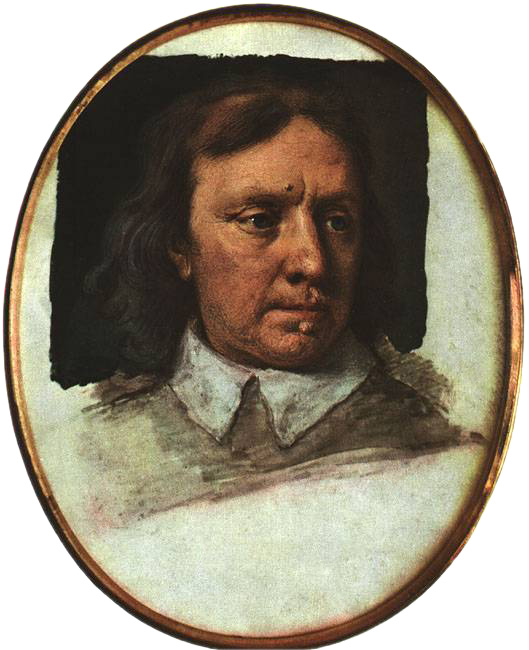
Oliver Cromwell’s Crisis

Oliver Cromwell (1599-1658), Lord Protector of England, and Christian reformer of church and civil governance. A hero of liberty to some. A fanatical tyrant to others.  From an unfinished portrait by Samuel Cooper (credit: Wikipedia)

Oliver Cromwell (1599-1658), Lord Protector of England, and Christian reformer of church and civil governance. A godly hero of liberty to some. A fanatical tyrant to others. From an unfinished portrait by Samuel Cooper (credit: Wikipedia)

By the early 17th century, the only type of governance that the English people had known for hundreds of years was the monarchy.  Along with the office of the king in the political realm, for Christians there was a corresponding office of bishop. The term bishop was derived from the Greek word episkopos, as found in Titus 1:7, typically translated today as “overseer.” Just as the king oversaw the worldly affairs of state, the bishop oversaw the spiritual affairs of the church.  King James I of England, who sponsored the famous English Bible translation that bears his name, was famously quoted as saying, “No bishop, no king.”

For James, a king can only rule a people properly with the assistance of bishops who could administer the spiritual life of Christian communities in accordance with the standard set by such a benevolent and divinely appointed king. King James, along with his bishops, saw this governing arrangement as quite efficient. But what happens when the people begin to lose confidence with their leaders? What happens when you can trust neither your bishop nor your king?
Continue reading


Martyn Lloyd-Jones on the Human Condition

Let us be honest. None of us really likes to talk about sin.

But when we talk about the great and glorious news of the Gospel, that in Jesus Christ we have been forgiven of our sin, it would behoove us to fully understand what the sin problem really is. If we fail to do that, it would be like a doctor trying to give a prescription to a patient for their healing without fully grasping the proper diagnosis of the condition.

Dr. Martyn Lloyd-Jones was perhaps the greatest evangelical preacher in 20th century Britain, only rivaled by perhaps one of my favorite expository British teachers, John R. W. Stott (who teaches on the subject of human sin as found in Ephesians 2:1-3 in a commentary found here). Formerly a doctor, Martyn Lloyd-Jones went onto preach as a minister for 30 years. Jones was a great admirer of the Puritans, thoroughly immersed in the Reformed tradition.

I have been spending several weeks reading Romans 5:12-21 in preparing some discussions for our small group Bible study. Of everything I have read in Romans, this passage of Scripture is probably the most compact, dense, liberating, and enriching text in the entire letter. It is nevertheless controversial within the church as to how it has been interpreted. Just ask any Roman Catholic, Protestant or Eastern Orthodox Christian familiar with the discussion. For starters, consider verse 12:

Therefore, just as sin came into the world through one man, and death through sin, and so death spread to all men because all sinned——

The Apostle Paul simply breaks off his thought within mid-sentence.  It is as though Paul had to pause there, anticipating the objections that would be raised to the concept of human as sinners that would chafe against the rational mind for the next 21 centuries. What does Paul mean by this phrase all sinned?   I have been reading this over and over again, looking at commentaries like this one, only to be further drawn into the Apostle Paul’s famous pause at the point. What was Paul getting at?

It is as breath-taking as it is challenging.

In the following video, Martyn Lloyd-Jones gets to the heart of why so many people have such difficulties with Paul’s message in Romans 5.

Also, if you want to hear some of the best Reformed, expository Bible preaching ever recorded, you will be pleased to know that over 1,600 of Martyn-Lloyd Jones sermons are now available for free on the Internet (though you can donate to make sure that those sermons remain freely available).

In the meantime, you can get the flavor of his approach to the Bible and why it is so important to understand the proper diagnosis of the human condition. This interview was conducted by journalist Joan Bakewell in December, 1970:
