Category Archives: Apologetics

Can Science Tell Us Nothing Reliable About The Past?… (Only the Bible Can Do That?)

True followers of Jesus trust God’s special revelation, the Bible. But can they also trust God’s natural revelation, as an independent witness to history, as understood by science?

History cannot be deduced by science, only explained by it.” So reads a promotional ad for the anniversary showing of the film Is Genesis History?, featuring Del Tackett, creator of “The Truth Project.”

A common apologetic argument today, for some Christians, insists that science can not tell us anything reliable about the past. Instead, we must look to the Bible for God’s revelation of history, and not to science, for answers concerning the age of the earth, and human origins.

For those unaware of other alternatives, this might at first seem reasonable. This approach seeks to honor and defend the Bible as God’s Word. After all, the Bible is under attack in our culture, and if modern science is to blame, we need good reasons to refute such godlessness. Christian parents are rightly concerned about worldly influences on their kids, and so the message of Is Genesis History?, hopes to stem the tide against encroaching unbelief.

But is this apologetic argument consistent with what Scripture itself teaches? Is science not to be trusted, when it comes to our knowledge of the past, and our ability to reconstruct natural history? Does science, with respect to the past, only function to explain history, as revealed by the Bible? Let me give you two biblical reasons why the usefulness of this apologetic has difficulties.

First, the concept of fixed laws of nature, transcending present, future, and the past, is actually grounded in the Bible. For example, God ties his everlasting, constant commitment to His people, with the very laws of nature that He created, as He said thousands of years ago:

” Thus says the Lord: If I have not established my covenant with day and night and the fixed order of heaven and earth, then I will reject the offspring of Jacob and David my servant and will not choose one of his offspring to rule over the offspring of Abraham, Isaac, and Jacob.“(Jeremiah 33:25-26 ESV)

The fixed laws of nature, that transcend time and undergird the practice of modern science, are reliable. Why? Because God is reliable to keep His covenant with His people. He gave us Jesus, a descendant of Jacob and David, as our King and Savior, through the nation of Israel. He has proven Himself reliable by continuing to build His covenant people over many, many, many generations, even today.

True, we can not travel back in a time-machine to observe previous events. But if the Bible teaches that God’s fixed laws of nature are trustworthy, would it not be reasonable to assume that events from the past should be consistent with what we observe today? Here are a few examples, demonstrating that we are constantly looking to science as a means of understanding the past.

When astronomers see distant starlight coming in from outer space, they are seeing light that was generated millions of light years ago. Unless one is willing to accept some untested hypothesis of millions-of-years old light being generated in midstream, or of light that travels at different speeds in different directions, or to suggest some other, hitherto unknown law of physics, it is extremely difficult to conclude that the universe is somehow less than 10,000 years old.

When archaeologists are digging for evidence, they are looking at layers of soil that correspond to ages in the past, as clues to understanding that past. Dendrochronologists measure tree rings as a means of understanding past events. Forensic scientists analyze DNA and other criminal evidence, from long ago, in order to solve cold cases. Most scientists, whether they be non-Christians or Christians, practice their craft today, with the hope that they can reasonably create a convincing historical narrative. But if you inherently distrust science, as a tool for reconstructing history, then science will have limited value for you.

Second, the Apostle Paul taught that pagans, who have no Law of Moses, effectively, no Bible, are without excuse when it comes to having a knowledge of God, as revealed in creation.

” For what can be known about God is plain to them, because God has shown it to them. For his invisible attributes, namely, his eternal power and divine nature, have been clearly perceived, ever since the creation of the world, in the things that have been made. So they are without excuse.”(Roman 1:19-20 ESV)

Paul is quite confident that by examining creation, even in looking at the evidence for the original creation event in the past, we are given a reliable testimony as to who this Creator really is. If the pagan, or anyone else, fails to recognize this, it is no fault of God’s. It is due to our failure to acknowledge what God has revealed in nature.

Paul is giving the first century, biblically-illiterate pagan, as well as anyone living today, no escape route, whereby someone could plead, “Well, if only I had something like the Bible, a written Word from God, to tell me the real history of the universe, then I would know for sure that there is a Creator.

Read the whole passage, Romans 1:18-2:29, to get the whole context, and tell me if you think Paul is saying anything differently. Then read Romans 10:14-18, where Paul recites the same theme, yet again, where even if someone has not heard the Word of special revelation, they still have the witness of natural revelation, as when Paul quotes from Psalm 19:4. In other words, Paul appears to be teaching that natural revelation, which is the domain where science operates, bears a witness to the truth of God, independent of, but nevertheless, consistent with, special revelation, the domain of where we study the Holy Scriptures.

Granted, if natural revelation, as we study it through the disciplines of the sciences, can not tell us anything reliable about the past, then yes, this apologetic argument, popular among Young Earth Creationists, makes good sense: You then only need to read the Bible in order to find out the real history of the universe (assuming the Bible is being correctly interpreted). Science only comes in, after the fact, to explain the details of that history. What more could be commendable to the Christian?

However, just be aware of the implications. This line of reasoning is built on a philosophical presupposition as to how we are to understand God’s revelation in nature, and it has some problems. First, it goes against the grain of how most scientists, including non-believers and believers in Christ, across all sorts of disciplines, daily practice their craft. Secondly, it also chafes against several passages in the Bible, noted above. You tell me: Should a Christian follow a philosophical presupposition, where scientific evidence about the past, on its own, is irrelevant, and ironically, its biblical basis is shaky?

On the positive side, a Young Earth Creationist will have confidence in the Bible, as God’s special revelation. Even an Old Earth Creationist, can say “Amen” to that.

But when it comes to God’s natural revelation, all bets are off: Is God’s revelation in nature to be trusted? A Young Earth Creationist can never be completely sure.

Just something to think about.


Have you ever heard of this philosophical presupposition before, that “history cannot be deduced by science, only explained by it?” Well, a Christian DVD making the rounds today, that many of my homeschooling friends like,  Is Genesis History?, popularizes this very idea. The film will also be in theaters, February 22, 2018. You also hear it in statements like this: “You can not trust carbon dating! The Big Bang is really just a ‘big bust!‘” If you do decide to see the film, you might want to also think about some of the alternative Christian views profiled here on Veracity, that the movie does not discuss. Explore this and other topics above, by clicking on the links, or read other articles on Veracity, by going to the search box on the blog, type in something like “creation,” or “creationism,” and click go!


Life on Mission: A Review

Do you ever feel awkward or intimidated, when it comes to sharing your faith with others? The Lord knows, I do.

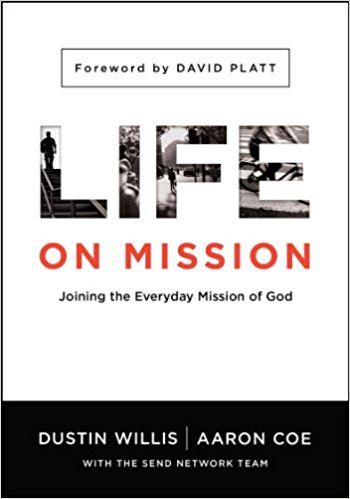
Life on Mission: Joining the Everyday Mission of God, by Dustin Willis and Aaron Coe, is a companion book to a five-week DVD teaching series, used in churches like mine. Life on Mission is geared towards giving Christians a biblical foundation for doing evangelism, and practical helps on how to share your faith with your neighbor, coworker, family member or friend.

Many of us Christians think that the work of evangelism is to be done by professionals, like pastors, or even outdoor evangelists, standing on a soapbox. Others of us know we should be doing evangelism ourselves, but we do not know why we should be doing it. Many of us feel like we lack the training to share our faith: What should I say? How do I broach the topic of spiritual things? When should I just shut-up and listen?

Life on Mission addresses these and other stumbling blocks to sharing our faith with others. Dealing with these stumbling blocks could not have come at a more critical time. Our culture is changing rapidly, and the influence of evangelical Christianity in American is not what it once was. We simply can not depend on the “professionals,” whoever they are, or Christian media, to get the job done, when it comes to spreading the Gospel. We must all get involved.

One of the central messages learned from Life on Mission is that everyone is a missionary, whether you are a plumber, a school teacher, a doctor, a student, a retired person, or a stay-at-home mom or dad. But we are not to go about doing evangelism alone. We need one another as fellow Christians as partners in the work, inviting people to join together, as we worship God and care for one another. In other words, we need biblical community.

Furthermore, sharing the Gospel needs to come from the right motivation. Ultimately, evangelism flows out of a life that is focused on giving God the glory in all things, to honor God as truly worthy to be worshipped.

Life on Mission is realistic. Here is one of my favorite quotes, illustrating the fact that the Christian church is far from perfection: “I am sure 9 out of 10 people… have been hurt by someone in the church, and the 10th person is simply in denial.” There are pitfalls to be avoided, and Life on Mission honestly looks at how to address these pitfalls.

This graphic, from Life on Mission, is a useful tool for how Christians might be able to share their faith with they non-believing friends (click on the image to zoom in).

The work of sharing our faith with our neighbors need not be boxed into some particular formula or  “discipleship program.” Mainly, it is about building friendships, within our circle of influence, and inviting those friends to share in our spiritual journey. As we are learning things in the Bible, we can share those things with our neighbor and co-worker. As we share what we are learning from the Bible, we then allow God’s Holy Spirit to do the work, for the Word of God to penetrate the hearts and minds of our friends.

Life on Mission can be read on its own, or it could be used as part of a five-week DVD group study, using a Life on Mission Bible study guide. You do not necessarily need the Life on Mission book itself, as the DVD presentation, along with the five-week study guide, covers the same material. Consider Life on Mission, the book and/or the DVD sessions, with the Bible study guide, as a great tool to help you, and/or your small group think about how you can pursue God’s mission to share your life with Jesus with those around you.

For more information about Life on Mission, poke around on their website. Look here for information about Life on Mission classes at the Williamsburg Community Chapel.


Is “Heaven and Hell” Biblical?

Is “Heaven and Hell” Biblical?

The answer is surprisingly, “No.”

Are you skeptical about that claim? Please hear me out for a moment….

If you were to do a search, in your Bible, to try to find the words “heaven” and “hell,” used in the same verse together, you might be shocked to realize something: the number of occurrences would be ZERO (Try it for yourself here, online). However, if you look for the words “heaven” and “earth” paired together in the same verse, you might discover about 200 occurrences in the Bible (Try it here, online).

For example, according to the King James Version, when Jesus teaches the disciples, “the Lord’s prayer,” we have, “Thy kingdom come, Thy will be done in earth, as it is in heaven.” Despite popular opinion, the terminology of “heaven and hell” is not found together in Holy Scripture. But “heaven and earth” quite frequently is.

So, why is that?

Joshua Ryan Butler, a pastor in Portland, Oregon, has written a thoughtful book, The Skeleton’s in God’s Closet, where he addresses some of the thorniest questions people have about God and the Bible, that focus on three central issues: Hell, Judgment and Holy War.

Butler makes the case that Christians often toss around lingo like “heaven and hell,” without really thinking about how the Bible actually addresses these topics. According to Butler, “we get hell wrong because we get heaven and earth wrong.”

Typically, we think that the Bible is constantly contrasting “heaven” and “hell,” when in reality, the Bible’s primary concern is the disruption between “heaven” and “earth,” resulting from human sin, that breaks down God’s good creation into horribly dysfunctional patterns of relationships. We tend to think of “hell” as this vast, underground torture chamber, but we miss the point, as “earth” gets completely left out of the story.

You know what I mean. We have all heard it before.

We are here on earth. We die. And then we go to one of two places: heaven or hell. End of story.

But earth is totally left out of the picture, by the end of the story.

Mmmm….

Butler makes the case, in the one-time Patheos blog of Preston Sprinkle (another young theologian/pastor with a bright mind), that, “heaven and earth are destined for reconciliation. God wants to bring creation back together from the things that tear it apart. God is on a mission to get the hell out of earth: to redeem his world from the destructive power of sin, death and hell.”

Have you ever thought of that before?

I have had Joshua Ryan Butler’s book on my “too-be-read” list for way too long. But his message is so thought-changing, that I thought it better to let Butler tell the story of the Bible himself, regarding heaven, hell, and earth, in this 3-minute video below, and then if it interests you, to encourage you to get the book. I would love to interact with someone about the book, and figure out, how in the world, he ever combs his hair.

Butler’s book also addresses other thorny issues, that strike a nerve in today’s culture, such as the whole idea of God’s judgment (“I thought God was a loving God?“) and the concept of holy war in the Old Testament (“So what makes the warfare in the Old Testament any different than what ISIS has been doing in Syria, for the past several years?“). Butler argues that we often have a caricature about God in the Bible, that leads many people to believe that the God of the Bible really is not that good after all, nor worthy of our trust.

Okay….Do you want to dive in more? Well, this gives me an opportunity tell you about a video podcast that I sometimes turn to, by Phil Vischer, the creator of Veggie Tales. The Phil Vischer Podcast is funny, a bit goofy, and at times will step on some toes, but Vischer and friends interview some fascinating authors, like Joshua Ryan Butler (One of Vischer’s cohosts is another young, smart theologian and writer, Skye Jethani … check out Jethani’s video on, “Why You Are Sick of Church.”)

The Phil Vischer video podcast interview with Butler was done a year ago, in January, 2017 (are we already in 2018??). If you want to get the meat of the interview, fast forward the YouTube video to the 10-minute mark. It will reframe how you think about heaven, hell, and earth, and help you in your discussions with friends, coworkers, family members on these difficult topics….. And, now for the extended story, from Joshua Ryan Butler, on the Phil Vischer Podcast…..


Ravi Zacharias and Christian Integrity

Jesus Among Secular Gods, by Ravi Zacharias and Vince Vitale. One of Ravi Zacharias’ wonderful books….(just, please, do not call him “Doctor”)

I have been an enthusiast for the apologetics ministry of Ravi Zacharias for several years. So, I feel compelled to respond to recent allegations of impropriety, as reported in ChristianityToday magazine.

Ravi Zacharias, his radio program Let My People Think, and his ministry, RZIM.org, have blessed the church with excellent materials in Christian apologetics. Our church was edified when Ravi came as a guest speaker several years ago, and I personally have taught several Adult Bible Classes, using Ravi’s material. Long-time Veracity readers will observe that we link to RZIM resources multiple times. I am still encouraged by the quality of Ravi’s work and ministry, for the sake of the Gospel.

I am therefore disappointed to learn of the recent allegations, that Ravi has misrepresented his academic credentials, over the years. I knew that Ravi had a Master of Divinity degree, but that he never has pursued an academic doctoral program, of any sort. However, he has received “Honorary Doctorates”. What I did not realize, is that this has led a number of Christians to mistakenly refer to Mr. Ravi Zacharias as “Dr.” Ravi Zacharias.

RZIM has responded that it has been customary, in certain cultures, where Ravi goes, that they refer to him as “Doctor,” out of a sign of respect for elders. This is evidently so. But it is inappropriate to go by the status of “Doctor,” in all cultural contexts. This may not be a big deal for some people, but I would disagree.

Truth matters, folks.

In an American context, calling someone “Doctor” gives the mistaken impression that the individual has earned an academic degree, when it was actually only an honorary degree. The two are not equivalent. If someone practicing medicine claims to be a “Doctor,” but has not an earned degree, this would be misleading. The same standard ought to apply to Christians who pursue academic work, to further a ministry. So, it is disturbing to learn that RZIM itself did not immediately and thoroughly self-correct this issue, when it was first raised two years ago, in 2015.

There are a few other issues, brought out below, in the video by the Steve Baugham, who describes himself as the “Friendly Banjo Atheist.” You can read RZIM.org’s response to some of the allegations (noted also in the Christianity Today article), Christian blogger Warren Throckmorton’s research, and Mr. Baugham’s video and other materials, and make your own assessments. As to the allegations with respect to the Canadian couple, there is just something weird going on there, that I can not fully grasp. I find there are several lessons to be learned from this most unfortunate situation:

  • First, Christian leaders should stop the continued practice of accepting the title of “Doctor,” when it is only honorary degrees that have been conferred, and not PhDs.  This practice is misleading, and Christian leaders should act in a manner that is above reproach. Politely demurring is good, but insufficient. Public, academic records should be set straight.
  • Secondly, as the Scriptures teach (Romans 3:23), all of us have failed at different points in our lives. Ravi Zacharias is no exception. Neither am I. Neither are you.
  • Thirdly, Christians should be on the forefront of telling the truth. Waiting for critics, like the “Friendly Banjo Atheist”, to point out our faults, is not good enough. Waiting two years before fully addressing problems with claims of misrepresentation and fact-checking issues, even if it was inadvertent, is not good enough. As apologist Randal Rauser writes, “When it comes to effective apologetics, it is important to have clear, concise, and logically valid arguments with plausible premises. It’s also important to have good rhetoric, a touch of humor, savvy cultural awareness, and a dollop of self-deprecation….While that is all important, the most important aspect of any effective apologetic is credibility. Credibility depends on demonstrable integrity. And integrity depends on conduct that is absolutely above reproach.”  An apologetics ministry, no matter how good it is, that raises questions regarding personal trust, actually undermines itself.
  • Fourthly, the whole business of admirers calling Ravi “Doctor,” has been completely unnecessary. The effectiveness of Ravi’s ministry stands on the quality of his arguments, reasoning, and rhetoric, not by misleading claims of holding certain academic credentials, that he never did. Ravi has his own issues, yes. But I find it disturbing that a radio listening and book reading Christian audience lacks the basic skills of spiritual discernment, that should insist on fact-checking sources and upholding standards of accountability.

I had the privilege of meeting Ravi Zacharias, when he visited Williamsburg, and our church, those few years ago. I found him to be a most gracious, genuine, and caring man. He is on the “front-lines” for the Gospel, so it comes as no surprise that he would have critics.

Steve Baugham may have an axe to grind, but nevertheless, the grist for the mill has at least some substance. The current crisis Ravi Zacharias is experiencing is surely painful, and those who have benefited from his work should earnestly pray for him, and the rest of the RZIM ministry team. This is not an unrecoverable situation. Contrary to Baugham’s conclusion, at the end of his video, I personally believe that this is an opportunity for RZIM to make something right out of this. Let us pray that Ravi, and those who work with him, will learn these painful lessons and do the right thing.

UPDATE: December 7, 2017. RZIM’s public statement on the federal lawsuit.

ANOTHER UPDATE: December 7, 2017

Also, if you check the Wayback machine, for June 26,2016, for the Oxford Centre, an Christian study center in Oxford, England, you will see that under endorsements, it lists “Dr. Ravi Zacharias” and  “Revd Professor Alister McGrath.” This is altogether strange, as Ravi has no PhD, and Alister McGrath has several. RZIM helped to start the Oxford Centre. Why would Ravi be listed as “Dr.,” but not Alister McGrath? Thankfully, the Oxford Centre has since fixed the issue. But it leaves open the question as to why the folks at RZIM, who probably were the ones who put up the website, let this error go unnoticed and uncorrected, for so long? Ah… this is frustrating!

A BETTER UPDATE: December 8, 2017

I made contact with someone at RZIM (Vince Vitale) to discuss the academic credential issue. I report on this really good conversation, as an addendum, to a related post, published earlier this year.

UPDATE: March 17, 2018

Ravi Zacharias carries ministry credentials from the Christian and Missionary Alliance (C&MA). The C&MA recently concluded their investigation into the controversy. Their conclusion?

“Evidence does not provide basis for formal discipline under the C&MA policy.”


UPDATE: December 23rd, 2020. Review of the sexual impropriety charges at a spa, partly owned by Ravi Zacharias, conducted by a law firm hired by RZIM, releases a preliminary report indicating that Ravi did act inappropriately.


Genesis: Paradise Lost, the Big Bang, … and Dogs Who Eat Homework

Some Christian friends of mine are all abuzz about Genesis: Paradise Lost, a new movie being shown in select theaters across America, November 13 and 16, 2017. Should Christians go see this film? (SEE MY DISCLAIMER at the bottom of the post, updated AFTER I first published this post).

In a promotional video for the movie, Dr. Charles Jackson, a professor of Creation Science at Liberty University, explains that the Big Bang Theory, of how the universe expanded from a single point, some 13 billion years ago, is part of a secular mythology, at odds with the Bible. As Dr. Jackson goes onto say, “there are all of these ‘dog ate my homework’ stories” that “atheist evolution theory” proposes to explain how stars were formed, in the wake of the Big Bang. Jackson argues that such explanations are “impossible” and “can not happen.”

The conclusion? Christians should reject Big Bang cosmology. Instead, they should embrace a Young Earth proposal, that the universe was created only some 6,000 years ago, based on a particular interpretation of the Bible. The film’s primary concern is to help Christians have a greater confidence in their Bibles, and to win those who have doubts, to have a saving relationship with Jesus Christ, which are critically important aims, that all believers can boldly affirm.  Genesis: Paradise Lost is endorsed by Answers in Genesis, the apologetics organization behind the Creation Museum and the Ark Encounter, located in Kentucky. Just based on this brief presentation, without any further knowledge, Dr. Jackson’s argument might sound fairly compelling.

But is what Dr. Jackson saying true?

Does Big Bang cosmology really contradict the Bible? It seems like the modern scientific consensus agrees with the Big Bang. If the Bible is out of step with the Big Bang, what does that mean?

What if, indeed, the opposite were the case? What if the Bible, written a few thousand years before scientists in the 20th century confirmed the evidence, aligns with the Big Bang? What if the Bible, accurately describes the scientifically-observed expansion of the universe? What is the likelihood of ancient, pre-modern Israelite prophets, perfectly articulating the precise nature of the universe, in a manner that exactly coincides with what modern scientists, have only recently seen in nature?

As I blogged about several months ago, Dr. Hugh Ross, of the apologetics ministry, Reasons to Believe, makes this very case.  Dr. Ross goes onto explain that the Big Bang was actually a fine-tuned expansion of the universe, and not a chaotic explosion.

But here is the kicker.

Dr. Ross makes the stunning claim that the Bible anticipates the discovery of the Big Bang by several thousands of years. Here is a quick sample of some of these Bible verses: Job 9:8; Psalm 104:2; Isaiah 40:22; 42:5; 44:24; 45:12; 48:13; 51:13; Jeremiah 10:12; 51:15; and Zechariah 12:1. Look them up at BibleGateway.com, where ancient Israelite prophets wrote about how God “stretched out the heavens,” a description consistent with modern Big Bang cosmology.

Is this merely a coincidence? Do Christians need to come up with other “dog ate my homework” stories, to explain features like this in the Bible, or are there better explanations that exist? Think about it.

Should a Christian go see Genesis: Paradise Lost? Sure, consider the evidence that the film presents, as Dr. Jackson does raise some good questions, and the film makers have a genuine, rightly-motivated interest, in presenting the Gospel message to non-believers. Amen to that! But do yourself a favor, and also consider a different viewpoint, from another Christian perspective.

Or better yet, read and study what the Bible itself says, and then come to your own conclusion.

As Proverbs 18:17 says, “The one who states his case first seems right, until the other comes and examines him.”

Below is the Dr. Charles Jackson clip, from the Genesis: Paradise Lost film, being used to promote the movie, then followed by an 8-minute presentation by Jeff Zweerink, an astronomer with Reasons To Believe , explaining what the Bible has to say about the Big Bang. Zweerink is part of the scholar team, along with Hugh Ross, at Reasons to Believe. Genesis: Paradise Lost should not be confused with an earlier film this year, Is Genesis History?, by Del Tackett and Thomas Purifoy, Jr. The earlier film has pretty much the same message, but the outdoor cinematography in Is Genesis History?, is spectacular, whereas Genesis: Paradise Lost relies more on 3D computer-generated graphics.

UPDATE (November 11, 2017): Though I published the above post a few days ago, I just learned something about “Doctor” Charles Jackson. Yes, Charles Jackson does have a doctorate. This is true. However, it is not in any particular science field. Rather, he earned his doctorate in the field of education, from the University of Virginia (UVA). He is not a practicing scientist, but rather he is a grade school science educator. This type of sleight of hand is not outright deception, but it is not entirely truthful either. At least, Is Genesis History? featured credentialed PhD-level scientists, having done doctoral work in their specific scientific field. Genesis: Paradise Lost relies on experts, that lack the level of expertise, as comparatively found in Is Genesis History?.  Eric Hovind, the producer of the latest film, should be embarrassed. Let the viewer of the film beware!!