October 11, in a number of circles, is known as “National Coming Out Day.” Many Christians are confused, as to how to engage with others about this. A good place to start is to consider the following question: Is the word “homosexual” in the Bible? Well, the answer is “yes” and “no,” and the reason for this is really, super important.
Merriam-Webster actually lists two different definitions for the word “homosexual,” which could be an adjective or a noun:
-
1: of, relating to, or characterized by a tendency to direct sexual desire toward another of the same sex: GAY// a homosexual man, was involved in a homosexual relationship
2: of, relating to, or involving sexual activity between persons of the same sex // homosexual acts
Those two definitions can be overlapping, but technically, they are not the same.
Actually, this distinction is profound, having a major ramification on how Christians can best love their neighbor with the Gospel.

How do we go about having helpful conversations about “LGBTQ” questions, in evangelical, Bible-believing churches, who desire to hold to a traditional view of marriage, while trying to figure out how to better love others? Perhaps we should start by talking about what IS and what is NOT in the Bible. (credit: Christianity Today).
Now, before I jump in any further, it bears emphasizing that when it comes to the topic of homosexuality, we are not simply quibbling over the meaning of words. Ultimately, we are talking about real people, with real lives, with real stories, that need to be heard. Yet part of hearing those stories about real people includes understanding what people mean when they use certain words. So, it really becomes important that we do not front load incorrect thoughts into our minds when we let people tell their stories, when they use certain words.
That being said, let us dig deeper into this….
On the Meaning of the Word “Homosexual,” and How it is Used in the Bible
In that Merriam Webster definition, they go onto say that the word homosexual entered the English vocabulary, in about 1891, in the sense of definition number 1. Definition number 1 refers to what we might call “same-sex attraction” today. It did not specifically mean someone who acted on their same-sex attraction, in the sense of actually being sexually active with another person of the same sex, which is the second sense of the word. However, it could mean that. But it does not necessarily imply definition number 2.
That definition number 2, or the second sense of the word, came later in English usage, eventually carrying the sense of embracing a particular identity, being actively involved in some type of sexual relationship. In other words, it is more than just “same-sex attraction.” It means acting upon that attraction, in terms of behavior. Today, the meaning has expanded, assuming that sexual activity with someone of the same sex is within a morally justifiable category.
Furthermore, definition number 1 could mean actively engaging in lustful fantasy, for another person of the same-sex. But it does not necessarily mean that.
Think about the alternative word, heterosexual, that appeared in the English language, at the same time homosexual did. Do heterosexuals engage in lustful fantasies, for members of the opposite sex? Sometimes, yes. But not 24×7.
In the language of modern psychology, someone is a heterosexual, even if they are sound asleep, or mentally absorbed in a baseball game. To be heterosexual does not implicitly mean that such a person is always acting on their opposite-sex attraction, in the sense of having a sexual relationship, or lusting after someone.
Likewise, the word homosexual, as in definition number 1, generally refers to having a “same-sex attraction,” but it does not require the idea of actually acting upon that desire, whether that be physically, or just mentally. In other words, a homosexual has a “same-sex attraction,” 24×7, everyday of the week, but they do not always act on that attraction, either physically or mentally.
The lateness of the word entering the English vocabulary explains why the King James Version of the Bible, translated in 1611, does not have the word homosexual, in its text. Following on from a previous post on this topic, let us consider 1 Corinthians 6:9-10:
-
Know ye not that the unrighteous shall not inherit the kingdom of God? Be not deceived: neither fornicators, nor idolaters, nor adulterers, nor effeminate, nor abusers of themselves with mankind, Nor thieves, nor covetous, nor drunkards, nor revilers, nor extortioners, shall inherit the kingdom of God. (KJV)
All of the moral categories that the Apostle Pauls mentions, such as fornicators, idolaters, adulterers, etc., all refer to repeated, unrepentant patterns of sinful human behavior. These are not mere inclinations, dispositions, or orientations, that suggest some potential or possibility of sinning, brought on by situations where such temptations arise. We all have these, to varying degrees. Rather, in 1 Corinthians 6:9-10, Paul has in mind those sinful, unrepentant patterns of human activity that are unbecoming of truly committed followers of Jesus Christ.
The highlighted phrase above, nor effeminate, nor abusers of themselves with mankind , goes back to two interesting Greek words, malakoi, which the KJV takes to be “effeminate,” or the one who is the passive partner in a same-sex, male sexual relationship, and arsenokoitai, which the KJV renders as “abusers of themselves with mankind,” or a man who beds with another man. Technically, malakoi means “soft,” by itself, but it was also used in the Greek language in the same-sex partnered sense, in the manner that the KJV most probably alludes to.
Digging Into Bible Translations, About “Homosexuality”
The point here is that the Apostle Paul is designating an actively engaged upon sexual activity, with respect to homosexuality. In the words of the Apostle Paul, in the Bible, there is no strict parallel to “same-sex attraction,” as a type of orientation, inclination, or internal disposition, which originally led to the coining of the word homosexual, in the late 19th century, by the psychologists of the day.
This distinction is vitally important, in how we read Scripture. Simply put, this non-behavioral sense of homosexuality, commonly described today as having a “same-sex attraction,” has no direct correlation to any particular word that we can find in the Bible. In other words, Paul’s teaching here in 1 Corinthians 6:9-10, which is reflective of other related passages of Scripture, refers to a behavior, not an orientation or inclination.
Some might find the notion of homosexuality, as an orientation or inclination to be objectionable, as it is not found in the Bible. Such critics contend that this psychological category of “same-sex attraction,” should be rejected by Christians, as a result.
But we have terms that Christians use all of the time, that do not find a direct correlation in Scripture. Take just one example, where we use the word “Trinity” to describe the nature of the Godhead, “one God in three persons.” Few Christians realize that the term “Trinity,” never appears in the Bible. Nevertheless, describing the Father, the Son, and the Holy Spirit as distinct persons within the singular Godhead is an incredibly significant theological concept, that most Christians take for granted.
You can do tons of research on the concepts of same-sex attraction or same-sex relations in the Bible yourself, to verify, but technically, there is no mention of homosexual in the Bible, as it was originally introduced into the English vocabulary.
Nevertheless, the meaning of words changes over time. What typically happens in this situation, a confusion of terminology often results. When the translators of the Revised Standard Version (RSV) of the Bible sought to update the language of the KJV, in 1946, the old KJV phrase “nor effeminate, nor abusers of themselves with mankind ,” was replaced with the word, “homosexual.”
That Revised Standard Version (RSV) of the Bible essentially became the “de facto” accepted translation of the Bible, used throughout hundreds of English-speaking, Protestant mainline churches, during the 1950s and 1960s. As a result, the confused use of the word homosexual became ingrained in the minds of many, among multiple generations of Bible readers.
Critics of a traditional Christian view of marriage, as being between a man and a woman, contend (rightly) that the word homosexual was therefore never originally in the Bible.
But the conclusion that is often drawn from this goes beyond what the meaning of the Scriptural text can bear. Therefore, such critics argue, the traditional Christian sexual ethic was and is too restrictive, implying that sexual relations between members of the same-sex, should be allowed to be morally permissible, among followers of Jesus. But this oversimplified approach to the Bible is highly misleading, and ignores a more complex, albeit intricate story.
The RSV was later updated to read as:
-
Do you not know that the unrighteous will not inherit the kingdom of God? Do not be deceived; neither the immoral, nor idolaters, nor adulterers, nor sexual perverts, nor thieves, nor the greedy, nor drunkards, nor revilers, nor robbers will inherit the kingdom of God.(RSV)
This substituted the previous 1946 RSV translation of homosexual(s) with sexual perverts, in the 1970s update to the RSV. But the trend towards using the word homosexual, in a more explicitly behavioral manner, was underway.
When we get to The Living Bible, in 1971, we see the word appear again:
-
Don’t you know that those doing such things have no share in the Kingdom of God? Don’t fool yourselves. Those who live immoral lives, who are idol worshipers, adulterers or homosexuals—will have no share in his Kingdom. Neither will thieves or greedy people, drunkards, slanderers, or robbers.(TLB)
The popular New International Version (NIV) of the Bible, in 1984, sought to be a bit more accurate here, but still comes up short:
-
Do you not know that the wicked will not inherit the kingdom of God? Do not be deceived: Neither the sexually immoral nor idolaters nor adulterers nor male prostitutes nor homosexual offenders nor thieves nor the greedy nor drunkards nor slanderers nor swindlers will inherit the kingdom of God.(NIV 1984)
Rendering the phrase as homosexual offenders (prepended with male prostitutes) was an improvement over what the RSV did in the late 1940s. By describing such homosexuals as offenders, it implied that some distinction could be made between homosexuality as an orientation, and homosexuality as a repeated, unrepentant form of behavior. But it was still confusing for some readers.
Here is the difficulty: Is the offense actually limited to being a type of sinful behavior? Or is it possibly that possessing a same-sex attraction, not acted upon, is nevertheless, still a type of offense before God?
Let us frame the difficulty this way: Is a celibate homosexual still a type of offender before God? Is such a homosexual, … who day after day seeks to mortify the flesh, and say “NO” to such sexual temptation, who resists putting themselves in situations that might cause them to give into temptation, … still, somehow, nevertheless, continues to exist as an offender, … a mere stench in God’s nostrils?
The ambiguity of the NIV 1984 translation is wholly intolerable today, in an age when same-sex relations and same-sex marriage in particular, occupy a large percentage of the public, cultural conversation.
Thankfully, when the NIV translators worked on the most recent update, in 2011, they made the distinction much clearer, and more precise, in terms specifying that the Apostle Paul had an activity, or behavior, in mind:
-
Or do you not know that wrongdoers will not inherit the kingdom of God? Do not be deceived: Neither the sexually immoral nor idolaters nor adulterers nor men who have sex with men, nor thieves nor the greedy nor drunkards nor slanderers nor swindlers will inherit the kingdom of God.(NIV 2011)
The English Standard Version (ESV) of the Bible, as of the last update in 2016, renders these verses like this:
-
Or do you not know that the unrighteous will not inherit the kingdom of God? Do not be deceived: neither the sexually immoral, nor idolaters, nor adulterers, nor men who practice homosexuality, nor thieves, nor the greedy, nor drunkards, nor revilers, nor swindlers will inherit the kingdom of God. (ESV 2016)
Here the ESV more accurately associates homosexuality with its practice, not with the mere presence of a disposition or orientation, thus showing that Paul had a behavior in mind, in this passage. Both the NIV 2011 and ESV have the following footnote, regarding this phrase in the Bible:
-
The two Greek terms translated by this phrase refer to the passive and active partners in consensual homosexual acts.
The 2017 Christian Standard Bible (CSB), likewise, is very careful:
-
Don’t you know that the unrighteous will not inherit God’s kingdom? Do not be deceived: No sexually immoral people, idolaters, adulterers, or males who have sex with males, no thieves, greedy people, drunkards, verbally abusive people, or swindlers will inherit God’s kingdom (CSB 2017)
How You Read Your Bible Translation Matters
Why bother with parsing through these various translations so carefully?
Because it makes a difference. Three points are in order:
First, as briefly noted above, it demonstrates that the Apostle Paul had behaviors in mind, patterns of repeated, sinful activity, that are not becoming of a disciple of Jesus Christ. With respect to homosexuality, this follows the same pattern as idolaters, adulterers, thieves, greedy people, etc.
Despite the great debate today going on in the wider culture, this has been the historic teaching of the Christian church for 2,000 years. Attempts by those to revise or dispose of a traditional sexual ethic, regarding God’s intent and purpose for marriage, by allowing for active, same-sex relations, whether that be in a “same-sex marriage,” or otherwise, have a serious obstacle in dealing with the Apostle Paul, in the New Testament.
Secondly, traditionally minded Christians need to rethink the importance of making a subtle, yet ultimately highly significant differentiation between homosexuality as a behavior (including lust), and homosexuality as an inward disposition or orientation of some sort, that is not necessarily acted upon.
Thirdly, it is important to drill down on the difference between homosexuality as a disposition or orientation, and homosexuality as lust. The two are not identical. This may sound controversial, but it need not be.
Think of it as the difference between noticing an attractive member of the opposite sex, for a heterosexual, and actually lusting after that person. The latter is the sin. The former is not sinful, for if it were, then it would be a sin for a man to compliment a woman on the nice dress she is wearing. Even more absurd, it would be like a mother complimenting her son on how handsome he looks, and then somehow treating even that as sin. Confusing noticing an attractive person, together with actual lust, creates a rather absurd view of sin.
Likewise, for a homosexual, noticing an attractive member of the same sex, is not the same as actually lusting after that person. True, having a homosexual orientation is an indicator that something is not right, a consequence of the Fall of humanity. But the same-sex orientation is no more sinful than for a single, heterosexual person, who notices an attractive member of the opposite sex, or a married, heterosexual person, who notices an attractive member of the opposite sex, who is not their spouse.
I am not aware of any contemporary, modern English translation that fails to provide some linguistic framework, for making a distinction between homosexuality as a behavior, and homosexuality as disposition or orientation.
Questions about sexuality and gender are the most theologically provocative issues of our day, just as the very nature of the Triune Godhead threatened to split the Christian church, in the great controversies over Jesus’ divinity and humanity, in the 4th through 5th centuries of the Christian movement.
So, on “National Coming Out Day,” having conversations about what the Bible does NOT say, and what the Bible actually DOES say, is really important. With all of the talk today in 2019 about Christians in “hate groups,” reparative therapy, and the like, it would behoove Christians to take a closer look at how Bible translations, over the years, have created confusion. Thankfully, most modern Bible translations are more accurate these days. Christians who love their Bible, and who seek to love others, as Christ loves us, would do well to follow their Bibles in guiding how they carefully think about this most sensitive and difficult topic.
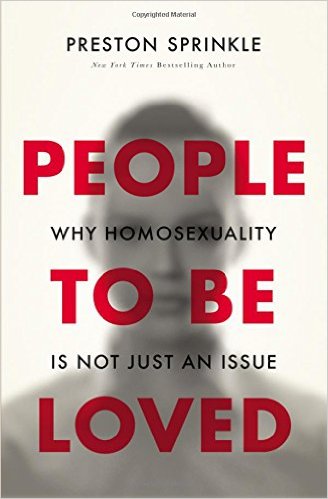
For more information of this topic, I highly recommend Preston Sprinkle’s People To Be Loved. For other posts on this topic see “Is the Temptation to Sin, Itself a Sin?,” “Single, Gay and Christian: A Review of the Book and Its Criticism,” “What Was the Sin of Sodom? (Taking a Closer Look),” “Statements: What Does Nashville Have to Do With Chicago?,” and “Such Were Some of You: The Language of Christian Identity.“