Author Archives: Clarke Morledge

About Clarke Morledge

Unknown's avatar
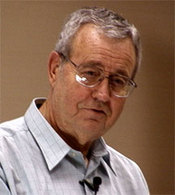
Clarke Morledge -- Computer Network Engineer, College of William and Mary... I hiked the Mount of the Holy Cross, one of the famous Colorado Fourteeners, with some friends in July, 2012. My buddy, Mike Scott, snapped this photo of me on the summit.

Ben Witherington and Darrell Bock on the Rapture

If you were a bit intimidated by my last (lengthy) post regarding the Book of Revelation, including its connection to the Rapture, you might be more interested in the following less-than-seven minute video by Ben Witherington, New Testament scholar at Asbury Seminary. Witherington, who was highlighted before here on Veracity, gets to the rub of the history behind the Rapture.

Witherington, as you will see, concludes with a negative assessment of “Rapture Theology.” Contrast this with Dallas Theological Seminary’s Darrell Bock who accepts the “Rapture Theology.” For those of you not accustomed to big words like eschatology, you can think of it in this context as someone’s understanding or theology of the “End Times.” Bock, also a New Testament scholar and a favorite here on Veracity, follows his brief assessment with a very helpful, three-minute way of evaluating how Christians should handle important issues in the church where Christians nevertheless disagree.

I hope you might benefit from both videos.


Revelation … (and the Rapture Reboot)

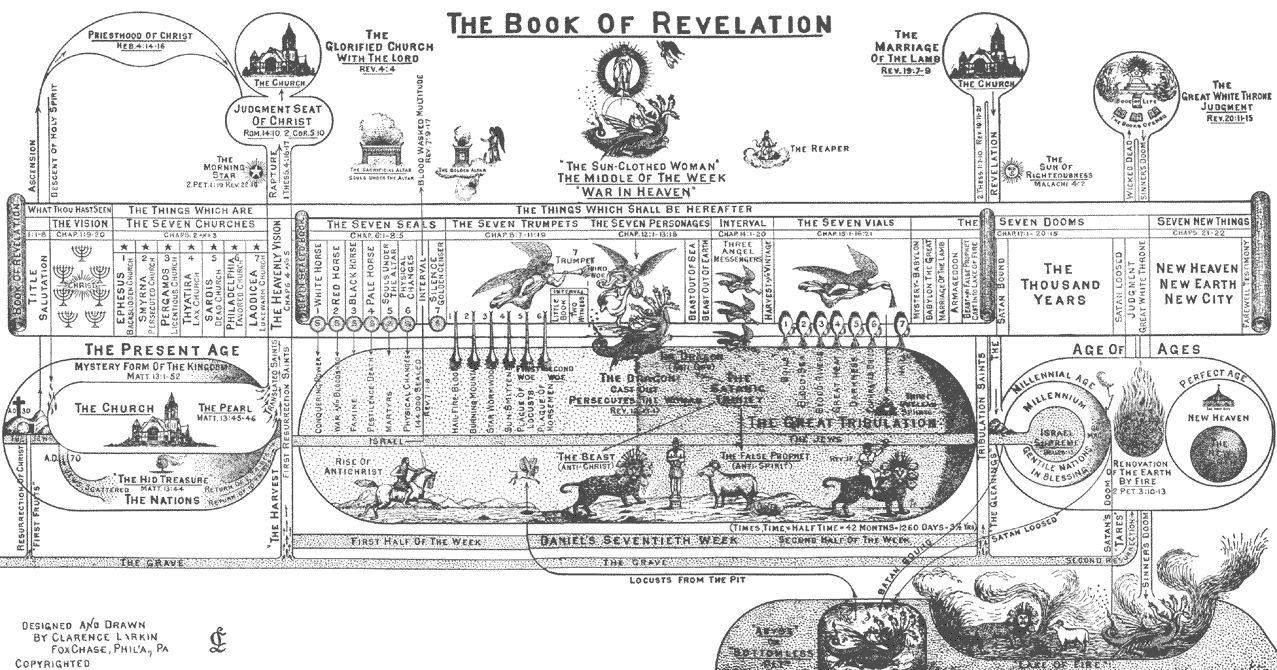
Clarence Larkin (1850–1924), a Baptist pastor, produced this intricately detailed chart showing the structure of the events described in the Book of Revelation according to a dispensationalist system of Bible interpretation. Note how Larkin splits the event of the Second Coming, into two parts: the first where Christ "raptures" the church and the second where the Christ comes in glory with his Church to begin the millennial reign. In between the two parts of the Second Coming is the "seventieth week of Daniel," which forms the basic narrative of the last book of the Bible.

Clarence Larkin (1850–1924), a Baptist pastor, produced this marvelously intricate and detailed chart showing the structure of events described in the Book of Revelation according to a dispensationalist system of Bible interpretation (Click to enlarge). Note how Larkin splits the event of the Second Coming, into two parts: the first where Christ “raptures” the church out of the world and the second where Christ comes in glory with his Church to begin the millennial reign. In between the two parts of the Second Coming is the “seventieth week of Daniel,” which forms the basic, if not sometimes terrifying, narrative of the last book of the Bible… You really need a chart to keep track of everything! (Source: clarencelarkincharts.com)

The subject of the End Times can be very daunting. Various places in the New Testament address the topic, but by far the most fascinating discussion in the Holy Scriptures that digs into End Times issues can be found in the very last book of the Bible: The Revelation.

As I was nearly completing this blog post on the Book of Revelation, I read about a new Christian movie coming out this year, Left Behind. What? Nicholas Cage in a Christian movie?

Yep. That’s right. What a great lead in on a blog post about the Book of Revelation! How did this all come about?

Well, the story is that some years ago, best selling Christian authors Tim LaHaye and Jerry B. Jenkins wrote a series of popular books of the same name. The only book series that has topped Left Behind in sales in recent years is Harry Potter.

In 2000, Cloud Ten Pictures released a theatrical version of the book, starring Christian actor Kirk Cameron. Left Behind: The Movie was a total bust at the box office. Unlike the Harry Potter films, Left Behind: The Movie never went very far.

In response to the poor sales and lackluster quality, author Tim LaHaye sued the film company claiming a breach of contract. LaHaye was expecting a much better movie and wanted Cloud Ten to make amends. Cloud Ten eventually settled with the author and agreed to remake the movie. As the subject of the film is “the Rapture,” you can call it a “Rapture Reboot.”

Well, here is the trailer. Does this look like your idea of a Christian film?

I am still working on the concept of Nicholas Cage being in this film…. Anyway… Undoubtedly, the film will be controversial, particularly among Christians. Fans of the book series might flock to the theatre, just to see if the “Rapture Reboot” with Nicholas Cage was really that much of an improvement over Kirk Cameron. Nevertheless, the film does raise a lot of questions about the Bible, the type of issues you simply will not be able to resolve just by going to a movie theater, or viewing later on Netflix.
Continue reading


Lectio Divina: Spiritual Formation #3

Imagination. Is there such a thing as a godly imagination in the life of a believer in Christ?

Lectio divina: An ancient spiritual discipline of “divine reading” of Holy Scripture that is being revived among evangelicals today. Yet some Christians fear that such practices could be dangerous.

Over the course of my spiritual journey, I have often had trouble reading the Bible. Not only do I find some things difficult to understand from what the text is saying, I also have struggled with something closer to home. Does God still speak through the Bible to people today? Am I trying to read the Bible merely to gain information, or am I reading it to try to meet with God in a personal relationship?

It has been said that the ultimate objective of reading Scripture is not simply to know the Word of God. Instead, it is to get to know the God of the Word, to move beyond the Sacred Page to have an encounter with the supreme Author of the text.

Yet for some Christians, there is a danger associated with moving beyond the Sacred Page. There is a temptation, critics argue, even for Christians to view the reading of Scripture as some sort of talisman, a type of magic book where merely reading the words of the text will somehow subconsciously restore our soul. The imagination of the reader can easily get caught up in inventing one’s own private, personal interpretation, thereby introducing confusion between understanding our own thoughts and wishes and desires with God’s supreme and objective revelation that calls us to face reality.

The critics are right to have their concerns. I have sat through innumerable Bible studies where people have brought forward a cacophony of opinions of “what the Bible says and means to me.” I even have known people who simply opened up to some random page of the Bible, put their finger somewhere into the page, and then read that verse believing that God might speak to them through that verse. I remember opening up my Bible once to Genesis 41:46. There I read that “Joseph served in Pharoah’s court.” As I was struggling with my tennis game at the time, I could have easily mistaken the words of Scripture as God’s way of coaching me on my backhand, but I sincerely doubt that this would have been the proper use of Scripture!

These are some of the issues that we can encounter when we think about spiritual formation, particularly in terms of developing spiritual disciplines focusing around Scripture. One of the classic spiritual disciplines in this area is something called lectio divina. Some might even call lectio divina … dangerous…
Continue reading


The Right Tool for the Right Job: Spiritual Formation #2

Dewalt Impact Driver. You can drive some screws with this baby? Are you using the right tools to help you in your spiritual growth?

Dewalt Impact Driver. You can drive some screws with this baby!! Are you using the right tools to help you in your spiritual growth?

So, what does spiritual formation look like in the life of the Christian? I think of it as having the right tool for the right job.

I am in the process of making some repairs to our backyard deck. Over the years, a number of the nails holding the deck together have corroded. This time, I plan on using galvanized screws instead of nails. To do the job, I broke down and bought a Dewalt impact drill. It is like a screwdriver or a power drill, but it has a unique design. An impact drill increases the efficiency in driving screws into wood by applying a stronger rotational and downward force than a normal drill.

(Hey, I am engineer. An engineer likes his tools).

Here is the point: When you are trying to make home improvements, like repairing a deck, it is important to get the right tool for the right job. In much the same way, spiritual formation is about getting the right tool for doing the right job.
Continue reading


Do We Need It?: Spiritual Formation #1

Dallas Willard.  Pioneer for the renewal of spiritual formation in the contemporary church.

Dallas Willard. Pioneer for the renewal of spiritual formation in the contemporary church.

What is spiritual formation? Do we really need it?

Spiritual formation is a term that gets tossed around quite a bit in churches today, but there is a lot of confusion as to what it means. Some are even downright suspicious of the idea. This hesitancy is understandable. In the broader culture, we find a lot of appeals to so-called “spirituality.” There is spirituality in the workplace, spirituality Oprah-Winfrey-style to beat the rat-race, spirituality all over the place.

But as the late Dallas Willard observed, this type of generic approach to spiritual formation is misguided:

Human beings are, as such, supposed to have a spirituality. And in a sense they do. They remain spiritual beings, with all that implies. But on their own they’re dead spiritually. They’re cut off from the source of spiritual life. Yet what we are seeing and what we will continue to see is an attempt to take the merely human, dead in trespasses and sins, and make that into ‘spirituality’, framing it culturally, artistically, and in other ways (from the essay, Spiritual Formation: What it is, and How it is Done.)

In other words, spiritual formation without the Holy Spirit really does not lead to the type of life promised to the believer in Christ.

Earlier on Veracity, we briefly explored some of the basic ideas behind a Christian approach to spiritual formation. When we read Romans 12:1-2, we learn that the Apostle Paul urges us not to be conformed to the values of this world but instead to be transformed by the renewing of your mind. What does this mean and what does this look like in the daily life of the Christian? The answer to this question gets to heart of what genuine Christian spiritual formation is all about.

Here again, is Dallas Willard, from the same essay:

Spiritual formation in the tradition of Jesus Christ is the process of transformation of the inmost dimension of the human being, the heart, which is the same as the spirit or will. It is being formed (really, transformed) in such a way that its natural expression comes to be the deeds of Christ done in the power of Christ.

Transformation: As the Apostle Paul teaches in Romans 8:9-11, if Jesus Christ is in someone, then that person becomes spiritually alive. To be in Christ, through the indwelling of the Holy Spirit, means taking on the character of Christ (Galatians 4:19).

The problem is that many Christians are great at acquiring knowledge, but they are not so great about putting what they have learned into practice. On an intellectual level, we may be able to grasp the theology, but in terms of our day to day experience, our level of spirituality might actually be rather shallow. The challenge is this: practically speaking, what does it mean to take on the character of Christ in your life?

Here I want to try to address some of the misunderstandings Christians often have about spiritual formation. Like any misunderstandings of this sort, there are grains of truth that we should keep in mind.
Continue reading