The Nephilim and the Wisdom of Not Knowing

Darren Aronofsky's Nephilim in his 2014 film, Noah. Rock-creatures that look like the tree-creatures in the Lord of the Rings?... Yeah, right.

Darren Aronofsky’s Nephilim in his 2014 film and environmentalist manifesto, Noah. Rock-creatures that look like the tree-creatures in the Lord of the Rings?… Yeah, right.

This summer, our church has been doing a “summer Bible study” on Genesis 1-11. Interestingly, the sermons have skipped over the part about the Nephilim, in Genesis 6:1-4:

When man began to multiply on the face of the land and daughters were born to them, the sons of God saw that the daughters of man were attractive. And they took as their wives any they chose. Then the Lord said, “My Spirit shall not abide in man forever, for he is flesh: his days shall be 120 years.” The Nephilim were on the earth in those days, and also afterward, when the sons of God came in to the daughters of man and they bore children to them. These were the mighty men who were of old, the men of renown (ESV).

I can understand that there are good reasons for skipping this passage. First, this passage is … uh.. a bit… weird. Secondly, no one really has a clue as to what this really means…. That is right. No one really knows for sure what Genesis 6:1-4 is all about… and neither do I.  Still, I think there is something we can still learn from the Nephilim passage. Continue reading


C.S. Lewis and the Butterfly Effect

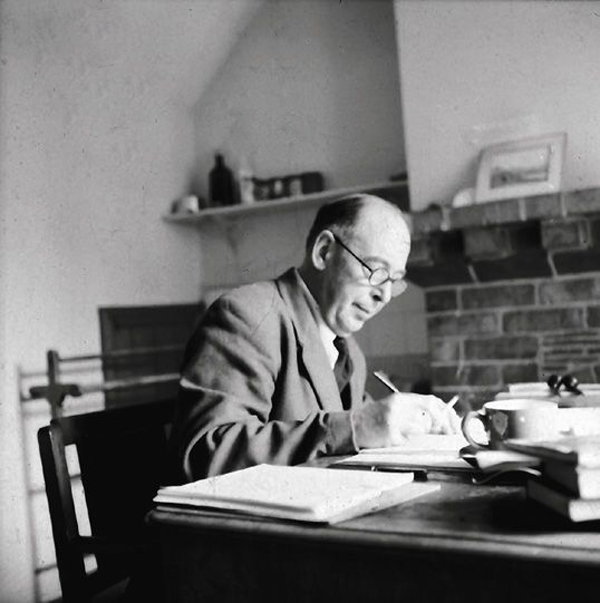
C.S. Lewis

Why would C.S. Lewis take the time to correspond with a young American girl he did not know? Would his four letters, including the one he wrote to her just 11 days before his death, have any consequence?

In our culture we are taught to swing for the fences. Blast the game-winning home run high over the center field wall. Instant gratification and recognition. Great work if you can get it.

But a life lived in obedience to God is seldom like that. It’s much more like the butterfly effect—where one small change can make a big difference in the way things turn out. Consider the chain of events in the following story.

  1. In the 1960s, a somewhat under-appreciated (at the time) Cambridge don, deep thinker, and writer of children’s literature gets a fan letter from a 12-year-old American girl. Despite all he has going on, he takes the time to write back to her.
  2. The young girl begins to read some of his other work, including his Christian writings. She writes more letters, he writes back.
  3. When he dies, only a small number of friends attend his funeral.
  4. Through subsequent publishing he becomes one of the most influential Christian thinkers of the 20th century.
  5. Because he took the time to write to the little girl, his corpus has a profound effect on her faith and her ability and desire to defend her Christian worldview.
  6. The little girl grows up, marries a small town preacher, and has a profound effect on him.
  7. The small town preacher becomes one of the most influential Christian writers and thinkers of the 21st century.

For the whole story, read this article.

We really don’t take enough time to correspond with people. Taking the time to write someone can have significant and lasting consequences—much more so than hitting a dramatic home run.

HT: Marion Paine, David the Older


Where Did Cain Get His Wife?

Talk about a dysfunctional family! Cain and Abel, 15th-century by unknown German artist, from Speculum Humanae Salvationis

Talk about a dysfunctional family! Cain and Abel, 15th-century by an unknown German artist, from Speculum Humanae Salvationis (credit: Wikipedia). Is it not the story of every family?

So, where did Cain get his wife?

This question is a real head scratcher, a favorite of skeptics and a longtime puzzle for those who want to understand the Bible. The difficulty in trying to resolve this question is that the Bible does not give us an obvious answer. We have to look at different clues from within the text to try to figure this out. Nevertheless, the question of Cain’s wife allows us to explore some of the challenges when trying to interpret difficult passages within the Bible.
Continue reading


Dr. Jim Shaw and the Butterfly Effect

Dr. Jim O. ShawThe essence of the butterfly effect is that one small change can make a big difference in the way things turn out.

Dr. Jim Shaw died last Wednesday, and while reading the online media tributes, I can’t stop thinking about the butterfly effect.

For those unfamiliar with Jim’s story, he is best known as the founder of Lackey Free Clinic, which provides “skilled, compassionate health care and counseling to the medically disadvantaged in a manner that honors the name of Jesus Christ.” He was also a husband, father, grandfather and respected pulmonary specialist. For their compassion and humanitarian efforts, Jim and his wife, Cooka, received the Daily Press Citizen of the Year award in 2007. Lackey Free Clinic just celebrated its 20th anniversary, racking up quite an impressive list of awards and accolades along the way.

I served with Jim as an elder in our church. He commanded respect. He was smart, humble, and determined to make a difference in this world. He was steadfast in his faith—not just in the hearing of the Word, but in the doing. Jim modeled what he read in the Bible.

If a brother or sister is poorly clothed and lacks daily food, and one of you says to them, “Go in peace, keep warm and eat well,” but you do not give them what the body needs, what good is it? So also faith, if it does not have works, is dead being by itself. But someone will say, “You have faith and I have works.” Show me your faith without works and I will show you faith by my works.
(James 2:15-18 NET)

Jim had a very long battle with cancer, chronicled in the links above. He fought the disease bravely, intelligently, and with conviction. He found a way to take all the pain and suffering and turn it into good in the name of Christ. Not unlike Dick Woodward.

The butterfly effect? My most profound memory of Jim is one in which, truthfully, I was a little peeved at him. It was a couple of decades ago when a group of volunteers would meet every Saturday morning to cut the grass at the Church. We saw all the comings and goings of people from the business end of our lawnmowers. Jim was one of those who kept coming. He had a lot of questions about Christianity, and he would show up Saturday mornings, Bible in hand, to meet with our senior pastor. I remember thinking, “Bill doesn’t have time to meet with this guy every Saturday. He’s got sermons to prepare and a church to pastor.”

Shows how much I know.

Chi Rho, Jim. Our community is far better off on your account, and you completely succeeded in honoring the name of Jesus Christ. We will miss you.

HT: Bill Warrick, Tuck Knupp, Lackey Clinic, Daily Press (Photo)


Saint Augustine on the Literal Interpretation of Genesis

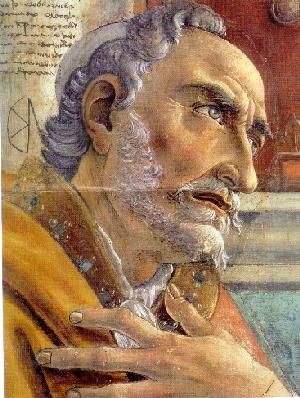
Saint Augustine.  Champion of the biblical doctrine of Grace..... but troublesome to many regarding the damnation of unbaptized infants.

Saint Augustine. Bishop of Hippo. (354-430)

In recent years, some have argued that anything other than a “literal” reading of the first few chapters of Genesis would be a compromise against the authority of the Bible. Any other approach is a capitulation to the spirit of the modern age that would undermine the faith of the believer, smuggling in a materialist, evolutionary worldview that is inconsistent with and hostile to Holy Scripture.

The modern concern is genuine, and it should not be taken lightly. The idea of injecting philosophies that are at odds with Christian faith should indeed be rejected by those who care for the absolutely supremacy of God’s Word. Nevertheless, such an argument with respect to materialist evolution would have been completely incomprehensible to the early church scholar and Bible teacher, Saint Augustine.

For the great African Christian intellectual of the early 5th century, Augustine had other concerns. An atheistic, “Darwinian evolution” could not be anachronistically inserted into his thought or vocabulary. In his classic work, De Genesi ad litteram, known in various ways in English as “On the Literal Interpretation of Genesis,” Augustine wrestled with the most appropriate way to interpret God’s Word faithfully. For Augustine, to interpret something “literally” means to interpret “in the sense intended by the author.”

Studying the history of the church is a neglected task in today’s evangelical Christianity, which is obsessed with the supposed virtues of “newness,” continually reinforced by rapid changes in technology (would you have read this blog on your phone ten years ago??). But church history can tell us a lot about ourselves today. Do we have the courage and discipline to learn from our forebears?

In the early church, Christians held different views on the interpretation of Genesis, just as we find today. On one side, there were those like Basil the Great, who saw the days of Genesis as being 24-hour creation days, thus rejecting the allegorizing approach advocated by Origen of Alexandria. Augustine was well aware of these debates, and he sought a different way to work through the issues. Augustine’s theory that God created everything instantaneously, based on his understanding of Psalm 33:6-9, is surely out of step with most Christian views of earth’s origins today, but nevertheless he still offers some advice that might help believers who wrestle with these challenging biblical texts.

Does Augustine help you? Read on, and let me know what you think.

Continue reading