Author Archives: Clarke Morledge

About Clarke Morledge

Unknown's avatar
Clarke Morledge -- Computer Network Engineer, College of William and Mary... I hiked the Mount of the Holy Cross, one of the famous Colorado Fourteeners, with some friends in July, 2012. My buddy, Mike Scott, snapped this photo of me on the summit.

Replacing Replacement Theology?

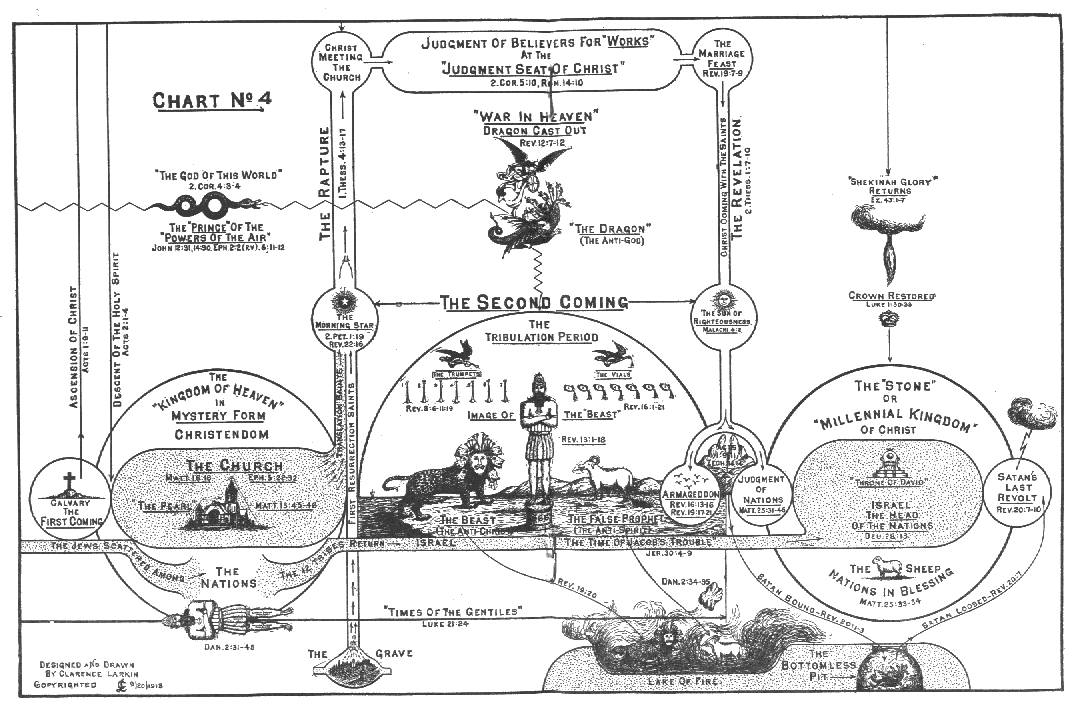
Clarence Larken (1850-1924) was an American Baptist pastor who developed charts like these that depict a dispensationalist view of the End Times. If you click on the image to expand the detail, you will see how Larkin divided the church on the left from Israel on the right. Contemporary followers of Larkin accuse "replacement theology" of wiping out Israel's place in Biblical prophecy.

Clarence Larkin (1850-1924) was an American Baptist pastor who developed charts like these that depict a dispensationalist view of the End Times, as popularized in the immensely influential Scofield Reference Bible. If you click on the image to expand the detail, you will see how Larkin divided the church on the left from Israel on the right. Contemporary followers of Larkin sometimes accuse “replacement theology” of wiping out Israel’s essential place in Biblical prophecy.

What is “replacement theology?”

About twenty years ago, I had the opportunity to visit the Holy Land. I looked out over the Sea of Galilee. I climbed part of the great mountain fortress of Masada. I witnessed orthodox Jews praying at the Western Wall. I walked the streets of Jerusalem down the Via Dolorosa, the Israeli flag flying high and proudly over several of these streets. It was a breathtaking experience.

However, the exhilaration was soberly offset by a conversation I had with the bus driver for our tour group. Like many other Palestinian Christians, his family had lived in the land for centuries with their Jewish and Muslim neighbors, mostly at peace. However, the events of the past 60+ years between the Israelis and their Arab neighbors have resulted in persecution for his family. He never went into the details, but I was always puzzled by what he meant by that.

Later on in the tour, when our group came to a stone gate in East Jerusalem, our bus driver nervously pointed out the bullet holes where Israeli and Jordanian fighters clashed with one another during the electrifying 1967 Six Day War. On the one hand, I felt then the thrill of the Israeli victory and reclamation of the ancient city that was discussed in this previous Veracity post.

But I had become also deeply troubled: what side was our Christian bus driver’s family on during that bitter conflict, or were they simply caught in the middle of the violence (like in this recent piece of news)? As I am writing this in July, 2014, Israel and Gaza’s Hamas have for weeks been involved in a deadly exchange, and Christians like this Baptist church in Gaza are vulnerable to the crossfire.

What is a Christian to think about the prophetic promises regarding national Israel, while also considering the challenges faced by Palestinian Christians living in the contested land in Middle East today, like my bus driver? What does the Bible have to say?

The study of Bible prophecy is a complicated subject and passions run very, very deep when people talk about “Israel.” Most evangelical Christians believe that “Israel” has a special place in God’s future plans, but there is a growing widespread confusion as to what this really means. So I must admit that I get conflicted when some Christians begin to talk about  the errors of “replacement theology.”  What is being meant when people speak of “replacement theology?” Granted, some criticisms are indeed valid, but a quick survey of what you find on YouTube can be rather troubling. Here is the ever colorful television personality Jack Van Impe:

Well,… uh, ok… now… what in the world is this guy talking about??????????
Continue reading


A Gideon Exposé

Room 19, Central House Hotel  in Boscobel, Wisconsin. Kept in the style it was in September 1898 when the first Gideon founders, Nicholson and Hill, met here. From the scramped quarters one evening came a ministry that has impacted millions of people around the world for Christ.

Room 19, Central House Hotel in Boscobel, Wisconsin. Kept in the style it was in September 1898 when the first Gideon founders, Nicholson and Hill, met here. From the cramped quarters one evening came a ministry that has impacted millions of people around the world for Christ.

1898. Boscobel, Wisconsin. Two businessmen, John H. Nicholson and Samuel E. Hill, arrived in town looking for a place to spend the night. However, the Central Hotel was so crowded that there was only one room left available. Nicholson and Hill, who had never met one another before, agreed to share that room with a double bed for the night. These men soon discovered that they were Christians. They prayed and read the Bible together. As these men were on their knees, they soon realized an idea that would eventually become the Bible distribution ministry of the Gideons.

If you stay at nearly any hotel these days, pull open the bedside drawer and chances are that you will find a Bible placed there by the Gideons. Over a hundred years after Nicholson and Hill met that evening together, first as strangers, then as brothers in Christ, the Gideons International has placed over 1.9 billion Bibles all over the world, in multiple languages, at an average rate of two copies of the Bible per second. The Gideons record countless stories of changed lives through people picking up a Gideon distributed Bible. Astrophysicist Hugh Ross had grown up in a completely secularized environment until he took the time to read a copy of the Bible given to him by the Gideons in his school, which eventually led him to place his faith in Christ. I myself remember getting my own green copy of the New Testament as a freshman in college.

But have you ever seen a sticker placed by an atheist on a Gideon Bible?
Continue reading


Aimee Semple McPherson: Disappearing Woman Evangelist

As a follow-up piece to the previous post (please be sure to read it first), I thought I would link to some resources regarding Aimee Semple McPherson, for those who want to learn more.

Sister Aimee was perhaps the most popular American evangelist between World War One and World War Two. She was a mother, an ardent anti-evolutionist, a persistent advocate for a vision of a “Christian America,” a faith healer, and one of the leading supporters of the contemporary revival of the gifts of the Holy Spirit, bringing a marginalized (and still contentious ) Pentecostalism into the very mainstream of American culture. She was also an extreme controversialist in her time: a divorcee who nevertheless pursued full-time Christian ministry and brought sensational headlines during her “infamous” disappearance off the coast of Los Angeles in 1926. Did she run off to have an affair with a married man, or was she kidnapped?

To the point of the last post, she was a female preacher. Was Sister Aimee using her public speaking gifts and following her God-given calling? Or was she in rebellion against the Word of God, failing to heed the Apostle Paul’s admonition for women not “to teach, nor to usurp authority over the man” (1 Timothy 2:11-12 KJV)? Did biblical doctrine take a back seat to some degree to her experience, or was she following in the footsteps of the prophetess and judge, Deborah? I find Sister Aimee’s legacy to be a mixed bag, but I will let you draw your own conclusions.

Christian History magazine has a nice write-up on her. The PBS program American Experience did a film about her life. The following YouTube video includes the PBS program, followed by one of her recorded radio sermons.


Deborah’s Dance: Women in Church Leadership?

Radio evangelist Aimee Semple McPherson (1890-1944). A modern day Deborah? Or a sensational character leading evangelicalism into the tragic morass of contemporary feminism? (Photo credit: Topical Press Agency/Getty Images)

Radio evangelist Aimee Semple McPherson (1890-1944). A modern day Deborah used by God to help restore the church to its proper ministry? Or a sensational character whose example, if followed too rigidly, will lead the church into the tragic morass of contemporary feminism?
(Photo credit: Topical Press Agency/Getty Images)

My wife loves to dance. I am not the best dancer in the world, but I must admit that I enjoy it, too. However, there is a certain mystery to dancing. There is just something about dancing the defies rational description…

Our church is doing a summer Bible study on the Book of Judges, and this past week the sermon was on the story of Deborah. Deborah brings one of the brighter moments in Judges. Deborah is celebrated as one of the great leaders in Old Testament Israel amid an ever spiraling downward movement of God’s chosen people. Her contemporary Barak lacked the confidence by himself to take on Sisera, the enemy of Israel, desiring Deborah’s presence as God’s anointed judge to assist him.

Deborah has always posed the question regarding whether or not women should be permitted to serve in certain positions of leadership in churches that hold to the authority of the Bible as God’s Word. The issue came up in our small group a few nights ago: How does one reconcile the positive example of Deborah’s leadership with the writings of Paul in the New Testament where the Apostle urges churches not to permit women to teach or have authority over men (I Timothy 2:11-15 and I Corinthians 14:33-40? Is the example of Deborah a partial fulfillment of God’s intended purposes that celebrate the leadership roles of both men and women equally in the church? Or is Deborah an exception to the rule, which specifically urges churches governed by the New Testament to only have men as elders and/or pastors, and thus honoring the complementarity between the sexes?

(PARENTHETICAL NOTE: The issues here are indeed complex. If you have not done so already, I would suggest that you stop where you are and go back and read my earlier post on Rachel Held Evans that addresses the sensitive question of “Biblical Womanhood.” There I have listed a set of the best resources available to do an in-depth study of what the Bible says on that topic in general, giving a fair hearing to both sides of the debate.)

What I will say here about the specific issue of women in church leadership is that I have had to learn how to deal with this issue the hard way. Not only is it important that we understand what the Bible says, it is also important as to how we approach this issue in our discussions with other Christians.

It has something do with dancing.

Continue reading


Oh, Jerusalem: A Biographical Lament

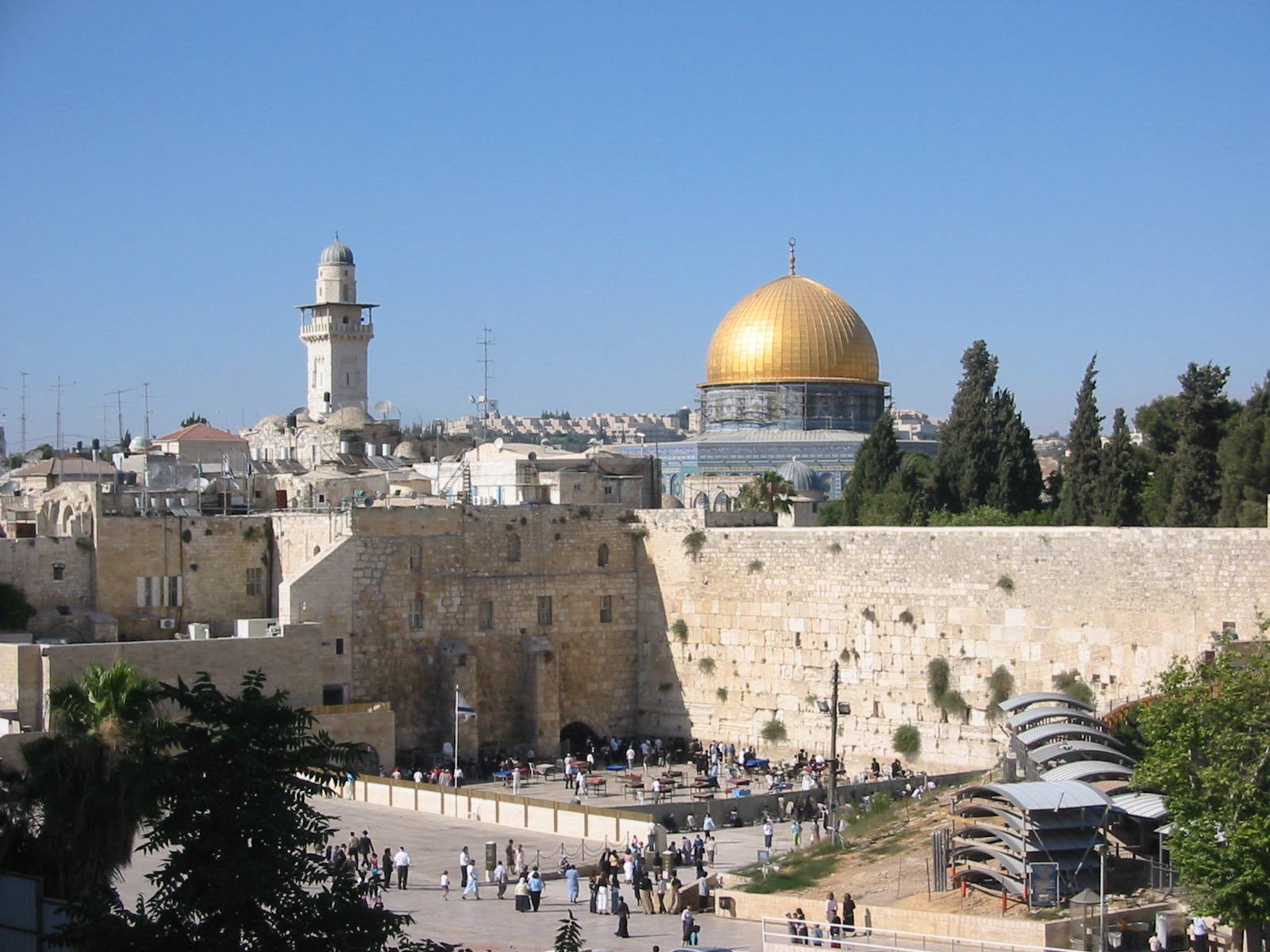
The Western Wall of the Temple Mount in that Holy City: Jerusalem

The Western Wall of the Temple Mount in that Holy City: Jerusalem (photo credit: TripAdvisor.com)

“O Jerusalem, Jerusalem, the city that kills the prophets and stones those who are sent to it! How often would I have gathered your children together as a hen gathers her brood under her wings, and you were not willing!”(Matthew 23:37 ESV)

Jesus said these words upon his last week in Jerusalem prior to His death. It pretty much sums up the theme of Simon Sebag Montefiore‘s monumentual book, Jerusalem: The Biography. I finished listening to it as an audiobook from Audible.com not too long ago. At 25 hours and 26 minutes, it is a very long listen. But as I have been doing tedious work as part of an upstairs remodeling effort, it helps to have had a set of headphones to listen to this fascinating work of history while I try to cover up my tile grout mistakes. Montefiore traces the story of Jerusalem, starting back at its Canaanite origins thousands of years ago up through the present era, stopping at the end of the Six-Day War in 1967.

It has been taking me over a year to get through Jerusalem, having to take a break every now and then just to work through the emotional energy required to take in such a vast topic. Jerusalem’s name is often associated with being “The City of Peace”. But the long and tumultuous story is evidence that this sacred and holy place has been anything but peaceful.
Continue reading