Clarke Morledge -- Computer Network Engineer, College of William and Mary...
I hiked the Mount of the Holy Cross, one of the famous Colorado Fourteeners, with some friends in July, 2012. My buddy, Mike Scott, snapped this photo of me on the summit.
After I dropped off the last of my cousins at the airport to go home, it was a pretty lonely ride back to my house. Some friends, including our Veracity blogger-in-chief, John Paine, suggested that I post “A Remembrance of My Dad” that I gave at his memorial service. My dad left me an important lesson and a treasure, that pretty well defines the orientation that I have towards the Christian faith, that I hope might come through here on the Veracity blog:
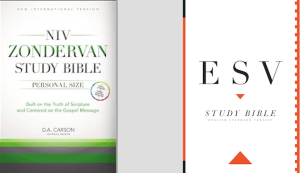
One of the best things on sale is the new NIV Zondervan Study Bible eBook, where the content was briefly reviewed a few months ago on Veracity. I have been wrestling with the idea of getting the new NIV Zondervan Study Bible, since it really looked to be a fantastic resource for digging into God’s Word. But Zondervan has it on sale this week for $4.99, so for less than the cost for lunch, you can have about a 3000 page, packed Bible study resource in eBook form (that is a steal compared to the $26.43 for the hardcover). So I gave up my lunch break yesterday and got it. Here is what I found….
As a young Christian, one of the standard reasons often given to me for the truth of Jesus’ Resurrection is that all of apostles, with the exception of John, died as martyrs. Why would the apostles have died for a known lie? The only sensible conclusion is that the martyrdom of these apostles proves that the Resurrection is true.
The problem with this approach, as argued by such scholars as Candida Moss, reviewed a few years ago on here on Veracity, is that the Bible and other early sources tell us very little about the death of the earliest apostles. We are forced mainly to rely on traditions, that in a number of cases, date to a few hundred years after the martyrdom events took place. Can such traditions really be trusted?
Sean McDowell’s new book, The Fate of the Apostles: Examining the Martyrdom Accounts of the Closest Followers of Jesus, is the result of his PhD dissertation research, an exploration into the historical accounts of how the first apostles of Jesus died. Sean McDowell, Biola University professor in apologetics and the son of another popular apologist, Josh McDowell, has investigated many of the traditions associated with the martyrdom claims, weighing the evidence as to which accounts are most probably reliable and which ones are more doubtful.
Here is my application takeaway from thinking about this, though I know that some might challenge me on it: The tendency to stretch the truth a bit, when it really is not necessary, simply to make an important case for something, was a problem in the early church just as much as it is a problem in our day. We must carefully guard the Truth for the sake of the integrity of the Gospel.
Folks, we need not fear the Truth as believers, even when that Truth exposes common, popular overstatements with seemingly good intentions. Sometimes, believers have a knee-jerk reaction to criticism that can devolve into a paranoid persecution complex, that tragically trivializes real persecution being experienced by our Christian brothers and sisters in places like Syria and Iraq. Instead, as Christians, we can look to fair-minded, intelligent, Biblically-sound scholarship and sober thinking to give solid reasons for our faith, even when we are challenged. Taking responsibility for our own personal discipleship, is something we strongly advocate here on this blog, and it is important now more than ever. We must be careful not to give into smooth and slick talk in an effort to “protect Christianity.”
My local church here in Williamsburg, Virginia, the Williamsburg Community Chapel, recently announced that we will be moving to the English Standard Version (ESV) for our pew Bibles, by this coming summer. A lot of people love their NIV (I still do!), but with the unavailability of the 1984 edition of the NIV, it forces a lot of churches to make a difficult decision. I am reposting my research on this very important and timely topic….
Does your church have a “pew Bible?” Through a generous gift years ago, an anonymous donor in our church gave hundreds of copies of the New International Version (NIV) of the Bible so that everyone who comes to our church would be able to read from the Bible where they sit each and every Sunday morning for worship. What a great gift it is to have a copy of God’s Word at your fingertips!
The problem is that we use the 1984 edition of the NIV…. and the version’s publisher, Zondervan, is no longer printing copies of the 1984 NIV. So what is a church like ours to do if you want to get a new pew Bible?
Ah, so we enter into the world of contemporary Bible translation controversy. The controversy, though a bit nerdy for many in some respects, is important because lovers of Jesus are also lovers of…