Author Archives: Clarke Morledge

About Clarke Morledge

Unknown's avatar
Clarke Morledge -- Computer Network Engineer, College of William and Mary... I hiked the Mount of the Holy Cross, one of the famous Colorado Fourteeners, with some friends in July, 2012. My buddy, Mike Scott, snapped this photo of me on the summit.

Is the “Baptism in the Holy Spirit” a Second Blessing Experience? (#4)

Fired up by enthusiasm, the theology of “the baptism in the Holy Spirit,” is taking over the globe. But what is it exactly? (photo credit: Getty Images, Economist magazine)

Fourth in a multipart blog series….

So, how did we get from the sacrament of confirmation or chrismation, from the early church, to contemporary Pentecostalism? The key to this is understanding the idea of a “second blessing” experience, in the life of a believer. The “second blessing” has a history stemming back to the founder of Methodism, John Wesley. Wesley had been an Anglican missionary in the early 18th century, in the English colony of Georgia. But in these early years, he considered himself to be mostly a failure, even from the very start.

On the ocean voyage across the Atlantic from England, Wesley’s ship was in a severe storm. But there was a group of Moravian missionaries on board that same ship, who calmly sang hymns and songs to God, praying for their safety, as their boat began to groan and crack under the beating of the pounding waves and swelling sea.

Wesley, on the other hand, was a nervous wreck. This missionary was completely scared to death. He and the Moravians survived the storm, but Wesley knew that they had some kind of peace and spiritual courage that he lacked. It was not until Wesley returned a few years later to England, where at a Bible study lecture, he felt his heart “strangely warmed.” He was never the same after that moment, experiencing great power in delivering hundreds and hundreds of sermons that fueled the fires of the Great Awakening in England.
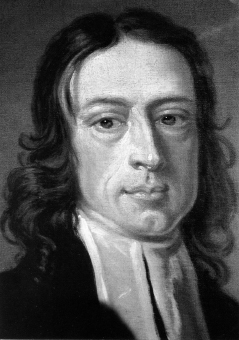
John Wesley, the 18th century evangelical leader, whose heart was “strangely warmed,” years after he had committed himself to follow Christ.

The Holiness movement in 19th century followed the theological lead set by John Wesley, and they began to speak of an experience with the Holy Spirit after conversion as a “second blessing.” It is therefore no surprise that William J. Seymour, and other leaders of the 20th century Pentecostal revival, built their theology of “the baptism in the Holy Spirit” on the foundations of the Wesleyan inspired Holiness movement. It bears repeating that these early, pre-Pentecostalism advocates of a “second blessing” were not “charismatic” in the sense of possessing the gift of “speaking in tongues,” or other miraculous gifts of the Spirit.

Furthermore, as briefly mentioned in the last blog post, these Holiness groups were not the only ones who believed in “the baptism in the Holy Spirit” as a “second blessing.” Prior to Wesley, various Puritan thinkers in the 17th and 18th centuries also made a distinction between becoming a Christian and “the baptism in the Holy Spirit.”  Even though the Holiness movement, through groups like the Nazarenes and the Church of God, directly led towards contemporary Pentecostalism, in a way that the Puritan movement did not, it is helpful to examine this particular Puritan theology in some detail. A more recent example of this early, Puritan-inspired view can be found in the great 20th century Welsh pastor, Doctor Martyn Lloyd-Jones. Continue reading

Is “Speaking in Tongues” the Sign of the “Baptism in the Holy Spirit?” (#3)

Fired up by enthusiasm, the theology of “the baptism in the Holy Spirit,” is taking over the globe. But what is it exactly? (photo credit: Getty Images, Economist magazine)

After a break for a few weeks, we are picking up again with the third in a multipart blog series….

Azusa Street. Los Angeles, California. April, 1906. A new African American preacher in town, William J. Seymour, a son of former slaves, stood up to preach for several nights in a row. Seymour had been blinded in one eye, due to contracting small pox, when he was young. But this did not deter Seymour from delivering his message.

According to Seymour, many churches in his day were spiritually dead. The movement of the Spirit was not to be detected. Teenagers were bored by long, droning sermons. Petty squabbles consumed the energies of church people. Spiritual lifelessness had permeated congregations. Even in Los Angeles, churches were strictly divided along the lines of race. Something was severely lacking in the churches of early 20th century America.

Seymour began preaching for revival.

Crowds began to gather to hear Seymour preach. The meetings were so packed that the small buildings where they met started to crack, and larger meeting places were sought after. The emotional excitement was electrifying. People gathered from all backgrounds in the hundreds. Rich and poor, men and women, black and white, all gathered together to experience the movement of the Spirit. Economic, racial and other barriers collapsed as people were somehow…. moved by the Spirit. Continue reading


The Book of Micah: In Seven Minutes

Ever read the Book of Micah? If you want a brief introduction to the Book of Micah, with some helpful visual illustrations, it is worth watching this 7-minute video by the “Bible Project.”


Truth in a Culture of Doubt: Brief Book Review

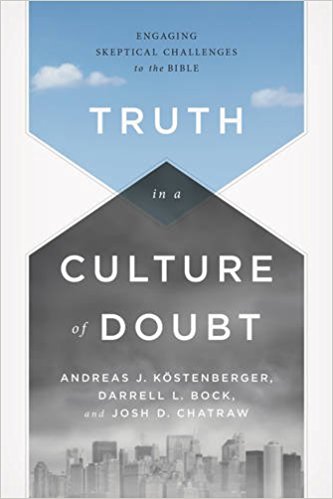
Still looking for that perfect gift book, for a high school graduate, off on their way to college? Consider Truth in a Culture of Doubt: Engaging Skeptical Challenges to the Bible, by Andreas Köstenberger, Darrell Bock, and Josh Chatraw.

Young people growing up in the church today face immense challenges from a culture skeptical to the Gospel. Leading the charge towards encouraging doubt is popular author and University of North Carolina religion professor, Bart Ehrman.

If you have never heard of Bart Ehrman before, you need to get out from underneath your rock, and learn about him. Ehrman grew up going to church and attending Christian colleges, but eventually lost his faith in the process. He has since authored five New York Times Bestsellers, and dozens of other books, all aimed at undermining confidence in the reliability of the Bible and its message.

What makes Ehrman’s skepticism so caustic, is that he knows his facts really, really well. He knows his Bible better than most Christians do, and he remains one of the world’s top textual critical scholars of the New Testament. The problem is that the conclusions he draws from his research are not always warranted. There are indeed very good answers to the issues he raises, that affirm the trustworthiness of the Bible.

In Truth in a Culture of Doubt, Köstenberger, Bock, and Chatraw, all evangelical and believing scholars themselves, tackle each of Erhman’s challenges in a very engaging manner, issues that every thoughtful Christian will face, as they seek to share their faith with their informed neighbors:

  • Is God Immoral Because He Allows Suffering?
  • Is the Bible Full of Irresolvable Contradictions?
  • Are the Biblical Manuscripts Corrupt?
  • Were there Many Christianities?
  • Are Many New Testament Documents Forged?

A nice little extra is a quick question and answer guide at the back of the book, that summarizes the basic arguments. Truth in a Culture of Doubt is an updated, more in-depth version of an earlier book by these evangelical scholars, Truth Matters, that I reviewed a few years ago. Though Truth in a Culture of Doubt was itself published back in 2014, the information packed in it is still relevant today, as the issues dealt within are not going away any time soon. Ehrman is still himself writing books, but more and more, any new issues that he writes about move further away from his area of expertise.

In many ways, the topics that Ehrman has been writing about for over fifteen years are not new. They are no more than popular distillations of scholarly, critical views in the history of Christianity, that have been taught in secular departments of religion at private and public universities for nearly a century now. Sadly, it has taken a barrage of these skeptical writings, in popular form, to force the evangelical church to better inform her people, and give better answers.

Read a brief excerpt from Truth in a Culture of Doubt here, then go buy the book for that young person you know, who is facing challenges from a skeptical culture.


Charismatic Shift?: Evangelist Greg Laurie Joins the Southern Baptists

During this break from the Veracity series on the baptism in the Holy Spirit, I could not passover a recent news item. Greg Laurie, the dynamic evangelist and California megachurch pastor of Harvest Christian Fellowship, announced earlier in June, 2017, that his church would join the Southern Baptist Convention. Why is this significant? Let me explain.

Greg Laurie’s Harvest Christian Fellowship is the eighth largest church in America. Greg Laurie, and his church, came out of the Calvary Chapel movement, that began in the early 1970s in Southern California. What is notable for those interested in the teaching of the “baptism in the Holy Spirit,” is that historically, the Calvary Chapel movement has been associated with the charismatic revival, that hit mainstream evangelicalism, starting in the 1960s. Calvary Chapel-type churches, like Laurie’s, are therefore not cessationist in their doctrinal teaching, Cessationism is the teaching that the miraculous gifts of the Spirit ceased to operate after the end of the apostolic age, in the early church. Instead, Greg Laurie would most likely affirm a continuationist view, that the miraculous gifts of the Spirit continue to operate today within the worldwide church.

What makes this quite interesting is that the Southern Baptist Convention, the largest Protestant denomination in America, has historically been cessationist, when it comes to these types of issues. Southern Baptists do not have an official teaching position about “speaking in tongues.” But it appears that the long-time, historical resistance to the charismatic movement could be changing in Baptist circles, as the Southern Baptist International Mission Board rescinded its policy of banning charismatics from becoming overseas missionaries, just a few years ago.

It would be careful to note that Greg Laurie’s position, while surely not banning charismatic gifts, is much more low-key than what you find in classic Pentecostal churches. You might hear “speaking in tongues” in small group meetings, but rarely, if ever, in a corporate worship setting.

I would call it “charismatic-lite.”

So, what does this mean for the Southern Baptists and for Greg Laurie’s Harvest Christian Fellowship? With respect to the charismatic movement, it is difficult to say. Is the charismatic movement declining among the Calvary Chapel-type churches, such as Harvest? Or are the Southern Baptists warming up even more to the miraculous gifts of the Holy Spirit? Is this part of a general, shifting trend throughout the evangelical church at large? If so, what is this shift?

What do you think? Below is the announcement from pastor Greg Laurie.
