Tag Archives: europe

Zwingli in Zurich: Part One (God’s Armed Prophet)

From the Christianity Along the Rhine blog series…

On this Happy Reformation Day, we ask: Who was Huldrych Zwingli?

Huldrych Zwingli is not as well known as the two leading lights of the 16th century Protestant Reformation, Martin Luther and John Calvin. But among the Swiss, Zwingli was the most influential of the Reformers … until he was killed in battle at age 47.

But if he was such an important historical figure, why do so few Christians know anything about Zwingli?

I think I know why: The irony of Zwingli’s death was that he was caught between his pride of the Swiss people and his hatred of the mercenary movement, whereby various European powers would offer pensions to Swiss men to go off and fight their wars. In the end, a combination of his Swiss pride and theology of the church overtook his rejection of military service, and he died at the end of the sword, all while preaching the Gospel. He was Zwingli: God’s Armed Prophet, the title of a fascinating biography of the Swiss Reformer by Yale historian Bruce Gordon.
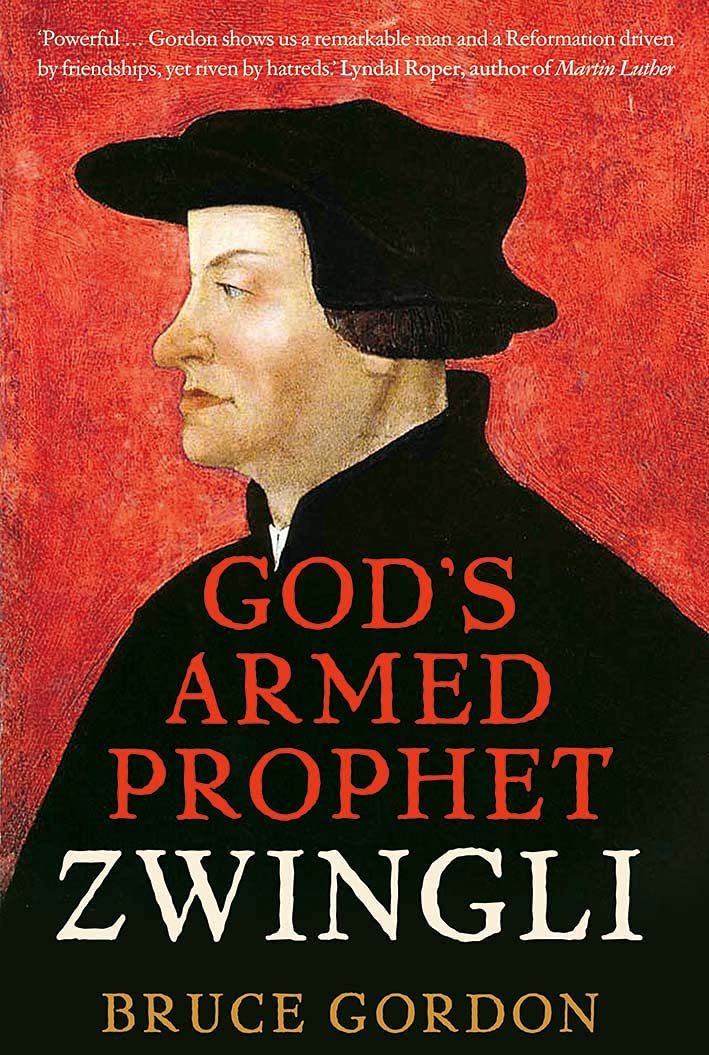
 

Zwingli: God’s Armed Prophet, by Bruce Gordon, is the most recent biography of the great Swiss Reformer of Zurich.


A Visit to Zurich, Switzerland

My wife and I took a trip to Europe in 2025, spending a few days in Zurich, Switzerland, where I got to explore the city where this relatively unfamiliar giant of the Protestant Reformation preached his sermons, lambasted by both the Roman papacy and fellow Reformer Martin Luther. This is the first of two “travel blog” posts covering the often forgotten Huldrych Zwingli.

The church where Zwingli preached in the 16th century, the Grossmünster, still stands in the center of the city of Zurich. After taking a boat cruise on Lake Zurich, which feeds the Limmat River, I walked up the road just a block or so alongside the Limmat. There I found a statue of the Reformer, with both a Bible and a sword in hand, sculpted by the Austrian artist Heinrich Natter, and dedicated in 1885.

Many historians do not know quite what to do with Zwingli. The idea of a pacifist-leaning preacher, who ironically was killed in battle, proved to be just one of the many contradictions of Zwingli, sidelining his historical memory among the Protestant Reformers. He upheld the authority of Scripture, and Scripture alone, but when confronted by more radical reformers that infant baptism was not explicitly taught in Scripture, Zwingli felt compelled to support efforts by the civil magistrates to have such radical reformers put to death. Zwingli was known to be a proficient musician, and yet he banned singing in worship in his Zurich church. In his earlier years, he had a spiritual conversion experience all while engaging in multiple premarital sexual relationships as a priest, and being rather unrepentant about it.

As a result of such embarrassments, it is hard to find the bulk of Zwingli’s written works translated into English. Not so with Luther and Calvin, whose books are translated widely and are still read today. Nevertheless, it is difficult to imagine how the Protestant Reformation would have taken off as it did without the intellectual talents of Zwingli driving it along.
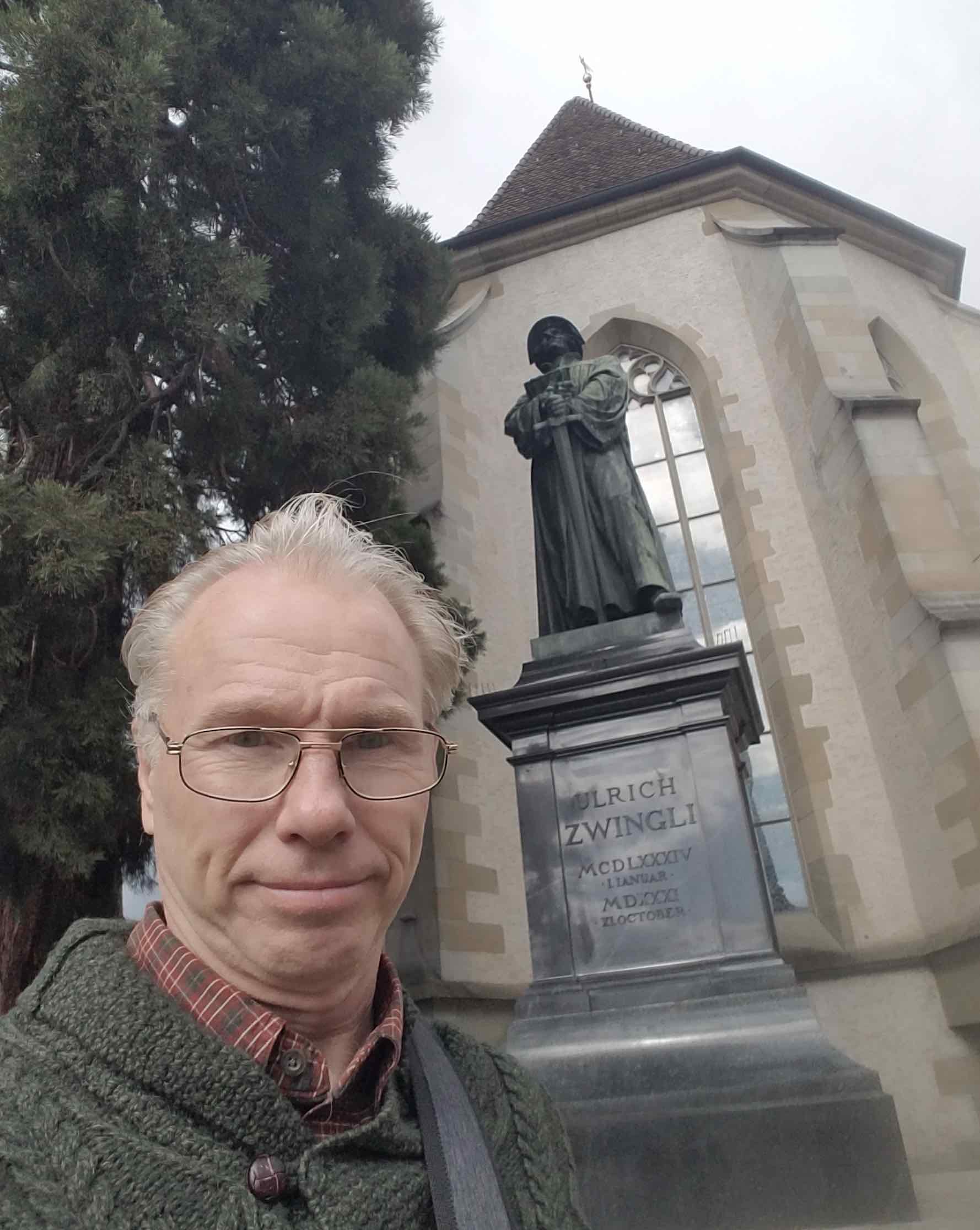
Unveiled in 1885, a statue of Zwingli stands in front of the Wasserkirche, or “Water Church,” in Zurich. The Reformer has both a Bible and a sword in his hands. I had the opportunity to explore the old city of Zwingli’s Zurich in October, 2025.


Zwingli’s Early Years

While Martin Luther taught in Wittenberg, Germany, Zwingli became the “people’s priest” in Zurich, Switzerland. Both Luther and Zwingli had become enamoured with Desiderius Erasmus’ Greek New Testament, marking a drastic change in each man’s outlook on the Bible at nearly the same time. But in many ways, Zwingli was ahead of Luther. Zwingli married Anna a year before Luther married Katie. Zwingli’s Swiss German translation of the Bible preceded Luther’s German translation by several years.

Born in a Swiss alpine village in 1484, Zwingli excelled as a student, going off to school at age 10 in Basel, and then attending university in Vienna at age 14, before returning to Basel to finish his college education. At age 22, he became a priest in the Swiss community of Glarus.

It was in Glarus that Zwingli experienced the cultural dilemma of the Swiss people. Though Zwingli had a fairly modest and financially stable upbringing, most Swiss had difficulties making ends meet. As a result, many took up military service for hire, as representatives of the papacy in Italy and their opponents in France would seek out Swiss men to serve as mercenaries, offering them pensions, though only half would live long enough to return home. It was the most practical way a Swiss man could provide for himself and his family, by effectively selling themselves for a period of time as a slave to fight wars for other people. As a priest, Zwingli accompanied his people into battle, and he became disillusioned with the whole mercenary system.

After returning from one military disaster, Zwingli went to Basel to meet Desiderius Erasmus, to learn more from the man who gave the Western world a new authoritative Greek New Testament. Zwingli’s meeting with Erasmus set the trajectory for the rest of his life. Later that year, Zwingli moved to a Benedictine Abbey in Einsiedeln. It was during these few years when he experienced spiritual upheaval.

On the one side was the reform of  Zwingli’s own spirituality, inspired by Erasmus’ work on the Greek New Testament. On the other side, Zwingli was caught up by the tensions of trying to live a celibate life as required of all medieval Catholic priests. However, it was commonly accepted that while priests were expected not to marry, they nevertheless had discreet sexual relations along the side. This was true for Zwingli as well.  While in Einsiedeln, Zwingli got a woman pregnant, and was known to have fathered at least one illegitimate child. Nevertheless, God was starting to take a hold of Zwingli’s life while in Einsiedeln. Zwingli’s years in Einsiedeln prompted him to make a bold change in his life. That change led him to Zurich, Switzerland.
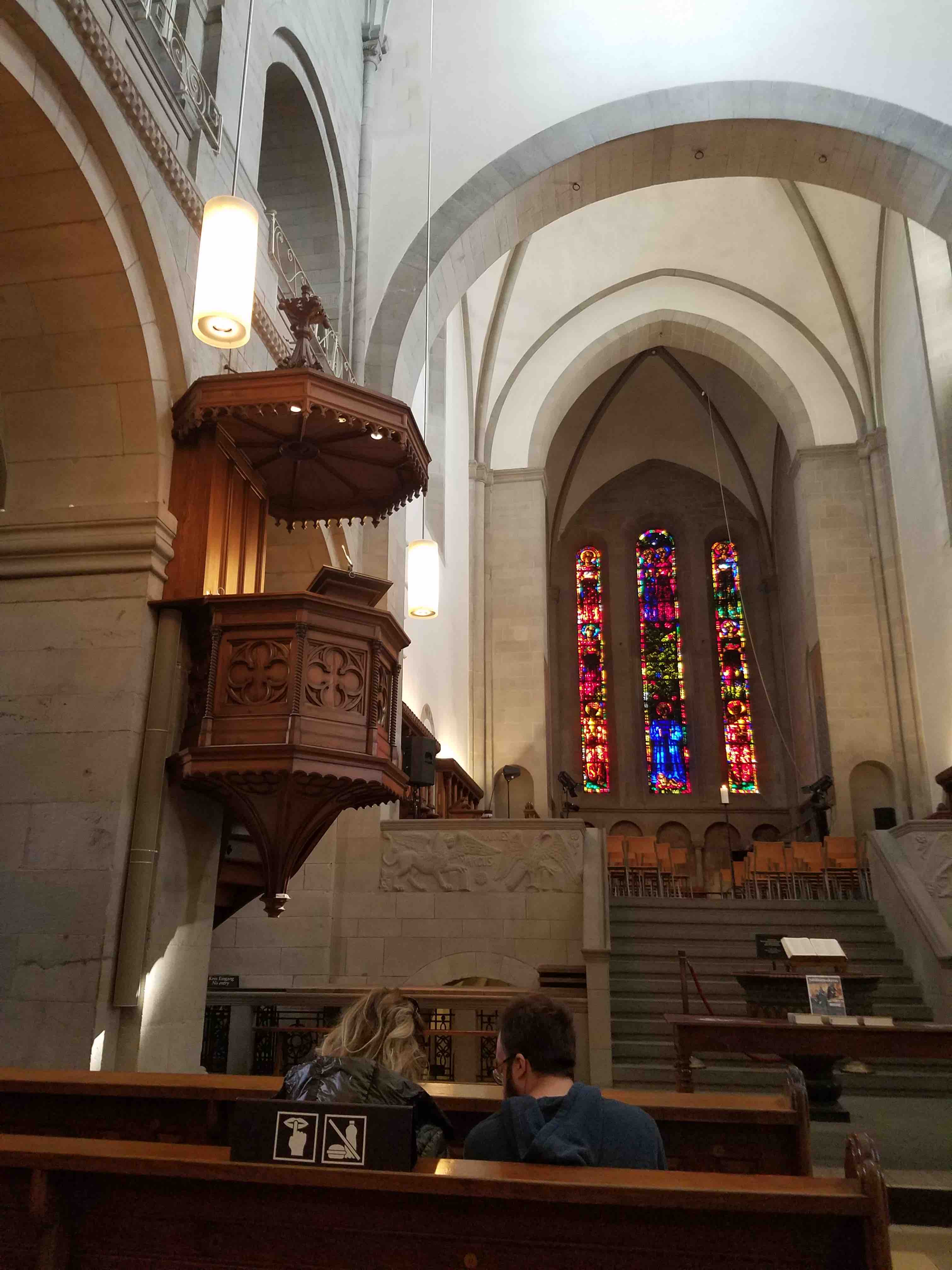
The pulpit from where Zwingli preached, at the main city church of Zurich, the Grossmünster.


Zwingli Goes to Zurich: The “People’s Priest”

The opportunity came for Zwingli to become the “people’s priest” at the Zurich church, Grossmünster in 1518. His election to the position was almost derailed by rumours of his sexual past. Furthermore, he had only been preaching for several months before the plague swept through Zurich, and nearly killing Zwingli himself. Zwingli survived, viewing his recovery from the plague as a sign of God’s blessing.

Zwingli’s preaching took up reformation themes. He rejected the intercessory powers of Mary and the saints, denied the existence of purgatory, and assured his parishioners that their unbaptized babies were not damned.

Zwingli was not afraid of challenging other preachers. During one sermon delivered by a Franciscan monk regarding the veneration of the saints, Zwingli himself shouted down the speaker, “Brother, you are in error!” Zwingli’s strategy was to force a public debate with detractors, with hopes of enlisting support from the Zurich city magistrates. The strategy worked.

But his most controversial preaching was in objecting to the Swiss mercenary practice, and the obtaining of pensions for such service, as offered through outside entities, including the papacy. Though once a loyal servant of the papacy, Zwingli had slowly been transformed into an irritant in the eyes of Rome.

By 1522, he even secretly married a young widow, who already had several children, Anna Reinhart, a woman who had assisted Zwingli to recover from the plague. Zwingli no longer could abide by the celibacy requirement for priests established by Rome.

Notable public controversy ensued when that year he met with a group of friends, where the others in the group ate a meal of sausages, in violation of the rules of the Lenten fast. Zwingli did not partake, but it was evident that he was the primary instigator. His pursuit of reforms even caused trouble with his friendly correspondence with his mentor Erasmus.

Zwingli wrote to Erasmus believing in the perspicuity (or clarity) of the Scriptures.  Erasmus in turn regretted the radical nature of Zwingli’s thought. Erasmus had urged for reform, too, but he still thought that no one could read the Scriptures on their own without assistance from the magisterial teaching authority of the church to properly guide the reader. Their differences led to a falling out for their friendship.

Erasmus had good grounds for being wary of Zwingli’s radical leanings as signs of instability. In 1520, Zwingli believed at first that the tithe was not sanctioned by the Bible, and could be abolished.  But when more radical reformers took him up on rejecting tithing, Zwingli shifted and commended that civil magistrates could collect tithes, just as long as the civil powers did not exploit the people  (Gordon, p. 96-98). A similar situation developed when Zwingli urged that ornate artistry be removed from the churches, as such imagery violated the second of the Ten Commandments.  But when more radical reformers took Zwingli’s teaching to the next level and destroyed altars, such that the wood could be sold to assist the poor, Zwingli rejected such iconoclastic activities as threatening the stability of the social order (Gordon, p. 102).
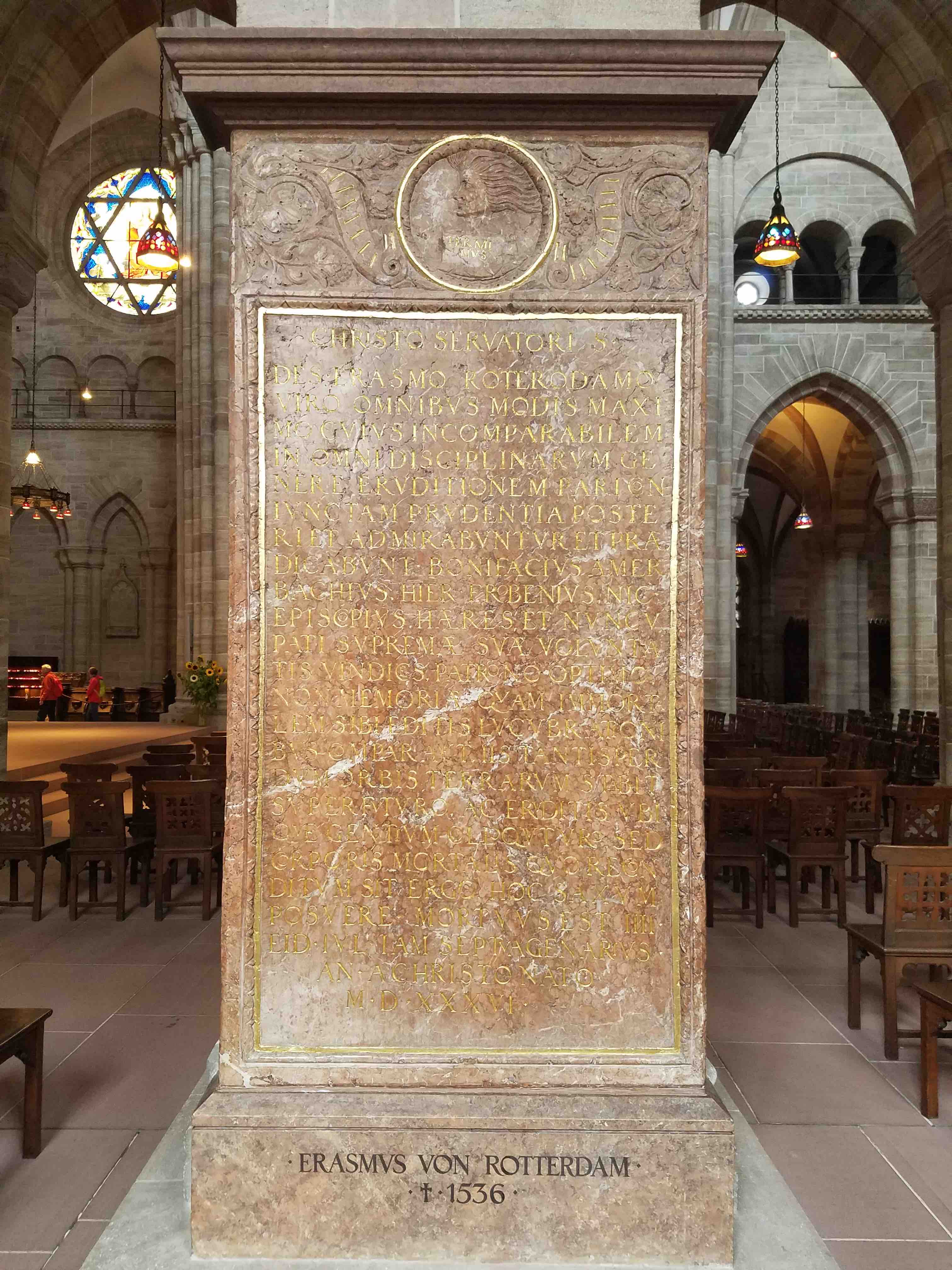
Desiderius Erasmus, the humanist who gave the Western world the first authoritative Greek New Testament in the 16th century, remained a Roman Catholic his whole life. Erasmus believed that Zwingli’s reforms had gone too radical, and broke his friendship with Zwingli. Nevertheless, when Erasmus died, he was buried in the city cathedral of Basel, Germany, a Protestant church, a remarkable gesture suggesting that Protestants and Roman Catholics are not as far apart as is commonly believed. … After two days in Zurich, my wife and I traveled to Basel, where I saw Erasmus’ grave here.


The Church Visible and the Church Invisible

Part of Zwingli’s shifting views on tithing and iconoclasm were a result of his developing views on the nature of the church. Zwingli believed in the church visible and the church invisible. The church visible was made up of people who attended church and participated in a Christian society. The church invisible were those genuine believers and followers of Jesus living among the church visible. Zwingli’s theory of how the state related to the church depended on this visible/invisible distinction. The more radical reformers, inspired by Zwingli, such as the Anabaptist leaders Konrad Grebel and Felix Manz, rejected infant baptism as being not taught in Scripture in their view, and urged true believers to take on adult baptism. These Anabaptists were rejecting their infant baptisms as valid, much to the consternation of Zwingli who saw the Anabaptist movement as a threat to his understanding of the visible church.

Zwingli saw the church as a parallel to the ancient Israelites. Just as circumcision was the primary identity marker for Old Testament Jews, so was baptism the primary identity marker for Christians. The Jews were God’s old covenant people, whereas the church was God’s new covenant people. For Zwingli, baptism was  “a covenantal sign that does not in itself or as an act impart or even strengthen faith. Zwingli rejected what he saw as the pernicious Anabaptist argument that baptism was a pledge to live a sinless life, a position he claimed was a new form of legalism to bind the conscience. It would make God a liar, as such lives were not possible. ” (Gordon, p. 126-127).

Zwingli acknowledged that the New Testament nowhere explicitly mentions that infants were to be baptized. However, to use that as an argument against infant baptism was no different than saying that women could be denied the Lord’s Supper, since there were evidently no women present when Jesus celebrated the Last Supper with his male disciples (Gordon, p. 127)

“Baptism is the rite of initiation into the covenant of Christ, as circumcision was for the Israelites. Circumcision did not bring faith: it was a covenantal sign that those who trust in God will raise their children to know and love God. Instruction follows initiation, so children are baptized and then are taught the faith. Baptism cannot save, but it is a sign or pledge of the covenant God has made with humanity. It was instituted by Christ for all” (Gordon, p. 127).

On the other side, Zwingli continued to receive serious pushback from the Roman Catholic papal authorities, who viewed Zwingli as much of a dangerous rebel as were the Anabaptists. Zwingli got on the theological radar of Johann Eck, one of Martin Luther’s fiercest theological opponents. For Eck, Zwingli was infected with the same mind virus as Luther.  Eck cited Paul’s letter to Titus in reference to Zwingli:  ‘After a first and second admonition, have nothing more to do with anyone who causes divisions, since you know that such a person is perverted and sinful, being self-condemned’ (Titus 3:10–11; Gordon, p. 123).

Zwingli’s outspoken views eventually would lead to a crisis, which ended poorly with him and his family. In the next part of this two part look at Zwingli’s life, we will consider the last few years of the Protestant reformer of Zurich.

In the meantime, enjoy this video interview with the author of Zwingli: God’s Armed Prophet , Bruce Gordon, as he talks about his book:
Christianity Along the Rhine: A Travel Blog Series

My wife and I just got back last week from a 12-day trip to Europe, and I am excited to blog about it.

The main focus of the trip was a week-long Viking river cruise along the Rhine and Moselle Rivers, starting in Basel, Switzerland and ending up in Trier, Germany. The river cruise was bookended with a two-night stay in Zurich, Switzerland on the leading end, with a two-night stay in Paris, France on the final end. For a church history enthusiast like myself, it was an amazing experience.

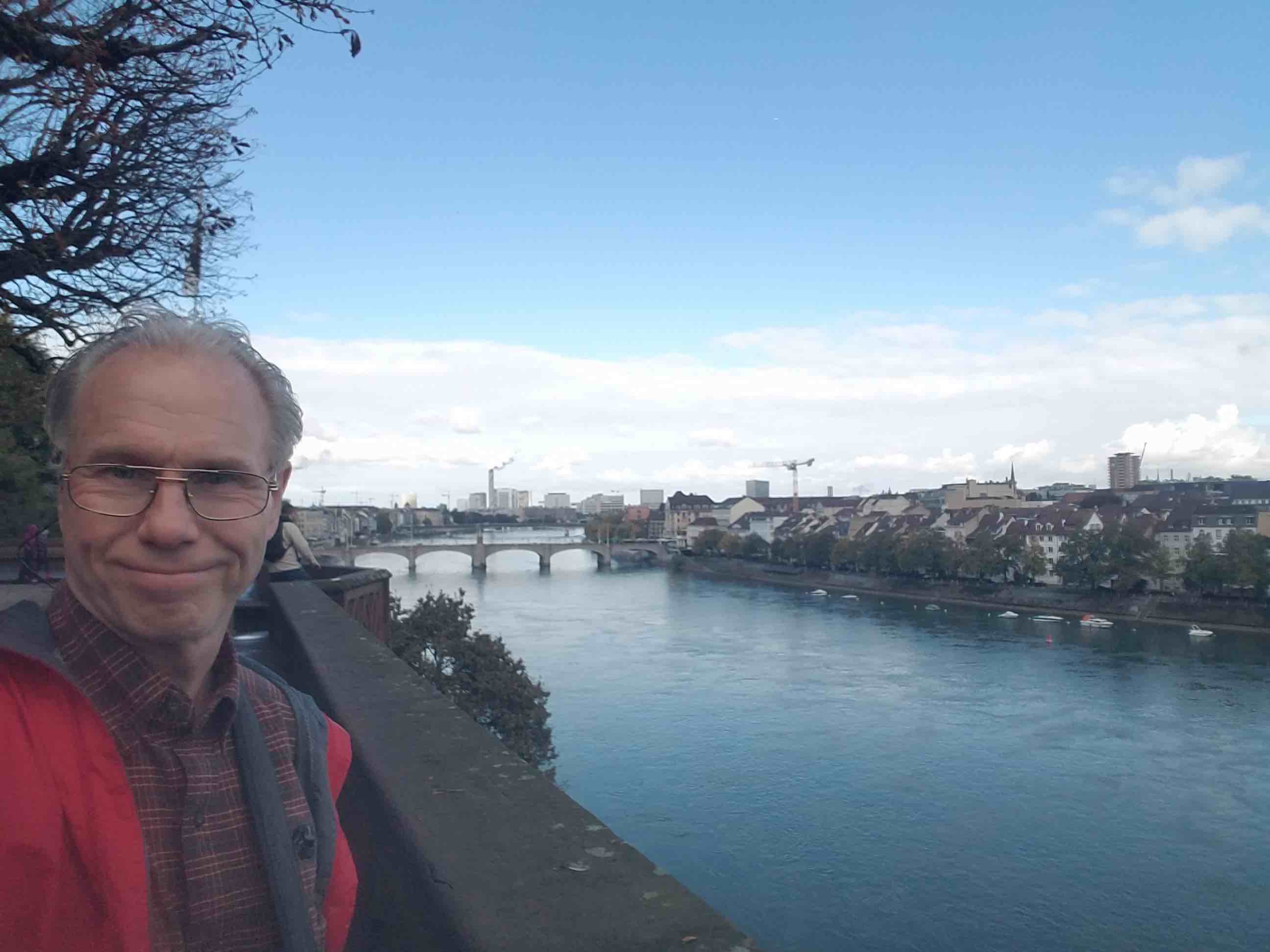
Veracity blogger above the Rhine River, in Basel, Switzerland.  October, 2025.


Over the next few months, and into the New Year, I will be periodically releasing blog installments covering different elements from our tour along the Rhine River, with highlights both before and after (SEE INDEX OF INDIVIDUAL BLOG POSTS BELOW!).  As usual, I got some book reading done before and during the trip, and I will be narrating those book reviews as I share some photos of the experience.  The land we traveled through during our trip is incredibly rich with church history (and history in general).

This is not the first time I have put together a travel blog series on Veracity. I got inspired to do this from some of the trips our Veracity blog founder, John Paine, took several times to Canada (in Toronto) and England (to see Codex Sinaiticus at the British Museum in London) a few years ago.  Thanks, John.  I am blaming you for all of these blog posts!!  😉

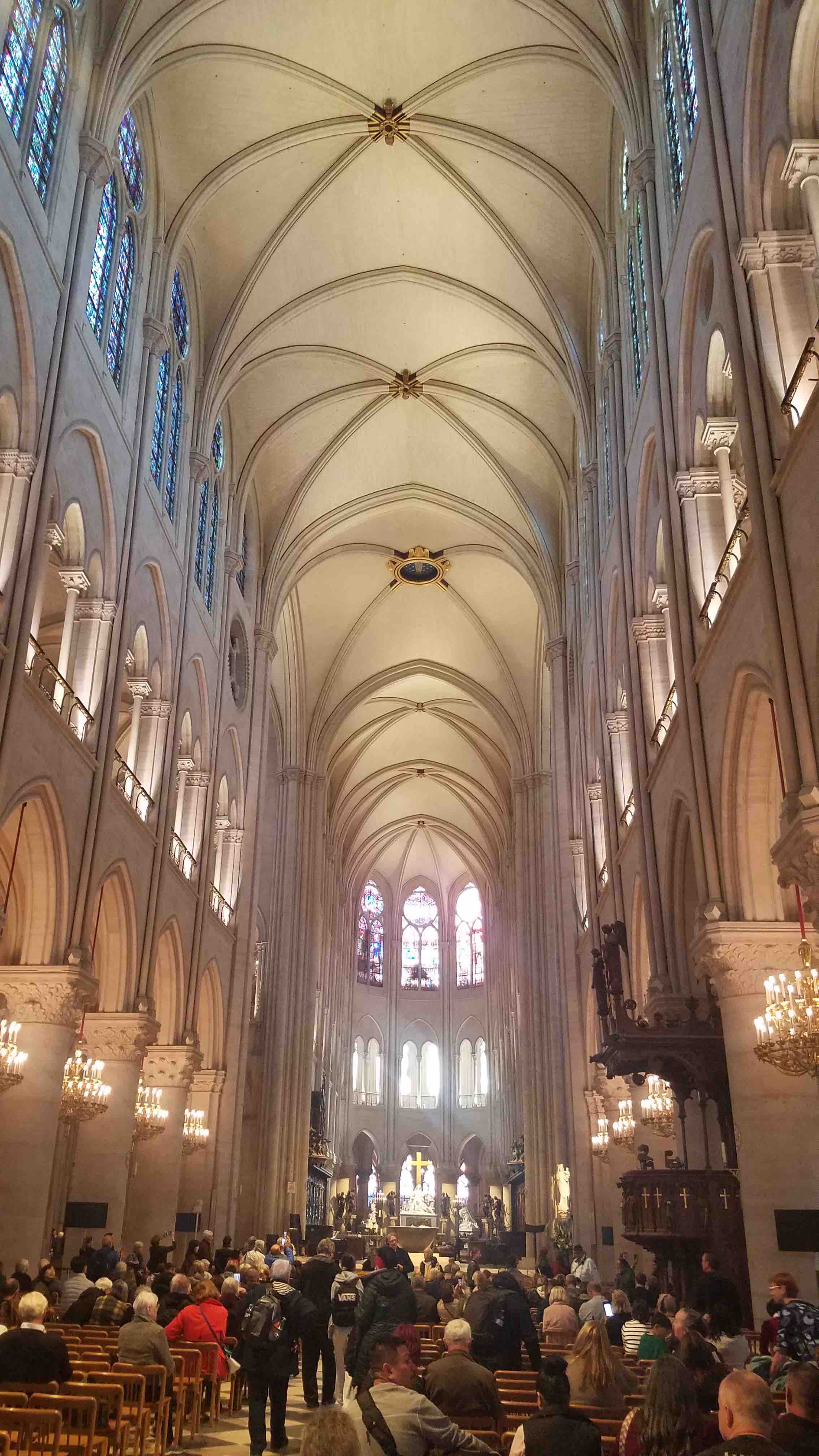
The newly restored Notre Dame Cathedral, in Paris, France. The fire in 2019 did a lot of damage, but the structure of building remained sound.  The restoration effort was impressive, as the inside of Notre Dame is much brighter than before. Centuries of candle smoke had darkened the Cathedral, but now it is a most glorious sight!!


Back in 2018, my wife and I spent 2 1/2 weeks in Rome, Italy, which still stands out to me as the best trip of all. I could have spent a whole month there and not seen everything. We had saved up for years to make this trip, and it was fantastic. It was a lot of fun to meet up in Rome for a full day with our friends Marie Knapp, and her (now) late husband Troy Knapp.

In October 2022, we took another river cruise, but this time down the Danube River, from Regensburg, Germany to Budapest, Hungary.  This was part of a full three-week tour of six European countries, to celebrate our 20th wedding anniversary. We were able to spend a few days earlier in Munich, and then after the Danube, a few extra days in Prague, followed by a few other days in Italy/Sicily.

For Christmas 2023, we were invited by our friends, Shannon and Andrew Bodine, to visit in Brussels, Belgium. After seeing the Christmas markets and Waterloo battlefield, we got on a train to cross the English Channel to make our way to Cambridge, England, where we met up with other friends, Jon and Meredith Thompson, who just happened to be in Cambridge for a few weeks while we were in the area. Pretty cool!

This recent trip along the Rhine River was special, and particularly enjoyable, as during the last two prior trips I got sick, which was not terribly fun. But this time, no Covid and no flu!! Yeah! …. The only downside to this recent trip was that there was constant activity, and not a lot of downtime. I need a vacation from my vacation!

Marksburg Castle, above the Rhine River, in Rhineland-Palatinate, Germany. The castle first dates back to the early 12th century, but had been damaged some over the years, most recently by American artillery during World War II.


I have to say that Viking has figured out how to do river cruises. They have had ads all over the PBS television network for decades, and we got to see for ourselves the famous section along the Rhine where all of the castles are featured in those ads.

The food was fantastic. We had excellent tour guides, even though the walking element on all of those cobblestone streets was very challenging for my wife. Going through the river locks appealed to my nerdy engineering side. I highly recommend doing something like this if you have the chance.

The first couple of blog posts in this series will be about the 16th-century Protestant Reformer, Huldrych Zwingli, of Zurich, Switzerland, who has become largely forgotten among Christians today, despite his enormous impact on Christian theology. I will keep a running tab and index of blog posts updated here at the bottom of this post, as reference.

Enjoy!


A cable car ride over the Rhine River, with our Viking longship below. Koblenz, Germany.


Heidelberg, Germany. Looking up towards the castle.


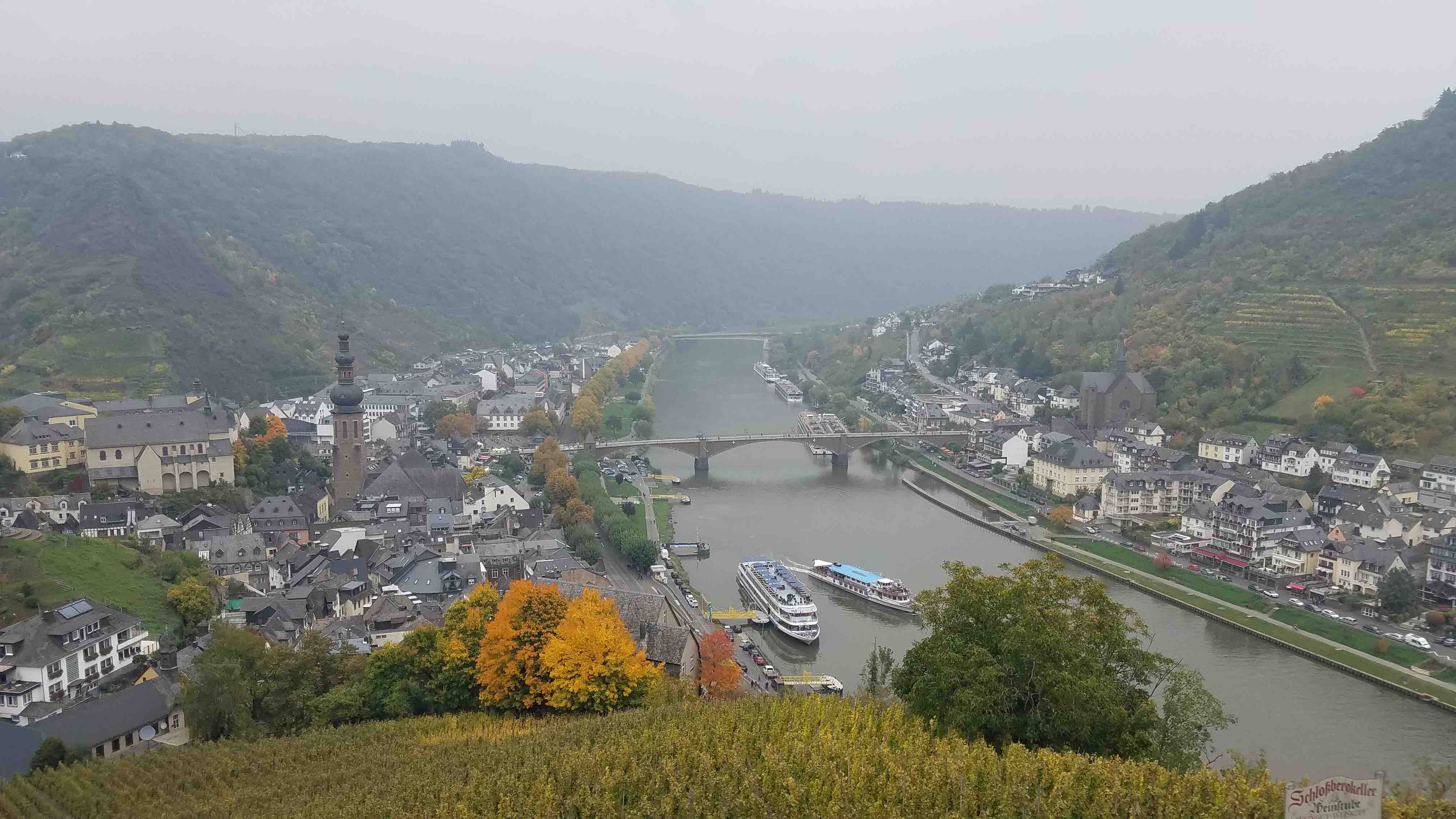
The town of Cochem, Germany, along the Moselle River.


Here is a reference list to previous travel blog post series, along with a list of posts to the current series…..

First, from Rome…………


Next, from Christianity along the Danube, with some time in southern Germany, along the Alps, and over to Prague, as well…….


Before our recent trip down the Rhine River, over Christmas of 2023, we went to Belgium and Cambridge, England….

Coming soon….. Christianity Along the Rhine…..

…. more posts to come!!


Sicily: From the Greek Classical World to Christendom

One final blog post about our trip to Europe last year, 2022. The adventure to Europe ended with an exciting finish: It was a whirlwind trip. Just three nights in Sicily, to visit with friends, and tour the best of Sicily. I even got to travel up a good part of Mount Etna, one of the world’s most active volcanoes (but visibility was poor due to rain that day).

Sicily has an incredibly grand and ancient history. Coming from my hometown of Williamsburg, Virginia, which prides itself in its rich colonial history going back 400 years, Williamsburg does not even begin to compare with a recorded history going back to the Sicilian and Punic wars.

I had started to listen to Robin Lane Fox’s The Classical World: An Epic History from Homer to Hadrian, while visiting Sicily. Fox’s immense survey of the history of the Greco-Roman world, finishing up with the reign of Emperor Hadrian, just as Christianity was emerging as a world changing movement in the early second century, clocks in at just under 24 hours as an audiobook. Though he is a secular British historian, whose rather aloof interest in the Christian faith is apparent, Fox is nevertheless a captivating story-teller, though the decadence and violence of the classical world that he chronicles made me yearn for more of the Christian story (I have Fox’s book on Saint Augustine queued up on my “to-be-read” list, but that is a long ways off from now!)

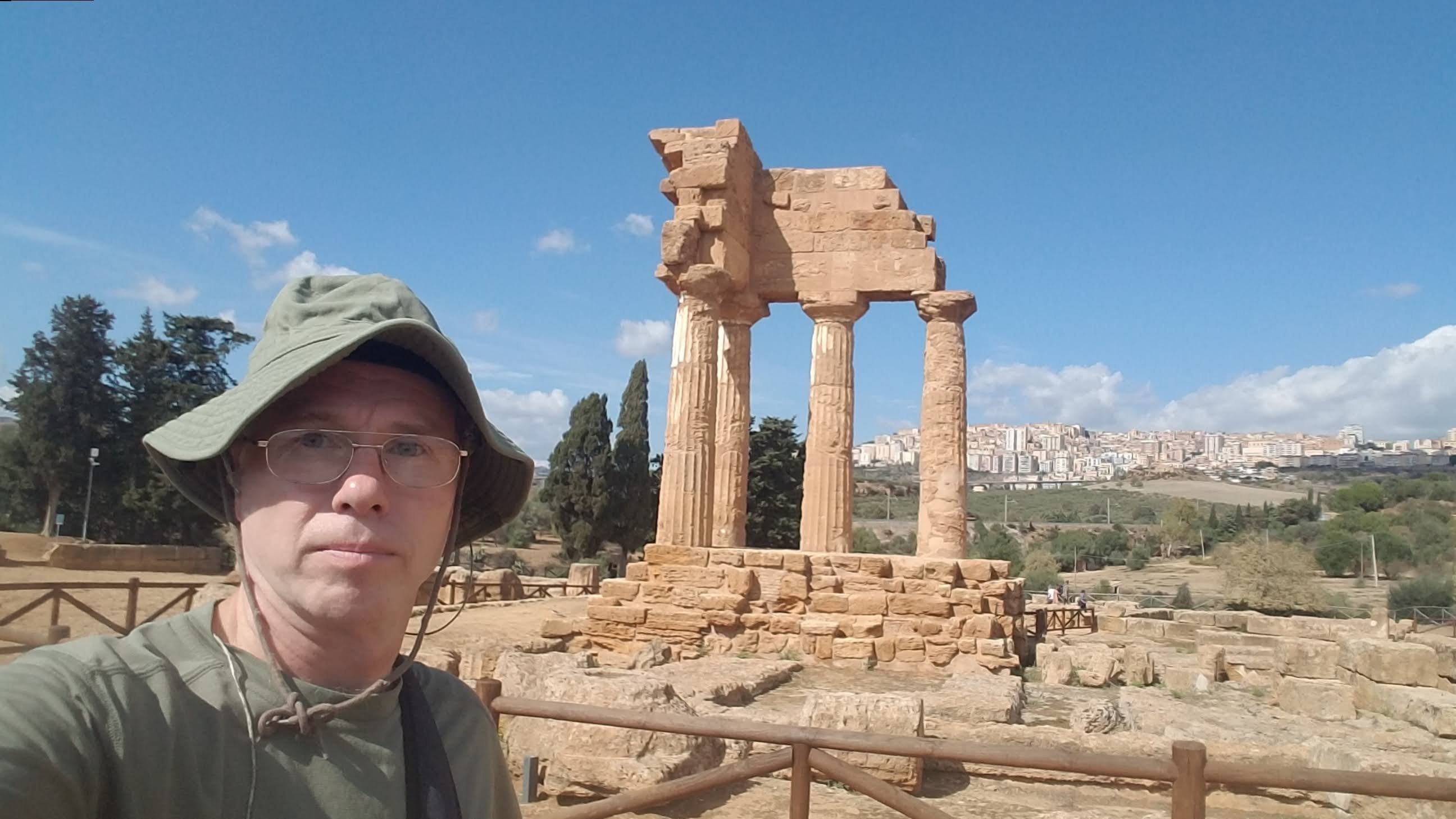
Having a book by a world-class historian at the ready makes for a more enjoyable visit to faraway places. The names of great places in Sicily were sprinkled throughout The Classical World, and I got a chance to see the highlights, and envision a bit of that remarkable ancient world. Take Agrigento for example. In southwest Sicily, the old city of Agrigento sits above an expansive historical park, the Valley of the Temples. On one end of the park stands the Temple of the Discouri.

Temple of the Dioscuri. Valley of the Temples Archaeological Park. Agrigento, Sicily, Italy. The city of Agrigento itself is up the hill in the background.

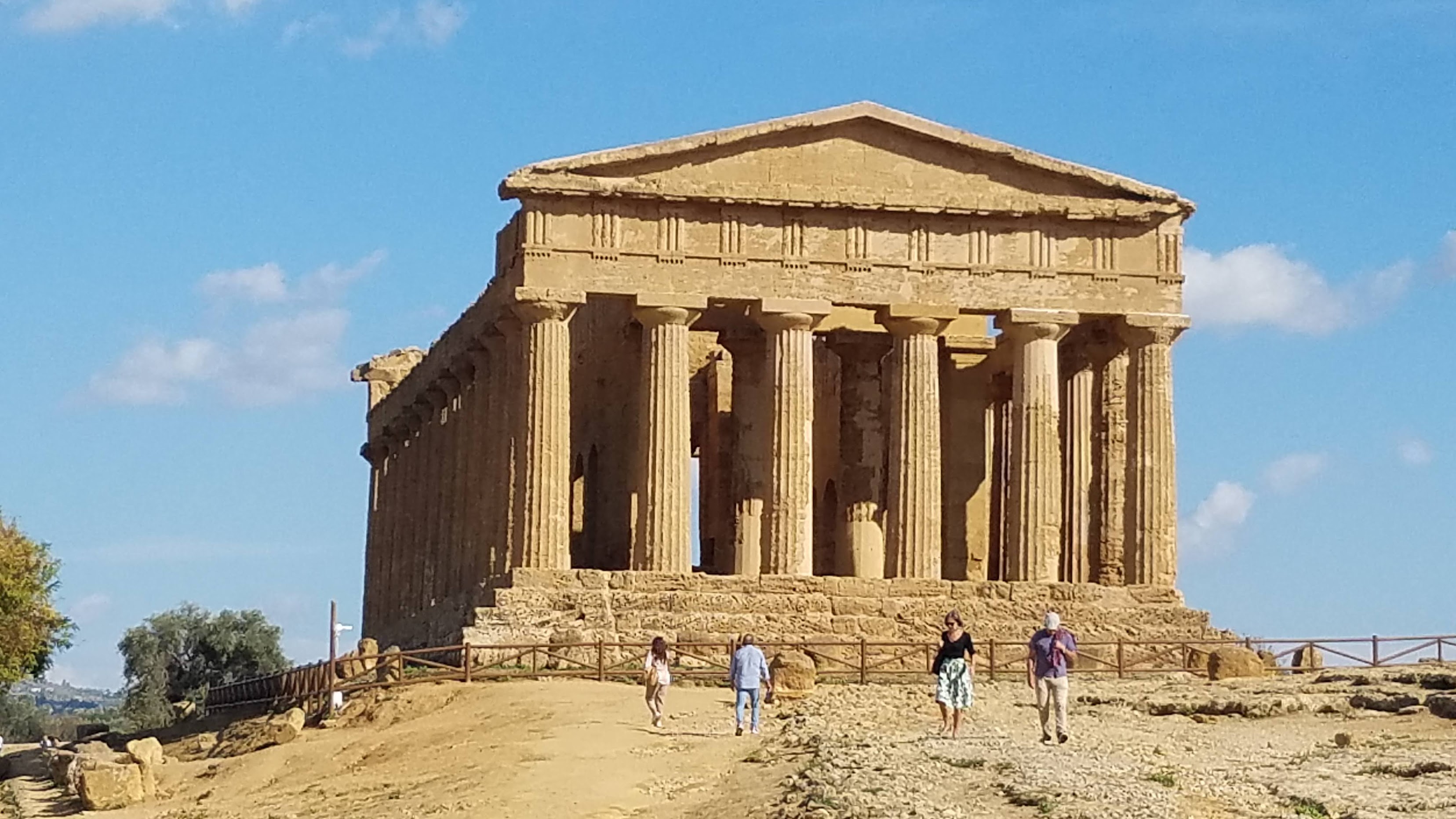
In the middle of the park stands the Temple of Concordia. These were the great houses of worship to the “gods,” much of this dating back half a millennium before Jesus (around 500 BCE), and established mostly by the Greeks. By the time Christianity spread and conquered the Roman Empire nearly a millennium later, these great buildings were converted to use as churches. A photographic history of “Early Christian Agrigento” is a good resource on the web, showing where and how Christians in the early history of the church buried their dead.

The transformation of the Greco-Roman world into a Christian society, less than 500 years after the birth of Jesus, is simply a fascinating thing to consider. In many ways, contemporary secular culture is drifting back to the advocated virtues and religious pluralism of the Greco-Roman classical world. It makes me wonder: How was it that a movement of ragtag Jewish peasants, following a singular figure, whom his followers believed had been risen from the dead, end up completely overcoming such a rich classical culture, with a new story that has since spread far and wide across planet earth, the world’s largest spiritual movement of all time, representing some one-third of the 21st century world population?

It is an astounding thought to ponder.

Temple of Concordia. Valley of the Temples. Agrigento, Sicily, Italy.

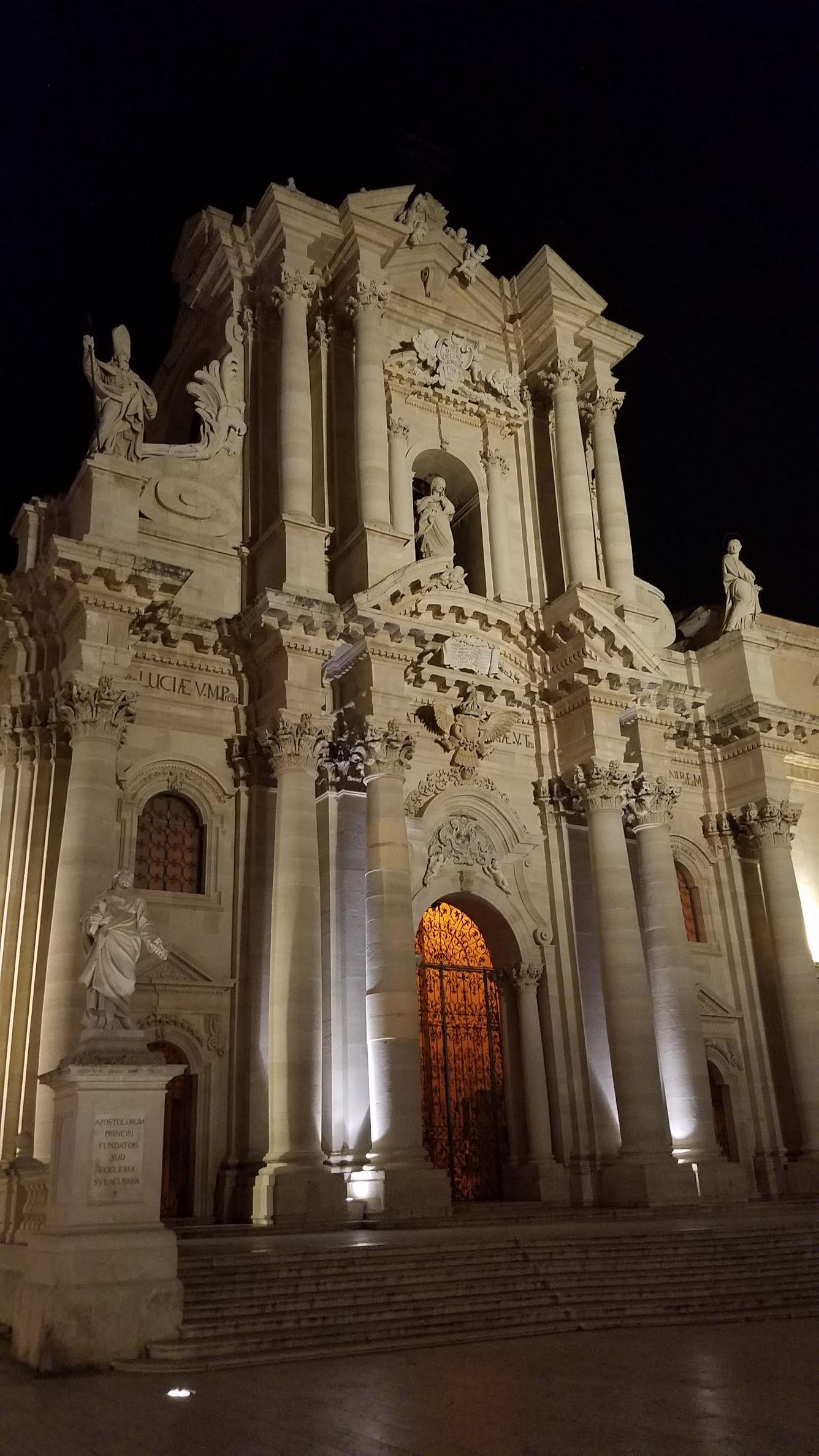
Another highlight for me was the city of Syracuse, specifically the island of Ortigia, one of the most incredibly beautiful places I saw while in Europe. While much of the classical ruins still lie beneath the city, awaiting archaeological investigation, the Baroque architecture of much of the town is impressive, even when walking around at night! …. Plus, the food was simply fantastic!!

Cathedral of Syracuse, on the island of Ortigia. One of Sicily’s many gorgeous churches.


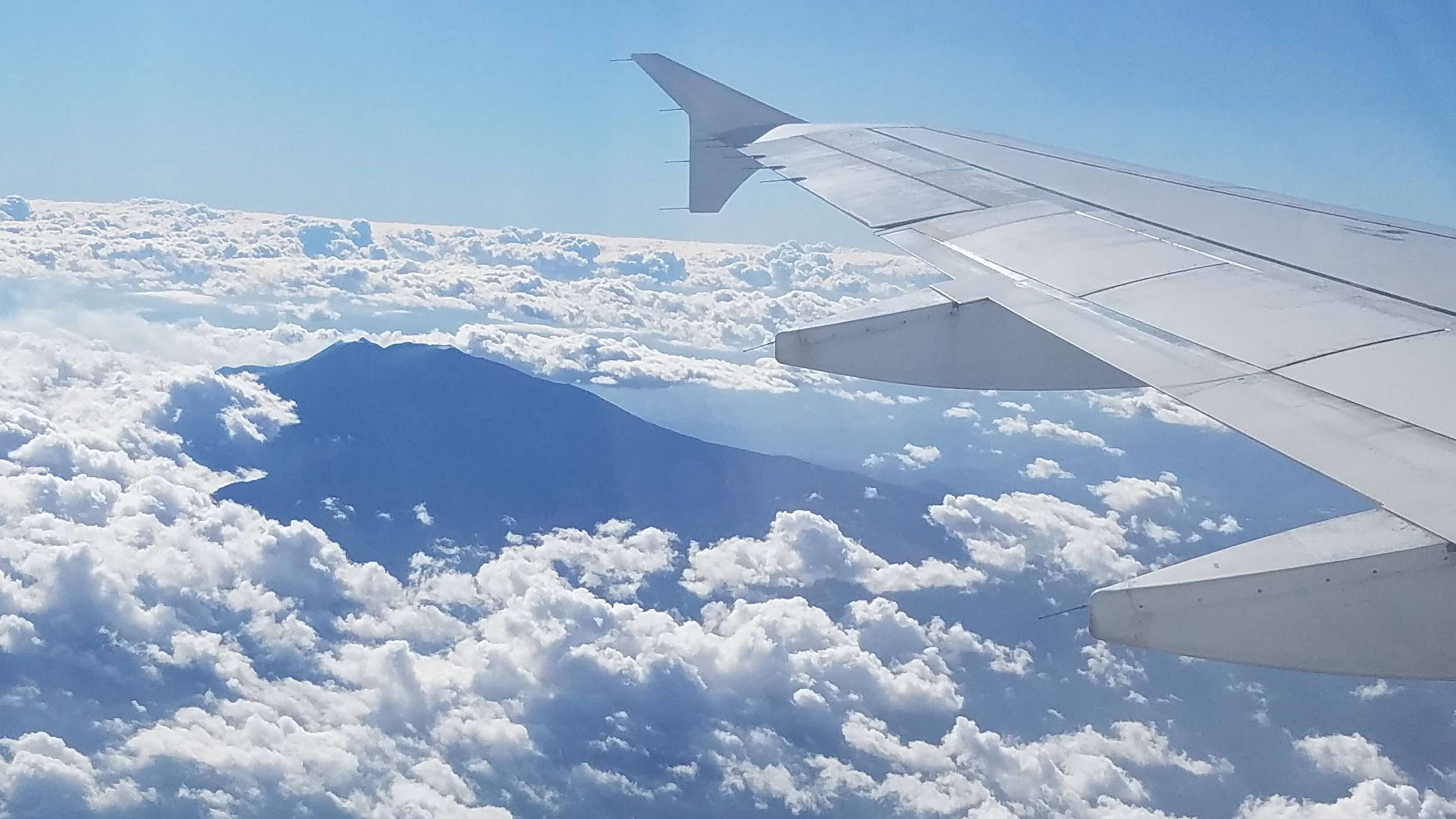
These are last of my photos I plan on posting on Veracity about the trip my wife and I took to Europe in 2022…. while I was in Sicily towards the end of the adventure, she was off in Venice with a friend…where unfortunately, the food was NOT as good!…. Oh, and about Mount Etna….. While in Sicily, I never got to see the top of the volcano, due to the rain and cloud cover. But on the flight out, I managed to be sitting on left side of the plane, which gave me a breathtaking view of the legendary volcano, at its very top. Enjoy!


APPENDIX:

Found a fun link here on Twitter. A museum in Hamburg animates Caesar Augustus singing “California Dreaming.” Augustus visited Sicily in 22 BCE.

Nachts im Museum: der römische Kaiser Augustus in der Ausstellung im Bucerius Kunst Forum in Hamburg.


Culture Clash: Christian, Secular and Soviet Influences In Eastern Europe

During our trip to Europe in 2022, I was particularly struck by the clashes of culture, particularly in cities like Budapest and Prague. For example, there are beautiful churches in Budapest and Prague. For the most part, churches rise above the skyline, a testimony to the time in Europe when Christianity dominated the cultural scene.

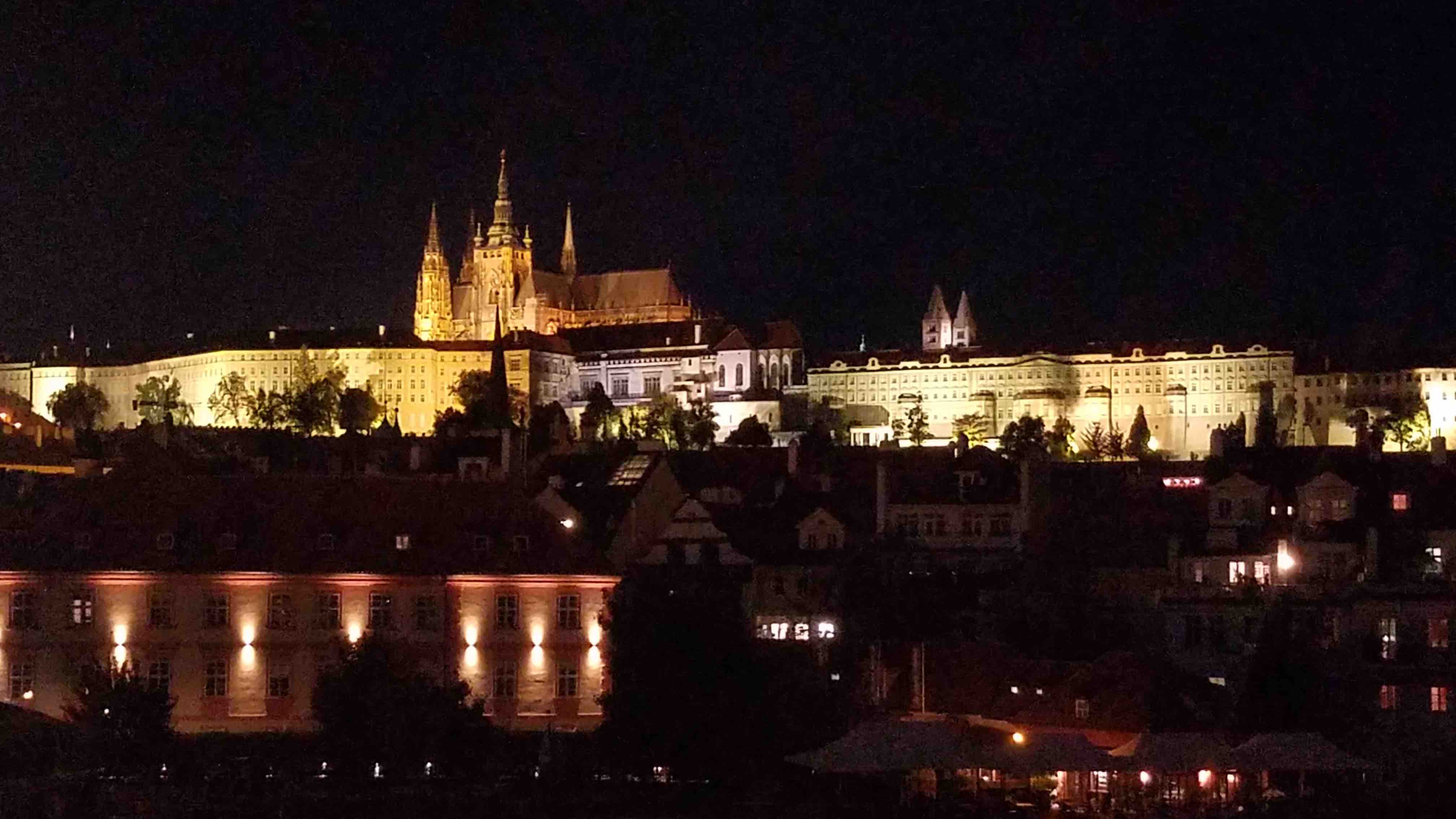
St. Vitus Cathedral, in Prague, Czech Republic, rises above the grand beauty of the Prague Castle at night, a testimony to the Christian era of the Middle Ages.

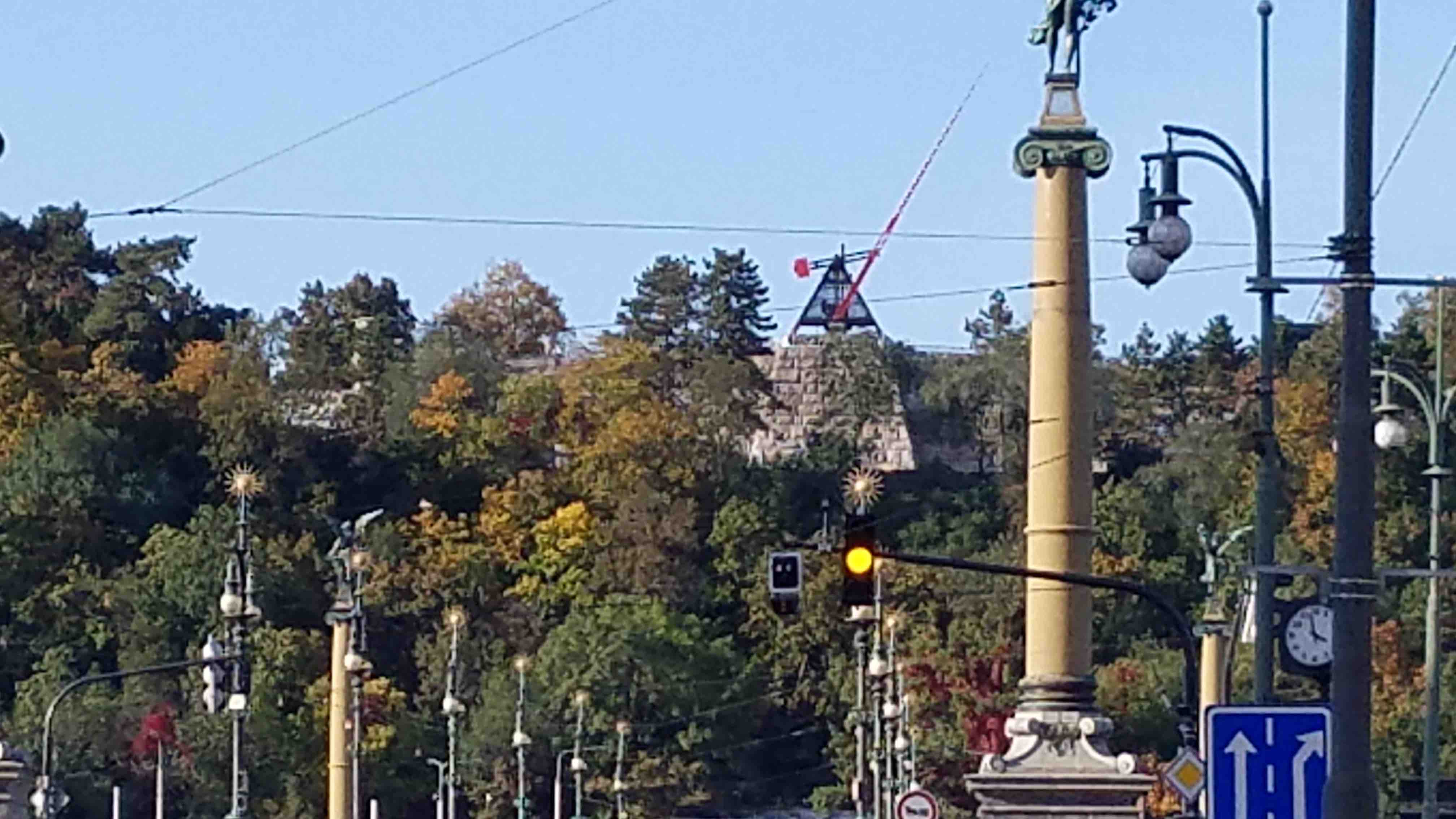
For example, in Prague, St. Vitus rises above the city in grandeur. I snapped the above photo on a beautiful moonlit night, with the spires of St. Vitus stretching upwards towards the sky overlooking the city. In a previous blog, I posted a photo of the interior of St. Vitus, lit up in the afternoon sunlight streaming in through the stained glass windows filled with Christian art. But less than a mile away, the Prague Metronome stands out for display, but with a different message. The curious history of the Prague Metronome is summarized by a plaque at the metronome’s base that reads, “In time, all things pass…”.

You have to know a little history to get the reference. In the mid-1950s, the Soviets installed a massive granite statue to honor Joseph Stalin. Stalin had grown up in the Russian Orthodox Church, and even spent some time studying in a seminary to train as a priest. However, as an adult, Stalin became a fierce opponent of Christianity. But his hatred of Christianity was eclipsed by his reputation for instilling terror and murdering millions. The monument was the largest statue of its kind in Europe until it was demolished in late 1962. It was so big and bulky that it took 1800 lbs. of explosives to take it down, and the Metronome took its place in 1991, after the decline of the Soviet Union.

To get an idea at how unpopular the Stalin statue was, you would have to know that the sculptor, Otakar Švec, killed himself just a few days before the statue was unveiled to the public. Otakar Švec was so horrified by his own creation, that he chose suicide over the humiliation of seeing his statue unveiled before his fellow Czech neighbors and friends. Strangely enough, the Czech Communists went forward with statue unveiling, only to begin the process of de-Stalinization shortly after the statue’s debut.

The Prague Metronome is a repudiation of Stalin’s ideological fanaticism, but I doubt that it is symbolizes a return to Christianity. Today, around 72% of all Czechs in the Czech Republic describe themselves as being “unaffiliated” when it comes to the Christian faith, the highest level of atheism/agnosticism of any country in Europe. On the bright side, at least there is more religious freedom in the Czech Republic now than there has been in recent generations.

The Prague Metronome took the place of the very unpopular Stalin monument. It was hard to get a closer photo of it, but if you click on the photo, you make it out better, rising just above the hill.

A similar story surrounds the “Liberty Statute” in Budapest, erected by the Soviets to celebrate the liberation of Budapest from Nazi Germany, but which was later reconfigured after the failed Hungarian Revolution of the 1950s that tried to oust the Soviets from power (see photo further down below).

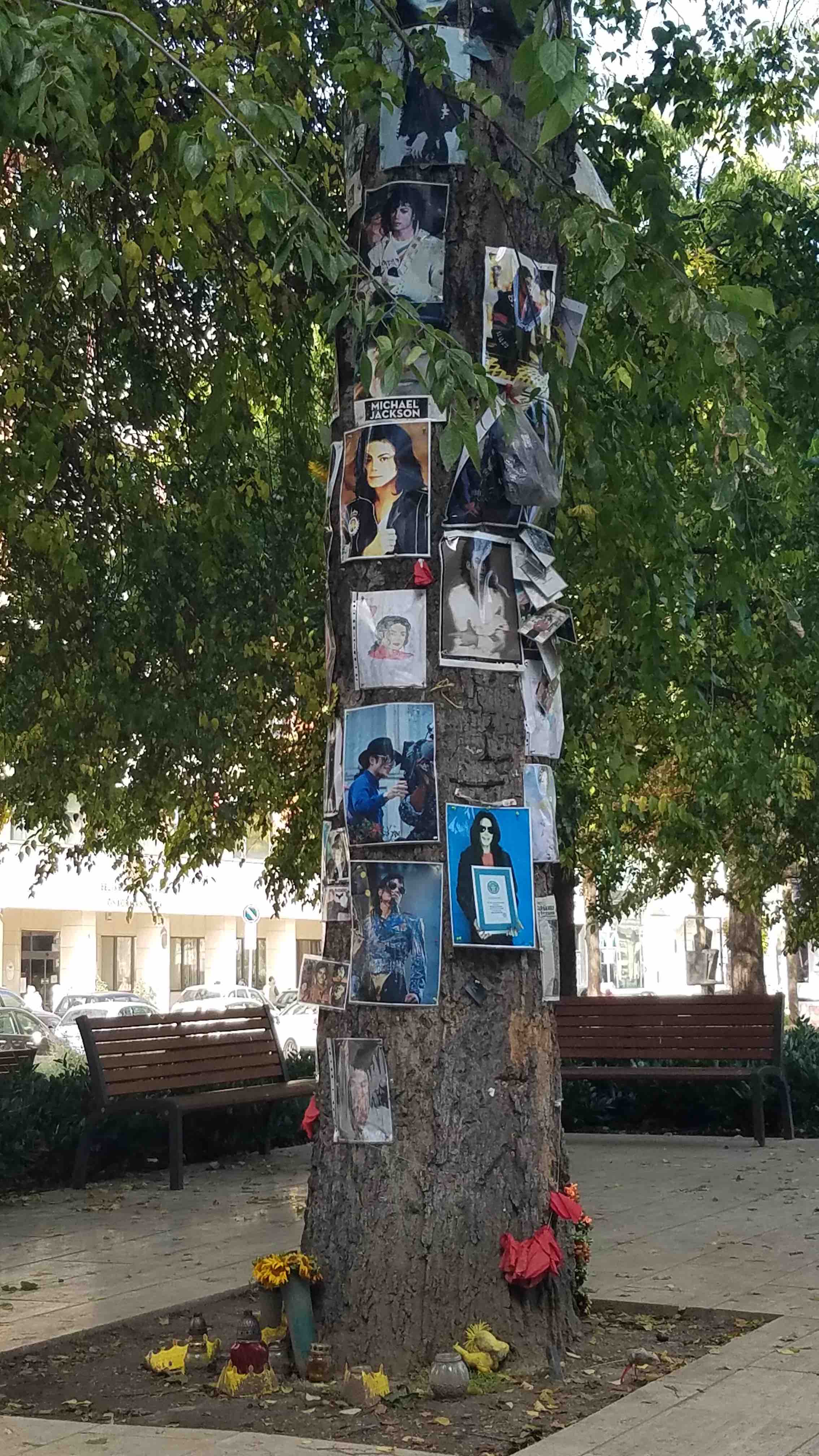
But the specter of failed Marxist experiments are not the only signs of secularization in Eastern Europe. In Budapest, a shrine for singer/songwriter Michael Jackson was erected across the street from the hotel he used to visit, shortly after his death a few years ago. Just a block or so away from the Michael Jackson shrine is the first McDonalds fast food restaurant that opened up in the late 1980s, as the Soviet Union began to fall apart.

Michael Jackson shrine in Budapest.


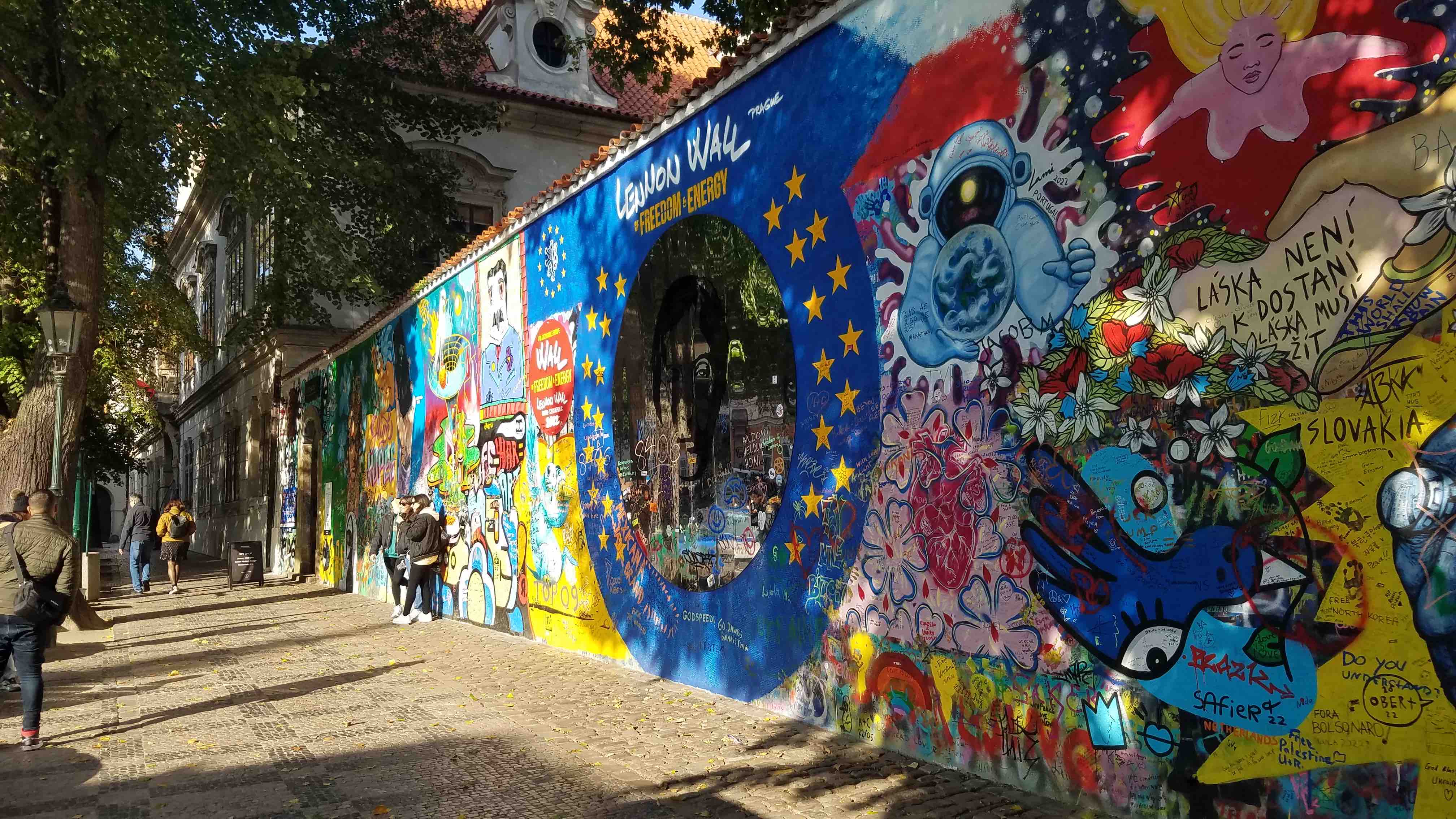
Prague has its own pop-culture shrine, the so-called Lennon Wall, just down the street from our hotel, in honor of the fallen Beatles member, John Lennon. It is just weird to think that a mentally disturbed, suicidally obsessed, American Christian college dropout, Mark David Chapman, murdered John Lennon in 1980, catapulting John Lennon into secular martyrdom status. The iconic martyrdom status of John Lennon, marked by the graffiti painted on the Lennon wall, far supersedes the memory of another fallen Beatle, George Harrison, who was known for his conversion to Hinduism. Lennon wrote the song, “Imagine,” which is often regarded as a stinging critique of organized religious faith of any kind.

The Lennon Wall, in Lessertown, in Prague, Czech Republic. As I stood around the wall taking photos on a nice fall day, several groups of Beatles lovers would drop by and take photos of themselves in front of this wall.


It makes me wonder what the future of Europe will look like. Will Christianity ever return and dominate the spiritual life of Central Europe? Bible-believers are surely scattered all over cities like this, but they are generally few in number. Pray that they will have the courage to witness for Jesus, and be beacons of hope in such cities that have lost much confidence in Christian churches. Pray that the people of Europe, in places like Hungary and the Czech Republic, who have endured such suffocating ideological oppression, would become more open  to the Gospel.

I will close out this photo essay with some of my favorite pictures of Europe that I took during our trip. Europe can be stunningly beautiful:

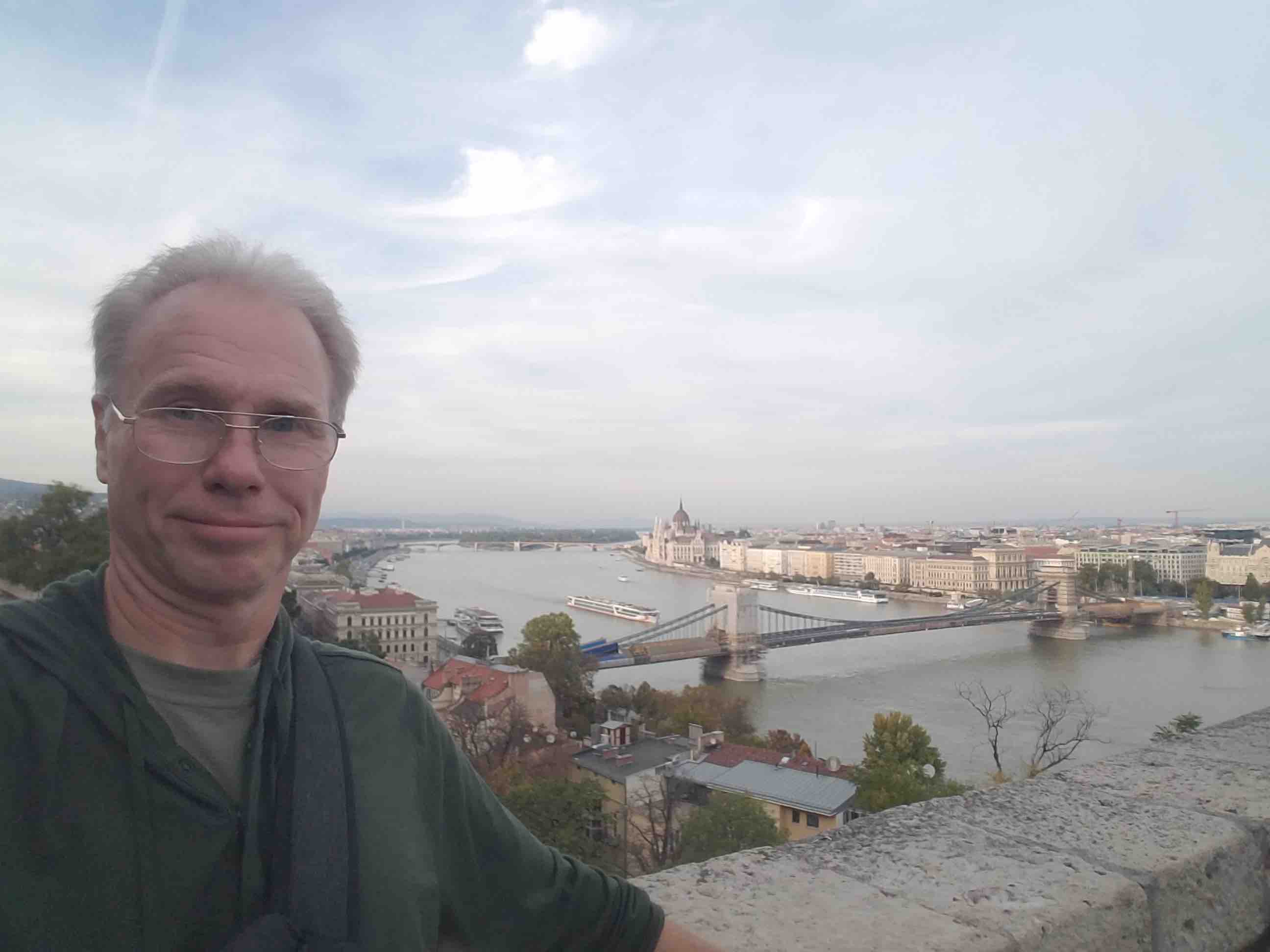
Overlooking the Danube, from Buda Castle, in Budapest. The famous parliament building stands at the center.


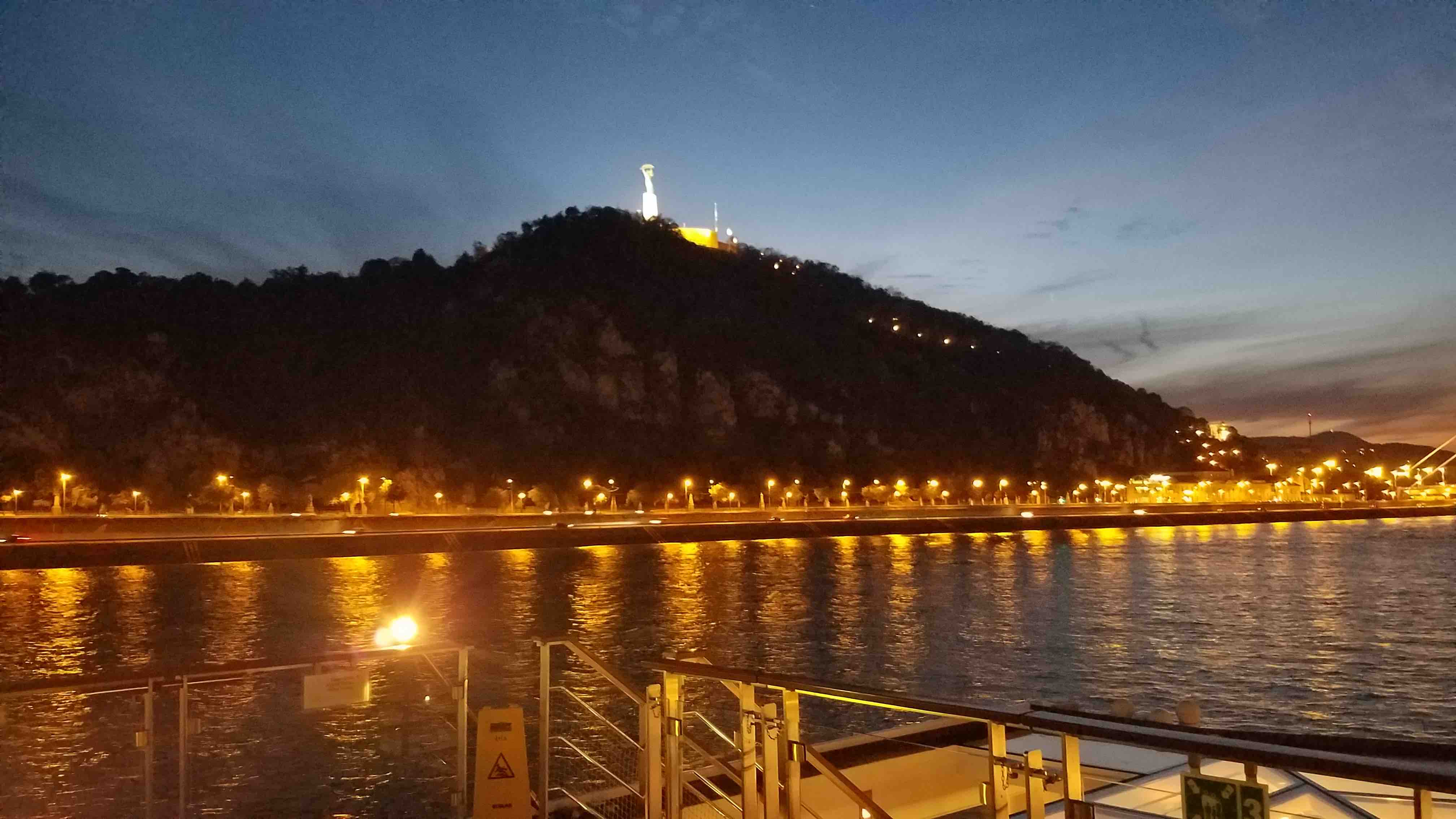
Evening in Budapest, highlighting the hill where the Soviet’s erected the “Liberty Statue.” Unfortunately, I could not get a closer picture of the statue because the park where the statue is located was closed for renovations. Many locals in Budapest refer to the “Liberty Statue” satirically as the world’s largest bottle opener.


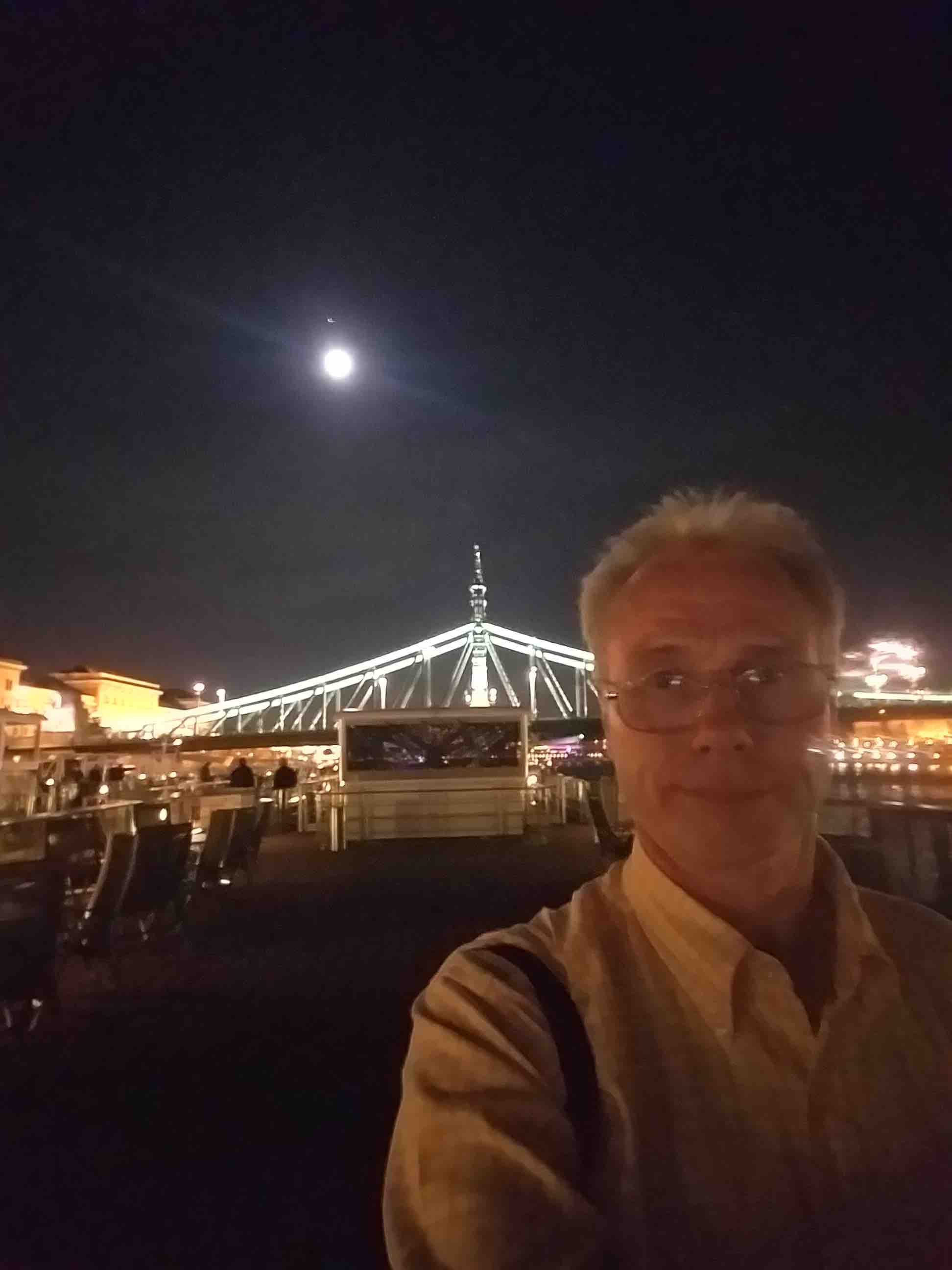
Full moon, on the Danube, in Budapest.


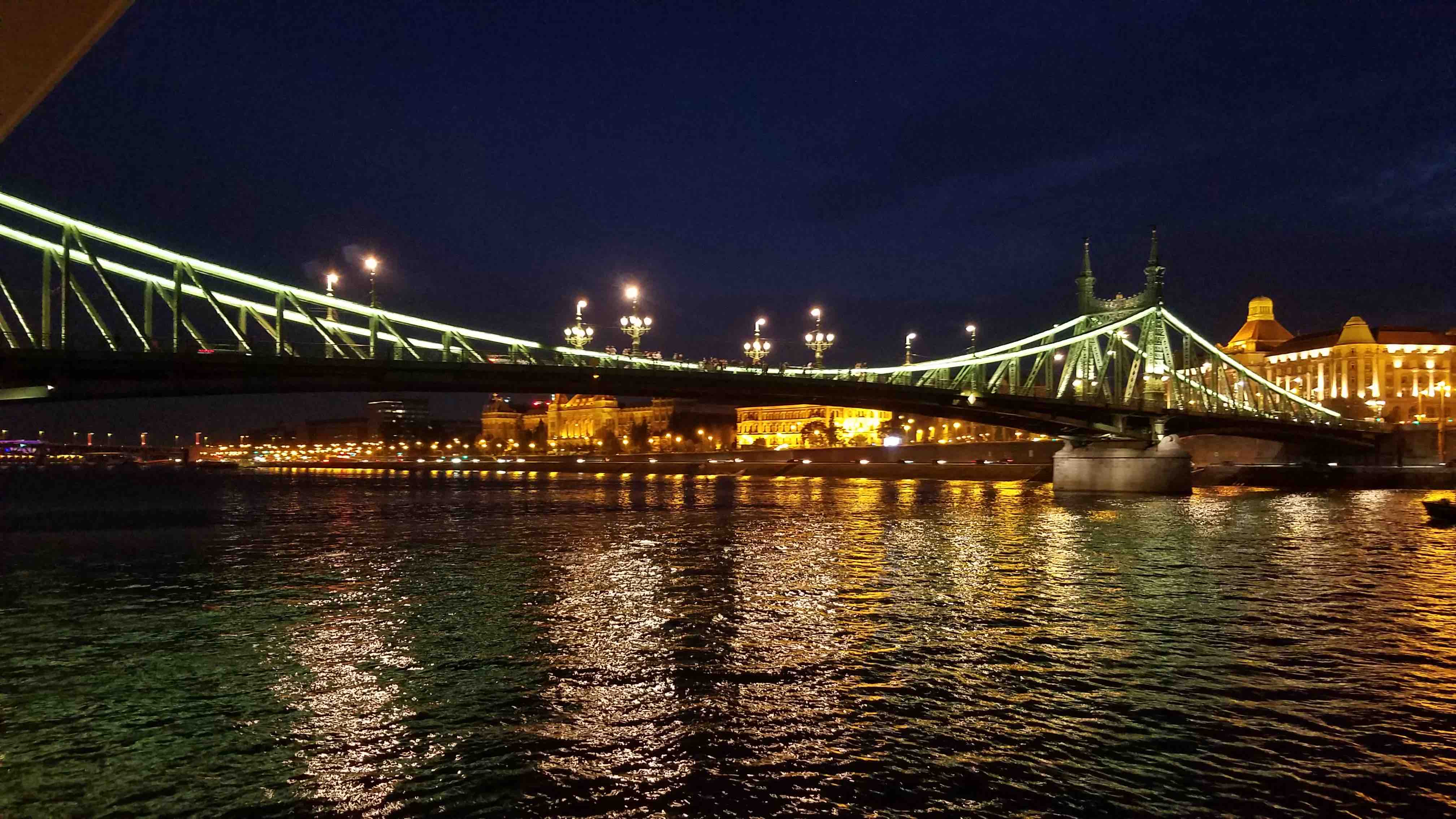
Nothing beats the look of Budapest and the Danube at night.


Christendom Under the Habsburgs in Vienna

In the days when Martin Luther nailed his Ninety-Five-Theses to the church door in Wittenberg, the Holy Roman Empire was the greatest unifying force in all of Western Christendom, under the Emperorship of Charles V. Despite various attempts to heal the rift between Roman Catholics and Protestants, most notably at a meeting (Diet) in 1541 at Regensburg, Germany, the theological split in Europe put the Holy Roman Empire under severe stress.  By 1648, some 130 years after Luther’s protest at Wittenburg, the unity of the Christian West in Europe lay in tatters. What superseded the Holy Roman Empire was the emergence of a single royal family headquartered in Vienna, Austria: the Habsburgs.

My wife and I spent two nights in Vienna during our trip to Europe in 2022. The presence of the Habsburgs’ influence could be felt everywhere.

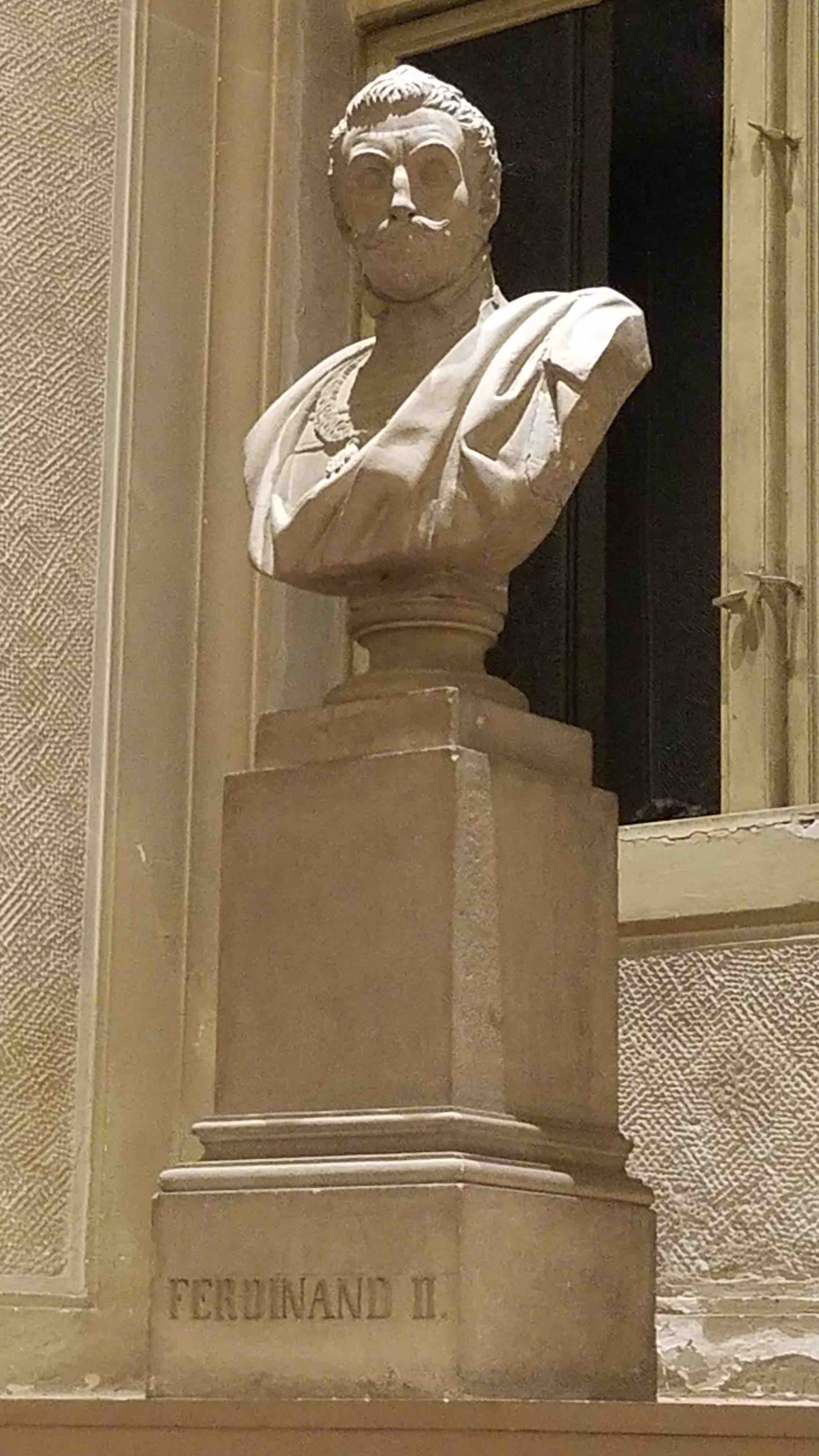
Bust of Ferdinand II, a leading Habsburg and Holy Roman Emperor from 1619 to 1637, during the Thirty Years War. Photo taken in Vienna, Austria.

The Habsburgs left Europe a checkered legacy. The Thirty Years War, which ended in 1648, had divided Central Europe into many autonomously governing districts. But the Habsburg family remained the primary power broker in the region, adored by some, despised by others. On the one hand, what emerged from the 1648 Peace of Westphalia was a renewed effort to reinvigorate the Roman Catholic Counter-Reformation in the various lands ruled by the Habsburgs, and their networks of ruling families, particularly in lands surrounding Vienna, Austria. Along with that renewed Catholicism came the suppression of Protestantism, particularly in Bohemia, and its most prominent city, Prague.

The Habsburgs managed to rule a large chunk of Europe until its final breakup, at the end of World War One. Names like Ferdinand, Leopold, and Maria Theresa pepper the family tree and made their mark on the world (it is a rather complex family tree!). Staunchly Roman Catholic, they were great patrons of the arts. Names like Wolfgang Mozart, Franz List, and Ludwig van Beethoven all gained measures of support from the royal family.

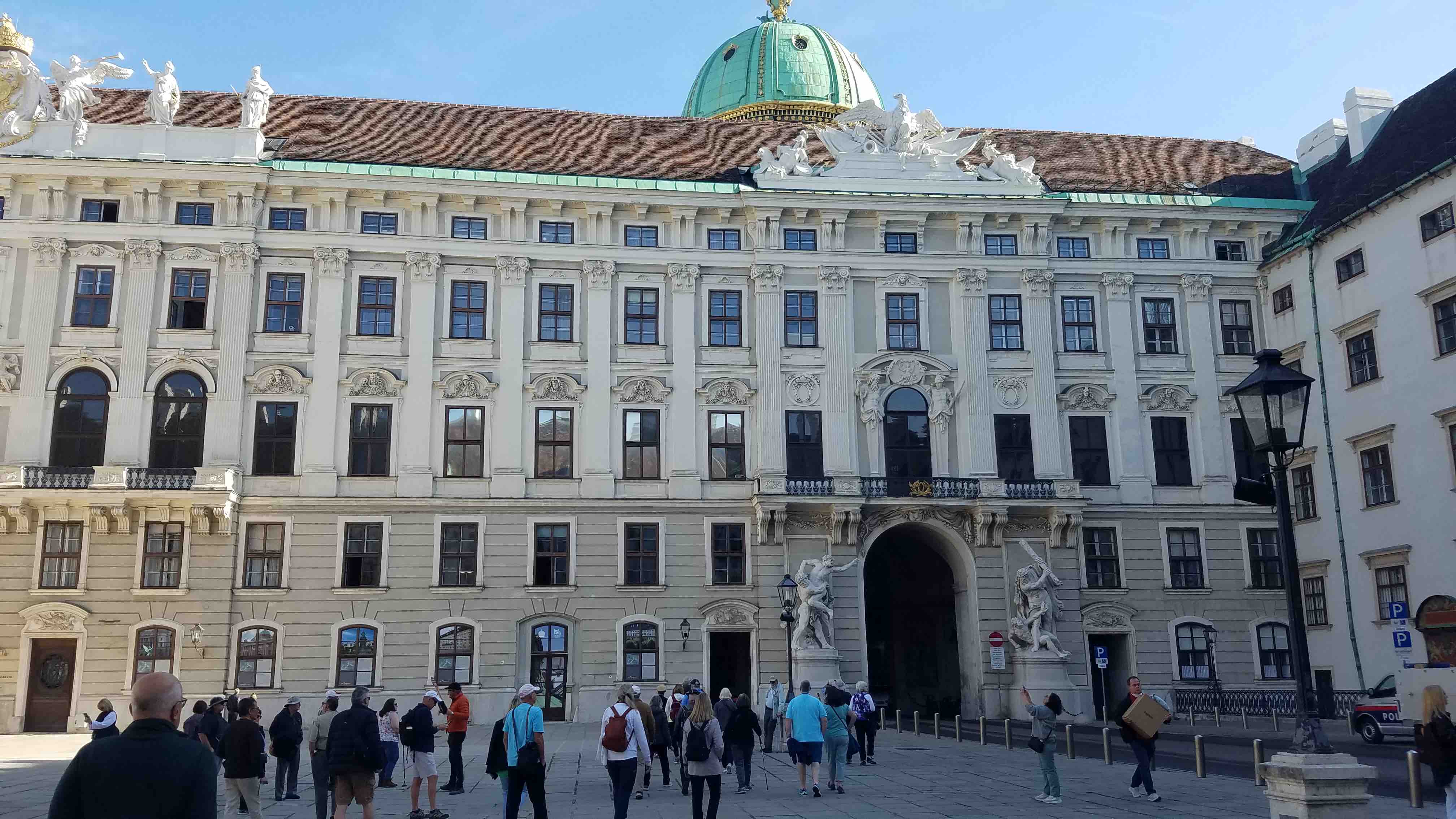
The royal family built some of the most impressive buildings and estates in Vienna. The standout features are the Hofburg Palace, the Habsburg winter estate near the city center of Vienna, and the Schönbrunn Palace, their summer estate on the outskirts of Vienna, both of which were on our tour.

Part of the Swiss Wing of the sprawling Hofburg Palace estate. Vienna, Austria.

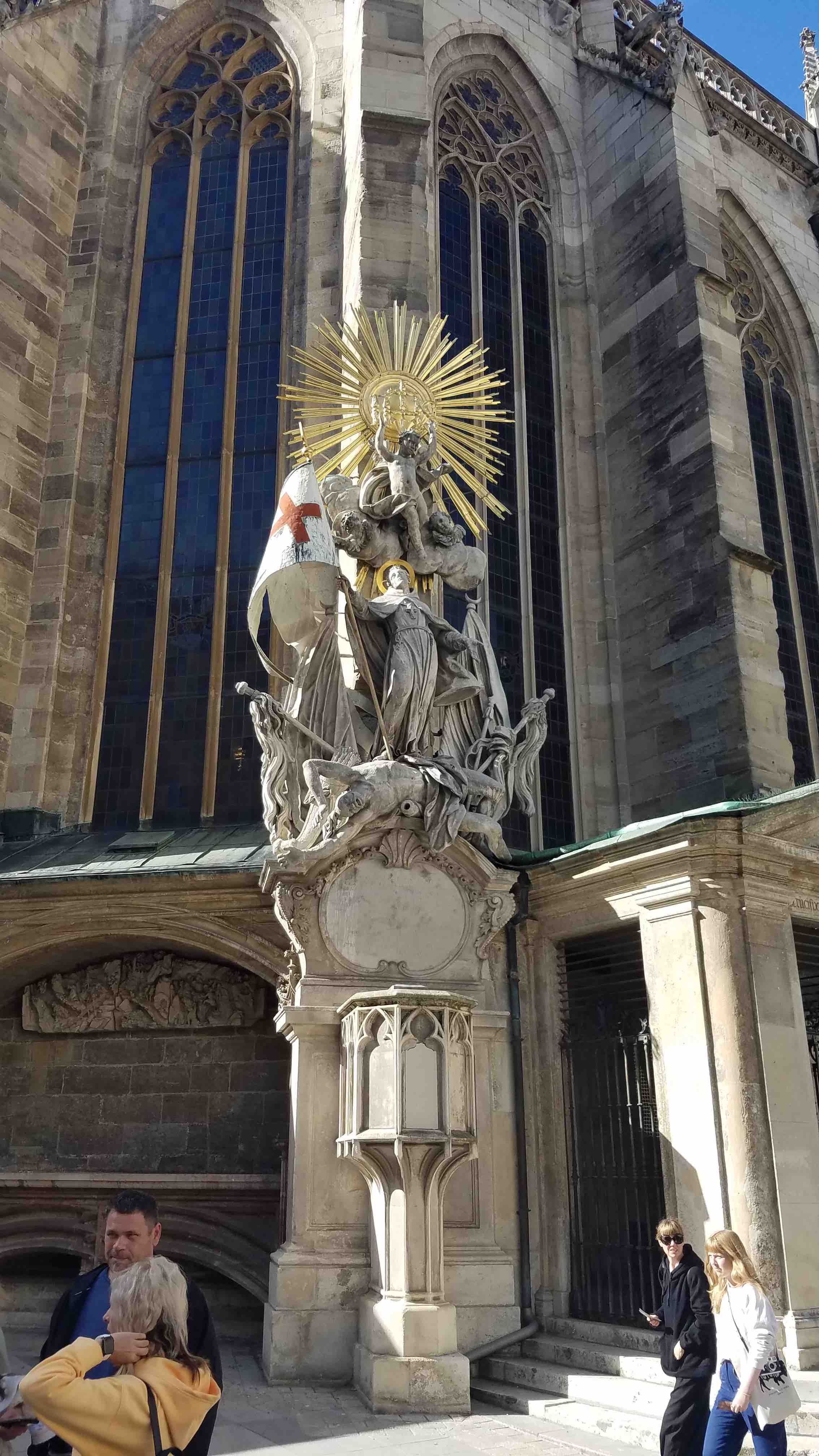
The Habsburgs also formed the greatest line of defense against invasion from the Turks, from the Islamic East. For several hundred years, on and off, the Turks laid siege to Vienna, seeing that this city on the Danube River was the gateway to Western Europe. But in 1683, the last and greatest siege was broken, and the Turks were driven back to their territories around Istanbul, in modern day Turkey. In the wake of the upheaval of World War One, the situation is much different now, but the signs of the medieval Austrian/Ottoman conflict remain. At St. Stephens’s Cathedral, one can look up one of the spires and find a cannon ball lodged in the stone, a memory recalling the great battle that took place on September 11, 1683 (Unfortunately, the ball is up so high, I could not get a good photo of it)….. For the curious, the date of the attack on the World Trade Center, in New York City, on September 11, 2001, was not picked by accident. It was intentionally set on that date to recall the events from this final siege of Vienna, centuries ago.

Capistran Chancel, outside of St. Stephen’s Cathedral, Vienna, Austria. A Franciscan friar under an extravagant sunburst, trampling on a beaten Turk, in response to the 1456 crusade. The Turks made numerous attacks against Vienna until 1683, when the Turks were finally repelled during the last great siege of Vienna.

What was most interesting about our recent trip to Europe was the different responses I got from tour guides when I asked about the legacy of the Habsburg family. In Vienna, glowing reports about the Habsburgs were mentioned as we toured the various palaces that the family owned. In contrast, in Prague, the name of the Habsburg family was largely synonymous with oppression.

Today, with few exceptions, glorious monarchies like the Habsburg family are pretty much a thing of the past. Along with the decline of such monarchies, the Christian influence that animated the spiritual life of the family and their supportive subjects, or infuriated those who despised their enforcement of their religious convictions, has been effectively replaced by secularism. For example, in nearly every church in Vienna that I visited, curious tourists far outnumbered reverential worshippers. Love ’em or despise ’em, the Habsburg family has left a multiple centuries long influence across Central Europe.

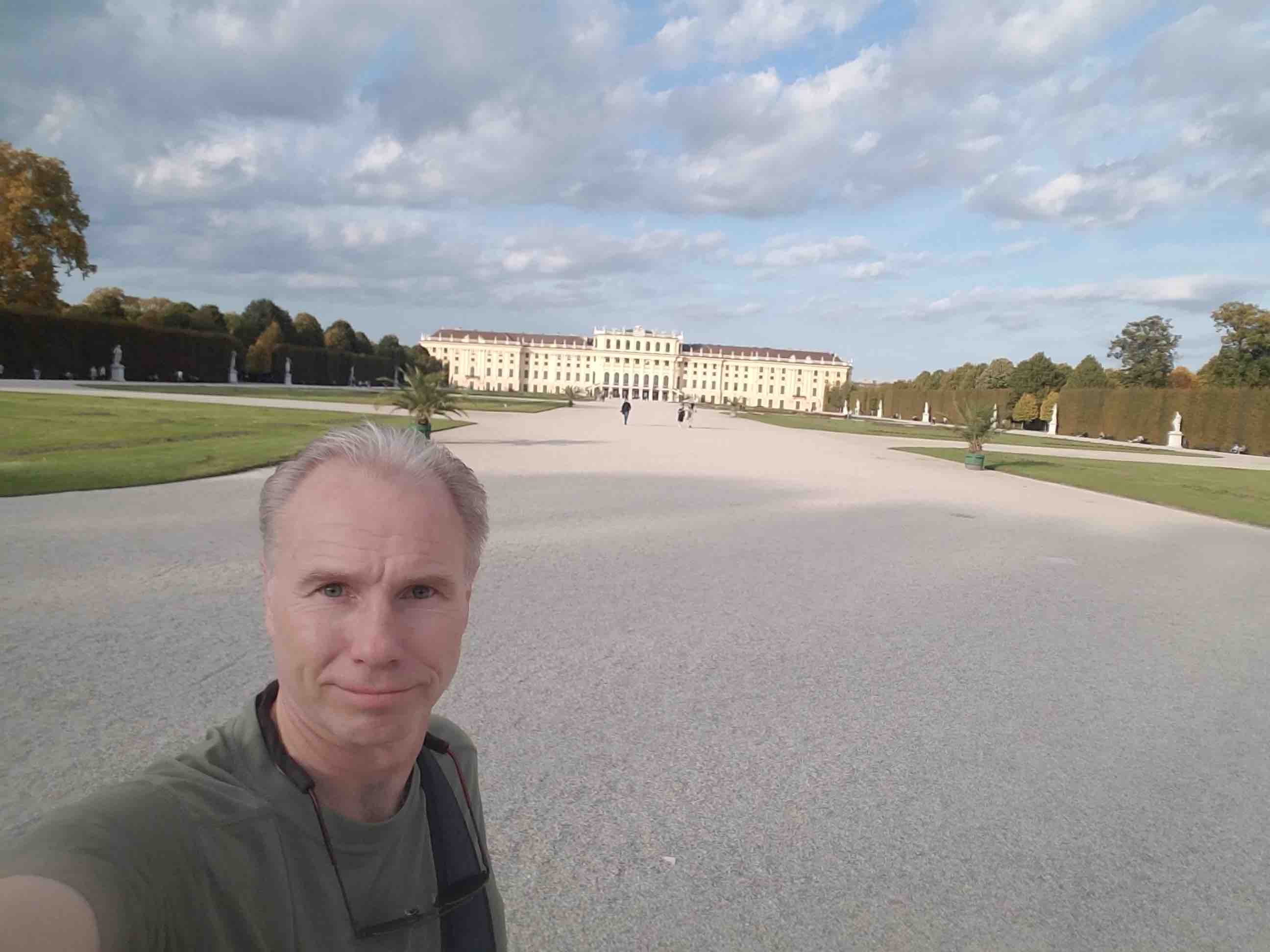
The rear view of Schönbrunn Palace, from the far side of the expansive gardens.

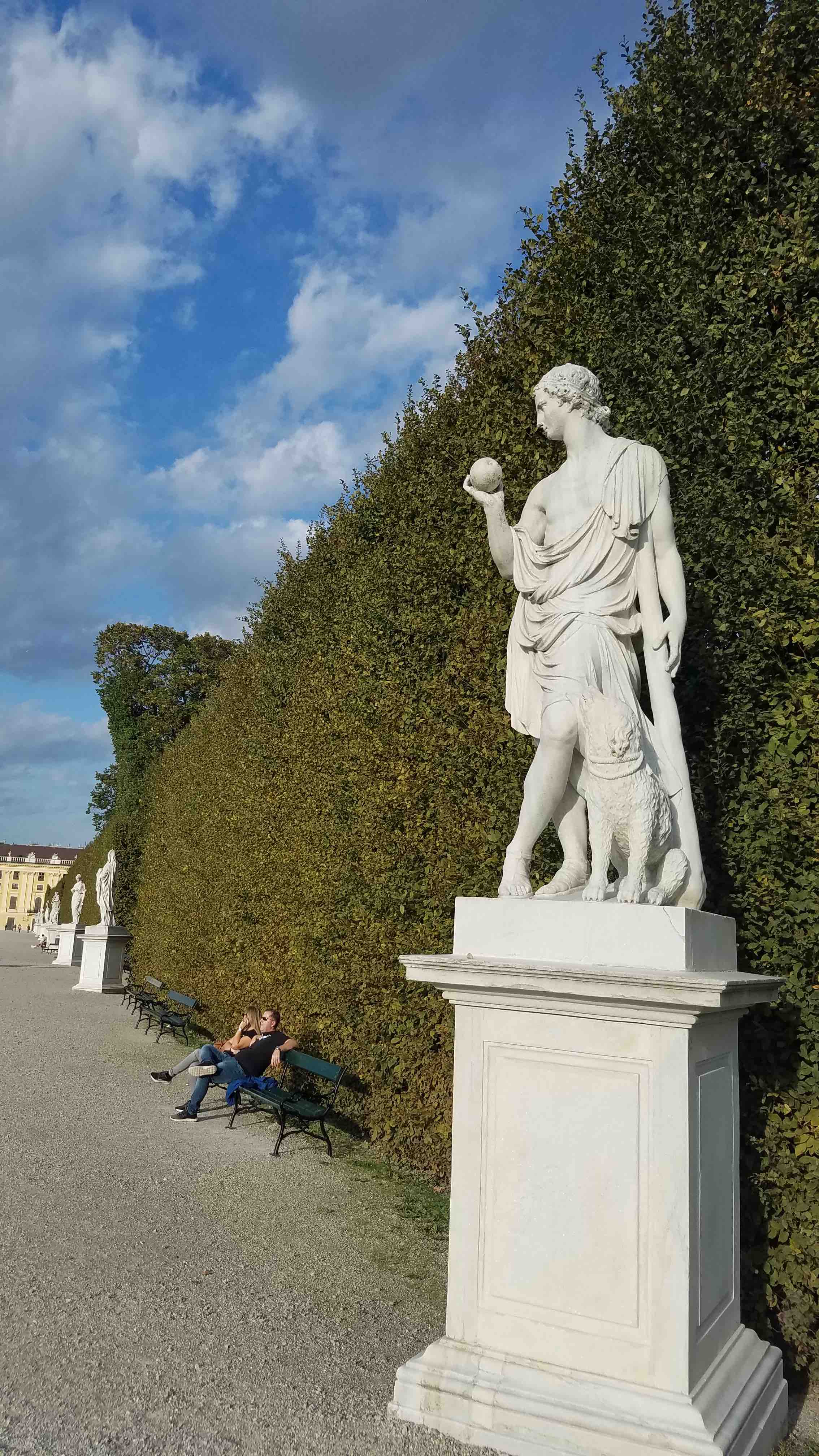
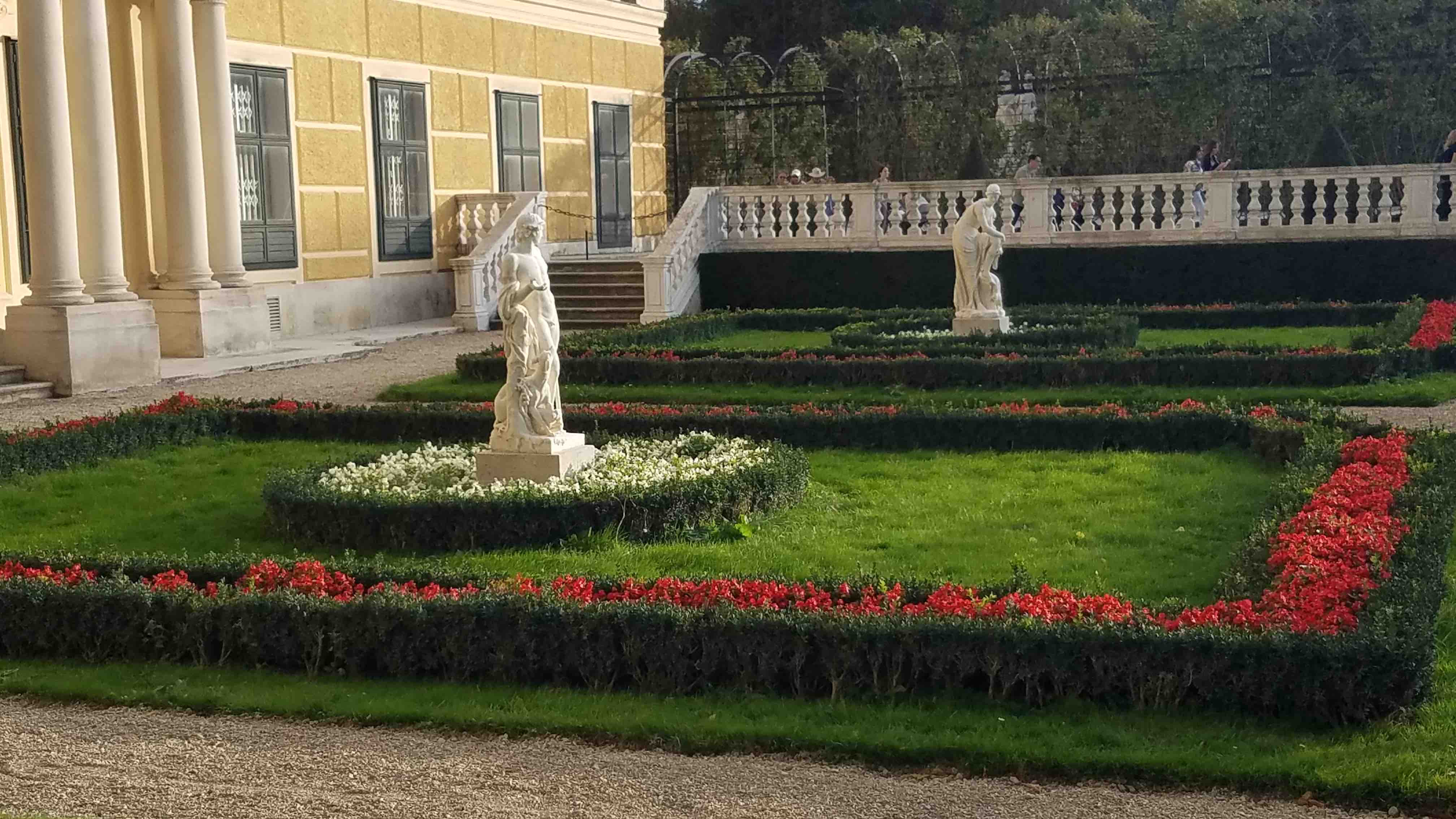
Yet despite the conflicted legacy the Habsburgs’ left, they knew how to build some immensely grand buildings, and beautiful gardens to surround them, particularly at the Schönbrunn Palace.