Category Archives: Topics

Reflections on Seven Years of Internet Blogging

Time flies, when you are having fun.

When John Paine first invited me to write an article for the Veracity blog seven years ago today, I never would have thought it would become a regular thing that would last more that a few weeks, and a couple of blog posts. Nearly seven years, and hundreds of posts later, I would like to offer a few reflections over what I have learned during that time period.

A lot has happened during these past seven years. Think about it….

Veracity Blavatar

Let’s see….

  • A member of the Church of Jesus Christ of Latter Day Saints became a major contender for the office of President of the United States. Who would have thought?
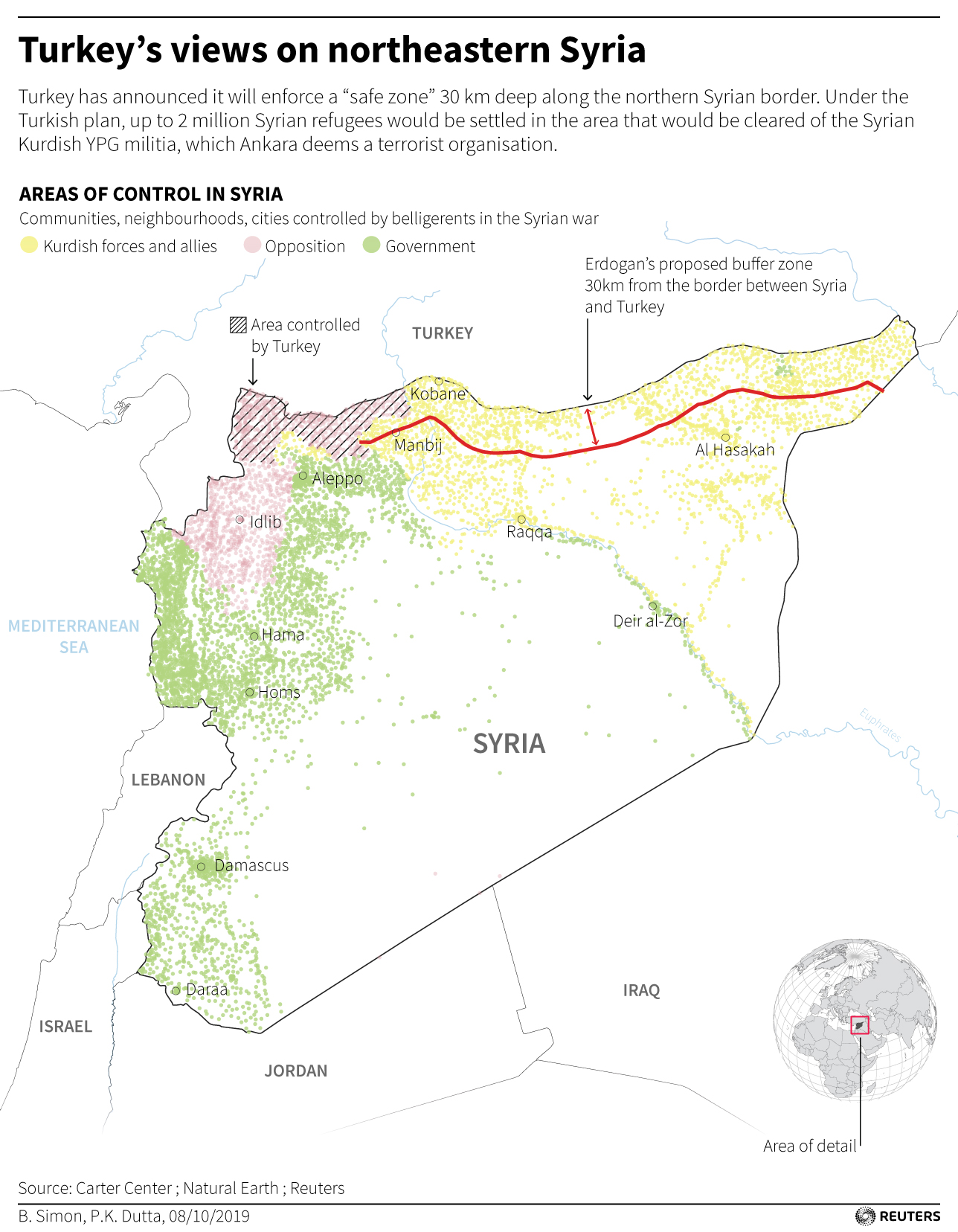
  • A fundamentalist Islamic State took over a large portion of the Middle East, triggering a massive emigration of some 4 million Syrians towards other countries of the world, including some of the most violent executions of Christians, ever witnessed in the history of the Christian church.
  • While Protestant evangelical, Bible-believing scholars and seminaries continue to be divided, as has been the case since the 1970s, over the question of having women serve as elders in local churches, the number of local churches that have declared themselves to be “complementarian” (against women as elders) vs. “egalitarian” (for women as elders) continues to threaten to split the evangelical movement, at the local level.
  • Two of the world’s most visible figures, in matters of faith and science, debated one another: Young Earth Creationist leader, Ken Ham, and Bill Nye, the Science Guy, a popular educator, with agnostic/atheistic leanings.
  • Liberal Protestant Christians started confessing their sins…. to plants.
  • Social media took over the world, as more and more people gained immediate access to the Internet, through affordable SmartPhones.
  • Evangelist Billy Graham died.
  • While Americans have become more electronically connected with one another, than ever before, American society has become more divided than ever. Same-sex marriage became acceptable as the “Law of the Land,” in the U.S., and countries all over the Western world followed suit. The topic of transgendered identity has people wondering what type of personal pronouns are acceptable, in school and workplace conversations.
  • A reality television star became the President of the United States.
  • The Chicago Cubs won the World Series.

Me? I started writing on a Christian apologetics blog.

What on earth was I thinking?

Why Write For a Blog, Anyway??

John Paine urged me to start writing, partly because John and I both have a passion for teaching, and this would be something fun we could do together. We also both believed in the importance of providing excellence in content, that upholds the authority of Scripture and an openness to the evidence, both mutually affirming ideas. Nearly 800 blog posts later, that tradition continues.

My other personal thought was that blogging would be a good way to publish material I could use in Adult Bible Classes, to get content easily out to students, without having to waste countless hours, trying to print stuff off on our church’s Xerox machine.

I do not need any more paper… and neither do you. That’s one good thing about the Internet.

Veracity Blavatar

I still find the blog useful for that purpose, but it has become something more than that. It has become partly a vehicle for discussion, and partly a form of spiritual discipline, kind of like keeping an on-line “spiritual journal.” There is a great community of faithful readers here, though most of them are occasional lurkers, who rarely comment. But when they do, the interaction is always edifying and encouraging…. and I really mean that. Thank you, folks!

What It Is Like Writing For A Blog

Some ask me, “Where do you find the time?” What most people do not know, is that over the past 30 years of online computing, and in pursuing a degree at a theological seminary, I have amassed a large collection of notes, research papers, and half-finished emails. Seriously. What was I going to do with all of this stuff?

Thankfully, I can cut-and-paste like nobody’s business. Now, I finally got rid of a lot of those printed out notes, and other old digital clutter, and have organized it better, which benefits me, and hopefully, you, the reader.

I confess that I will cut some corners, to save time, on a number of blog posts. I try to link to and footnote references where I can, but they do not always make it into the final draft. The proofreading gets shortchanged a lot, and as my wife has told me (gently) on numerous occasions, it is clearly evident that I am a computer engineer and not an English major!!

I need an editor.

I know that.

But frankly, this is the nature of blogging. The goal here is to informally stimulate thought and discussion, and not to write formal journal articles or books for publication.

Let the professionals have at it. They do a much better job with it anyway.

The most successful bloggers, like Tim Challies and Justin Taylor, spend countless hours honing their craft. Me? I have a day job.

But let me get back to the question: Why blog in the first place?

Well, believe it not, the Internet is here to stay.

The Internet, Digital Revolution and Its Lasting, Deep Impact on Christian Faith

The Internet has done for the theological chaos of the 21st century what the printing press did for the Reformation in the 16th century. While blogging platforms will not completely replace the printed book, the sheer convenience of online media is causing other forms of information sharing to decline.  But just as movable type broke the hegemony that the official medieval church enjoyed for so long, technology from Google, Apple and Facebook will continue to spread information around, chopping ideas up in bits and pieces, making it increasingly difficult to maintain consensus among believing Christians (Some think that the Internet is making us more stupid, but that is another topic, for another time).

Furthermore, it seems like the digital world keeps shifting all of the time. Blogging has not gone away, but it has less appeal seven years since I started writing, now that the novelty of quick, easy Internet access to information has worn off. These days, even parents are issuing SmartPhones to their kids, sort of like a right of passage, on the way towards adulthood, kind of like how it was when my parents allowed me to get a driver’s learning permit, back some years ago. Teenagers today are more likely to use phone texting and Instagram, and less likely to use email, on a regular basis. They only read blogs, if they subscribe to them, or if someone links them to a blog article, if cited on a social media platform.

In fact, for “GenZ” folks, young people who have grown up in the online era, following 9/11, platforms like Snapchat and Instagram have become the primary means of communication for this age group.

It makes it really difficult to keep up with all of the changes.

I should know about these things, as my day job is that of working as an Internet Service Provider, at an American university. “Looking up things online” was once a novel curiosity. Now, it is a fundamental part of modern day communication, an essential for many in corporate and personal life.

I keep imagining what it would have been like if Martin Luther had the Internet at his disposal. Mmmm…. Would he have posted his Ninety-Five Theses on his Facebook page? Would he have tweeted out his view of “sola gracia“; that is, salvation by grace alone, on his Twitter account? Would the Protestant Reformation have turned out a bit differently?

The impact of social media, and the Internet in general, has had the greatest negative impact on young people. When I started doing youth ministry in the late 1980’s, surveys in those days suggested that 85% of all Christians made commitments to Christ before the age of 18. According to apologist J. Warner Wallace, some 30 years later now, that percentage has dropped to 12%.

Think about that for a moment.

Less and less young people, growing up in evangelical churches today, are making commitments to Christ, before they leave high school.

Skepticism about Christianity some 30 years ago, generally started to kick in when young people went off to college. Now, skepticism about Christianity starts to kick in somewhere between the ages of 10 and 17, for most kids growing up in Christian homes.

That is bad news for sure, for Christian parents, as by the time kids enter the age of middle school, they have learned how to use Google. The good news is that Christian parents and church leaders still have at least some influence on children, while these young people are at home. Parents are still the number one bulwark against the acidic corrosion of those elements that seek to undermine Christian faith, in the lives of their children. Yet sadly, most Christian parents are woefully unprepared to help their kids to learn how to defend their faith, in an online world.

Evangelical Christians have both an opportunity and a serious problem, in the digital era.

Our insatiable interest in gathering information, in an Internet age, has yielded two, major significant results. The first is really good. The second is really bad: First, it has given Christians access to the best research, scholarship, and quality Bible teaching, at the click of a mouse. What was once the domain of stuffy Bible scholars and nerdy theologians, locked up in seminaries, is within reach from your SmartPhone. 

A plentiful wealth of educational helps is readily available to the average Christian, more than any previous generation, in the history of the church, all right at our fingertips. Such excellent Christian content, all made possible by the worldwide access to Internet, is allowing believers to reach more and more people than ever before, with the Gospel of Jesus Christ.

We can praise God for that!

Secondly, … and this is the downside, … the average Christian’s ability to discern truth from error, in the era of the Internet age, has increasingly gone downhill, as unvetted information continues to come across daily on our phones, and other computer screen devices…. and most local churches do not have much of a clue, as to how to help their local flock of believers navigate the mess.

As a result, less and less evangelical, church going people read their Bibles, and therefore, know less and less of what the Bible actually teaches.

The contemporary chaos of social media is particularly difficult for an evangelical Protestant, such as myself, as Protestants have no teaching magisterium to appeal to, in order to try to resolve theological disputes and controversies. In this sense, I do envy my Roman Catholic and Eastern Orthodox friends, who do not have this problem. Well, perhaps the problem is lessened in those traditions, as they have a stronger sense of community authority, as compared to the relatively free-for-all world of Protestantism.

For us evangelical Protestants, it often comes down a preacher’s ability to take the Word of God, and make their best case towards an audience who might listen, trusting that the Holy Spirit will make things clear to them, and move their consciences towards thinking, saying, and doing the right things.

This was once done through sermons, in front of a live audience, supplemented by books, and radio, and perhaps television. Those rules have drastically changed in the post-Christian era of the Internet. Today, it really helps to have a Twitter account, and some means to propagate compelling content to a reading, listening and viewing audience, through podcasts and online video.

Will “Internet Blogging” Continue to Flourish, In the Coming Years?

Here is my approach: I am an advocate of what some might call the “longform” blog, best represented and championed by the folks at Mere Orthodoxy. I get more out of one, well-articulated article, than a bunch of quick reads, that you can easily forget in 5 minutes. As a supplement to reading Scripture, I much prefer reading a thoughtful, challenging essay at Christianity Today, The Gospel Coalition, or First Things, as opposed to reading a daily entry from Our Daily Bread, or a page from My Utmost for His Highest, by Oswald Chambers.

Let me explain this: I do acknowledge that these more pithy resources help other Christians immensely. Short devotional readings are very good at establishing regular, spiritual disciplined habits, but they are not very helpful in terms of forming a Christian perspective on reality, or what the Bible calls, having “the mind of Christ.”

…However, I do make an exception for what I believe is the UK’s best short form blog, Think. Nuggets to chew on for weeks….

I have averaged roughly one blog post a week, or else I have tried to break up longer posts into smaller, more digestible posts, but I confess that brevity is not always my strong point. I realize this, as I will often get a lot of “TL;DR,” which stands for “Too Long, Did Not Read,” for reasons why some readers quickly move on to something else.

Part of that is my weakness, but it is also partly because our fast-paced society has very little patience for sustained thought and argumentation. We love “sound bite” theology, but frankly, biblical truth does not operate like that. Sometimes, you just have to block out some time to read and study the Scriptures, for several hours at a time. There is no substitute for doing this. There is only so much coherence and clarity to be embedded in a 280-character Twitter tweet.

Me? I very much like books on Kindle. Audiobooks and podcasts work great on a commute, or while working out in the yard. But there is just something about have a printed book in my hand, like a good study Bible, that keeps me grounded in a reality that is more tangible.

Nevertheless, the drive to make things more accessible puts pressure on blogger-types, like me, to try to find more creative ways to get really good content out there, and keep it short and crisp. In many ways, the excitement of blogging, that really captivated people, when blogging first became popular, has worn off on a lot people. People have less intellectual bandwidth for “longform” blogging, than they did a few years ago, when John Paine convinced me to start writing.

For example, in 2019, the most popular form of engaging important conversations is now the threaded tweet, whereby Twitter users can link multiple Twitter messages into a single thread. This makes it really easier to get thoughts out there, to a wide audience. When Twitter increased the Twitter message length from 140 to 280 characters, it really did not change the length of individual tweets, whereas the threaded tweet has really taken off. Apparently, we humans like our information in short chunks.

But the popularity of threaded tweets might change next week. The pace of change is unrelenting.

Such brevity, in the world of social media, comes at the cost of increasing information chaos, a lot of unbridled emotion, and less human face-to-face interaction. As a result, a large portion of information on the Internet is simply mistaken, what has now become known, in today’s jargon, as “fake news.” Just about every heterodox opinion is available on the Internet, and then some new stuff, that no one has ever heard before…. and it is all available from your teenager’s SmartPhone.

Come to think of it…. If Martin Luther was alive on this planet to see this day, he might have thought twice about posting his Ninety-Five Theses online.

Communicating the Good News in an Era of “Fake News”

First and foremost, Veracity is a Christian apologetics blog. That being the case, a lot of what has been written over the past seven years has led to some very fruitful interactions with critics. Normally, skeptics and critics do not flock to reading Christian apologetics blogs, but of those who do, who really want to interact, who are all over the world, most of these dialogue partners, have been very cordial, even when we are unable to work past our disagreements.

Sadly, some of the most difficult interactions have been with other Christians, who seem less inclined towards respectful conversation. A lot of what ends up online is more of an indicator of people in process, as opposed to a presentation of informed, mature thought. Reaching prematurely for the keyboard is often driven by the flash of emotion, and not a desire to promote edifying discussion.

What still amazes me is how much junk (dis)information is floating around in Christian circles, and how easy it is for us as believers to give this type of stuff an unwarranted pass.

OKAY.

Time for a true confession: The first time I read an article on the Babylon Bee, a good three years ago, I truly thought it was a true story. It was that believable. But upon reading a bit more, I quickly learned that the Babylon Bee was a Christian satire site, kind of like the evangelical version of The Onion. So, I am just as guilty as the next person, when it comes to being gullible as to what you can read online.

Nevertheless, this is no excuse for failing to employ adequate fact-checking measures, before you relink some bogus story on your Facebook page. Your skeptical neighbor or co-worker will judge you harshly, if you re-post something online that reveals that you have not done your homework, and this damages the credibility of our Christian witness.

Some twenty to twenty-five years ago, I would constantly receive bogus emails from otherwise well-meaning Christians, that had zero quality of credibility. I can not tell you how many emails I collected, from otherwise well-meaning believers, still claiming:

That type of stuff has largely stopped, but that was before the era of pervasive social media. Things have only gotten worse. I had never even heard of the Flat Earth movement or the anti-vaccine movement, among Christians, until the age of social media. I get depressed every time I read comments on YouTube videos, authored by so-called professing Christians.

This may sound like I am grumpy, let us be honest: We have exchanged the diligent study of the Scriptures, under the authority of the Word of God, with half-truths, unverified rumors, and just plain bad thinking. I still have a lot of my thinking that needs correction, too, but as Dr. Michael S. Heiser, an Old Testament scholar with Logos Bible Software has noted, there is still a large amount of incredibly useful material that never makes it into local churches, as well-trained godly men and women wrestle with how best to deliver meaningful, accurate content to everyday Christians.

Most academics write for other academics, and not for “normal” people. Furthermore, a lot of otherwise sincere and gifted pastors are clueless as to what is out there, that can really help their people. My belief is that Christian intellectuals need to do a better job in getting good content out to the “people in the pews,” so my small, meager effort here at Veracity is just my limited attempt to help that process along.

God meant for the Scriptures to be read and understood by unlearned people, but not to be used as a club to beat up others, thereby displaying one’s own ignorance. Sadly, the massive influx of online information tends to take advantage of the latter.

In saying this, I must be careful to add that I am not picking on my fellow Christians. There is plenty of evidence out there to suggest that crazy thinking does not discriminate, on the basis of one’s worldview. There are plenty of Mormons, who believe the Book of Mormon to be the inspired Word of God, despite the lack of archaeological evidence, supporting the claim of ancient Israelite migration to the Americas, over 2,500 years ago, as put forward by Joseph Smith. Likewise, a large number of atheists continue to insist that Jesus of Nazareth never existed, despite the abundant historical evidence to the contrary.

It is just that Christians, above all people, need to be people of the Truth. So, it really hurts the integrity of the Christian message, when otherwise sincere believers continue to propagate debunked or speculative interpretations of the Bible, that lack evidential warrant. At the very least, Christians should make a concerted effort to verify suspect pieces of information, before blasting nonsense out on their Facebook pages. Christians should be models for displaying critical thinking skills, and, at the very least, make a concerted effort to apologize to others, when such misinformation gets propagated.

The Critical Need for Evangelical Churches to Engage in Christian Apologetics

Some forty years ago, you could get away with not being exposed to much serious content as an American Christian. But nowadays, we are constantly being bombarded by information through traditional and social media, much of it that is hostile to the Gospel. It has become an imperative for believers today to become more conversant with the culture, and to the objections to our faith.

” We destroy arguments and every lofty opinion raised against the knowledge of God, and take every thought captive to obey Christ” (2 Corinthians 10:5 ESV)

The future of the church depends on this type of informed engagement with ideas that would seek to undermine the Gospel. Yet, I should note a word of caution here: Christians do not need to know the answer to every question. But Christians do need to know where to go to find the right answers. It is best to say, “I do not know the answer to your question, but let me get back to you once I have done some research on that, and we can discuss it further.”

The amount of pushback Christians can get, when sharing their faith, can indeed be overwhelming. But typically, a basic understanding of some of the most popular criticisms against Christianity is sufficient for most.

Previous generations of young people would look up to authority figures, like their parents or pastors, to find answers to life’s questions. However, today’s young people look more to the Internet and social media to find answers, and this is just as true for young people in the church as well as outside of the church.

The average teenage kid today, armed with a cell phone, can “fact check” a pastor’s sermon in less than thirty seconds, something that kids growing up previously in my generation could only do by spending hours, taking multiple trips to the local library (in the 1980s), or Barnes and Nobles (in the 1990s), and fussing around through clunky card catalog systems to find that information. But how does a kid today know the difference between “fake news” and really good content when they go and “google” for something, in a matter of seconds?

Do You Feed the Trolls? : Internet Rage as Barriers to Healthy, Constructive Discussion

There have been a few other noticeable shifts since I started blogging some seven years ago. For example, fewer people comment on the blog than they once did. At other times, comments just go off on irrelevant rabbit trails, having nothing to do with the topic at hand.

Commenting on a blog can be intimidating, as Internet blogs get regularly trolled by “drive-by” commenters, who have no desire to engage in discussion. Rather, they just want to promote their message, and vitriol in online communication has apparently become the new normal. Without exception, every time I have tried to engage thoughtfully with an online troll, who leaves abrasive, inflammatory, or self-righteous comments, they never respond back.

The blog trollers pretty much ruin it for everyone else. People online will say things that they would never dare say to someone in a face-to-face conversation. This is part of the reason why Internet search providers, like Google, YouTube, Facebook, and Microsoft (Bing), are self-censoring a lot of their data results now, due to all of the complaints. But this raises serious concerns regarding free speech. What is mostly upsetting to me is that some of the worst offenders at this negative form of communication are so-called professing Christians.

Sadly, there is a growing breed of commenters who really have not done the hard work of study, who simply parrot the responses of others, but who have very little understanding of what they are saying. The democratization of ideas in an online world has largely placed the voices of shallow thinkers on the same level as that of well-trained scholars, who actually know what they are talking about. The cause of truth suffers as a result.

In response, the growing trend among many bloggers, is to shut down their comments section, as it is just no longer worth the time to parse through the utter rudeness that passes for an overwhelming percentage of online discussion. We have become a technological culture that largely SHOUTS AT ONE ANOTHER…. IN ALL CAPS, OF COURSE!! The discussion has shifted more towards organized discussion boards (like Reddit), but most significantly towards dedicated social media sites, like Facebook and Twitter.

Who knows? It is possible that people will get sick of sites like Facebook and Twitter, and turn back to reading and engaging more with blogs again. These trends tend to be cyclical. But my objection to shutting down comments sections in blogs is that it shuts down conversations too much. I do not want to put up with nonsense, but on the other hand, we need to meet people where they are at, and take serious ideas seriously. Perhaps we can all find a “sweet spot” where polite discussion can still take place, without descending into mayhem. I do not know how all of this will play out.

The Future of Platforms, Like Veracity: A Lesson From History

The rise of social media has made this problem in how we engage one another in online mediums, only more challenging. As someone who works professionally in the area of information technology, and who appreciates its benefits, it has become quite clear to me that the advances in technology have not led to advances in ethics. As followers of Jesus, we need to seriously re-think how we engage and use information technology.

With the decline of traditional authority, established within the local church, and the proliferation of “fake news” and alternative media sources, through Twitter feeds, YouTube videos, etc., that are not guaranteed to be reliable, many of my fellow Christians have fallen into this morass.

The problem is exacerbated by sincere, yet misguided Christians, who lack any substantial theological training, who think that because they have a keyboard and an Internet connection, that somehow makes them an expert on the Bible.

Dr. Michael Heiser refers to this world of Christians gone wacky as “Christian Middle Earth“, a realm marked by good intentions, but driven by cranky scholarship, and its influence is growing. Gone are the days when we could look to a Walter Cronkite to give us the news, or to a spiritual leader, like a Billy Graham, who could rally Christians together for the common cause of the Gospel. We need spiritual discernment now more than ever.

Blogs, like Veracity, can be very useful tools to get good content out to people. But even blogs have shortcomings by their very nature. There is simply no substitute for the local church. By far, the greatest opportunity for the Gospel comes in the form of believers, united together in community, in fellowship with one another, looking past their differences on non-essential matters of faith, seeking that the name of Jesus be held in the highest esteem, for the glory of God alone.

It is really hard to imagine how much crazier it can get, when it comes to the absolute erosion of truth, that passes for communication, in our online world. I knows this all sounds pessimistic, but I actually suggest the opposite!

I believe that God has a way of doing remarkable things, when we least expect it. In many ways, the current cultural situation reminds me of the period of the early church, when the Christian message had to compete with a myriad of mystery religions, and an untold number of Roman and Greek pagan gods and goddesses, and even bizarre speculations among marginal Christian groups, like the Gnostics.

But within a few hundred years, the clear, consistent voice of orthodox Christian witness rose above the din of intellectual and spiritual chaos. The advancement of the Christian gospel completely took over the Roman empire. In this type of atmosphere, such a “revival” of Christian faith in our day could be unleashed at any time…. and that is exciting!

With respect to the cultural moment we current live in, it is imperative that Christians learn how to use technology, including social media, in a manner that respectfully honors the Lord and Savior we serve. It is not simply the message that we seek to communicate that matters. It is also includes the manner in which we share that message. If we approach those with whom we disagree with charity and grace, this will go a long way towards winning skeptical non-believers to the Truth of Christ.

So despite the challenges, I am hopeful. We are called to faithfulness to the Truth, but this does not always mean that the message of the Gospel will permeate the heart of every person we meet. But if the Veracity blog helps to enable even one person to better love and have a face-to-face conversation with another human being, about the true reality of Jesus Christ, resulting in a transformed life, set free from sin and experiencing the hope of eternal life, then it is all worth it.


What is the Bible? (in 5 Minutes)

My church is doing a year long survey of the Bible. The problem is… well, …. the Bible is a big, long book.

How do you grasp the story of the Bible, without getting overwhelmed?

It is a pretty daunting task.

This may sound odd to some people, but most Christians have never read the entire Bible. Evangelical believers will say that they look to the Bible as their authority. But sadly, and typically, we only read select portions of the text.

So, there is a bit of a tragic irony here. Grasping the whole Bible can be intimidating. For it could even be counter-productive. When professed atheist Penn Jillette was growing up, he was the only kid in his high school church youth group, to have read the entire Bible from cover to cover, and he was not impressed by what he read. As Jillette put it, reading “the Bible itself, will turn you atheist faster than anything.

Yikes!!

There is a better way of going about this. But how?

I mean, as a Christian, I have probably read the Bible through completely perhaps twice… and I confess to have cheated in some places … like skimming through the lengthy description of the tabernacle, in the Book of Exodus; skipping over a few pages in Lamentations; eyes glazing over various long genealogies, of “someone who begat someone else, who begat someone else,” …. and yes, I had my head scratching when it came to the Book of Revelation, quickly moving to the end.

So, getting an overview of the Bible, before one tries to dive into it would be a helpful thing.

This is where The Bible Project really becomes a handy resource. Some 1.4 million subscribers on YouTube have made this channel one of the best learning tools, for gaining a survey of the Bible. Most videos are short (5 minutes or so), and have excellent graphics. As I join my church in our year long survey of the Bible, I will be referencing select videos from The Bible Project’s excellent catalog of resource, on the Veracity blog. Here is a good place to start, from their “How to Read the Bible” series, on “What is the Bible?” Learn more about The Bible Project here.

Enjoy!!


On Baptism: Why I Want to Worship at an Interdenominational Church

Some might think my view on baptism is quirky, but I have it for a good reason. I was baptized as an infant, and in 6th grade, I went through a confirmation process, that was, frankly, rather lame. So, when I finally came to a genuine awareness of having faith in Christ in high school, and I started attending a Baptist church, I really was not sure what to do with baptism.

My Baptist friends kept telling me, “Now that you are a believer in Jesus, you really should get baptized as an adult.” They would cite to me passages like Acts 2:38, arguing that those who came to faith in Jesus at Pentecost were told by Peter to become baptized. Heartfelt faith and water baptism go together. The practice of being baptized as a believing adult is known as credobaptism.

That made a lot of sense, when I first heard it.

But it also confused me, too, the more I thought about it. After all, I still had the certificate that my parents gave me, telling me that I was already baptized as a child.  The Bible clearly stated that “there is one Lord, one faith, one baptism” (Ephesians 4:5). If I was already baptized as a infant, a practice known as paedobaptism, then to get “re-baptized” as an adult essentially served to de-legitimize my first baptism. There are not two baptisms for a Christian. Only one. “Re-baptism” would effectively make my infant baptism improper at best, or false, at worst, …. and that really bothered me.

After all, for most of church history, paedobaptism has been the standard practice throughout the centuries, for those raised in Christian churches. It has only been within the past few hundred years that there has been a shift towards credobaptism, among evangelical, Bible-believing people. Does this really mean that for the bulk of church history, that most Christians growing up in Christian families; that is, millions of them, received a “false” baptism? Perhaps my own baptism as an infant was “improper,” just as the disciples of Apollos in Ephesus needed to be properly baptized by Paul (Acts 19:1-7), but I could not bring myself to think of my baptism as a baby as “false.”

I went back and forth on the question for years.

Coming to Grips Personally With the Baptism Controversy, In Evangelical Christianity

When I had an opportunity to go to the Holy Land, and a really good friend, who was a Baptist pastor, was going to go with me, it seemed like this was the breakthrough I needed. So, I asked my Baptist friend if he would baptize me, as a thirty-some year old adult, in the Jordan River. He felt really honored to do that, and I felt privileged that he would participate. It would be an act of obedience, resolving to follow the teachings of the Bible, as best as I knew how. I had a peace in my heart and mind about that decision.

I remember talking with another companion on that Holy Land trip, relaying the above story to him, of my theological struggle with baptism, along with my decision to go ahead and get baptized as an adult. I told him that I was not completely sure about the validity of my infant baptism, but out of an act of obedience, though I did not understand it all, I would go forward with an adult believer’s baptism.

My companion’s response shocked me. He was quite honest to tell me that my reasons for getting baptized in the Jordan River were “rather lame.” In his view, my reasoning was theologically unsound.

Well, I have to admit that I did have some bizarre, inappropriate expectation that it would be some cool, spooky experience to be baptized in the Jordan River. After all, Jesus Himself was baptized there!

If you have been to Israel/Palestine, you will probably know the spot where most baptisms in the Jordan are performed, for American visitors to the area. It was indeed a special moment in my life. Any anxiety about not being properly baptized before was removed, at least at that moment. But it was not all that spooky. Experientially, nothing spectacular happened, as far as I could tell. The water in the Jordan River was just as wet as it is in any American baptismal pool or river.

The popular baptismal site at Yardenit, along the Jordan River, where I was baptized as an adult in 1994 (credit: Maranatha Tours)

When I got back to the States, after the trip, I got some chagrined looks on the faces of my paedobaptist friends, when I told them I got “re-baptized.” For those paedobaptists, baptism is a sign that signals identification with the New Covenant in Christ, just as circumcision has been a sign that signals identification with the Old Covenant. Just as circumcision was for infant males under the Old Covenant, so is baptism for infant male and females, under the New Covenant (Acts 2:39). Infant baptism does not automatically lead to faith, anymore than circumcision necessarily leads to the inward circumcision of a person’s heart, though that is what these outward signs point inwardly towards. I had never understood that before.

Mmmm. Had I done the right thing? I still was not completely sure. My friend’s judgment, that my decision to be baptized was “rather lame,” and theologically unsound, stuck in my head. As a result, I began to have doubts. Nevertheless, it was all water over the bridge now. At that point, the deed was done.

Sometime later, I began thinking about some of my credobaptist friends, who were baptized as older children, through a form of believer’s baptism. They later on fell away from the faith, only to come back to faith years later as older adults. Some of them wanted to get re-baptized, because now their faith really meant something. They simply had no idea what they were doing being baptized at 9-years-old. Therefore, now they wanted to get baptized… for real.

I know a few credobaptist pastors who would gladly baptize (re-baptize?) someone who was baptized as an infant. Why? Because that infant baptism was either improper or not a genuine baptism, since there was no genuine faith exercised by that infant. But I have to ask such credobaptist pastors a followup question: What would you do if a credobaptist person, baptized at age 9, were to come to you years later, perhaps at about age 20-30, saying that now they really understand what faith is about, and requesting re-baptism? Would you perform the baptism?

To make it even more complicated, what if that person had also been baptized as an infant? Would her baptism be a third baptism, or would her latest baptism cancel the previous two “improper” baptisms?

Is there some statute of limitations involved as to how many times you can get rebaptized? How do you distinguish between an improper or proper baptism, or even a false versus genuine baptism? Where is the cutoff on the age limit, if there is one, and who decides, and on what basis?

When such analysis extends down to this level, it all gets rather silly, if you ask me.

Baptism and the Conscience of the Christian

These are thorny questions that lead me to think that the question of baptism is one that is best reserved to take place between the person requesting baptism (or re-baptism), and the pastor or other person performing the baptism, or between parents, with their newborn, with their pastor. If families are already members of a particular church, that takes a definite stand on the issue, then they should naturally follow with what that church teaches.

But what if, like me, you are not so sure about all of this? Perhaps you lean a particular way, but you do not want to exclude being in fellowship with another believer who thinks differently? Perhaps you do have a strong conviction, but that you are trusting the work of the Holy Spirit that the Spirit might change the hearts and minds of your fellow believers, and that God might be calling you to be in a community of faith, as an instrument of change, where such introspective reflection is deemed permissible. In other words, while we can surely affirm that there is but one baptism, publicly signaling our initiation into Christian faith, the particular manner of one’s baptism, its mode, and its timing should be a matter of conscience.

Water baptism is the outward expression corresponding to the inward reality of a heart washed by the cleansing blood of Christ. Stressing out too much over exactly when someone really first experiences that inward reality and when you should get baptized can be counterproductive to spiritual growth. The timing of baptism with respect to when someone comes to actual faith is a matter of prayer, the study of Scripture, and having a sense of peace in your mind and heart.

Unfortunately, there are a lot of churches that take partisan approaches to baptism, that are not particularly helpful. Though I have never seen this personally, I have heard of some paedobaptist churches that look down judgmentally upon someone who was baptized as an infant, but then re-baptized as an adult. Perhaps such re-baptisms are improper, upon further reflection, but this is ultimately a matter of standing alone before God.

More often, there are credobaptist churches that will refuse membership to a person, if they only received infant baptism. Moreover, such churches might even allow a paedobaptist preacher to speak at their church, but then refuse them to become members. Even more extreme are those credobaptist churches that would refuse to serve communion to a paedobaptist. Some credobaptist churches, in some branches of the Churches of Christ tradition, even teach a kind of “baptismal regeneration” doctrine, insisting that unless you have been water baptized as an adult, you can not even be saved.

Some of this type of thinking just seems insane, if not outright wrong.

This is why I desire to worship in an interdenominational church, that takes an “agree-to-disagree” posture on the question of baptism. In a biblically-balanced, interdenominational church fellowship, the question of what constitutes genuine baptism is left as a conversation between the one with their question and their pastor, with Bibles open and hearts open with prayer.

Baptism was originally meant in the Bible to publicly signify our identification with Christ, and our profession of faith, a sign of unity of the one, true faith we have in Jesus. It is sad to see how so many churches mistreat baptism as a cause for division, instead of seeing it as a cause for rejoicing for the unity we have in Christ. Some believe that being a part of an interdenominational church, that stresses the principle of “agree to disagree” on non-essential issues of faith, is simply an excuse to avoid “taking a stand” on important issues facing the church.

I view it differently.

It is more about recognizing the complexity of how growing Christians develop in their understanding of Scripture, even changing their views over time, like I have. There is but one baptism, and one faith, not separate paedobaptist and credobaptist faiths, or baptisms, plural. Nevertheless, different Christians can approach issues, like baptism, and come to different conclusions, all under the supervision of Scripture. What matters most is the meaning of baptism, not the mode or timing.

We have come a long way from the early debates over baptism in the 16th century, among Protestant evangelicals. In those years, Protestants sought to settle these debates by actually putting to death the lives of those who held different viewpoints on baptism. I am so glad that those days are behind us. Thankfully, in our day and age, we can rely on a robust theology of conscience, to help us navigate what can be a confusing issue for at least some Christians. Thank the Lord!!

Conscience: What It Is, How To Train It, and Loving Those Who Differ, by Andy Naselli & J.D. Crowley, is a great book that I am currently reading, to work through difficult questions, like the “proper” understanding of baptism.

Addendum: Applying a Theology of Conscience to Other “Disputable Matters” 

If I had enough good sense, I would have ended this post at the previous paragraph. But in view of a lot of things that I have been thinking about, this past year, I need to tie up some loose ends.

Specifically, the inner questions of how baptism works should fit within the category of “disputable matters,” that the Apostle Paul addresses in Romans 14. As an example, I see a parallel here between the question of “women in ministry” and baptism (I could also add topics like the age of the earth, specific views of the “End Times,” the gifts of the Holy Spirit, etc., but for this discussion, I will just stick with the “women in ministry,” question that seems so utterly divisive among believers today). As I wrote about in my 20-post series on “women in ministry,” there is a sacramental character about church eldership, as well as baptism, whereby we have a physical act, that serves as a visible reminder of an invisible reality.

God has mercy towards us humans, who need physical, visible reminders of spiritual realities. With respect to “women in ministry,” the church needs to exhibit a physical, visible reminder of the invisible differences between men and women, in the corporate life in the church. Likewise, water baptism serves as a physical, visible reminder of what in means to be invisibly washed clean inwardly, by the precious blood of Jesus.

In that 20-post series, I made the case that an all-male eldership, exercising spiritual authority within a local church (as opposed to an eldership mixed with men and women), serves as that outward, sacramental reminder of the differences between male and female. Secular society today is very confused about gender; that is, we continually debate as to whether being male or female is essentially a characteristic defined at birth, or is it merely a social construct? In response, Christians who hold to an historic view of orthodox faith need to bear witness to the invisible reality that being male and female is more than just biology. Admittedly controversial or otherwise unconvincing for some, I contend that an all-male eldership, committed to listen to and serve men and women in a local church, empowering women to use of all of their God-given gifts for service in God’s Kingdom, has been a remarkably consistent expression of that spiritual reality, for 2,000 years of church history.

Why we need sacramental reminders, like all-male eldership and water baptism, is a great mystery. But God knows why we need these things. The problem is that we often get hung up, as Christians, on the physical, visible characteristics of the spiritual realities, which can dangerously obscure the precious inward meaning of those spiritual realities.

One more thing about this idea of conscience, with respect to baptism, and its connection to the “women in ministry” issue: We must be careful not to impose something that violates the sensitive conscience, of other Christians, in these matters.

Having a good conscience, for me, is essential. Compelling a person to get re-baptized (??) as an adult, when the person believes that their baptism as an infant was perfectly valid, now that they have a professing faith, seems to me to be a violation of conscience. Perhaps it might be okay, as it was for me, to not be sure about these type of things, but to proceed anyway in being baptized as an adult, trusting that God will eventually clear the way in one’s understanding. Likewise, it could be permissible to submit to the authority of a local elder body, where women are serving as elders, even if one is not completely convinced by the Scriptural legitimacy of the practice, or otherwise unsure, trusting that God will eventually clear the way in one’s understanding.

Of course, there are plenty of churches that take definite theological positions on “women in ministry,” and baptism, that further divides the Body of Christ into particular factions. If a Christian can accept such a definite theological position, with a clean conscience, then surely, they should become (or remain) members of such a church (or churches). At the same time, such a Christian should be aware that a defined theological position, in such an area, puts one at risk of being isolated from other believers, to a certain degree, in the Body of Christ.

As Gavin Ortlund argues in his marvelous book, Finding the Right Hills to Die On, living by the principle of “agreeing to disagree” can be really hard to do. We want to be generous as possible with whom we disagree, without compromising our conscience in the process. As a result, there are still some non-essential matters of faith, what Ortlund calls “second rank” issues, that might still lead someone to find a different local church body to worship in.

Could I worship in a church that takes a “hard line” on a particular stand about baptism? Well, it depends, but I would hope so. That is something that I would have to discuss with the elders of that church, if I am not personally convinced of that church’s view. Otherwise, I would have to register the view that I have, due to my conscience, that I am just not completely sure of the proper mode and/or timing of baptism, and see if the elders of that church would still find me as an acceptable candidate for membership in that church, if God were to lead me, in that direction.

In the end, issues like these come down to maintaining a posture of theological humility, in the Body of Christ. It is also this respect for the conscience of others, who do not necessarily accept my views. And this posture of theological humility, and respect for conscience, are things worth striving for.

That is why I desire to worship in an interdenominational church, if such an interdenominational church really exists.

.     .     .

For more on baptism, see these other blog posts.


Is the Bible Good for Women?: A Review of Wendy Alsup’s Critical, Timely Book

Is the Bible good for women?

That is a question that troubles many people, Christian and non-Christian alike. As my mother told me at times, in so many words, “I like what Jesus in the Bible has to say about women, but I am not so sure about Paul.” I have stumbled over this question myself, and I am a guy.

Is “Biblical Womanhood” a Bad Deal For Women? : Rachel Held Evans Speaks Out

Unless you have no clue what the Internet is, you probably have heard of Rachel Held Evans. Evans was a relatively young mother, of several young children, who tragically met her death at 37, earlier this year. Growing up in a conservative, evangelical Christian home, Rachel, who would probably prefer that title, instead of “Ms. Evans,” was regarded as a master communicator, in the world of social media, and she was a funny and engaging blog and book writer. She deeply cared about her faith in God, the health of the evangelical church, and how to work through periods of doubt, as a Christian.

But she had an edge to her. She would spar with leading evangelical pastors and leaders on Twitter. Her most controversial book, A Year of Biblical Womanhood, simultaneously encouraged and disturbed many of her evangelical Christian readers. Rachel had her fans, but she also had her vocal critics. To her fans, Rachel offered a way of reading the Bible, that enabled them to look past a rather rigid, wooden approach to how the Bible treated women. Rachel presented a positive view of women, that offered to transcend the cultural limitations and misogynistic prejudices she saw, that were in the Bible. But she did this in a manner that also sought to retain many classic themes in Christian theology. Many felt encouraged, even relieved, to read Rachel’s book.

For example, to the delight of her fans, Rachel believed that God can call women to serve in any position of Christian ministry, that a man can serve in. Women should be elders and pastors of churches, just like men are. There is effectively no functional difference between men and women, at any level, at any measure, in the ministry of the local church. Bible passages that effectively restrict the roles of women in church, such as Paul’s policy of not permitting women to teach or exercise authority over a man, in a local church, as in 1 Timothy 2:12, can be safely set aside as merely a culture-bound restriction, that only applied to the church in Ephesus in the first century. Today, the trajectory of the Gospel has simply erased any and all differences between men and women, except for basic biology, …though in some circles, even that can be debated today, as the advances of medical surgery can make just about anything possible!

Rachel Held Evans.

Conflicted Responses to Rachel Held Evans

However, for others who read Rachel, they felt ill at ease. To her most alarmed detractors, Rachel came across as a wolf in sheep’s clothing. Rachel was not merely recasting a different interpretation of the Bible, more acceptable to modern ears. She was attacking the very integrity and plain-spoken character of God’s Word itself. Such critics completely wrote off Rachel Held Evans as an unhinged, false teacher.

At the same time, more moderate readers of Rachel’s work appreciated her voice, opposing the discrimination of women, but were bothered by what appeared to be a diminished view of Scriptural authority. In her effort to make the Bible more palatable to women, as well as to the men who know, love, and respect them, Rachel was throwing out the baby with the bathwater. Rachel’s egalitarian theology was opening up the floodgates of doubt upon other vital themes in Scripture.

Is there are middle-ground here? Is there a way of recognizing the vital contribution of Rachel Held Evans, without abandoning a more balanced way of reading Scripture?

Wendy Alsup, a Christian who is a divorced mother, who once was a women’s ministry director in a large megachurch in Seattle, Washington, read Rachel Held Evans’ book, and she was caught in the middle between the two extremes. In her reflections on Rachel’s death, Wendy describes the sense of growing up in a rigidly conservative, legalistic evangelical church, where it was commonly thought that girls who question are troublemakers. The message was this: if you do not want to be a troublemaker, keep your questions to yourself.

That is not very good advice for women who read the Bible, in the shadow of #MeToo.

Thankfully, Wendy Alsup sees right through that kind of corrupt theology. But it still leaves the fundamental question open: Is the Bible good for women?

Does the Bible Required a Raped Woman to Marry Her Rapist?

What women are not troubled when they read about the rape of Dinah (Genesis 34), or the rape of Tamar (2 Samuel 13), and then also learn that in Old Testament times, the man who who raped a woman, was then commanded, by the Law of Moses, to marry the woman, whom he had raped (Deuteronomy 22:28-29)?

Why would God command such a law, in the Bible? At first glance, it would look like the Bible is really not so good for women.

Wendy Alsup’s personal story is instructive, in understanding why such questions are so important. Wendy was herself working as a women’s ministry leader in one of evangelicalism’s largest megachurches, only to have the whole thing implode, not too long after she left the church, when the pastor was asked to step down from his position, with charges that he was abusing his power and influence. Rachel Held Evans was one of the first Christians to publicly call out this pastor’s abusive behavior.

Wendy Alsup was grateful for Rachel’s willingness to step up and raise questions, particularly about abuse. Rachel Held Evans took a lot of heat for her vocal criticism, and for that, Wendy was grateful for Rachel’s voice. The hoped for accountability structure at this influential complementarian church was not working, and accountability was sorely needed.

But Wendy was also concerned that Rachel had indeed crossed a line, in the other direction, with respect to honoring Scriptural authority. Wendy’s response to all of this was to write her own book about “biblical womanhood.”


Wendy Alsup.


Tackling Tough Issues With Honesty, Biblical Fidelity, and a Strong Sense of Hope: Wendy Alsup’s Vision of “Biblical Womanhood”

In many ways, Is the Bible Good for Women?: Seeking Clarity and Confidence through a Jesus-centered Understanding of Scripture, is the book that many Christians, like myself, wish Rachel Held Evans had of written.

Wendy tackles some of the really tough parts about Scripture, honestly grappling with the question in her book’s title. Wendy makes her appeal to some of the best evangelical scholarship available, in order to find answers. For example, with respect to the Mosaic regulation, commanding that the rapist marry the woman he raped, Wendy points out that Ancient Near East culture was not very friendly to women, in such desperate, humiliating positions (Deuteronomy 22:28-29).

But then one considers that marrying the raped woman was actually a way of protecting and providing for the raped woman, who would otherwise be shunned by her ancient community, or even killed by her family, due to the shame. The Law of Moses challenged the rapist to re-examine himself, repent of his wrong doing, make restitution to the woman by restoring her dignity and honor, and seek to try to make things right.1

It bears keeping in mind that rape, in those ancient cultures, were typically not involving unknown assailants, as commonly thought of today. Rather, the case of rape often involved persons who were already known to each other, to begin with. True, this ancient Hebrew prescription of the Mosaic Law was not as progressive as modern Westerners have come to expect. But as Wendy Alsup reminds the reader, the Law of Moses was never meant to be an end, in and of itself.

The Law of Moses pointed towards its eventual fulfillment in the coming of the Messiah. The Law itself was incapable to completely right the wrong suffered in cases of rape. Only Christ Himself can do that. Jesus fulfills what the Law intended to do.

The Law of Moses was a step in the right direction, in an otherwise brutal Ancient Near East culture, but it does not tell the whole story of God’s redemptive purposes. Part of the Good News of the Gospel is that we are no longer required to follow laws, such as this one, anymore. We furthermore anticipate that Jesus will wipe every tear away, and undo all of the evil done in this world. This is a big part of our blessed hope as Christians.

What about the prescriptive regulations about cleanliness following a woman’s menstrual period (Leviticus 15)? To be kept isolated after menstruation seems humiliating today. But in a culture where wild animals could easily enter a house, smelling blood, the protective aspect of the Law of Moses begins to become seen in a whole new light.

Keeping a woman in such a condition isolated from wild animals was probably a very sensible thing to do, even though the Bible does not explicitly spell that out for the average reader. Plus, these isolation regulations helped to protect against the spread of disease, in an era when modern medical knowledge was not accessible. As our knowledge of Ancient Near Eastern culture continues to increase, as we learn more about such early periods of human history, through archaeology and historical studies, we can gain some fresh insight into why some of the more bizarre sounding parts of the Bible are perhaps not so bizarre after all.

Wendy embraces a form of complementarian theology, that holds to a time-honored view of male-headship in the home, and in believing that the role of elder/pastor is limited to men only. So while Wendy is quite open to embrace scholarship, that might shed further light on difficult Bible passages, she rejects the suggestion that scholarship can itself be used to overthrow readings of Scripture, that are simply not available to non-specialists, who lack the academic training. Scholarship can help to illuminate those parts of Scripture that are difficult to understand. But scholarship can not be used to contradict a non-specialized reading of Scripture.

This might be still too much for some of Wendy’s more egalitarian minded readers.2 Even I would place a caveat on Wendy’s position, in that it is quite clear to me that some non-specialized readings of Scripture can still be wrong, in light of compelling evidence. Good biblical scholarship can help to bring such evidence to light. Nevertheless, Wendy appears to be correct and quite sober in how she handles the evidence, in articulating her positive, refined approach to a complementarian theology.

Less she gets misunderstood, Wendy is also quite uncompromising on critiquing bad elements of complementarian theology, that would seek to use the Bible as a weapon to harm women. Too often, critics of complementarian views of the Bible, lump all complementarians into the same category, particularly viewing all women who hold to such complementarian views as being “self-haters.” But this one-dimensional criticism is far too simplistic. Honoring differences in gender, through church office, need not imply that women are somehow “more easily deceived” than men, as some supposed traditionalists maintain. In particular, in my view, Wendy’s reading of Genesis 3:16 is spot on, avoiding some of the pitfalls found in the more popular interpretations of this critical verse of the Bible.3

Wendy also sees no conflict with Scripture, if a woman were asked to teach a Bible study, or a Sunday school, if asked by the elders of that local church, as it is the elders of that local church who are given spiritual authority for teaching, and not the Bible study leaders themselves, who are called to submit to that eldership authority. This view of women “teaching” is consistent with what any non-ordained, non-elder man can do, in a local church. You can find out more about what Wendy thinks at her blog, Theologyforwomen.org. Or better yet, read her book.

Wendy Alsup encourages the reader that the Bible is indeed good for women, but that it all begins by rethinking what “good” means, and looking at it from God’s perspective, as ultimately revealed to us in Jesus Christ. Just because we think something is “good” does not necessarily mean that God thinks that it is “good.”

If anything, the chapter of the book where Wendy makes a distinction between prescriptive versus descriptive passages of the Bible, is worth the price of the book alone.

Wendy may not answer every question to everyone’s satisfaction, as Is the Bible Good for Women?, is not a completely exhaustive look at every possible objection, regarding the Bible’s view of women. But Wendy Alsup is to be commended for writing a fantastic book that probes difficult questions, without offering weak and simplistic answers.

If I had to pick one very intelligent woman author, who presents an easily accessible read about “women in the church,” while possessing great theological acumen, and who holds a balanced view on this subject, that would appeal to the greatest cross-section of Christian readers, it would be Wendy Alsup.

If you get the audiobook version, like I did, she reads the book herself, which added to the gripping honesty and forthrightness of the book. As a male, Wendy’s book helped me to understand the  hesitations some women may experience when reading the Bible, while at the same time, affirming a positive answer, that yes, the Bible is truly good news for women. Though published in 2017, Wendy’s message is still very fresh and timely, touching on the ever present themes in the work of the late Rachel Held Evans, a critical engagement in our day and age when topics on gender are front and center, in the minds of many Christians and skeptics alike.

I have read or cited a number of books on this topic, in recent months, but many of them are quite technical. Wendy’s book is more of an easy entry into the discussion, and it makes for a great read. If you, or someone you know, wrestles with what the Bible has to say to about women, then you really need to get this book.

Notes:

1. There are actually other arguments that indicate that the command for a rapist to marry the raped woman, is not exactly how it first seems. For example, another example from Mosaic law indicates that the father of the woman must approve of the marriage, before consenting to it. If the father does not consent, the man who raped the woman must still provide material support for the woman he injured (Exodus 22:16-17). Furthermore, another instance of the Mosaic Law clearly prescribes the circumstances, where one can tell if a rape was committed, or not. If a rape was committed, the male perpetrator was to suffer the death penalty (Deuteronomy 22:25-27). Some scholars even suggest that there is a Bible translation issue here, as the original Hebrew is ambiguous (listen to Tyler Vela’s Freedthink podcast). It is quite possible that Deuteronomy 22:28-29 may not even be addressing a rape situation. The point is that while Wendy Alsup takes a worst-possible scenario here, reading Scripture within the larger context is a more suitable way to understand controversial texts, such as these.   

2. See Marq Mowczko’s excellent website, offering an informed egalitarian alternative to Wendy Alsup’s moderate complementarianism. For a Bible study on YouTube, covering the same Biblical issues in detail, from another informed egalitarian perspective, see this video with Dr. Cynthia Westfall, at Bruxy Cavey’s church in Canada..

3. Wendy Alsup was interviewed on the Theology Gals podcast, put out by a group of Reformed Presbyterian women, where she explains the problems with the 2016 change in the English Standard Version, in Genesis 3:16.  Wendy highlights the fact that the Council for Biblical Manhood and Womanhood (CBMW), largely drove the translation change, while embracing a suspect view of the Trinity, namely the Eternal Subordination of the Son, an issue that divides the complementarian movement into basically two camps, that of a moderate complementarianism, championed by those like Wendy, and a more extreme version of complementarianism, championed by the CBMW.  Wendy writes about the New Wave of Complementarianism, in her blog, and in an essay, in a new highly praised book, Cultural Engagement: A Crash Course in Contemporary Issues, a compendium of essays edited by Joshua Chatraw and Karen Swallow Prior.  


Jamestown: 1619 Remembered

Growing up in Williamsburg, Virginia, I pretty much took nearby Jamestown Island, the 1607 site of the first successful English settlement in North America, for granted. Yet sadly, I still meet people who know very little about Jamestown, and its historical importance. So, it is very exciting to remember Jamestown on this day, when many of the world’s eyes are upon this island.

On July 30, 1619, a very hot day indeed, the very first democratic English assembly was held, in the “New World,” known as the House of Burgesses, the forerunner to today’s Virginia General Assembly.

Aerial look over Jamestown, Virginia, in the 1950s, showing the beginning of modern archaeological work being performed on the island. 20-years later, as a middle school kid, I worked on one of those archaeological projects (taken from the book, New Discoveries at Jamestown, by archaeologist J. Paul Hudson and co-author John L. Cotter).

1619 was a big year in Jamestown for other reasons. The small colony established at Jamestown was starting to stabilize, but with very few women around, a lot of the men wanted to leave (for understandable reasons). In response, the Virginia Company of London ordered that “…a fit hundredth might be sent of women, maids young and uncorrupt, to make wives to the inhabitants and by that means to make the men there more settled and less movable….” By 1620-1621, women started to show up at Jamestown.

It was a tough sell to get women to come live in an area, centered in a mosquito-infested, swampy island. Some women were secretly kidnapped to bring them to Virginia, but a more voluntary arrangement was needed for the colony to survive. What effectively was a “mail-order” bride system, to provide incentives for impoverished English women to make the journey across the Atlantic, saved the day for the young Virginia colony.

Barely a month after the first House of Burgesses meeting, in July, 1619, the first Africans arrived at Jamestown. What is particularly notable was that among this first boatload of Africans, were actually prisoners taken from a Portuguese slave ship. These Africans were originally treated as indentured servants. In principle, these Africans could purchase their freedom.

But over the following decades, the rules gradually changed. What started out as customs, here and there, eventually became Virgina colony law, as the indentured servanthood status of dark-skinned persons was transformed to make them slaves for life.

There was some resistance to these legal changes. For example, it was not considered proper for a Christian to enslave a fellow Christian. So, if an African person was baptized, they could claim a right to their freedom. Yet as regretted now, in our day, even that exemption was eventually eradicated. Even racial intermarriage was outlawed in 1691.

I wonder what would have happened if those slavery laws were never passed in the Virginia colony. I wonder what it might have been like, if Christians in Virginia would have studied their Bibles a bit more closely, to learn that racism has no actual basis in the Scriptures. Perhaps they might have rethought the whole slavery business, and the inherent racism that undergirded it.

It is worth thinking about… and remembering.

Other posts about Jamestown: (a) Musings about the parallels between Jamestown’s Captain John Smith and the ancient Jewish historian, Josephus, (b) Jamestown and the first Thanksgiving, and (c) Veracity co-blogger, John Paine, takes us on a YouTube video trip to Jamestown, to help us learn some lessons about the historicity of Jesus.