How well do you sleep at night?
Thinking about the nature of having a Christian conscience has often kept me up at night. What about you?
I wrote a post a few months ago about the subject of conscience, when it came to troublesome questions about baptism. I got some rather puzzled questions from readers, about that post, so I thought I would address some of those questions in the following review of a book that I highly recommend.
Southern Baptist leader, Al Mohler, says that there are three different orders of theological controversies in churches today. First order controversies, such as different views on the divinity of Jesus, have to deal with essential doctrines of the faith, where Christians should break fellowship with those who disregard such fundamental doctrine(s). Second order controversies deal with certain established practices or beliefs of a local church, that are not essential in nature, but rather do strike at the heart of how a church operates on a normative basis; such as the composition of elders, certain approaches to baptism, etc. Third order controversies deal with nevertheless important matters, but that are non-essential in character, that do not necessarily impede the normal operations of a church, such as different views on the age of the earth, the timing of the Rapture, or whether or not a Christian should only buy fair trade coffee.
There are times where some Christians are unable to agree on certain non-essential matters of faith, that nevertheless are important to them. One believer adheres to a particular belief, that when practiced, interferes with the conscience of another believer, who holds to quite a different belief. In those matters of conscience, how do believers learn to respect and love one another, in a local church?
Do You Struggle With Issues of Conscience? Then Read This Book
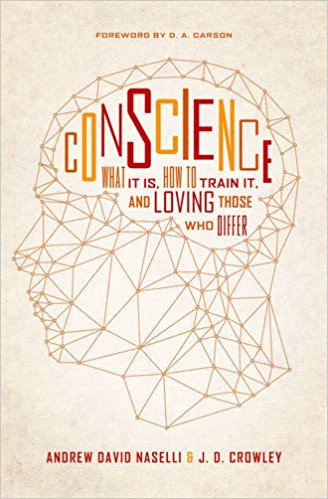
Conscience: What It Is, How to Train It, and Loving Those Who Differ, by Andrew Naselli and J.D. Crowley, is a very helpful book, to better understand what it means to have a Christian conscience, calibrated by the Word of God. I am not familiar with co-author J.D. Crowley, but I have greatly benefited from the work of Andrew Naselli, a professor of New Testament and an elder at Bethlehem Baptist Church, in Minneapolis, Minnesota, formerly pastored by the well known pastor/teacher John Piper.
The topic of conscience is directly related to that of “disputable matters,” the adiaphora (your Greek word for the day), that we find in Romans 14:1 (NIV): “Accept the one whose faith is weak, without quarreling over disputable matters.”
No one likes to think of their faith being “weak,” but the idea suggests that the one who is pretty indifferent to a non-essential matter of faith should defer to the one for whom the matter means a great deal. For example, in the early church of the New Testament era, the idea of eating food sacrificed to idols was a very grave matter. It was such a big deal that the great first council of the church in Jerusalem (Acts 15), required that all Gentile converts to the Christian faith should refrain from eating meat that was sacrificed to idols (See Acts 15:20, in particular). This solution regarding eating such food kept the peace between the Jewish and Gentile parties in the church.
The context for this prohibition, of food sacrificed to idols, was initially about participating in a pagan worship ritual, whereby such food was prepared in a pagan temple kitchen. This would be the context that the Apostle Paul has in 1 Corinthians 10. Paul taught that believers should refrain from eating such food, if the food was used as part of a sacrificial, worship ritual. However, if an unbeliever, hosting the dinner, offers such food, without mentioning any pagan ritual belief, then Paul encourages the Christian to lay any personal scruples aside, and joyfully receive the food offered to them. Paul does not go into any particular limits to this, but the general principle, that we should be as generous as possible with our unbelieving neighbors, is in view here. But might there be other contexts whereby eating such food would be permissible?
The Apostle Paul apparently thought so, according to 1 Corinthians 8. Nevertheless, Paul sets out a principle, that has a caution embedded with it. While it is difficult to ascertain what every context might fit into the “permissible” category, Paul does declare that pagan idols are really no gods at all. Therefore, outside of an actual pagan ritual, there is no harm done by eating such food.
Nevertheless, some might be bothered by eating such food, whereas others might think rather indifferently about it. This gets at the heart as to why the Apostle Paul, in writing to the Romans, sought to untangled this knot regarding matters of conscience:
-
One person considers one day more sacred than another; another considers every day alike. Each of them should be fully convinced in their own mind. Whoever regards one day as special does so to the Lord. Whoever eats meat does so to the Lord, for they give thanks to God; and whoever abstains does so to the Lord and gives thanks to God (Romans 14:5-6 NIV).
As biblical scholar D. A. Carson notes, cultural matters are typically at the forefront of matters of conscience. Several generations ago, many evangelical Christians saw no need to judge one another regarding the matter of tobacco smoking. The health implications of smoking were not well known. However, today, I know of very few evangelical Christians who regard tobacco smoking as a “disputable matter.” Tobacco smoking is just plain wrong, for many people today, including the vast majority of evangelical Christians. We are called to take care of our body, the temple of the Holy Spirit. Therefore, smoking tobacco violates the principle invoked by this command. I would tend to agree. But is this still yet merely a cultural matter, where the principle of conscience applies?
That is a good question.
The authors of Conscience contend that a Christian conscience must be informed by Scripture, trained to reflect that which brings glory to God. In other words, a conscience can be badly misguided, or through unrepentant sin, a conscience can become seared, thereby disregarding the teachings of God’s Word. In other words, the conscience of a Christian must be properly calibrated, being educated by the truth of Scripture.
-
This does not mean that a Christian can read the Bible any way they want, and then say that they hold a particular view or behavior to be morally acceptable, and then pull out the “conscience card.” Appealing to so-called “conscience” is not an acceptable reason for disregarding Scriptural norms. We severely risk the judgment of God when we make an excuse for license. Likewise, one should not impose a purely cultural standard on others, treating it is a Scriptural norm, when no such norm exists within the Bible. Such persons on both sides of this approach to conscience need to be able to adequately defend their view from a cogent and thorough understanding of Scripture.
So, when matters of conscience are raised, it is crucial that believers come together to study the Scriptures, and seek a common understanding of what they teach the believer. Believers should not condemn others, where there exists genuine Scriptural freedom. But neither should believers ignore the commands of God, set forth in Scripture, that would cause them to disobey God, if they were to disregard their conscience.
Dealing With An Overly Sensitive Conscience
Andrew Naselli illustrates the embarrassing absurdity of an overly sensitive conscience, by relaying an anecdote regarding the famous 20th century British preacher, Martyn-Lloyd Jones. When the good doctor was a young, 24 years old, long before he became a seasoned, mature pastor, he shared some convictions in 1924, that the well-regarded preacher most probably regretted years later:
- I cannot possibly understand a man who wears silk stockings or even gaudily coloured socks; rings, wrist-watches, spats, shoes instead of boots, or who carries a cane in his hand.
- The modern method of installing a bath in each house is not only a tragedy but it has been a real curse to humanity. . . . If I had to spend a life-time with a companion who had one bath a day or with one who had one bath a year, I should unhesitatingly choose the latter, because a man’s soul is more important than his skin.
- When I enter a house and find that they have a wireless apparatus [a radio] I know at once that there is something wrong. . . . Your five-valve sets may do wonders, they may enable you to hear the voice of America, but believe me, they will never transmit the only Voice that is worth listening to.
What??!! Christians listening to the radio, in order to hear God’s Word being taught? What a horror!!!
Methinks that the fastidious, young, future preacher, Martyn Lloyd-Jones, would be quite a bit scandalized by young pastors today, who put Bible verse tattoos on their body!
Nevertheless, the authors of Conscience contend, that if a Christian is bothered by an overly sensitive conscience, then disobeying one’s conscience, in this situation, is still sin, even if what is done is technically not morally or theologically wrong. This highlights what the Apostle Paul calls a “weak conscience.” An overly sensitive conscience can condemn us, burdening us with a man-made guilt, as opposed to truly experiencing the convicting power of the Holy Spirit, which exposes our real sin. Bottom line: We should never sin against our conscience. Nor should we encourage others to do so.
Having A Well-Calibrated Conscience, And Encouraging Others to Have One as Well
On the flip side, a well-calibrated conscience can bring about a genuine sense of sorrow, for having disobeyed God. To ignore the signals that a well-calibrated conscience would rightly give can reap spiritual disaster! The good news, the very essence of the Gospel itself, is that the work of Christ, upon the Cross, demonstrates that God can and indeed does forgive us, when we disobey Him. Our conscience can then be wiped clean, knowing that the God of the Universe has cleansed us from our real guilt and shame. We are forgiven!! Amen!!
Those who are “strong” in matters of conscience; presumably that is, those whose consciences are properly calibrated, by the standard of God’s Word, should bear with those who are “weak” in matters of conscience.
Scholars are unsure of the exact details, but it is possible then that the Apostle Paul had in mind the following situation: Consider food that was prepared in a pagan temple, but that was NOT used in a pagan ritual. Instead, such food was brought home by a Christian for dinner. Presumably, Paul would have no problem with a believer eating such food, in the privacy of one’s home.
But what if another believer came over for dinner, and that believing guest is disturbed by their conscience, regarding the presence of such meat in the home, that came from a pagan temple kitchen?
In such a case, the “strong” minded believer should not cause the “weak” minded believer to stumble. Therefore, the strong should refrain from eating such meat, when around a weak believer, for whom eating such meat reminds them too much of pagan worship. Surely, the “strong” minded believer should not serve such meat to their “weak” minded guest. But if a “weak” minded believer is not around, as a guest at one’s home, the “strong” minded believer is free to eat such meat.
Likewise, someone who is a legalist, might be prone to lecture a fellow believer, who has such freedom in their conscience. In other words, for the legalist, eating such food would be condemned, in all cases, thus making this an indisputable matter for them. But to condone such moral lecturing would go against Paul’s wisdom and exhortation. Some believers can become overly dogmatic, imposing one’s own personal convictions upon other believers, burdening them with unnecessary guilt. This is why training the conscience, and having it calibrated against the Word of God, is so important.
The difficulty here is that it is not always obvious that we have interpreted Scripture correctly, when it comes to areas that tend to shift back and forth between the “indisputable” and “disputable” columns. There are many areas in the Bible that are clear. Thankfully, such matters that are essential also line up with that which is clear. But there are also areas for where the Scriptural witness is up for thoughtful discussion, for where a clear, consistent witness, on a particular topic remains elusive. Reading one passage of Scripture might suggest one approach, whereas another passage might indicate that the topic is much more complex, resisting an easy solution.
It is with these matters that Conscience: What It Is, How To Train It, and Loving Those Who Differ so effectively addresses.
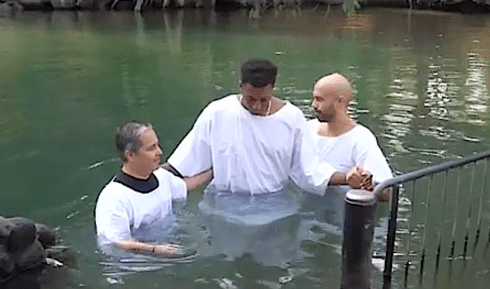
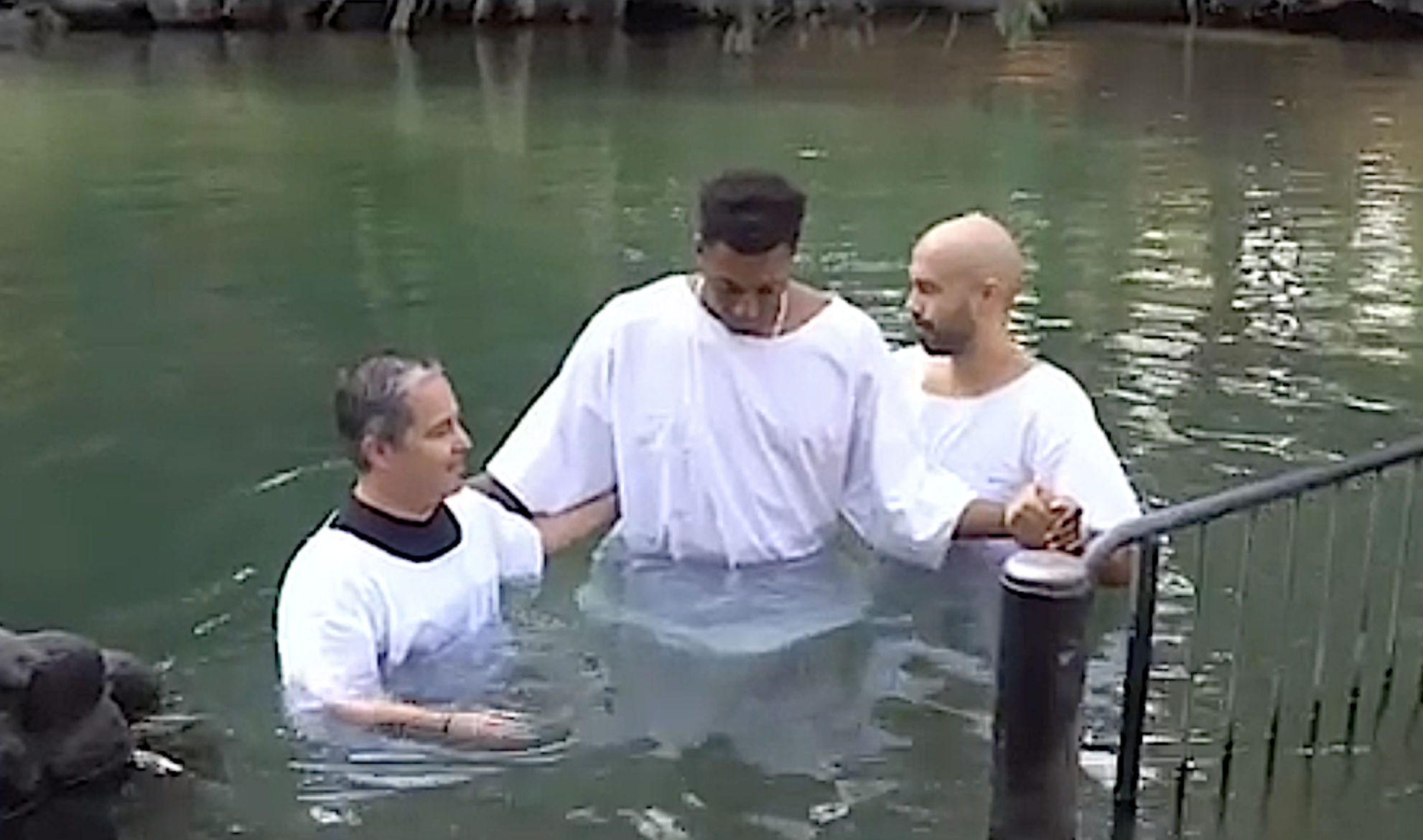
Hip-hop artist Lacrae was “rebaptized” in the River Jordan, in September, 2019, at the same exact location I was “rebaptized” in 1994. I question whether Lecrae’s (or my own) “rebaptism”) was biblically sound. The Christian church has consistently taught, throughout its history, that there is but one baptism, not two or three. My view now is that my original baptism as an infant was that “one baptism.” But in the end, the issue of baptism has been so contentious within the history of the church, that it is perhaps better off placed within the category of conscience, a topic where Christians can be free to “agree to disagree.”
Issues of Conscience: Baptism, and Women in Ministry
Now for a bit of personal application: In my previous post along these lines, I brought up the topic of baptism. Historically, the nature of baptism, specifically whether infant baptism is appropriate, alongside adult believer’s baptism, has been hotly debated during the past 500 years of the Protestant Reformation. You can surely find plenty of denominational churches that “take a stand” on this issue, landing in different places.
But my own personal journey regarding “baptism” has led me to believe that the solution to this theological dilemma is not so clear cut. Thankfully, we do not kill one anymore over such issues of biblical interpretation, but nevertheless, the discussion remains unresolved throughout the global church.
With all but a few exceptions, there is a general agreement that the mode and timing of baptism are not essential matters. It is not a first order issue, within the category where something like the doctrine of the deity of Christ resides. It is a disputable matter, but does it belong in Al Mohler’s second order or third order category? For Baptists and Presbyterians, it is a second order issue, in that Baptists do not practice infant baptism, whereas Presbyterians do. For if either denominational body were to shift in their practice, it would effectively disrupt the established order of that body of believers.
It is my conviction that baptism belongs in the third order category. A truly interdenominational church would allow for all baptized persons to join as members, whether such baptism be by adult immersion, or by infant sprinkling or pouring. Where it gets tricky is how such a church operates when a family inquires about baptism for their infant child.
In this case, a truly interdenominational church would normally only practice believer’s baptism, as such practice is accepted by both believer’s baptism and infant baptism advocates. But if a parent wishes to have their child baptized as an infant, that should be done in a more private setting, so as not to disturb the consciences of those others in the church, who do not believe infant baptism to be taught within the Scriptures. Perhaps, such an infant baptism should be performed in one’s home, with a gathering of supportive friends and family, as opposed to being done more publicly, in a full congregational worship setting.
Still, this is a conversation that must happen between a parent and their pastor. The pastor may not be led to perform an infant baptism, out of their Scriptural conviction. In such a case, the parent should respect the conscience of their pastor, and not press the matter.
Have a discussion? Yes! Seek to persuade the other believer to accept a more biblically faithful perspective? Absolutely! But one should refrain from being too forceful when expressing one’s views. I have much to personally learn in this area, as a general principle, even outside of baptism, as I tend to be quite adamant when sharing my views on sensitive topics. At the same time, I need to better learn how to boldly stand my ground, when fundamental truths that impact the Gospel are at stake. We must learn to “speak the truth in love,” reproving others of spiritual error with great gentleness and patience.
The tension created by these matters of conscience regarding baptism explains the popular rise in “baby dedications,” a uniquely modern practice within the past 50 to 100 years, in otherwise interdenominational churches. The practice of “baby dedications,” have a short history in the church, but they do offer a type of moderating solution that keeps the peace between those who favor infant baptism, and those who do not. There are at least some churches that are able to live within the midst of this theological tension, and thrive in an environment where the focus is on the “majors” of core Scriptural truths, including the importance of evangelism and discipleship, as opposed to getting needlessly distracted by the “minors.”
Likewise, the same should, in my mind, apply to the question of whether or not a local church should have women serving as elders/pastors. A denominational church, or otherwise a “non-denominational” church (whatever that means), that takes a particular approach to this issue, would most probably consider this to be within the second order category of theological controversies. Either the local church will have women as elders/pastors, or they will not. It is not a salvation issue, in the first order category. But neither is it in the third order category.
But in a truly interdenominational church, this issue would be in the third order category…. if that is even possible. I have seen this interdenominational principle work, but only rarely. It is exceedingly rare. For when this “third order” principle works, it requires great forbearance on behalf of all involved. As New Testament theologian N. T. Wright puts it, we can make great demands on the charity of another believer, but we can not make demands on their conscience.
In principle, such a truly interdenominational church would not strictly prohibit, in principle, a woman from serving as an elder/pastor of a church. This would accommodate the conscience of those egalitarians, who believe that Scripture allows for women to serve in such church offices. Yet in practice, the matter would be different. Such principled egalitarians would defer to the more restrictive conscience of the complementarians, who do not believe that women should serve as elders/pastors in a church. Such complementarians would allow their egalitarian brothers and sisters to maintain the integrity of their conscience. But since the actual act of submitting to a woman in such a position of spiritual authority would violate the conscience of such a complementarian, thereby encouraging the complementarian to sin against the dictates of their conscience, the egalitarian should refrain from pressing the matter, in an effort to keep the peace within that body of believers, and not encourage sin. Instead, other ways of empowering women to serve and use their gifts, within that local church should be cultivated and actively supported, so as not to condemn the consciences of such women who are surely gifted for ministry within the church body, who feel led by the Holy Spirit to exercise such gifts. For example, a more generous understanding could be made for deacons, to allow women to serve in that capacity, so as not to discriminate against, and bless the church in that way.
This would require both the complementarian and the egalitarian to extend a great amount of charity towards the other, while still allowing their consciences to remain intact and not violated.
Functionally, this makes such a local church complementarian in practice. Yet it remains egalitarian in principle. Egalitarians and complementarians can still be in dialogue with one another, seeking to persuade the other that their position is the better one theologically. Such a local church can thereby stay in tune to the Holy Spirit, as it seeks to have the consciences of her members properly calibrated to the Word of God. Can such a tension be kept in a local church, that is committed to a truly interdenominational vision?
I am not sure. That is why I am not sure that such truly interdenominational churches really exist. Though I hope so.
Ironically, the topic of baptism, that signifies the public profession of one’s faith in Christ, has for many centuries been an issue of contention that has divided believers, and harmed the reputation of the Christian church. In more recent times, the baptism controversy has settled towards a more tolerable situation. But just as the baptism controversy set Protestant believers at odds with one another, in centuries past, so it is that any theological topic having to deal with gender or sexuality identity generates the greatest amount of friction in today’s evangelical church.
As I have written about extensively before, it is my contention that the controversy regarding having women serve as elders/pastors within a local church is pretty much at a gridlocked stalemate. I see no effective progress in resolving these concerns. But we have much more pressing issues to face in today’s culture. For example, the whole LGBTQ conversation is several orders of magnitude greater in importance and consequences, than what the “women as elders” dispute affords us.
If there was one particular convicting lesson to be learned from reading Conscience, it would be that I should be less judgmental when dealing with another Christian who has an overly sensitive conscience. I have never really had problems with dressing up for Halloween, trick-or-treating, etc. But I know plenty of people who freak out over the prospect of honoring a particular day that some think is Satanic in origin (though it really is not). Yet perhaps I should be more forbearing towards those who do freak out, and suggest some positive alternative, whereby believers can use the time of Halloween to actually go out and meet their unbelieving neighbors, and get to know them better, and share the love of Jesus with them.
If there is one criticism I have of Conscience, it would be that it does not completely answer the question as to what is exactly a disputable matter versus an indisputable matter. Christian missionaries, dealing with cross-cultural settings, know about this dilemma, all too well. But this situation is more indicative of an inherent problem existing within Protestant evangelicalism, where people are prone to interpret the Bible as they jolly well please, as opposed to any fault of the authors of the book. On the one hand, it can be particularly frustrating when I run into instances of a hardened legalism, that easily triggers an overly sensitive conscience.
It simply would not occur to me to wear silk stockings. The young Martyn-Lloyd Jones would surely have driven me crazy!! But the problem also emerges on the other extreme, whereby the conscience of a believer does not effectively inform them when a limit to some moral behavior is being crossed.
I find that being burdened with issues of conscience can be relieved when I reflect upon larger, more substantial issues, and when I make it a habit of going to the Bible, in order to gain God’s perspective on something. How much is such an issue of conscience helping me to better love, and reach out to my non-believing neighbor? Is such an issue of conscience helping to drive me to God’s Word, to look for His guidance, and submit to Scripture’s authority?
The subject of conscience can be a real thorny issue, which is probably why the Apostle Paul gave it so much attention with his letter to the Romans, and in 1 Corinthians. In this respect, I found Conscience: What It Is, How to Train It, and Loving Those Who Differ to be a very helpful guide to walk through the theological principles involved, holding a close view as to what is the authoritative teaching of Scripture, in these matters.
It also helps to know that Conscience is a short book, with only 142 pages of text. I listened to it as an audiobook, over several days, listening to a chapter or so at a time, and I was greatly edified by what I read. If you struggle with matters of conscience, particularly when your own conscience conflicts with consciences of other believers, you will greatly benefit from this book.
See these other reviews, as well: Mitch Chase’s review at the Gospel Coalition. Tim Challies review. Kenneth Berding’s review at BIOLA.








 Veracity