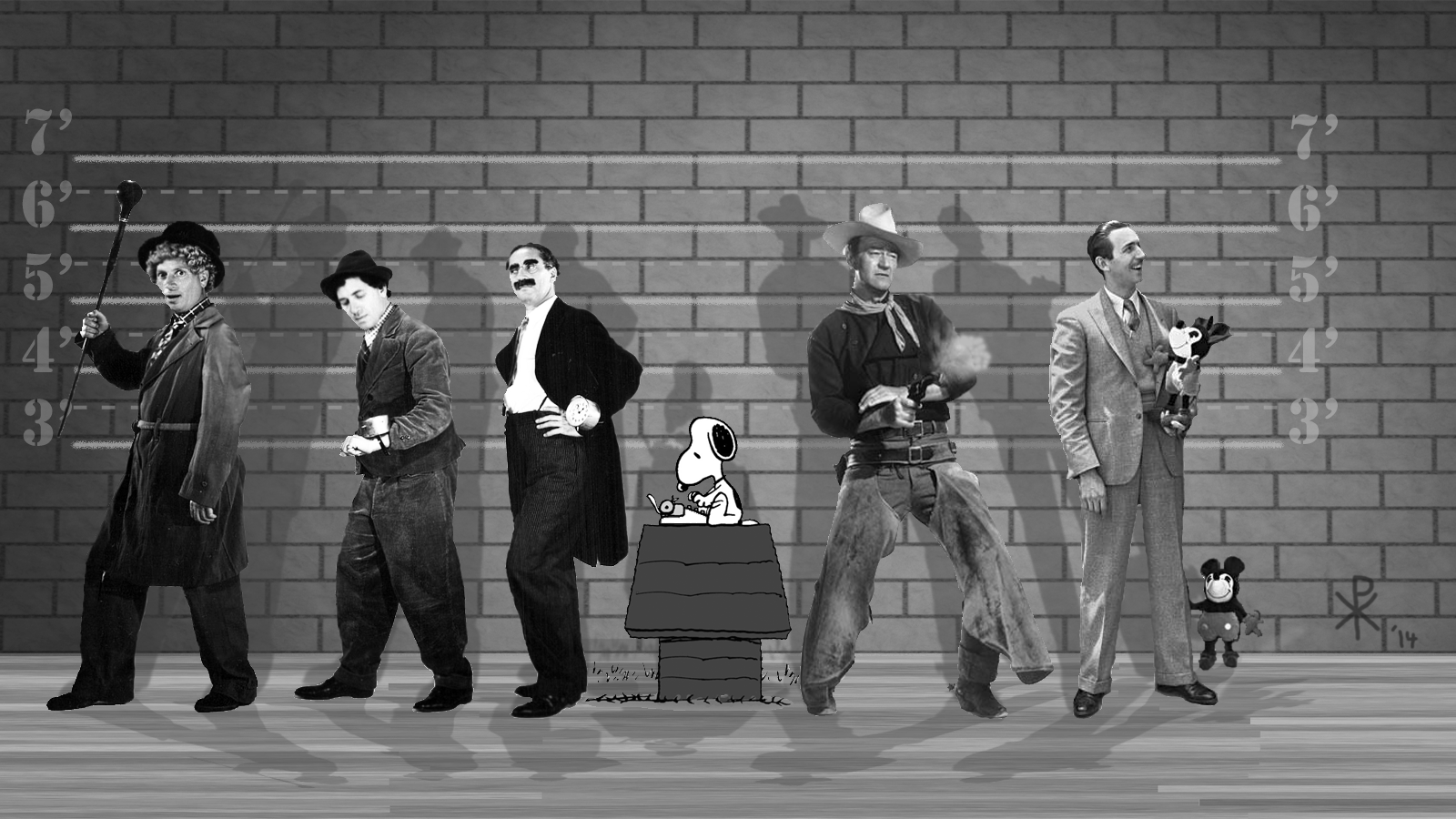
Communication problems in marriage can give us remarkable theological insight. Here is a great example.
I married a gourmet cook. My wife is the type of person who would rather cook something rather than go out to a restaurant where the chef’s skills are inferior to hers. As for me? I am good with a can of Chef Boyardee.
So imagine what it was like when my wife was out of town unexpectedly for a family crisis and she had promised to fix a dish for a previously scheduled dinner party. Guess who had to step in and cook?
Now that, my friends, is a recipe for disaster.
My wife left me instructions. The recipe called for dry mustard. Unfortunately, I could not find it in the pantry. Where could the mustard be?
Would a culinary defeat be averted?
Was all hope lost?
Read on and find out what happened… and what it might tell us about the challenge of doing biblical interpretation when Christians do not always agree with one another. Continue reading
Setting aside for now discussions about canonicity, inerrancy, and textual criticism, how much confidence can we have that the four gospels were written by their traditionally-accepted authors?
Because none of the gospel writers identified themselves by name as the author of the text, these foundational books of the Christian faith remain technically anonymous. It is no surprise therefore that skeptics seek to discredit the claims of Christianity by questioning the traditional authorship of the gospels. Likewise it is no surprise that well-meaning proponents of the faith get in over their heads when it comes to defending the traditional authorship. As you can see from spirited discussions like this one (be sure to read the comments), the facts can easily become blurred by the voices entangled in debate. Our position on Veracity is that we’re all about the truth and that readers can decide for themselves without being told what to think. Personally, I think scholars give themselves too much credit for what they ‘know’−on both sides of the debate. Worldviews influence interpretation. Got it. Continue reading
Is your theology built on a difficult to maintain stack of dominos?
As a kid, I liked to play with dominos. I would try to arrange them in neat patterns, and even try to stack them in certain ways to build a toy house or a bridge. But the problem with building any structure with dominos is that if you make one slight mess up with any one domino, the whole project would come crashing down.
Some years ago, I put an addition with an extra bedroom on the small house I was living in. But I learned that the most important part was the foundation. Footers supporting the new structure had to be strengthened prior to any further work being done, and I was glad for it! For within a few months after completing the project, a terrible storm came and ripped part of the siding off of the brand new addition. That was a bummer! But the siding was not fundamental to the foundation, so I was able to live in the addition while it was getting repaired. But if something had gone wrong with the foundation, I would have had to abandon the entire structure.
I have had numerous disturbing conversations with well meaning Christians as to how they view the Bible. Some subscribe to the notion that they believe Christianity is an all-or-nothing proposition regarding the Scriptural text. If they were to find but one error in the Bible, even if it is a small, minor or obscure one, then it threatens the whole substance of their faith. They could never trust any of the Bible or anything in Christianity at all if there was yet but just one small minor problem or discrepancy that they could not solve.
This is domino theology in action. All it takes is one slight move of doubt and the whole thing comes crashing down. Watching all of the dominos fall is great fun for a kid playing a game, but it is a disaster when it comes to trying to build your faith. Continue reading
We had to drive over an hour to find a theatre that was showing Alone Yet Not Alone on opening weekend of its second run. I am not really a film critic, but my wife, some friends and I really enjoyed it. As introduced recently on Veracity, Alone Yet Not Aloneexplores the true story of a pair of German immigrant children captured by Delaware Native Americans in rural western Pennsylvania during the French and Indian War in the mid-1750s. It has a profoundly Christian message, being produced by a non-Hollywood, evangelical homeschooling community. Partly filmed in my hometown of Williamsburg, Virginia, it was great to see a movie that combines a great story, a vital interest in history, and a call to embrace the Gospel of Jesus Christ. But without a Hollywood backing, Alone Yet Not Alone might remain a side-lined story: too controversial for the wider culture and too disinterested by the evangelical Christian church.
Sure, the film had its flaws, with some questionable make-up decisions and some possibly misleading depictions of colonial and Native American life. Undoubtedly, the most powerful critique involves the very nature of the story itself. In an era of filmmaking taken up by the themes of Dancing With Wolves, it is simply difficult to put out a movie that makes any “white man” look even slightly good. I went into the film anticipating the very worst, but I was pleasantly surprised to see how fairly the Native American situation was portrayed, contrary to those critics who expected the movie to be blatantly pro-European. Alone Yet Not Alone simply tells the story from a Christian European immigrant point of view. Much like the German Pietist family in the film, Europeans came to the American colonies for a variety of reasons, often in the pursuit of freedom, but the question of how to best relate to the native population was often unresolved. An uneasy peace between the different cultures would last for decades only to be broken because of mistrust and the defrauding of promises made to those like the Delaware tribe.
The wider contemporary culture often gets a distorted picture of early American history and the involvement of Christianity, but Christians themselves are largely ignorant of that history as well. With distorted or ignored images of our past, it does not bode well for the future. This is why we need more films like Alone Yet Not Alone in an era more concerned about the present and not the past.
Nevertheless, the critics have their point to make. Stories like Alone Yet Not Alone are completely overshadowed by the practically genocidal impulse that has nearly wiped out Native American cultures and people in the United States. The bulk of American history has effectively silenced the suffering of native peoples that has only recently come to light in the public consciousness. From broken treaty after broken treaty to the Cherokee “Trail of Tears” to the slow and continued disintegration of native cultures today, Native Americans have overwhelming born the brunt of the conflict. Sadly, with some rare exceptions here and there where missionaries like the Moravians and David Brainerd made sacrificial investments in reaching out to folks like the Delaware, most colonial Americans who claimed to be Christian failed to stop such horrendous ethnic cleansing. Yet I would contend that this state of affairs is not a result of some inherent flaw within the Christian message itself but rather the failure of professing “Christians” to be obedient to the Gospel they say they profess. We need a film from a Christian perspective that tells that story.
This tragic evaluation of Christianity and Native American history should not be a surprise. Our church this summer is doing a study on the Book of Judges. When you read Judges, you encounter just some terrible things: senseless violence, broken treaties, treachery, rape, kidnapping, idolatry… you name it. You think you were reading something out of the conflict between Native Americans and white Europeans in America! Much of the evil in the Book of Judges is sadly being perpetrated by those claiming to be the people of God! Christianity has a tarnished past with the Native American, but if we are to be faithful to the example of Scripture, we need to be willing to frankly address that past and confess the shortcomings of the church.
Does Alone Yet Not Alone correct the contemporary misunderstanding regarding Native American history and Christianity? The answer to that is complicated by the backstory surrounding the film. One of the promoters of the film, who also acted as British Colonel Mercer in the movie, was Doug Philips, formerly the director of Vision Forum, an outspoken supporter of home schooling for Christian families. Vision Forum was the primary sponsor behind the “Jamestown Quadricentennial: A Celebration of America’s Providential History” that I attended in 2007. But in a reversal of momentum, Vision Forum is now officially dead as Philips has been implicated in a scandal along almost the same lines like that of fellow conservative home schooling advocate Bill Gothard. The charges of spiritual abuse surrounding Philips have cast a dark cloud among Christians over an otherwise promising and positive film. This is all incredibly sad to me.
Despite these challenges, Alone Yet Not Alone remains an important film, filling a void in the telling of history from a Christian perspective that is badly needed today. Though not suitable for young children, you should still go and see it. But more work needs to be done to give a fully biblical faithful rendering of history. On one side are those who loudly wish to blame Christianity for practically all of the ills of contemporary society. On the other side are those from a supposedly Christian perspective who would seek to recover the positive aspects of our past but who have a difficult time honestly dealing with issues of repentance where the church needs to truly repent. Oh, that God would raise up such a generation who would accept that task and take a “third way” in the telling of God’s story throughout history.
John’s suggestion of William Lane Craig as the “graduate school” for the next step following after Dick Woodward’s Mini Bible College is very appropriate. Dick was an amazing teacher who continues to impact the world through his unique ability to “put things on the bottom shelf” for people by exploring the basic contours of the Bible. Dr. Craig then makes it more in-depth in terms of helping you grasp and develop your own understanding of God (theology) founded on Scripture and then applied in terms of being able to offer a rational defense of the Christian faith (apologetics).
But just as there are fine and different academic graduate schools out there, there are different “graduate school” approaches to theology and apologetics. For example, Dr. Craig is probably one of the leading Christian apologists alive today, such that atheist Richard Dawkins awkwardly still refuses to debate him. But Dr. Craig is known for his “Middle Knowledge” approach to the issue of God’s sovereignty vs. free will. He is also known for his classical/evidentialist approach to apologetics. Without digging too much into those things right now, let me just say that not everybody is totally with Dr. Craig on these issues. But, PLEASE, do not let that dissuade you from digging into William Lane Craig! He is awesome! It is just important to know that there are other approaches that Christians take to these issues. You might want to check out some of the other podcast resources available to get a flavor of what is out there. So here we go!