A growing number of secular-minded college campuses are not extending the welcome mat to evangelical Christians today. Is the central issue regarding sexual discrimination, or is it an erosion of religious freedom?
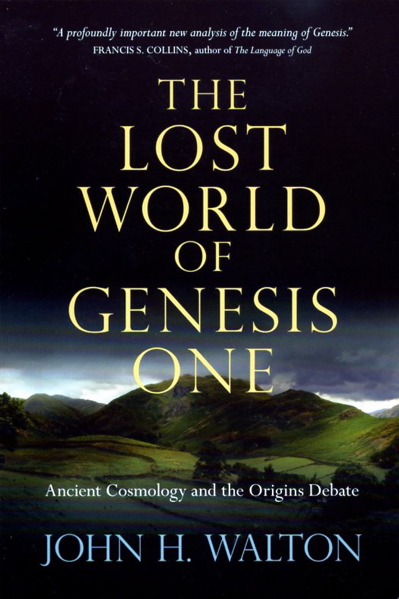
John Walton understands Genesis to be talking about an archetypal, functional view of creation, as opposed to a scientific, materialistic account of origins.
Many Christians are opposed to calling Genesis One an allegory or poetry. These Christians warn that this threatens to change the clear message of the Bible, watering it down, and thus compromising the Gospel. On the other side, other Christians are troubled by efforts that interpret Genesis too literally. Does not an over-literal reading of Genesis One conflict with modern science, creating an unnecessary obstacle for a non-believer in coming to know Christ? John Walton, an Old Testament scholar at Wheaton College, takes both of these concerns seriously, and he suggests a third alternative.
In the previous Veracity post about John Walton, you were introduced to Walton’s thesis that the first chapter of Genesis is an account of the functional order of the universe, NOT the material origins of the universe. It sounds a little odd, but some refer to John Walton’s perspective as an archetypal view of creation. Walton calls it a cosmic temple inauguration view.
Yeah, just go ahead and try to explain that to your grandmother…. or Joe Friday.
Joe Friday wants to ask Wheaton College professor John Walton, “So, what is the cosmic temple inauguration view, and what does it have to do with the Bible? Have you been spending a bit too much in time in those Ancient Near Eastern texts?“
Okay, it does sound a little fancy and nerdy. But just exactly what is Dr. Walton driving at? Let us give Dr. Walton a little room here, shall we? Walton argues that the Genesis was written for us but not to us. It is as though we are reading someone else’s mail when we read Genesis. Walton contends that Bible students today need to understand Genesis from the perspective of those ancient Hebrews who first read the text. If we fail to do that, we risk distorting God’s Word.
Whoa. Do I have your attention now?
In the last Veracity post on this topic, we set out some of the primary points of John Walton’s thesis. But before doing a “deep-dive” it might be good to consider some of the objections critics have been making to his ideas. Then, as you look over Walton’s presentation, you can evaluate on your own whether he has made a good case or not. Even if you are not entirely convinced, you will be challenged to grow deeper in your faith and understanding of God’s Word. Continue reading
Are Christians who look for literal scientific revelation in Genesis abusing the Biblical text? John Walton, in The Lost World of Genesis One, says “Yes”, proposing a better way to interpret and honor the authority of Scripture based on pioneering research from the Ancient Near East.
When the first few chapters of the Book of Genesis are talking about the origins of the universe, should we read it like a scientific textbook…. or something else?
Many Christians today read the first part of Genesis assuming that God is supernaturally revealing to us the natural history of physical creation. This is a reasonable assumption. The Bible claims to be God’s Word, and we all want to know how it all got started.
So it would appear that God is simply stepping in Himself and giving us “just the facts, ma’am,” as Joe Friday said on the classic 1960’s TV show, Dragnet. But what exactly does that mean? Before Adam gets created, there are no human eyewitnesses peering over God’s shoulder to see what He was doing. Even if you believe that Moses was the author of Genesis, you have to grapple with the reality that Moses was not hanging out in a tree in the Garden of Eden with a video camera or an iPhone camera app, recording the interaction between Adam, Eve and the Serpent. Joe Friday is wondering what to make of all this! So then, how does that historical information get from God to Moses, and then finally, to us?
Unlike the Gospels that are built on eyewitness testimony, in early Genesis many wrestle with God’s meaning of things like “days” and try to figure out how it all fits in with modern science. Are they 24-hour periods of time, or long epochs of time? How do you get “light” on day one when the sun does not appear until day four? What about the Big Bang?
But these are modern types of questions that today’s Bible readers bring to the text. Have we really taken the time to consider how the ancient Hebrew readers from several thousands of years ago understood the Genesis text? Centuries before NeoDarwinian genetics, the telescope, Google, and… we can not forget, Joe Friday… what did God’s people think when they originally read Genesis One?
Joe Friday wants to interrogate Moses.. he might just have to settle for Wheaton College’s John Walton.
Meet John Walton, professor of Old Testament at Wheaton College (uh, not the guy in this photo… you will see a photo of Walton later). Walton argues in The Lost World of Genesis One that though Genesis was written for us, it was not written to us. It is a subtle distinction, but it emphasizes the reality that we must not pretend that Moses, or anyone else in the Old Testament era, originally wrote for a 21st century audience. Instead we must first understand the mindset of the ancient Hebrews before we try to apply the Truth of Genesis to modern-day concerns.
To put it the way that a William and Mary chemistry professor and friend of mine would say it: Is Genesis talking about “Adam” or “atoms”? Continue reading
Room 19, Central House Hotel in Boscobel, Wisconsin. Kept in the style it was in September 1898 when the first Gideon founders, Nicholson and Hill, met here. From the cramped quarters one evening came a ministry that has impacted millions of people around the world for Christ.
1898. Boscobel, Wisconsin. Two businessmen, John H. Nicholson and Samuel E. Hill, arrived in town looking for a place to spend the night. However, the Central Hotel was so crowded that there was only one room left available. Nicholson and Hill, who had never met one another before, agreed to share that room with a double bed for the night. These men soon discovered that they were Christians. They prayed and read the Bible together. As these men were on their knees, they soon realized an idea that would eventually become the Bible distribution ministry of the Gideons.
If you stay at nearly any hotel these days, pull open the bedside drawer and chances are that you will find a Bible placed there by the Gideons. Over a hundred years after Nicholson and Hill met that evening together, first as strangers, then as brothers in Christ, the Gideons International has placed over 1.9 billion Bibles all over the world, in multiple languages, at an average rate of two copies of the Bible per second. The Gideons record countless stories of changed lives through people picking up a Gideon distributed Bible. Astrophysicist Hugh Ross had grown up in a completely secularized environment until he took the time to read a copy of the Bible given to him by the Gideons in his school, which eventually led him to place his faith in Christ. I myself remember getting my own green copy of the New Testament as a freshman in college.
But have you ever seen a sticker placed by an atheist on a Gideon Bible? Continue reading
“We should not imagine a committee of church fathers with a large pile of books and these five guiding principles before them when we speak of the process of canonization. No ecumenical committee was commissioned to canonize the Bible.”
Our church’s Statement of Faith is pretty minimal. We only list eight core beliefs, the second of which states that we believe “in the inspiration of all the Scriptures by the Holy Spirit, and that they are the final authority for our faith and practice.”
“…final authority for our faith and practice?” Really?!
Our founders didn’t draft up this idea—it is delineated in the historic confessions of the Christian church. Consider the absolute implications of this statement. It means the Bible contains the foundations for Christian faith and practice, and that we are bound to it in all matters. We don’t get to impart our personal, alternative views. We don’t get to cherry pick which parts we like or which parts we would write differently. We don’t get to interpret what it says in ways that are contradictory to it. When we disagree with someone else’s view or interpretation, we submit to the final authority of the Bible. No appeals. We believe the Bible comprises God’s special revelation to us.
If you’ve been reading Veracity for any length of time, you know that we are big on personal discipleship—which we define as the process in which a believer or seeker takes personal responsibility for investigating the claims and content of the Bible. Personal Discipleship is based on the Bible.
Exactly how did we get the Bible?
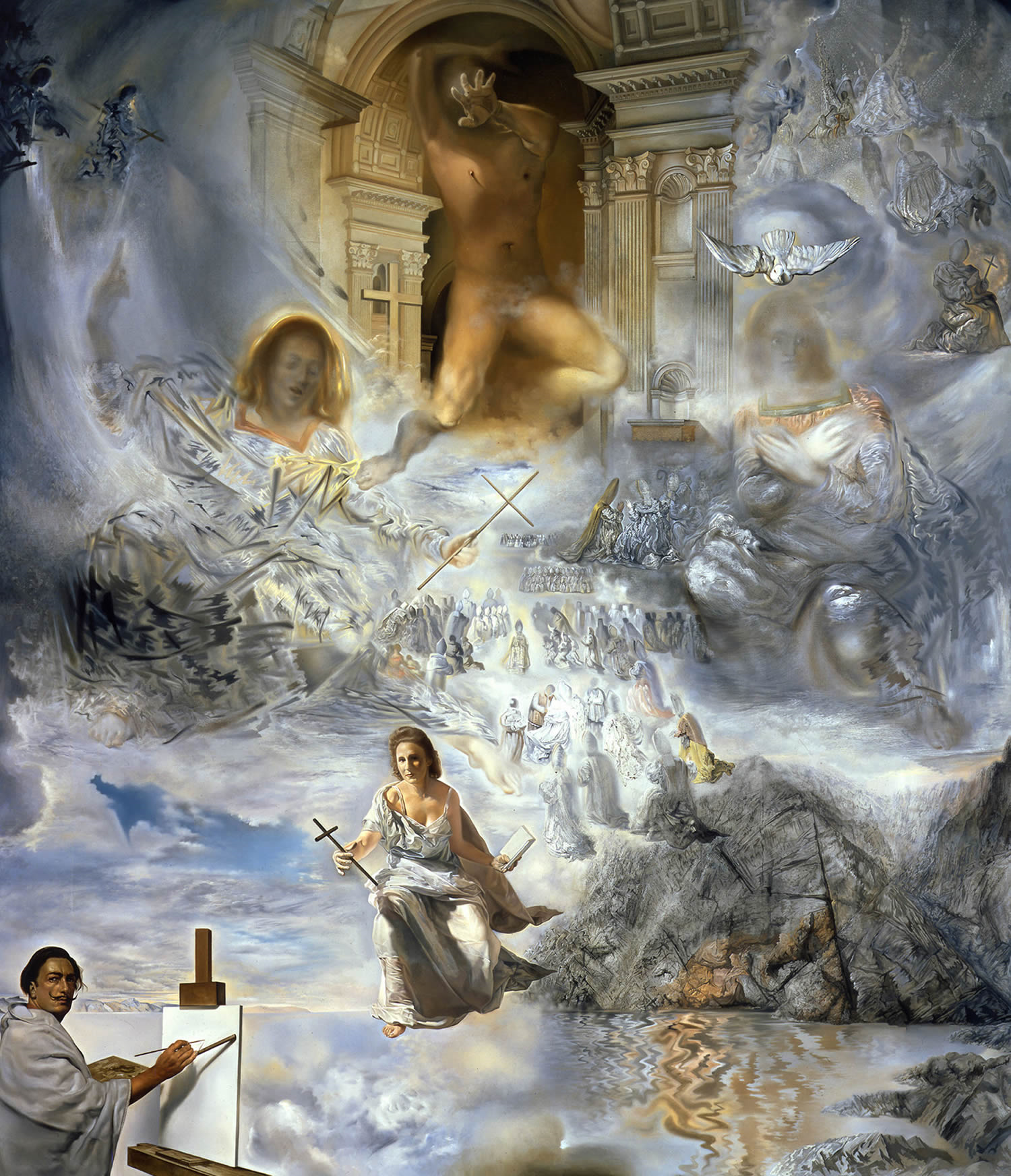
Welcome to our latest Veracity series. If you’re like me or Salvador Dali you may have developed some loose derivative notions such as:
God told a select group of human authors what to write,
Their writings were evaluated by committees of men in silly hats,
These ecumenical councils voted on which writings would be in “the Bible,” and
Later ecumenical councils clarified and solidified the final selection (and some modified it).
In fact, if you read what Wikipedia has to say about Ecumenical Councils it sounds like a pretty cut-and-dried historical process. But is that all there is to it? For that matter are these notions even correct? Are we to live our lives under the complete authority of documents that were assembled by ancient and medieval committees? How do we know that the Bible we hold in our hands today is what God intended for us to have? What if it was corrupted in its translations or transmission? How do we know that we have the right books, and why do we disagree along denominational lines about what should be included in the ‘Holy’ Bible?
In preparing for this series I read a lot of texts that come at these questions from a canonical perspective (focusing on how the official list of biblical texts was created and adopted). I must confess, that was originally my interest as well. But Drs. Norman Geisler and William Nix have a more comprehensive, full-orbed understanding, which they explain in From God To Us Revised and Expanded: How We Got Our Bible. So let’s dig in and see what these and other scholars have to bring to our understanding of how we got the Bible.
Introduction
Over the course of this series we will look at the inspiration, canonization, transmission, and translation of the Bible. But before we dive into the topic of inspiration here’s a Mini Bible College audio clip from Dick Woodward to give us the big picture.
Dick did a masterful job summarizing the basics for us, and Geisler and Nix will delve more deeply into the details (particularly when we get to the process of canonization). We’ll go slowly and see what we can learn about the book that comprises the authoritative basis for our Christian faith and practice.