Loving Those Who Wrestle with Transgendered Experiences : A Review of Preston Sprinkle’s Embodied

First, let me start off with a personal story. I am a biological male who feels quite comfortable with being gendered as masculine. But it was not always that way.

I was never much of an athlete growing up. In elementary school, I was shorter and smaller than the other boys, and I was always the last one to get picked on a side for kickball. I especially dreaded it when girls played with us, and the girls got picked first over me. I was generally consoled when there was at least one or two girls left, after I got picked. But it still was not a great feeling.
That began to change as a 12-year old, when I discovered the sport of tennis. I learned from my coaches that I was actually pretty good at it, compared to a number of the other kids. I won match after match with other boys in a local municipal league, throughout an entire season. Having grown up thus far, playing in the dirt, building dams in the small creek behind our house, and being fascinated with dump trucks and bulldozers, I was finally beginning to feel comfortable with my “boy-ness.” My tennis experience with other boys seemed to confirm it.

Then, I was lined up to play a girl my same age in the girl’s league. It went like this: 6-0, 6-0, 6-1. I was completely devastated by the loss. At least I got one game in the victory column. But it cemented in my mind the same type of feeling I had being chosen for kickball in elementary school…. at the bottom of the list.

Well, as it turned out, this girl who destroyed me in tennis was the daughter of the president of the local university in my hometown. She probably started taking tennis lessons at age 5, for all I knew. For when she got to high school, she ended up being a Virginia State Champion in tennis, with an almost unbroken victory record. I do not know if she actually went to the Olympics or not, or played professionally, but she could have. She was definitely THAT good.

I put the tennis racket away after that.

I never touched it again until my years in college, and then only briefly. I was never able to fully enjoy the sport until I hit my 30s. I was completely sandwiched in by social expectations, formed by traditional stereotypes, that I was somehow “less than” a boy, because I was completely humiliated by a girl in sports. Sure, you could call it “sexist,” on my part (Though for being a kid just out of 6th grade, that seems like a heavy trip to lay on someone). As for me, a growing adolescent, I thought it was confusing. For if I was really a boy, why was I such a poor athlete compared to girls my age? What does it mean to be a “boy” after all?

What made the experience worse is that I hit puberty rather late. Plus, I received little to no sexual education, even in school. As an only child, who was rather shy to begin with, figuring out how I fitted in socially was difficult. I was a bookish nerd, intimidated by the athletic boys, and I generally felt less threatened around girls than with boys. It was not until probably late in my freshman year, that I finally settled on the answer: “Yes, I really was a boy.” The biggest factor was in realizing that I was attracted to girls, in a way that I never really felt before. Yep, that was DEFINITELY the game changer.

But it took a while. And I had more than a few doubts along the way. Without going into further detail in this online forum of a blog, let me just say that there was a period of time, perhaps a few months or so, where I was really confused about my gender status.

I look back on those experiences as a kid, as though they are part of a distant land and distant time, particularly the gender crisis I went through in my early high school years. Frankly, this has become one of those life stories that I would rather just forget about.

But the world has vastly changed since then. Vastly.

Today, I am a so-called “typical male,” in that I am a single-task operating system, who can not multitask as women generally do. I have a big love for sports and playing sports, my biggest love being for playing soccer. I still like playing in the dirt. I pretty much fit all of the culturally assumed norms being masculine. But back in those childhood and teenage years, I had no one to talk to about my gender insecurities.

Not friends…. (except for perhaps one awkward conversation with one girl I knew in my gym class, so I am not sure if that counts).

Not parents.

Not teachers.

Not someone in my mainline Protestant church. No pastor. No Sunday School teacher. No youth group leader.

No one.

Fast forward decades later to 2021: The concept of transgender is now relatively commonplace in colloquial discussion. It is certainly freely talked about in social media, as there is less social stigma. There is a sense that this can be a good thing, as sweeping difficult conversations under the rug is never a good thing.

However, there is another side to this. The rise of what has been described by some as “Transgender-ISM” has become an extremely volatile and politically charged topic. In some alarming cases, government overreach has dictated to people what they can and can not say, a direct threat to free speech (Just ask Jordan Peterson).

We live in the age of Bruce/Caitlyn Jenner. We live in an era when a sitting U.S. President, on his first day in office, signed an executive order to ban discrimination against transgender athletes, a move that supporters say will offer “hope for young trans athletes” (Bryan Armen Graham, in The Guardian), and critics say will signal the end of women’s sports (Rod Dreher, in The American Conservative). On top of that, Rachel Levine, an openly transgender doctor, has been nominated to be the new assistant health secretary, a definite first for a top federal official position.

What was once such a personal matter has now triggered a whole culture, set on edge. Struggling people, who would rather not be left exposed in the middle of a culture war, are caught in the crossfire.

One of my nieces coaches girls soccer. Just a couple of years ago she was told to admit to her team a boy who was transitioning to becoming a girl, to play in the position of goalie. “She” became the best player on the team. Something like that would have been unthinkable, just a generation ago. The culture has changed so rapidly within the past decade.
The Transgender Conversation in Today’s Post-Modern, Post-Christian Culture

How do Christians today navigate the transgender conversation going on today? Is being male or female a fundamental characteristic of human identity, or is gender merely a social construct? How should one address another person transitioning from one gender to another? What type of pronoun should you use, without compromising your Christian beliefs? These type of questions dominate the minds of Christian believers who work with, go to school with, or who have family members who wrestle with some type of transgendered identity (whatever that really means)…. it also, quietly, keeps a lot of young people, who are confused about their gender, awake at night…. like it did me, back in 9th grade.

Thankfully, there are some very good theological resources for the transgender conversation today. Let me walk you through my journey with some of these resources.

But can you do me a favor here? Can we hold off just a bit on the whole Target’s bathroom policy-type stuff? I want to get back to that before the end of this post, but let me lay down some groundwork first.

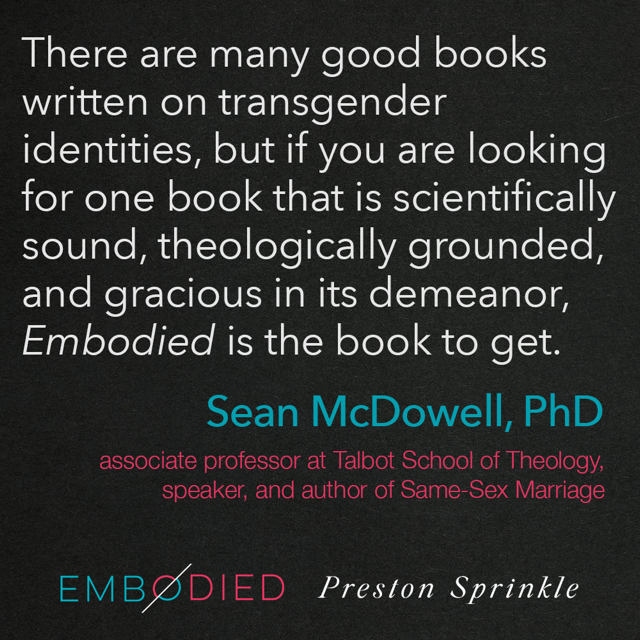
I first read Andrew T. Walker’s 2017 God and the Transgender Debate: What does the Bible actually say about gender identity? a few years ago, as an introduction into the transgender conversation. It offers a good approach, from a conservative evangelical theological viewpoint, that offers nuanced wisdom in how to effectively love someone who is deeply impacted by confusion regarding their gendered experience, while maintaining a theological integrity in affirming that God created every human being in his image, male and female.

However, there is a weakness in Walker’s book in that it does not provide sufficient enough insight into the stories and experiences of persons who personally wrestle with such deep and disturbing questions. Furthermore, while Walker’s book does cover the general science outlook on gender dysphoria, it does not really dive into some of the more complex scientific issues surrounding gender. As wonderful a book God and the Transgender Debate: What does the Bible actually say about gender identity? is, I still was looking for something with more depth, and even more nuance, that would help me in my conversations with those who have anxiety about their gender…. along the lines of what I experienced as a kid, or way more intense than that.

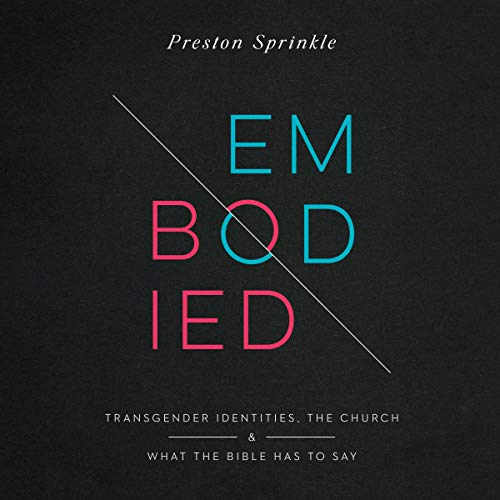
This is why I was excited to read and review Preston Sprinkle’s new book, Embodied: Transgender Identities, The Church, & What the Bible Has to Say. In my view, Preston’s earlier book, People to Be Loved: Why Homosexuality Is Not Just an Issue, is the best book available on how to understand questions regarding same-sex attraction and same-sex marriage, from an evangelical and orthodox Christian perspective (I reviewed that book several years ago here on Veracity, with some deeper dive looks at the Bible, prompted by Preston’s book:  including an examination of the sin of Sodom, the relationship between temptation and sin, the language of Christian “identity,” and the history of the word “homosexual” as it has appeared in modern Bible translations).

In Preston Sprinkle’s Embodied, the author sets up the book very well in that it emphasizes a variety of stories of persons whom Preston knows, who fall all over the spectrum of transgendered experiences. This is critically important to understand because there is simply no one, single category that defines transgendered experience. Psychologists will typically call transgendered experiences an expression of gender dysphoria, which the American Psychiatric Association defines as “psychological distress that results from an incongruence between one’s sex assigned at birth and one’s gender identity.

The first step that Preston encourages every Christian to cultivate is an attitude of listening, and learning to know and better understand the experience of someone with gender dysphoria. The second step that Preston encourages is to realize that transgendered experiences are complex, they differ greatly from person to person, and the definition of terms is critically important in an effort to have good conversations with others.

The Problem with Words: How Do You Even Start a Conversation?

The problem of words, and their definitions, and how those definitions can change over time, can not be underestimated. What is the difference between male and female? What is the difference between sex and gender? The list goes on, but thankfully, Preston takes great care to define terms, acknowledging that not everyone even accepts his definitions. For example, Preston prefers the term “trans” over “transgender.” Who knew there was a difference? Though primarily a theologian, and not a scientist, Preston does a good job interacting with the science, and explaining different points of view, as expressed in the scientific literature, that is accessible to the general public. But the problem of words and their meanings remains…… And this is not just about pronouns.

Here is a good example of the problem. Preston has a chapter about “intersex,” which involves the problem of persons at birth possessing some of sort ambiguity regarding their sex identification. Doctors will put the “sex” of the child on the birth certificate. But what if there is some biological confusion, that makes it difficult to assign one’s “sex” with a high degree certainty?

When I was discussing this with my wife, I told her that this “intersex” condition is “rare.” It sometimes requires surgery to resolve, but not always. Different authoritative resources regarding intersex will agree that calculating the frequency of intersex conditions assumes that there is a spectrum of difficulties in making a clear determination of a person’s sex. I told my wife that one particular estimate of at least some possible condition on the intersex spectrum impacts roughly 1 out of 2000 babies (some of the more rarer conditions rank 1 out of 100,000 or more).

In my mind, that type of ratio, 1 out of 2000, means that intersex is “rare.” But my wife objected. In her mind, 1 out of 2000 is not some statistic that could be trusted in that it implies that intersex is rather “common.” As a result, she is suspicious of such statistics, as she believes that such “scientific” estimates are more informed by political concerns, and less by science. She believes that such “science” is being used to push an anti-Christian, anti-biblical agenda in the cultural sphere.

Well, 1 out of 2000 still sounds “rare” to me. I mean, compare that to the relatively much more “common” condition of someone on the autism spectrum, which in 2016 has been calculated to be 1 out of 54, by the American Center for Disease Control. But the debate I had with my wife just shows how difficult it can be to navigate such discussions about such a complex topic. How we define words in our conversations make a big difference.

Preston includes some thought provoking chapters on other topics, such as “what about the eunuch?,” as Scripture talks about; the ongoing debate about the “material” body versus “immaterial” soul, and how that all relates to gender identity; brain science and sexual differentiation; and the recent explosion of rapid onset gender dysphoria, that is producing intense anxiety for many teenagers today. The overriding theme is that Christians should become better informed about these topics, and when doing so, should exhibit some caution towards coming to premature conclusions.

For people in the workplace, or in school, surely the most difficult question, over the use of words, and their meanings, comes down to what pronoun you should use when talking with a transgendered person: “He?” “She?” “Surely not ‘it.’  “But what then?”  “By using a certain pronoun, am I implicitly endorsing an alien belief system?” “How can I let someone know that I want to be their friend? “

This is a complex topic, with concerns about ideological dogmatism, when it comes to enforcing language codes, which is an affront to free speech, on the one side, versus concerns over offering hospitality to the other person, for the sake of maintaining a friendly relationship. Preston offers an excellent chapter in Embodied, dedicated primarily to this one issue, which is worth the price of the book, on its own.
What Does the Bible Say about Transgender?

The most important chapter in Preston’s book is regarding what the Bible says about how being male and female is related to God’s good creation. The footnotes alone for this chapter will stimulate the student of Scripture to dig deeper and deeper into God’s Word. The bottom line is that according to what is taught in the Bible in Genesis, we are all created in the image of God, male and female. Therefore, fundamentally, sex and ultimately gender are not social constructs. Biological sex plays the much larger definitive role in determining what is male versus female, as opposed to culturally defined expectations of gender characteristics. Someone’s gendered experience may not match up with social stereotypes, as it did for a relatively short period of time in my youth.

Large swathes of our society give us very culturally-bound ideas of gender, some that are uniquely Western. For example, American men typically do not hold hands with one another, though women holding hands together is a lot more common. Compare that with the fact that in many developing countries, men will often hold hands with other men. This does not mean that such men are gay, or that they are having some transgendered experience. This simply means that men holding hands with other men are but one cultural expression of gender, a sign of showing affection in male to male friendship. But these varying cultural stereotypes do not mean that being male and female are simply products of culture, in every respect.  Instead, the fundamental Christian claim, according to the Bible, is that being created male and female matters to God, and that such differences in being male and female ultimately transcend culture.

Preston does interact with theological viewpoints that do not line up with historically, orthodox Christianity, making a good faith attempt to be as generous as possible with critics. I would probably give Embodied a fully deserved 5-star review, if it were not for the fact that Preston sometimes is overly cautious to a fault, when landing on a firm theological footing (I would give Embodied a 4.5, but Amazon does not allow for fractional reviews, so I decided for a more conservative evaluation and round down slightly). Now, let me be clear here, in case a potential reader might be nervous: Preston does eventually get to and affirm an historical, orthodox theological perspective. But in the process of getting there, through pages and pages of back and forth, yet rightly thorough analysis, Preston may leave some readers puzzled as to why he is as cautious as he is. He puzzled me in a couple of cases.

For example, Preston briefly addresses the question of whether or not intersex is a product of the fall. He has generally opted to say that intersex is indeed a product of the fall of humanity, but that in researching for the book, he has become more cautious in making such a conclusion.

I understand why Preston brings out some caution, and he clearly acknowledges that one of his intersex friends firmly acknowledges that the intersex condition is indeed part of “the fall,” and that this knowledge provides a form of comfort. But if that is the case (and I would agree with the viewpoint of Preston’s intersex friend), I am puzzled as to why Preston is so cautious as he is. Perhaps it comes down to one’s definition and understanding of what “the fall” entails.

How Our Theology of “The Fall” Can Guide Us Through the Transgender Conversation

Going back to my own experience, I grew up also with a significant speech impediment. I stuttered quite frequently during my elementary and middle school years. Thankfully, my stuttering eventually subsided somewhat, and I learned to gain more confidence when I speak with other people. One of my greatest joys in my college years was that I even became a disc jockey for about a year and half, hosting a jazz music program on my college’s radio station. I would never have been able to do anything like that, if I had continued stuttering as severely as I did in elementary school.

But I would definitely say that my speech impediment was (and still is) a product of the fall of humanity. I do not believe that God would intentionally create me with a speech impediment, as part of his good design for creation. I look forward to that Resurrection Day, when I will no longer have to worry about how my verbal speech with come out, and embarrass me in front of others.

Nevertheless, God has given me a type of gift, due to that experience of the fall. I am more hesitant to speak, because I am sometimes self-conscious about messing up with my words and syllables in public. As a result, I often find myself more inclined to listen. In a world where so many people want to be heard, I have realized the gift that God has given me to use my hesitancy towards speaking, in learning how to better effectively listen to others, thus gaining more empathy with them.

I would think that experiences of intersexed persons, and transgendered persons (otherwise known as simply “trans”), who go through periods of gender dysphoria, would best frame their experiences in such a theological framework. The experience of being “trans” for a follower of Jesus would lead to the realization that such consequences of the fall also provides opportunities for God to give good gifts to such a person, that most other people will never, ever have. Sin does have consequences, and can impact people through no obvious fault of their own. But God is a God of redemption, who can turn what the Evil One meant for evil into something good. In the process, God’s children are given gifts that bring God the most glory possible…. and that is Good News! I think Preston Sprinkle would still agree with me here. I just wish he had come out more firmly on this with less hesitation.
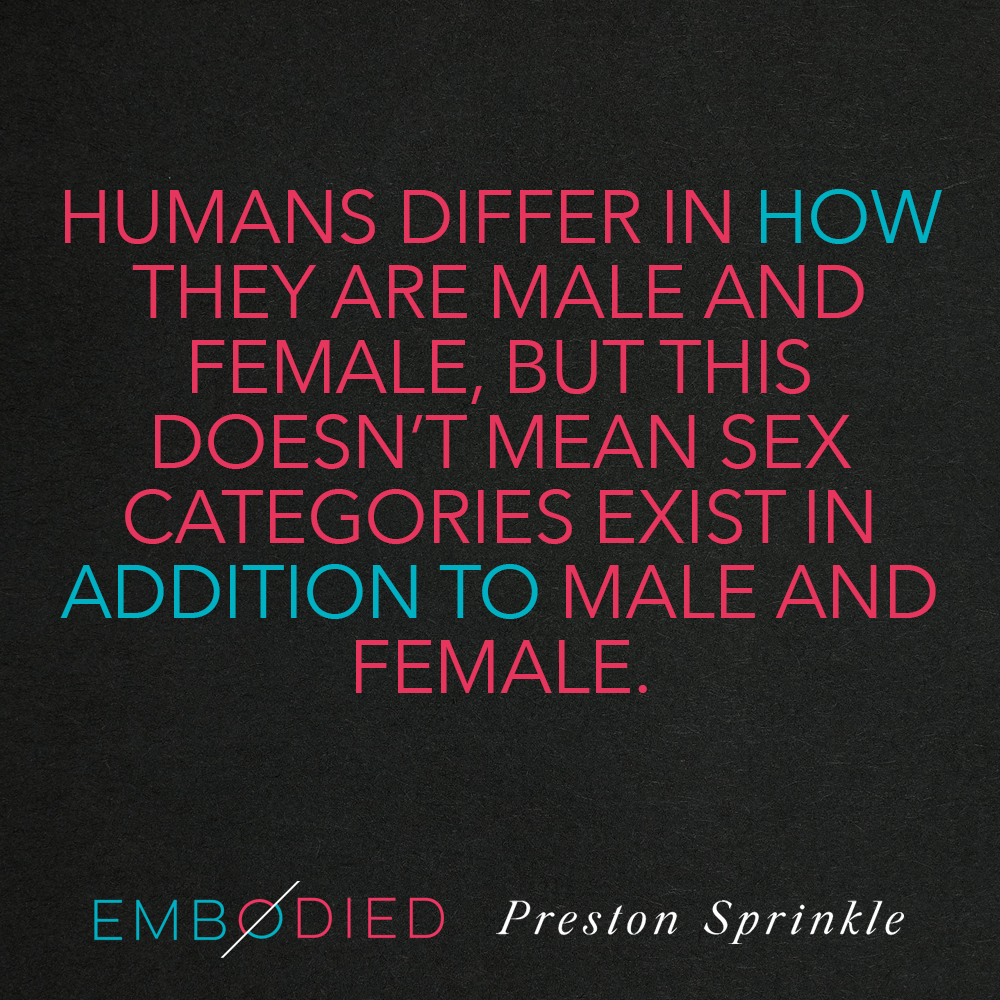
Listening with Compassion, with Theological Clarity

With that caveat in mind, please do not let that deter any reader from picking up Preston Sprinkle’s Embodied. The author does a fantastic job giving the reader encouragement, that having experiences of gender dysphoria does not disqualify anyone from being a genuine follower of Jesus. Preston is quite frank in admitting that he has friends, having a “trans” background, who are often some of the most loving and Christ-like persons he has ever met. One need not follow the secular culture, in order to be fully human. No one needs to be dismissive over what Scripture teaches regarding being created in the image of God, as male and female. Instead, we are all challenged to enter in the mystery of celebrating our differences as male and female.

My experience of gender dysphoria, as a young teenager, was pretty mild and short-lived. I rarely ever think about it any more. Others though, have had severe problems, that persist into adulthood, ultimately leading such persons to pursue transitioning into a gender identity contrary to their birth, sexual identity, through various types of medical procedures, such as hormonal treatments, or even surgery. An alarming, growing number of such transitions happen among children. Sadly, many have gone through such experiences, only to ultimately regret such decisions to go through with such hormonal treatments and/or surgery. Preston rightly points out that the mental health risks for those who transition to another gender identity, through surgery, are significantly higher than for those who do not transition. It is a lot more difficult to transition back, than it is to transition in the first place. Sometimes transitioning back is medically impossible. Those reasons alone are important enough, simply from a medical perspective, for those considering transitioning to not take that step of transitioning in the first place, or at least to delay it as much as possible. In many cases, such gender dysphoria disappears over time, assuming a person has a loving environment that supports them.

What about people who have already transitioned? Preston admits that this is a really difficult situation to deal with, for a Christian befriending someone else who has transitioned, whether that other person is a Christian or not. In such situations, it is really best to walk alongside those people who have taken that step, first and foremost as listeners and as a friends, and trust that God will intervene in such a way to bring about healing, according to God’s own timing and purposes.

More and more people who have transitioned to the opposite of their birth sex, have been transitioning back, and Preston observes that this number is continually growing, despite the social pressures against transitioning back. But in the final analysis, Prestron rightly affirms that it should be the truth of Scripture that should guide us, and not concerns over what is practical or not.

The Failure and Opportunity of the Church to Model Biblical Masculinity and Femininity

One big problem in many churches today, particularly Protestant evangelical ones, is that many have not figured out a way to model what Christian masculinity and Christian femininity look like. Some fall back on traditional cultural stereotypes. Some Christians are so freaked out by the rise of radical feminism, that women are almost completely marginalized in the use of their God-given gifts for ministry. Others go for the stereotype where the women pretty much do 90% of the “spiritual” work, and the men are just dragged kicking and screaming to church.

Other churches, on the less traditional side of things, have become too quick to show how men and women, particularly in church leadership, are simply interchangeable, whereby there is no real fundamental difference theologically between men and women. Sadly, the whole debate between complementarians and egalitarians, tends to narrowly focus on whether or not women can serve as church officials; particularly as elders, thus missing the more fundamental theological reality, of distinguishing between male and female, within the context of corporate worship (I have written extensively about this particular topic elsewhere on Veracity).

As a result, the sacramental expression of what it means to be a man, and what it means to be a woman, in the life of the church, gets cast aside. Children growing up into adulthood suffer the most, as few young people have an effective means to work through their anxiety, as to what it means to be male and female, in the sight of God, as opposed to simply following cultural imposed patterns of what masculinity and femininity look like.

Rapid changes in Western culture are only making the problem worse. Preston Sprinkle highlights the shocking statistic, just from one study in the United Kingdom, where the number of males questioning their gender has risen by 1460%, and the number of females questioning their gender has risen by 5337%, just in the last ten years.

1460%. 5337%. Those are real numbers. Experiences with gender confusion among American teenagers are not too far behind, as such startling statistics appear to be becoming part of the norm. Christian parents trying to raise their children in today’s anxiety ridden culture do not have the luxury of ignoring these massive cultural shifts.

Strangely, the silence of evangelical churches, when it comes to discussing this transgender identity crisis, has become deafening. And when it does get mentioned, if at all, such as in a sermon, it is typically either within the context of just how rotten the culture has become, or chiding less “enlightened” people for their “bigotry.”

The idea of men mentoring men (and boys) and women mentoring women (and girls) has become a lost art, in too many churches. How many churches still have men’s groups, where they talk about what it means to be a Christian man? How many churches still have women’s groups, where they talk about what it means to be a Christian woman? If we want to stem the tide against efforts by the culture to aggressively “normalize” ideologically driven concepts of “transgenderism” (a pejorative label, for some), churches need to do better in modeling what it means to be male and female, even in how we conduct worship services. No matter what churches do, cultivating the art of listening is essential, in figuring out ways to give young people permission to talk about their doubts and experiences.

Our Western culture today has made it socially acceptable to discuss issues related to “trans” people. That is a good thing. Evangelical churches tend to be behind the eight-ball on this, but at least, the secular world offers a variety of counseling, medical, and psychotherapy options for young people to process their anxieties.

On the other hand, the growing rate at which young people are considering themselves to be somewhere on the “trans” spectrum is particularly alarming. The drive to somehow “normalize” such “trans” experiences, even in psychological counseling, is particularly outrageous. We hear stories of concerned parents who want to immediately rush to give their child sex hormone therapy, if the child begins to experience even the mildest form of gender dysphoria. The shocking rise of rapid onset gender dysphoria, particularly among girls, over the past decade is horrifying….. and yes, there are legitimate concerns that Target’s bathroom policy might invite “fake” trans-people to take advantage of such policies and invade the private space of women. Who will speak out for the protection of women, who feel threatened by cultural shifts like this? Or will they experience the disdain of “cancel culture,” that the Harry Potter author, J.K. Rowling experienced?

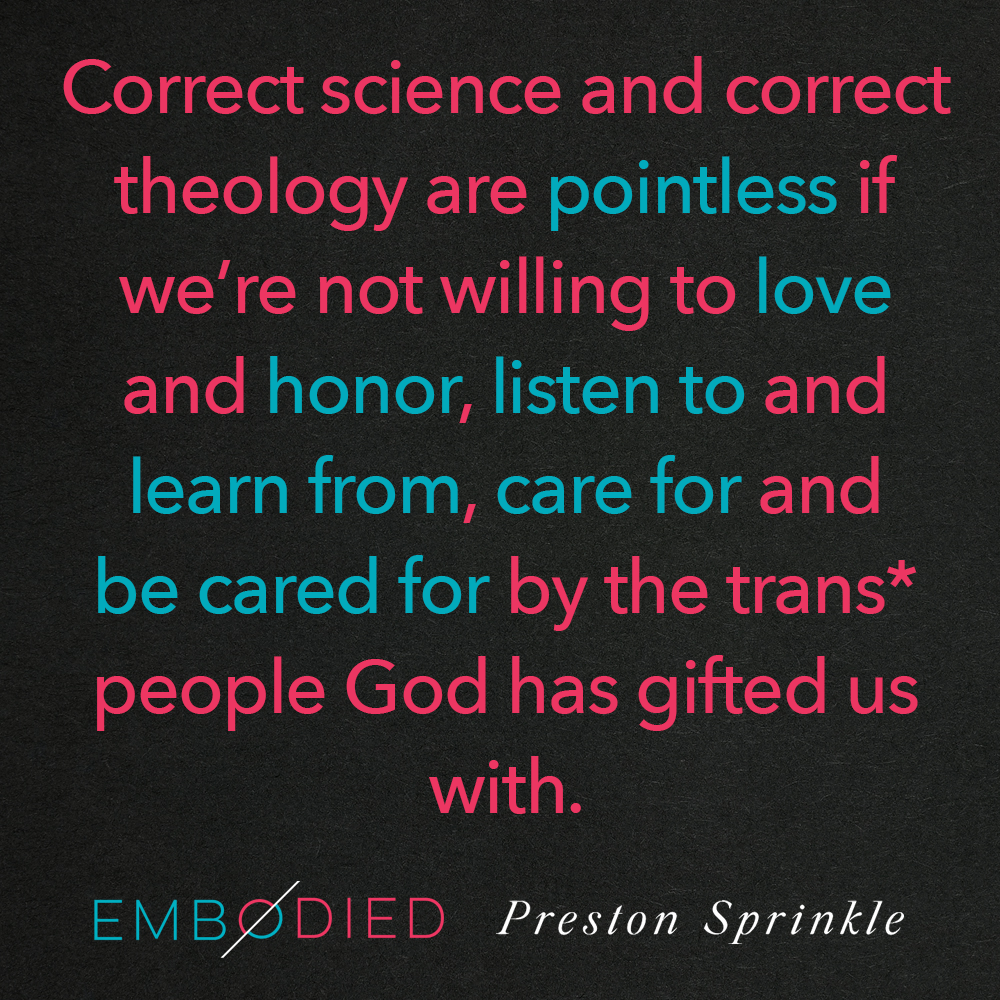
But as Preston Sprinkle reminds the reader, fits of outrage and horror do not lead to healing and real change. Instead, it is through the expression of the love of Christ, through listening to others, that real change happens. We need less of our love for outrage and more outrageous love.

Listen.

Take a deep breath.

Be a part of the conversation, instead of always rushing to pontificate on just how awful the culture has become…. or how closed-minded others on your Facebook page appear.

One simple (though perhaps still expensive) suggestion for churches, would be to offer single-person-use bathrooms in church facilities (what some might call “family restrooms”). That one act, of providing a restroom where a “trans” person can discreetly take care of business, is an excellent way to offer hospitality to someone who is new to your church, that might lower the anxiety and stress level of a visitor. Installing signage, that indicates that a single-person-use restroom is just down the hall, is a great way of saying to a “trans” person that they are welcome to visit your church.
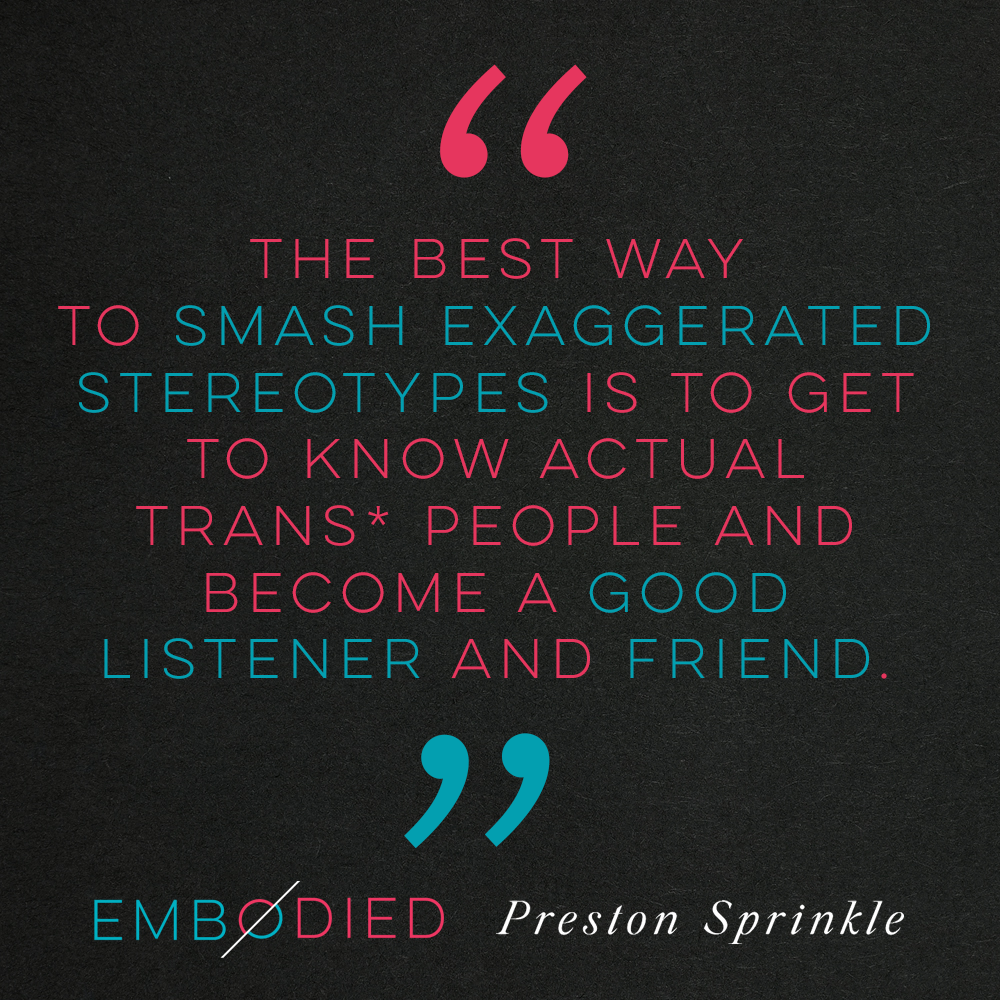
Extending Outrageous Love to Trans-Persons

Preston tells one story that really stands out to me, that of Lesli, who was biologically born female, but who went through a confusing, difficult period of gender dysphoria. When she confided her struggles with her pastor, the pastor escorted her out the church back door, and told her never to come back again. She left the Christian faith at that point. She ended up becoming a lesbian, and married another woman. But when her same-sex marriage partner died, she wanted to find some way for her spouse to have a decent funeral. Lesli finally worked up the courage to call some church office, out of the blue, and ask if the pastor there could perform the funeral for her deceased partner. Instead of giving Lesli a knee-jerk theological justification for condemning homosexuality and the transgender “lifestyles”, the pastor simply said, “We would be honored to [help out, and perform the funeral service].” It was that loving expression by that Christian pastor that eventually led Lesli to return to the Christian faith.

That is a challenging message. Yet that is the challenging message that undergirds Preston Sprinkle’s excellent Embodied. We need to land somewhere between oversimplifying the growing transgender awareness in our culture, as merely a Satanically-inspired political conspiracy, and on the other side, a fear-based resolve that we must choose between transitioning and suicide, as the only alternatives for moving through transgender conversations.

Sadly, some of the folks I know who would probably benefit the most from reading Embodied are most likely those ones who will not read it. I am just as horrified, as are many other Christians, as to how aggressively “transgenderism”, as a negative ideological category, has become a forceful cultural, even an activist, political movement. Likewise, I am also deeply concerned about the connection between suicide rates and gender insecurities.

But what this is ultimately about is people. People who wrestle with some form a gender dysphoria are people whom Jesus sought to die for, that they might be reconciled to God and find healing. What is really needed is a way for Christians to trust Jesus enough to give them the wisdom necessary to know how to best extend the hand of Christian friendship, to someone who wrestles with transgendered experiences.

Beginning February 1, 2021, pick up the book at Amazon, Embodied: Transgender Identities, the Church, and What the Bible Has to Say, by Preston Sprinkle, or wherever you can find it. Try out the audiobook, if you prefer, as Preston reads his own book, which is a great experience. This has become my “go-to” resource for addressing this critical and deeply sensitive issue today.

In the following discussion between Preston Sprinkle and Christina Beardsley, an openly transgender person, who is also a priest in the Church of England, I found the conversation to be difficult to follow at times, but it just shows how complex the cultural conversation is. One of the best ways we can love a transgender person is to try to figure out how people define the words they use in conversations.

Beware of False Prophets, QAnon Conspiracies, and Whataboutism!

Now that the dust is settling after the storming of the Capital on January 6, and Americans witnessed a peaceful transition of power, from one President to another President earlier this week, it is worth taking stock of what has happened, and what it means for the church.

The first point to note is that we are reminded, yet once again, that we are to beware of false prophets. A shocking number of Christian leaders have publicly made pronouncements, for the past many months, prophesying that Donald Trump would win a second consecutive Presidential term. Astoundingly, such pronouncements continued to come out even after the November election indicated that Donald Trump had lost the race. A few of these Christian leaders have, thankfully, stepped up to apologize for “jumping the gun” too quickly, with too much “thus saith the Lord,” in making this particular prediction, that Donald Trump would be inaugurated on January 20th, 2021. But the fact that so many Christian spokespersons put their integrity on the line with such so-called “prophecies,” only to see their prophecies fail to come to pass, should be a sober warning to believers to avoid such false prophets in the first place. “For the time is coming when people will not endure sound teaching, but having itching ears they will accumulate for themselves teachers to suit their own passions” (2 Timothy 4:3 ESV), and also, “Thus says the Lord of hosts: ‘Do not listen to the words of the prophets who prophesy to you, filling you with vain hopes. They speak visions of their own minds, not from the mouth of the Lord’” (Jeremiah 23:16 ESV).

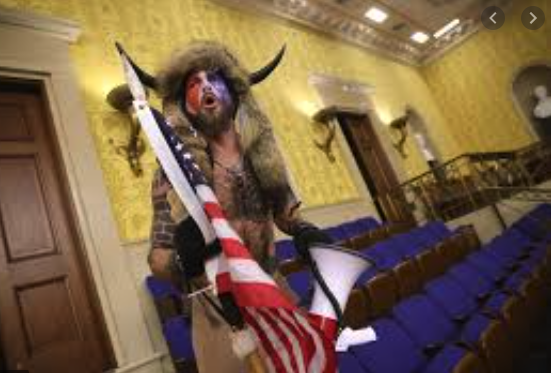
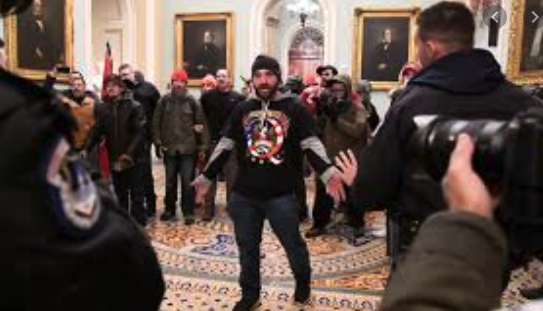
The second point to note is that Christians should be wary of conspiracy theories. The QAnon conspiracy theory was a special highlight of the fiasco at the Capital protest, on January 6. While the vast majority of protestors were peaceful, who gathered on the Washington Mall the day that the Electoral College votes were certified by Congress, the relatively smaller number of people who ended up storming the Capital included a number of Christians, who believe in the QAnon conspiracy. In a nutshell, the QAnon conspiracy contends that there is a pedophilia sex ring, enslaving countless numbers of children, run by a secret cabal of Democratic leaders, existing in the “deep state” of the American federal government. Believers in QAnon have held to the idea that Donald Trump was raised up by God to expose this “deep state,” such that while Trump was still President, his efforts would lead to the arrest of these corrupt Democratic leaders.  But because of the insidious nature of the “deep state,” followers of QAnon knew that President Trump would only signal to QAnon followers in code, to know what to do. Many QAnon followers then believed that the President’s speech before the crowds gathered on January 6 was the cryptic signal that was needed to alert QAnon followers, that “the storm” had finally come, and so, they should go and storm the Capital. This is not some “mainstream media” spin. This is stuff you can see on hundreds of videos taken at the Capital on January 6.

QAnon is quite a complex web of intricate and even conflicting beliefs, so it is really difficult to tell if someone is really “in” on QAnon as a serious believer, or if they are simply toying with particular ideas associated with the QAnon cult. Not everyone in QAnon is a Christian, for that matter, and this political cult has apparently spread to other countries, not just the United States. Nevertheless, the fact that this major, massive arrest of Democratic pedophilia supporters never materialized, before Trump left office, has left quite a number of QAnon folks demoralized. Of the tiny few Q adherents who were arrested at the Capital, some were shocked that the President did not pardon their efforts in penetrating the Capital, fully believing that Trump would do so. At the same time, the unexpected turn of events have only emboldened the remaining faithful to double-down on the QAnon theory, trying to come up with a new strategy to figure out what went wrong, and what will happen next. The latest claim: Trump actually did defeat Biden in the election, and he is secretly governing behind the puppet Biden. After all, as the Q would say, it is all “part of the plan.”

The third point to note is the trend of “whataboutism,” that I hear quite a bit, that oddly tries to justify some of the weirdness that a number of Christians have participated in, during this tumultuous political season. “Oh yeah?? Well, What about Antifa? What about the radical elements of Black Lives Matter, that led to so much destruction of property during the summer of 2020?Informed Christians should know that the rise of critical theory and wokeness has undercut the biblical justice theme of colorblindness, that Dr. Martin Luther King, Jr. envisioned over 50 years ago, as more secular minded theorists seek today to co-opt earlier Christian efforts to combat racism. But Christians should be, first and foremost, taking a stand against all forms of violence, whether perpetrated by the left or the right.

There are several reasons why the failure to discern true prophets from false prophets, the lure of conspiracy theories, and the temptation to embrace the rhetoric of “whataboutism”, is such an important concern, particularly for today’s American evangelical church.

First, the scandals involving false prophecies, conspiracy theories, and overly defensive rhetoric cause embarrassment for the proclamation of the Gospel. When I try to share my faith with my skeptical neighbor, co-worker, or family neighbor, I really need to focus on the claims of the Gospel, that Jesus is Risen from the Dead, that the Bible is indeed God’s Word, and that faith in Jesus matters in every area of life. What I do not need to be distracted with is when a non-believer brings up false prophets in the church, the rabbit trails of conspiracy theory thinking, and criticizing excuses for Christians behaving badly. Instead, what every believer needs to be most concerned with is having confidence in the Gospel, “For I am not ashamed of the gospel, for it is the power of God for salvation to everyone who believes, to the Jew first and also to the Greek” (Romans 1:16).

Second, such scandals indicate that well-meaning Christians have lost their focus, and have been tempted to put their trust in man, and not in the Lord. When a Christian become more engaged with politics and less engaged with the work of missions and evangelism, then you know that something serious is amiss. “Do not put your trust in princes, in human beings, who cannot save. When their spirit departs, they return to the ground; on that very day their plans come to nothing. Blessed are those whose help is the God of Jacob, whose hope is in the Lord their God” (Psalm 146:3-5 NIV).

And finally, such scandals show that many believers in our churches are not being fed with spiritual food that can properly sustain them in living a growing, dynamic spiritual life in Jesus.  We have settled for rather shallow teaching, that does not really help the believer properly embrace and understand the Scriptures as the True and Living Word of God. For when people are not being challenged with solid teaching, they so easily gravitate towards other things that sound a lot more exciting and thrilling. Our social media enriched world only makes the challenge even more challenging. Weak sermons, lackluster one-on-one discipleship, and shallow small group Bible studies, that fail to help people really dig in and do the hard work of studying the Bible make people vulnerable to the exhilaration of the latest conspiracy theory, and having some special confidence in knowing the “real” inside scoop that false prophecy tends to encourage. “All Scripture is breathed out by God and profitable for teaching, for reproof, for correction, and for training in righteousness, that the man of God may be complete, equipped for every good work” (2 Timothy 3:16-17).

Folks, let us get back to basics. We have our work cut out for us. The culture surrounding us is becoming more and more opposed to the cause of Christ, which means that we are to hold onto and harness the truth of God, with greatly resolve and clarity, so that we might be more faithful in our life and witness, for the glory of His Name. We must learn the art of persuasion with our neighbors. Let us set about being in prayer and in the study of the Scriptures, and less enthralled with the latest Facebook post and media madness. Let us be out there, sharing our faith with others, helping the poor and the needy, and be ambassadors for Christ’s Glorious Kingdom.


Best of 2020 … (Books, a few excellent blog posts & videos … and a deepfake)

One last look at 2020….

First, let me talk about some really good books….

If there was one ironic benefit of the coronavirus pandemic lockdowns of 2020, it was that it gave me a chance to read some more books. Most of them I “read” via Audible, or the Kindle “Speech-to-Text” feature with the Amazon Alexa app for Android (which was new to me and is pretty cool!!), listening to them as I took my exercise riding my bike all around the pathways of our rural county, as the pandemic curtailed much of my commuting into work. Increasing the reading to 1.25 speed helped, too, and then I could go back and review, if I missed parts. Here are some of the best books I enjoyed, that I commend to others:

  • Tactics, by Greg Koukl.  Hands down, this 10th anniversary edition of Tactics is the best book I read in 2020, and immensely practical. Koukl does a fantastic job giving the Christian a set of tactics to use, to enable anyone to have a good conversation about spiritual matters with just about anyone else. Tactics is like the Christian version of How to Have Impossible Conversations, written by Peter Boghossian and James Lindsay, that I read in 2019 (and re-read alongside Tactics in 2020). These books made me realize how much improvement I need in my communication and conversation skills with others. I will be going back to reference these books for A LONG TIME.   Reviewed here at Veracity.
  • Dominion: How the Christian Revolution Remade the World, by Tom Holland. While Koukl’s book is immensely practical, Tom Holland’s book was the most intellectually stimulating read of the year. Tom Holland is a British popular historian, specializing in ancient and medieval history, but his latest book takes a 2,000 year journey through the history of the West, showing how Christianity made the Western world, contrary to a more secular narrative, that sees Christianity as an impediment to the flourishing of today’s global society. Holland made me stop and think a lot, reminding me that the case for atheism really can not be made without acknowledging a debt to Christianity. Most secular atheists unconsciously accept certain Christian presuppositions, without giving them a second thought. If you have conversations with atheists, and you are not quite sure how to respond to them, Dominion is essential reading. Reviewed here on Veracity. Pastor Tim Keller wrote a sober and appreciative review for the book here, that might be entitled as “Nietzsche was right”.
  • The Crucible of Faith, by Philip Jenkins. While Tactics was the most practical, and Dominion the most intellectually stimulating, Philip Jenkins book on the period of Second-Temple Judaism was the most faith-challenging book I read in 2020. A thought-provoking introduction to the “time between the Testaments,” looking at the crucial historical period after the (near) completion of the Old Testament and before the writing of the New, where most of the central interpretive theological frameworks, that connect the Old and the New Testaments come together. It showed me just how ignorant I was, as a Protestant, of how important the study of Second Temple Judaism is in properly understanding the Bible as a whole. Crucible of Faith forced me to rethink my view of biblical inspiration, and how progressive revelation through the Scriptures actually works. Surprisingly, Jenkins has a liberal historical-critical bias here, when it comes to the Bible, that I could have skipped, but the historical narrative Jenkins portrays is so captivating, that I ended up reading the book twice!
  • J. I. Packer: An Evangelical Life, by Leland Ryken. Ryken wrote an excellent biography several years ago about J. I. Packer, one of evangelicalism’s greatest statesmen, of the modern era. Really inspiring. Packer died in July, 2020. We lost a great soul here. I am so thankful that he served his Lord so faithfully. Reviewed here on Veracity.
  • Grounded in the Gospel: Building Believers the Old-Fashioned Way, by J.I. Packer and Gary Parrett. One of Packer’s final books, Packer and Parrett make a cogent and urgent case for restoring the practice of catechesis, or Christian instruction in basic doctrine, to the life of evangelical churches, for the sake of the future of the church.  It has become my conviction, that every church needs to seriously consider implementing catechismal instruction, across all age groups, particularly in view of our post-modern society. Reviewed here at Veracity.
  • Angels, by Michael Heiser. A somewhat academic, yet eye-opening treatment on the topic of angels, correcting a lot of falsehoods that Christians (and others) sometimes believe about angels. Reviewed here on Veracity. This is a side topic that rabbit trails off of Dr. Heiser’s major work, The Unseen Realm. I also started reading Heiser’s Brief Insights of Master Bible Study, short devotional-type readings, that have encouraged me to be a better student of the Scriptures. Fantastic stuff. Brief Insights of Master Bible Study was reviewed here at Veracity.
  • Did America Have a Christian Founding?, by Mark David Hall. A scholarly, responsible reading of the theological orientation of the Founding Fathers. Hall makes a provocative case that the Founding Fathers were generally more “Christian” than proposed by other evangelical historians. Hall’s thesis might be a stretch in some areas, but he thankfully avoids the irresponsible pitfalls that you find among some popular Christian authors, such as David Barton. Reviewed here on Veracity.
  • God of Liberty: A Religious History of the American Revolution, by Thomas Kidd. A very balanced presentation of the history of the American Revolution, with special attention paid to evangelical Christian concerns. I used Kidd as the main source for teaching an Adult Bible Class on American Church History, at my church in the winter/spring of 2020.
  • Roger Williams and the Creation of the American Soul, by John M. Barry. A fantastic look at the life and times of Roger Williams, the founder of the colony of Rhode Island. Barry convincingly shows how evangelical Christian faith is at the very roots of contemporary ideas behind religious freedom. Interestingly, Barry is also the author of The Great Influenza, about the 1919 Spanish Flu pandemic, which has helped many readers survive the great coronavirus pandemic of 2020!
  • Blessed: A History of the American Prosperity Gospel, by Kate Bowler. Bowler gives us a definitive history of the prosperity gospel movement, that threatens to corrupt the historic Gospel of Christianity. Interestingly, Bowler’s work is not a theological critique, and she comes across as sympathetic to her subject. But she manages to trace the historical development of prosperity theology in a way that is very surprising. I had no idea how pervasive and subtle the prosperity gospel is until I read Bowler. Reviewed here at Veracity.
  • Studies in Words, by C.S. Lewis. Lewis is an expert in the English language, and he gives a number of examples of how the meanings of words change over time. In an era when the pace of social change comes quickly, and words easily change their meaning, I have found Lewis to be very helpful in the age of social media. Reviewed here at Veracity.
  • The Genealogical Adam and Eve: The Surprising Science of Universal Ancestry, by Joshua Swamidass. A much appreciated attempt to try to reconcile Young Earth, Old Earth, and Evolutionary Creationism, all in one book. Swamidass makes a case for an historical Adam and Eve, 6,000 years ago, who are the genealogical parents of today’s human beings, without necessarily being the genetic parents of all humans who have ever existed. I hope that Swamidass’ peacemaking project is successful. The church needs peace in this disputed area of doctrine!! Reviewed here at Veracity.
  • Eden Was Here: New Evidence for the Historicity of Genesisby Glenn Morton, a Christian geologist and apologist, who died in 2020. This was Glenn’s last book, written by one of the most provocative thinkers in looking at the creation vs. evolution controversy. Glenn fully accepted the contemporary science of an ancient earth, with an evolutionary origin of humanity, but he nevertheless sought to reconcile science with a fully historical account of the early chapters of Genesis. This was Glenn’s last stand, in making a valiant, if not at times, greatly contrarian, defense of the Bible. I dare any Young Earth Creationist to read it! Reviewed here at Veracity.
  • Confronting Old Testament Controversies, by Tremper Longman. Veteran Old Testament scholar Tremper Longman writes a much needed book for Christians, addressing various attempts by other Christian scholars to rethink the Old Testament, in an age influenced by the “New Atheism.” Longman finds several of these revisionist attempts to be lacking, but he interacts with  critics in a very irenic fashion. Offers much needed help to Christians, who are hesitant to embrace the Old Testament. Longman has helped me to wrestle with some of my doubts concerning the Old Testament. Reviewed here at Veracity.
  • Hebrews for Everyone, by N.T. Wright. I like reading good commentaries as I prepare lessons for my small group Bible study, so this was a good fit for our group’s study of Hebrews this year. Wright’s For Everyone series is really designed for folks who want a general overview of different blocks of passages, as opposed to digging into a verse-by-verse study, which is more my preference. Nevertheless, Wright’s Hebrews study is very solid, and easy reading. N.T. Wright is like a writing machine!
  • Weathering Climate Change, by Hugh Ross. From a fully evangelical Christian perspective, a much needed look at a vexing problem facing the whole world, that takes the science seriously, but that does not demand draconian political measures to try to address it. A mix of detailed scientific analysis made accessible to non-experts, along with very creative solutions, that should be taken seriously. Reviewed here at Veracity.
  • Algorithms to Live By: The Computer Science of Human Decisions, by Brian Christian & Tom Griffiths. Though I read a good bit of theology and history, I really enjoy science books, and I finally finished this one that I started to read a few years ago. Christian & Griffiths have written about how the discipline of computer science gives us insights into how humans make decisions…. and sometimes how irrational we can all be. This book is void of anything spiritual, so would be helpful if a Christian theologian could write a book about this topic.
  • In Search of Ancient Roots: The Christian Past and the Evangelical Identity Crisis, by Kenneth Stewart. Finally finished this book I started a few years ago, exploring why some evangelical Protestants become Roman Catholic or Eastern Orthodox. While the vast number of shifts are from Roman Catholic to Protestant, or Eastern Orthodox to Protestant, there is still a minority, yet growing number of evangelical Protestants who move in the opposite direction. John Henry Newman, the great 19th century Roman Catholic theologian, said, “To be deep in history is to cease to be a Protestant.‘ As an enthusiastic student of church history, I can attest to there being a lot of truth in this statement. Then there is this quote by Eastern Orthodox theologian, Jaroslav Pelikan, that rings very true for me: “Tradition is the living faith of the dead; traditionalism is the dead faith of the living.” I have not completely felt the pull to move away from evangelical Protestantism for good, but there are a number of times when evangelicalism just drives me nuts. This book effectively explains why.
  • What Does God Want, by Michael Heiser.  A short primer on the Gospel, meant as an evangelistic tool, to be given to folks raised in a church, but who find much of traditional evangelical Christianity to be lacking in telling a cohesive grand narrative, that takes into account some of the most difficult passages of the Bible. This might become my “go-to” evangelistic book to hand out to seekers wanting to know Jesus. Ironically, there is a hunger for a deeper knowledge of the Bible among many Christians, that many church-goers are simply not getting from popular megachurch evangelicalism, and Dr. Heiser is seeking to help people grasp that grand Scriptural narrative, for believers and non-believers alike. May his tribe increase!

Here are my books of the decade and books of 2019 posts, previously noted on Veracity. Looking back, I have come to conclude that Jonathan Haidt’s The Righteous Mind was the best book of the decade. It has really helped me keep a lot of things in perspective, in such a wild and crazy year as 2020.

Next, let me talk about some blog posts….

Normally each year, I write a blog summarizing the best blog posts of the year, but I pretty much have already done that a few months ago. I will highlight a few of the most interesting and important blog posts that folks might benefit from, that have been published since early September. But let me preface with a caveat….

Last year, I wrote a post, “Reflections on Seven Years of Internet Blogging.” I am more convinced now that blogging, particularly of the long-form kind, that I’ve been putting out here on Veracity, is still valuable, but I do think that exhaustion over social media has caused a lot of blogging to suffer. YouTube video offerings still seem to be big, however… so I have included a few video links below as well.

So, yes, I want to talk about some videos, too…

People tend to respond more to video than to written text. After all, if someone had simply written about the death of George Floyd, it probably would not have brought so much attention…. it took a video to explode the nation. But that is deeply concerning, particularly with the development of more and more convincing DeepFake technology, that can so easily fool us, and breed a horrifyingly lack of discernment, that so plagues the post-modern world, including Christians. A case in point… here is the U.K.’s Channel4, doing their own DeepFake video, mimicking the original Christmas message that Queen Elizabeth delivered last week, that I was encouraged by and posted on Veracity the other day…. If we can be fooled by technology, why put so much of our trust in it?

Back to reality now….

Kind of a hodge-podge of posts here, but to me, these are all thought provoking…. go ahead and skim through it, as your interest will indeed vary, but you should stick around for the video at the bottom. It sums up the year exceedingly well:

  • The Beauty of Complementarity Between Male and Female: British pastor Andrew Wilson has written an excellent summary showing how complementarity between male and female is so important and beautiful, and why churches need to develop a theology that can be lived out in sacramentally distinctive ways.  It perfectly summarizes what I have been trying to articulate on the Veracity blog over the past two years, that seeks to navigate a middle-way between a rigid complementarianism, that sadly excludes women from fully utilizing their gifts for ministry in the church, and a “woke” egalitarianism, that preaches that male and female are simply interchangeable cogs in the machinery of “big-box” evangelicalism today, a product of a corporate mindset that permeates significant segments of the evangelical world. Most of my critics never bother to read my arguments, but perhaps they might read Andrew Wilson’s excellent summary instead, and let me know what they think? Here is a gem from Wilson’s conclusion:
    • This is what makes it so crucial that we practise what we preach on the church as family. To deny that women can be elders will sound like the equivalent of denying that women can be CEOs, but it is more like the equivalent of denying that women can be fathers, and that men can be mothers. But for that to be grounded in reality, it is vital that the church is not just said to be a family, but seen to be a family; that we recognise fathers and mothers and honour and revere them as such, rather than (as can easily happen) operating with a fundamentally corporate model in which women are simply excluded from all the key positions or discussions.”  Well put!  READ IT AT THINKTHEOLOGY IN THE U.K.!
  • Do infants automatically get saved?: Another gem from Andrew Wilson covers the question, “DO BABIES GO TO HEAVEN?” What really encourages me is that Wilson finds that there are good reasons why Scripture can be so clear on some matters and less clear on other matters (like this one).
  • The Best Way to Teach the Bible on YouTube Verse-by-Verse?: Speaking of John Piper, this retired pastor has taken on the task of using YouTube as a means of helping people study the Scriptures verse by verse, with the YouTube hashtag #LookAtTheBook. Here is a ten minute segment on 2 Timothy 3:14-17. An excellent resource.
  • Another “Statement”?: There is the Philadelphia Statement, which I whole heartedly endorse. On the other hand, I think enthusiasm for these kind of statements (think the Nashville Statement, the Statement of Social Justice, etc.) is starting to wane. I call it “statement fatigue.”
  • Does John Walton Really Teach Gnosticism?: In the latest on the never ending battle between Young Earth Creationism, and other Creationist readings of Genesis, a young blogger Evan Minton responds to an argument by the film producer of Is Genesis History?, that seeks to critique Wheaton College’s John Walton, and his “Cosmic Temple Inauguration”  approach to Genesis. In-depth reading, particular for those who believe the myth that Creationists, who do not subscribe to a Young Earth interpretation of Genesis, do not believe the Bible. This debate will probably continue until Jesus’ returns.
  • Walter Hooper:  The man who worked nearly full-time since 1963 to keep C. S. Lewis’ literary legacy alive and in print, died in December, 2020, from complications when suffering from COVID-19. Joseph Loconte wrote an obituary for Walter Hooper in The National Review. Lewis was convinced that no one would continue to read his books, after his death. What fascinated me the most about Hooper, in this article, is that Hooper followed in Lewis’ footsteps to become an Anglican, but then converted to Roman Catholicism. Hooper believed that Lewis would have also converted to Catholicism, had Lewis lived longer, into the 1980s, as the Church of England became increasingly more liberal. Here is a link to a YouTube interview video of Hooper.
  • A critique of The Bible Project’s approach to the atonement?: I am a big fan of The Bible Project , so I would want to take any valid criticism seriously. Pastor Sweatman offers some thoughtful criticism, but I am not persuaded that the creators of The Bible Project reject the concept of propitiation, as Sweatman suggests.

AND FINALLY…. a way to end off the year 2020, by looking back, in a humorous way….. that does not really have anything overtly theological in it at all.

Some independent film company in California put together this 18-minute film, back in October, that perfectly summarizes pretty much all that has happened in the year 2020…. Australia fires, locust attacks in Africa, wildfires in California, Black Lives Matter protests, and obviously, the coronavirus….  (of course, being released in October, it has nothing about the Presidential election, the announcement of a COVID-19 vaccine, or the Nashville Christmas bombing). I have not seen the movie 1917, which supposedly has a really long, single scene shot, at the beginning of the movie. But this 2020 film is meant to parody 1917, with the same, single long film shot, look and feel.  So, with that, I wish all of you Veracity readers an end to crazy 2020, and a Happy New Year, for 2021 !!


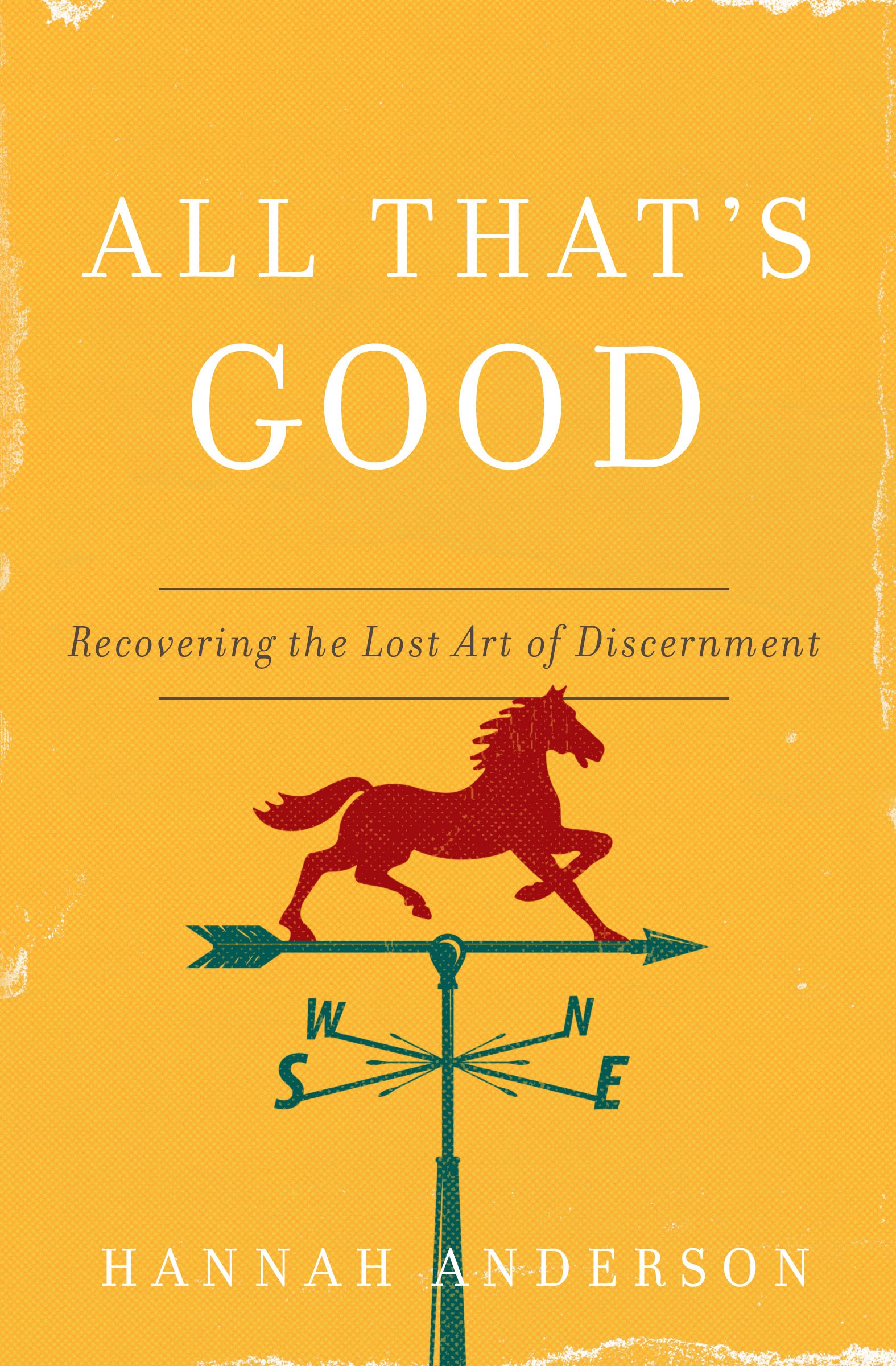
All That’s Good: Recovering the Lost Art of Discernment: Reading Hannah Anderson While Thinking About 2020

We need discernment now more than ever. But it appears to be a disappearing commodity. Especially in 2020.

When I was growing up in the 1970s, Walter Cronkite was the most trusted man in America. There were only three sources of evening news television: CBS, ABC and NBC, but my parents liked Cronkite on CBS the best.

That started to change in the mid-1970s, when the Watergate affair blew the lid off of America’s innocence. While Nixon and his White House staff were under scrutiny practically every night, the MacNeil/Lehrer Report premiered on PBS, to eventually become the PBS Newshour. Having a new choice in where to get news was refreshing. Getting the news was still pretty simple back then, but it was about to get more complicated.

Way more complicated.

Cable TV in the 1980s brought a plethora of new television channels, along with other news networks. By 1992, Bruce Springsteen wrote the song “57 Channels (And Nothin’ On).” And that was before the Internet exploded.


Fast forward to the beginning of the third decade of the 21st century. Except for my mother-in-law, I do not know anyone who watches the 6:30 Evening News anymore. We all have our cultivated social media feeds, podcasts, and streaming radio news sources, designed to fit our preferences. Not since the dawn of movable type, that catapulted an obscure German monk, Martin Luther, to become the best known person in Europe, have we seen anything like it, in world history. For medieval Europe, the voice of Rome was the voice of newsworthy authority, until Luther came along, as the catalyst for the Protestant Reformation.

Luther almost single-handedly cracked the traditional authority of the medieval church, through the power of his printed words, as they rolled off the printing press. Then when Luther came into conflict with other Reformers, over the nature of the Lord’s Supper, even the Protestant Reformation movement began to splinter. The Christian church obviously survived the crisis, and even thrived as Christianity continued to spread across the world. However, the church was fractured in ways that we are still deeply struggling with, 500 years later. The voice of Rome became but one voice, alongside a plethora of Protestant voices. But this is nothing like what we have with the Internet and social media landscape, of the first quarter of the 21st century.

Historian Brad S. Gregory makes the case in his The Unintended Reformation: How a Religious Revolution Secularized Society (another book on my to-be read list), that the unintended consequences of the Protestant Reformation have led to “hyperpluralism of beliefs, intellectual disagreements that splinter into fractals of specialized discourse, the absence of a substantive common good, and the triumph of capitalism’s driver, consumerism.” These days I tend to think that he might be right.

You can even go to a website now that displays “The Media Bias Chart,” showing how an amazing spread of news organizations, including Christian ones, fall on a scale, with “Neutral” in the middle, and “Most Extreme Left” to “Most Extreme Right,” on either side. There are so many “news sources” out there now, I can not even count them all. All you need is an iPhone and an Internet connection, and you can become your own news source.

The Internet has revolutionized global society, and taken the Christian church with it. Today, we have Protestantism on-steroids. Everyone has their “own interpretation” about everything, it seems. And, as a professional Information Technology specialist, who builds computer networks for a living, I helped to make it all happen.

YIKES!

Even scarier: I have been in the business of computer science and Internet technology for 35 years… and not once has a church pastor or youth group leader asked me (or someone else, with my technical background … I freely admit that I am not the best speaker) to speak to parents about how Internet technology really works. Now, perhaps such church leaders have other resources to help address this problem. I pray that this is, in fact, the case. But my honest observation, from my vantage point, is that most church leaders take a “head in the sand” approach to social media.

A recent documentary, The Social Dilemma, features interviews with Internet technologists at Google, Facebook, and other monster social media companies, explaining how the simple practice of searching for something in a Google search box, or thumbing through new entries in your Pinterest feed, has been carefully tailored to manipulate you, and get you hooked on using the technology. Technology pioneers, like Microsoft founder Bill Gates, and the late inventor of the Apple iPhone, Steve Jobs, both limited their children’s use of smartphone technology. Bill Gates refused to get a smartphone for his children until they reached the age of 14.

Sadly, I see Christian parents all of the time handing out smartphones to their 12-year old kids in middle school, if not even earlier! It is as though many Christian parents are either being pushed by peer pressure or they are amazingly unaware that by giving such powerful technology to young children, that they are potentially exposing them to forms of addictive behavior, which is already having a negative impact on a whole generation of teenagers. All of this is leading to confusion as to how we can help a growing generation of young people develop the art of discernment, ranging from how a person can wisely consume news and information, to even the most addictive form of all, unfettered and almost endless pornography.

Wow. We are in deep trouble.


It is with this backdrop of information overload, addiction, and disinformation that I read this selection from Hannah Anderson’s 2018 book, All That’s Good: Recovering the Lost Art of Discernment. Hannah was writing about what draws her to enjoy murder mystery novels, and these few paragraphs hit me like a bolt of lightning (page 84):


You don’t have to be a student of world history or a fan of murder mysteries to understand why truth is so important to discerning goodness–just look at your social media feed. Unlike the compact boundaries of a village, the digital world sprawls, leaving us with a type of informational vertigo. But it’s not simply that we have too much information; it’s that we have too little shared reality. Like the characters in a mystery, we don’t know what is true and what isn’t. We can’t agree on who is an expert and who isn’t. So more often than not, we simply craft our own reality and can’t be bothered with whether we share it with anyone else or not.

The result is a confusing muddle experience of the world. When my “facts” collide with your “facts,” it results in anger, conflict, mistrust, and isolation. Family members blocking and unfriending family members. Perfect strangers yelling and belittling each other. Communities coming apart at the seams– not simply because we can’t agree on what is good and valuable, but because we can’t agree on what is true anymore. And slowly but surely, our separately constructed realities cut us off from each other and lead us to solitude. Surrounded by a mass of people, we feel unloved and misunderstood, for the simple fact that we’ve created millions of worlds with a population of one.

Because shared reality is necessary to a good, flourishing life, Paul begins Philippians 4:8 by calling us to first seek “whatever is true.” The importance of shared reality to a good, flourishing life also explains why the serpent attacked truth from the start and why Jesus links falsehood with murder. “You are of your father the devil,” He says in John 8:44. “He was the murderer from he beginning and does not stand in the truth, because there is no truth in him. … He is a liar and the father of lies.” When the serpent lied to the woman about the consequences of disobedience, he, in effect, murdered her, bringing death and isolation upon the human race.

And when we lie to and about each other, we destroy the bonds of community that sustain life, effectively destroying the people in them.


That pretty much sums up what I see in American culture these days, and in the evangelical church, in particular. As a side note, a few years ago, I discovered Hannah Anderson, the wife of a pastor in the Blue Ridge Mountains of Virginia, and a blogger at SomeTimesALight.com. She came on my radar after being forced to think through the theological issues, regarding the complementarian/egalitarian controversy, that continues to divide evangelical churches today, and Hannah came across to me as someone who thinks deeply theologically about what it means to be male and female, created in the image of God. However, she apparently thinks deeply about other matters, too, in a way that stretches and renews me spiritually.

As I have been reading her All That’s Good, it has helped to remind me just how important is for Christians to be pursuers of truth. Discernment seems to be something lacking in a number of the Christian circles I come across, so All That’s Good has been a great source for thinking through, what it means to know truth, and meditate on how we come to know that truth. Hannah has another great section that explores epistemology, a ten-dollar word for the study of knowledge and opinions. It answers questions like: How do we know what we know?” (page 86). She explains why discernment of what the Holy Spirit is saying to us must be grounded in factual reality:


While it’s true that God guides us to truth through His Spirit, it won’t happen apart from the physical reality that He has ordained for us. After all, we don’t have a sensory experience of the world by accident– God made us both spiritual and physical, and we dare not reject either. Because of this truth must be rooted in factual reality. Facts are not the sum total of all that is true, but truth is not a set of privately held beliefs that cannot be tested by other people. The information that we use to come to our decisions and opinions to come under scrutiny. We must not be offended when people ask us to prove them. We must not expect people to accept anyone else’s opinions simple because they claim that they are true.


This is especially true in how much of American evangelicalism portrays the Christian faith today, particularly as I look back on 2020. We sadly also have far too many Christian celebrities, who make a name for themselves, through their charisma and winsome personalities, instead of investing in the type of true spiritual discernment that Hannah Anderson is arguing for.

Too many have made claims that the Holy Spirit has given them private revelations, that others are unable to confirm, and that lack a convincing grasp of Scriptural knowledge ( I appreciate legitimate concerns about voter fraud, but I have to ask some questions:  What was that whole crazy “Jericho March” really supposed to be about?….. Eric Metaxas is a very funny and sweet Christian man, but is he claiming to be a prophet, or is he just pulling our leg?…. We are about to find out in less than a month).

Others have unintentionally or even intentionally redefined traditional theological categories to unwittingly make room for anti-Christian ideologies to permeate the church (is critical theory, or “wokeness,” really just a tool to help in recasting Martin Luther King Jr’s biblical vision of a colorblind society, or is it an ideological agenda bent on undercutting classic Christianity with Neo-Marxism propaganda?).

Others have gained the acclaim of their followers, while living lives that lack sufficient accountability (who was asking the tough questions in apologist Ravi Zacharias’ life, particularly when doubts about Ravi began to surface five years ago, if not sooner?). Others have been elevated as leaders, despite lacking the theological foundations and spiritual maturity that should help them to weather the storms of life. The cause of truth suffers as a result.

That can all sound quite depressing. So, it would be best to end on a brighter, and still truthful, note.

Thankfully, there are millions of Christ followers who humbly and quietly follow Jesus, loving God and loving their neighbors, sharing their faith and living out Christ-likeness in very concrete ways, whose stories never show up in our Facebook and Twitter feeds. Godly Christian parents are training up their children to be confident in their faith, with no Pinterest fanfare. Across the world, thousands are coming to know Christ, despite persecution of the faith. For example, in Iran alone, a great spiritual revival is happening there, where Christianity is growing faster there than anywhere else in the world, despite the pandemic. Even in America, the growth of small groups of believers meeting either in person or on Zoom potentially signals a revitalization of American Christianity, during the time of COVID. A mission my wife and I support, International Cooperating Ministries, is on the verge of building their 10,000th church! The accessibility of high-quality, peer-reviewed biblical scholarship to the average Christian is at an all-time high, due to the ease of the Internet. A new crop of young, knowledgeable Christian apologists are having a huge impact in defending the faith on YouTube , for the up and coming generation. Just one example: Aside from Queen Elizabeth’s Christmas message, YouTube apologist Michael Jones’ (a.k.a. Inspiring Philosophy) “The Lost Message of the Bible” was in my mind this years best YouTube Christmas video, encouraging me to dig more into the Bible, and share the Good News of Jesus with others! ….  So, there are still plenty of good reasons to rejoice, even in an era when spiritual discernment more generally seems to be in short supply.

Hannah Anderson goes on in other chapters, exploring more themes derived from Philippians 4:8, “Whatever is honorable, whatever is just, whatever is pure, whatever is lovely, whatever is commendable.” This is not really a super-heady book, but it still helped me to think more deeply about where I am with God, and where the church of Jesus Christ is today. Sprinkled with her own family anecdotes, and wise thinking, this is the best devotional type of writing I read all year.

Just get the book and read it, if you want to see what I mean. It will be like balm to your soul.

Onward to 2021!


The Queen’s Christmas Broadcast

This kind of made me have second thoughts, as to why we Americans broke away from the mother country. Though respectful of other faiths, the Queen’s Christian faith shines through clearly. Following this year’s speech, is the first televised Christmas speech she gave in 1957, reading from John Bunyan’s The Pilgrim’s Progress.