11th in a series.
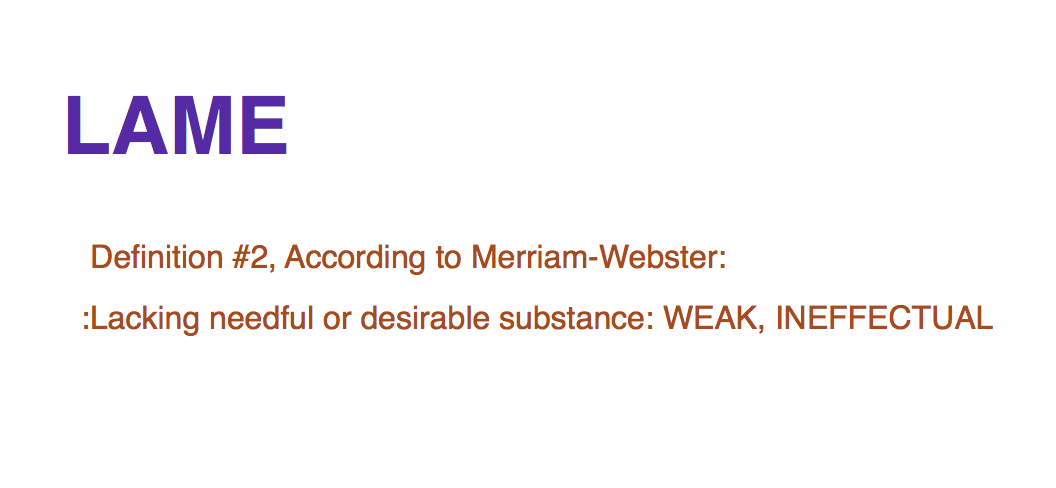
Let us examine another word in verse 12, to discover why this verse is so controversial:
- I do not permit a woman to teach teach or to exercise authority over a man; rather, she is to remain quiet.
So, what does Paul have in mind when it comes to the word “teach?”

Here is the problem. If you take a common complementarian argument, that insists that under no circumstances should a woman be permitted to “teach,” when a man is present, then you run into some severe difficulties with other passages of Scripture.
- Jesus said to her [Mary Magdalene] , “Do not cling to me, for I have not yet ascended to the Father; but go to my brothers and say to them, ‘I am ascending to my Father and your Father, to my God and your God.’” Mary Magdalene went and announced to the disciples, “I have seen the Lord”—and that he had said these things to her. (John 20:17-18 ESV)
So, when Mary Magadelene went and announced to the disciples, was she “teaching” them?
Here is another passage from the apostle Paul, encouraging the church in Colossae:
- Let the word of Christ dwell in you richly, teaching and admonishing one another in all wisdom, singing psalms and hymns and spiritual songs, with thankfulness in your hearts to God (Colossians 3:16 ESV).
Paul is encouraging all believers to be “teaching” one another, thus including men and women. In particular, men and women should be “teaching” one another, within the life of the church. Does your church do this?
If you do not believe this, then just read the next few verses, when Paul gives instructions to “wives” (who are women”) and “husbands” (who are “men”), Colossians 3:18-19. Therefore, the context of the letter requires us to accept that Paul is encouraging both men and women in the church; that is, all believers, to “teach” one another.
Some may answer that when a woman “teaches” that she must only do this in a private setting, as opposed to a more public setting. But where does one draw the line between such a private and a public setting? Paul does not mention any distinction between “private” and “public” settings in Colossians. Furthermore, the practical difficulties can lead to some rather awkward, or even silly, conclusions. For if women are not to “teach” when men are present, does that mean that women should never open their mouths in a couple’s Bible study? If a man listens to a woman Bible study teacher on a Christian radio station, should that man immediately turn off that radio station, less they fall into some kind of weird sin?
Some maybe willing to live with such cognitive dissonance. But it might be better to suggest a different disposition in this matter. Scripture is rich in diversity but it is not self-contradicting. A high view of Scripture requires that the interpreter of Scripture view the message of the Bible to be presenting a coherent and consistent perspective.
There is also the incident whereby Priscilla, along with her husband, Aquila, expounded the Scriptures to Apollos, a man (Acts 18:26 ESV). Many complementarians will interject at this point that Priscilla was not ministering to Apollos by herself. She had her husband with her.
But such a solution does not neatly address the case of when Paul “commended” Phoebe, a female deacon, in Romans 16:1-2, as Paul’s official representative, when presenting his letter to the church in Rome.
Furthermore, it does not explain the case of Mary Magdalene, the first witness to the resurrection, tasked by the Lord Jesus Himself, to tell the guys about the promised ascension of Jesus. She had no male figure accompanying her. She was pretty much operating solo. But she did act under the direct authority of Jesus, who, just in case you might have missed it, was indeed a male.
I know some people who balk at calling what Mary Magdalene did “teaching.” Some might simply call what Mary Magdalene did the “passing on of information.” Fair enough. Nevertheless, it drives us back the question raised in 1 Timothy 2:12, as to what Paul means by “teaching.”
The Gift of Prophecy vs. The Gift of Teaching?
We also see a persistent problem when it comes to the exercise of the gift of prophecy in the church. There is no doubt that there were women prophets in the New Testament. Philip had four unmarried daughters, all of whom were prophets (Acts 21:8-9). Women prophecied in corporate worship in the Corinthian church (1 Corinthians 11:2-16). Anna was a prophet (Luke 2:36). Luke also states that the prophecy of Joel, that both the sons and daughters of Israel might prophecy, was fulfilled at Pentecost (Acts 2:16-17).
What are we to make of all this? How is “prophecy” different from that of “teaching?” In what way are they similar? Both involve speaking and have a public mode of expression, but surely Paul had something in mind when in distinguishing “prophecy” from “teaching.” It all leads us back to how the prohibition against women “teaching” in 1 Timothy can be squared with what we read elsewhere in the New Testament.
Most egalitarian scholars seek to resolve the tension raised by 1 Timothy 2:12, by appealing to what appears to be a rather pejorative or negative view of “teaching,” that Paul might have in mind here. Based on the evidence available, egalitarian scholars draw on the premise that Paul’s letter to Timothy is particularly concerned about the problem of false teaching, being propagated in the church in Ephesus, primarily by women, of some sort. They contend that the type of “teaching” Paul has in mind in 1 Timothy 2:12 is actually heretical or false teaching. For example, some egalitarians might translate this portion of 1 Timothy 2:12 as “I do not permit a woman to teach false doctrine,” or something like that.
The advantage of this interpretation is that it completely removes the possibility of a there being a contradiction in Scripture at this point. But are egalitarians trying too hard to resolve the tension? Are they fudging a bit on the evidence at hand?
A complementarian scholar would respond that if Paul really had this in mind, he would have specifically made such a statement. He could have said, “I do not permit a woman to propagate false teaching in the church.” But he did not. The egalitarian is therefore making an assumption that is difficult to prove with any certainty.1
Complementarians, on the more aggressive side, will then conclude that women can have no public role of teaching, wherever men are present. No women adult Sunday school teachers, in mixed settings. No women Bible study leading in a mixed group, unless a man supervises. Some even go so far as to prohibit women from leading certain aspects of the worship service, such as song leading, or corporate prayer.
But such complementarian thinking does not walk away with total victory so easily. Are such complementarians trying too hard to resolve the Scriptural tension, to suit their own tradition?
As with the egalitarians, the more strict complementarians have to explain a lot of the New Testament, that would contend against their view. Such complementarians must still explain how Paul can make such a binding statement prohibiting women from teaching in 2 Timothy 2:12, while at the same time, encouraging all believers, men and women, to teach one another, and to prophecy. How then does the whole counsel of God in Scripture accommodate these passages where women appear to be “teaching,” at least in some sense?2
“Big-T” versus “Little-t” Teaching
I find the “big-T” versus “little-T” teaching distinction articulated by British pastor-scholar Andrew Wilson to be immensely helpful. Wilson’s perspective does two things: First, it adequately resolves the tension in the New Testament texts regarding how “teaching”, or various kinds, can be handled in the church, without exposing the New Testament to the charge of being self-contradicting. Secondly, it has practical applications that avoids awkward legalisms.
“Big-T” teaching has to do with the expounding and definition of godly Scriptural doctrine, while opposing and refuting false doctrine. It is all making sure that the Gospel message is being properly transmitting from one generation to the next. The Apostle Paul’s charge to the Ephesian elders, before left Miletus in Acts 20:17-28 makes this message loud and clear. “Big-T” teaching inherently implies the exercise of spiritual authority, as the proper domain of elders/pastors in a local church setting.
“Little-T” ( or “Little-t”) teaching has to do with the teaching all of us as believers are called to do, at countless levels within the corporate life of the church. You can think of it as the conveying of information, the “passing on of information,” etc., as approved by the elders of the church, if you like, but it is still “teaching.”
In other words, it makes a distinction between “Big-T” teaching as practiced by the elders and overseers of the church, as described by Paul in 1 Timothy, and “Little-t” teaching as Paul encourages all believers to do in Colossians. Without this distinction, you are pretty much left with an apostle Paul who says one thing in 1 Timothy (no-women teaching) and something completely contradictory in Colossians (everyone should teach). If you believe that the Bible is without contradiction, and at the same time, profoundly practical, then this “Big-T” versus “little-t” teaching distinction makes a ton of sense.
For example, when I am in a Bible study, and someone in the group shares what they have been learning, that is in alignment with sound doctrine, whether they be male or female, then those persons are “teaching” me, and now I am learning. Perhaps I have forgotten the lesson, or it could be something new. Nevertheless, I still need to here it, regardless of the source, as this fits within the scope of “little-t” teaching. If a woman, in public or private setting, offers me a word of encouragement or a word of admonishment, that is still “teaching.”
I can extend this even further, though some might think it to be controversial: Such “little-t” “teaching” would also include times when some particular person is leading a particular Bible study or group, under the oversight (episcopos, from 1 Timothy 3:1) of the elder-led leadership of the local church, whether that person “teaching” be a man or a woman. It would also include occasional times of exhortation or testimony by a woman from the pulpit, just as it would apply to a man sharing an exhortation or testimony from the pulpit, if that man were not an elder of the church.
The point here is that ultimately the male-led eldership is ultimately responsible for what gets taught in the local church. But it does not mean that the elders are the only ones who are to teach. Instead, we are all called to teach one another.
Such a view of “little-t” “teaching” would also include all activities of those who hold a “servant” office in the church (or deacon, from 1 Timothy 3:8-13), who along with others, submit to the oversight of the elders. Such servants, or deacons, would include men and women (some may protest at this point, but I have sought to answer this objection elsewhere).
This would also suggest that women, along with men, should be encouraged to pursue Christian education, even at the level of obtaining theological and biblical studies masters degrees and doctorates, so that such men and women, under the protective covering of a local church eldership, can convey their learning to others, and further equip the body of Christ.
An Objection to the “Big-T” vs. “Little-T” Teaching Distinction
More aggressive complementarians will, of course, object at this point, claiming that if a woman is speaking in front of any mixed group of men and women, then this is not permitted, by Paul’s restriction in 1 Timothy. This view makes the assumption that if a man or woman, under the authority of elders, takes upon the role of teaching, then they are automatically exercising their own spiritual authority.
But is this a valid assumption?
Is this not a confused way of looking at it, since it confuses this notion of “little-T” teaching with “big-T” teaching? For if you take such a view to the extreme, it would result in only allowing the women to occupy relatively “menial” roles within church life, robbing the church of half of its spiritual workforce, to build God’s Kingdom. Granted, no jobs within the church are “menial,” but we often treat anything within the realm of “teaching” in a different manner.
Such a confused way of looking at the matter also elevates spiritually immature men over more spiritually mature women, thus disrupting the order of the church. Simply having any man serve as an elder in a church will not do. Only qualified men should serve as elders. To somehow suggest that an unqualified man should be able exercise spiritual authority over someone else, whether they be male or female, is an invitation to disaster.
Here is a better way to approach this: Those who teach in a “little-t” teaching context are not teaching under their own, independent authority. At least they should not. If they are doing so, then you have a deeper problem within that church body.
Rather, such “little-t” teachers are teaching under the authority of the elders, which is the proper domain of “big-T” teaching. If it so happens that a “little-t” teacher subverts the authority of the elders, then such a “little-t” teacher needs to be reigned in, whether they be male or female. So if a dispute arises, as to what a “little-t” teacher is saying, take the matter to the elders, and let it be settled there.
Bad teaching in the church only undermines the work of discipleship, regardless of gender. If the elders and pastors are really doing their job in training and equipping the sheep, then you will not have “little-t” teachers going off the deep end, and having others shave their heads, walking on their hands upside down, sacrificing baby chickens, or whatever. If the elders and pastors are fulfilling their calling, then there is no need to micro manage those who are serving. Therefore, a “little-t” teacher, who seeks to affirm the authority of the elders, should be encouraged to use their teaching gifts to the fullest extent possible, whether they be a man or woman. In turn, the elders of the church are responsible to provide protection for those who earnestly seek to use their gifts.
A Missionary Strategy?
I am reminded of something I heard at an InterVarsity Urbana missions conference from years ago. It may have been Helen Roseveare, but I will just call this woman, “the missionary.” When “the missionary” went out to plant a church in an African village, she became quite skilled in handling the word of God. But it would eventually prove frustrating for her, as it was difficult for those villagers to take the responsibility of teaching themselves the Scriptures. She was such a gifted teacher, that the men of the village would feel intimidated by her. It was like a “no-win” situation for the missionary.
So then, the missionary then read 1 Timothy 2:12 to her followers. The men read the passage and sought to rebuke the missionary! Ah, this was the break that she needed. The men pledged themselves to be obedient, and then took it upon themselves, to designate elders, and the church was able to grow, without the missionary’s presence. This freed the missionary to move onto the next village, and repeat the process.
Now, that is a brilliant church growth strategy!!!
Nevertheless, the 1 Timothy 2:12 prohibition against women teaching is not the only thing that raises questions, in this verse of Scripture. See you next time in the next post….
Notes:
1. Complementarians are claiming that egalitarians are adding something to Scripture here, namely saying that Paul is not permitting a woman to “teach false doctrine,” when the text simply says “teach.” But I always find it ironic that many complementarians will do the same thing with Genesis 3:16 (NIV), by saying, regarding Eve, that “Your desire will be to rule over [for] your husband, and he will rule over you,” when text only says, “Your desire will be for your husband, and he will rule over you.” Such complementarians have added the phrase to “to rule over,” with respect to Eve’s position towards the man. ↩
2. What complementarians have to contend with concerns this: if women are not to teach men, then what are the qualifications of teaching in general? Does this mean that any man can teach, or only some? If only some, is this only the elders? Views on these questions among complementarians vary widely. ↩