Tag Archives: veracity

Christians in Assad’s Syria

Maaloula, St. Takla Convent, Syria.   Refugees from the Syrian civil war are hiding here as of early, September, 2013.  Residents of this village still speak a dialect derived from the ancient Aramaic, the language that Jesus spoke.

Maaloula, St. Takla Convent, Syria. Refugees from the Syrian civil war are hiding here as of early, September, 2013. Residents of this village still speak a dialect derived from the ancient Aramaic, the language that Jesus spoke.

As of early September, 2013, the world has been shocked by reports of chemical weapons being used in the civil war in Syria.   Numerous reports in the media argue that President Bashar al-Assad was behind these attacks. This horrible tragedy surely deserves at least some response.   But what kind of response?

Philip Jenkins is a renowned evangelical historian at Baylor University.   He has studied extensively the history of Christianity in the Middle East and the rest of the Mediterranean region.    Jenkins recently wrote an editorial piece giving his view that the lessons of church history should give American leaders caution in their response to the situation in Syria.  In particular, will a military intervention in Syria help or hurt the existing Christian community in Syria?

Jenkins’ position is that military intervention in Syria will not only hurt the Christians, it could ultimately lead to the annihilation of the Christian community in that country.  Pretty strong words.

Sadly, many American Christians are largely ignorant about the history of Christianity in this part of the world.  As I have tried to show with the recent situation in Egypt, the issues are exceedingly complex.   Frankly, I am not sure what the clear answer is on what to do.   But what I do know is that most Christians in the Middle East and particularly in Syria itself oppose outside intervention into Syria’s internal problems.   Assad is not the nicest guy in the world.  That much is over-abundantly clear.  But Christians in the region have looked to Assad and his family for many years for at least some protection from Islamic extremists.   What will happen to an already persecuted church if the country is further destabilized?

Perhaps you might have a completely different view.   Perhaps Jenkins is mistaken. There is much that I do not know.  Nevertheless, as a Christian in America what I do know that it is my duty and responsibility to listen to my brothers and sisters in Christ in Syria and make a better effort to fully understand their history and appreciate their situation today in view of the present crisis.
Unwinding with Alvin Plantinga

“Be merciful to those who doubt;”
Jude 22 (NIV84)

Alvin Plantinga

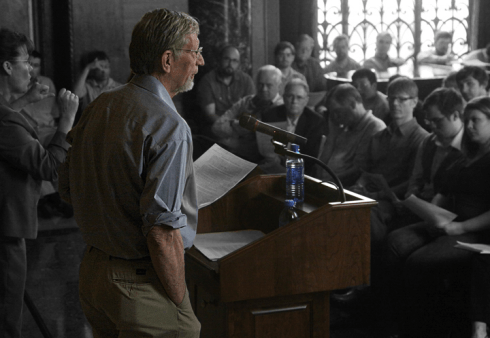
Alvin Plantinga speaking to students and faculty at Baylor University on April 26th, 2012 (photo credit: Chris Derrett).

Have you ever heard a presentation of the Gospel that goes something like this: “Hell is hot, death is certain, Jesus saves, turn or burn”? This is the Ripley’s (Believe It or Not) version of the Gospel. While this presentation may work—if only pragmatically—on a theological level, it’s a complete mess on a personal, relational level. It falls so short of the mark. Unfortunately, there are a lot of people who hear the message of Jesus Christ just this way.

I came across a common theme in atheists’ objections to Christianity three times last week—specifically that Christians are misguided. You know: the Bible is a bunch of fairy tales and legends, a loving god wouldn’t allow evil and suffering, there is no god, hell is an invention, science disproves Christianity, and so forth. (If you’re not running into these objections might you be playing it a little too safe in sharing your faith?) One atheist posted a rant in which the sophomoric level of his uninformed statements exposed his unwillingness to think rationally about theism and Christianity. They also pointed to a long line of Believe-It-or-Not presentations that left negative impressions. (His argument denying the plausibility of God was solely based upon his personal conviction that there can be no such thing as hell.) Who ‘shared’ their faith with him, and how? Too much truth and not enough grace? Continue reading


Rhetoric That Still Matters: “I Have a Dream”

Martin Luther King, Jr.

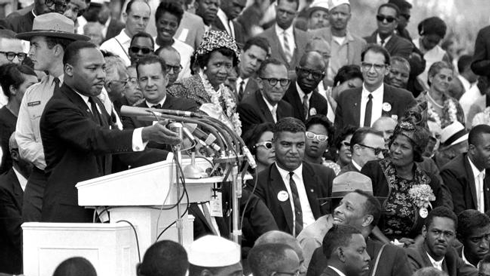
Dr. Martin Luther King, Jr. delivering his “I Have a Dream” speech—50 years ago today.


I still get emotional reading this speech. This is how you start a revolution. This is rhetoric that still matters.


C.S. Lewis: Christian Champion … or Contrarian?

C.S. Lewis.  Died on the same day as President John F. Kennedy and author Alduous Huxley.

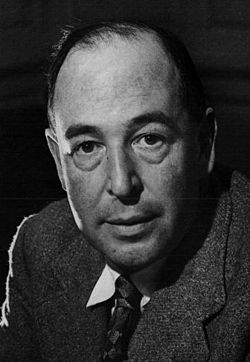
C.S. Lewis. Died on the very same day that President John F. Kennedy was shot.  The author of Brave New World,  Aldous Huxley, died on that day as well:  November 22, 1963 (Wikipedia image, photo by Arthur Strong, 1947)

In 2013, we remember the 50th anniversary of the death of C.S. Lewis. Though his death back then was overshadowed by the assassination of President John F. Kennedy, I would argue that at least for followers of Jesus, C.S. Lewis has had a far more profound and lasting influence than even JFK…. but how well did he do as a theologian?

Lewis was clearly the most popular Christian apologist of the 20th century. His works have been cited as a major factor in the conversions to faith of numerous prominent Christians, ranging from the scientist and U.S. National Institutes of Health director, Francis Collins, to the British atheist and molecular biologist turned theologian, Alister McGrath. Lewis’ Chronicles of Narnia books remain bestsellers among children’s fiction, several of the books having been portrayed in big-budget, major motion pictures. He was a member of the Inklings, a group of Oxford scholars that included such literary luminaries as J.R.R. Tolkien, author of The Hobbit, and (indirectly) Dorothy Sayers, the inspiring visionary of the classical Christian education movement. Lewis’ classic introduction to Christian faith, Mere Christianity, is also the slogan for a major Christian magazine, Touchstone, and his writings form part of the “canon” of many homeschooling curriculums.

For any Christian living in the past fifty years or more, Lewis has been big stuff. However, where does Lewis stand now in the mind of 21st century Christianity? Oddly enough, his legacy is somewhat controversial among some Christians.
Continue reading


Embarrassing Witnesses

“Behold, I am sending you out as sheep in the midst of wolves, so be wise as serpents and innocent as doves.”
Matthew 10:16 (ESV)

One the greatest joys we have in producing this blog is sharing material from authors, pastors, thinkers, and theologians who are insightful and effective witnesses for Jesus Christ.  Whether you read these posts as a committed Christian or a scathing skeptic, we appeal to your intellect “with gentleness and respect,” as prescribed in 1 Peter 3:15.

We try to keep things positive, partly because so much of the negative passion that comes out in contemporary writing is self-defeating, but mostly because of the love that is modeled for us by Jesus Christ. We have produced lists of resources, people, and tools that—in addition to the material shared in individual posts—can help you discover the veracity of the Scriptures.

But…much as we would like never to write an unkind word, Jesus also modeled (in fact commanded) discernment.

There are people who make being a disciple of Jesus Christ much more difficult than it should be for the rest of us.  Some have large media outlets (even universities) behind them.  Some have presidential-sized egos and ambitions.  Some, quite frankly, are weirdoes and snake oil salesmen.  Some have been caught perpetrating scams.  Some have been investigated by the U.S. Senate for their overseas dealings or their accumulation of personal wealth while operating under the guise of tax-exempt ministries.  The common thread is a thirst for affluence, power, or attention (and strangely enough, an appetite for expensive jets). Continue reading
